Think Forward.

Morocco's immeasurable archaeological wealth and the rewriting of history... 10042

Morocco has just decided to equip itself with a new archaeological museum, and it's thinking big. It will be the largest of its kind in Africa, covering an area of 25,000m2. It's both enormous and flattering. Some people will talk of excess, or simply fail to see the point. To this we must quickly retort: think again. If Morocco has always been considered to be of great archaeological interest, this interest has never been greater, except since the latest finds: the oldest homo sapiens fossil at Jbel Ighoud, not far from Safi; the oldest surgical procedures and treatments at Tafoghalt, near Berkane; the Bronze Age remains recently discovered near Wad Laou, on the prehistoric site known as KachKouch, not far from Tétouan; and the necropolis south of Tagounite near Zagora; those of the ornaments dated between 142 and 150 thousand years ago, uncovered in the Bizmoune cave near Essaouira; those of the 12-hectare farm near Oued Beht, a size never before known in North Africa, dating from the end of the Neolithic period, bearing witness to great wealth and highly evolved know-how. The list is extremely long. The clumsy notion that archaeological research and excavations are a luxury or the preserve of a few experts for their own pleasure is absolutely wrong. The importance of archaeological research to the writing of history is not debatable. It is fundamental. The remains and traces of the past help to complete, correct or confirm historical accounts. Fossils, structures and artefacts discovered on archaeological sites are all tangible evidence, providing an objective and nuanced view of vanished civilisations, particularly when they have left no written trace. Archaeology provides information about ways of life, culture, beliefs and human interaction, as well as the techniques used and the degree of evolution of vanished civilisations. It is essential for preserving and appropriating the national heritage, and hence that of humanity. It provides a milestone in human evolution and helps to explain what we are today. As the transmission of knowledge is crucial, archaeological research provides us and future generations with indisputable evidence of pride and identity. It is therefore essential for writing and rewriting history, which it cleans of the biases that some historians may have inserted here and there through ignorance or lack of evidence, and those that ideologists, for more or less laudable reasons, may have deliberately introduced as misleading orientations or aspects. The findings in Morocco call into question what successive generations have learned about their history and origins. Although it has been proven that the role of local populations in exchanges and in the construction of Mediterranean civilisation was extremely important, unfortunately we continue to peddle a biased history that ignores these contributions and archaeological evidence, which have now been proven beyond doubt. Since 1985, Morocco has had a National Institute of Archaeological and Heritage Sciences (INSAP). And it's not for nothing or by chance that archaeological research here is closely linked to heritage. Heritage means tangible evidence in the case of tangible heritage, and transmissible evidence in the case of intangible heritage. As it happens, Morocco is immensely rich in both. The researchers at INSAP are not going to contradict what has been said here, nor Ibn Khaldun, whom we venerate without respecting his doctrine. Today, it is essential to revisit the narrative that links the origins of Moroccan populations to any migration from elsewhere, and even less so from the east of the country; just as it is time to emphasise the evolution of these populations and their undeniable contributions to Mediterranean civilisation and therefore to the world. The people of this region have not been subjected to the civilisations of the region, they have made a great and important contribution, and this must be taught in our schools. Ignoring this truth creates deficiencies, particularly in the perception of identity. Nations need a historical frame of reference if they are to flourish. Some build it up out of nothing, whereas in Morocco it is there and self-evident. These truths could not be clearer. They must form the basis of our identity. The problems from which a certain fringe of the population suffers, particularly young people in search of an identity, and who unfortunately today are caught up in imported ideologies that can embrace dangerous extremism, can only be solved by rewriting history objectively, based on facts and historical evidence, from the most distant to the closest. Young people, particularly during adolescence and early adulthood, ask themselves profound questions about who they are, what they want to become and what place they occupy in the world. These questions are influenced by many factors, including of course family, culture, friends, personal experience and social environment, but they are also inevitably influenced by the history of the country in question. The further back in time this history goes, the more it is a source of pride and serenity. In this constantly changing world, where social networks and pressures of all kinds play a significant role, this quest for identity can be complex and sometimes a source of anxiety. Dismay can lead people to seek comfort elsewhere. Some may go so far as to think they are stepping back into an imaginary time and constructing a fictional world for themselves, watered down by ideologues serving obviously implausible causes. The investment in such a major archaeological museum has therefore come at just the right time to fill an extremely serious cultural gap, bringing together in a welcoming venue of respectable size a wealth of evidence of Morocco's rich history. Historians, for their part, should take up the question of identity in order to make up for the shortcomings and eliminate the biases. However, it is imperative that institutions take up the issue vigorously. First and foremost, the Ministry of Education must take the measure of the importance of revising the curricula and content of the history courses taught in our schools, without forgetting to train a significant number of specialists to improve research in such a cardinal field.

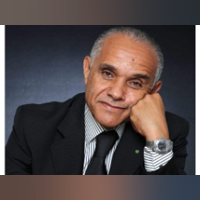
Aziz Daouda Aziz Daouda

Aziz Daouda

Directeur Technique et du Développement de la Confédération Africaine d'Athlétisme. Passionné du Maroc, passionné d'Afrique. Concerné par ce qui se passe, formulant mon point de vue quand j'en ai un. Humaniste, j'essaye de l'être, humain je veux l'être. Mon histoire est intimement liée à l'athlétisme marocain et mondial. J'ai eu le privilège de participer à la gloire de mon pays .


8100

33.0

Chapter 5: Synthesis- The Consilience of the Framework 115

The evidentiary power and utility of this integrated framework—Orbits, Latticework, Pipeline—lies in its consilience. It weaves breakthroughs from wildly disparate fields into a single, coherent explanatory tapestry, revealing a universal pattern of successful inquiry. From Ballpark to Trading Floor: The narratives of Moneyball and The Big Short are isomorphic: Both begin with a philosophical reframing of value (what makes a baseball player valuable; what is the true risk of a mortgage bond). Both proceed through scientific, data-driven discovery of a massive market inefficiency (OBP vs. price; real default risk vs. AAA ratings). Both culminate in the formulation and execution of a winning model (a roster of undervalued players; a portfolio of credit default swaps). They are the same story, told in different arenas. From Sideline to Boardroom- José Mourinho’s Tactical Objectivity: The strategic success of football manager José Mourinho, particularly in his early career at Porto, Chelsea, and Inter Milan, can be precisely deconstructed through this lens. Lacking a storied playing career, he was unburdened by the sport’s internal, dogmatic "ways of knowing." His Outer Orbit philosophy was defined with stark clarity: winning is the sole aesthetic. His Middle Orbit work became legendary: obsessive, scientific analysis of opponents, involving countless hours of video to identify specific tactical vulnerabilities in individual players and systemic gaps in team shape. His Inner Orbit genius was in formulation: he would design rigorous, often defensively-oriented game models tailored to exploit those precise weaknesses, demanding robotic discipline from his players. His famous 1-0 victories, frequently derided as "anti-football" or "boring," were direct, logical products of pursuing objective victory over subjective aesthetic approval. He demonstrated that objectivity often requires enduring backlash from a consensus invested in a different, more romantic model of the game. From Factory Flow to Protein Fold: Taiichi Ohno’s andon cord and Demis Hassabis’s AlphaFold: Both are profound interventions based on latticework understanding. Ohno designed a human-technological system to make local truth (a defect) instantly global, optimizing a physical manufacturing lattice. Hassabis built a computational system to infer the spatial relationship lattice of amino acids from evolutionary data, optimizing our understanding of the biological lattice. One is mechanical and human, the other digital and abstract, but both are solutions born from seeing a problem as a network of relationships to be modeled and managed. The Contemporary Imperative-The Age of the Synthesist: The historical drift of knowledge since the Enlightenment has been from integration toward fragmentation. The Renaissance ideal of the uomo universale (universal man) gave way to the Industrial Age’s demand for the hyper-specialist. The 20th century perfected the silo. The 21st century, however, presents us with a stark imperative that demands a synthesis, a return to integrated thinking, but now armed with powerful new tools and facing problems of unprecedented scale. Two convergent forces make the orbital, latticework methodology not merely beneficial, but essential for competent navigation of our time. The Nature of Our Tools: Our most powerful analytical engines—Artificial Intelligence (particularly machine learning and large language models) and, on the horizon, Quantum Computing—are inherently cross-orbital and lattice-native. Deploying AI effectively on any complex problem, from drug discovery to climate modeling to ethical dilemma resolution, requires precise philosophical framing (defining objectives, values, and constraints to avoid perverse outcomes), robust and curated scientific data grounding, and exquisite mathematical formulation of the model architecture and training paradigm. These tools fail, often catastrophically and insidiously, with fragmented, siloed, or philosophically unexamined input. They demand, and therefore will select for, synthesist thinkers who can navigate all three orbits and think in terms of interconnected systems. The Nature of Our Challenges: The existential problems that define our epoch are quintessential latticework challenges. They cannot be contained within academic departments or government agencies. They are not "physics problems" or "economics problems." They are system problems. The specialized intellect, trained to dig ever deeper into a single vertical silo, is architecturally unequipped to even properly define them, let alone solve them. These challenges demand minds capable of orbital thinking across the lattice, minds that can hold multiple models, trace second- and third-order consequences, and formulate strategies that are robust across multiple domains of reality. Objectivity as the Foundational Operating System. The pursuit of objective truth is not a passive state of receiving revealed wisdom. It is an active, disciplined, and often confrontational chase. It requires the moral courage to question foundational premises in the Outer Orbit, the intellectual rigor to map reality without favor or illusion in the Middle Orbit, and the creative potency to formally synthesize understanding in the Inner Orbit. It demands that we see the world not as a collection of unrelated events, but as a vast, dynamic lattice of interlocking causes and effects. And it is best navigated with the structured, self-correcting protocol of the Objectivity Pipeline. This framework proposes objectivity not as the cold, emotionless province of a narrow scientism, but as a universal operating system for understanding, a scalable, rigorous, and ultimately humane methodology applicable with equal force to the equations of a physicist, the ethical calculus of a jurist, the investment thesis of a historian, the innovation of an engineer, and the strategy of a state. Subjectivity is the fog of un-modeled complexity. The Orbits Model, the Latticework Theory, and the Objectivity Pipeline constitute the navigation system—the charts, the compass, and the piloting protocol. In an epoch defined by overwhelming information, pervasive misinformation, and tools of god-like power whose misuse carries existential risk, mastering this chase is no longer an intellectual luxury or a philosophical pastime. It is the essential meta-skill, the foundational logic upon which reliable judgment, effective action, and meaningful progress depend. The choice before us is not between a subjective world and an objective one, but between wandering in the fog and building a lighthouse. The architecture for the lighthouse is here. The materials are the disciplines of thought we have inherited and refined. The builders must now be us.