Think Forward.

Le syndrome de DiGeorge un déficit immunitaire congénital (par absence ou sous-développement du thymus) 2611

Le syndrome de DiGeorge est un déficit immunitaire congénital dans lequel le thymus est absent ou sous-développé à la naissance, ce qui entraîne des problèmes avec les lymphocytes T, les globules blancs qui aident à identifier et détruire les cellules étrangères ou anormales. D’autres malformations congénitales cardiaques sont également présentes. Les enfants atteints du syndrome de DiGeorge naissent avec plusieurs anomalies, y compris des anomalies cardiaques, des glandes parathyroïdes peu développées ou absentes, un thymus peu développé ou absent et des traits faciaux caractéristiques. Les problèmes liés aux lymphocytes T provoquent des infections récurrentes. Ce trouble est appelé aussi syndrome de microdélétion 22q11 .2 . 1 /Quelles sont les causes de cette maladie La maladie résulte d'une perte (délétion) d'un petit fragment sur le chromosome 22 qui porte des gènes intervenant dans le développement du cœur, du cerveau, du thymus, et de la glande parathyroïde qui régule le taux de calcium dans le sang. Les conséquences de cette anomalie génétique sont très variables. Certaines personnes n'ont quasiment aucun symptôme et le diagnostic est parfois porté à posteriori , suite à la survenue d'un autre cas plus typique dans la famille. 2/ Quels sont les symptômes ? Il existe des déformations au niveau du visage avec une fente palatine à l’origine d’une occlusion incomplète de la cavité buccale lors de l'émission vocale. Les yeux sont généralement très écartés et la mâchoire est petite et en retrait. Sont observés un retard dans l’acquisition de la marche, de la parole et du langage avec une lenteur ou une maladresse dans l'exécution des gestes. Une susceptibilité particulière aux infections est fréquente avec notamment des otites à répétition et des infections pulmonaires. Une malformation cardiaque est présente dans 75 % des cas affectant essentiellement l’aorte. Un abaissement de la concentration de calcium dans le sang peut provoquer des crises de tétanie. 3/ Y a-t-il un traitement À l'heure actuelle, il n’est pas encore possible de remplacer le fragment chromosomique manquant. La prise en charge des troubles du langage repose essentiellement sur l'orthophonie. Une opération chirurgicale est parfois nécessaire. Un traitement antibiotique prolongé est parfois prescrit à visée préventive pour les enfants qui présentent des infections répétées. Une greffe de tissu thymique ou de cellules souches est effectuée en cas d’absence du thymus. DR MOUSSAYER KHADIJA, spécialiste en médecine interne et en gériatrienالدكتورة خديجة موسيار Présidente de l’Alliance Maladies Rares Maroc (AMRM) et de l’association marocaine des maladies auto-immunes et systémiques (AMMAIS), Vice-présidente du Groupe de l’Auto-Immunité Marocain (GEAIM) POUR EN SAVOIR PLUS : SYMPTÖMES CARACTERISTIQUES (SOURCE MSD MANUEL), SYMPTÖMES CARACTERISTIQUES (SOURCE MSD MANUEL) Le fœtus ne se développe pas normalement et des anomalies affectent souvent les organes suivants : Cœur : Les enfants naissent souvent présentant un trouble cardiaque congénital Glande parathyroïde : L’enfant naît généralement avec des glandes parathyroïdes (qui contribuent à réguler les taux de calcium dans le sang) insuffisamment développées ou inexistantes. Visage : L’enfant présente en général des traits faciaux caractéristiques, tels que des oreilles basses, une petite mâchoire en retrait ou des yeux très écartés. Il peut présenter une fente dans le palais (fente palatine). Thymus : Le thymus est nécessaire pour le développement normal des lymphocytes T. Comme cette glande est absente ou insuffisamment développée, le nombre de lymphocytes T est faible, ce qui limite leur capacité de combattre de nombreuses infections.Le pronostic est en général lié à la gravité de l’atteinte cardiaque. DIAGNOSTIC DU SYNDROME Analyses de sang Parfois, examens d’imagerie (tels que radiographies du thorax et échocardiographie) Les médecins suspectent un syndrome de DiGeorge en se basant sur les symptômes et des analyses de sang. TRAITEMENT Il se fonde sur : Suppléments calciques et de vitamine D Parfois une greffe de tissu thymique ou de cellules souches Chez les enfants qui possèdent tout de même quelques lymphocytes T, le système immunitaire peut fonctionner correctement, sans traitement. Les infections qui se développent doivent être rapidement traitées.. Chez les enfants qui n’ont pas de lymphocytes T, ce trouble est mortel à moins de recourir à une greffe de tissu thymiqu BIBLIOGRAPHIE -DiGeorge or 22q11.2 deletion syndrome, https://primaryimmune.org/understanding-primary-immunodeficiency/types-of-pi/digeorge-or-22q112-deletion-syndrome -James Fernandez , MD, PhD, Cleveland Clinic Lerner College of Medicine at Case Western Reserve University, Traitement du syndrome de Digeorge, Le Manuel MSD, Vérifié/Révisé janv. 2023 https://www.msdmanuals.com/fr/accueil/troubles-immunitaires/d%C3%A9ficits-immunitaires/syndrome-de-digeorge#:~:text=Les%20enfants%20atteints%20du%20syndrome,T%20provoquent%20des%20infections%20r%C3%A9currentes L'Alliance des Maladies Rares aumar L’Alliance a pour missions de faire connaître et reconnaître les maladies rares auprès du public, des professionnels de santé et des pouvoirs publics en informant sur leurs enjeux scientifiques, sanitaires et sociaux, par tous les moyens : presse écrite, télévision, radio, sites internet et réseaux sociaux. Elle a également pour objectifs de contribuer à l’information des médecins en organisant des colloques thématiques sur les maladies rares. Elle œuvre à aider à la création d’associations de malades dédiées à chaque maladie rare et à améliorer l’accès au diagnostic et aux soins des maladies rares par la mise en place de centre de référence et de compétence et par une prise en charge réellement efficaces en inscrivant ces troubles comme des affections de longues durées (ALD) L’Alliance des Maladies Rares (AMRM) a été créée en 2017. Elle s’est inspirée des modèles des pays plus développés, où des associations de malades atteints de maladies rares et des malades dépourvus d’association se sont unis depuis plusieurs années en « Alliance », telles la France avec l’Alliance des Maladies Rares ou la Suisse avec Proraris. L’Alliance se donne par ailleurs pour but de contribuer à la création par les malades eux-mêmes d’associations spécifiques comme elle l’a fait par exemple pour : l’association marocaine des malades d’angioœdèmes (AMMAO) ou l’association pour les personnes atteintes de rachitisme vitamino résistant hypophosphatémique (RVRH-XLH). L’Alliance au Maroc collabore déjà étroitement avec beaucoup d’autres associations œuvrant sur une pathologie particulière comme l’Association de solidarité avec les enfants de la lune Maroc, l’Association Marocaine de Mucoviscidose, l’association des amis des myasthéniques (AAMM), l’association marocaine du syndrome de Rett (AMSR), l’association SOS Pku …
Dr Moussayer khadija Dr Moussayer khadija

Dr Moussayer khadija

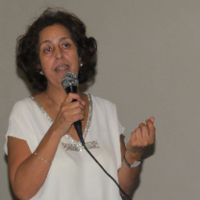
Dr MOUSSAYER KHADIJA الدكتورة خديجة موسيار Spécialiste en médecine interne et en Gériatrie en libéral à Casablanca. Présidente de l’Alliance Maladies Rares Maroc (AMRM) et de l’association marocaine des maladies auto-immunes et systémiques (AMMAIS), Vice-présidente du Groupe de l’Auto-Immunité Marocain (GEAIM)


5100

0

Chapter 3: The Latticework Theory- Reality as an Interdependent, Multi-Layered System 149

The conceptual framework commonly referred to as “Latticework Theory” integrates formal ontological analysis with applied epistemic reasoning. Willard Van Orman Quine’s analytic ontology, as outlined in "On What There Is" (1948), establishes rigorous criteria for identifying entities, categories, and relations within complex systems, providing a foundation for understanding which elements and interactions are structurally significant. Charlie Munger’s notion of a “latticework of mental models,” as articulated in his speeches and compiled in "Poor Charlie's Almanack" (2005), complements this by advocating for the disciplined integration of knowledge across domains to improve strategic decision-making under uncertainty. Together, these perspectives underpin a framework in which authority, information, and incentives propagate across layers of agents and institutions, producing outcomes that cannot be inferred from the isolated properties of components. Deviations at any node can be corrected when feedback is accurate, timely, and actionable. Failures occur when feedback is impaired, misaligned, or ignored. This framework provides a lens for analyzing industrial operations, national governance, financial systems, and technological risk in a unified, empirically grounded manner. The Toyota Production System (TPS), developed by Taiichi Ohno and detailed in "Toyota Production System: Beyond Large-Scale Production" (1988), exemplifies this framework at the operational level. TPS integrates authority, information, and incentives to align local actions with system-level objectives. The andon system, which allowed assembly line workers to halt production upon detecting defects, transmitted local observations directly to organizational decision nodes, enabling immediate corrective action. Empirical analyses, including studies of manufacturing efficiency, demonstrate that this configuration reduced defect propagation, accelerated problem resolution, and increased overall reliability compared to designs that optimized individual workstations independently. For instance, companies implementing TPS principles have reported defect rate decreases of around 60 percent, reflecting the structural alignment of authority, information, and incentives rather than isolated interventions. Singapore under Lee Kuan Yew illustrates the same principle at the national level. Between 1965 and 2020, per-capita GDP rose from approximately $517 to $61,467 in current U.S. dollars. By 2020, public housing coverage reached approximately 78.7% of resident households. Scholarly analyses attribute these outcomes to a central coordinating constraint: administrative meritocracy combined with credible enforcement. Recruitment and promotion emphasized competence and performance, anti-corruption measures ensured policy credibility, and social and industrial policies aligned skill formation, investment, and housing. These mechanisms were mutually reinforcing, producing system-level outcomes that cannot be explained by any single policy instrument but rather by ontological reasoning. Financial markets and strategic advisory practice demonstrate analogous dynamics. Many successful hedge fund managers and macro investors, such as George Soros (who studied philosophy with a strong historical focus) and Ray Dalio (who emphasizes historical pattern recognition in his investment principles), draw on deep historical expertise. Studies and industry insights highlight the value of humanities backgrounds in finance, with hedge funds actively recruiting liberal arts graduates for their ability to provide broader contextual understanding. This expertise enables pattern recognition across interacting variables, resource constraints, institutional incentives, technological change, political legitimacy, leadership behavior, and stochastic shocks, while facilitating analogical judgment about systemic regimes. George Soros’s concept of reflexivity formalizes the empirical reality that market prices and participant beliefs mutually influence one another. In feedback-dominated systems, quantitative models fail unless interpreted in historical and structural context. Historical insight therefore provides an advantage in long-horizon investing, geopolitical risk assessment, and capital allocation, as evidenced by the track records of such practitioners. The Boeing 737 MAX incidents of 2018 and 2019 provide a negative case that clarifies the ontology’s conditions. Investigations revealed that the MCAS system relied on single-sensor inputs, information about its behavior and failure modes was inconsistently communicated to operators, and engineering authority was constrained by commercial and schedule pressures. Incentives prioritized rapid certification and cost containment over systemic reliability. Local anomalies propagated to produce two hull-loss accidents with 346 fatalities. Analysis demonstrates that robust interconnection alone is insufficient. Outcomes depend on the alignment of authority, accurate information, and incentive structures that empower corrective action. Across manufacturing, national governance, finance, and technology, the same structural principle emerges: effective outcomes require the alignment of authority, information, and incentives, with feedback channels possessing sufficient fidelity and remedial capacity. Misalignment in any dimension produces fragility and amplifies errors. The Orbits Model operates within this substrate, with inner orbits requiring empirical validation and outer orbits constrained by systemic coherence. Empirical evaluation relies on archival records, institutional data, and observable system outcomes, providing a unified framework for analyzing complex adaptive systems. The Latticework framework thus integrates ontology, applied epistemics, and structural empirics, combining theoretical rigor with practical observation across domains.

Theosophy 201

Theosophy is a spiritual movement that emerged in the late nineteenth century with the ambition of bringing religion, philosophy, and science into a single, coherent vision of truth. Drawing on both Eastern and Western mystical traditions, it promotes the idea of a timeless or “perennial” philosophy underlying all world religions. Central to this outlook is the belief that the soul evolves over long cycles of reincarnation and karma, gradually awakening to deeper spiritual realities. The movement was formally established in 1875 by Helena Petrovna Blavatsky (1831-1891) and her collaborators with the founding of the Theosophical Society, and it went on to shape many of the spiritual, philosophical, and artistic currents of the modern era. At the heart of Theosophical thought is the idea of a divine, impersonal Absolute that lies beyond the limits of human understanding—an idea comparable to the Hindu concept of Brahman or the Neoplatonic One. From this unknowable source, all levels of existence are said to unfold, descending through a hierarchy of spiritual planes and beings until they manifest in the material world. This cosmological vision reflects strong influences from Indian philosophy, especially Vedanta and Buddhism, while also incorporating elements of Western esoteric traditions such as Neoplatonism, Hermeticism, and Kabbalah. A defining feature of Theosophy is its emphasis on spiritual evolution. In The Secret Doctrine (1888), Blavatsky’s most influential work, she presents an elaborate account of planetary and human development governed by the laws of karma and reincarnation. According to this framework, humanity is currently passing through the fifth of seven “root races,” each representing a stage in the unfolding spiritual and psychic capacities of the species. The ultimate goal is a conscious return to divine unity, achieved through inner transformation and esoteric knowledge. Blavatsky maintained that her teachings were not purely her own but were inspired by highly advanced spiritual beings known as the Mahatmas or Masters. Said to live in remote regions of the world, these adepts were described as guardians of ancient wisdom and exemplars of humanity’s spiritual potential. Whether understood literally or symbolically, they expressed the Theosophical ideal of enlightenment and supported the Society’s mission of awakening latent spiritual capacities in all people. The influence of Theosophy reached well beyond the boundaries of the Theosophical Society itself. It played an important role in introducing Western audiences to ideas such as karma, reincarnation, and subtle energy systems, and it helped spark broader interest in Eastern religions. Its impact can be seen in the work of artists like Wassily Kandinsky (1866-1944), composers such as Gustav Holst (1874-1934), and spiritual thinkers including Rudolf Steiner (1861-1925), who later founded Anthroposophy, and Jiddu Krishnamurti (1895-1986), who was once proclaimed a World Teacher before ultimately distancing himself from the movement. Despite internal disagreements and the often complex nature of its teachings, Theosophy laid important groundwork for the later New Age movement and for modern forms of spiritual pluralism. Its effort to present a shared mystical heritage across cultures anticipated contemporary conversations linking science and spirituality, psychology and mysticism, and Eastern and Western worldviews. In this sense, Theosophy is more than a historical curiosity. It represents an ambitious attempt to reinterpret ancient wisdom for a modern world, grounded in the belief that spiritual truth is universal and that humanity’s deeper purpose lies in awakening to its own divine origins.