Think Forward.

Sa Majesté le Roi Mohammed VI : Héritier d’une Tradition, Artisan d’une Modernité Souveraine 1644

Bien avant les grandes transformations des années 1920, le Maroc a connu d’importantes tentatives de modernisation sous le règne de Hassan Ier (1873-1894). Sultan visionnaire, Hassan Ier a entrepris de réformer l’administration, de renforcer l’armée et de développer les infrastructures, notamment les routes et les communications. Ses efforts se sont heurtés à un contexte interne conservateur, marqué par la résistance des fouqahas et des élites attachées aux structures traditionnelles. Il a dû faire face également aux pressions croissantes des puissances européennes cherchant à s’implanter au Maroc. Ce double obstacle a limité la portée des réformes, mais a néanmoins posé les bases d’une modernisation progressive. Avant lui, Sidi Mohammed ben Abdallah, sultan éclairé du XVIIIe siècle, avait déjà joué un rôle majeur dans l’ouverture du Maroc sur le monde. Il est notamment à l’origine de la fondation et du développement du port d’Essaouira (alors Mogador) en 1765, conçu comme un hub commercial stratégique pour contrôler le commerce extérieur. Grâce à sa position géographique et ses infrastructures, Essaouira est rapidement devenue un carrefour incontournable des échanges entre l’Afrique subsaharienne, l’Europe et la Méditerranée, renforçant ainsi les liens économiques et diplomatiques du royaume. D’autres souverains ont poursuivi cette dynamique. Moulay Abdelaziz (1894-1908) a continué certaines réformes militaires et administratives malgré une période d’instabilité croissante. Sous le protectorat français, Moulay Youssef (1912-1927) a dû composer avec la domination coloniale tout en tentant de préserver une certaine souveraineté marocaine. Monté sur le trône en 1927 à seulement 19 ans, Mohammed V est devenu le symbole de la résistance marocaine face au protectorat français. Refusant la domination coloniale, il a soutenu le mouvement nationaliste, notamment lors de son discours historique de Tanger en 1947, où il a revendiqué l’unité et l’indépendance du Maroc. Exilé de 1953 à 1955, son retour triomphal a marqué le début de la fin du protectorat. En 1956, il a proclamé l’indépendance et posé les fondations d’un Maroc souverain. Il a ensuite engagé la construction d’un État moderne en réformant les institutions, en unifiant le territoire, en développant l’éducation et en amorçant la modernisation économique, en créant les Forces Armées Royales et les autres corps sécuritaires tout en affirmant l’identité culturelle nationale. Fils de Mohammed V, Hassan II (1961-1999) a consolidé l’État marocain en instaurant une monarchie constitutionnelle et en développant des infrastructures essentielles. Il a su allier tradition et modernité, renforçant la souveraineté nationale tout en ouvrant le pays aux investissements étrangers et aux échanges internationaux. Sous son règne, le Maroc a connu des avancées majeures dans les domaines économique, social et culturel, posant les bases d’une modernisation durable et préparant le terrain pour les transformations actuelles. Hassan II va rester dans l’histoire pour avoir progressivement recouvert l’intégrité territoriale du Royaume dans un contexte interne et international difficile, voire hostile. Sous Mohammed VI, le Maroc connaît une transformation profonde, comparable en ampleur à celle des années 1920, mais dans un contexte souverain et globalisé. Son règne, marqué par une vision claire et une volonté affirmée, conjugue respect des traditions et ouverture vers la modernité. Le pays investit massivement dans les infrastructures de transport : routes, trains à grande vitesse, aéroports et dans les équipements publics et privés à travers tout le territoire. L’intégration avec les économies occidentales s’est renforcée, faisant du Maroc une destination privilégiée pour les investissements directs étrangers, attirant chaque année des milliards de dollars. Des projets phares, notamment en préparation de la Coupe du Monde 2030, stimulent le développement d’infrastructures sportives, touristiques et culturelles, affirmant le rayonnement international du pays. Parallèlement, une modernisation sociale et économique est engagée, avec des initiatives pour améliorer l’éducation, la santé, l’innovation et le développement durable, inscrivant le Maroc dans une dynamique globale et moderne. Le Maroc a simplement triplé son PIB en moins de vingt années. Le tout s’inscrivant dans la Continuité et le renouveau. C’est en fait un Maroc en perpétuelle réinvention Le parallèle entre les grandes transformations des années 1920 et l’ère Mohammed VI révèle un Maroc capable de se réinventer constamment. Alors que la métamorphose des années 1920 était dictée par un contexte colonial, celle d’aujourd’hui est le fruit d’une ambition souveraine, tournée vers un développement équilibré, inclusif et durable. Elle incarne la volonté d'un souverain avec une vision multilatérale. Aucun domaine n'est laissé de côté ou oublié. Les grands projets d’hier et d’aujourd’hui témoignent d’un énergie de transformation encore plus forte et plus déterminée, avec des finalités différentes : passer d’un Maroc sous tutelle, un Maroc dépendant, subissant impuissant les conjonctures, à un acteur majeur sur la scène internationale, capable d’attirer et de coopérer avec le monde et de bâtir son avenir avec confiance. Aujourd’hui, le Maroc s’inscrit dans une longue tradition de métamorphoses historiques. Chaque époque a façonné un pays dynamique, tentant une modernité et des ambitions des fois réussies des fois avortées. Il est tout de même resté fidèle à son histoire millénaire et à son héritage culturel. Aujourd’hui il se redresse, se modernise et s’affirme comme un pays émergeant sur lequel on peut conter . Le Royaume de Mohammed VI est ainsi prêt à relever les défis du XXIe siècle avec audace et détermination et cette fois ci il s'arme d'institutions de visions et de stratégies claires et puissantes. La volonté royale oriente ainsi le pays vers un développement véritable profitant à tous, un positionnement géostratégique incontournable, une percée économique durable et un système politique fiable, des avancées véritablement souveraines et irréversibles.

Aziz Daouda Aziz Daouda

Aziz Daouda

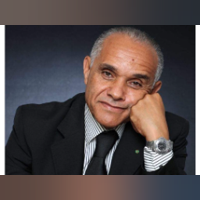
Directeur Technique et du Développement de la Confédération Africaine d'Athlétisme. Passionné du Maroc, passionné d'Afrique. Concerné par ce qui se passe, formulant mon point de vue quand j'en ai un. Humaniste, j'essaye de l'être, humain je veux l'être. Mon histoire est intimement liée à l'athlétisme marocain et mondial. J'ai eu le privilège de participer à la gloire de mon pays .


8100

33.0

Chapter 3: The Latticework Theory- Reality as an Interdependent, Multi-Layered System 149

The conceptual framework commonly referred to as “Latticework Theory” integrates formal ontological analysis with applied epistemic reasoning. Willard Van Orman Quine’s analytic ontology, as outlined in "On What There Is" (1948), establishes rigorous criteria for identifying entities, categories, and relations within complex systems, providing a foundation for understanding which elements and interactions are structurally significant. Charlie Munger’s notion of a “latticework of mental models,” as articulated in his speeches and compiled in "Poor Charlie's Almanack" (2005), complements this by advocating for the disciplined integration of knowledge across domains to improve strategic decision-making under uncertainty. Together, these perspectives underpin a framework in which authority, information, and incentives propagate across layers of agents and institutions, producing outcomes that cannot be inferred from the isolated properties of components. Deviations at any node can be corrected when feedback is accurate, timely, and actionable. Failures occur when feedback is impaired, misaligned, or ignored. This framework provides a lens for analyzing industrial operations, national governance, financial systems, and technological risk in a unified, empirically grounded manner. The Toyota Production System (TPS), developed by Taiichi Ohno and detailed in "Toyota Production System: Beyond Large-Scale Production" (1988), exemplifies this framework at the operational level. TPS integrates authority, information, and incentives to align local actions with system-level objectives. The andon system, which allowed assembly line workers to halt production upon detecting defects, transmitted local observations directly to organizational decision nodes, enabling immediate corrective action. Empirical analyses, including studies of manufacturing efficiency, demonstrate that this configuration reduced defect propagation, accelerated problem resolution, and increased overall reliability compared to designs that optimized individual workstations independently. For instance, companies implementing TPS principles have reported defect rate decreases of around 60 percent, reflecting the structural alignment of authority, information, and incentives rather than isolated interventions. Singapore under Lee Kuan Yew illustrates the same principle at the national level. Between 1965 and 2020, per-capita GDP rose from approximately $517 to $61,467 in current U.S. dollars. By 2020, public housing coverage reached approximately 78.7% of resident households. Scholarly analyses attribute these outcomes to a central coordinating constraint: administrative meritocracy combined with credible enforcement. Recruitment and promotion emphasized competence and performance, anti-corruption measures ensured policy credibility, and social and industrial policies aligned skill formation, investment, and housing. These mechanisms were mutually reinforcing, producing system-level outcomes that cannot be explained by any single policy instrument but rather by ontological reasoning. Financial markets and strategic advisory practice demonstrate analogous dynamics. Many successful hedge fund managers and macro investors, such as George Soros (who studied philosophy with a strong historical focus) and Ray Dalio (who emphasizes historical pattern recognition in his investment principles), draw on deep historical expertise. Studies and industry insights highlight the value of humanities backgrounds in finance, with hedge funds actively recruiting liberal arts graduates for their ability to provide broader contextual understanding. This expertise enables pattern recognition across interacting variables, resource constraints, institutional incentives, technological change, political legitimacy, leadership behavior, and stochastic shocks, while facilitating analogical judgment about systemic regimes. George Soros’s concept of reflexivity formalizes the empirical reality that market prices and participant beliefs mutually influence one another. In feedback-dominated systems, quantitative models fail unless interpreted in historical and structural context. Historical insight therefore provides an advantage in long-horizon investing, geopolitical risk assessment, and capital allocation, as evidenced by the track records of such practitioners. The Boeing 737 MAX incidents of 2018 and 2019 provide a negative case that clarifies the ontology’s conditions. Investigations revealed that the MCAS system relied on single-sensor inputs, information about its behavior and failure modes was inconsistently communicated to operators, and engineering authority was constrained by commercial and schedule pressures. Incentives prioritized rapid certification and cost containment over systemic reliability. Local anomalies propagated to produce two hull-loss accidents with 346 fatalities. Analysis demonstrates that robust interconnection alone is insufficient. Outcomes depend on the alignment of authority, accurate information, and incentive structures that empower corrective action. Across manufacturing, national governance, finance, and technology, the same structural principle emerges: effective outcomes require the alignment of authority, information, and incentives, with feedback channels possessing sufficient fidelity and remedial capacity. Misalignment in any dimension produces fragility and amplifies errors. The Orbits Model operates within this substrate, with inner orbits requiring empirical validation and outer orbits constrained by systemic coherence. Empirical evaluation relies on archival records, institutional data, and observable system outcomes, providing a unified framework for analyzing complex adaptive systems. The Latticework framework thus integrates ontology, applied epistemics, and structural empirics, combining theoretical rigor with practical observation across domains.

Theosophy 201

Theosophy is a spiritual movement that emerged in the late nineteenth century with the ambition of bringing religion, philosophy, and science into a single, coherent vision of truth. Drawing on both Eastern and Western mystical traditions, it promotes the idea of a timeless or “perennial” philosophy underlying all world religions. Central to this outlook is the belief that the soul evolves over long cycles of reincarnation and karma, gradually awakening to deeper spiritual realities. The movement was formally established in 1875 by Helena Petrovna Blavatsky (1831-1891) and her collaborators with the founding of the Theosophical Society, and it went on to shape many of the spiritual, philosophical, and artistic currents of the modern era. At the heart of Theosophical thought is the idea of a divine, impersonal Absolute that lies beyond the limits of human understanding—an idea comparable to the Hindu concept of Brahman or the Neoplatonic One. From this unknowable source, all levels of existence are said to unfold, descending through a hierarchy of spiritual planes and beings until they manifest in the material world. This cosmological vision reflects strong influences from Indian philosophy, especially Vedanta and Buddhism, while also incorporating elements of Western esoteric traditions such as Neoplatonism, Hermeticism, and Kabbalah. A defining feature of Theosophy is its emphasis on spiritual evolution. In The Secret Doctrine (1888), Blavatsky’s most influential work, she presents an elaborate account of planetary and human development governed by the laws of karma and reincarnation. According to this framework, humanity is currently passing through the fifth of seven “root races,” each representing a stage in the unfolding spiritual and psychic capacities of the species. The ultimate goal is a conscious return to divine unity, achieved through inner transformation and esoteric knowledge. Blavatsky maintained that her teachings were not purely her own but were inspired by highly advanced spiritual beings known as the Mahatmas or Masters. Said to live in remote regions of the world, these adepts were described as guardians of ancient wisdom and exemplars of humanity’s spiritual potential. Whether understood literally or symbolically, they expressed the Theosophical ideal of enlightenment and supported the Society’s mission of awakening latent spiritual capacities in all people. The influence of Theosophy reached well beyond the boundaries of the Theosophical Society itself. It played an important role in introducing Western audiences to ideas such as karma, reincarnation, and subtle energy systems, and it helped spark broader interest in Eastern religions. Its impact can be seen in the work of artists like Wassily Kandinsky (1866-1944), composers such as Gustav Holst (1874-1934), and spiritual thinkers including Rudolf Steiner (1861-1925), who later founded Anthroposophy, and Jiddu Krishnamurti (1895-1986), who was once proclaimed a World Teacher before ultimately distancing himself from the movement. Despite internal disagreements and the often complex nature of its teachings, Theosophy laid important groundwork for the later New Age movement and for modern forms of spiritual pluralism. Its effort to present a shared mystical heritage across cultures anticipated contemporary conversations linking science and spirituality, psychology and mysticism, and Eastern and Western worldviews. In this sense, Theosophy is more than a historical curiosity. It represents an ambitious attempt to reinterpret ancient wisdom for a modern world, grounded in the belief that spiritual truth is universal and that humanity’s deeper purpose lies in awakening to its own divine origins.