Think Forward.

Morocco, this quiet conviction that still needs to be shared... 7704

The saying "One who believes in himself has no need to convince others" is commonly translated into French as "Celui qui croit en lui-même n’a pas besoin de convaincre les autres". It evokes a quiet confidence, inner strength, and the stability of one who moves forward without ostentatious display. This idea finds a particular resonance in present-day Moroccan reality: a country confident in the course it has set, proud of its multiple and diverse advances, convinced of its diplomatic legitimacy, strong in its alliances and international roots. However, it faces a major internal challenge: persuading its own youth, even a large part of its population, of the meaning and scope of its progress and achievements. Winning the trust of the youth, and thereby enabling them to gain confidence in themselves and a shared, radiant, and prosperous future, is a true work in progress. Moroccan diplomacy, an example of affirmed confidence, demonstrates an unashamed resolution facing any trial. It is characterized by unwavering determination, both decisive and pragmatic. Internationally, Morocco displays recognized strategic serenity. Under the Royal impulse, its diplomacy based on dialogue and continuity stands as a model of balance between cooperation, firmness, and self-confidence. At the UN, for example, Morocco’s proposal of autonomy in the Sahara issue has become a normative reference, accepted by nearly all international partners. This diplomatic success perfectly illustrates the saying. Confident in its correctness, Morocco did not need to resort to excessive demonstrations to impose its position. Pragmatism, patience, endurance, and determination are the watchwords on this matter. Today, Minister Bourita and Omar Hilal, the Kingdom’s ambassador to the UN, are even seen as stars and are sought after as such at every public appearance, so convincing and credible are they. But is it the same in all fields and sectors? Beyond the Moroccan Sahara issue, the Kingdom is deploying active economic and parliamentary diplomacy, weaving a solid network of alliances in Africa, Europe, the Middle East, and progressively in Latin America and Asia. This partnership-based strategy illustrates this "conviction tranquille" which seeks less to convince than to consolidate achievements. Renewed agreements with the European Union or strengthened cooperation with China, India, Brazil, African countries, and others demonstrate the solidity of this approach. Yet beyond that, Morocco endures a striking paradox. Its most urgent internal challenge is to regain, perhaps even build, the trust of its youth. Confidence in themselves first and foremost, but also confidence in the country. This confidence shown outwardly and perceived positively internally contrasts with the impatience and skepticism of some Moroccan youth towards other aspects of life. Faced with socio-economic challenges such as unemployment, insecurity, and the perceived slowness of reforms, many young people express deep doubt about their future. Alongside the endemic weakness in communication, the poverty of arguments, the apathy of official media, and the excesses of many others, young people often also endure nihilistic discourse spread by some media voices or social networks, which undermines their confidence and fuels disengagement and fatalism. This paradox of a state confident on the world stage but constantly needing to convince internally lies at the heart of the situation. Despite government efforts to improve employment and public services, recurring individual or collective protests reflect this malaise—a deficit in civic and chronic confidence. How can Morocco then revive common faith and evolve this paradigm? It seems essential to invest in authentic dialogue with youth so that they fully feel the scope and benefits of the progress made. Initiatives such as renewed civic education programs, support for youth entrepreneurship—especially in rural areas—thorough revision of the school curriculum, and increased youth participation in decision-making bodies are some examples underway or to be developed. The easing of certain regulations regarding taxation, currency exchange, e-commerce, business operations, and digital currencies would surely open up new horizons for this connected youth, eager for success. This would certainly increase this much sought-after confidence capital, crucial today. Why not immediately take the measures that will inevitably be taken in ten years? Then it will be too late. Moroccan youth want to undertake and live at the pace of the world. The saying "Celui qui croit en lui-même n’a pas besoin de convaincre les autres" would thus become a call to reinvent the bond between the State and its youth: create a collective energy of confidence, not only manifested outwardly but also lived and felt inwardly, to build a shared future. This seems to have started today. Recent decisions by the Council of Ministers to encourage youth to join institutions, through the revision of the organic law of the House of Representatives, bear witness to this. Lowering the youth age cap from 40 to 35 is a major advance. The possibility for young people to run in elections without party affiliation, as well as the promised financial support for non-partisan youth, are strong incentives against the lethargy that had long taken hold in Moroccan political life. The matter is settled: either political parties open up to youth, or they will be condemned to occupy only backbencher seats. If young people get involved, they will participate in the change they dream of and impose it. Their level of confidence will only increase. Now, let us wait for the parliamentary debates that will finalize all this. This is an important criterion: for once, we will have a law adopted about nine months ahead of elections. Provided no one throws a wrench in the works. Only then will confidence be built, like a transparent, inclusive, participatory, and lasting foundation. One clarification though, the phrase "One who believes in himself has no need to convince others" is generally attributed to Lao Tzu (or Laozi), the Chinese sage and founder of Taoism. However, it is not authenticated as an excerpt from the Tao Te Ching. No matter, the saying takes on its full meaning here anyway.
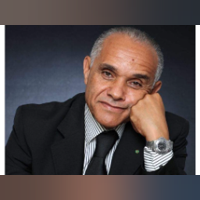
Aziz Daouda Aziz Daouda

Aziz Daouda

Directeur Technique et du Développement de la Confédération Africaine d'Athlétisme. Passionné du Maroc, passionné d'Afrique. Concerné par ce qui se passe, formulant mon point de vue quand j'en ai un. Humaniste, j'essaye de l'être, humain je veux l'être. Mon histoire est intimement liée à l'athlétisme marocain et mondial. J'ai eu le privilège de participer à la gloire de mon pays .


9300

33.0

Eternal Morocco, Unbreakable Morocco: The Identity That Triumphs Over Exile... 294

There are affiliations that geography dissolves over time, and others that it strengthens as distance sets in. The Moroccan experience undoubtedly falls into the second category. Across generations, sometimes up to the third or fourth, a phenomenon intrigues. Women and men born far from Morocco continue to recognize themselves in it, to feel attached to it, to project themselves into it. They have left the country or never lived there long-term; they were born far away, but Morocco has never left them. How to explain such persistence? Why does this loyalty cut across social classes, faiths, degrees of religiosity, and even nationalities acquired elsewhere? How is a memory so indelible? How does it withstand the test of time, distance, and new cultural acquisitions, if not through the profound weight of national consciousness? Morocco is not merely a modern state born from 20th-century recompositions. It is an ancient historical construct, shaped by centuries, even millennia, of political and civilizational continuity. Dynasties like the Almoravids, Almohads, Merinids, Saadians, or Alaouites forged a stable political and symbolic space whose permanence transcends apparent ruptures. This historical depth irrigates the collective imagination. It gives Moroccans, including those in the diaspora, the sense of belonging to a history that precedes and surpasses them. Being Moroccan is not just a nationality. It is an inscription in a continuity, a composite identity forged by inclusion. Moroccan identity has been built through sedimentation. It is Amazigh, African, Arab, Andalusian, Hebraic. These are layers that coexist in a singular balance, complementing and interweaving without exclusion. This ancient plurality explains Moroccans' ability to embrace diversity without identity rupture. Thus, a Jewish Moroccan in Europe or a naturalized Muslim elsewhere often shares a common affective reference to Morocco, not out of ignorance of differences, but because they fit into a shared historical and geographical framework. This inclusive identity enables a rarity: remaining deeply Moroccan without renouncing other affiliations, with the monarchy serving as a symbolic thread. In this complex architecture, the monarchy plays a structuring role. Under Mohammed VI, it embodies historical continuity and contemporary stability. For Moroccans abroad, the link to the Throne goes beyond politics. It touches the symbolic and the affective, a dimension fully grasped only by Moroccans. It acts as a fixed point in a shifting world, offering permanence amid changes in language, environment, or citizenship. This transmission occurs invisibly in the family, in rituals. It is not a memory but living, sensitive memories. The diffusion and transfer also manifest in cuisines with ancestral recipes, in music and sounds, in living rooms echoing with Darija, through summers "back home," gestures, intonations, moussems, or hiloulas. Moroccan identity is transmitted less through discourse than through sensory experiences: tastes, smells, rhythms, hospitality. Thus, generations born abroad feel a belonging not formally learned, an active loyalty blending affection and claimed will. The diaspora does not settle for abstract attachment. It acts. Financial transfers, investments, public commitments, and defense of Moroccan positions internationally bear witness. This operational patriotism extends affection into action, a duty to the nation, a Moroccan loyalty. Moroccans may be exiles, but never uprooted. For the Moroccan diaspora, attachment transcends oceans. Even in political, economic, or academic roles abroad, Moroccains carry their country of origin explicitly or implicitly. The otherness of host societies reinforces this identity. The external gaze consolidates this sense of belonging to a culture so distinctive that it crystallizes, is claimed, and magnified. This phenomenon, intense among Moroccans, compels us to name what went without saying in the homeland: a continuity at a distance. Neither frozen nostalgia nor mere inheritance, this relationship is a profound dynamic. Morocco is not just a place; it is the bond that spans generations, adapts without diluting, reminding us that exile does not undo all affiliations. Morocco is in our daily lives, in a perennial, solid, and unyielding memory that defies borders and time.

My Pain Qualifies Me 424

At an immersion meeting for psychoanalysts, I heard the phrase: “My pain qualifies me,” and immediately, like a lightning bolt, it struck deeply within me and, with the speed of a thought, made complete sense. I was able to perceive it with a clarity that, honestly, I don’t recall ever experiencing before in my entire life. It was so intense that I felt certain I was in the right place, investing in a career that, until not long ago, I couldn’t have imagined myself pursuing even in my dreams. Although this discovery is recent, given the fascination it caused me, perhaps it had been stored in my unconscious all along, likely as a repressed desire, even due to my own prejudice regarding matters of the human mind. Because of unsuccessful past experiences, I had come to doubt the effectiveness of psychotherapy, even considering it at times as a way of making easy money at the expense of others’ suffering. I believed that a person in distress could simply rely on friends and family to vent, share their problems, and relieve tension, while medications prescribed by doctors would do their part. However, upon hearing that my pain qualified me, now, of course, with a different mindset and studying psychoanalysi, I felt as though I was experiencing a kind of gnosis. I know my pain, or rather, my pains, and I fully understand this statement. When we set out to help someone who carries their own pain, we can even through a simple look, convey to the analysand that we understand what they are going through. This phenomenon is what we call countertransference: emotions, feelings, and thoughts that arise in our unconscious in relation to the analysand. These feelings and emotions are developed by the therapist during a therapy session. In that space, we become aware that there are two souls facing each other, one pouring out their thoughts, anxieties, and traumas, and the other offering attentive listening, care, and guidance, helping them find their path and providing tools to manage their struggles and move forward in life as best as possible. And for the therapist who has experienced, or still experiences pain, it also becomes an opportunity for self-analysis, which undoubtedly gives full meaning to the exchange that takes place between two souls standing face to face with their pains.

AFCON 2025: The Trophy that Sets the Savannah Ablaze.. 525

There are moments when football stops being a game and becomes a brutal revealer of a continent's institutional and political fragilities. The current crisis surrounding the Africa Cup of Nations (AFCON) is the perfect illustration. Between the rigorous application of regulations, the credibility of the Confederation of African Football (CAF), media pressure, and reactions from the Senegalese Football Federation, the affair now extends far beyond sports into a much broader realm, intertwining law, sovereignty, and diplomacy. At its origin, a disciplinary decision that, under normal circumstances, would have been a simple sporting dispute. But the context, symbolism, and players involved have turned this file into a full-blown crisis. The CAF, as the regulatory body, faces a fundamental demand: to enforce its own rules without yielding to pressure. Any weakness in applying the law would open the door to widespread challenges to its authority, including revisiting past decisions and verdicts. In this sense, the decision taken, however contested, fits into a logic of institutional preservation. However, law, as essential as it is, cannot be entirely divorced from its political and emotional environment. Today's events provide perfect proof. The Senegalese side's reaction, perceived as an offense or challenge to the decision, reveals a deeper malaise: a sense of injustice, real or supposed, amplified by a public opinion whipped into a frenzy by a flood of increasingly belligerent statements and remarks. Social media, TV panels, and certain official discourses have turned a legal matter into a symbolic clash between nations. In response, the Royal Moroccan Football Federation remains silent, stoic, calm, and discreet. This is where the main danger lies. Beyond texts and procedures, it is historical relations, built over decades of solidarity and brotherhood, that are now exposed to unnecessary tension. African football, long presented as a vector of unity, risks here becoming a factor of division. And this drift, if not contained, could leave lasting scars. That's precisely what the occult forces, or not so occult, stoking the fire are aiming for. In this climate of escalation, the temptation is great for each side to harden its position. Yet, the history of sports conflicts shows that escalation is rarely a solution. It weakens institutions, undermines competition credibility, and, above all, distances the public from the essentials: fair and credible play. The central question then becomes: how far will this showdown go? A peaceful outcome necessarily requires a return to calm and reason. This does not mean renouncing one's rights or silencing disagreements, but framing them in a controlled manner. Appeal mechanisms exist, whether through direct sports jurisdictions or, if necessary, the international body that is the Court of Arbitration for Sport (CAS). Its role is precisely to settle such disputes with impartiality and rigor. Awaiting the verdict from this body, even if it is slow, means accepting that law takes precedence over emotion. It also means recognizing that the credibility of African football's components depends on their ability to resolve disputes in line with the rules they have set for themselves. Any other path, pressure, excessive politicization, or media confrontation, would only entrench and worsen the crisis. At its core, this affair raises an essential question about the governance model for African football. A model subject to power plays and momentary emotions, or one based on solid, respected institutions capable of enforcing the law, even when it stings? Ultimately, African football bodies didn't fall from the sky. They are the emanation of a democratic process in which Africa's 54 countries participate in good conscience. The answer to this question will determine not only the outcome of this crisis but also the future of football on the continent. Beyond the present case, the credibility of an entire sports architecture is at stake. In the immediate term, one thing is clear: the time for appeasement must follow that of confrontation and escalation. Preserving the essentials and consolidating fraternity among African peoples is worth far more than a sports victory, even an Africa Cup of Nations trophy. Alas, this is beyond those whose vision doesn't extend past the end of their nose. The CAS will speak soon. Then we'll see who is right or wrong under strict application of the law, with no further recourse possible except a return to reason. Wouldn't it be better, in the meantime, to keep a cool head, maintain lucidity, and calm down? A trophy is only raised when it is deserved—truly deserved.

Faceless War, Disoriented World, Trapped Citizen... 528

There was a time when war made sense, or at least appeared to. It pitted identifiable camps against each other, produced winners and losers, and sometimes ended in peace, even imperfect peace, sometimes signed in a train car. Before that, it unfolded in battles for which appointments were even set, far from civilians. They observed each other, sized one another up, and collectively decided the start time of the clashes. A true war of the brave. There were always winners and losers. Thank cinema for reliving those scenes, more or less romanticized, but scenes nonetheless... From World War I to the Cold War, closer to us, conflicts, however tragic, followed a certain historical intelligibility. Since then, joysticks have crept in, and computers have taken over... Things changed; dare we say: they dehumanized. Contemporary war, as it emerges in the triangular confrontation between the United States, Israel, and Iran, seems to have broken with that old logic. It's no longer just complex: it's become ungraspable, unintelligible to ordinary mortals like us. It doesn't just oppose forces; it dissolves the very landmarks that once allowed us to understand what war is. Who is the victor? Who is the vanquished? The question feels almost out of place. For this modern war produces no clear verdict, but a succession of competing narratives saturated with propaganda, disinformation, and what we now call "fakes." Truth itself becomes a battlefield, fragmented, manipulated, inaccessible. Lies are baked into the system. Reality wavers and fades. Yet lives are lost in anonymity, buildings surely turned to mush, billions of dollars vanished, likely burned in milliseconds by traders, exploded without a trace except by making poor people everywhere. In this war, roles seem interchangeable. One of those who triggered the hostilities seeks to extricate itself, as if suddenly discovering the vertigo of what it initiated. The second? Who knows. Its war logic has long been impenetrable. It presents itself as the aggressed party, refuses all negotiation, or pretends to, while expanding the theater of operations. The one retaliating, the third protagonist, loses its leaders, gets hammered daily for over a month, yet seems driven by an endless escalation logic too. Toward what horizon? It strikes beyond its declared adversaries without provoking proportional reactions. Part of its war is waged against those who don't want it and resist with all their might, without retaliation. How long will this last? We must ask: what does "winning" mean in a war with no clear limits or identifiable final objective? We are thus confronted with a profound mutation of war: it is no longer a means in service of a political end, as once thought, but an autonomous, self-sustaining process, almost abstract. A war that no longer aims for peace, but for its own perpetuation. And yet, this distant war is not so distant. Beyond strategies and rhetoric, it's civil societies that pay the price. Here in Morocco, elsewhere in the world, the effects hit with silent brutality. Energy prices climb, threatening psychological thresholds unthinkable just forty days ago: 20 dirhams per liter of gasoline soon. Tomatoes, fish, chicken, lentils, and the rest will follow... Anxiety is very real. The economy becomes war prolonged by other means. The citizen becomes an adjustment variable. It's they who foot the bill. Even when they don't want war, they must still pay for it, wherever they are, even at the ends of the earth. Faced with this, governments seem powerless. They dust off old solutions, already tested and already ineffective, as if economic history itself were trapped in eternal recurrence. This political impotence amplifies the sense of injustice and abandonment. Thus arises the question, almost metaphysical: what have we done to deserve this? This so-human question may be ill-posed. For it assumes an immanent justice in the world's course, a moral logic linking our acts to our collective fate. Yet the tragedy of our era is precisely the absence of that coherence. The world is not just: it is unstable, chaotic, traversed by forces beyond us. Perhaps that's the price of calling ourselves democratic, living in or under democracies... or not. Perhaps we need to rephrase the question. Not: why is this happening to us? But: how to keep living in a world where meaning slips away beneath our staggering feet? That is probably the true philosophical challenge of our time. Not understanding war, for it now escapes classical understanding, but preserving, despite everything, a capacity to think, to resist confusion, to refuse letting lies become the norm. If modern war is faceless, endless, and truthless, then the only possible victory is internal to each of us: upholding, against all odds, a demand for lucidity, a touch of humanism, hope, a dream.