“Peace and Return with Dignity”: A Sahrawi Collective Calls for Voluntary Return to Morocco 7800
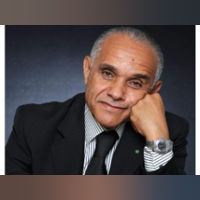
Founded in June 2025 in Nouadhibou by Sahrawis living in Mauritania, Europe, and the Tindouf camps in Algeria, a collective named “Peace and Return with Dignity” seeks to promote the voluntary return of “refugees” to Morocco. Under the leadership of Badi Abdelaziz—who presents himself as a former separatist military cadre turned opponent of the Polisario Front, the group issued an appeal in September 2025 to the Moroccan authorities, requesting facilitation of repatriation for Sahrawis under safe and dignified conditions. While Moroccan press outlets relayed this initiative, it has remained largely absent from the media in the neighboring country and its proxy, for obvious reasons.
The collective denounces the “difficult” and “inhumane” conditions endured by populations in the Tindouf camps, blaming the Polisario’s oppressive administration and calling for guarantees of safety and dignity for those wishing to return. This initiative highlights both humanitarian concerns already raised by several NGOs and the voices of Sahrawis themselves seeking to break free from dominant structures (the Polisario Front and the Algerian military authorities). The stakes are therefore both humanitarian and political.
According to Badi Abdelaziz, the initiative aligns with the recommendations previously emphasized by Morocco’s UN ambassador, Omar Hilale, who underlined that "refugee" return requires an official census, a demand made for years by the UN High Commissioner for Refugees (UNHCR) but never carried out, blocked by Algeria’s military junta. A census is considered a prerequisite to identify those eligible for return. As widely known, not all those held in Tindouf originate from the region. The collective therefore aims to ensure a transparent and rights-based return, while challenging the Polisario’s political control over the camps.
The population, weary of harsh living conditions, is increasingly aware of the false propaganda and of its exploitation by the Polisario separatists for agendas far removed from official rhetoric. UN agencies, in their Sahrawi Refugees Response Plan 2024-2025, estimate funding needs at nearly USD 104 million to assist those held in Tindouf, underlining their total dependence on international aid. These figures reflect the gravity of the situation, which fuels both diplomatic and humanitarian debates on the so-called Western Sahara issue, especially as many reports, backed by evidence, stress the systematic diversion of aid.
The group’s call must also be seen in the light of the geopolitical evolution of this dossier with its multiple regional and international ramifications.
The international community, and major powers first and foremost, are weary of the situation Algeria created and continues to maintain at exorbitant cost, at the expense of its own development, the well-being of its people, and regional security.
In this context, the roles of Mauritania and Algeria are central. Mauritania, though relatively neutral, nevertheless hosted and tolerated the launch of this collective in Nouadhibou, perhaps signaling a shift or a willingness to open more pragmatic dialogue. Algeria, on the other hand, remains the Polisario’s staunchest political and military backer. The reality today is that Algeria’s military junta uses this conflict to boost regional influence, counter Morocco’s growing weight, and above all export its failures and chronic shortcomings, despite the country’s immense wealth.
The Morocco-Algeria rivalry, fueled solely by Algiers, is further exacerbated by this issue, blocking regional progress such as Maghreb reunification and broader economic integration. The conflict hampers cooperation on trade, security, and migration, at a time when the region faces shared challenges like terrorism, irregular migration, and climate change.
International actors also play a pivotal role and increasingly seem eager to fast-track a resolution. The United States, France, Spain, the United Kingdom, and other EU, African, Asian, and Latin American countries have clearly aligned with Morocco’s position, recognizing the Moroccan sovereignty of the territories in question on the basis of factual and objective arguments. The recent visit of Minister Bourita to Beijing also appears to support this trend.
Officially, however, the status quo remains, at least until the next UN Security Council meeting on the matter. Morocco has consolidated its network of support thanks to its autonomy plan, arguing that it represents the realistic solution that respects territorial integrity and national unity. This proposal appeals to partners faced with the chimera of independence promoted by Algeria’s proxy.
Security considerations weigh heavily as well. The Sahara is a strategic corridor for drug and arms trafficking, raising alarms among Western powers. Stability in the area is therefore crucial not only for local populations but also for regional and international security.
The “Peace and Return with Dignity” collective thus offers a fresh internal perspective: a significant portion of Sahrawis rejects prolonging the conflict at the cost of continued suffering. Its endorsement of autonomy within the Kingdom and its clear call for voluntary return are signals that cannot be ignored in the regional diplomatic calculus.
Still, it remains difficult to assess the collective’s exact representativeness compared with other factions, whose influence and independence are often hard to gauge. Moreover, the regional context, marked by tensions such as those between Mali and Algiers, contradictory interests, and major security challenges, continues to complicate rapid progress.
In the meantime, those held in Tindouf camps continue to live in precarious conditions, underscoring the urgency of reinforced humanitarian action. Only Morocco’s proposed political framework ensures rights and respects the dignity of the affected populations. Balancing political settlement, strategic ambitions, and humanitarian urgency remains the key to unlocking this protracted issue, one whose resolution will largely shape the future stability of North Africa. It is in this context that upcoming Security Council debates on this artificial conflict, which has dragged on for far too long, should take place.