For once, the PJD is proposing to set up a national sports council 9449
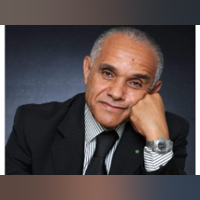
It's not customary, but this Sunday, April 6, 2025, the article is about sports. I don't usually like to talk about it unless I'm forced to. It's paradoxical, given that I've dedicated my life to sports and made it my profession. Many are convinced that it's very difficult to make changes, as mediocrity is deeply rooted, good intentions are disrupted, undesirable skills are present, dedication is not valued, and honesty is perceived as questionable.
The opportunity arose due to two political parties, as it's not common for both parties to show interest in sports within a week. The PJD and the FFD have done so. I found this very interesting because usually, parties only address the subject after unacceptable results. Then, succumbing to emotion, they take advantage of the situation to question the government and, for a while, take a stand, criticizing the responsible minister and blaming the federations. This was the case recently following the disappointing results at the Paris Olympics. Afterwards, there was complete silence.
During the preparation of electoral campaign programs, some parties, though rare, mention sports in simple narratives that are generally devoid of meaning; just to say it's important, without specifying why or how they plan to address it once in parliament or government. This quickly translates into a lack of vision in the inaugural speeches of prime ministers, now chiefs of government. We settle for a few phrases picked up here and there to say that sports are not forgotten.
From memory, I can cite a few exceptions that confirm the rule. The Ittihad Addoustouri, in its program at its creation, dedicated a good chapter to sports. I contributed significantly to it. The USFP, during the last elections, also invited me to a reflection that served as the basis for the party's program. I also remember participating in similar work a long time ago with the Istiqlal under the impetus of Si Belmahi, the valiant president of the FRM cycling federation.
This time, it's the PJD that has taken a stand by proposing, according to the press, a bill to create a National Sports Council in place of the current responsible department, namely the small sports department under the Ministry of National Education, Preschool, and Sports.
The structure of Si Akhanouch's Government and its revised version continues to astonish, reducing sports to a simple department without prominence among the prerogatives of a ministry bogged down in endless reforms, without us seeing the end of the tunnel. Since independence, national education has been in perpetual reform. The latest one dates back to just last week. Let's hope it's not the last.
Since this attachment, the two ministers in charge seem not to have time for sports.
The PJD has come boldly with this project, which is not new. The first sports conferences in the early sixties already mentioned it. Since then, sports have experienced at least 14 or 15 upheavals, going from an independent department to being attached to youth, national education, passing through a secretariat attached to the prime minister. It was even attached to labor during the time of the late Arsalane El Jadidi.
Sports will continue on its path with more or less success, but mostly repetitive failures. The only time it experienced some stability was during the time of the late Abdellatif Semlali, who still holds the record for longevity as a sports official. His tenure as Secretary of State and then Minister lasted eleven good years. We talked then about a sports takeoff. It was a relatively happy period that saw a restructuring of the sports field with sponsorship, the second round in the World Cup, the creation of the National Athletics School, and a resurgence of youth in more than one sport discipline.
The PJD, which led the government, didn't it realize the malaise that sports were experiencing during its ten years of glory? Better late than never.
Moving to a sports management system that escapes political time is a necessity. It's an evident demand made by many specialists for a long time, without the political world following up. Sports time is longer than political time. Preparing high-level athletes requires 7 to 8 years of continuous and linear work. Sports performance requires time and stability. The number of ministers in charge of sports who have succeeded each other in a short period shows how much we need this stability, and that's one of the flaws, but not the only one.
Due to ignorance of this history, some say that the project is inspired by what happened in France with the creation of an agency to handle sports. This is completely false. The demand in Morocco is much older. For about forty years, it has been discussed. Already during the government of Driss Jettou, it was on the table but did not succeed for many reasons, including a certain resistance that does not want this highly promising sector to leave the political sphere.
National sports can only thank the PJD for this bold move, even if it doesn't have much chance of succeeding, given how things are going in the current parliament. The PJD, being largely in the minority and without real support from its partners in the opposition, will have at least succeeded in opening the debate in the right direction. The supporters of Si Benkirane rightly refer to the royal letter of 2008. They cite the law 30.09 without saying that it was catastrophic for national sports. This could be the subject of a future article.
The second party that raised the issue of sports did so just yesterday. It is the Front of Democratic Forces. The party, under the leadership of Si Mustapha Benali, has brought back to the forefront the discussion of public sports policies with an extremely wide and varied panel of specialists and sports leaders, and in the presence of representatives from political parties of the same persuasion. The debates were of very good quality with a broad consensus around solutions that seem obvious and the surprise that they are not being implemented. This kind of debate is as necessary as it is urgent. Morocco, which makes sports and football in particular a driver of development, cannot wait any longer, lest it see its colossal efforts wasted and thus dangerous for its near and distant future.