Think Forward.

Bipartisan U.S. Bill Seeks to Designate Polisario Front as Foreign Terrorist Organization 11225

A promis is a promise. As he had already announced a few weeks ago, Joe Wilson, a Republican senator representing South Carolina, has just introduced a bipartisan bill in the United States House of Representatives aimed at designating the Polisario Front as a foreign terrorist organization. This bill is bipartisan because it is also signed and proposed by California Democratic Senator Jimmy Panetta. The project, titled "Polisario Front Terrorist Designation Act," aims to list the Polisario on the U.S. list of terrorist organizations. Being on this blacklist automatically triggers severe sanctions, such as the prohibition of any material or financial support, freezing of assets under U.S. jurisdiction, and entry bans to the United States for members of the organization. By extension, the vote on this bill will also have a direct and significant impact on the host country of the Polisario and its potential supporters. The content of the bill is simple and clear. The Polisario is described as a Marxist militia supported by Iran, Hezbollah, and Russia. It is asserted that this militia destabilizes the Western Sahara region and threatens the security of the Kingdom of Morocco, a steadfast historical ally of the United States. The bill also highlights alleged links between the Polisario and extremist groups in the Sahel, while mentioning serious accusations of human rights violations committed by the militia. Senators could have enriched the text by recalling the origins of the movement, notably the support from Cuba and the generosity of Gaddafi towards it for decades. This will likely be discussed during debates. In the current geopolitical context, the Polisario is perceived as an Iranian proxy hostile to regional stability, particularly due to its involvement in smuggling networks and terrorist activities in the region, facts that are well documented. The text thus seeks to officially recognize the Polisario as a terrorist entity, which would allow, besides international sanctions, to strengthen security cooperation against this separatist movement. The initiative has a very strong chance of succeeding after, of course, satisfying all necessary steps and procedures. The bill was introduced on June 24, 2025, and is currently under review by the Foreign Affairs and Judiciary Committees of the House of Representatives. The U.S. legislative process involves several steps: committee review and approval, House vote, Senate passage, and then the President's signature. The exact duration of the process varies, but committee review usually takes several weeks or months, followed by votes in plenary sessions. The bill seems to enjoy strong support, as it is sponsored by both a Democrat and a Republican, eliminating partisan division at this level. It could be adopted in the coming months, although nothing guarantees a rapid or certain progression, as political and geopolitical debates could influence the timeline. Adopting this law would mark a historic shift in U.S. policy on Western Sahara, with significant diplomatic and security implications. The United States, having already officially recognized the Moroccan sovereignty over the concerned provinces, would thus strengthen its position and lead to increased support for Morocco. The resolution of the artificial conflict, which has lasted half a century over the southern provinces of the Kingdom, has never been closer. The Republican majority controls both the House and the Senate, with 218 seats out of 435 in the House and 53 out of 100 in the Senate, which would facilitate the bill's passage. Moreover, Republicans are very disciplined and strongly support this initiative, notably due to their loyalty to Donald Trump and the expressed support of Secretary of State Marco Rubio, who aligns with Moroccan positions. The bill introduced by Senators Joe Wilson and Jimmy Panetta therefore has a strong chance of quickly succeeding. The text benefits from bipartisan support, increasing its chances of adoption without major obstacles. The geopolitical context, reinforced by recent reports from American think tanks Heritage Foundation and Hudson Institute demonstrating the terrorist nature of the Polisario and its links with Iran and other hostile actors, politically legitimizes this proposal. The bipartisan bill aiming to designate the Polisario as a terrorist organization thus finds its full justification given the proven links with actors hostile to American and Moroccan interests, as well as its destabilizing activities in the region. Once the law is adopted by both chambers, the President has ten days to sign it, which can accelerate its enactment if the executive is favorable, which seems very likely.
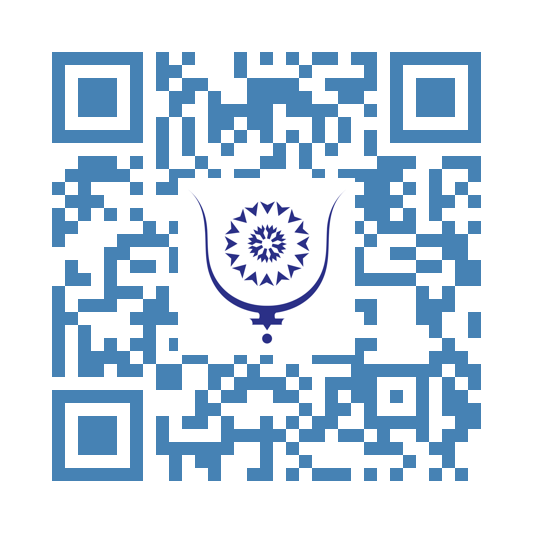
Aziz Daouda Aziz Daouda

Aziz Daouda

Directeur Technique et du Développement de la Confédération Africaine d'Athlétisme. Passionné du Maroc, passionné d'Afrique. Concerné par ce qui se passe, formulant mon point de vue quand j'en ai un. Humaniste, j'essaye de l'être, humain je veux l'être. Mon histoire est intimement liée à l'athlétisme marocain et mondial. J'ai eu le privilège de participer à la gloire de mon pays .


9500

33.0

Morocco and the Trust Economy: The Invisible Capital of Development... 392

In the economic history of nations, some assets are visible, such as natural resources, geographical position, infrastructure, or market size. Others, however, are invisible but often decisive. Among them, trust holds a central place and constitutes the true cement of sustainable economies. An economy can survive with few natural resources, but it cannot prosper sustainably without trust. Morocco today has many assets: remarkable political stability, a strategic position, world-class infrastructure, and active economic diplomacy. Yet, the decisive step in development now consists of building a true trust economy, capable of sustainably reassuring citizens, entrepreneurs, and investors. This is not a slogan. Trust is an institutional and cultural architecture that is built over time. It is the primary capital of a modern economy and a determining factor. It reduces transaction costs, encourages investment, facilitates innovation, and stimulates individual initiative. When an entrepreneur knows that the rules of the game are stable, that contracts will be respected, and that justice is swift and independent, he invests more easily. When a citizen trusts the tax administration and institutions, he more willingly accepts taxes and participates in the formal economy. Conversely, a lack of trust generates precautionary behaviors: capital flight, informality, low long-term investment. The economy then becomes cautious, fragmented, and inefficient. For Morocco, the central question is therefore not only to attract investments, but to create an environment where trust becomes a collective reflex. It would be unfair not to recognize the considerable progress made over the past decades. The foundations are solid. The country has massively invested in infrastructure: Tanger Med is today one of the world's most important logistics hubs. Nador and Dakhla are coming soon. Industrial zones have enabled the emergence of high-performing sectors, in the automotive industry with Renault Group and Stellantis, and in aeronautics with Boeing, Airbus, and Safran. The country's ambition in energy transition is exemplary. This shows that it is capable of carrying out structuring projects and offering a stable macroeconomic environment. However, the next step in development requires a qualitative leap: moving from an opportunity economy to a trust economy with a determining role for the rule of law. Trust first rests on the solidity of institutions. For investors as for entrepreneurs, the predictability of rules is a decisive element. Laws must be stable, readable, and applied equally, with three particularly crucial dimensions: **The independence and efficiency of justice** A swift, accessible, and credible justice system is the keystone of any trust economy. Commercial disputes must be resolved within reasonable timeframes. Judicial decisions must be enforced without ambiguity. Legal security is often the primary factor of attractiveness. **Fiscal stability** Investors do not necessarily expect very low tax rates; they primarily seek stability and readability. Predictable taxation allows companies to plan investments over the long term. Morocco has already undertaken several major tax reforms, but the challenge now is to go further and consolidate a clear and durable fiscal pact. **The fight against rents and privileges** Trust disappears when the rules of the game seem unequal. A dynamic economy relies on fair competition and equal opportunities. Transparency in public markets, competition regulation, and limiting rent situations are essential levers. A trust economy is also an economy of freedom, capable of unleashing entrepreneurial energy. The freedom to enterprise, innovate, and experiment is one of the fundamental engines of growth. Morocco has a talented youth, competent engineers, and an influential diaspora. However, several obstacles remain: administrative complexity, access to financing for SMEs, slowness of certain procedures. The challenge is to create an environment where individual initiative becomes the norm rather than the exception. Moroccan startups in fintech, artificial intelligence, or agricultural technologies already demonstrate the country's potential. With a more fluid ecosystem, they could become tomorrow's economic champions. In a world marked by geopolitical uncertainty and economic recompositions, trust also becomes a comparative advantage. If Morocco manages to position itself as a country where rules are stable, justice reliable, and administration predictable, it could become one of the main investment platforms between Europe and Africa. This ambition aligns with the Kingdom's African strategies and its growing international openness. Trust could thus become Morocco's true economic hallmark. Several strategic orientations deserve to be prioritized: - Accelerate the modernization of the judicial system, particularly in handling commercial disputes and enforcing judicial decisions. - Radically simplify administrative procedures for businesses through complete digitalization of public services. - Establish multi-year fiscal stability to enhance visibility. - Promote transparency and fair competition in all economic sectors. - Strengthen training and valorization of human capital, particularly in technological and scientific fields. - Develop a culture of trust between the State, businesses, and citizens. This dimension is often overlooked, yet it constitutes the invisible foundation of development. Morocco finds itself today at a pivotal moment in its economic history. The infrastructure is in place, strategic ambitions are affirmed, and the international environment offers new opportunities. The next step therefore consists of building a sustainable trust ecosystem. If Morocco succeeds in this gamble, and it must, it could not only accelerate its development but also become one of the most credible and attractive economies in the emerging world. In the 21st-century global economy, trust is undoubtedly the rarest and most powerful capital.