Think Forward.

Football marocain : entre passion et violence, l’heure du choix décisif... 2579

La violence dans les stades marocains n'est plus un épiphénomène. Chaque saison, les affrontements entre supporters, les dégradations d’infrastructures et, parfois, des drames humains rappellent que les joutes de football, censées être une fête populaire, tournent trop souvent en champ de bataille. La violence est physique, mais pas seulement. Les chants des "supporters" peuvent également être d'une violence inouïe envers les supporters adverses et de plus en plus souvent aussi envers les institutions. Le phénomène est en constante aggravation. Les comportements dangereux, bien que trop peu nombreux, du KACM et ceux de Dkheira, récemment promus en Botola, ou encore les faits perpétrés à Mansouria l'an passé, pour ne citer que quelques exemples, montrent combien la tendance est à la généralisation, même là où l'enjeu n'est pas important. La préoccupation dépasse désormais la simple gestion ponctuelle d'incidents divers : elle exige une prise de position ferme, morale, institutionnelle et médiatique pour restaurer un climat sain et sécurisé. Les incidents relevés en marge des manifestations de ce qui est désormais appelé Génération Z, montrent combien la frontière entre la violence dans les stades et dans la rue est plus que poreuse. Il s'agit des mêmes comportements d'une jeunesse désemparée, sensible aux discours nihilistes ambiants et certainement parfaitement bien manipulable. La jonction est facile. Les adeptes de la violence n'ont aucun mal à passer à l'acte, munis de slogans creux, pensant porter la bonne parole. Les clubs et la Fédération ne sont aucunement responsables dans cette situation alarmante, mais leur silence est lourd et peut engendrer des conséquences fâcheuses pour l'ensemble du pays, hors football. Les clubs de football marocains, ainsi que la Fédération Royale Marocaine de Football (FRMF), occupent une place centrale dans le système sportif, culturel et économique national, mais leur posture peut sembler ambiguë. Leur rôle n'est pas uniquement d'organiser des rencontres et des matchs; il s'étend bien au delà des enceintes sportives. Malgré les condamnations officielles des violences, une relation parfois tacite et passive persiste entre certains groupes radicaux de supporters et les clubs souvent impuissants, peut être inconscients de la profondeur de la problématique. Ils en deviennent souvent victimes. Leur rôle d'encadrements des fans étant loin de ce qu'il est supposé être. La ferveur spectaculaire qui remplit les stades et captive les médias certes, nourrit hélas également un engrenage de violence difficilement contrôlable. Des études montrent que les supporters violents sont souvent des jeunes issus de milieux socio-économiques modestes, principalement âgés de 18 à 34 ans. Beaucoup n'ont d'exutoire que le stade et d'identité que celle du club qu'ils supportent. Ils crée à chaque occasion une atmosphère où la passion se mêle dangereusement à la transgression. Pour une lutte crédible contre ce type de violence, une rupture claire est nécessaire : le football marocain doit se désolidariser totalement des groupes violents, en refusant tout chantage symbolique ou organisationnel. La persistance d’une complicité indirecte compromet les efforts déployés et retarde la mise en place d’une véritable politique contre Achaghab. Force est de relever aussi le rôle ambivalent des médias en particulier quand ils, jouent un rôle ambivalent. Ils couvrent abondamment les manifestations "spectaculaires" dans les tribunes: fumigènes, craquages, tifos gigantesques, chorégraphies pyrotechniques, souvent présentées comme des preuves de passion et de créativité, alors que certains de ces aspects sont interdits par les lois nationales et les règlements de la FIFA. Derrière des mises en scène festives peut se cacher une réalité beaucoup plus sombre, où violence et affrontements sont inhérents à ces pratiques. Cette glorification médiatique contribue involontairement à renforcer une "culture" devenue néfaste. Une couverture responsable devrait privilégier la valorisation du jeu, des initiatives éducatives, citoyennes, et des efforts des joueurs et entraîneurs plutôt que la mise en avant d’une spirale de violence. Ce changement d’angle médiatique est indispensable pour déconstruire le mythe que la violence appartient intrinsèquement au football, Ce n'est point vrai. Les exemples ne manquent pas. Il s'agit donc de déconstruire le mythe de la passion violente. Nombreux sont ceux qui justifient la violence dans les stades comme étant le revers inévitable de la ferveur populaire. Ce fatalisme est trompeur et dangereux. De grands championnats, à travers des politiques strictes et des investissements dans la sécurité et l’éducation sportive, ont réussi à encadrer et réduire drastiquement ces comportements. Le Maroc n’y échappera pas. Tôt ou tard il va falloir changer de cap. Mieux vaut tôt que tard. La violence est un problème social qu’il faut combattre avec détermination et non l'accepter comme une fatalité. Il ne s'agit pas de promulguer des lois, mais de les mettre en application, mais surtout de les accompagner de politiques et de programmes éducatifs et de dissuasion dans le cadre d'une responsabilité collective à assumer. La lutte contre la violence dans les stades ne peut être réduite à la seule action des forces de l’ordre. Plus on évitera de mettre face à face les jeunes et les forces de l'ordre mieux ca vaudra. Elle requiert une mobilisation collective et concertée : - Les clubs et la FRMF doivent clairement rompre avec les groupes violents et s'en désolidariser, mettant en place des sanctions strictes et des mesures pour protéger les stades. - Les médias doivent cesser la valorisation esthétique des actes violents et adopter un traitement plus sensible et éducatif du football. - L’État et les collectivités territoriales doivent investir dans l’éducation civique par le sport et offrir aux jeunes des espaces d’expression et de loisirs hors des tribunes, notamment dans les quartiers défavorisés où la frustration sociale est un facteur aggravant. - Les supporters responsables doivent être encouragés et protégés pour rééquilibrer l’image du public footballistique marocain, souvent déformée par une minorité violente. C'est là un choix sociétal déterminant. La problématique dépasse largement le cadre sportif pour toucher à la vision même de la société marocaine. Si le football est un miroir de la nation, il appartient à tous, institutions et citoyens, de décider si ce miroir doit refléter la passion, la créativité et l’unité, ou la haine, la destruction et la division. Il est grand temps que le football marocain choisisse clairement son camp, en mettant fin à toute complaisance vis-à-vis de la violence et en s’engageant résolument dans la construction d’une culture sportive et sociale pacifique, saine et constructive. Ce choix déterminera l’avenir et la grandeur de ce sport extrêmement populaire dans le Royaume. Aujourd'hui on est champion du monde.

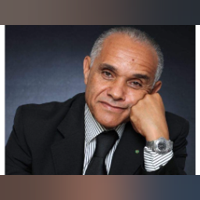
Aziz Daouda Aziz Daouda

Aziz Daouda

Directeur Technique et du Développement de la Confédération Africaine d'Athlétisme. Passionné du Maroc, passionné d'Afrique. Concerné par ce qui se passe, formulant mon point de vue quand j'en ai un. Humaniste, j'essaye de l'être, humain je veux l'être. Mon histoire est intimement liée à l'athlétisme marocain et mondial. J'ai eu le privilège de participer à la gloire de mon pays .


10200

33.0

April 6: The Moroccan Idea That Conquered the World... 390

April 6 is now etched into the global calendar as the International Day of Sport for Development and Peace. A celebration championed by the United Nations, echoed across all continents, and enthusiastically embraced by millions of athletes, institutions, and enthusiasts. Yet behind this worldwide recognition lies an origin that often goes unnoticed. It’s a Moroccan idea, that of Hamid Kamal Lahlou. The irony is striking. While the world fervently celebrates this day, Morocco—the birthplace of the initiative—sometimes seems to lag behind, as if hesitating to fully claim its paternity. Yes, there have been scattered initiatives and events here and there. But they fall far short of what we might have hoped for. We won’t list the few organized manifestations, so as not to ruffle feathers by omitting any. In any case, there are no major events from the sports authorities, such as the ministry, the National Olympic Committee, or the major Royal Moroccan Sports Federations. Is this simply an oversight, or a more subtle form of distancing? The question deserves to be asked, especially when you know the personality of its originator. Kamal Lahlou is not a consensual figure. Journalist, sports leader, communicator, he has established himself over decades as a singular voice in Morocco’s media and sports landscape. His career is dense: former handball player, originally a physical education teacher and inspector, committed actor in the development of national sports, he has held important responsibilities, notably within the Moroccan National Olympic Committee and the Association of African National Olympic Committees. He remains president of the Royal Moroccan Weightlifting Federation and vice-president of the Mohammed VI Sports Champions Foundation. But beyond titles and roles, it’s his words that stand out and his stance that impresses. Direct, clear, often critical, Lahlou disturbs as much as he inspires. He practices neither doublespeak nor complacency. In an environment where restraint is sometimes elevated to an implicit rule, his frankness cuts through. He points out shortcomings, challenges decision-makers, and defends a demanding vision of sport as a lever for development and national influence. This positioning has earned him as many admirers as detractors and doubtless even more denigrators. Some praise his courage and consistency, others reproach him for a tone deemed too incisive. Still others find nothing to fault him for, yet behind his back, lavish him with gratuitous reprimands. But all agree on one point: Kamal Lahlou is an incontournable figure, impossible to ignore. His patriotism admits no ambiguity. Behind every statement, every critique, emerges a clear ambition: to see the Kingdom take the place it deserves on the international sports scene. The April 6 Day fits precisely into this logic. By proposing to dedicate a date to sport as a vector for peace and development, Lahlou sought not personal legitimation, but recognition of the fundamental role sport can play in modern societies. He thus transcribed, in his own way, the royal vision of sport and the role the country can play on a universal scale in service of peace. So why this relative discretion in Morocco around this day? Is it the price to pay for free speech? The backlash of rivalries that have no place? An implicit way to marginalize a figure deemed too independent? A means to silence an ambitious voice? Or simply a deficit of collective memory? Whatever the answers, or the answer, one reality remains. April 6 is an idea born in Morocco, carried by a Moroccan, and adopted by the entire world. At a time when the country seeks to strengthen its soft power and highlight its successes, it might be time to reconcile origin and celebration. For recognizing this initiative to Kamal Lahlou is not just about honoring a man. Does he really need it? It’s rather about embracing a part of contemporary national and global sports history, and reminding that beyond infrastructure and performances, ideas too can change the world. And if it’s the Kingdom of Morocco at the origin, that’s even better.

Mediterranean: The Great Erasure of the Amazigh in Eurocentric Historical Narrative... 873

The history of relations between the two shores of the Mediterranean is deeply biased. Behind the lazy opposition between a supposedly dynamic North and a South relegated to the margins lies a more serious omission: **the systematic erasure of the determining role of the Amazighs (Berbers, Moors) in the formation of Mediterranean Europe**. This erasure is neither neutral nor accidental; it stems from a genuine ideological construct. Long before the colonial era, Amazigh populations structured most of North African space and held a central place in the political, military, commercial, and cultural dynamics of the Mediterranean, forming essential pillars of its history. They ensured an almost continuous link between sub-Saharan Africa and the northern Mediterranean. From Al-Andalus to medieval Sicily, their imprint is deep and enduring. A symbol of this centrality, the conquest of the Iberian Peninsula in the 8th century was led by Tariq ibn Ziyad (as named in the sources) at the head of a predominantly Amazigh army. Chronicles emphasize its largely Berber composition. This reality is systematically downplayed in favor of an Arab-centered narrative that invisibilizes the predominant Amazigh component. Without the Amazighs, there simply would have been no lasting Muslim implantation in Western Europe and the subsequent impacts. Reducing Al-Andalus to a mere outgrowth of the "Arab world" is a grave falsification by oversimplification. The dynasties that drove its golden age, foremost the Almoravids and Almohads, were of Amazigh origin. Emerging from Saharan and Atlas Berber confederations, they refounded the political balances of North Africa and Al-Andalus, building a Hispano-Moorish civilization that remains vibrant today. This fundamentally Amazigh civilization marked urban and monumental architecture, still visible in Seville, Marrakech, Fez, or Cordoba. It structured religious and legal thought with reformist Malikism among the Almoravids, doctrinal rigor among the Almohads for Muslims, and Maimonides' thought for Jews. It also durably impacted the political and military organization of the western Mediterranean. Southern Spain and Portugal still bear visible and toponymic traces of this Amazigh presence today. Ignoring them mutilates a deeply shared history. To refresh this memory, what better than a little tour of Spain's Extremadura. This influence did not stop at the Andalusian shores. In Sicily and southern Italy in general, particularly Palermo, interactions between North African worlds and European spaces were constant during Islamic and then Norman periods, via military contingents, trade networks, and knowledge transfers. These circulations included a significant Amazigh component, often retroactively dissolved into the vague formula of "Arab influence." Couscous is still present there, accompanied by orange blossom almond sweets. By speaking indistinctly of "Arabs," dominant narratives erase the real plurality of actors and obliterate the African depth of these exchanges. This erasure stems from several cumulative biases. First, **Eurocentrism** and the inability to admit that African populations were co-founders of Mediterranean Europe. Second, **historiographical Arabocentrism** and the tendency to homogenize the Muslim world by invisibilizing its non-Arab components, primarily the Amazighs. Finally, **colonial legacy**, with the need to smooth and hierarchize narratives to legitimize a supposed European civilizational superiority. The result is clear: the Amazighs are relegated to a secondary, folkloric, or local role, even though they were structuring actors of the western Mediterranean. Their impact is unequivocally one of the most important in the region's history. Correcting this bias does not boil down to adding a "Berber" chapter to already-written history books. The narration itself must be reconfigured. It involves reinscribing the Amazighs at the heart of the Mediterranean narrative. Southern Europe is not solely the heir to Rome and Christianity. It is also, in part, the product of North African contributions, particularly Amazigh ones, visible in its political structures, urban landscapes, culinary and clothing arts, certain names, and imaginaries. Isn't the name Maurice an example of indelible impact? The western Mediterranean must be conceived as a space of co-construction, not as a theater of unilateral diffusion from North to South. Recognizing this is not a reflex of identity politics or any ideological claim, but a minimal requirement of scientific rigor. Mediterranean history has been flattened to serve power logics, at the cost of extreme simplification of trajectories and actors. The Amazighs are among the great erased, if not the only ones excluded. Fully reintegrating them into the narrative is not "rewriting" history in the sense of distorting it: it is **repairing** it, by restoring to the Mediterranean its African depth and true complexity. This approach is essential to ease relations in the region and build a solid future for its populations, whether in political, economic, or simply human terms. For centuries, this unbalanced narrative has permeated academic, media, and political discourses. Yet the Mediterranean has always been a sea of circulation, not domination; a space of permanent interactions, not a border between hierarchized worlds. From Antiquity and likely before, it has been a zone of mutual fertilization between African, Levantine, and European civilizations. Archaeology demonstrates this powerfully. Phoenicians, Romans, Carthaginians, Egyptians, Numidians, and of course Amazighs structured its commercial, cultural, and scientific exchanges. The idea of an autonomous Europe, the sole source of modernity, is merely a late reconstruction. Not so long ago on a geological scale, the strait between Morocco and Spain was barely more than one kilometer wide... It falls to historians, teachers, and school systems on both shores to correct this, with a view to a common future founded on an equally shared past.

Chapter 5: Formalize & Systemize 1212

A working implementation begins with a narrowly defined document type. The unit of construction is a skill, which combines input schema, feature computation, semantic rules, generation constraints, and validation logic into a single packaged pipeline. The input schema defines the structure of accepted data. Each field has a fixed type and meaning. Inputs outside this structure are rejected or normalized before processing. This step removes ambiguity at the entry point. The feature layer computes derived values from the input schema. These computations are deterministic and expressed in standard tooling such as SQL or Python. The outputs include numerical transformations, aggregations, and formatted representations. Once computed, these values are stored and reused across all downstream operations for the same input. The semantic layer maps computed features into categorical labels. These mappings are expressed as explicit rules that define thresholds and conditions. The rules function as a translation layer between raw computation and narrative intent. Changes in business definition are reflected by modifying rules rather than rewriting logic. The generation layer receives three inputs: original data, computed features, and semantic labels. It produces structured text under strict constraints. The model is restricted to expressing provided values. No additional facts are introduced. Output formats are predefined, often as structured JSON containing narrative sections. The validation layer compares generated text against deterministic outputs. It extracts numerical values, categorical claims, and references, then checks them against the feature and semantic layers. Any deviation indicates failure. Output is either accepted or routed for correction. A complete skill behaves like a compiled artifact. Input enters through a fixed interface. Output is produced in a predictable format. Internal logic remains inspectable and versioned. Once a single skill is stable, the same structure can be replicated across multiple document types. Financial reports, product summaries, operational dashboards, and compliance documents follow identical architectural patterns. Variation exists only in schema definitions, feature logic, and semantic rules. As the number of skills increases, duplication appears in semantic definitions. Terms such as “strong performance,” “declining trend,” or “high risk” recur across domains, often with subtle differences in meaning depending on context. A static rule system cannot represent these contextual variations efficiently. Each skill encodes its own version of definitions, which leads to inconsistency and maintenance overhead. A knowledge graph introduces a shared semantic layer. Concepts are represented as nodes, and relationships between them are explicitly defined. Each concept carries attributes such as context, domain, and threshold values. This allows meaning to vary based on surrounding conditions rather than fixed rule files embedded in individual skills. In this structure, a query retrieves the appropriate definition of a concept based on context parameters such as industry, market state, or organizational role. The semantic layer no longer evaluates rules directly. It resolves references into context-specific definitions drawn from the graph. Feature computation remains unchanged. Inputs are still transformed into deterministic values. The difference lies in how those values are interpreted. Instead of fixed thresholds embedded in code or configuration files, interpretation depends on graph queries that return context-aware mappings. This creates composability across systems. Multiple skills reference the same underlying semantic nodes. A change in definition propagates through the graph without modifying individual pipelines. Consistency emerges from shared structure rather than replicated configuration. The generation layer remains unchanged. It still receives features and resolved semantic labels. The difference lies upstream, where those labels are derived from a shared semantic space rather than isolated rule sets. Validation also extends naturally. Outputs can be traced not only to feature computations but also to the specific semantic definitions used during interpretation. This adds a second layer of provenance, linking each statement to both numerical derivation and contextual meaning. The system shifts from isolated pipelines to a connected network of shared meaning, where document generation becomes an application of structured knowledge rather than repeated local interpretation.