Think Forward.

La gériatrie une spécialité encore peu connue au Maroc 3639

La gériatrie désigne la médecine de la personne âgée (PA) et de ses maladies dues au vieillissement : il s’agit d’une prise en charge globale pour maintenir ou, au besoin, restaurer l’autonomie fonctionnelle du patient. L’intervention d’une personne spécialisée en ce domaine est utile en ce sens que la personne âgée (PA) présente des spécificités dues à son vieillissement : elle présente des maladies plus fréquentes et souvent multiples dont l’impact est plus intense sur l’ensemble de l’organisme. D’où l’intérêt de consulter ce spécialiste en gériatrie qui va mieux pouvoir faire la synthèse de tous ses problèmes de santé. Le vieillissement de l’organisme a en effet des conséquences trop souvent méconnues sur la prise en charge du patient âgé, surtout aux environ de 70 ans. Ainsi il détecte moins bien les 4 saveurs de base : le seuil de détection est ainsi en moyenne multiplié par 11,6 pour le salé, 7 pour l’amer, 4,3 pour l’acide et 2,7 pour le sucré ! Près de 400 médicaments perturbent par ailleurs le goût. Ces facteurs et bien d’autres sont alors souvent cause de malnutrition. De même, les médicaments restent en plus grande quantité et plus longtemps dans l’organisme : le paracétamol s’élimine deux fois plus lentement, le diazepam (valium), quatre fois plus lentement. D’où des risques d’’intoxications médicamenteuses dues à une automédication (trop fréquente) ou des prescriptions inappropriées qui sont ainsi responsables d’une hospitalisation sur cinq chez les PA dans les pays développés ! La situation ne peut être qu’au moins identique au Maroc ! UNE SPECIALITE RECENTE AU MAROC La gériatrie n’est devenue une spécialité à part entière que très récemment dans le monde avec l’augmentation de la proportion des personnes âgées dans la population : cette spécialité n’a été créée qu’en 2005 en France par exemple ! Elle n’est donc encore qu’à ses débuts au Maroc, avec la décision du ministère de la Santé, dans les années 2000, d’envoyer en France une quinzaine de spécialistes en médecine interne pour acquérir une seconde sous-spécialité en gériatrie. Ces internistes/gériatres (avec une formation de 5 ans en médecine interne et d’un an en gériatrie), sont les mieux à même de gérer les cas les plus graves. Plusieurs dizaines de médecins généralistes ont aussi une orientation « gériatrie », grâce à des formations complémentaires. Au-delà de ces quelques dizaines de médecins dédiés aux PA, les spécialistes en médecine interne sont aussi par nature les plus ccompétents sur l’ensemble des problèmes de santé des PA, de par leur approche globale de la prise en charge des malades. LA TRANCHE D'ÂGE CONCERNEE PAR CETTE DISCIPLINE La gériatrie ne se définit pas directement par l’âge de ses patients. On peut aller le consulter dès cinquante ans pour mieux préparer son vieillissement. Elle concerne le plus souvent les plus de 60 ans et les principaux défis de cette spécialité visent les plus de 75 ans. Si on peut estimer que l’entrée dans la vieillesse (et de ses premiers handicaps) se fait réellement vers 67/68 ans au Maroc, c’est en effet seulement à partir de 75 ans, le quatrième âge, qu’on observe une montée des incapacités dans les six principales activités de la vie quotidienne : se laver entièrement, s’habiller, aller aux toilettes et les utiliser, se déplacer à l’intérieur du domicile, contrôler ses sphincters et se nourrir. D’où la nécessité d’une intervention de médecins formés spécifiquement à ce moment là de la vie.
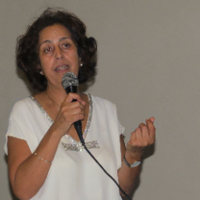
Dr Moussayer khadija Dr Moussayer khadija

Dr Moussayer khadija

Dr MOUSSAYER KHADIJA الدكتورة خديجة موسيار Spécialiste en médecine interne et en Gériatrie en libéral à Casablanca. Présidente de l’Alliance Maladies Rares Maroc (AMRM) et de l’association marocaine des maladies auto-immunes et systémiques (AMMAIS), Vice-présidente du Groupe de l’Auto-Immunité Marocain (GEAIM)


5300

0

Morocco and the Trust Economy: The Invisible Capital of Development... 255

In the economic history of nations, some assets are visible, such as natural resources, geographical position, infrastructure, or market size. Others, however, are invisible but often decisive. Among them, trust holds a central place and constitutes the true cement of sustainable economies. An economy can survive with few natural resources, but it cannot prosper sustainably without trust. Morocco today has many assets: remarkable political stability, a strategic position, world-class infrastructure, and active economic diplomacy. Yet, the decisive step in development now consists of building a true trust economy, capable of sustainably reassuring citizens, entrepreneurs, and investors. This is not a slogan. Trust is an institutional and cultural architecture that is built over time. It is the primary capital of a modern economy and a determining factor. It reduces transaction costs, encourages investment, facilitates innovation, and stimulates individual initiative. When an entrepreneur knows that the rules of the game are stable, that contracts will be respected, and that justice is swift and independent, he invests more easily. When a citizen trusts the tax administration and institutions, he more willingly accepts taxes and participates in the formal economy. Conversely, a lack of trust generates precautionary behaviors: capital flight, informality, low long-term investment. The economy then becomes cautious, fragmented, and inefficient. For Morocco, the central question is therefore not only to attract investments, but to create an environment where trust becomes a collective reflex. It would be unfair not to recognize the considerable progress made over the past decades. The foundations are solid. The country has massively invested in infrastructure: Tanger Med is today one of the world's most important logistics hubs. Nador and Dakhla are coming soon. Industrial zones have enabled the emergence of high-performing sectors, in the automotive industry with Renault Group and Stellantis, and in aeronautics with Boeing, Airbus, and Safran. The country's ambition in energy transition is exemplary. This shows that it is capable of carrying out structuring projects and offering a stable macroeconomic environment. However, the next step in development requires a qualitative leap: moving from an opportunity economy to a trust economy with a determining role for the rule of law. Trust first rests on the solidity of institutions. For investors as for entrepreneurs, the predictability of rules is a decisive element. Laws must be stable, readable, and applied equally, with three particularly crucial dimensions: **The independence and efficiency of justice** A swift, accessible, and credible justice system is the keystone of any trust economy. Commercial disputes must be resolved within reasonable timeframes. Judicial decisions must be enforced without ambiguity. Legal security is often the primary factor of attractiveness. **Fiscal stability** Investors do not necessarily expect very low tax rates; they primarily seek stability and readability. Predictable taxation allows companies to plan investments over the long term. Morocco has already undertaken several major tax reforms, but the challenge now is to go further and consolidate a clear and durable fiscal pact. **The fight against rents and privileges** Trust disappears when the rules of the game seem unequal. A dynamic economy relies on fair competition and equal opportunities. Transparency in public markets, competition regulation, and limiting rent situations are essential levers. A trust economy is also an economy of freedom, capable of unleashing entrepreneurial energy. The freedom to enterprise, innovate, and experiment is one of the fundamental engines of growth. Morocco has a talented youth, competent engineers, and an influential diaspora. However, several obstacles remain: administrative complexity, access to financing for SMEs, slowness of certain procedures. The challenge is to create an environment where individual initiative becomes the norm rather than the exception. Moroccan startups in fintech, artificial intelligence, or agricultural technologies already demonstrate the country's potential. With a more fluid ecosystem, they could become tomorrow's economic champions. In a world marked by geopolitical uncertainty and economic recompositions, trust also becomes a comparative advantage. If Morocco manages to position itself as a country where rules are stable, justice reliable, and administration predictable, it could become one of the main investment platforms between Europe and Africa. This ambition aligns with the Kingdom's African strategies and its growing international openness. Trust could thus become Morocco's true economic hallmark. Several strategic orientations deserve to be prioritized: - Accelerate the modernization of the judicial system, particularly in handling commercial disputes and enforcing judicial decisions. - Radically simplify administrative procedures for businesses through complete digitalization of public services. - Establish multi-year fiscal stability to enhance visibility. - Promote transparency and fair competition in all economic sectors. - Strengthen training and valorization of human capital, particularly in technological and scientific fields. - Develop a culture of trust between the State, businesses, and citizens. This dimension is often overlooked, yet it constitutes the invisible foundation of development. Morocco finds itself today at a pivotal moment in its economic history. The infrastructure is in place, strategic ambitions are affirmed, and the international environment offers new opportunities. The next step therefore consists of building a sustainable trust ecosystem. If Morocco succeeds in this gamble, and it must, it could not only accelerate its development but also become one of the most credible and attractive economies in the emerging world. In the 21st-century global economy, trust is undoubtedly the rarest and most powerful capital.