Think Forward.

The Polisario Front Confronted with Increasing Accusations: Moving Towards Being Designated as a Terrorist Organization 8041

For several years now, the Polisario Front, a separatist movement supported and armed, as everyone knows, by Algeria, which has provided it with an entire territory in the Tindouf area, has been at the center of a growing international controversy. In the United States, Japan, and Europe, voices are rising to have this group officially classified as a terrorist organization. This shift is based on tangible evidence of its links with actors qualified as terrorists, its involvement in violent actions, but also on a network of international alliances that go beyond the regional framework. While Algeria, Iran, and Hezbollah are often cited as the main supporters of the Polisario, as well as South Africa, Cuba has also played a historic and decisive role in the military and logistical training of separatist fighters. As early as 1977, under the impetus of Fidel Castro and at the request of Algeria, a tripartite military agreement was signed between Cuba, Algeria, and the Polisario, paving the way for intensive cooperation. This agreement allowed the sending of many separatist fighters to Cuba to receive specialized military training. Dedicated military schools were created on the island, where Polisario recruits were trained in guerrilla tactics, special operations, and military logistics. A Cuban delegation even went to Tindouf in 1988 to study Moroccan defenses and help develop strategies to breach the defense wall erected by the Kingdom. Cuba also provided naval logistical support, notably in the waters near the Canary Islands, where Cuban ships were involved in operations to facilitate Polisario infiltrations. Between 1975 and 1991, Cuba delivered to the Polisario a significant arsenal including assault rifles, mortars, rocket launchers, and ammunition, thus strengthening its military capabilities. Even after the 1991 ceasefire, Cuba maintained its support, continuing to train warriors especially in special operations. The last known class trained in Cuba dates back to 2003. More recently, six-month training courses have been given to groups of about forty separatists, focused on special forces tactics. Moreover, for a long period, damning testimonies report the kidnapping of children from the Tindouf camps, sometimes as young as 9 years old, to send them to Cuba on a "youth island" under high military surveillance. They undergo intensive military training mixed with strong political indoctrination. These children, isolated from their families, are trained to become soldiers in the service of the Polisario, under conditions denounced as inhumane by witnesses and former detainees. Some recent signals suggest a possible repositioning of Havana. Indeed, at the 2019 Non-Aligned Movement summit, Cuban President Miguel Díaz-Canel omitted any reference to the Polisario, marking a break with the tradition of support displayed by Fidel and Raúl Castro. This evolution could reflect a diplomatic realignment, notably after the resumption of diplomatic relations between Morocco and Cuba in 2017, relations broken for nearly 37 years due to Cuban support for the Polisario. However, to date, the aforementioned tripartite agreement has not yet been repealed. Cuba's role is part of a larger network of Polisario alliances. Algeria, the main political and military supporter, continues to arm and shelter the movement. Iran, through Hezbollah, provides military and logistical support, notably also training fighters and delivering sophisticated weapons. This is well documented. There are also hundreds of Polisario mercenaries captured in Syria, where they operated alongside Assad's army, reinforcing the image of a group involved in international terrorist conflicts. On the ground, the Polisario is also accused of violence against civilians in southern Morocco. The missiles launched against the city of Smara bear witness to this, in addition to the blockage of the strategic Guerguerat passage. The sequestration of Sahrawi populations in the Tindouf camps, where it refuses, with Algerian support, any official census, is another proof of the true nature of the movement. Faced with these elements, several American, European, and Asian political leaders advocate for the Polisario Front to be quickly listed as a terrorist organization. American Congressman Joe Wilson has proposed a bill to this effect, denouncing the use of the Polisario by Algeria and its accomplices to destabilize the Kingdom of Morocco, a long-standing strategic ally of the United States in the region. This eminent designation would deal a major blow to Algeria, which seems tireless in supporting the Polisario for nearly 50 years, while it simply costs the country development. It would further strengthen Morocco's position on the international stage, notably after the American recognition in 2020 of Moroccan sovereignty over its southern provinces, that of Spain, France, the recent one of the United Kingdom, and many other African and Latin American countries. The historical, military, and educational support of Cuba, combined with the role played by Algeria, Iran, and Hezbollah, places the Polisario in a network of actors with manifest destabilizing and terrorist activities. The rise in calls for its classification as a terrorist organization fits into a logic of regional and international security, requiring a coordinated response to restore stability in North Africa, the Sahel, and beyond. This page must be quickly turned for the good of the populations of the entire region

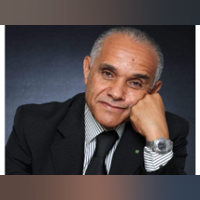
Aziz Daouda Aziz Daouda

Aziz Daouda

Directeur Technique et du Développement de la Confédération Africaine d'Athlétisme. Passionné du Maroc, passionné d'Afrique. Concerné par ce qui se passe, formulant mon point de vue quand j'en ai un. Humaniste, j'essaye de l'être, humain je veux l'être. Mon histoire est intimement liée à l'athlétisme marocain et mondial. J'ai eu le privilège de participer à la gloire de mon pays .


8100

33.0

The Radiance of a Lady 16

​Your love illuminates my heart, And you have forbidden me to reveal this honor. How can the light of your brilliance be dimmed When it radiates from everywhere? It shines like a sapphire, a diamond, or a jewel, And dazzles everyone with your blonde beauty. You do not believe in my love, In turn, While I can love no one else but you; This is my destiny, this is my faith. You are my heart and my soul, You are my destiny, you are my law. I cannot bear it when you are far away, beautiful woman, You who soothe my heart in flames. In you, I find all my vows, You who make my days happy. ​Dr. Fouad Bouchareb Inspired by an Andalusian music piece, "Bassit Ibahane" December 13, 2025 https://youtu.be/wlvhOVGyLek?si=5tt6cm0oChF1NQJJ

Chapter 3: The Latticework Theory- Reality as an Interdependent, Multi-Layered System 214

The conceptual framework commonly referred to as “Latticework Theory” integrates formal ontological analysis with applied epistemic reasoning. Willard Van Orman Quine’s analytic ontology, as outlined in "On What There Is" (1948), establishes rigorous criteria for identifying entities, categories, and relations within complex systems, providing a foundation for understanding which elements and interactions are structurally significant. Charlie Munger’s notion of a “latticework of mental models,” as articulated in his speeches and compiled in "Poor Charlie's Almanack" (2005), complements this by advocating for the disciplined integration of knowledge across domains to improve strategic decision-making under uncertainty. Together, these perspectives underpin a framework in which authority, information, and incentives propagate across layers of agents and institutions, producing outcomes that cannot be inferred from the isolated properties of components. Deviations at any node can be corrected when feedback is accurate, timely, and actionable. Failures occur when feedback is impaired, misaligned, or ignored. This framework provides a lens for analyzing industrial operations, national governance, financial systems, and technological risk in a unified, empirically grounded manner. The Toyota Production System (TPS), developed by Taiichi Ohno and detailed in "Toyota Production System: Beyond Large-Scale Production" (1988), exemplifies this framework at the operational level. TPS integrates authority, information, and incentives to align local actions with system-level objectives. The andon system, which allowed assembly line workers to halt production upon detecting defects, transmitted local observations directly to organizational decision nodes, enabling immediate corrective action. Empirical analyses, including studies of manufacturing efficiency, demonstrate that this configuration reduced defect propagation, accelerated problem resolution, and increased overall reliability compared to designs that optimized individual workstations independently. For instance, companies implementing TPS principles have reported defect rate decreases of around 60 percent, reflecting the structural alignment of authority, information, and incentives rather than isolated interventions. Singapore under Lee Kuan Yew illustrates the same principle at the national level. Between 1965 and 2020, per-capita GDP rose from approximately $517 to $61,467 in current U.S. dollars. By 2020, public housing coverage reached approximately 78.7% of resident households. Scholarly analyses attribute these outcomes to a central coordinating constraint: administrative meritocracy combined with credible enforcement. Recruitment and promotion emphasized competence and performance, anti-corruption measures ensured policy credibility, and social and industrial policies aligned skill formation, investment, and housing. These mechanisms were mutually reinforcing, producing system-level outcomes that cannot be explained by any single policy instrument but rather by ontological reasoning. Financial markets and strategic advisory practice demonstrate analogous dynamics. Many successful hedge fund managers and macro investors, such as George Soros (who studied philosophy with a strong historical focus) and Ray Dalio (who emphasizes historical pattern recognition in his investment principles), draw on deep historical expertise. Studies and industry insights highlight the value of humanities backgrounds in finance, with hedge funds actively recruiting liberal arts graduates for their ability to provide broader contextual understanding. This expertise enables pattern recognition across interacting variables, resource constraints, institutional incentives, technological change, political legitimacy, leadership behavior, and stochastic shocks, while facilitating analogical judgment about systemic regimes. George Soros’s concept of reflexivity formalizes the empirical reality that market prices and participant beliefs mutually influence one another. In feedback-dominated systems, quantitative models fail unless interpreted in historical and structural context. Historical insight therefore provides an advantage in long-horizon investing, geopolitical risk assessment, and capital allocation, as evidenced by the track records of such practitioners. The Boeing 737 MAX incidents of 2018 and 2019 provide a negative case that clarifies the ontology’s conditions. Investigations revealed that the MCAS system relied on single-sensor inputs, information about its behavior and failure modes was inconsistently communicated to operators, and engineering authority was constrained by commercial and schedule pressures. Incentives prioritized rapid certification and cost containment over systemic reliability. Local anomalies propagated to produce two hull-loss accidents with 346 fatalities. Analysis demonstrates that robust interconnection alone is insufficient. Outcomes depend on the alignment of authority, accurate information, and incentive structures that empower corrective action. Across manufacturing, national governance, finance, and technology, the same structural principle emerges: effective outcomes require the alignment of authority, information, and incentives, with feedback channels possessing sufficient fidelity and remedial capacity. Misalignment in any dimension produces fragility and amplifies errors. The Orbits Model operates within this substrate, with inner orbits requiring empirical validation and outer orbits constrained by systemic coherence. Empirical evaluation relies on archival records, institutional data, and observable system outcomes, providing a unified framework for analyzing complex adaptive systems. The Latticework framework thus integrates ontology, applied epistemics, and structural empirics, combining theoretical rigor with practical observation across domains.

Theosophy 263

Theosophy is a spiritual movement that emerged in the late nineteenth century with the ambition of bringing religion, philosophy, and science into a single, coherent vision of truth. Drawing on both Eastern and Western mystical traditions, it promotes the idea of a timeless or “perennial” philosophy underlying all world religions. Central to this outlook is the belief that the soul evolves over long cycles of reincarnation and karma, gradually awakening to deeper spiritual realities. The movement was formally established in 1875 by Helena Petrovna Blavatsky (1831-1891) and her collaborators with the founding of the Theosophical Society, and it went on to shape many of the spiritual, philosophical, and artistic currents of the modern era. At the heart of Theosophical thought is the idea of a divine, impersonal Absolute that lies beyond the limits of human understanding—an idea comparable to the Hindu concept of Brahman or the Neoplatonic One. From this unknowable source, all levels of existence are said to unfold, descending through a hierarchy of spiritual planes and beings until they manifest in the material world. This cosmological vision reflects strong influences from Indian philosophy, especially Vedanta and Buddhism, while also incorporating elements of Western esoteric traditions such as Neoplatonism, Hermeticism, and Kabbalah. A defining feature of Theosophy is its emphasis on spiritual evolution. In The Secret Doctrine (1888), Blavatsky’s most influential work, she presents an elaborate account of planetary and human development governed by the laws of karma and reincarnation. According to this framework, humanity is currently passing through the fifth of seven “root races,” each representing a stage in the unfolding spiritual and psychic capacities of the species. The ultimate goal is a conscious return to divine unity, achieved through inner transformation and esoteric knowledge. Blavatsky maintained that her teachings were not purely her own but were inspired by highly advanced spiritual beings known as the Mahatmas or Masters. Said to live in remote regions of the world, these adepts were described as guardians of ancient wisdom and exemplars of humanity’s spiritual potential. Whether understood literally or symbolically, they expressed the Theosophical ideal of enlightenment and supported the Society’s mission of awakening latent spiritual capacities in all people. The influence of Theosophy reached well beyond the boundaries of the Theosophical Society itself. It played an important role in introducing Western audiences to ideas such as karma, reincarnation, and subtle energy systems, and it helped spark broader interest in Eastern religions. Its impact can be seen in the work of artists like Wassily Kandinsky (1866-1944), composers such as Gustav Holst (1874-1934), and spiritual thinkers including Rudolf Steiner (1861-1925), who later founded Anthroposophy, and Jiddu Krishnamurti (1895-1986), who was once proclaimed a World Teacher before ultimately distancing himself from the movement. Despite internal disagreements and the often complex nature of its teachings, Theosophy laid important groundwork for the later New Age movement and for modern forms of spiritual pluralism. Its effort to present a shared mystical heritage across cultures anticipated contemporary conversations linking science and spirituality, psychology and mysticism, and Eastern and Western worldviews. In this sense, Theosophy is more than a historical curiosity. It represents an ambitious attempt to reinterpret ancient wisdom for a modern world, grounded in the belief that spiritual truth is universal and that humanity’s deeper purpose lies in awakening to its own divine origins.