Think Forward.

Puissance africaine naissante ou occasion perdue : Lomé 2025 entre pivot historique et naufrage stratégique... 108

À Lomé, du 8 au 12 décembre 2025, le 9ᵉ Congrès panafricain a transcendé les rituels commémoratifs habituels pour devenir un QG stratégique. Du moins il l'aura tenté. Gouvernements, intellectuels, patrons d’entreprises, diasporas et activistes ont martelé un diagnostic impitoyable: dans un monde fracturé par les guerres hybrides, les chaînes d’approvisionnement rompus et les empires en déclin ou en quête de repositionnement, l’Afrique ne peut plus se contenter de survivre. Elle doit imposer une doctrine de puissance collective, ou périr comme terrain de jeu des géants. Fini le panafricanisme de discours lyriques et les joutes idéologiques. On est passé du symbole au glaive avec un panafricanisme en arme géopolitique. À Lomé, Faure Gnassingbé, président togolais et hôte, a d'emblée planté le décor: l’unité africaine n’est plus une utopie morale, mais un bouclier contre les prédateurs. Face à la Chine qui verrouille les mines de cobalt, la Russie et les problèmes sahéliennes, les États-Unis qui dictent des normes plutôt floues, l’Afrique choisit la rupture. Gnassingbé l’a dit cash : sans coordination, le continent reste une proie ; avec elle, il devient un pivot. Les débats ont disséqué la fragmentation se penchant sur les crises au Sahel, les tensions au Soudan, la piraterie en Somalie. L’alternative est binaire: vassalisation ou souveraineté collective. Lomé pose donc les bases d’une alliance défensive, inspirée possiblement des BRICS, pour contrer les ingérences gourmandes. On ne s'est point gêné de statuer que le multilatéralisme s'effritait en lambeaux. l’Afrique, du moins dans le discours, part ainsi à l’assaut des forteresses. Les ministres ont sonné l’alarme: l’ONU, le FMI, l’OMC sous-représentent l’Afrique, véritable bastion démographique qui pèsera 2,5 milliards d’habitants en 2050 et sanctuaire énergétique incontournable avec son soleil, son lithium et son hydrogène vert. Le continent se pose la question fondamentale du pourquoi céder les rênes à des institutions figées dans l’après-1945 ? Ainsi à Lomé le Congrès s'est forcé à tracer une feuille de route offensive avec des idées on ne peut plus claires: - ** Une coordination diplomatique** et un front uni à l’ONU pour bloquer les résolutions biaisées. - **La nécessité de réformes institutionnelles** en exigeant deux sièges permanents au Conseil de sécurité et un droit de véto. - ** Une parole souveraine** par l'alignement des votes régionaux notamment à l'UA et à la CEDEAO, sur des intérêts communs et pas sur des caprices nationaux ou des visées idéologiques d'un autre temps. L’enjeu est donc de redéfinir les règles du jeu. L'Afrique ne se contente plus de strapontins. Elle veut peser sur le commerce mondial, les sanctions et les normes climatiques, où elle paie l’addition sans en tirer profit. **La diasporas arme secrète d’une géopolitique afro-globale**, de Bogotá à São Paulo, a volé la vedette à Lomé. Francia Márquez, vice-présidente colombienne, a rappelé les 200 millions d’Afro-descendants en Amérique : une profondeur stratégique ignorée. L'alliances Sud-Sud, les réparations comme arme diplomatique vis à vis de l’Europe post-coloniale, les flux de capitaux via la diaspora US sont autant d'atout et de pistes pour un changement radical de posture. Lomé élargit ainsi le panafricanisme à la diaspora comme lobby à Washington et Bruxelles, vecteur de tech (IA, fintech) et de soft power culturel. Face à la Belt and Road chinoise, c’est un contre-réseau transnational africain qui se dessine. Les précongrès régionaux avaient déjà proposé un plan d'action clair et concret : - **Indépendance technologique** : Maîtriser l'intelligence artificielle (IA) et l'informatique quantique pour mettre fin à la domination des pays occidentaux. - **Élites panafricaines** en réformer l'éducation pour former des leaders et des stratèges africains, et non des personnes qui fuient le continent. - **Migration contrôlée** : en mettant en place une politique commune à tout le continent pour transformer les mouvements de population en atout démographique, au lieu de subir les barrières imposées par l'Europe. - **Mémoire active** : en reliant l'esclavage et le colonialisme à des demandes économiques concrètes, comme l'annulation des dettes injustes et le paiement de redevances sur les ressources minières. - En fait des **Axes de puissance pour 2030 fondés sur la technologie, l'éducation, et la migration** L'Afrique passe de la réaction à la projection et anticipe un monde multipolaire où l’Afrique rivalise avec l’Inde ou l’ASEAN. Mais comme à chaque fois en Afrique, il reste légitime de se poser la question fondamentale: **Lomé, pivot ou mirage ?** L'espoir est que ce congrès ne soit pas un feu de paille mais plutôt une esquisse, une doctrine pour une puissance par l’unité, par l'influence et par la coordination. Le diable est dans l’exécution. Les rivalités internes et régionales, les tentations bellicistes continueront elles à diviser? Le Grand Maghreb pour ce qui nous concerne en connait un chapitre depuis 50 ans. Lomé 2025 impose un ultimatum : stratégie partagée ou irrelevance éternelle ?L’Afrique, pôle émergent ou pion sacrifié ? La réponse se joue maintenant et concerne davantage les générations africaines en devenir... Elles ne pardonneront jamais nos erreurs actuelles et nos divisions imbéciles...

Aziz Daouda Aziz Daouda

Aziz Daouda

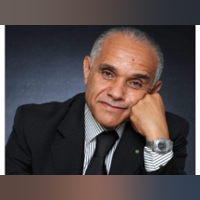
Directeur Technique et du Développement de la Confédération Africaine d'Athlétisme. Passionné du Maroc, passionné d'Afrique. Concerné par ce qui se passe, formulant mon point de vue quand j'en ai un. Humaniste, j'essaye de l'être, humain je veux l'être. Mon histoire est intimement liée à l'athlétisme marocain et mondial. J'ai eu le privilège de participer à la gloire de mon pays .


8100

33.0

Chapter 5: Synthesis- The Consilience of the Framework 108

The evidentiary power and utility of this integrated framework—Orbits, Latticework, Pipeline—lies in its consilience. It weaves breakthroughs from wildly disparate fields into a single, coherent explanatory tapestry, revealing a universal pattern of successful inquiry. From Ballpark to Trading Floor: The narratives of Moneyball and The Big Short are isomorphic: Both begin with a philosophical reframing of value (what makes a baseball player valuable; what is the true risk of a mortgage bond). Both proceed through scientific, data-driven discovery of a massive market inefficiency (OBP vs. price; real default risk vs. AAA ratings). Both culminate in the formulation and execution of a winning model (a roster of undervalued players; a portfolio of credit default swaps). They are the same story, told in different arenas. From Sideline to Boardroom- José Mourinho’s Tactical Objectivity: The strategic success of football manager José Mourinho, particularly in his early career at Porto, Chelsea, and Inter Milan, can be precisely deconstructed through this lens. Lacking a storied playing career, he was unburdened by the sport’s internal, dogmatic "ways of knowing." His Outer Orbit philosophy was defined with stark clarity: winning is the sole aesthetic. His Middle Orbit work became legendary: obsessive, scientific analysis of opponents, involving countless hours of video to identify specific tactical vulnerabilities in individual players and systemic gaps in team shape. His Inner Orbit genius was in formulation: he would design rigorous, often defensively-oriented game models tailored to exploit those precise weaknesses, demanding robotic discipline from his players. His famous 1-0 victories, frequently derided as "anti-football" or "boring," were direct, logical products of pursuing objective victory over subjective aesthetic approval. He demonstrated that objectivity often requires enduring backlash from a consensus invested in a different, more romantic model of the game. From Factory Flow to Protein Fold: Taiichi Ohno’s andon cord and Demis Hassabis’s AlphaFold: Both are profound interventions based on latticework understanding. Ohno designed a human-technological system to make local truth (a defect) instantly global, optimizing a physical manufacturing lattice. Hassabis built a computational system to infer the spatial relationship lattice of amino acids from evolutionary data, optimizing our understanding of the biological lattice. One is mechanical and human, the other digital and abstract, but both are solutions born from seeing a problem as a network of relationships to be modeled and managed. The Contemporary Imperative-The Age of the Synthesist: The historical drift of knowledge since the Enlightenment has been from integration toward fragmentation. The Renaissance ideal of the uomo universale (universal man) gave way to the Industrial Age’s demand for the hyper-specialist. The 20th century perfected the silo. The 21st century, however, presents us with a stark imperative that demands a synthesis, a return to integrated thinking, but now armed with powerful new tools and facing problems of unprecedented scale. Two convergent forces make the orbital, latticework methodology not merely beneficial, but essential for competent navigation of our time. The Nature of Our Tools: Our most powerful analytical engines—Artificial Intelligence (particularly machine learning and large language models) and, on the horizon, Quantum Computing—are inherently cross-orbital and lattice-native. Deploying AI effectively on any complex problem, from drug discovery to climate modeling to ethical dilemma resolution, requires precise philosophical framing (defining objectives, values, and constraints to avoid perverse outcomes), robust and curated scientific data grounding, and exquisite mathematical formulation of the model architecture and training paradigm. These tools fail, often catastrophically and insidiously, with fragmented, siloed, or philosophically unexamined input. They demand, and therefore will select for, synthesist thinkers who can navigate all three orbits and think in terms of interconnected systems. The Nature of Our Challenges: The existential problems that define our epoch are quintessential latticework challenges. They cannot be contained within academic departments or government agencies. They are not "physics problems" or "economics problems." They are system problems. The specialized intellect, trained to dig ever deeper into a single vertical silo, is architecturally unequipped to even properly define them, let alone solve them. These challenges demand minds capable of orbital thinking across the lattice, minds that can hold multiple models, trace second- and third-order consequences, and formulate strategies that are robust across multiple domains of reality. Objectivity as the Foundational Operating System. The pursuit of objective truth is not a passive state of receiving revealed wisdom. It is an active, disciplined, and often confrontational chase. It requires the moral courage to question foundational premises in the Outer Orbit, the intellectual rigor to map reality without favor or illusion in the Middle Orbit, and the creative potency to formally synthesize understanding in the Inner Orbit. It demands that we see the world not as a collection of unrelated events, but as a vast, dynamic lattice of interlocking causes and effects. And it is best navigated with the structured, self-correcting protocol of the Objectivity Pipeline. This framework proposes objectivity not as the cold, emotionless province of a narrow scientism, but as a universal operating system for understanding, a scalable, rigorous, and ultimately humane methodology applicable with equal force to the equations of a physicist, the ethical calculus of a jurist, the investment thesis of a historian, the innovation of an engineer, and the strategy of a state. Subjectivity is the fog of un-modeled complexity. The Orbits Model, the Latticework Theory, and the Objectivity Pipeline constitute the navigation system—the charts, the compass, and the piloting protocol. In an epoch defined by overwhelming information, pervasive misinformation, and tools of god-like power whose misuse carries existential risk, mastering this chase is no longer an intellectual luxury or a philosophical pastime. It is the essential meta-skill, the foundational logic upon which reliable judgment, effective action, and meaningful progress depend. The choice before us is not between a subjective world and an objective one, but between wandering in the fog and building a lighthouse. The architecture for the lighthouse is here. The materials are the disciplines of thought we have inherited and refined. The builders must now be us.

Chapter 4: The Objectivity Pipeline- A Sequential Protocol for Execution 112

A theoretical framework, no matter how elegant, remains an intellectual curiosity unless it can be translated into a practical, repeatable protocol. The Orbits Model and the Latticework Theory converge into a disciplined, sequential, and recursive process I call ‘The Objectivity Pipeline’. This seven-stage pipeline provides the operational scaffolding to move from a nebulous, subjective problem to an objective, actionable solution. Define: Articulate the core problem, obstacle, or Wildly Important Goal (WIG) with surgical, unambiguous precision. Vague, multifaceted, or emotionally charged aims guarantee vague, conflicted outcomes. This is a pure Outer Orbit activity. Identify Variables: Catalog the key agents, forces, constraints, and measurable factors involved in the system. Move into the Middle Orbit. What are the inputs, outputs, and actors? Distinguish between independent variables (potential levers) and dependent variables (outcomes). Map Relationships: Diagram the causal, correlational, inhibitory, and influential links between the identified variables. This is the cartography of the latticework. Tools include causal loop diagrams, systems maps, influence diagrams, and process flows. The goal is to visualize the system's structure, revealing feedback loops, bottlenecks, and leverage points. Model: Construct a formal representation of the mapped system. This is the decisive leap to the Inner Orbit. The model can take many forms: a set of statistical equations, a system of differential equations, an agent-based computer simulation, a Bayesian network, or even a rigorously structured qualitative framework. The model is a simplified but functional analogue of reality, designed for manipulation and testing. Simulate: Run the model. Conduct experiments in silico. Test scenarios, stress-test assumptions under extreme conditions, and observe the range of potential outcomes the system logic produces. This stage provides a safe, low-cost environment for failure and learning before committing real-world resources. Verify: Return to the Middle Orbit. Collect new, out-of-sample empirical data—data not used to build the model—and check the model’s predictions against this observed reality. Does the world behave as the model forecasts? If not, the error is not in "reality"; it lies in an earlier stage of the pipeline. The process must recursively return to Definition, Variable Identification, Relationship Mapping, or Model Formulation for correction. Optimize: With a reasonably verified model, adjust the controllable variables within it to find the most efficient, effective, or robust path to achieve the goal defined in Stage 1. This is the stage of generating prescriptions and strategies. The Four Disciplines of Execution (4DX): The corporate strategy framework developed by McChesney, Covey, and Huling (The 4 Disciplines of Execution, 2012) is a streamlined, commercialized instantiation of the Objectivity Pipeline, designed for team-level implementation. Define: Focus on the Wildly Important Goal (WIG)—no more than one or two overwhelming priorities. Identify Variables: Differentiate between Lag Measures (the ultimate outcome metrics, like revenue or customer satisfaction) and Lead Measures (the predictive, influenceable activities that drive the lag measures, like sales calls or quality checks). Map Relationships: Create a Compelling Scoreboard that is simple, public, and visually maps, in real-time, the relationship between lead measure activity and progress toward the WIG. Model & Cadence: Establish a recurring Cadence of Accountability, a short, rhythmic meeting (e.g., weekly) where team members report on commitments, review the scoreboard, and plan new commitments. This cadence functions as a live, human-powered simulation, verification, and optimization loop, embodying stages 5-7 of the pipeline in a behavioral rhythm. The Lucas Paradox and the Anatomy of Perceived Risk: The Lucas Paradox, introduced by Nobel Prize winning economist Robert Lucas in 1990, refers to the persistent empirical observation that capital does not flow from capital-rich countries to capital-poor countries at the scale predicted by neoclassical growth theory, despite higher marginal returns to capital in poorer economies. This phenomenon is not a failure of investor rationality, nor is it primarily a behavioral anomaly. It is a failure of overly narrow models of risk and return. In its simplest form, the canonical model assumes that capital responds to differences in marginal productivity adjusted for measurable risk. Under those assumptions, capital should flow aggressively toward emerging and frontier markets. It does not. The paradox arises because the model omits structural variables that dominate realized outcomes in cross-border investment. The conventional framing treats the problem as one of portfolio optimization under uncertainty, focusing on variables such as growth rates, inflation, fiscal balance, political stability indices, and currency volatility. These variables are necessary but insufficient. Empirical research following Lucas has repeatedly shown that capital flows are far more sensitive to institutional quality, property rights enforcement, legal predictability, capital controls, sovereign credibility, and the risk of expropriation than to marginal productivity alone. Once these variables are incorporated, much of the paradox dissolves. A latticework-consistent approach does not redefine the problem as “exploiting irrational fear.” It reframes it as identifying structural wedges between theoretical returns and realizable returns. The relevant distinction is not between perceived and actual risk in a behavioral sense, but between modeled risk and true system risk, much of which is institutional, legal, and political rather than financial. A pipeline-compliant analysis therefore proceeds differently. It defines the problem as understanding why expected returns fail to materialize when capital is deployed across jurisdictions. It expands the variable set to include enforceability of contracts, durability of political coalitions, susceptibility to policy reversal, credibility of monetary and fiscal regimes, depth of domestic financial markets, and exposure to global liquidity cycles. It models the interaction between these variables, recognizing that risk is not additive but multiplicative. Weak institutions amplify shocks, truncate upside, and skew return distributions through tail events rather than through mean variance alone. Failing to be conscientious in pursuing objectivity using pipeline steps can have severe consequences at a global level making it an approach valid for consideration and study.

The Radiance of a Lady 109

​Your love illuminates my heart, And you have forbidden me to reveal this honor. How can the light of your brilliance be dimmed When it radiates from everywhere? It shines like a sapphire, a diamond, or a jewel, And dazzles everyone with your blonde beauty. You do not believe in my love, In turn, While I can love no one else but you; This is my destiny, this is my faith. You are my heart and my soul, You are my destiny, you are my law. I cannot bear it when you are far away, beautiful woman, You who soothe my heart in flames. In you, I find all my vows, You who make my days happy. ​Dr. Fouad Bouchareb Inspired by an Andalusian music piece, "Bassit Ibahane" December 13, 2025 https://youtu.be/wlvhOVGyLek?si=5tt6cm0oChF1NQJJ