Think Forward.

Les particularités de la maladie cœliaque chez l’enfant 2739

La maladie cœliaque ou intolérance au gluten est une pathologie auto-immune chronique, qui touche les intestins, suite à l'ingestion de gluten. Il s'agit plus précisément d'une intolérance (et non d'une allergie) à un composant du gluten, la gliadine (ensemble de protéines constituant les farines de certaines céréales, dont le blé, le seigle, l'orge, l'avoine). Le diagnostic de ce trouble est souvent difficile et tardif. Il n'existe toujours pas de traitement curatif et sa seule résolution réside dans l'exclusion de tout gluten de l'alimentation générale. Chez les très jeunes enfants (moins de 3 ans), il y a plus souvent présence de diarrhée, de distension abdominale et de retard de croissance. Les enfants plus âgés et les adolescents seraient plus sujets à présenter d’autres symptômes gastro-intestinaux (douleurs abdominales récurrentes, constipation ou vomissements) ou des symptômes extra-intestinaux. LES SYPTOMES DE LA MALADIE COELIAQUE CHEZ L’ENFANT Elle se manifeste essentiellement de deux manières chez les enfants : - la maladie cœliaque avec des manifestations gastro-intestinales impliquant une croissance médiocre, un abdomen distendu, des diarrhées, des vomissements, des troubles de la croissance avec une cassure de la courbe staturo-pondérale. - la maladie cœliaque atypique avec des manifestations peu significatives, des troubles à des organes autres que l’intestin, une croissance médiocre et assez souvent une anémie en fer ou en acide folique . L’enfant peut aussi présenter des manifestations auto-immunes ou être diagnostiqué de ce type de pathologie. Sachant qu'elles peuvent être associées à la maladie cœliaque, il convient alors de faire des examens en procédant à une recherche d'anticorps, notamment chez les enfants atteints de diabète de type1, de thyroïdite ou d'alopécie areata. Cette recherche est nécessaire aussi pour les enfants atteints de maladies rares comme le syndrome de Down ou de Turner. LES TESTS SANGUINS DE DETECTION DE LA PATHOLOGIE Le diagnostic de la maladie cœliaque doit être réalisé avec rigueur selon des protocoles internationaux au moyen de tests sanguins spécifiques et éventuellement par gastroscopie avec prélèvements biopsiques si nécessaire. Le dosage des anticorps anti-transglutaminase spécifiques de la maladie cœliaque, lorsqu'il est détecté avec une valeur élevée, est le test sanguin le plus approprié à réaliser pour le diagnostic suspecté de la maladie cœliaque. Il doit être associé à la détermination des immunoglobulines IGA totales. UNE PREDISPOSITION GENETIQUE La maladie cœliaque est une maladie à forte prédisposition génétique. Elle est en relation avec notre carte d’identité biologique : le système HLA (Human leukocyte Antigen), un ensemble de molécules situées à la surface des cellules pour permettre au système immunitaire de les reconnaitre. La présence de gènes spécifiques HLA DQ2 et DQ8 chez presque tous les cœliaques est un élément nécessaire mais non suffisant pour développer la maladie, puisque qu’on les retrouve aussi en moyenne dans 35% de la population alors que la maladie n’en touche que 1%. LE TRAITEMENT : LE REGIME SANS GLUTEN Le régime sans gluten (RSG) ne doit être mis en place qu'après confirmation du diagnostic, car l'élimination du gluten de l'alimentation de l'enfant entraîne des tests négatifs et la résolution des symptômes, compromettant un diagnostic ultérieur de certitude. Pour le moment, le seul traitement consiste à suivre ce régime alimentaire sans gluten (RSG). Le gluten et les protéines apparentées sont présents dans la majorité des céréales (blé, orge et seigle). Le gluten est présent aussi dans de nombreux produits très divers et souvent insoupçonnés : médicaments, rouge à lèvres, rince-bouche, dentifrice, colle, bonbons, sauce à salade, plats cuisinés… Le patient doit alors se diriger vers des produits de substitution sans gluten comme le riz (blanc, semi-complet, complet), des légumineuses (lentilles, pois chiches, haricots rouges…) ainsi que des céréales non toxiques et pseudo-céréales anciennes ou venues d’autres continents (sarrasin, millet, quinoa ou encore amarante originaire d’Amérique du sud). Au Maroc, la bonne observance du régime sans gluten est compliquée du fait qu’il n’existe pas d’étiquetage obligatoire sur ce sujet L’ASSOCIATION MAROCAINE DES INTOLERANTS ET ALLERGIQUES AU GLUTEN (AMIAG) Fondée en 2013, l’AMIAG a su s’imposer rapidement comme l’association nationale de référence pour la maladie cœliaque au Maroc et est reconnue comme telle par ses partenaires à l’étranger. Elle est présidée par Mme Jamila Cherif Idrissi. Comptant près de 1 000 adhérents, elle a mis en place ou organise : la journée nationale de la maladie cœliaque chaque année en mai ; des ateliers culinaires ; une grande fête annuelle pour les enfants cœliaques ; des conférences scientifiques avec des experts nationaux et internationaux, en particulier lors d’événements des professionnels de santé ; des aides alimentaires et des dons de moulins à céréales aux familles les plus pauvres… . Dr Moussayer khadija, spécialiste en médecine interne et en Gériatrie, vice - présidente de l’association marocaine des intolérants et allergiques au gluten (AMIAG) BIBLIOGRAPHIE - L’effiler D. Celiac disease diagnosis and management. JAMA. 2011;306(14):1582–92 - Ford AC and al. Yield of diagnostic tests for celiac disease in individuals with symp-toms suggestive of irritable bowel syndrome. Arch Intern Med. 2009;169(7):651–8. - Husby S. and al Guidelines for the Diagnosis of Coeliac Disease., for the ESPGHAN Working Group on Coeliac Disease Diagnosis, on behalf of the ESPGHAN Gastroenterology Committee European Society for Pediatric Gastroenterology, Hepatology, and Nutrition. JPGN 2012; 54: 136–160. -Diagnostic de la maladie cœliaque chez l'enfant Diagnosis of celiac disease in children, Elsevier Perfectionnement en Pédiatrie Volume 5, Issue 2, Supplement 1, May 2022, Pages S2-S6 https://doi.org/10.1016/S2588-932X(22)00071- OVERVIEW Celiac disease, defined as permanent intolerance to gluten, is an autoimmune disease, where the immune system attacks, in genetically predisposed individuals, the intestinal villi. The resultant atrophy of the intestinal wall causes malnourishment of nutrients and many other complications. The auto-immune diseases are a broad range of related diseases in which a person’s immune system produces an inappropriate response against its own cells, tissues and/or organs, resulting in inflammation and damage. There are over 100 different autoimmune diseases, and these range from common to very rare diseases. Some of the over 100 autoimmune diseases are lupus, type 1 diabetes, scleroderma, multiple sclerosis, Crohn’s disease, autoimmune hepatitis, rheumatoid arthritis, Graves disease, myasthenia gravis, myositis, antiphospholipid syndrome (APS), Sjogren’s syndrome, uveitis, polymyositis, Raynaud’s phenomenon, and demyelinating neuropathies
Dr Moussayer khadija Dr Moussayer khadija

Dr Moussayer khadija

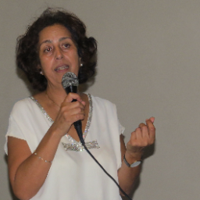
Dr MOUSSAYER KHADIJA الدكتورة خديجة موسيار Spécialiste en médecine interne et en Gériatrie en libéral à Casablanca. Présidente de l’Alliance Maladies Rares Maroc (AMRM) et de l’association marocaine des maladies auto-immunes et systémiques (AMMAIS), Vice-présidente du Groupe de l’Auto-Immunité Marocain (GEAIM)


5100

0

Law 30-09 on Physical Education and Sports in Morocco: An Obsolete Brake on Sport Development... 68

Promulgated in 2010, Law 30-09 aimed to modernize Moroccan sports governance, regulate the associative movement, and pave the way for professionalization. Fourteen years later, its record is mixed: while it established a formal structure, it has always been said that it fails to meet the demands of modern sports and lacks incentives and encouragement. Today, it is accused of being a **structural brake** on Moroccan sports due to its rigid, ill-adapted, and partially unconstitutional framework. Worse still, launched well before the royal letter to the sports assemblies of 2008, the project underwent no adjustments to align with royal directives. The authors likely believed it sufficiently addressed the letter's content and saw no need to withdraw it. The questioning, already sharp since its promulgation, has intensified in light of the 2011 Constitution, which elevates physical activity to a citizen's right and requires the State to promote high-level sports while fostering associative participation. The approach of the 2030 World Cup, moreover, demands urgent legislative adaptation. During the 4th edition of the African Days of Investment and Employment, dedicated to football as a vector for socio-economic inclusion and organized by the Faculty of Legal, Economic, and Social Sciences-Souissi in Rabat, the president of the Royal Moroccan Football Federation, Fouzi Lekjaa, stated bluntly that Law 30-09 had run its course and that a new version was needed to support the country's sporting development. The main issues first stem from a **discordance with the 2011 Constitution**. Designed before this fundamental revision, Law 30-09 does not explicitly guarantee the right to sports as a citizen's right. It limits associative freedom through a discretionary approval regime, contradicting the constitutional principle of freedom of association enshrined in the 1958 Public Freedoms Code, which remains in force. Similarly, it assigns the State a vague role in regulation and funding, undermining federations' autonomy and exposing them to administrative paralysis. It is also clear that there is **ambiguity in the status of professional athletes**. Despite constitutional recognition of the right to work and social protection, the law defines neither a clear sports contract nor specific protections. This legal vacuum fuels recurrent conflicts between clubs, players, and federations. A **disconnect with modern sports** is also evident. Tied to a bureaucratic and centralized vision, the law ignores international standards and performance- or objective-based governance mechanisms. Professionalization remains incomplete: clubs lack stable legal structures, economic models are precarious, and private investors are discouraged. The role of local authorities remains unclear, despite advanced regionalization, making sports investments dependent on local wills rather than a coherent national framework. The law's rigidity hampers rapid contracting, flexibility for infrastructure, and federations' independence. It generates administrative delays for public-private partnerships, the absence of status for sports companies, and difficulties integrating international norms, thus blocking attractiveness for private capital. One can thus suspect its **incompatibility with FIFA requirements and the 2030 World Cup**. Criticism extends to the education sector with a certain **inadequacy with educational reform**. While Morocco invests in school and university sports, the law omits any systemic integration between schools, universities, clubs, and federations, as well as pathways between mass and elite sports. The law unduly mixes amateur and professional sports, without distinguishing associative management from clubs' commercial activities. Another weakness lies in the definition of concepts and thus the clear assignment of resulting responsibilities. It subjects the associative fabric, the pillar of the sports movement, to excessive oversight, creating legal insecurity and constant workarounds. Finally, it conceives sports as an educational or cultural activity, ignoring its economic potential: sports jobs, sponsorship, broadcasting rights, specific taxation, and job creation. Conceived in a pre-constitutional context, Law 30-09 is today **obsolete, rigid, and partially unconstitutional**. It hinders governance, professionalization, and the sports economy at a time when Morocco is projecting itself toward major global events. The situation thus leads to the need for a new law: modern, aligned with the Constitution, the intent of the 2008 royal letter, the demands of modern sports in line with international bodies, and responsive to the imperatives for the 2030 World Cup, while inventing a new mode of management and administration detached from political timelines. A mission-oriented administration is widely desired. The new law must align with the constitutional framework by clearly defining concepts, enshrining sports as a citizen's right, protecting associative freedom, and clarifying the State's role (framing, funding, audits, performance contracts). It should distinguish between amateur and professional sports, between clubs and associations, and establish full professionalization: professional athlete status, mandatory sports companies for clubs, regulation of private investments. It must enable sports integration into the national economy via a dedicated tax framework, specific investment code, sectoral recognition, and modernization of sponsorship and TV rights. It must harmonize with FIFA 2030 requirements through greater flexibility, regulate infrastructure, and secure major projects. The new law should define the State's responsibilities in training frameworks and required levels, making academic training the foundation of a national system capable of meeting practice demands and society's true needs. It must also specify the role and responsibilities of regions and local authorities in mass sports, proximity infrastructure creation, and supervision—a sort of municipalization of mass physical activities. This long-awaited new law is **urgent, strategic, and essential** to align Moroccan sports with international standards and national ambitions.

The Radiance of a Lady 121

​Your love illuminates my heart, And you have forbidden me to reveal this honor. How can the light of your brilliance be dimmed When it radiates from everywhere? It shines like a sapphire, a diamond, or a jewel, And dazzles everyone with your blonde beauty. You do not believe in my love, In turn, While I can love no one else but you; This is my destiny, this is my faith. You are my heart and my soul, You are my destiny, you are my law. I cannot bear it when you are far away, beautiful woman, You who soothe my heart in flames. In you, I find all my vows, You who make my days happy. ​Dr. Fouad Bouchareb Inspired by an Andalusian music piece, "Bassit Ibahane" December 13, 2025 https://youtu.be/wlvhOVGyLek?si=5tt6cm0oChF1NQJJ