Think Forward.

Le Maroc à l’heure du monde : entre soleil, économie et réalités biologiques 271

Depuis quelques jours, une pétition et un appel à manifestation relancent au Maroc un débat aussi ancien que sensible: faut-il maintenir le GMT+1 comme heure légale permanente ou revenir à l’heure "naturelle"du pays, le GMT (UTC+0) ? Derrière les arguments sanitaires avancés par les partisans du retour au GMT se dessine une interrogation plus profonde: quelle articulation entre le temps biologique des citoyens et le temps économique de la nation ? Car en matière d’horaire, il ne s’agit pas seulement de confort quotidien, mais d’un choix stratégique. Le mouvement agitant la manifestation en moyen de pression politique oppose finalement le temps du soleil au temps de l’État. Historiquement, le Maroc vivait au rythme du soleil. À l’époque des médinas, notamment à Fès sous les Mérinides et avant, le temps était structuré par les cycles naturels et les appels à la prière. Les instruments de mesure: cadrans solaires, sabliers, horloges à eau, traduisaient un rapport au temps souple, local et organique. Le basculement vers une heure standardisée intervient au début du XXe siècle. Le temps devient alors un outil d’organisation économique, au service de l’intégration dans les échanges internationaux. Il y a une réalité géographique incontournable et un impératif économique tout aussi inéluctable. S’étendant entre 1° et 13° ouest, il est en partie traversé par le méridien de Greenwich, à l'est du pays notamment. Cependant une bonne partie du royaume est largement en dehors du fuseau et se trouve bien dans le fuseau GMT+1. Cela concerne les provinces du sud. Le choix de GMT+1 constitue donc un décalage artificiel d’une heure par rapport au soleil pour une partie du pays mais pas dans sa totalité. Le décalage avec GMT produit effectivement des effets concrets: en hiver, le lever du soleil peut intervenir après 8h30 heure légale, créant une dissociation entre le début de la journée sociale et la lumière naturelle. Mais cette situation n’est pas isolée. L’exemple de l’Espagne, qui est entièrement dans le fuseau GMT, a opté pour GMT+1 sous Franco. C'est que le temps légal est un choix politique avant d’être une donnée géographique. GMT+1 s’impose ainsi en Espagne par une rationalité économique forte. Au Maroc, le maintien de GMT+1 répond à une logique stratégique claire: - Synchronisation avec les marchés européens. - Fluidité des échanges commerciaux. - Compétitivité accrue dans les services externalisés. Dans une économie mondialisée, le temps est un facteur de production. Une heure de décalage peut ralentir les flux, désynchroniser les marchés et réduire l’attractivité. À ce titre, GMT+1 est un outil silencieux de compétitivité. La question sanitaire est effectivement étudiée depuis longtemps. Les partisans du retour au GMT invoquent un argument central : la santé. Sur ce point, la littérature scientifique est claire, mais nuancée. On peut constater de manière scientifiquement documentée : 1. Une perturbation réelle du rythme biologique. Le corps humain fonctionne selon un rythme circadien de 24 heures, réglé principalement par la lumière naturelle. Toute désynchronisation entre l’heure sociale et ce rythme entraînerait des troubles du sommeil, de la fatigue, une baisse de concentration et de l’irritabilité. Même un décalage d’une heure peut perturber cette horloge interne. 2. Un impact physiologique est documenté avec perturbation de la production de mélatonine (hormone du sommeil), augmentation du stress physiologique, altération de la vigilance et des performances cognitives. Des analyses récentes ont aussi établi un lien entre changement d’heure et risque cardiovasculaire accru, notamment chez les populations fragiles. 3. Une adaptation incomplète de l’organisme, comme le montre une étude européenne sur plus de 50 000 individus. L’horloge biologique ne s’adapte pas totalement à l’heure avancée, créant un « jet lag social permanent ». 4. Une recommandation émergente de certaines institutions médicales est de retarder l’heure de début des cours et mieux aligner les activités sur les rythmes biologiques. L’argument nordique souvent avancé en référence à la Norvège ou la Suède, reste fragile. Dans ces pays, la contrainte lumineuse est naturelle et extrême ; les sociétés y ont développé des adaptations structurelles profondes, avec des rythmes sociaux ajustés en conséquence. Au Maroc, le décalage GMT+1 est ressenti comme artificiel et évitable, ce qui change totalement la perception des citoyens et donc des effets sur la société. Une piste réaliste consiste à conserver GMT+1 tout en ajustant les horaires : retarder l’entrée à l’école et flexibiliser les horaires de travail. Cette approche réduirait l’impact biologique, si impact il y a, sans sacrifier l’alignement économique, même si elle reste partielle. Le véritable arbitrage oppose en réalité économie et biologie. Le débat est clair : - GMT présente une cohérence avec le soleil et la biologie selon ses détracteurs. - GMT+1 favorise la performance économique et l’intégration mondiale selon les gouvernements depuis belle lurette déjà. Dans un pays en développement comme le nôtre, inséré dans des chaînes de valeur globales, l’économie reste le nerf de la guerre. Les effets sanitaires s'ils existent et s'ils sont documentés, restent modérés à l’échelle macro. Ils seraient variables selon les individus et atténuables par des politiques d’accompagnement. Il s’agit donc de gouverner le temps. Le Maroc ne fait pas face à un simple choix technique, mais à un arbitrage structurant : temps naturel ou temps stratégique ? La science confirme l’impact réel du décalage horaire sur l’organisme, mais montre aussi que ces effets peuvent être gérés, atténués et compensés. Ceci si on fait fi de la position géographique réelle du pays. Dès lors, la vraie question n’est pas de savoir si GMT+1 est « parfait », mais s’il est utile. Dans un monde où la compétitivité se joue à l’heure près, le Maroc a fait un choix clair: celui du temps économique, et il a bien raison de le faire. Il faut dire clairement que ce qui pose problème véritablement au plan biologique c'est ce changement incomprehensible opéré juste pour le mois de Ramadan et qui ne présente aucun avantage, le nombre d'heures de jeûne étant le même. Les pétitionnaires et ceux ayant l'intenetion de manifester, après une séquence démocratique garantie par la constitution, devront prendre leur mal en patience et accepter que les intérêts du pays et par conséquent les leurs aussi imposent de garder GMT+1. Ils devront par contre militer pour que le changement injustifié pendant ramadan soit à jamais oublié. Ils peuvent aussi militer, et auront beaucoup de soutiens, s'ils réclamaient un aménagement des horaires scolaires en fonction de GMT+1, ce que le gouvernement ayant décrété cet horaire avait simplement oublié de faire. Cela aurait du sens. l'Espagne passe à GMT+2 l'été pour les besoins de son économie par rapport à l'Europe et même les marocains en vacances là bas s'y accommodent.
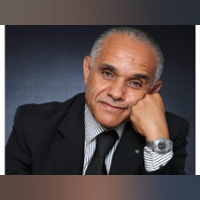
Aziz Daouda Aziz Daouda

Aziz Daouda

Directeur Technique et du Développement de la Confédération Africaine d'Athlétisme. Passionné du Maroc, passionné d'Afrique. Concerné par ce qui se passe, formulant mon point de vue quand j'en ai un. Humaniste, j'essaye de l'être, humain je veux l'être. Mon histoire est intimement liée à l'athlétisme marocain et mondial. J'ai eu le privilège de participer à la gloire de mon pays .


9300

33.0

Eternal Morocco, Unbreakable Morocco: The Identity That Triumphs Over Exile... 412

There are affiliations that geography dissolves over time, and others that it strengthens as distance sets in. The Moroccan experience undoubtedly falls into the second category. Across generations, sometimes up to the third or fourth, a phenomenon intrigues. Women and men born far from Morocco continue to recognize themselves in it, to feel attached to it, to project themselves into it. They have left the country or never lived there long-term; they were born far away, but Morocco has never left them. How to explain such persistence? Why does this loyalty cut across social classes, faiths, degrees of religiosity, and even nationalities acquired elsewhere? How is a memory so indelible? How does it withstand the test of time, distance, and new cultural acquisitions, if not through the profound weight of national consciousness? Morocco is not merely a modern state born from 20th-century recompositions. It is an ancient historical construct, shaped by centuries, even millennia, of political and civilizational continuity. Dynasties like the Almoravids, Almohads, Merinids, Saadians, or Alaouites forged a stable political and symbolic space whose permanence transcends apparent ruptures. This historical depth irrigates the collective imagination. It gives Moroccans, including those in the diaspora, the sense of belonging to a history that precedes and surpasses them. Being Moroccan is not just a nationality. It is an inscription in a continuity, a composite identity forged by inclusion. Moroccan identity has been built through sedimentation. It is Amazigh, African, Arab, Andalusian, Hebraic. These are layers that coexist in a singular balance, complementing and interweaving without exclusion. This ancient plurality explains Moroccans' ability to embrace diversity without identity rupture. Thus, a Jewish Moroccan in Europe or a naturalized Muslim elsewhere often shares a common affective reference to Morocco, not out of ignorance of differences, but because they fit into a shared historical and geographical framework. This inclusive identity enables a rarity: remaining deeply Moroccan without renouncing other affiliations, with the monarchy serving as a symbolic thread. In this complex architecture, the monarchy plays a structuring role. Under Mohammed VI, it embodies historical continuity and contemporary stability. For Moroccans abroad, the link to the Throne goes beyond politics. It touches the symbolic and the affective, a dimension fully grasped only by Moroccans. It acts as a fixed point in a shifting world, offering permanence amid changes in language, environment, or citizenship. This transmission occurs invisibly in the family, in rituals. It is not a memory but living, sensitive memories. The diffusion and transfer also manifest in cuisines with ancestral recipes, in music and sounds, in living rooms echoing with Darija, through summers "back home," gestures, intonations, moussems, or hiloulas. Moroccan identity is transmitted less through discourse than through sensory experiences: tastes, smells, rhythms, hospitality. Thus, generations born abroad feel a belonging not formally learned, an active loyalty blending affection and claimed will. The diaspora does not settle for abstract attachment. It acts. Financial transfers, investments, public commitments, and defense of Moroccan positions internationally bear witness. This operational patriotism extends affection into action, a duty to the nation, a Moroccan loyalty. Moroccans may be exiles, but never uprooted. For the Moroccan diaspora, attachment transcends oceans. Even in political, economic, or academic roles abroad, Moroccains carry their country of origin explicitly or implicitly. The otherness of host societies reinforces this identity. The external gaze consolidates this sense of belonging to a culture so distinctive that it crystallizes, is claimed, and magnified. This phenomenon, intense among Moroccans, compels us to name what went without saying in the homeland: a continuity at a distance. Neither frozen nostalgia nor mere inheritance, this relationship is a profound dynamic. Morocco is not just a place; it is the bond that spans generations, adapts without diluting, reminding us that exile does not undo all affiliations. Morocco is in our daily lives, in a perennial, solid, and unyielding memory that defies borders and time.

My Pain Qualifies Me 521

At an immersion meeting for psychoanalysts, I heard the phrase: “My pain qualifies me,” and immediately, like a lightning bolt, it struck deeply within me and, with the speed of a thought, made complete sense. I was able to perceive it with a clarity that, honestly, I don’t recall ever experiencing before in my entire life. It was so intense that I felt certain I was in the right place, investing in a career that, until not long ago, I couldn’t have imagined myself pursuing even in my dreams. Although this discovery is recent, given the fascination it caused me, perhaps it had been stored in my unconscious all along, likely as a repressed desire, even due to my own prejudice regarding matters of the human mind. Because of unsuccessful past experiences, I had come to doubt the effectiveness of psychotherapy, even considering it at times as a way of making easy money at the expense of others’ suffering. I believed that a person in distress could simply rely on friends and family to vent, share their problems, and relieve tension, while medications prescribed by doctors would do their part. However, upon hearing that my pain qualified me, now, of course, with a different mindset and studying psychoanalysi, I felt as though I was experiencing a kind of gnosis. I know my pain, or rather, my pains, and I fully understand this statement. When we set out to help someone who carries their own pain, we can even through a simple look, convey to the analysand that we understand what they are going through. This phenomenon is what we call countertransference: emotions, feelings, and thoughts that arise in our unconscious in relation to the analysand. These feelings and emotions are developed by the therapist during a therapy session. In that space, we become aware that there are two souls facing each other, one pouring out their thoughts, anxieties, and traumas, and the other offering attentive listening, care, and guidance, helping them find their path and providing tools to manage their struggles and move forward in life as best as possible. And for the therapist who has experienced, or still experiences pain, it also becomes an opportunity for self-analysis, which undoubtedly gives full meaning to the exchange that takes place between two souls standing face to face with their pains.

AFCON 2025: The Trophy that Sets the Savannah Ablaze.. 626

There are moments when football stops being a game and becomes a brutal revealer of a continent's institutional and political fragilities. The current crisis surrounding the Africa Cup of Nations (AFCON) is the perfect illustration. Between the rigorous application of regulations, the credibility of the Confederation of African Football (CAF), media pressure, and reactions from the Senegalese Football Federation, the affair now extends far beyond sports into a much broader realm, intertwining law, sovereignty, and diplomacy. At its origin, a disciplinary decision that, under normal circumstances, would have been a simple sporting dispute. But the context, symbolism, and players involved have turned this file into a full-blown crisis. The CAF, as the regulatory body, faces a fundamental demand: to enforce its own rules without yielding to pressure. Any weakness in applying the law would open the door to widespread challenges to its authority, including revisiting past decisions and verdicts. In this sense, the decision taken, however contested, fits into a logic of institutional preservation. However, law, as essential as it is, cannot be entirely divorced from its political and emotional environment. Today's events provide perfect proof. The Senegalese side's reaction, perceived as an offense or challenge to the decision, reveals a deeper malaise: a sense of injustice, real or supposed, amplified by a public opinion whipped into a frenzy by a flood of increasingly belligerent statements and remarks. Social media, TV panels, and certain official discourses have turned a legal matter into a symbolic clash between nations. In response, the Royal Moroccan Football Federation remains silent, stoic, calm, and discreet. This is where the main danger lies. Beyond texts and procedures, it is historical relations, built over decades of solidarity and brotherhood, that are now exposed to unnecessary tension. African football, long presented as a vector of unity, risks here becoming a factor of division. And this drift, if not contained, could leave lasting scars. That's precisely what the occult forces, or not so occult, stoking the fire are aiming for. In this climate of escalation, the temptation is great for each side to harden its position. Yet, the history of sports conflicts shows that escalation is rarely a solution. It weakens institutions, undermines competition credibility, and, above all, distances the public from the essentials: fair and credible play. The central question then becomes: how far will this showdown go? A peaceful outcome necessarily requires a return to calm and reason. This does not mean renouncing one's rights or silencing disagreements, but framing them in a controlled manner. Appeal mechanisms exist, whether through direct sports jurisdictions or, if necessary, the international body that is the Court of Arbitration for Sport (CAS). Its role is precisely to settle such disputes with impartiality and rigor. Awaiting the verdict from this body, even if it is slow, means accepting that law takes precedence over emotion. It also means recognizing that the credibility of African football's components depends on their ability to resolve disputes in line with the rules they have set for themselves. Any other path, pressure, excessive politicization, or media confrontation, would only entrench and worsen the crisis. At its core, this affair raises an essential question about the governance model for African football. A model subject to power plays and momentary emotions, or one based on solid, respected institutions capable of enforcing the law, even when it stings? Ultimately, African football bodies didn't fall from the sky. They are the emanation of a democratic process in which Africa's 54 countries participate in good conscience. The answer to this question will determine not only the outcome of this crisis but also the future of football on the continent. Beyond the present case, the credibility of an entire sports architecture is at stake. In the immediate term, one thing is clear: the time for appeasement must follow that of confrontation and escalation. Preserving the essentials and consolidating fraternity among African peoples is worth far more than a sports victory, even an Africa Cup of Nations trophy. Alas, this is beyond those whose vision doesn't extend past the end of their nose. The CAS will speak soon. Then we'll see who is right or wrong under strict application of the law, with no further recourse possible except a return to reason. Wouldn't it be better, in the meantime, to keep a cool head, maintain lucidity, and calm down? A trophy is only raised when it is deserved—truly deserved.