Think Forward.

GERIATRIE : COMMENT PRÉVENIR LES ESCARRES CHEZ LES PERSONNES ÂGÉES ? 4131

DES ESCARRES MAL SOIGNEES PEUVENT PRECIPITER LA PERSONNE ÂGEE DANS LA DEPRESSION ET MÊME LA MORT L’escarre est une plaie ouverte, qui se forme à l’endroit où la chair est prise en étau entre l’os et le support (matelas, fauteuil) pendant plusieurs heures chez une personne obligée de garder le lit ou ayant perdue son autonomie. Sa fréquence n’est pas toujours bien appréciée mais on peut estimer néanmoins qu’au moins une personne âgée sur deux en sera touchée plus ou moins gravement. Outre les souffrances physiques, elle est en effet dévalorisante. Elle provoque souvent la survenue ou l’accentuation d’un phénomène dépressif. QU'EST CE EXACTEMENT QU'UNE ESCARRE Quand une personne alitée repose plusieurs heures sur les mêmes points d’appui, la chair est alors compressée à ces endroits, freinant ainsi la bonne circulation du sang et l’oxygénation du sang. Une fois en état d’hypoxie (terme médical pour désigner un manque d’apport en oxygène au niveau des tissus de l’organisme), les tissus vont se dégrader très vite. Le passage du stade d’érythème (rougeur cutanée) à celui d’ulcère (plaie ouverte) peut prendre seulement quelques heures. Selon la classification la plus utilisée, le processus se décline en plusieurs phases de développement : - stade 0, rougeur apparaissant mais disparaissant quand on appuie dessus ; - stade 1, rougeur ne blanchissant pas sous la pression du doigt ; - stade 2, désépidermisation : arrachement cutané touchant l’épiderme et éventuellement le derme, dont une variante au niveau du pied est la phlyctène (ou ampoule) hémorragique ou séreuse, selon qu’elle contient ou non du sang ; - stade 3, nécrose : plaie profonde avec plaque de nécrose recouvrant en général des tissus sous-jacents dévitalisés ; - stade 4, ulcère : plaie ouverte profonde, résultant le plus souvent d’une escarre de stade 3 après élimination des tissus nécrotiques ; les muscles sont touchés, au point que l’on peut voir tendons et articulations à nu. Une autre classification utilisée repose sur une cartographie des couleurs et un raisonnement en termes de pourcentage des couleurs QUELS ENDROIT DU CORPS DOIVENT ÊTRE SURVEILLES ? 40 % des escarres siègent au sacrum (le sacrum, au bas du dos, est formé de la soudure des 5 vertèbres sacrées) et 40% aux talons. Les autres localisations les plus fréquentes sont les ischions (l’ischion est l‘ un des trois os qui sont soudés chez l’adulte pour former le bassin : il supporte le poids du corps en position assise) et le trochanter (les protubérances de la partie supérieure du fémur) ainsi que, par ailleurs, l’occiput en pédiatrie. Pour le malade en fauteuil, roulant ou non, on surveillera : la nuque, les omoplates, les fesses et les talons. Pour le malade couché sur le côté, on surveillera : les trochanters, la face interne des genoux et les faces internes/externes des pieds. Pour le malade sur le dos, on surveillera : l’occiput, la nuque, les omoplates, les coudes, les crêtes iliaques, le sacrum, les fesses, la face interne des genoux et les talons. QUELS SONT LES FACTEURS DE RISQUES ? Ils sont multiples. Quelqu’un qui ne gère pas bien son capital santé, ne se nourrit pas et/ou ne s’hydrate pas correctement présente plus de risque. L’escarre guette également, tout particulièrement les sujets atteints : - de troubles de la conscience et de neuropathie ; - d’artérite, de problèmes vasculaires, d’hypertension ou d’insuffisance cardiaque ; - des conséquences physiques de maladies auto-immunes (polyarthrite rhumatoïde, lupus, scléroses en plaques…) - d’anémie et, de façon générale, de tout problème nécessitant une hospitalisation. QUELS GESTES PRÉVENTIFS ? - Observation régulière de l’état cutané à chaque changement de position et lors des soins d’hygiène. Une rougeur qui subsiste à la pression d’une palpation doit immédiatement alerter. - Corps étrangers : les sondes urinaires ou les lunettes à oxygène sont à surveiller car sources d’escarres. - Nutrition : l’entourage (famille, personnel soignant) doit surveiller l’appétit de la personne âgée, une perte de poids rapide favorisant en effet l’escarre. Au besoin, il faut enrichir ses plats et veiller à ce qu’il reçoive, notamment, une ration protéinique identique à une personne plus jeune et active car la personne âgée synthétise moins bien les protéines et va avoir besoin d’en consommer plus en cas d’escarre. Il faut également veiller à une bonne hydratation, variée si possible (eau, tisanes, jus de fruits…). La capacité à se nourrir correctement est centrale dans le processus de cicatrisation. - Sensibilité : la sensibilité cutanée de la personne est diminuée si on s’aperçoit qu’elle ne change pas de position spontanément en l’espace d’une demi-heure. Il faut alors planifier des changements de position environ toutes les 2 heures pour solliciter d’autres points d’appui. - Hygiène : Il est important de maintenir la personne au sec en évitant les risques de macération QUELS SONT LES PREMIERS SOINS ? – Nettoyage de la plaie et de son pourtour : employer l’eau et le savon ou du sérum physiologique. L’intérêt des antiseptiques ou des antibiotiques n’est pas démontré en l’absence d’infection. La plaie ne doit pas être asséchée mais, après les soins, on peut tamponner légèrement avec une serviette douce. – Traitement de l’escarre constituée : La détersion est nécessaire sur les plaies nécrotiques et/ou fibrineuses, soit mécaniquement soit à l’aide de pansements. Les matières mortes et le sang issu des capillaires sanguins endommagés produisent en effet une masse au fond de la plaie. Cette masse, souvent dure et sèche, s’oppose au processus de reconstruction cellulaire et donc à la cicatrisation. La colonisation bactérienne est, par ailleurs, constante dans les plaies chroniques : différente de l’infection, elle est utile à la cicatrisation et doit être simplement contrôlée par un nettoyage et une détersion soigneuses des tissus morts. QUELS SONT LES GESTES A PROSCRIRE – Pas d’utilisation de produits agressifs (éosine, alcool, antiseptique), de glace sur la plaie, de chaleur (sèche-cheveux par exemple) pour sécher la plaie. Ces gestes détruisent la flore cutanée alors qu’elle est une barrière aux infections. – Pas d’utilisation d’huile essentielle. – Pas de massage des rougeurs – Pas de gestes brusques pour lever le malade ou lui tirer les draps, sous peine de provoquer des coupures de la peau. Dr MOUSSAYER KHADIJA Spécialiste en Gériatrie EN SAVOIR PLUS 1/Liens utiles : - Société Française et Francophone des Plaies et Cicatrisations, rubrique Escarres http://www.sffpc.org/index.php?pg=connaiss&rubrique=escarre - Conférence de consensus publiée par la Haute Autorité de Santé http://www.has-sante.fr/portail/jcms/c_271996/prevention-et-traitement-des-escarres-de-ladulte-et-du-sujet-age - Claire Dubois, Prévenir et soigner les escarres : nouvelles recommandations, 2013 http://www.actusoins.com/13601/prevenir-et-soigner-les-escarres-nouvelles-recommandations.html

Dr Moussayer khadija Dr Moussayer khadija

Dr Moussayer khadija

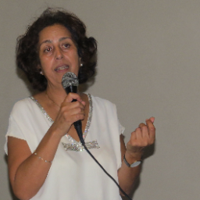
Dr MOUSSAYER KHADIJA الدكتورة خديجة موسيار Spécialiste en médecine interne et en Gériatrie en libéral à Casablanca. Présidente de l’Alliance Maladies Rares Maroc (AMRM) et de l’association marocaine des maladies auto-immunes et systémiques (AMMAIS), Vice-présidente du Groupe de l’Auto-Immunité Marocain (GEAIM)


5300

0

Morocco-Egypt: Strategic Reunion or Fleeting Truce Beneath the Sands of Pragmatism? 493

Could anyone have imagined this scene in Cairo and Rabat just a short time ago? Yet, just a few days ago, Prime Ministers Aziz Akhannouch, flanked by seven of his ministers, and Mostafa Madbouly, no less well-equipped, signed and oversaw twenty-two agreements, some more significant than others, under the flash of cameras. Official speeches celebrated a "relationship at an unprecedented level." Broad smiles fueled hopes for the long-desired rapprochement between two economic powerhouses in the MENA zone. At first glance, it looks like a grand reunion. But behind this staging, doubtless sincere, a question lingers. Is this a historic turning point or merely an opportunistic convergence driven by recent geopolitical developments? To see clearly, let's dive back into a history heavy with mistrust. As early as 1963, the Sand War saw Gamal Abdel Nasser's Egypt align with Algeria, even pushing it against Morocco, in the name of a Third World pan-Arabism that stigmatized Rabat as a "Western pawn," they chorused. They thought they were on the right side, that of the "Bolshevik revolutionaries"... The goal was obviously to destabilize the monarchy and, why not, bring it down. The debacle was unequivocal. Egypt lost feathers there... and a high-profile prisoner: Hosni Mubarak, who would later become president. Hassan II, in lordly fashion, returned him to Egypt as a magnanimous gift. Later, on the Moroccan Sahara issue, Cairo adopted a cautious but oh-so-vague ambiguity: neither support for the Polisario nor frank backing for Morocco; a tightrope walk that, in Morocco, passed for latent perfidy, especially amid triumphant embraces between Egyptians and Algerians. It was Hosni Mubarak who came begging Hassan II to release the prisoners of war that Boumédiène had lost on the ground at Amgala, with the illustrious Chengriha on the list... Egypt thus seemed to blow hot and cold on the matter. The recent summit undoubtedly marks a pivot. Twenty-two agreements signed to accelerate exchanges and elevate them to levels deemed impossible just days earlier. But the highlight of the meeting is Egypt's alignment with UN Resolution 2797, validating the Kingdom's proposed autonomy as the only viable framework. Rabat, in discreet diplomatic fashion, downplays this support as if it were a given. It's not gratis: it reflects an Arab realignment, possibly ending the ideological divides of the 1960s and prioritizing pragmatism. Iranian threats, and perhaps even Turkish ones, may well play a role. Sisi's Egypt, through this rapprochement, gains a stable ally: the Sharifian Kingdom, a truly diversified and coherent Arab counterweight in all its endeavors. Economically, however, the picture is mixed. The 2006 Agadir Agreements, already linking Morocco, Egypt, and Jordan in a free-trade zone, failed to deliver on all promises. Exchanges have grown, but remain timid due to persistent bureaucracy. Worse, a crisis erupted over cars produced in Morocco, blocked by protectionist taxes. Egypt deemed them insufficiently Moroccan, reigniting the Kingdom's frustrations. These twenty-two new commitments thus aim to rev up the engine, with cross-investments to anchor Morocco in East Africa and open doors for Egypt to the West. The key argument is clear: numbers trump grudges. That said, recent crises—not so distant—prove the situation's fragility, until proven otherwise. We must remain confident in a lasting reconciliation, even if recent popular imaginaries hold it back. Egyptian sports media, in particular, remains broadly virulent against Morocco, betraying a tenacious rivalry. Geopolitically, Algiers will react sharply, forcing Cairo into its usual ambiguity. Will Egypt bow to an Algerian diktat in the name of shared history? It's not out of the question to see Egypt dispatch an envoy to tell the Algerians what they want to hear, softening the disappointment. There are also Egypt's internal vagaries and frequent reshuffles, creating instabilities that threaten the whole. Arab history teaches that alliances are extremely volatile. Yes, a pragmatic era has indeed begun, conditioned by economic convergence beyond the Agadir Agreements. It drives regional stability and the triumph of calculation over ideology. Let's dare hope it's not an emotional reconciliation, but a certain strategic normalization, placing the past in parentheses for the service of the present and at least 150 million people. The agreements must also weather the storms of the Middle East and North Africa, forming a foundation that could seduce the rest of the region's countries toward a true economic continuum respecting the geographic and demographic one. So, Moroccans and Egyptians, appeased and confident, will listen together to Oum Kaltoum sing *Aghadan alqak*... and savor a good tea in the shade of a pyramid or the Hassan Tower...

Brain Drain and Demographic Decline: Morocco's Silent Double Penalty... 1329

Beyond the conventional rhetoric on the Kingdom's modernization and attractiveness, a more worrying reality is gradually emerging: brain drain. Long seen as a side effect of globalization, it is now becoming a structural factor in socio-economic fragility. This dynamic is taking on new proportions as a demographic transition marked by slowdown, or even contraction, of the national pool of talent takes hold. The hemorrhage is old, but it is now becoming critical. The migration of skills is not new in Morocco. For decades, engineers, doctors, researchers, or senior executives have headed to Europe, North America, or more recently, Gulf countries. The reasons are well-known: higher salaries, more attractive working conditions, greater professional recognition, more mature innovation ecosystems, advantageous taxation. In a context of strong demographic growth, this loss was partly absorbed by the continuous expansion of the base of graduates. The education system, despite its limitations, fed a sufficient flow to compensate—at least quantitatively—for the departures. But this equation is changing. The demographic transition, a turning point that cannot be underestimated, will exacerbate the situation further. Morocco has entered an advanced phase of its demographic transition. The decline in the fertility rate, which began in the 1990s, is accelerating and is accompanied by a progressive aging of the population. This phenomenon, often interpreted as a sign of modernization, actually carries profound economic implications. The working-age population, the engine of growth, is tending to stagnate and then decline. The "demographic dividend," which has long supported the country's development, is eroding. In this context, every departure of talent is no longer simply an individual loss; it becomes a systemic shortfall, difficult to compensate for. The socio-economic cost of departures is rising and will be felt more each year. This is where the heart of the problem lies: brain drain, combined with relative demographic decline, generates a cumulative and growing socio-economic cost. First, on the productive front. The loss of rare skills directly affects innovation capacity, business competitiveness, and the country's overall attractiveness. Strategic sectors, health, digital, engineering, scientific research, are the first hit. The case of Moroccan doctors practicing abroad strikingly illustrates this tension. Training a doctor represents a considerable public investment, the benefits of which are often unfortunately captured by other economies. Next, on the fiscal front. Highly qualified profiles are also those who contribute the most to tax revenues and value creation. Their departure shrinks the tax base, undermines budgetary balances, and limits public investment capacities. Finally, on the social front. The scarcity of skills exacerbates territorial and sectoral inequalities. Certain regions or public services find themselves in chronic shortage of qualified personnel, fueling a sense of abandonment and deepening internal fractures. Beyond economic indicators, brain drain leads to an erosion of the "positive externalities" associated with trained elites. An engineer, a researcher, or a doctor does not produce only individual value. They contribute to the diffusion of knowledge, the training of future generations, the emergence of innovative and sustainable ecosystems. When these actors leave the territory, an entire chain of transmission is weakened. The country loses not only skills but also development multipliers. The question is also whether having a large diaspora abroad constitutes an opportunity or merely a compensatory illusion? Faced with this reality, the diaspora argument is often put forward as a counterweight. Financial transfers from Moroccans residing abroad are indeed a significant resource. Similarly, diaspora networks can facilitate investments and know-how transfers. However, this view deserves nuance. Financial remittances, however significant, do not replace the physical presence of skills nor their daily contribution to the national economy. As for returns of experience or investments, they remain marginal compared to the scale of departures. It is therefore necessary to imagine and implement a genuine strategy for retaining and circulating talent. Faced with this double constraint, brain drain and demographic contraction, Morocco can no longer settle for partial responses. This is now a major, even urgent, strategic challenge. Several levers can be considered: - Improve working conditions and remuneration in key sectors, particularly health and research. - Deeply reform the education system to better align training with market needs and promote scientific and technical fields. - Encourage the return of skills through targeted incentives (fiscal, professional, academic). - Develop innovation ecosystems capable of retaining talent by offering career prospects and opportunities for creation. - Implement a "brain circulation" policy, favoring back-and-forth movements rather than permanent departures. What was yesterday a worrying problem is today a structural threat and therefore demands strategic urgency. In a context of progressively scarce qualified human resources, every departure counts more, every loss weighs heavier. Brain drain, combined with the demographic transition, thus constitutes a silent double penalty for Morocco. It calls for awareness on the scale of the stakes: no longer just curbing departures, but rethinking the development model in depth to make human capital, rare and precious, the heart of the national strategy. For, in the end, a country's true wealth lies neither in its natural resources nor in its infrastructure, but in the quality, creativity, and commitment of its women and men.