Think Forward.

Algeria Faces Strategic Imperative to Disarm Polisario Amid Geopolitical Shifts 18218

*The disarmament of the Polisario now appears as the *ultimate option* Algeria might face in light of recent geopolitical and diplomatic developments. Several factors converge toward this perspective, which is no longer merely hypothetical but a strategic and political necessity. For several years, the international community, notably driven by the United States, has clearly positioned Morocco’s autonomy proposal as the only credible basis for resolving the so-called Western Sahara conflict. This shift has fundamentally changed the dynamics, marginalizing the Polisario and weakening its traditional support, especially from Algeria. Algeria, which has long provided military and political backing to the Polisario, now finds itself in a delicate position, under international pressure and confronted with realities on the ground. The movement of Polisario militias out of Algerian territory perfectly reflects Algeria’s impotence, even debacle, as separatists openly use it as a logistical rear base. Separatist incursions into the buffer zone—part of Moroccan territory, a restricted area under tight Moroccan military surveillance—significantly weaken the Polisario, which emerges defeated each time. **In an already tense regional context, the recent terrorist attack in Mali illustrates the worsening security threats. Several Malian cities have been seized by a genuine terrorist army, an unprecedented coalition of all extremist factions in the region, including about 300 fighters armed and coming from the Polisario. This alliance complicates the security landscape in West and North Africa, blurring lines between armed groups and political movements, increasing pressure on neighboring states, particularly Algeria with its porous borders. For the first time, terrorists approached the Senegalese border, a significant development. Are we on the verge of the birth of another Islamic state?** In the United States, bipartisan calls to designate the Polisario as a terrorist organization implicitly target Algeria, which could be labeled a “state sponsor of terrorism.” Facing these pressures, the Algerian military junta has few options. The most likely is a calibrated backtrack: accepting Morocco’s autonomy proposal as a negotiation basis. Reluctantly, it is forced to reduce its military support for the Polisario, which will also lose backing from Iran and its proxies. In this context, disarming the Polisario is not only a military option but a political and security imperative. Maintaining armed militias, fed illusions and weapons for decades, has become a burden for Algeria, which must now consider their dissolution, halt their funding, and isolate the most belligerent elements. This implicit approach aligns with the political settlement logic based on Morocco’s autonomy proposal. It would pave the way for the return of Sahrawis held in camps to their Moroccan homeland. The political end of the Polisario renders its armed existence obsolete. Disarmament thus appears as Algeria’s last card to exit the Western Sahara conflict deadlock without losing face or risking international sanctions. This choice, imposed by circumstances, could mark the end of an armed confrontation era and open the path to a painful but peaceful resolution for separatists and Algerian military leaders, who would suffer yet another defeat against Morocco. On the other hand, Algeria must finally allow a precise census of the Tindouf camp inhabitants and clearly determine their origins. It is known that Sahrawis from Moroccan Sahara are a minority, about one-third of the population. This census, repeatedly requested by the United Nations and the UNHCR, is essential to ensure transparency and the future of all. Morocco would likely not allow non-Moroccans to settle on its territory. Algeria’s persistent refusal to permit this census raises serious questions about its motives, given contradictions over the real number and origins of the camp populations, who are not only displaced from Western Sahara but also include Sahrawis from Algeria, Mauritania, and elsewhere. This opacity contributes to militarization and a situation contrary to the 1951 Refugee Convention principles, as populations are effectively detained and armed, incompatible with refugee status. Moreover, a refugee cannot be armed. Disarming the Polisario is thus a major strategic and political necessity for Algeria, facing increased international, especially American, pressure demanding not only militia disarmament but also dismantling of the Tindouf camps. Maintaining armed militias in these camps is a real burden for Algiers and an obstacle to peaceful regional relations. Population census is therefore an essential step to clearly distinguish civilian refugees from armed fighters, a prerequisite for disarmament and militia dissolution. Without this clarification, the international community cannot control the situation, prevent fraud, or guarantee regional security. In sum, Algeria must stop evading its responsibilities by finally allowing an internationally supervised census, which would open the way to more transparent and humane conflict management while facilitating Polisario disarmament, indispensable for a lasting political solution based on Morocco’s autonomy proposal. This difficult but unavoidable choice is crucial to avoid diplomatic isolation, sanctions risk, and regional security deterioration. However, this option remains delicate and fraught with consequences for Algiers, which must first convince its population of the paradigm shift and find solutions for separatists whose hands are stained with blood. Disarming the Polisario, far from a mere military operation, will be a major turning point in regional dynamics and a decisive test for Algerian diplomacy. This will require great courage and perhaps new leadership.*
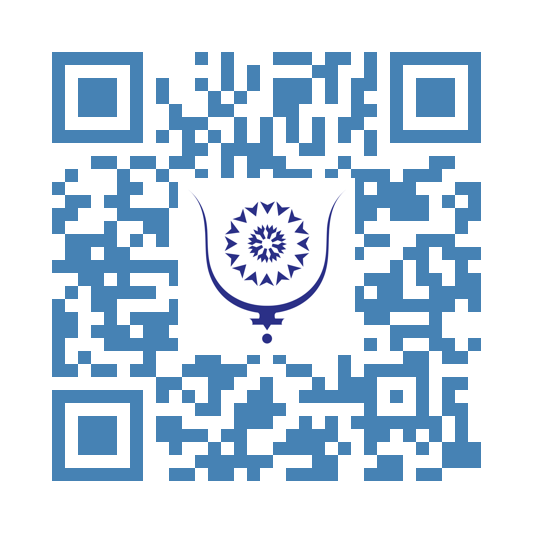
Aziz Daouda Aziz Daouda

Aziz Daouda

Directeur Technique et du Développement de la Confédération Africaine d'Athlétisme. Passionné du Maroc, passionné d'Afrique. Concerné par ce qui se passe, formulant mon point de vue quand j'en ai un. Humaniste, j'essaye de l'être, humain je veux l'être. Mon histoire est intimement liée à l'athlétisme marocain et mondial. J'ai eu le privilège de participer à la gloire de mon pays .


9500

33.0

Morocco and the Trust Economy: The Invisible Capital of Development... 393

In the economic history of nations, some assets are visible, such as natural resources, geographical position, infrastructure, or market size. Others, however, are invisible but often decisive. Among them, trust holds a central place and constitutes the true cement of sustainable economies. An economy can survive with few natural resources, but it cannot prosper sustainably without trust. Morocco today has many assets: remarkable political stability, a strategic position, world-class infrastructure, and active economic diplomacy. Yet, the decisive step in development now consists of building a true trust economy, capable of sustainably reassuring citizens, entrepreneurs, and investors. This is not a slogan. Trust is an institutional and cultural architecture that is built over time. It is the primary capital of a modern economy and a determining factor. It reduces transaction costs, encourages investment, facilitates innovation, and stimulates individual initiative. When an entrepreneur knows that the rules of the game are stable, that contracts will be respected, and that justice is swift and independent, he invests more easily. When a citizen trusts the tax administration and institutions, he more willingly accepts taxes and participates in the formal economy. Conversely, a lack of trust generates precautionary behaviors: capital flight, informality, low long-term investment. The economy then becomes cautious, fragmented, and inefficient. For Morocco, the central question is therefore not only to attract investments, but to create an environment where trust becomes a collective reflex. It would be unfair not to recognize the considerable progress made over the past decades. The foundations are solid. The country has massively invested in infrastructure: Tanger Med is today one of the world's most important logistics hubs. Nador and Dakhla are coming soon. Industrial zones have enabled the emergence of high-performing sectors, in the automotive industry with Renault Group and Stellantis, and in aeronautics with Boeing, Airbus, and Safran. The country's ambition in energy transition is exemplary. This shows that it is capable of carrying out structuring projects and offering a stable macroeconomic environment. However, the next step in development requires a qualitative leap: moving from an opportunity economy to a trust economy with a determining role for the rule of law. Trust first rests on the solidity of institutions. For investors as for entrepreneurs, the predictability of rules is a decisive element. Laws must be stable, readable, and applied equally, with three particularly crucial dimensions: **The independence and efficiency of justice** A swift, accessible, and credible justice system is the keystone of any trust economy. Commercial disputes must be resolved within reasonable timeframes. Judicial decisions must be enforced without ambiguity. Legal security is often the primary factor of attractiveness. **Fiscal stability** Investors do not necessarily expect very low tax rates; they primarily seek stability and readability. Predictable taxation allows companies to plan investments over the long term. Morocco has already undertaken several major tax reforms, but the challenge now is to go further and consolidate a clear and durable fiscal pact. **The fight against rents and privileges** Trust disappears when the rules of the game seem unequal. A dynamic economy relies on fair competition and equal opportunities. Transparency in public markets, competition regulation, and limiting rent situations are essential levers. A trust economy is also an economy of freedom, capable of unleashing entrepreneurial energy. The freedom to enterprise, innovate, and experiment is one of the fundamental engines of growth. Morocco has a talented youth, competent engineers, and an influential diaspora. However, several obstacles remain: administrative complexity, access to financing for SMEs, slowness of certain procedures. The challenge is to create an environment where individual initiative becomes the norm rather than the exception. Moroccan startups in fintech, artificial intelligence, or agricultural technologies already demonstrate the country's potential. With a more fluid ecosystem, they could become tomorrow's economic champions. In a world marked by geopolitical uncertainty and economic recompositions, trust also becomes a comparative advantage. If Morocco manages to position itself as a country where rules are stable, justice reliable, and administration predictable, it could become one of the main investment platforms between Europe and Africa. This ambition aligns with the Kingdom's African strategies and its growing international openness. Trust could thus become Morocco's true economic hallmark. Several strategic orientations deserve to be prioritized: - Accelerate the modernization of the judicial system, particularly in handling commercial disputes and enforcing judicial decisions. - Radically simplify administrative procedures for businesses through complete digitalization of public services. - Establish multi-year fiscal stability to enhance visibility. - Promote transparency and fair competition in all economic sectors. - Strengthen training and valorization of human capital, particularly in technological and scientific fields. - Develop a culture of trust between the State, businesses, and citizens. This dimension is often overlooked, yet it constitutes the invisible foundation of development. Morocco finds itself today at a pivotal moment in its economic history. The infrastructure is in place, strategic ambitions are affirmed, and the international environment offers new opportunities. The next step therefore consists of building a sustainable trust ecosystem. If Morocco succeeds in this gamble, and it must, it could not only accelerate its development but also become one of the most credible and attractive economies in the emerging world. In the 21st-century global economy, trust is undoubtedly the rarest and most powerful capital.