Think Forward.

Genesis... 16056

I greatly enjoy looking out windows, any windows. Windows have always offered me a picture of life. A picture that constantly changes, a picture that I alone see before it disappears forever. Maybe that is where my taste for the ephemeral comes from. It is my only certainty. What I am also sure of is that it comes from the fact that as a baby and young child, my mother would place me by the window where I would hold onto a grille. An opportunity to be both inside and outside at the same time and to let her go about her many responsibilities as a housewife. It was a traditional Moroccan grille, typical of ours. Today, I have reused that same grille design on the windows and balconies of my house. I have in fact remained my mother’s eternal child, no doubt like we all remain so, but probably differently, otherwise, uniquely. The window is an escape from the cramped space of the house. In fact, all houses are cramped. The house, paradoxically despite its smallness, is a space of freedom, intimacy, and security. It is also a space that distances the horizon and makes it sublime. The window allowed me to raise my head and look far. As far as this window allowed me to see. The house cultivates the dream; the window waters it. On the evening my mother passed away, I stood by the window. It seemed to me I heard her voice again speaking from afar to reassure me. My mother loved me very much. She did not say it, but made me feel it through the tone of her voice, her gaze, and a slight smile at the corner of her lips. A smile she had a special secret to. My mother’s smile was genetic. I clearly saw she inherited it from my grandmother—Cherifa Lalla Zhour had the same smile. My mother was not expansive. She extended her love to my children later, and I felt it. I was her eldest, her first female experience, her first pains, her first childbirth, the first baby cry to her ears. I owe my mother much: the sensation of a pencil in hand, the touch of the softness of paper before writing on it, the taste for reading and the pleasure of manual work. My mother was among the first classes of the modern school in Fès. My maternal grandfather, Si Ahmed Ben Ali, had the wisdom to send her to school against the opinion of people at the time—family, neighbors, and onlookers. She traveled a long distance from Saqaet El Abbassyine to her school. It was in Fès j’did, a neighborhood of great nationalists, intellectuals, artists, and state clerks: Bahnini, Benbouchta, Moulay Ahmed El Alaoui, Ahmed Chajai, and many others. It is the stronghold of Wydad of Fès. I have many wonderful memories of Saqaet El Abbassyine. From time to time, I go for a walk there to recharge myself. The dilapidation of Bab Riafa, the sad passage by Lalla Ghriba to reach Saqaet El Abbassyine, the continuation by Sidi Hmama to arrive at Qobt Assouk, saddens me every time. So, to soothe my pain and sorrow, I go and sit at Bab Boujloud to enjoy a good glass of tea prepared in a traditional samovar, under the famous mulberry tree. The magic of Fès is unmatched. My father, on the other hand, was affection in the absolute. The exemplary man. The man who forged my pride and committed my life to serving the country. Moroccan at heart, attached to the land of his ancestors. Proud to have been an active nationalist against the protectorate. He spoke of his people’s struggle against French soldiers. He kept fresh memories of the fights of Bou Gafer and the brave battle of his people. He was happy to have served his country but also disappointed with the evolution of some things. He said that we were losing our soul with the decline of our attachment to ancestral values; remembered by all the families of old Rabat who still recall him for having treated their children and eased their pains. He passed away certain that Morocco could have done better. He remained attached to his parents and adored them, attached to his native land that he visited every year, attached to his people to whom he offered land to expand the Sidi Daoud cemetery, his forever village, today swallowed by a soulless Ouarzazate. I am not surprised. My father is a direct descendant of Sidi Daoud, a Sufi Sheikh and great scholar who left many works including the famous *Oumahat Al Wataeq, Al Mountafaa Bih Fi Anawazil*. My father loved Rabat and its beach. It was there he saw the sea for the first time in his life, coming from the other side of the Great Atlas, which climate change is now altering. It was at the Rabat beach that he learned to swim. Today, his grave overlooks that beautiful beach and ocean. His resting place is bathed in the sea air that blows continuously over the hilltop, the final abode of thousands of souls at rest, of lives both rich and less rich, and of memories forever lost. The cemetery tells a lot about the place we give to our dead, and it does not speak well of us. So, like my brothers and sisters—Jalil, Moughni, Rajae, Atika, Abdelmoutaleb, Elhoussein, Soumaya, I am a kind of accident of nature. A father from Ouarzazate marrying a girl from Fès; that was rare. It was 1950. The maternity hospital where my lungs filled for the first time with air and where I cried out announcing my coming to life is still there. It was Tuesday, 11:37 am, May 15, 1951. Each time I pass by, something brings me back to memories I have created from my mother's stories. I see again her pride and my father's joy at my birth. By chance, on the way to bury my mother, and years later my father, we passed along the Almohad wall. The historic maternity hospital of Rabat is just behind. The circle was thus completed. My mother's name was Lalla Amina Makhloufi and my father’s Ahmed Belhoucine El Ouarzazi. The civil registry attendant gave him the surname Daouda, probably because he was born in Sidi Daoud or simply because that person had been influenced by a stay in sub-Saharan Africa...
Aziz Daouda Aziz Daouda

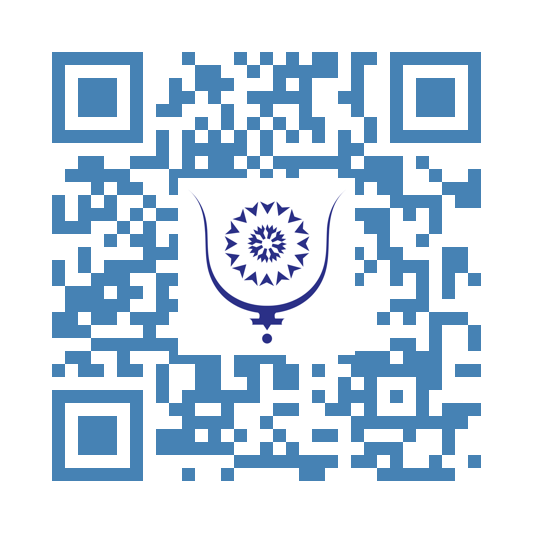
Aziz Daouda

Directeur Technique et du Développement de la Confédération Africaine d'Athlétisme. Passionné du Maroc, passionné d'Afrique. Concerné par ce qui se passe, formulant mon point de vue quand j'en ai un. Humaniste, j'essaye de l'être, humain je veux l'être. Mon histoire est intimement liée à l'athlétisme marocain et mondial. J'ai eu le privilège de participer à la gloire de mon pays .


9500

33.0

Morocco and the Trust Economy: The Invisible Capital of Development... 652

In the economic history of nations, some assets are visible, such as natural resources, geographical position, infrastructure, or market size. Others, however, are invisible but often decisive. Among them, trust holds a central place and constitutes the true cement of sustainable economies. An economy can survive with few natural resources, but it cannot prosper sustainably without trust. Morocco today has many assets: remarkable political stability, a strategic position, world-class infrastructure, and active economic diplomacy. Yet, the decisive step in development now consists of building a true trust economy, capable of sustainably reassuring citizens, entrepreneurs, and investors. This is not a slogan. Trust is an institutional and cultural architecture that is built over time. It is the primary capital of a modern economy and a determining factor. It reduces transaction costs, encourages investment, facilitates innovation, and stimulates individual initiative. When an entrepreneur knows that the rules of the game are stable, that contracts will be respected, and that justice is swift and independent, he invests more easily. When a citizen trusts the tax administration and institutions, he more willingly accepts taxes and participates in the formal economy. Conversely, a lack of trust generates precautionary behaviors: capital flight, informality, low long-term investment. The economy then becomes cautious, fragmented, and inefficient. For Morocco, the central question is therefore not only to attract investments, but to create an environment where trust becomes a collective reflex. It would be unfair not to recognize the considerable progress made over the past decades. The foundations are solid. The country has massively invested in infrastructure: Tanger Med is today one of the world's most important logistics hubs. Nador and Dakhla are coming soon. Industrial zones have enabled the emergence of high-performing sectors, in the automotive industry with Renault Group and Stellantis, and in aeronautics with Boeing, Airbus, and Safran. The country's ambition in energy transition is exemplary. This shows that it is capable of carrying out structuring projects and offering a stable macroeconomic environment. However, the next step in development requires a qualitative leap: moving from an opportunity economy to a trust economy with a determining role for the rule of law. Trust first rests on the solidity of institutions. For investors as for entrepreneurs, the predictability of rules is a decisive element. Laws must be stable, readable, and applied equally, with three particularly crucial dimensions: **The independence and efficiency of justice** A swift, accessible, and credible justice system is the keystone of any trust economy. Commercial disputes must be resolved within reasonable timeframes. Judicial decisions must be enforced without ambiguity. Legal security is often the primary factor of attractiveness. **Fiscal stability** Investors do not necessarily expect very low tax rates; they primarily seek stability and readability. Predictable taxation allows companies to plan investments over the long term. Morocco has already undertaken several major tax reforms, but the challenge now is to go further and consolidate a clear and durable fiscal pact. **The fight against rents and privileges** Trust disappears when the rules of the game seem unequal. A dynamic economy relies on fair competition and equal opportunities. Transparency in public markets, competition regulation, and limiting rent situations are essential levers. A trust economy is also an economy of freedom, capable of unleashing entrepreneurial energy. The freedom to enterprise, innovate, and experiment is one of the fundamental engines of growth. Morocco has a talented youth, competent engineers, and an influential diaspora. However, several obstacles remain: administrative complexity, access to financing for SMEs, slowness of certain procedures. The challenge is to create an environment where individual initiative becomes the norm rather than the exception. Moroccan startups in fintech, artificial intelligence, or agricultural technologies already demonstrate the country's potential. With a more fluid ecosystem, they could become tomorrow's economic champions. In a world marked by geopolitical uncertainty and economic recompositions, trust also becomes a comparative advantage. If Morocco manages to position itself as a country where rules are stable, justice reliable, and administration predictable, it could become one of the main investment platforms between Europe and Africa. This ambition aligns with the Kingdom's African strategies and its growing international openness. Trust could thus become Morocco's true economic hallmark. Several strategic orientations deserve to be prioritized: - Accelerate the modernization of the judicial system, particularly in handling commercial disputes and enforcing judicial decisions. - Radically simplify administrative procedures for businesses through complete digitalization of public services. - Establish multi-year fiscal stability to enhance visibility. - Promote transparency and fair competition in all economic sectors. - Strengthen training and valorization of human capital, particularly in technological and scientific fields. - Develop a culture of trust between the State, businesses, and citizens. This dimension is often overlooked, yet it constitutes the invisible foundation of development. Morocco finds itself today at a pivotal moment in its economic history. The infrastructure is in place, strategic ambitions are affirmed, and the international environment offers new opportunities. The next step therefore consists of building a sustainable trust ecosystem. If Morocco succeeds in this gamble, and it must, it could not only accelerate its development but also become one of the most credible and attractive economies in the emerging world. In the 21st-century global economy, trust is undoubtedly the rarest and most powerful capital.