Think Forward.

Egregores and the psychosphere 8447

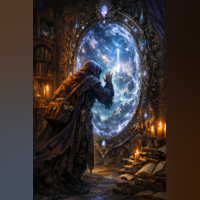
The psychosphere can be understood as an energetic field that envelops the planet, serving as a living repository for the mental and emotional energies generated by all sentient beings. Some interpretations, such as those in the Gaia theory, even suggest that all emotional beings, including animals contribute to this field. For the sake of clarity in this discussion, I will focus solely on humans. The psychosphere exists as a subtle layer between the material world we inhabit and the higher, more ethereal planes, often referred to as the spiritual realm. Rich with thoughtforms—mental constructs born from individual or collective consciousness—it plays a determinant role in the astral plane. Though intangible to the physical senses, the psychosphere profoundly influences both individual experiences and the collective emotional state of humanity. At the core of the psychosphere are thoughtforms and egregores, which I discussed in my previous writing. These are the primary forces that shape this astral layer. Both thoughtforms and egregores contribute to the psychosphere, which grows denser with the energy they generate. While thoughtforms are personal and typically temporary, egregores have the potential to become enduring entities, sustained by the continual focus and intention of a group. These entities accumulate in the psychosphere, influencing the mental and emotional states of those who dwell within its planetary field. The psychosphere functions as a middle ground between the dense physical realm and the more subtle ethereal or spiritual planes. As a layer of the astral plane, its "matter" is finer than the physical world but denser than the purely spiritual realms. This gives it a unique role in the cosmological framework, acting as a bridge where mental energy and spiritual forces intersect, creating a dynamic interplay between human thought and extradimensional or spiritual influence. To provide a helpful metaphor, we can look to the superstring theory with its concept of multiple dimensions. Imagine the psychosphere as the "fine point" where different dimensions converge and interact, much like vibrating strings generate different forms of matter. The vibrations of thought and emotion within the psychosphere create and sustain various thoughtforms and egregores. These vibrations, in turn, shift and shape the energies of the astral plane, producing a vast and complex network of mental and spiritual activity. The astral plane, and by extension the psychosphere, influences human experience in subtle but powerful ways. On one hand, individuals and groups can shape the psychosphere through their focused intentions, emotions, and beliefs. On the other hand, the psychosphere exerts its influence on them, subtly affecting their thoughts, emotions, and behaviors. For example, when an egregore grows strong, it can exert pressure on the individuals who feed it. This can manifest as powerful collective emotions—such as national pride, religious fervor, or even mass hysteria. The egregore becomes a force that shapes the thoughts and behaviors of its creators, locking them into patterns of belief or action. This reciprocal relationship creates a feedback loop in which individuals both influence and are influenced by the larger thoughtform structures of the psychosphere. On a more personal level, the thoughtforms individuals generate can resonate within the psychosphere, attracting similar energies or influences from the astral plane. In some cases, these thoughtforms can be empowering, manifesting goals or desires in the physical world. In other instances, they may create unwanted energetic attachments or lingering emotional residues. Thoughtforms and egregores, like all things in the universe, have a lifespan. When the energy sustaining them wanes—due to a lack of focus, intention, or belief—they begin to dissolve. This dissolution is not always clean, however. Much like physical organisms, these entities can leave behind husks or residual energy patterns that linger in the psychosphere. These empty husks are a form of astral debris. Although they no longer possess the vibrancy or purpose they once had, they still exist as empty shells of what they once were. These remnants can be manipulated by beings on either side of the astral plane—whether from higher spiritual realms or lower astral dimensions. In the hands of malevolent or parasitic entities, these empty husks can be repurposed, filled with new energy, and used to influence or manipulate the emotions and thoughts of individuals. This can manifest as irrational fears, lingering emotional disturbances, or sudden shifts in consciousness. Conversely, benevolent entities may seek to dissipate or transform these husks into higher forms of energy, restoring balance within the psychosphere. The psychosphere is a dynamic, living field that reflects the collective mental and emotional states of the beings within it. It is influenced by human consciousness and, in turn, exerts its influence on the thoughts and emotions of those who interact with it. Through the creation of thoughtforms and egregores, individuals and groups shape the psychosphere, contributing to the intricate network of energetic patterns that govern the mental and spiritual landscape of the planet. The ongoing cycle of creation, sustenance, and dissolution of thoughtforms and egregores, shapes not only the psychosphere itself but also the experiences of those who live within its reach. Understanding this complex relationship allows us to better grasp how unseen forces may be influencing our inner and outer worlds, offering insights into the interconnectedness of mind, spirit, and the greater energetic realities that surround us.
Tupan Tupan

Tupan

I have several interests (too many to list here) and I would like to write about some experiences I've had and ideas about them.


7300

0

Morocco and the Trust Economy: The Invisible Capital of Development... 343

In the economic history of nations, some assets are visible, such as natural resources, geographical position, infrastructure, or market size. Others, however, are invisible but often decisive. Among them, trust holds a central place and constitutes the true cement of sustainable economies. An economy can survive with few natural resources, but it cannot prosper sustainably without trust. Morocco today has many assets: remarkable political stability, a strategic position, world-class infrastructure, and active economic diplomacy. Yet, the decisive step in development now consists of building a true trust economy, capable of sustainably reassuring citizens, entrepreneurs, and investors. This is not a slogan. Trust is an institutional and cultural architecture that is built over time. It is the primary capital of a modern economy and a determining factor. It reduces transaction costs, encourages investment, facilitates innovation, and stimulates individual initiative. When an entrepreneur knows that the rules of the game are stable, that contracts will be respected, and that justice is swift and independent, he invests more easily. When a citizen trusts the tax administration and institutions, he more willingly accepts taxes and participates in the formal economy. Conversely, a lack of trust generates precautionary behaviors: capital flight, informality, low long-term investment. The economy then becomes cautious, fragmented, and inefficient. For Morocco, the central question is therefore not only to attract investments, but to create an environment where trust becomes a collective reflex. It would be unfair not to recognize the considerable progress made over the past decades. The foundations are solid. The country has massively invested in infrastructure: Tanger Med is today one of the world's most important logistics hubs. Nador and Dakhla are coming soon. Industrial zones have enabled the emergence of high-performing sectors, in the automotive industry with Renault Group and Stellantis, and in aeronautics with Boeing, Airbus, and Safran. The country's ambition in energy transition is exemplary. This shows that it is capable of carrying out structuring projects and offering a stable macroeconomic environment. However, the next step in development requires a qualitative leap: moving from an opportunity economy to a trust economy with a determining role for the rule of law. Trust first rests on the solidity of institutions. For investors as for entrepreneurs, the predictability of rules is a decisive element. Laws must be stable, readable, and applied equally, with three particularly crucial dimensions: **The independence and efficiency of justice** A swift, accessible, and credible justice system is the keystone of any trust economy. Commercial disputes must be resolved within reasonable timeframes. Judicial decisions must be enforced without ambiguity. Legal security is often the primary factor of attractiveness. **Fiscal stability** Investors do not necessarily expect very low tax rates; they primarily seek stability and readability. Predictable taxation allows companies to plan investments over the long term. Morocco has already undertaken several major tax reforms, but the challenge now is to go further and consolidate a clear and durable fiscal pact. **The fight against rents and privileges** Trust disappears when the rules of the game seem unequal. A dynamic economy relies on fair competition and equal opportunities. Transparency in public markets, competition regulation, and limiting rent situations are essential levers. A trust economy is also an economy of freedom, capable of unleashing entrepreneurial energy. The freedom to enterprise, innovate, and experiment is one of the fundamental engines of growth. Morocco has a talented youth, competent engineers, and an influential diaspora. However, several obstacles remain: administrative complexity, access to financing for SMEs, slowness of certain procedures. The challenge is to create an environment where individual initiative becomes the norm rather than the exception. Moroccan startups in fintech, artificial intelligence, or agricultural technologies already demonstrate the country's potential. With a more fluid ecosystem, they could become tomorrow's economic champions. In a world marked by geopolitical uncertainty and economic recompositions, trust also becomes a comparative advantage. If Morocco manages to position itself as a country where rules are stable, justice reliable, and administration predictable, it could become one of the main investment platforms between Europe and Africa. This ambition aligns with the Kingdom's African strategies and its growing international openness. Trust could thus become Morocco's true economic hallmark. Several strategic orientations deserve to be prioritized: - Accelerate the modernization of the judicial system, particularly in handling commercial disputes and enforcing judicial decisions. - Radically simplify administrative procedures for businesses through complete digitalization of public services. - Establish multi-year fiscal stability to enhance visibility. - Promote transparency and fair competition in all economic sectors. - Strengthen training and valorization of human capital, particularly in technological and scientific fields. - Develop a culture of trust between the State, businesses, and citizens. This dimension is often overlooked, yet it constitutes the invisible foundation of development. Morocco finds itself today at a pivotal moment in its economic history. The infrastructure is in place, strategic ambitions are affirmed, and the international environment offers new opportunities. The next step therefore consists of building a sustainable trust ecosystem. If Morocco succeeds in this gamble, and it must, it could not only accelerate its development but also become one of the most credible and attractive economies in the emerging world. In the 21st-century global economy, trust is undoubtedly the rarest and most powerful capital.