Think Forward.

Le compagnonnage, une piste oubliée pour réinsérer les jeunes NEET... 824

S'il y a une situation à laquelle il faut répondre vite, très vite même, c'est celle des NEET. Ces jeunes ne vont pas s'évaporer. Au fur et à mesure qu'ils avancent en âge, leurs problèmes, et donc les nôtres, deviendront de plus en plus difficiles à apprivoiser et à contenir. Le gouvernement se doit de trouver des solutions durables pour réinsérer ces jeunes sans emploi ni formation, les fameux NEET: Not in Employment, Education or Training. Une voie ancienne pourrait s’avérer étonnamment moderne : le compagnonnage. Héritée des traditions artisanales, cette forme d’apprentissage direct, qui a fait ses preuves tout au long de notre histoire, n'a pas été abandonnée ailleurs. Dans de nombreux pays européens, l’apprentissage en atelier est un pilier de la formation professionnelle. L'idée devrait inspirer un nouveau modèle marocain d’insertion et de transmission des savoir-faire, en redonnant sens à l’apprentissage par le contact avec les métiers. Dans un passé pas si lointain cela a été le cas même pour certains métiers modernes : coiffure, mécanique et autres. Il est temps de repenser tous cela et également de regarder ce qui se passe ailleurs dans les pays où l'enfance et ses droits sont parfaitement protégés, mais où il n'est pas interdit d'apprendre un métier en atelier, bien au contraire. En Suisse ou en Allemagne, le système dit « dual » associe enseignement théorique et pratique en entreprise. Il permet aux jeunes d’acquérir une qualification reconnue tout en participant à la vie productive du pays. C'est par exemple le pilier incontournable de l'excellence suisse en horlogerie. Ce modèle d'apprentissage valorise la transmission et la rigueur du geste, et permet de maintenir vivantes des professions manuelles et artisanales, tout en réduisant le chômage des jeunes. Or, aujourd'hui, force est de constater que bon nombre de métiers traditionnels marocains sont en perte de vitesse et risquent la disparition faute de Maâlems. Le compagnonnage met au cœur de la formation la relation entre le maître et l’apprenti, la mobilité entre ateliers, ainsi que la réalisation de chefs-d’œuvres auxquels l'apprenti participe fièrement et voit se concrétiser ses efforts, dont l'appréciation du client est l'indice unique d'évaluation. Les écoles de formation professionnelle ne peuvent offrir une telle approche émotionnelle avec les métiers. Le compagnonnage valorise la patience, l’excellence et la fierté du métier : des valeurs qui résonnent avec la culture artisanale marocaine. Au Maroc, la situation est étonnamment paradoxale. Les politiques de lutte contre le travail des enfants ont permis des avancées spectaculaires certes : le nombre de mineurs travailleurs a chuté de près de 94% en vingt ans. Mais la législation, dans son zèle protecteur, ne distingue pas clairement le travail illégal de l’apprentissage encadré. Le résultat est sans équivoque, des ateliers où se transmettaient autrefois les savoirs du bois, du cuir ou du métal ferment les uns après les autres, faute de pouvoir accueillir des apprentis sans enfreindre la loi, alors que des centaines de milliers de jeunes sont abandonnés à la rue et ses risques. Cette confusion entre «exploitation» et « formation pratique » prive aujourd’hui des centaines de jeunes d’une voie d’apprentissage réelle, et fragilise un pan entier du patrimoine artisanal national. Afin de récupérer au plus vite cette force historique pour l'absorption des NEET, un cadre juridique revisité, adapté et souple est une urgence. La leçon peut encore une fois nous venir d’Europe. Les comparaisons internationales peuvent nous offrir un éclairage précieux. En Suisse, la formation professionnelle repose sur une véritable alliance entre écoles, entreprises et collectivités locales. L’apprentissage y est valorisé comme une voie d’excellence. Les jeunes ont la possibilité et la chance d'alterner cours et pratique en atelier. Ils acquièrent une solide expérience et obtiennent un certificat fédéral reconnu. Ce système assure une insertion rapide sur le marché du travail, tout en garantissant une protection claire des mineurs et une reconnaissance institutionnelle du statut d’apprenti. Le résultat de ce pragmatisme est que les métiers manuels et artisanaux y demeurent vivants et respectés. En Allemagne, le modèle dual associe également formation théorique et apprentissage en entreprise. Il permet aux jeunes d’intégrer très tôt le monde du travail avec un statut protégé et encadré. Le système est reconnu pour sa capacité à prévenir le chômage des jeunes et à maintenir un haut niveau de compétence technique, notamment dans les métiers industriels et artisanaux. Le Maroc, en revanche, peine encore à structurer cette articulation entre apprentissage et formation. L’apprentissage artisanal y reste largement informel, soumis à une législation restrictive qui tend à confondre accompagnement formatif et travail illégal. Si la protection des mineurs est globalement forte, elle demeure floue dès qu’il s’agit de formation pratique. Cela a pour conséquence une insertion inégale des jeunes selon les secteurs, alors que de nombreux métiers traditionnels pourtant créateurs de richesse, sont aujourd’hui menacés de disparition faute de relève. La philosophie directrice de la réforme nécessaire aujourd'hui, devrait être la réhabilitation du rôle du Maalem. Le Maroc dispose heureusement encre d’un atout inestimable : son réseau d’artisans maîtres, ou Maâlems, gardiens de traditions séculaires dans la ferronnerie, la bijouterie, la menuiserie ou la poterie. Redonner une place légale et formatrice à ces maîtres serait un premier pas vers la création d’un compagnonnage marocain, adapté aux réalités locales et tourné vers la modernité. Cela impliquerait de réformer la loi sur le travail des enfants pour distinguer l’apprentissage structurant, du travail précaire, et de créer des passerelles institutionnelles entre l’artisanat traditionnel et les programmes de formation professionnelle formelle. C'est une voie d’avenir pour les jeunes NEET et ces milliers de jeunes marocains déscolarisés. Le compagnonnage pourrait devenir une porte de sortie de la précarité, voire de la délinquance menaçante. L’apprentissage auprès d’un Maalem n’est pas un retour en arrière, mais une réinvention moderne du lien entre savoir, travail et dignité. Le Maâlems est un maitre est un éducateur, un transmetteur de valeurs fortes. Et puis n'oublions pas que c'est ainsi que Fès était une ville industrielle, que Marrakech a gardé une authenticité qui lui donne son cachet particulier, que Ouarzazate est Ouarzazate ou que Chefchaouen soit Chefchaouen. Encadré par l’État, reconnu par les institutions et soutenu par des incitations locales, ce modèle pourrait contribuer à redonner espoir à une jeunesse en quête de sens, tout en préservant les métiers patrimoniaux qui font la richesse culturelle du Maroc, ce qui le distingue et ce qui fait sa force. En chaque apprenti, germe un bon citoyen, en chaque apprenti dort une PME.
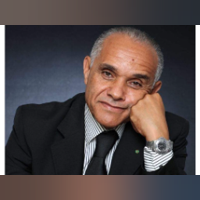
Aziz Daouda Aziz Daouda

Aziz Daouda

Directeur Technique et du Développement de la Confédération Africaine d'Athlétisme. Passionné du Maroc, passionné d'Afrique. Concerné par ce qui se passe, formulant mon point de vue quand j'en ai un. Humaniste, j'essaye de l'être, humain je veux l'être. Mon histoire est intimement liée à l'athlétisme marocain et mondial. J'ai eu le privilège de participer à la gloire de mon pays .


8000

33.0

CAN 2025 in Morocco: Reflection of a Major Probable Migratory and Social Transformation... 124

Three weeks before the Africa Cup of Nations in Morocco, it seems appropriate to revisit key insights from the 2024 General Population and Housing Census (RGPH 2024). This event will undoubtedly have a powerful impact on the country's perception, through the positive images it is already broadcasting and, consequently, on future demographic data. The census shows that out of 36.8 million recorded inhabitants, 148,152 people are foreign nationals, representing nearly 0.4% of the total population, an increase of over 76% compared to 2014. Behind this relatively modest figure lies a structural transformation: the rise of Sub-Saharan African migrants, partial feminization of flows, strong urban concentration, and increasingly qualified profiles. Morocco's geographical position and economic evolution have, in a relatively short time, transformed it from a country of emigration into a space of settlement and transit for migrants with varied profiles. The National Strategy on Immigration and Asylum (SNIA), adopted in 2013, along with the regularization campaigns of 2014 and 2017, have established a more inclusive approach in Morocco and better statistical knowledge of the populations concerned. Sub-Saharan African nationals now represent nearly 60% of migrants, compared to about 27% in 2014. The share of Europeans has declined to just over 20%. That of MENA region nationals is only 7%. Morocco's continental anchoring is thus confirmed. In terms of nationalities, Senegal and Côte d'Ivoire account for more than one-third of foreigners, ahead of France, which remains the leading European nationality with nearly 14% of foreign residents. Other countries like Guinea, Mali, Congo-Brazzaville, Cameroon, or Syria complete this panorama. Foreign residents in Morocco are mostly recent arrivals: more than half report arriving since 2021, and more than one-third between 2011 and 2020, testifying to a very recent acceleration of arrivals. A majority of this population will fill the stands during the CAN. Economic motives overwhelmingly dominate: more than 53% of migrants cite work as the main reason, confirming Morocco's role as a regional attraction pole in sectors such as construction, services, agriculture, and the informal economy. Family reasons follow (a little over 20%), reflecting the growing weight of family reunification and medium- to long-term settlement projects, then studies and post-graduation (about 14%), a sign of the country's academic attractiveness to Sub-Saharan students. Humanitarian motives, flight from conflicts, insecurity, racism, or climate change effects—remain numerically minor. Morocco thus appears as a hybrid space where labor migrations, student mobility, family reunifications, and international protection needs coexist. The vast majority of foreign residents live in cities: nearly 95% are settled in urban areas, confirming the role of major agglomerations as entry points and integration spaces. Two regions clearly dominate: Casablanca-Settat, which hosts more than 43% of foreigners, and Rabat-Salé-Kénitra with a little over 19%, though the latter's share has declined compared to 2014 in favor of Casablanca. Nearly 56% of this population are men, but feminization is progressing, particularly among certain nationalities like Ivorian women and Filipinos, who are very present in personal services and domestic work. More than 80% of foreign residents are between 15 and 64 years old, making them essentially a working-age group, with a non-negligible presence of children and a minority of elderly people. Nearly half of people aged 15 and over are single, while a little over 45% are married, showing the coexistence of individual mobility trajectories and stabilized family projects. The education level appears generally high: nearly 39% hold a higher diploma and 28% have reached secondary level. Employed workers are mostly private sector employees, while a minority work as independents, employers, or public sector employees, highlighting the diversity of professional integration modes. The relatively limited share of unemployed may mask forms of underemployment or precariousness in the informal sector. In 2024, more than 71,000 households include at least one foreign resident. About 31% are exclusively composed of foreigners, while about 69% are mixed households combining Moroccans and foreigners, a proportion sharply up from 2014. This rise in mixed households reflects a deepening of residential and social integration, through mixed marriages, welcoming relatives, or shared cohabitations linked to work and studies. In terms of housing, the majority of foreign households live in apartments, followed by modern Moroccan houses, reflecting integration into the ordinary urban fabric rather than segregated housing forms. Exclusively foreign households are overwhelmingly tenants, while mixed households are more often owners or co-owners, highlighting differentiated settlement trajectories based on household composition. The RGPH 2024 results confirm that the foreign presence in Morocco, though numerically limited, now constitutes a structural and lasting fact of society. The youth, the high proportion of active workers, the rise of family and mixed households, as well as the diversification of educational profiles, call for greater coordination between migration policies, urban, social, and educational policies.The major challenges concern valuing the economic and demographic potential of this population, access to education, health, housing, and decent work, and combating discrimination in a context of cultural pluralization. The SNIA mechanisms to meet Morocco's regional and international commitments in migration governance must also evolve. However, these figures and data will likely undergo real evolution in the coming years: the African media focus on the CAN, and later on the World Cup in Morocco, will reveal the country's assets and increase its attractiveness. These two events, through their combined media weight and the impressions reported by the thousands of expected spectators, should play a promotional role for the country. Deep Africa will discover Morocco and the multiple opportunities it offers, both economically and for studies.

Morocco Faces Its Sports Challenge: From Leisure to National Powerhouse... 593

Long confined to mere popular entertainment, used as a political communication tool, or dismissed as a socially useless activity, Moroccan sport is now emerging as an essential economic, social, and health driver. Under the spotlight of CAN 2025 and the 2030 World Cup, the Kingdom must fully embrace this potential. No room for half-measures, the sector already carries significant weight. Sport currently generates 1.56% of national GDP, equivalent to over 21 billion dirhams. This is just the beginning: reaching the symbolic 3% threshold, as estimated by the World Bank, could eventually position it to rival economic heavyweights like agribusiness or tourism, which it already boosts. The sector is buzzing with activity. Sales of sports goods have surged to 3.77 billion dirhams, while clubs and fitness centers report a 25% revenue increase, reaching 604 million. Professional football, capturing 12% of sports jobs, weighs in at 879 million dirhams. Moroccan sport is no longer just leisure; it is a full-fledged emerging economy. On the global stage, football is a major engine: valued at 59 billion dollars in 2025, FIFA anticipates record revenues of 11 billion for the 2023–2026 cycle. Morocco has every interest in riding this global wave, and it is doing so effectively. Major projects, from construction to jobs, contribute to this new revenue stream. CAN 2025 and the 2030 World Cup are more than sports events. They represent a powerful lever for investment and transformation. The three host countries: Morocco, Spain, Portugal, will mobilize 15 to 20 billion dollars, with 50 to 60 billion dirhams for Morocco alone, which is not just catching up but surpassing its partners. Renovated stadiums, roads, hotel infrastructure, and transport: these projects should create 70,000 to 120,000 direct and indirect jobs. Sports tourism adds to this, already a strong driver generating 2 billion dirhams from iconic events like golf tournaments, the Marathon des Sables, or Atlas trails. But physical activity and sport are more than that, they are healing investments. Beyond the economy, investing in physical activity and sport is crucial for public health. According to the WHO, every dollar invested in physical activity yields three dollars in medical cost savings. Europe estimates that a 10% increase in practitioners saves 0.6% of GDP in healthcare costs. In Morocco, where 59% of the population is overweight and 24% suffer from obesity, and 48.9% of Moroccans experience a mental disorder at least once in their lives, physical activity could reverse these health trends. It reduces premature mortality by 30%, type 2 diabetes by 40%, depression by 30%, while boosting productivity by 6 to 9%. Physical activity and sport are the best free medicine. They heal before illness even appears. Thus, sport is not just pleasure: it is a powerful, sustainable public health lever. What better way to channel the overflowing energy of youth? Sport is also the school of life and citizenship. Studies show athletic students score 0.4 points higher on average, gain 13% in concentration, and reduce stress by 20%. Yet, only 22% of young Moroccans engage in regular physical activity, despite a potential exceeding 6 million. Children tend to swap the ball for screens. The risk is high: without strong policies, a fragile generation is being prepared. The Kingdom already invests significantly in sports for all, especially by providing youth with free outdoor facilities, but much remains to be done. Here is a corrected and improved version of your text: The legislative framework is clearly misaligned with ambitions. Law 30-09, governing sport in Morocco, is criticized for excessive centralization, administrative burdens, and lack of autonomy for clubs and federations. It fails to clearly define concepts, creating real legal ambiguity. More than ever, it would be wise to move toward a new law that implements and respects the provisions of the 2011 constitution; a more incentive-based law that clearly defines concepts and thus responsibilities, correcting all the flaws of the previous one—and there are many. It would also be urgent to remove sport from political timelines and entrust it to a mission-oriented administration whose tasks, strategies, and pace adapt to sports time, which is much longer, and align with international sports timelines. Morocco's Royal Sports Federations capture no more than 350,000 licensees for a potential of 6 to 7 million. Clubs struggle to professionalize, private investors are lukewarm, and mass participation remains proportionally neglected. To accelerate growth, it will likely be necessary to lighten taxation with reduced VAT on equipment and subscriptions, ease burdens for sports startups, and officially recognize sport as an activity of public utility. The 2026 Finance Bill precisely provides for adjustments to promote public-private partnerships and boost private investment. The next decade could mark a historic turning point in the country's development. By 2030, Morocco has chosen sport as a national pillar. With prestigious international competitions, modern infrastructure, and energetic youth, Morocco holds all the cards to make sport a pillar of sustainable development. But this requires a paradigm shift: sport is not just a spectacle or image tool; it is an economic sector, a culture to promote, and a public policy to build. Morocco now has the opportunity to make sport a major vector of prosperity, health, employment, and social cohesion. This is the choice made: to take sport out of the leisure framework and fully integrate it into a national strategy. Sport is not a luxury. It is a collective investment in health, employment, and national unity. The message is clear: by 2030, Morocco must shine not only through its teams but also through its ambitious vision of sport as a lever for human and economic development.

Guterres snubs Attaf in Luanda: the UN breaks with Algeria's rudeness on the Sahara... 643

At the Africa-Europe summit held in Luanda, a filmed and widely shared incident spotlighted a deep diplomatic tension involving António Guterres, UN Secretary-General, and Ahmed Attaf, Algerian Foreign Minister. A video of the moment went viral on social media, sparking intense debate and mockery. Guterres abruptly gave a formal but cold greeting before swiftly turning his back on Attaf, who was desperately trying to engage with him. This was not a mere protocol slip but a deliberate gesture symbolizing a conflict-laden, annoyed relationship between the UN and Algeria. At such a high diplomatic level, gestures are never accidental or improvised. Nearing the end of his term, Guterres has little patience left for certain behaviors, including those of an insistent and exhausting minister from a country repeatedly harassing the institution. Politically, this public refusal to engage cannot be seen as an accident. It expresses explicit exasperation with Algeria’s stance and likely reflects Attaf's failure to secure a meeting with the Secretary-General. The context is heavy: the Moroccan Sahara issue fuels tension with Algeria pursuing an aggressive, systematic strategy challenging UN reports and resolutions, accusing the UN of bias. Algeria claims neutrality, but this masks the reality that it has sustained and intensified the conflict for half a century, along with Gaddafi’s Libya. Official Algerian media frequently criticize the UN with diplomatic invective, targeting countries and leaders who recognize Moroccan sovereignty over Western Sahara. Attacking Israel and Zionism is also a recurring theme, all to bolster Algerian national pride amid economic hardships. This unprecedented political rudeness damages Algeria’s international image. Algerian representative Amar Bendjama’s disdainful and disrespectful comments after the UN Security Council Resolution 2797 vote illustrate this climate. The ongoing tensions have led to a diplomatic deadlock for Algeria, which desperately pressures the UN publically, breaking traditional diplomatic norms. Guterres’s gesture sends a clear political rejection of Algeria's destabilizing posture, a "enough is enough" message that may go unheeded given Algeria’s stubbornness. The episode reveals the limits of informal diplomacy when faced with an aggressive actor and underscores the growing irritation within the UN regarding the Sahara dossier. Major powers now publicly refuse to tolerate Algeria’s antics, having long endured them in hopes of Algerian realizations. Geopolitical stakes in the Mediterranean and Africa are too high for the international community to continue tolerating Algeria’s regional destabilization doctrine. Algeria has only succeeded in creating the new terminology "Western Sahara," which has reignited the question of the "Eastern Sahara." Increasingly, young people provide historical proof of Morocco’s sovereignty over the territories previously linked to colonial France. This incident symbolizes a symbolic rupture in Algeria-UN relations, exacerbated by the recent UN resolution explicitly naming the parties to the Sahara dispute: Algeria, its proxy Polisario Front, Mauritania, and Morocco. The only solution on the agenda is autonomy under Moroccan sovereignty, hard for Algeria to accept. Even at the recent G20 summit hosted by South Africa, a known Algerian ally, no word was uttered on the Moroccan Sahara. This confrontation at such a high-profile summit illustrates Algeria’s waning political influence in multilateral forums while Morocco strengthens its regional and global diplomatic standing.