Think Forward.

L’étrange syndrome de l’odeur du poisson pourri 2460

Le syndrome de l’odeur du poisson pourri, appelé la triméthylaminurie, est un désordre métabolique rare où l’organisme est incapable de transformer une substance volatile mal odorante (la triméthylamine) en une autre sans odeur (oxyde de triméthylamine). Cette pathologie est connue en anglais sous le nom de Fish odor syndrome » (FOS) La triméthylamine (TMA) provient de certains aliments notamment les poissons de mer, les cacahuètes, les œufs et certains légumes. En l’absence de sa dégradation, elle s’accumule dans l'organisme et s’évapore par la sueur, l'urine et l'expiration, avec une forte odeur de poisson. LES CAUSES C’est une défaillance génétique de l’enzyme qui dégrade la TMA produite elle-même de la dégradation bactérienne intestinale d’aliments riches en ses précurseurs (choline, lécithine et carnitine). La TMA ainsi produite dans l’intestin sera rapidement transformée dans le foie et éliminée dans les urines sous forme d’oxyde de TMA. L’enzyme peut être totalement absente et la maladie s’exprime alors chez les enfants dès la diversification alimentaire. Si cette absence est partielle, les mauvaises odeurs sont intermittentes. Les personnes atteintes ont deux copies du gène défectueux . Les parents eux-mêmes peuvent n'avoir qu'une seule copie du gène défectueux et la pathologie sera transmise uniquement si les deux parents sont tous les deux porteurs d’une ou deux copies du gène défectueux ; ce qui signifie qu'une personne atteinte ne transmettra la maladie que si son partenaire est porteur. LES SIGNES Une odeur corporelle de poisson extrêmement désagréable que le corps dégage par la sueur, l’urine, la salive et l’haleine et même l’air expiré. L’intensité de cette odeur est variable d’une personne à l’autre et avec le temps. Ces symptômes difficiles à vivre peuvent entraîner un isolement, de l’anxiété et la dépression. On estime que plus de 200 personnes en seraient touchées dans le monde. LE TRAITEMENT DE CE SYNDROME Il n’existe actuellement aucun traitement curatif de la maladie. Les symptômes peuvent être fortement atténués par l’éviction de certains produits riches en TMA et ses précurseurs. Certains antibiotiques sont utiles en cures courtes pour réduire l’activité microbienne intestinale. Se laver fréquemment avec un savon acide et faire des exercices intenses avec sudation suivis par un lavage permet aussi une réduction des odeurs. Dr MOUSSAYER KHADIJA الدكتورة خديجة موسيار Spécialiste en médecine interne et en Gériatrie, Présidente de l’association marocaine des maladies auto-immunes et systémiques (AMMAIS), Présidente de l’Alliance Maladies Rares au Maroc (AMRM) اختصاصية في الطب الباطني و أمراض الشيخوخة رئيسة الجمعية المغربية لأمراض المناعة الذاتية و والجهازية , رئيسة ائتلاف الأمراض النادرة المغرب BIBLIOGRAPHIE - S. Nicolas and al, Le « Fish odor syndrome » : une maladie socialement invalidante - Fish odor syndrome : A socially disabling disorder, La Revue de Médecine Interne Volume 43, Issue 3, March 2022, Pages 178-180 https://doi.org/10.1016/j.revmed.2021.12.010 - Qu’est-ce que le syndrome de l’odeur du poisson ? Fréquence Médicale https://www.frequencemedicale.com/oncothoracique/patient/25623-Qu-est-ce-que-le-syndrome-de-l-odeur-du-poisson - Messenger J, Clark S, Massick S, Bechtel M. A review of trimethylaminuria: (fish odor syndrome). J Clin Aesthet Dermatol. 2013 Nov;6(11):45-8. PMID: 24307925; PMCID: PMC3848652. OVERVIEW Trimethylaminuria, or fish odor syndrome (FOS), is a condition characterized by the presence of trimethylamine (TMA)—a tertiary amine whose odor is described as resembling that of rotting fish—in the urine, sweat, and expired air. POUR EN SAVOIR PLUS, D’AUTRES EXEMPLES DE MALADIES TRES RARES On estime qu’une maladie est rare lorsqu’elle touche une faible fraction de la population. En Europe, le seuil est fixé à moins d’une personne sur 2 000. Certaines de ces pathologies ne peuvent concerner que quelques centaines de personnes dans le monde. Ainsi à titre d’exemple : Progéria La progéria, est une maladie génétique extrêmement rare qui accélère le vieillissement des nouveau-nés. Sa prévalence est exceptionnellement faible : 1 nouveau-né sur 7 000 000. Il n’y a pas de remède pour cette maladie génétique et la plupart des patients décèdent avant l’âge de 13 ans, atteignant exceptionnellement l’âge de 20 ans. Atrophie hémifaciale progressive Cette maladie affecte la peau, les muscles faciaux et les structures osseuses du visage. Elle n’implique généralement qu’un seul des plans de la tête (d’où son nom, hémifacial). L’atrophie unilatérale donne au patient un aspect très étrange, comme si la moitié de son visage était en train de se décomposer. Il n’y a pas de traitement pour cette affection, mais on emploie souvent la chirurgie esthétique pour en réduire le phénomène L'ostéogenèse imparfaite L’ostéogenèse imparfaite, ou maladie « des os de verre », est une affection génétique, caractérisée par une fragilité osseuse et une faible masse osseuse à l’origine de fractures à répétition, survenant à la suite de traumatismes bénins L'on compte environ un malade pour 10 000 à 20 000 personnes et elle ne peut donc être considérée comme "très rare" L’ostéogenèse imparfaite chez l'enfant ainsi que ces troubles annexes peuvent être traitées par différents traitements médicaux et chirurgicaux : traitement des fractures : en évitant les immobilisations trop rigides et trop prolongées, lutte contre la douleur des fractures du tassement vertébral par des médications ou par des contentions, apport régulier de vitamine D avec des ajouts de calcium si besoin… L’ALLIANCE DES MALADIES RARES AU MAROC (AMRM) Depuis sa création en 2017, l’ALLIANCE travaille au quotidien avec beaucoup d’associations marocaines spécifiques pour une maladie donnée. Elle a d'ailleurs déjà signé des conventions de partenariat « stratégiques » avec 12 associations de patients : 1/Association de syndrome de Rett (AMSR) , 2/ Association de Solidarité avec les Enfants de la Lune au Maroc (A.S.E.L.M.) , 3/ Association de l’amyotrophie spinale (SMA) , 4 / association SOS Pku , 5/ association marocaine des malades d’angioedème héréditaire (AMMAO) , 6/ Association Marocaine pour la Santé de l’Enfant et de la Mère (AMSEM) , 7/ Association S.O.S Marfantime (S.O.S.M.) , 8/Association Prader Willi Maroc (P.W.M.) , 9/ Association Flamme d'Espoir pour les Autistes et les Patients atteints de la PKU , 10/ Association marocaine pour les enfants souffrant d’ostéoporose (Ostéogenèse imparfaite) A.M.E.O.S , 11/ Association Marocaine de Mucoviscidose (AMM) , 12/ Association Fragile X Maroc (FxMa) . Au sein du bureau de l’Alliance, la présidente est entourée notamment du : Dr Fouzia Chraibi, ,Vice –Présidente , Dr Mounir Filali, Secrétaire général, M Mohammed Elaidi, Secrétaire général adjoint, Mme Najat Kababi, Trésorière et de Mme Fatima Lahouiry, Trésorière adjointe
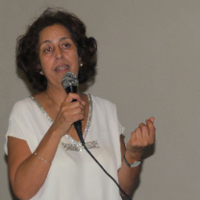
Dr Moussayer khadija Dr Moussayer khadija

Dr Moussayer khadija

Dr MOUSSAYER KHADIJA الدكتورة خديجة موسيار Spécialiste en médecine interne et en Gériatrie en libéral à Casablanca. Présidente de l’Alliance Maladies Rares Maroc (AMRM) et de l’association marocaine des maladies auto-immunes et systémiques (AMMAIS), Vice-présidente du Groupe de l’Auto-Immunité Marocain (GEAIM)


5100

0

Agentic AI Beyond Benchmarks: Meta-Agents & the Future of AI Evaluation with Khalil Mrini 262

I recently sat down with Khalil Mrini to talk about his work and international experiences. He has spent time in Marrakech, Switzerland, India, and the United States, each place influencing his perspective in different ways. We also mentioned his visit at the UM6P, his experience of the university, students and innkvative AI curriculum. Khalil presented his new paper on agentic AI. The paper focuses on the use of autonomous agents to evaluate and benchmark other agents: essentially, systems that can test one another’s capabilities. He described how this approach could provide a more dynamic and optimal method for measuring progress in AI research. We ended the conversation by discussing AI ethics. Our exchange raised open questions about responsibility, transparency, and how the field can ensure that increasingly autonomous systems align with human values.
youtu.be/zE7PKRjrid4

A Historical Triptych: How Morocco, Spain, and Portugal are Forging the Success of the 2030 World Cup 375

The assignment of the 2030 FIFA World Cup hosting rights to the unprecedented trio of Morocco, Portugal, and Spain marks the opening of a new chapter in the history of international and sporting relations. The joint organization of this event confirms an unparalleled dynamic, engaging the three nations in a triangular cooperation whose efficiency will be the decisive marker of this global event's success. This trilateral partnership transcends mere logistical collaboration to become a true lever for strategic development. The question is no longer whether bilateral relations are ready, but how their integration into a strengthened trilateral framework will guarantee the success of a mega-event poised to connect, for the first time, two continents through the medium of sport. Historical ties and geographical proximity provide a fertile ground for a remarkable intensification of relations between these three partners. The announcement of their tripartite bid has, in fact, elevated the need for harmonized coordination in the logistical, economic, and security domains to the level of a strategic imperative. I. The Political and Economic Foundations of Enhanced Cooperation The alignment around the 2030 project is not fortuitous; it is rooted in deep political and economic considerations that mutualize the interests of the three countries. •⁠ ⁠The Imperative of Convergence suffers no ambivalence: Spain and Portugal, while operating within the structural framework of the European Union, recognize Morocco as an essential strategic partner, a genuine gateway and pivot to the African continent. This dynamic is not unilateral; the Kingdom is consolidating its Euro-African anchor with heightened clarity through this same alliance. The World Cup deadline, far from being a simple calendar constraint, acts as a powerful lever, forcing the acceleration—often judged too slow—of regulatory, customs, and security convergence processes among the three capitals. Crucially, the political will displayed at the highest level—symbolized by the direct monitoring of Moroccan commitments by His Majesty King Mohammed VI—stands as a decisive catalyst, ensuring the establishment of a unified and enduring policy line, even in the face of contingencies and fluctuations in political majorities within the allied states. •⁠ ⁠Mutualization of Investments and Benefits: On the economic front, the World Cup represents an unprecedented opportunity to boost trade and investment. The trilateral agreements directly influence the planning of major works: the goal is no longer to build isolated infrastructures, but integrated networks (ports, air links, potential high-speed rail connections) designed for interoperability. The harmonization of tourism offerings and incentivizing fiscal regimes for sponsors and investors is crucial to maximize shared benefits. The success of coordination in the logistical, economic, and security domains will not be merely a performance indicator; it will be the symbol of a collective capacity to manage a complex event on a transcontinental scale. II. Managing Complexities: The Challenges of Co-Development An event of this magnitude, operated by three sovereign states, naturally generates frictions and coordination challenges that require first-rate diplomatic and technical management. •⁠ ⁠The Challenge of Global Security and Integrated Transport: The primary obstacle is the creation of a unified security space for the millions of supporters on the move. This demands real-time information sharing, coordination of law enforcement agencies, and the harmonization of emergency protocols. Concurrently, the transport system must be conceived as a single network. The transit of teams and supporters between Europe and Africa must be fluid, reliable, and ecological, necessitating targeted investments in airport capacity and maritime services. •⁠ ⁠The Cultural and Civilizational Vector: Beyond sport, the World Cup is a diplomatic platform. The secondary, but fundamental, challenge is to move beyond simple technical organization to present an ideal model of intercultural coexistence. Morocco, Spain, and Portugal must invest in promoting their cross-cultural heritages, consolidating the values of peace and mutual respect. This involves qualifying national institutions not only in logistics but also in public management and global media interaction, to avoid the pitfalls of fragmented or sensationalist coverage. III. The Structuring Influence of Bilateral Agreements on Logistics The influence of existing agreements between the three countries is vital for infrastructure development. The current stage is characterized by high anticipation from the private sectors and sports observers, who are watching for the concrete acceleration of construction projects. The overall efficiency of the operation—whether considering the pre-event phase, execution during the tournament, or the post-realization legacy—rests entirely on the solidity of the triangular commitment. The transformation of infrastructures, from stadiums to training centers and reception areas, must be carried out in a spirit of normative alignment. In conclusion, the 2030 World Cup is not merely the sum of three national organizations; it is a project of strategic co-development. The strong historical relations uniting the Kingdom of Morocco, Portugal, and Spain, amplified by a constant and high-level political will, constitute the decisive element for transforming this bid into a resounding success, offering the world a precedent of successful integration between two shores.