Think Forward.

Style is the man 9204

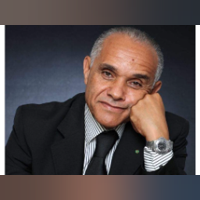
The particular imprint of exceptional humans has marked history, if not made history. Georges-Louis Leclerc de Buffon, French naturalist and mathematician and member of the Académie Française, undoubtedly marked by the rigor of the exact sciences, stated in his reception speech: ‘Style is the man himself’. Even if Buffon only spoke of literature and science, style thus becomes an objective constant of each of those who mark history with a particular legacy. Foreshadowing what the Crown Prince would grow to be when King, the late His Majesty Hassan II of Morocco will take up the notion of style, precisely quoting Buffon. He said in a notorious interview : ‘Style is the man’. No one wanted to announce that the reign of His Majesty King Mohammed VI of Morocco was going to be different from his own, although in the logical continuity of history. Today the trend is to confuse style with a more modern notion of ephemerality: the look. If the look, which will summarize an outfit, a haircut, colors, is circumstantial and therefore contingent on the moment, style is a constant of the person and accompanies him throughout his life. Style will experience an evolution but in a logical continuum. If style ends up being validated and confirmed by history’s objective appreciation, the look is not necessarily in symbiosis with style. The look is tainted by subjectivity. It depends on each person’s perception, image and imagination. It is marked by the appreciation we have of the person we meet in a particular circumstance, a particular environment. The look is a subjective composition which can be modeled simply through a photograph which falls into your hands, a video viewed on a train or on a plane, so many images that forcefully invite themselves into the intimacy of the onlooker by forcing the screen from a phone or a tablet, through advertisements and social media. The look can go so far as to contrast with the style. It is the subjective assessment that we make of the person being scrutinized; and will be even more biased if it is accompanied by a comment even if it is the antipode of objectivity. A film actor can thus be stuck by his look and his acting, the personality traits of a character, when all he has done is succeed in restoring them to us for the duration of a film. The look is appreciated as long as it coincides with the image we have of the person at the very moment of meeting. It depends on the success of the approach and the reaction of the person encountered. It is conditioned by the circumstances of this encounter, the degree of surprise and the emotional level it arouses. The first glance will be decisive here. The look generates admiration: everyone will form an idea of the person they meet based on their own appreciation, their emotions and their state of mind at the moment. The degree of sympathy expressed or shared can thus lead to idolatry. The style commands respect and generates love and appreciation. It is a constant that evolves slowly, surely, and becomes significant. It is assessed on rather objective and verified criteria. Style is indelible and is linked to action through art and manner. Style leaves a mark forever. It is this imprint that allows us to judge and define its contours. History is judge of style. Aziz Daouda
Aziz Daouda Aziz Daouda

Aziz Daouda

Directeur Technique et du Développement de la Confédération Africaine d'Athlétisme. Passionné du Maroc, passionné d'Afrique. Concerné par ce qui se passe, formulant mon point de vue quand j'en ai un. Humaniste, j'essaye de l'être, humain je veux l'être. Mon histoire est intimement liée à l'athlétisme marocain et mondial. J'ai eu le privilège de participer à la gloire de mon pays .


9300

33.0

Football: When Passion Kills the Game in Impunity and Tolerance.. 360

Football (Soccer for Americans) is first and foremost a matter of emotions. By its very essence, it is an open-air theater where human passions play out in their rawest, most primal form. It generates joy, anger, pride, humiliation, and a sense of belonging. From the stands of Camp Nou to those of the Diego Armando Maradona Stadium, through the fervor of the Mohamed V sport Complex in Casablanca, the vibrant enclosures of Stade Léopold Sédar Senghor in Dakar, or even the Parc des Princes in Paris, the Vélodrome In Marseille, and the Bernabeu In Madrid, football transcends the mere framework of the game to become a total social phenomenon. But this emotional intensity, which makes football's beauty, also constitutes its danger. For without rigorous regulation, it quickly tips into excess, then into violence. Today, it must be acknowledged that the rules exist, but they are too often circumvented, stripped of their substance, or applied with disconcerting leniency. On the pitches as in the stands, excesses are multiplying: insults toward referees, provocations between players, systematic challenges, physical violence, projectile throwing, pitch invasions, xenophobic remarks, racist offenses. What was once the exception is tending to become a tolerated norm. Astonishingly, we are starting to get used to it. Recent examples are telling. In Spain, in stadiums renowned for their football culture, racist chants continue to be belted out without shame, targeting players like Vinícius Júnior. Most recently, it was the Muslim community that was insulted. And yet, Spain's current football prodigy is Muslim. An overheated crowd that has doubtless forgotten it wasn't so long ago that it was Muslim itself. Among those chanting these remarks, and without a doubt, some still carry the genes of that recent past... In Dakar, just a few days ago, clashes escalated, turning a sports celebration into a scene of chaos. In Italy, incidents involving supporters who invaded the pitch, during a friendly match, no less, endangered players and officials, recalling the dark hours of European hooliganism in the 1980s. These episodes are not isolated; they reflect a worrying normalization of violence in and around stadiums. Even at the highest level of African football, behavioral excesses are becoming problematic. The 2025 Africa Cup of Nations final left a bitter taste. What should have been a moment of celebration for continental football was marred by behaviors contrary to sporting ethics. Pressures on refereeing, excessive challenges, and game interruptions have become commonplace. When a coach manipulates a match's rhythm to influence a refereeing decision, it is no longer strategy but a challenge to the very foundations of the sport. Despite international outrage, the sanctions imposed on teams, clubs, or players involved remain often symbolic, insufficient to eradicate these behaviors. A very surprising phenomenon: rarely have clubs or federations clearly distanced themselves from such crowds. They accommodate them, and when they condemn them, it is half-heartedly, in a muffled, timid tone with no effect. The problem is twofold. On one hand, disciplinary regulations exist but lack firmness. On the other, their application suffers from a lack of consistency and political courage. Bodies like FIFA, continental confederations, and national federations hesitate to impose truly dissuasive sanctions such as point deductions, prolonged closed-door matches, competition exclusions, or even administrative relegations. Yet without fear of sanction, the rule loses all effectiveness. It suffices to compare with other sports to measure the gap. In rugby, for example, respect for the referee is a cardinal value. The slightest challenge is immediately sanctioned. In athletics, a false start leads to immediate disqualification, no discussion. Football, meanwhile, still tolerates too many behaviors that should be unacceptable. This permissiveness has a cost. It undermines football's image, discourages some families from attending stadiums, and endangers the safety of the game's actors. More gravely, it paves the way for future tragedies. History has already taught us, through catastrophes like the Heysel Stadium disaster, that violence in stadiums can have tragic consequences. It is therefore urgent to react. Regulating football does not mean killing its soul, but rather preserving it. It is not about extinguishing passions, but channeling them. This requires strong measures, exemplary sanctions against offending clubs and players, accountability for national federations, increased use of technology to identify troublemakers, and above all, a clear political will from national and international governing bodies. Football cannot continue to be this "market of emotion" left to its own devices. For by tolerating the intolerable, it risks losing what makes its greatness and its ability to unite rather than divide. If FIFA does not decide to act firmly, the danger is real: that of seeing football sink into a spiral where violence triumphs over the game, and where, one day, tragedies exceed the mere framework of sport. The long-awaited decision of the Court of Arbitration for Sport (CAS) in the 2025 AFCON final case should confirm rigor and integrity in the application of rules, at least at this level, thereby strengthening the credibility of the pan-African competition and football in general.

April 2026 or the Certain Confirmation of the Moroccan Victory... 575

We are entering a decisive month of April. The international dynamic is shifting even further in Morocco's favor on the Sahara issue. April once again promises to be a pivotal moment in the international handling of the Moroccan Sahara question. This structuring diplomatic ritual corresponds to the presentation of the annual report by the UN Secretary-General's Personal Envoy to the Security Council. But this year, the context is profoundly different. The lines have shifted, balances have been redrawn, and a new dynamic is taking hold, clearly favorable to Morocco, a logical follow-up to the adoption of Resolution 2797, with strong structuring potential. The adoption of this resolution marks an essential milestone. It goes beyond simply renewing the existing framework. It consolidates a political direction initiated over several years, by enshrining the preeminence of a realistic, pragmatic, and sustainable political solution, centered exclusively on the Moroccan autonomy initiative. This resolution fits into a strategic continuity that progressively marginalizes unrealistic options, those that long relied on outdated or inapplicable references in the current geopolitical context. It also increases pressure on the parties to engage in a credible political process under the exclusive auspices of the United Nations, but in reality under strong American pressure. The United States has directly engaged in favor of the Kingdom, with the return of roundtables in Madrid and then Washington as key pivots. These meetings have confirmed a diplomatic reality that is now hard to contest. The format of the gatherings, including Morocco, Mauritania, the Polisario Front, and Algeria despite itself, is the only relevant framework for progress. It implicitly enshrines Algeria's central role, long eager to present itself as a mere observer. Its active participation, even forced, places it at the heart of the dispute, profoundly altering the reading of the conflict and redistributing political responsibilities. Madrid and Washington are not insignificant venues. They reflect the growing involvement of Western powers in seeking a resolution, with increasing convergence around the Moroccan proposal. One of the expected developments this month concerns the future of MINURSO. The time has come to redefine the mission. From its inception, it has never fulfilled the role for which it was established. A major evolution is likely emerging in support of implementing autonomy in the southern provinces within the framework of the Kingdom's sovereignty. Long confined to monitoring the ceasefire, the mission will see its name change and its mandate evolve to adapt to on-the-ground realities and the demands of a renewed political process. Such a change would be highly significant. It would mark the end of UN inertia and reflect the international community's will to move from managing the status quo to an active and definitive resolution logic. Much to the dismay of those who, for 50 years, have done everything to perpetuate the conflict through their proxy; the latter is increasingly suffering from the shifting landscape. Washington has toughened its tone and put the Polisario in its sights. Algeria is evidently feeling the effects. The introduction in the US Congress of a proposal to designate the Polisario as a terrorist organization represents a potentially major turning point. If successful, such a designation would have considerable political, financial, and diplomatic consequences. It would further isolate the movement, weaken its supporters, and reshape the balance of power. Above all, it would reinforce the security reading of the dossier, in a Sahel-Saharan context marked by rising transnational threats. This adds to a Security Council increasingly aligned with the Moroccan position. The Council's current composition clearly leans in favor of Moroccan positions. Several influential members explicitly or implicitly support the autonomy initiative, seen as the most serious and credible basis for settlement. This shift is no accident. It results from active, coherent, and consistent Moroccan diplomacy, which has successfully embedded the Sahara issue within logics of regional stability, counter-terrorism, and economic development. Algeria, for its part, faces its contradictions. In this context, the Algerian regime appears increasingly beleaguered. Its positioning, long structured around ideological rhetoric and systematic opposition to Morocco, now seems out of step with international system evolutions. Algiers' relative diplomatic isolation, including in its Sahelian environment, contrasts with its regional ambitions. Internally, economic and social challenges exacerbate tensions in a country with considerable resources but unevenly distributed benefits. Algerian populations suffer from much injustice and lack the essentials. The Sahara issue, instrumentalized for decades as a lever for foreign policy and internal cohesion, thus reveals the limits of a politically exhausted model. The trend thus confirms a historic turning point depriving the Algerian regime of its artificial political rent. All elements converge toward one conclusion: April 2026 could mark a decisive step in the evolution of the Moroccan Sahara dossier. Without prejudging an immediate outcome, current dynamics are progressively narrowing the space for blocking positions. More than ever, resolving this conflict seems to hinge on recognizing geopolitical realities and adhering to a pragmatic political solution. In this perspective, Morocco appears in a position of strength, bolstered by growing legitimacy and increasingly assertive international support. The question remains whether other actors, particularly Algeria, will adapt to this new reality or choose to oppose it at the risk of greater isolation in a world where balances of power evolve rapidly. There will undoubtedly be a before and after April 2026, and above all, the consolidation of a Moroccan position oriented toward further development of the southern provinces. The Security Council's output is awaited in this direction.