Think Forward.

AFCON 2025: When Morocco Believes in Itself and in Africa.. 6804

In 1961, John F.Kennedy issued an immortal challenge to Americans: "Ask not what your country can do for you—ask what you can do for your country." This call to individual responsibility helped forge a collective mindset rooted in civic engagement and self-transcendence. Contemporary America still bears the imprint of this philosophy in many ways. Decades later, Barack Obama rallied crowds with "Yes we can," a cry of unity and collective determination, while Donald Trump popularized "Make America Great Again," a slogan of national rebirth. These formulas are more than mere words: they crystallize moments when a people rediscover themselves, mobilize, and project toward the future. A kind of regeneration for a power afraid of falling, a way to revitalize a nation prone to forgetting itself or resting on its laurels? Morocco has also known this grammar of national mobilization. The late Hassan II forcefully reminded in one of his speeches: "We will only achieve this goal by translating nationalism into citizenship and by moving national consciousness from mere love for the homeland to effective engagement in building a Morocco that is a source of pride for all Moroccans." A founding vision: loving Morocco is not enough; it must be built. In the same spirit, His Majesty King Mohammed VI stated, on the occasion of the 2019 Throne Day, that "Morocco belongs to all Moroccans because it is our common home," calling on each to contribute to its construction, its development, as well as to the preservation of its unity, security, and stability. More recently, on the 2024 Throne Day, the Sovereign again emphasized the need to "pool the efforts of all Moroccans" and appealed to their patriotism as well as to their sense of individual and collective responsibility. A message that resonates, in Moroccan style, like a national "Yes we can," aimed at overcoming socio-economic challenges and consolidating achievements. **AFCON 2025: A Revealer of National Confidence.** It is in this context that Morocco experienced a major turning point with the organization of the 2025 Africa Cup of Nations. Well before kickoff, the AFCON was already acting as a powerful revealer: a revealer of the level of development achieved by the Kingdom, but also of the renewed confidence of Moroccans in their collective capacities. The international competition hosted by Morocco demonstrated unparalleled capacity: modern stadiums meeting the most demanding standards, extensive highway networks, efficient rail hubs, increasingly clean and organized cities, civility widely praised by visitors. Casablanca, Rabat, Tangier, Marrakech, or Agadir as examples only, embody this Morocco that advances, invests, and projects toward a bright future. These progresses are not the fruit of chance. They result from a strategic vision driven by His Majesty King Mohammed VI and translated into structuring investments: more than 2,000 km of highways built since the early 2000s, the Tanger Med port complex becoming a global reference in transshipment, or an ambitious energy policy aiming for over 52% renewable energies in the national mix by 2030. Thus, AFCON 2025 crowns a long-term process, not just a one-off flash. **Resilience, Solidarity, and International Credibility.** Even before the sporting event, the Al Haouz earthquake in September 2023 had already highlighted the resilience of the Moroccan nation. Faced with a major human tragedy, spontaneous solidarity—mass collections, citizen volunteering, mobilization of institutions, and the state's rapid intervention under royal impetus—demonstrated the strength of the national bond. The ongoing reconstruction has reinforced the conviction that Morocco knows how to face adversity. At the same time, macroeconomic indicators attest to an overall positive trajectory: gradual improvement in GDP per capita over the medium term, rise of sectors like automotive, aeronautics, and green energies, affirmation of the Kingdom as a central diplomatic actor in Africa. This international credibility, sometimes a source of regional tensions or criticisms, above all confirms that Morocco has crossed a strategic threshold. **A Success That Calls for More Engagement.** But this success is not an end in itself. It calls for more individual and collective efforts, more mutual trust between citizens, businesses, and institutions. More than ever, the question posed by Kennedy remains relevant: "What am I doing for my country?" Every Moroccan, at their level, is called upon. This dynamic rests on a common denominator: solidarity, extended by work, innovation, and responsibility. It translates into local initiatives, the rise of tech hubs in Casablanca, Rabat, or Tangier, investment in human capital, and adherence to the New Development Model, which aims for a more inclusive, more productive Morocco, better positioned in the global economy. **An Assumed African Ambition.** AFCON 2025 must also be understood as a moment of African fraternity. Morocco has affirmed its continental vocation there: to pull upward, share experience, strengthen South-South partnerships and economic interdependencies. Security, climate, social, and economic challenges are common; responses must be too. Morocco's destiny is inseparable from that of Africa, and Africa's depends on Morocco as well. A prosperous Morocco is an excellent locomotive for the rest of the continent, especially in the region. Sterile criticisms and entrenched or passing jealousies never withstand the seriousness of work, the constancy of effort, and the clarity of vision for long. Only the countries that advance, invest, and unite endure. **A Clear Mission.** The mission is now crystal clear: persevere, aim higher, stronger, and more united, under the leadership of His Majesty King Mohammed VI. Not by copying imported slogans, but by innovating, assuming our singularity, and confidently occupying the place that is naturally Morocco's on the global chessboard. Yes, "Yes we can," Moroccan style. Let us build together a stronger Morocco and a more confident Africa, not through denigration or sterile comparison, but through work, complementarity, and collective engagement. The world advances and waits for no one. Morocco has understood this. It is now up to each to choose: join this movement or stay on the sidelines of History. There will always be football cups.
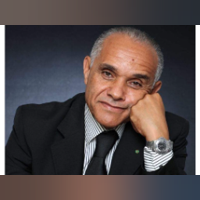
Aziz Daouda Aziz Daouda

Aziz Daouda

Directeur Technique et du Développement de la Confédération Africaine d'Athlétisme. Passionné du Maroc, passionné d'Afrique. Concerné par ce qui se passe, formulant mon point de vue quand j'en ai un. Humaniste, j'essaye de l'être, humain je veux l'être. Mon histoire est intimement liée à l'athlétisme marocain et mondial. J'ai eu le privilège de participer à la gloire de mon pays .


9300

33.0

Football: When Passion Kills the Game in Impunity and Tolerance.. 499

Football (Soccer for Americans) is first and foremost a matter of emotions. By its very essence, it is an open-air theater where human passions play out in their rawest, most primal form. It generates joy, anger, pride, humiliation, and a sense of belonging. From the stands of Camp Nou to those of the Diego Armando Maradona Stadium, through the fervor of the Mohamed V sport Complex in Casablanca, the vibrant enclosures of Stade Léopold Sédar Senghor in Dakar, or even the Parc des Princes in Paris, the Vélodrome In Marseille, and the Bernabeu In Madrid, football transcends the mere framework of the game to become a total social phenomenon. But this emotional intensity, which makes football's beauty, also constitutes its danger. For without rigorous regulation, it quickly tips into excess, then into violence. Today, it must be acknowledged that the rules exist, but they are too often circumvented, stripped of their substance, or applied with disconcerting leniency. On the pitches as in the stands, excesses are multiplying: insults toward referees, provocations between players, systematic challenges, physical violence, projectile throwing, pitch invasions, xenophobic remarks, racist offenses. What was once the exception is tending to become a tolerated norm. Astonishingly, we are starting to get used to it. Recent examples are telling. In Spain, in stadiums renowned for their football culture, racist chants continue to be belted out without shame, targeting players like Vinícius Júnior. Most recently, it was the Muslim community that was insulted. And yet, Spain's current football prodigy is Muslim. An overheated crowd that has doubtless forgotten it wasn't so long ago that it was Muslim itself. Among those chanting these remarks, and without a doubt, some still carry the genes of that recent past... In Dakar, just a few days ago, clashes escalated, turning a sports celebration into a scene of chaos. In Italy, incidents involving supporters who invaded the pitch, during a friendly match, no less, endangered players and officials, recalling the dark hours of European hooliganism in the 1980s. These episodes are not isolated; they reflect a worrying normalization of violence in and around stadiums. Even at the highest level of African football, behavioral excesses are becoming problematic. The 2025 Africa Cup of Nations final left a bitter taste. What should have been a moment of celebration for continental football was marred by behaviors contrary to sporting ethics. Pressures on refereeing, excessive challenges, and game interruptions have become commonplace. When a coach manipulates a match's rhythm to influence a refereeing decision, it is no longer strategy but a challenge to the very foundations of the sport. Despite international outrage, the sanctions imposed on teams, clubs, or players involved remain often symbolic, insufficient to eradicate these behaviors. A very surprising phenomenon: rarely have clubs or federations clearly distanced themselves from such crowds. They accommodate them, and when they condemn them, it is half-heartedly, in a muffled, timid tone with no effect. The problem is twofold. On one hand, disciplinary regulations exist but lack firmness. On the other, their application suffers from a lack of consistency and political courage. Bodies like FIFA, continental confederations, and national federations hesitate to impose truly dissuasive sanctions such as point deductions, prolonged closed-door matches, competition exclusions, or even administrative relegations. Yet without fear of sanction, the rule loses all effectiveness. It suffices to compare with other sports to measure the gap. In rugby, for example, respect for the referee is a cardinal value. The slightest challenge is immediately sanctioned. In athletics, a false start leads to immediate disqualification, no discussion. Football, meanwhile, still tolerates too many behaviors that should be unacceptable. This permissiveness has a cost. It undermines football's image, discourages some families from attending stadiums, and endangers the safety of the game's actors. More gravely, it paves the way for future tragedies. History has already taught us, through catastrophes like the Heysel Stadium disaster, that violence in stadiums can have tragic consequences. It is therefore urgent to react. Regulating football does not mean killing its soul, but rather preserving it. It is not about extinguishing passions, but channeling them. This requires strong measures, exemplary sanctions against offending clubs and players, accountability for national federations, increased use of technology to identify troublemakers, and above all, a clear political will from national and international governing bodies. Football cannot continue to be this "market of emotion" left to its own devices. For by tolerating the intolerable, it risks losing what makes its greatness and its ability to unite rather than divide. If FIFA does not decide to act firmly, the danger is real: that of seeing football sink into a spiral where violence triumphs over the game, and where, one day, tragedies exceed the mere framework of sport. The long-awaited decision of the Court of Arbitration for Sport (CAS) in the 2025 AFCON final case should confirm rigor and integrity in the application of rules, at least at this level, thereby strengthening the credibility of the pan-African competition and football in general.

April 2026 or the Certain Confirmation of the Moroccan Victory... 694

We are entering a decisive month of April. The international dynamic is shifting even further in Morocco's favor on the Sahara issue. April once again promises to be a pivotal moment in the international handling of the Moroccan Sahara question. This structuring diplomatic ritual corresponds to the presentation of the annual report by the UN Secretary-General's Personal Envoy to the Security Council. But this year, the context is profoundly different. The lines have shifted, balances have been redrawn, and a new dynamic is taking hold, clearly favorable to Morocco, a logical follow-up to the adoption of Resolution 2797, with strong structuring potential. The adoption of this resolution marks an essential milestone. It goes beyond simply renewing the existing framework. It consolidates a political direction initiated over several years, by enshrining the preeminence of a realistic, pragmatic, and sustainable political solution, centered exclusively on the Moroccan autonomy initiative. This resolution fits into a strategic continuity that progressively marginalizes unrealistic options, those that long relied on outdated or inapplicable references in the current geopolitical context. It also increases pressure on the parties to engage in a credible political process under the exclusive auspices of the United Nations, but in reality under strong American pressure. The United States has directly engaged in favor of the Kingdom, with the return of roundtables in Madrid and then Washington as key pivots. These meetings have confirmed a diplomatic reality that is now hard to contest. The format of the gatherings, including Morocco, Mauritania, the Polisario Front, and Algeria despite itself, is the only relevant framework for progress. It implicitly enshrines Algeria's central role, long eager to present itself as a mere observer. Its active participation, even forced, places it at the heart of the dispute, profoundly altering the reading of the conflict and redistributing political responsibilities. Madrid and Washington are not insignificant venues. They reflect the growing involvement of Western powers in seeking a resolution, with increasing convergence around the Moroccan proposal. One of the expected developments this month concerns the future of MINURSO. The time has come to redefine the mission. From its inception, it has never fulfilled the role for which it was established. A major evolution is likely emerging in support of implementing autonomy in the southern provinces within the framework of the Kingdom's sovereignty. Long confined to monitoring the ceasefire, the mission will see its name change and its mandate evolve to adapt to on-the-ground realities and the demands of a renewed political process. Such a change would be highly significant. It would mark the end of UN inertia and reflect the international community's will to move from managing the status quo to an active and definitive resolution logic. Much to the dismay of those who, for 50 years, have done everything to perpetuate the conflict through their proxy; the latter is increasingly suffering from the shifting landscape. Washington has toughened its tone and put the Polisario in its sights. Algeria is evidently feeling the effects. The introduction in the US Congress of a proposal to designate the Polisario as a terrorist organization represents a potentially major turning point. If successful, such a designation would have considerable political, financial, and diplomatic consequences. It would further isolate the movement, weaken its supporters, and reshape the balance of power. Above all, it would reinforce the security reading of the dossier, in a Sahel-Saharan context marked by rising transnational threats. This adds to a Security Council increasingly aligned with the Moroccan position. The Council's current composition clearly leans in favor of Moroccan positions. Several influential members explicitly or implicitly support the autonomy initiative, seen as the most serious and credible basis for settlement. This shift is no accident. It results from active, coherent, and consistent Moroccan diplomacy, which has successfully embedded the Sahara issue within logics of regional stability, counter-terrorism, and economic development. Algeria, for its part, faces its contradictions. In this context, the Algerian regime appears increasingly beleaguered. Its positioning, long structured around ideological rhetoric and systematic opposition to Morocco, now seems out of step with international system evolutions. Algiers' relative diplomatic isolation, including in its Sahelian environment, contrasts with its regional ambitions. Internally, economic and social challenges exacerbate tensions in a country with considerable resources but unevenly distributed benefits. Algerian populations suffer from much injustice and lack the essentials. The Sahara issue, instrumentalized for decades as a lever for foreign policy and internal cohesion, thus reveals the limits of a politically exhausted model. The trend thus confirms a historic turning point depriving the Algerian regime of its artificial political rent. All elements converge toward one conclusion: April 2026 could mark a decisive step in the evolution of the Moroccan Sahara dossier. Without prejudging an immediate outcome, current dynamics are progressively narrowing the space for blocking positions. More than ever, resolving this conflict seems to hinge on recognizing geopolitical realities and adhering to a pragmatic political solution. In this perspective, Morocco appears in a position of strength, bolstered by growing legitimacy and increasingly assertive international support. The question remains whether other actors, particularly Algeria, will adapt to this new reality or choose to oppose it at the risk of greater isolation in a world where balances of power evolve rapidly. There will undoubtedly be a before and after April 2026, and above all, the consolidation of a Moroccan position oriented toward further development of the southern provinces. The Security Council's output is awaited in this direction.

Eternal Morocco, Unbreakable Morocco: The Identity That Triumphs Over Exile... 945

There are affiliations that geography dissolves over time, and others that it strengthens as distance sets in. The Moroccan experience undoubtedly falls into the second category. Across generations, sometimes up to the third or fourth, a phenomenon intrigues. Women and men born far from Morocco continue to recognize themselves in it, to feel attached to it, to project themselves into it. They have left the country or never lived there long-term; they were born far away, but Morocco has never left them. How to explain such persistence? Why does this loyalty cut across social classes, faiths, degrees of religiosity, and even nationalities acquired elsewhere? How is a memory so indelible? How does it withstand the test of time, distance, and new cultural acquisitions, if not through the profound weight of national consciousness? Morocco is not merely a modern state born from 20th-century recompositions. It is an ancient historical construct, shaped by centuries, even millennia, of political and civilizational continuity. Dynasties like the Almoravids, Almohads, Merinids, Saadians, or Alaouites forged a stable political and symbolic space whose permanence transcends apparent ruptures. This historical depth irrigates the collective imagination. It gives Moroccans, including those in the diaspora, the sense of belonging to a history that precedes and surpasses them. Being Moroccan is not just a nationality. It is an inscription in a continuity, a composite identity forged by inclusion. Moroccan identity has been built through sedimentation. It is Amazigh, African, Arab, Andalusian, Hebraic. These are layers that coexist in a singular balance, complementing and interweaving without exclusion. This ancient plurality explains Moroccans' ability to embrace diversity without identity rupture. Thus, a Jewish Moroccan in Europe or a naturalized Muslim elsewhere often shares a common affective reference to Morocco, not out of ignorance of differences, but because they fit into a shared historical and geographical framework. This inclusive identity enables a rarity: remaining deeply Moroccan without renouncing other affiliations, with the monarchy serving as a symbolic thread. In this complex architecture, the monarchy plays a structuring role. Under Mohammed VI, it embodies historical continuity and contemporary stability. For Moroccans abroad, the link to the Throne goes beyond politics. It touches the symbolic and the affective, a dimension fully grasped only by Moroccans. It acts as a fixed point in a shifting world, offering permanence amid changes in language, environment, or citizenship. This transmission occurs invisibly in the family, in rituals. It is not a memory but living, sensitive memories. The diffusion and transfer also manifest in cuisines with ancestral recipes, in music and sounds, in living rooms echoing with Darija, through summers "back home," gestures, intonations, moussems, or hiloulas. Moroccan identity is transmitted less through discourse than through sensory experiences: tastes, smells, rhythms, hospitality. Thus, generations born abroad feel a belonging not formally learned, an active loyalty blending affection and claimed will. The diaspora does not settle for abstract attachment. It acts. Financial transfers, investments, public commitments, and defense of Moroccan positions internationally bear witness. This operational patriotism extends affection into action, a duty to the nation, a Moroccan loyalty. Moroccans may be exiles, but never uprooted. For the Moroccan diaspora, attachment transcends oceans. Even in political, economic, or academic roles abroad, Moroccains carry their country of origin explicitly or implicitly. The otherness of host societies reinforces this identity. The external gaze consolidates this sense of belonging to a culture so distinctive that it crystallizes, is claimed, and magnified. This phenomenon, intense among Moroccans, compels us to name what went without saying in the homeland: a continuity at a distance. Neither frozen nostalgia nor mere inheritance, this relationship is a profound dynamic. Morocco is not just a place; it is the bond that spans generations, adapts without diluting, reminding us that exile does not undo all affiliations. Morocco is in our daily lives, in a perennial, solid, and unyielding memory that defies borders and time.

My Pain Qualifies Me 1011

At an immersion meeting for psychoanalysts, I heard the phrase: “My pain qualifies me,” and immediately, like a lightning bolt, it struck deeply within me and, with the speed of a thought, made complete sense. I was able to perceive it with a clarity that, honestly, I don’t recall ever experiencing before in my entire life. It was so intense that I felt certain I was in the right place, investing in a career that, until not long ago, I couldn’t have imagined myself pursuing even in my dreams. Although this discovery is recent, given the fascination it caused me, perhaps it had been stored in my unconscious all along, likely as a repressed desire, even due to my own prejudice regarding matters of the human mind. Because of unsuccessful past experiences, I had come to doubt the effectiveness of psychotherapy, even considering it at times as a way of making easy money at the expense of others’ suffering. I believed that a person in distress could simply rely on friends and family to vent, share their problems, and relieve tension, while medications prescribed by doctors would do their part. However, upon hearing that my pain qualified me, now, of course, with a different mindset and studying psychoanalysi, I felt as though I was experiencing a kind of gnosis. I know my pain, or rather, my pains, and I fully understand this statement. When we set out to help someone who carries their own pain, we can even through a simple look, convey to the analysand that we understand what they are going through. This phenomenon is what we call countertransference: emotions, feelings, and thoughts that arise in our unconscious in relation to the analysand. These feelings and emotions are developed by the therapist during a therapy session. In that space, we become aware that there are two souls facing each other, one pouring out their thoughts, anxieties, and traumas, and the other offering attentive listening, care, and guidance, helping them find their path and providing tools to manage their struggles and move forward in life as best as possible. And for the therapist who has experienced, or still experiences pain, it also becomes an opportunity for self-analysis, which undoubtedly gives full meaning to the exchange that takes place between two souls standing face to face with their pains.

AFCON 2025: The Trophy that Sets the Savannah Ablaze.. 1135

There are moments when football stops being a game and becomes a brutal revealer of a continent's institutional and political fragilities. The current crisis surrounding the Africa Cup of Nations (AFCON) is the perfect illustration. Between the rigorous application of regulations, the credibility of the Confederation of African Football (CAF), media pressure, and reactions from the Senegalese Football Federation, the affair now extends far beyond sports into a much broader realm, intertwining law, sovereignty, and diplomacy. At its origin, a disciplinary decision that, under normal circumstances, would have been a simple sporting dispute. But the context, symbolism, and players involved have turned this file into a full-blown crisis. The CAF, as the regulatory body, faces a fundamental demand: to enforce its own rules without yielding to pressure. Any weakness in applying the law would open the door to widespread challenges to its authority, including revisiting past decisions and verdicts. In this sense, the decision taken, however contested, fits into a logic of institutional preservation. However, law, as essential as it is, cannot be entirely divorced from its political and emotional environment. Today's events provide perfect proof. The Senegalese side's reaction, perceived as an offense or challenge to the decision, reveals a deeper malaise: a sense of injustice, real or supposed, amplified by a public opinion whipped into a frenzy by a flood of increasingly belligerent statements and remarks. Social media, TV panels, and certain official discourses have turned a legal matter into a symbolic clash between nations. In response, the Royal Moroccan Football Federation remains silent, stoic, calm, and discreet. This is where the main danger lies. Beyond texts and procedures, it is historical relations, built over decades of solidarity and brotherhood, that are now exposed to unnecessary tension. African football, long presented as a vector of unity, risks here becoming a factor of division. And this drift, if not contained, could leave lasting scars. That's precisely what the occult forces, or not so occult, stoking the fire are aiming for. In this climate of escalation, the temptation is great for each side to harden its position. Yet, the history of sports conflicts shows that escalation is rarely a solution. It weakens institutions, undermines competition credibility, and, above all, distances the public from the essentials: fair and credible play. The central question then becomes: how far will this showdown go? A peaceful outcome necessarily requires a return to calm and reason. This does not mean renouncing one's rights or silencing disagreements, but framing them in a controlled manner. Appeal mechanisms exist, whether through direct sports jurisdictions or, if necessary, the international body that is the Court of Arbitration for Sport (CAS). Its role is precisely to settle such disputes with impartiality and rigor. Awaiting the verdict from this body, even if it is slow, means accepting that law takes precedence over emotion. It also means recognizing that the credibility of African football's components depends on their ability to resolve disputes in line with the rules they have set for themselves. Any other path, pressure, excessive politicization, or media confrontation, would only entrench and worsen the crisis. At its core, this affair raises an essential question about the governance model for African football. A model subject to power plays and momentary emotions, or one based on solid, respected institutions capable of enforcing the law, even when it stings? Ultimately, African football bodies didn't fall from the sky. They are the emanation of a democratic process in which Africa's 54 countries participate in good conscience. The answer to this question will determine not only the outcome of this crisis but also the future of football on the continent. Beyond the present case, the credibility of an entire sports architecture is at stake. In the immediate term, one thing is clear: the time for appeasement must follow that of confrontation and escalation. Preserving the essentials and consolidating fraternity among African peoples is worth far more than a sports victory, even an Africa Cup of Nations trophy. Alas, this is beyond those whose vision doesn't extend past the end of their nose. The CAS will speak soon. Then we'll see who is right or wrong under strict application of the law, with no further recourse possible except a return to reason. Wouldn't it be better, in the meantime, to keep a cool head, maintain lucidity, and calm down? A trophy is only raised when it is deserved—truly deserved.