Think Forward.

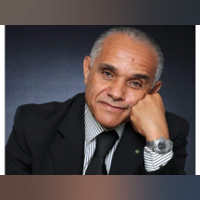
Najib Salmi, une conscience qui s’éteint, un héritage qui demeure 108

Najib Salmi s’en est allé, et avec lui se referme l’une des plus belles pages du journalisme sportif marocain. Mais, au-delà de l’hommage collectif, c’est aussi une page intime de ma propre vie de chroniqueur, de confrère et d’ami qui se tourne. Il laisse derrière lui un héritage professionnel immense et, surtout, une empreinte humaine indélébile. Il a été sans doute la plus grande plume du sport marocain pendant des décennies. Pendant plus de quarante ans, Najib Salmi a incarné une certaine idée du journalisme sportif, exigeante et responsable. Il a, en fait, initié une école de journalisme sportif, lui qui est tombé dedans un peu par hasard et s’y était plu. Figure centrale du quotidien L’Opinion, dont il a dirigé la page sportive, il a marqué des générations de lecteurs, notamment à travers sa chronique devenue culte, « Les points sur les i », espace rare où la liberté de ton se conjuguait avec la rigueur intellectuelle et le sens de l’intérêt général. Il était à lui seul une institution. Il appartenait à cette génération pour laquelle le journalisme sportif n’était ni divertissement creux ni caisse de résonance des passions aveugles, mais un acte de service public. À une époque où le sport marocain entrait dans l’ère de la professionnalisation, de l’argent et de la médiatisation excessive, sa plume savait dénoncer les dérives, pointer les responsabilités et saluer, avec la même honnêteté, les avancées et les réussites lorsqu’elles étaient réelles. Najib Salmi ne fut pas seulement un grand chroniqueur, il fut aussi un bâtisseur. À la tête de l’Association marocaine de la presse sportive, de 1993 à 2009, il s’est battu pour la reconnaissance du métier, la défense de son éthique et la dignité de ceux qui l’exercent. Il a contribué à inscrire le journalisme sportif marocain dans les instances régionales et internationales, avec une crédibilité forgée sur le sérieux et la constance. N'est ce pas dans un congrès qu'il organisa à Marrakech que notre ami Gianni Merlo fut élu président de l'AIPS. N'est ce pas lui seul qui titra sur Said Aouita jeune prodige alors. Il venait d'établir un nouveau record national des 1500m...Il dira de lui sans se tromper qu'il ira très loin. Il aura été le soutien de générations de grands athlètes. Il était présent à tous les championnats du monde et au jeux olympiques. Il me soutenait ainsi avec force et détermination. Homme de principes, discret mais inflexible sur l’essentiel, il considérait que le respect du lecteur et la véracité de l’information n’étaient pas négociables. Cette rectitude morale, rare dans un environnement souvent soumis aux pressions et aux intérêts, lui a valu d’être reconnu par ses pairs comme une véritable école du journalisme sportif. Abdellatif Semlali, ministre légendaire de la Jeunesse et des Sports, son ami, se plaisait à l’appeler « Monsieur à côté ». Il l’était effectivement. Jamais il n’a été dans le moule de qui que ce soit, même quand, un laps de temps, il avait rejoint Le Matin du Sahara, alors dirigé de main de maître par Moulay Ahmed Alaoui. Pour moi, Najib Salmi n’était pas seulement une référence professionnelle, il était un ami, un frère et un mentor. C’est grâce à sa confiance que j’ai pu, pendant des années, écrire dans les pages sportives de L’Opinion, apprendre le métier au quotidien, ligne après ligne, sous son regard attentif et bienveillant, subissant ses sautes d’humeur et, surtout, la correction du style et de la syntaxe. Il m’a transmis bien plus que des techniques d’écriture : une conception de ce que doit être la chronique fondée sur la probité, le travail de fond et le refus de la facilité. Aujourd’hui encore, si je continue à écrire, c’est aussi parce que demeure cette voix intérieure qu’il a su faire naître, celle qui rappelle qu’on ne trahit ni le sport, ni le lecteur, ni la vérité. Najib Salmi s’est éteint à l’âge de 78 ans, après une longue lutte contre la maladie, laissant un vide immense dans les rédactions de L’Opinion et de Challenge, auxquels il a contribué avec force et assiduité. Il laisse un vide immense dans le cœur de tous ceux qui ont croisé sa route. Il reposera au cimetière des Chouhada à Rabat, là où lui-même avait accompagné tant d’autres amis et connaissances, de proches et de confrères, et beaucoup de ceux qui ont grandi à l’ombre bienveillante de sa plume. Que Dieu l’accueille en Sa miséricorde. À l’ami, au frère, au maître qui m’a montré le chemin, je ne peux dire qu’une chose : merci, Najib, pour les moments délicieux partagés, pour les mots, pour les leçons et pour l’exemple. Les lecteurs regretteront Najib Salmi, la famille, les intimes et moi enterrons Saïd Hejaj. Said Hejaj s'en va paisiblement se reposer. Najib Salmi se racontera lui dans l'histoire.

Aziz Daouda Aziz Daouda

Aziz Daouda

Directeur Technique et du Développement de la Confédération Africaine d'Athlétisme. Passionné du Maroc, passionné d'Afrique. Concerné par ce qui se passe, formulant mon point de vue quand j'en ai un. Humaniste, j'essaye de l'être, humain je veux l'être. Mon histoire est intimement liée à l'athlétisme marocain et mondial. J'ai eu le privilège de participer à la gloire de mon pays .


8100

33.0

African Football’s Leading Force: The Moroccan Model Amidst Regional Headwinds 306

The curtain fell on AFCON 2025, leaving a trail of striking contrasts. While the event confirmed the Kingdom’s supremacy as a world-class logistical hub, the tensions witnessed during the final on January 18, 2026, in Rabat, served as a stark reminder of the contingencies still weighing on continental football. Between the seamlessness of the infrastructure and the archaic nature of certain disciplinary attitudes, a fundamental question emerges: how will the transition from CAF’s regulatory framework to that of FIFA in 2030 reshape the management of these organic crises? This shift represents more than a mere scaling up; it is a true paradigmatic rupture where technocratic neutrality will serve to sanctify Moroccan excellence. I. Moroccan Excellence: A Technological Showcase for Africa The massive investment deployed by the Kingdom—ranging from the deep modernization of sports complexes to the systemic integration of VAR—presented the world with the image of a modern, rigorous, and visionary Morocco. This material success, lauded by international observers, aimed to establish an African benchmark. However, this pursuit of perfection encountered a persistent psychological phenomenon: the "host country complex." In this configuration, organizational mastery is sometimes perceived by competitors not as shared progress, but as a lever of dominance, mechanically fueling theories of favoritism. The events of the final illustrate this at its peak. The disallowed goal for Ismaïla Sarr and the late-match penalty became, through the lens of regional suspicion, instruments of controversy rather than technically grounded officiating decisions. Yet, data from DM Sport reveals the opposite: Morocco was among the most penalized teams in the tournament. This discrepancy highlights a major flaw: technology is insufficient to validate a result unless it is protected by a jurisdictional authority perceived as exogenous. II. Solidary Leadership and the Diplomacy of Resentment It would be erroneous, however, to view this quest for excellence as a desire for isolation. On the contrary, Morocco maintains deep and unwavering historical ties with the majority of its sister nations across the continent. Faithful to its African roots, the Kingdom continues to actively promote continental football within CAF, offering its infrastructure and expertise to federations seeking professionalization. This "open-hand" policy ensures that Moroccan success translates into success for all of Africa. Nevertheless, such leadership breeds friction. A "diplomacy of resentment" has emerged from certain foreign media spheres—particularly in specific Arab and African countries—aiming to tarnish the prestige of the Moroccan organization. By framing Morocco as a favored "ogre," these narratives attempt to transform factual superiority into moral injustice. This media harassment specifically targets the emergence of a governance model that now aligns with the most demanding global standards. III. The Advent of "Cold Justice": Legal Sanctification The transition to FIFA’s aegis in 2030 will signal the end of the geographical proximity that fosters such smear campaigns. Unlike the continental framework, the globalization of officiating bodies will dismantle zonal rivalries. Where CAF must often navigate between diplomatic compromise and sporting imperatives, FIFA deploys a "cold justice"—purely procedural in nature. The chaos observed in Rabat would meet a surgical response in 2030. Article 10 of the FIFA Disciplinary Code is unequivocal: any refusal to resume play results in an automatic forfeit and severe sanctions. In 2030, the rule of law will act as a protective cleaver for the host, rendering victimhood narratives obsolete. IV. Technology and the "2030 Bloc": Toward an Indisputable Truth The 2030 edition, spearheaded by the Morocco-Spain-Portugal trio, will benefit from total judgment automation (Shadow VAR, semi-automated offside) and absolute transparency. The FIFA Hosting Agreement will prevail as a superior norm, guaranteeing impartiality. This legal framework will serve as a shield, preventing disciplinary incidents from being politically instrumentalized against the Kingdom. AFCON 2025 was a successful demonstration of organizational strength for Morocco, confirming its role as the driving force of African football. However, it also revealed that excellence remains vulnerable to peripheral noise. In 2030, the definitive anchoring in FIFA law will allow the Kingdom to transform its organizational prowess into a lasting institutional legacy. Sport, finally shielded from geopolitical dross, will align with the strategic vision of a Morocco turned toward the universal, making the rule of law the bedrock of its global legitimacy.

Light Pollution and the End of the Construction of Imagination – Part 1 383

One of the memories I carry most fondly is when my interest in everything related to outer space first awakened. I clearly remember that in 1980 I saw a TV report about a lunar eclipse that we would be able to observe. The images shown on the news program impacted me so deeply that I could hardly sleep that night. The sight of the lunar craters, caught in that characteristic interplay of light and shadow, became etched in my mind. The next day, I questioned a teacher who was a friend of my family almost to the point of exhausting him, asking so many questions about the subject. Next year, I also saw TV advertisements announcing the theatrical release of "The Empire Strikes Back". In a way, my imagination was launched in a manner analogous to the catapult effect that spacecraft and space probes use when they swing around planets. There wasn’t a single clear night when I didn’t spend hours looking up at the sky, at the immensity of the universe. At that time, the night sky was truly dark, since light pollution caused by city lights did not yet have as significant an effect as it does today. In 1982, Carl Sagan’s series "Cosmos" also premiered on television, and even its soundtrack struck me deeply. Then, in 1984, with the debut of several animated series, two of them being "Groizer X" and "Star Blazers", the American version of "Space Battleship Yamato", I experienced yet another “gravitational catapult” effect, further fueling my imagination. In 1986, the passage of Halley’s Comet took over newspapers, magazines, TV programs, and even my school science books. That was it! This was the definitive confirmation of my passion for the space. At that time, however, I still lived in the realm of fantasy, driven solely by what my imagination brought me. I would look at the sky on clear nights and think that traveling through space was like it was in the movies, challenging, full of adventures and dangers, yet seeming simple and even comfortable. After all, in science fiction films, many aspects of physics were disregarded, using a kind of poetic license. But I grew up. I became a scientist. My gaze acquired a new perspective, yet without ever losing the magic of imagination from the beginning of this story. What came next? In the second part of this story, I will conclude… Clear skies to all, and Ad astra!