Think Forward.

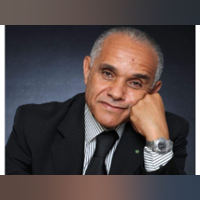
Najib Salmi, une conscience qui s’éteint, un héritage qui demeure 118

Najib Salmi s’en est allé, et avec lui se referme l’une des plus belles pages du journalisme sportif marocain. Mais, au-delà de l’hommage collectif, c’est aussi une page intime de ma propre vie de chroniqueur, de confrère et d’ami qui se tourne. Il laisse derrière lui un héritage professionnel immense et, surtout, une empreinte humaine indélébile. Il a été sans doute la plus grande plume du sport marocain pendant des décennies. Pendant plus de quarante ans, Najib Salmi a incarné une certaine idée du journalisme sportif, exigeante et responsable. Il a, en fait, initié une école de journalisme sportif, lui qui est tombé dedans un peu par hasard et s’y était plu. Figure centrale du quotidien L’Opinion, dont il a dirigé la page sportive, il a marqué des générations de lecteurs, notamment à travers sa chronique devenue culte, « Les points sur les i », espace rare où la liberté de ton se conjuguait avec la rigueur intellectuelle et le sens de l’intérêt général. Il était à lui seul une institution. Il appartenait à cette génération pour laquelle le journalisme sportif n’était ni divertissement creux ni caisse de résonance des passions aveugles, mais un acte de service public. À une époque où le sport marocain entrait dans l’ère de la professionnalisation, de l’argent et de la médiatisation excessive, sa plume savait dénoncer les dérives, pointer les responsabilités et saluer, avec la même honnêteté, les avancées et les réussites lorsqu’elles étaient réelles. Najib Salmi ne fut pas seulement un grand chroniqueur, il fut aussi un bâtisseur. À la tête de l’Association marocaine de la presse sportive, de 1993 à 2009, il s’est battu pour la reconnaissance du métier, la défense de son éthique et la dignité de ceux qui l’exercent. Il a contribué à inscrire le journalisme sportif marocain dans les instances régionales et internationales, avec une crédibilité forgée sur le sérieux et la constance. N'est ce pas dans un congrès qu'il organisa à Marrakech que notre ami Gianni Merlo fut élu président de l'AIPS. N'est ce pas lui seul qui titra sur Said Aouita jeune prodige alors. Il venait d'établir un nouveau record national des 1500m...Il dira de lui sans se tromper qu'il ira très loin. Il aura été le soutien de générations de grands athlètes. Il était présent à tous les championnats du monde et au jeux olympiques. Il me soutenait ainsi avec force et détermination. Homme de principes, discret mais inflexible sur l’essentiel, il considérait que le respect du lecteur et la véracité de l’information n’étaient pas négociables. Cette rectitude morale, rare dans un environnement souvent soumis aux pressions et aux intérêts, lui a valu d’être reconnu par ses pairs comme une véritable école du journalisme sportif. Abdellatif Semlali, ministre légendaire de la Jeunesse et des Sports, son ami, se plaisait à l’appeler « Monsieur à côté ». Il l’était effectivement. Jamais il n’a été dans le moule de qui que ce soit, même quand, un laps de temps, il avait rejoint Le Matin du Sahara, alors dirigé de main de maître par Moulay Ahmed Alaoui. Pour moi, Najib Salmi n’était pas seulement une référence professionnelle, il était un ami, un frère et un mentor. C’est grâce à sa confiance que j’ai pu, pendant des années, écrire dans les pages sportives de L’Opinion, apprendre le métier au quotidien, ligne après ligne, sous son regard attentif et bienveillant, subissant ses sautes d’humeur et, surtout, la correction du style et de la syntaxe. Il m’a transmis bien plus que des techniques d’écriture : une conception de ce que doit être la chronique fondée sur la probité, le travail de fond et le refus de la facilité. Aujourd’hui encore, si je continue à écrire, c’est aussi parce que demeure cette voix intérieure qu’il a su faire naître, celle qui rappelle qu’on ne trahit ni le sport, ni le lecteur, ni la vérité. Najib Salmi s’est éteint à l’âge de 78 ans, après une longue lutte contre la maladie, laissant un vide immense dans les rédactions de L’Opinion et de Challenge, auxquels il a contribué avec force et assiduité. Il laisse un vide immense dans le cœur de tous ceux qui ont croisé sa route. Il reposera au cimetière des Chouhada à Rabat, là où lui-même avait accompagné tant d’autres amis et connaissances, de proches et de confrères, et beaucoup de ceux qui ont grandi à l’ombre bienveillante de sa plume. Que Dieu l’accueille en Sa miséricorde. À l’ami, au frère, au maître qui m’a montré le chemin, je ne peux dire qu’une chose : merci, Najib, pour les moments délicieux partagés, pour les mots, pour les leçons et pour l’exemple. Les lecteurs regretteront Najib Salmi, la famille, les intimes et moi enterrons Saïd Hejaj. Said Hejaj s'en va paisiblement se reposer. Najib Salmi se racontera lui dans l'histoire.

Aziz Daouda Aziz Daouda

Aziz Daouda

Directeur Technique et du Développement de la Confédération Africaine d'Athlétisme. Passionné du Maroc, passionné d'Afrique. Concerné par ce qui se passe, formulant mon point de vue quand j'en ai un. Humaniste, j'essaye de l'être, humain je veux l'être. Mon histoire est intimement liée à l'athlétisme marocain et mondial. J'ai eu le privilège de participer à la gloire de mon pays .


8100

33.0

Light Pollution and the End of the Construction of Imagination – Part 2 84

Well, as I said in the previous article, I grew up and became a scientist. Not an astronomer, but a biologist. A biologist passionate about the stars. And many may ask: why didn’t you study astronomy? There are three reasons for that. The first is that I love biology. The second is that I was never good at mathematics. And the third is that I discovered that astronomers nowadays barely look at the sky. Telescopes work automatically, providing data to be analyzed later. That romantic astronomy of the past no longer exists. It was almost poetic, because imagination was the fuel for those scientists. Therefore, in cases like mine, it is much better to remain an amateur. This reminds me of a curious anecdote in which the writer Isaac Asimov is said to have refused an invitation to visit a factory where robots performed tasks on assembly lines, because he did not want to compromise his imagination. Returning to my story, when I was 21 years old, my father surprised me by taking me to a well-known store and buying a telescope. It was a relatively simple instrument, with a 60 mm aperture, but it allowed me to see the surface of the Moon perfectly, as well as Jupiter’s four largest moons and even Saturn’s rings. I don’t even need to say how I felt, do I? I became a child again! And that telescope is still here with me today, 30 years later. But here comes the bad part, which gives these two articles their title… Light pollution has reached extremely high levels, to the point that in large cities, when you look at the sky, you see very few stars, only the brightest ones. City lights have erased the night sky. What child today will look up at the sky and be enchanted by all that immensity? Who will feel themselves on the shores of the cosmic ocean, as Carl Sagan said in the first episode of the classic series Cosmos? How will imagination be built? In the same way, the inspiration of many poets and artists will be compromised. A child today, upon hearing stories of a time when the sky was filled with shining stars, might think that either the batteries ran out and no one replaced them, or that the bulbs burned out and no one changed them. It is still a child using their imagination, but without having experienced one of the most beautiful spectacles of creation. That spectacle is still there, happening, and it will continue to happen for a very, very long time. Or rather, as long as time exists, it will continue, but with a curtain separating the stage from the audience. Today there are movements and campaigns aimed at solving this issue, but I believe it is a great challenge to overcome. Until then, one alternative is to leave large urban centers and seek regions far away, at least 50 km from these cities, where one can truly enjoy the magical view of a clear and genuinely dark sky. I always wish clear skies to everyone, and ad astra!

CAF Sanctions: Disciplinary Justice with Variable Geometry? 335

The decisions by the Confederation of African Football (CAF) Disciplinary Commission regarding the incidents that marred the CAN final between Senegal and Morocco are now known. They were awaited, scrutinized, sometimes feared. But beyond their mere announcement, it is their **coherence, proportionality, and equity** that raise questions today. At first glance, the CAF sought to strike hard, giving the impression of sanctioning both parties to preserve a posture of balance. The CAF simply forgot that at its core, the conflict was squarely between Senegal and the referee, not with the Moroccan team, and thus, in the end, pitted Senegal against this very same CAF, responsible for the organization and officiating. Senegal and Morocco have thus, according to the commission's logic, presided over by a Senegalese, let us recall, been sanctioned to varying degrees. Yet, a close reading of the facts, confronted with the very content of the decisions rendered, reveals an **asymmetry that is hard to justify** between the severity of the acts observed and the weight of the sanctions imposed. The ridiculous is not far off. The central problem, namely, the officiating, has simply been swept aside. The most troubling element undoubtedly lies in the **total absence of any reference to the referee** in the Commission's ruling. As if he had never existed. Yet, the images and testimonies align: in the final moments, the referee displayed **manifest irresponsibility**. How can one justify resuming play when the minimum safety conditions were clearly not met? The stadium had been invaded by official Senegalese supporters, equipment had been vandalized, and tensions were at a boiling point. In such circumstances, the rules are clear: absolute priority must be given to the safety of players, officials, and the public. By ignoring this dimension, the Disciplinary Commission misses an **essential link in the chain of responsibilities**. They are, however, clearly identified. This is not to fully exonerate the Moroccan side. Reprehensible behaviors existed, and some hot-headed reactions could have been avoided. But the nature and gravity of these acts remain **incommensurable** with those attributable to the Senegalese delegation and its immediate environment. The most striking example remains the sanction imposed on Achraf Hakimi. Reproaching him for attempting to remove a towel belonging to the Senegalese goalkeeper—an object that, incidentally, had no business on the pitch—smacks more of a **search for artificial balance** than rigorous application of disciplinary principles. Can one seriously equate this gesture with outbursts involving pitch invasions and infrastructure damage? This harms the image of world football, beyond just African football. The inclusion of such an amalgam in the dossier and the proportionality of the sanctions are manifestly debatable. It is precisely on the terrain of proportionality that the CAF's decision falters. The sanctions imposed on the Moroccan camp appear **relatively heavy** given the facts reproached to them, especially when compared to those concerning the Senegalese side, which was linked to structurally far graver incidents. This disproportion undermines the narrative of those in Senegal and elsewhere who decried Morocco's supposed "stranglehold" on CAF bodies. If such influence truly existed, how to explain that Morocco itself ends up heavily sanctioned? Where is this alleged institutional protection when the disciplinary decisions, on the contrary, seem applied with particular rigor against it? One can only regret the missed opportunity for the CAF to show a new face of power and justice. The CAF Disciplinary Commission squandered a precious chance: to **clarify responsibilities, reaffirm the central role of officiating, and lay credible foundations** for managing crises in African competitions. By opting for punitive symmetry rather than a fine analysis of the facts, it perpetuates unease, fuels suspicions, and leaves the game's actors—players, officials, and fans, in a gray zone where perceived injustice becomes more damaging than the sanction itself. African football deserves better than disciplinary justice with variable geometry. It deserves an authority capable of owning its choices, naming responsibilities where they truly lie, and protecting the essentials: the integrity of the game and the safety of those who bring it to life. Today, some chuckle under their breath for escaping truly proportional sanctions for their misdeeds; others are stunned; still others conclude the immaturity of this African body, like other continental instances. A pitiful image for a continent whose youth aspires to development and a bright future, with football and footballers as role models. Has African football missed the chance to set an example? Did the CAF issue the wrong communiqué or target the wrong match? In any case, there is one clear winner slipping under the radar: the party at the origin of it all. Like a fugitive, the commission released its statement at an impossible hour... Funny, no? One wonders whether to hold out hope and pursue the process further, or resign oneself to admitting there is no hope for a just and credible African football body.

Najib Salmi, a Conscience Fades, a Legacy Endures 345

Najib Salmi has passed away, and with him closes one of the most beautiful chapters of Moroccan sports journalism. But beyond the collective tribute, it's also an intimate page of my own life as a columnist, colleague, and friend that turns. He leaves behind an immense professional legacy and, above all, an indelible human imprint. He was undoubtedly the greatest pen in Moroccan sports for decades. For over forty years, Najib Salmi embodied a certain idea of sports journalism, one that was demanding and responsible. In fact, he founded a school of sports journalism, having stumbled into it somewhat by chance and grown to love it. A central figure at the daily *L’Opinion*, where he directed the sports page, he marked generations of readers, especially through his cult column "Les points sur les i" (*Dotting the i's*), a rare space where freedom of tone blended with intellectual rigor and a sense of the public interest. He was an institution in himself. He belonged to that generation for which sports journalism was neither empty entertainment nor a echo chamber for blind passions, but an act of public service. At a time when Moroccan sports was entering the era of professionalization, money, and excessive media coverage, his pen knew how to denounce excesses, pinpoint responsibilities, and salute, with the same honesty, real progress and achievements when they were genuine. Najib Salmi was not just a great columnist; he was also a builder. At the helm of the Moroccan Association of Sports Press from 1993 to 2009, he fought for the profession's recognition, the defense of its ethics, and the dignity of those who practice it. He helped embed Moroccan sports journalism in regional and international bodies, earning credibility through seriousness and consistency. Wasn't it at a congress he organized in Marrakech that our friend Gianni Merlo was elected president of AIPS? Wasn't it he alone who headlined young prodigy Said Aouita after he set a new national 1500m record? He rightly predicted that Aouita would go far. He was the unwavering supporter of generations of great athletes. He attended every world championship and Olympic Games. He supported me too, with strength and determination. A man of principles, discreet but inflexible on essentials, he believed that respect for the reader and the truthfulness of information were non-negotiable. This moral uprightness, rare in an environment often subject to pressures and interests, earned him recognition from his peers as a true school of sports journalism. Abdellatif Semlali, the legendary Minister of Youth and Sports and his friend, delighted in calling him "Monsieur à côté" (*The Man on the Side*). He truly was. He never fit anyone else's mold, even during a brief stint at *Le Matin du Sahara*, then masterfully directed by Moulay Ahmed Alaoui. For me, Najib Salmi was more than a professional reference; he was a friend, a brother, and a mentor. It was thanks to his trust that I was able to write for years in *L’Opinion*'s sports pages, learning the craft day by day, line by line, under his attentive and benevolent gaze, enduring his mood swings and, above all, his corrections to style and syntax. He passed on to me more than writing techniques: a vision of what a column should be, rooted in integrity, thorough groundwork, and a rejection of shortcuts. Even today, if I continue to write, it's also because that inner voice he helped instill remains, the one that reminds us not to betray sport, the reader, or the truth. Najib Salmi passed away at the age of 78, after a long battle with illness, leaving an immense void in the newsrooms of *L’Opinion* and *Challenge*, to which he contributed with strength and diligence. He leaves a huge void in the hearts of all who crossed his path. He will rest in the Chouhada Cemetery in Rabat, where he himself had accompanied so many other friends, acquaintances, loved ones, and colleagues, and many who grew up under the benevolent shadow of his pen. May God welcome him in His mercy. To the friend, the brother, the master who showed me the way, I can say only one thing: thank you, Najib, for the delightful moments shared, for the words, the lessons, and the example. Readers will miss Najib Salmi; the family, the inner circle, and I will bury Said Hejaj. Said Hejaj departs peacefully to rest. Najib Salmi will live on in history.