Think Forward.

Le ramadan chez la Personne âgée : un savant équilibre physiologique à respecter 4133

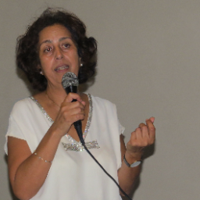
Pendant le mois sacré du Ramadan, de nombreux musulmans jeûnent pendant la journée. Pour être sûr de rester en bonne santé tout en se privant de manger et de boire, il est primordial pour les personnes âgées de faire attention à ce que l'on consomme avant, pendant et après le jeûne. La clé du repas d'avant l'aube, est de constituer des réserves d'énergie pour tenir bon pendant la journée avec des glucides (sucres) non raffinés. Lors de la rupture du jeûne à ‘’l'iftar’’, il est important de manger beaucoup d'aliments rassasiants mais sans excès... CE QUI EST LOIN D'ËTRE TOUJOURS LE CAS ! Le ramadan est en général sans danger pour les pratiquants et l’âge n’est pas en soi un obstacle à son respect. Il existe des contre-indications (quelque soit l’âge) en cas de diabète traité à l'insuline, d'insuffisance rénale, de maladie cardiaque... et de toute autre pathologie ne supportant pas un jeûne, en particulier certaines MALADIES AUTO-IMMUNES et certaines MALADIES RARES . Il est sage de faire le point avec son médecin traitant et de faire preuve de responsabilité, surtout après 75 ans où le jeûne est à déconseiller en général. Les personnes âgées de plus de 60 ans doivent par contre savoir que leurs « paramètres » physiologiques, très différents d’une personne plus jeune, les oblige à plus de vigilance. Passons en revue toutes ces évolutions du corps et ce qu’elles impliquent. SOMMAIRE : I/ Le manque d’appétit fréquent chez la personne âgée : un risque de dénutrition lors du Ramadan, II/ Une grande vigilance à observer à l’égard des troubles de l’hydratation, III/ Attention à la fonte du capital musculaire, IV/ Une qualité du sommeil à préserver, V/ Les médicaments et le jeûne: un arbitrage raisonnable entre deux éléments contradictoires, VI/ Bibliographie Les personnes âgées ont souvent tendance à diminuer leur apport sans que leurs besoins énergétiques ne soient réduits. Ce manque d’appétit qui survient avec l’âge est en partie dû notamment à l’altération des perceptions des odeurs et du goût (qui stimulent ainsi moins). La capacité discriminative s’affaiblit d’où une difficulté à identifier et apprécier les aliments. Le seuil de détection des 4 saveurs de base est ainsi augmenté en moyenne de 11,6 fois pour le salé, 7 pour l’amer, 4,3 pour l’acide et 2,7 pour le sucré par rapport à un individu jeune. Les besoins énergétiques de la PA sont presque identiques à ceux de l’adulte jeune : 2000 kcal/j pour l’homme et 1800 kcal/j pour la femme contre respectivement 2800 et 2200 à 30 ans. De ce fait, la conjonction d’une baisse de l’appétit et l’observation de longues heures de jeune peut compromettre l’état nutritionnel de la PA et mener à une spirale de conséquences fâcheuses. II/ Une grande vigilance à observer à l’égard des troubles de l’hydratation La PA a tendance naturellement à baisser ses apports en eau, le seuil de perception de la soif s’émoussant aussi avec l’âge. Les pertes en eau de la PA sont aussi plus importantes à cause de la plus forte résistance du rein à l’action d’une substance qui limite les pertes en urine (l’hormone antidiurétique). De plus, les mécanismes de régulation sont moins bien assurés, et l’élimination des surplus de sucre ou de sodium s’accompagne d’une plus grande perte en eau. L’équilibre hydrique est également menacé par certains médicaments (diurétiques, neuroleptiques…). Pour toutes ces raisons, les besoins en eau de boisson sont toujours plus élevés chez la PA que l’adulte jeune (1,7 l/j contre 1,5l/j), d’autant plus que les signes d’une déshydratation sont souvent tardifs et pas toujours faciles à interpréter. Ainsi, des manifestations de somnolence brusque, de troubles neuromusculaires, de constipation… ou d’accélération du rythme cardiaque doivent conduire à une réhydratation d’urgence… et cela sans perdre de temps. III/ Attention à la fonte du capital musculaire Le capital musculaire diminue chez la PA, ce qui aggrave l’état nutritionnel et d’hydratation. Les réserves en eau (73% de l’eau totale du corps sont stockés dans les muscles) baissent en effet corrélativement à la diminution de la masse musculaire (17% du poids du corps à 70 ans contre 30% à 30 ans). Ce phénomène, la sarcopénie, a des répercussions par les faiblesses qu’il provoque : risques infectieux par baisse des réserves protéiques nécessaires aux défenses immunitaires, chutes et fractures éventuelles compromettant l’autonomie de la PA… Pour éviter l’aggravation de la fonte musculaire, l’apport nutritionnel conseillé en protéines animales (viandes, poissons …) et/ou végétales (amande, pistache, noix de cajou, haricots rouges, …) et en particulier lors du ramadan, doit être supérieur à celui de l’adulte jeune : 1 à 1,2 contre 0,8 à 1g/kg/j, soit 12 à 15 % des nutriments. IV/ Une qualité du sommeil à préserver Le sommeil se modifie avec l’âge tant par sa structure que par sa qualité. Son temps total diminue et il devient moins efficace car plus fragmenté par des réveils nocturnes . Il faut donc essayer de conserver une heure de coucher et de lever régulière, de consacrer une heure de sont temps l’après-midi, à une sieste réparatrice, de pratiquer une activité physique et de s’exposer à lumière naturelle durant la journée. La bonne règle en ce domaine est de prendre un petit déjeuner consistant avant le lever du soleil, de faire un repas léger au moment de la rupture et d’en faire un autre 3 heures après. V/ Les médicaments et le jeûne: un arbitrage raisonnable entre deux éléments contradictoires Les médicaments restent en plus grande quantité et plus longtemps dans l’organisme d’une personne âgée. Leur élimination rénale ralentie, leur accumulation dans les graisses et leur passage plus agressif dans le cerveau rendent de fait les PA beaucoup plus fragiles face aux médicaments. Ainsi, le paracétamol s’élimine deux fois plus lentement, L’observance du ramadan se révèle ainsi toujours problématique face à la prise de médicaments. Surtout quand on sait que l’intoxication médicamenteuse est responsable d’un tiers des hospitalisations des PA dans les pays développés ! Bon ramadan à tous et soyez vigilant à ne pas dépasser les exigences physiologiques de votre corps ! Dr MOUSSAYER KHADIJA الدكتورة خديجة موسيار Spécialiste en médecine interne et en Gériatrie, Ex - interne aux Hôpitaux de Paris (Hôpital gériatrique Charles Foy), Présidente de l’Alliance Maladies Rares Maroc رئيسة ائتلاف الأمراض النادرة المغر , et de l’association marocaine des maladies auto-immunes et systémiques (AMMAIS), Vice-présidente du Groupe de l’Auto-Immunité Marocain (GEAIM) VI/ Bibliographie - Personnes âgées : Questions à Khadija Moussayer, Spécialiste en gériatrie Fév 2017 https://www.lavieeco.com/news/societe/personnes-agees-questions-a-khadija-moussayer%E2%80%85s - Halte à l’overdose pour les personnes âgées ! Que Choisir Santé 28/01/2015 https://www.quechoisir.org/action-ufc-que-choisir-medicaments-halte-a-l-overdose-pour-les-personnes-agees-n14033/

Dr Moussayer khadija Dr Moussayer khadija

Dr Moussayer khadija

Dr MOUSSAYER KHADIJA الدكتورة خديجة موسيار Spécialiste en médecine interne et en Gériatrie en libéral à Casablanca. Présidente de l’Alliance Maladies Rares Maroc (AMRM) et de l’association marocaine des maladies auto-immunes et systémiques (AMMAIS), Vice-présidente du Groupe de l’Auto-Immunité Marocain (GEAIM)


5300

0

Morocco and the Trust Economy: The Invisible Capital of Development... 528

In the economic history of nations, some assets are visible, such as natural resources, geographical position, infrastructure, or market size. Others, however, are invisible but often decisive. Among them, trust holds a central place and constitutes the true cement of sustainable economies. An economy can survive with few natural resources, but it cannot prosper sustainably without trust. Morocco today has many assets: remarkable political stability, a strategic position, world-class infrastructure, and active economic diplomacy. Yet, the decisive step in development now consists of building a true trust economy, capable of sustainably reassuring citizens, entrepreneurs, and investors. This is not a slogan. Trust is an institutional and cultural architecture that is built over time. It is the primary capital of a modern economy and a determining factor. It reduces transaction costs, encourages investment, facilitates innovation, and stimulates individual initiative. When an entrepreneur knows that the rules of the game are stable, that contracts will be respected, and that justice is swift and independent, he invests more easily. When a citizen trusts the tax administration and institutions, he more willingly accepts taxes and participates in the formal economy. Conversely, a lack of trust generates precautionary behaviors: capital flight, informality, low long-term investment. The economy then becomes cautious, fragmented, and inefficient. For Morocco, the central question is therefore not only to attract investments, but to create an environment where trust becomes a collective reflex. It would be unfair not to recognize the considerable progress made over the past decades. The foundations are solid. The country has massively invested in infrastructure: Tanger Med is today one of the world's most important logistics hubs. Nador and Dakhla are coming soon. Industrial zones have enabled the emergence of high-performing sectors, in the automotive industry with Renault Group and Stellantis, and in aeronautics with Boeing, Airbus, and Safran. The country's ambition in energy transition is exemplary. This shows that it is capable of carrying out structuring projects and offering a stable macroeconomic environment. However, the next step in development requires a qualitative leap: moving from an opportunity economy to a trust economy with a determining role for the rule of law. Trust first rests on the solidity of institutions. For investors as for entrepreneurs, the predictability of rules is a decisive element. Laws must be stable, readable, and applied equally, with three particularly crucial dimensions: **The independence and efficiency of justice** A swift, accessible, and credible justice system is the keystone of any trust economy. Commercial disputes must be resolved within reasonable timeframes. Judicial decisions must be enforced without ambiguity. Legal security is often the primary factor of attractiveness. **Fiscal stability** Investors do not necessarily expect very low tax rates; they primarily seek stability and readability. Predictable taxation allows companies to plan investments over the long term. Morocco has already undertaken several major tax reforms, but the challenge now is to go further and consolidate a clear and durable fiscal pact. **The fight against rents and privileges** Trust disappears when the rules of the game seem unequal. A dynamic economy relies on fair competition and equal opportunities. Transparency in public markets, competition regulation, and limiting rent situations are essential levers. A trust economy is also an economy of freedom, capable of unleashing entrepreneurial energy. The freedom to enterprise, innovate, and experiment is one of the fundamental engines of growth. Morocco has a talented youth, competent engineers, and an influential diaspora. However, several obstacles remain: administrative complexity, access to financing for SMEs, slowness of certain procedures. The challenge is to create an environment where individual initiative becomes the norm rather than the exception. Moroccan startups in fintech, artificial intelligence, or agricultural technologies already demonstrate the country's potential. With a more fluid ecosystem, they could become tomorrow's economic champions. In a world marked by geopolitical uncertainty and economic recompositions, trust also becomes a comparative advantage. If Morocco manages to position itself as a country where rules are stable, justice reliable, and administration predictable, it could become one of the main investment platforms between Europe and Africa. This ambition aligns with the Kingdom's African strategies and its growing international openness. Trust could thus become Morocco's true economic hallmark. Several strategic orientations deserve to be prioritized: - Accelerate the modernization of the judicial system, particularly in handling commercial disputes and enforcing judicial decisions. - Radically simplify administrative procedures for businesses through complete digitalization of public services. - Establish multi-year fiscal stability to enhance visibility. - Promote transparency and fair competition in all economic sectors. - Strengthen training and valorization of human capital, particularly in technological and scientific fields. - Develop a culture of trust between the State, businesses, and citizens. This dimension is often overlooked, yet it constitutes the invisible foundation of development. Morocco finds itself today at a pivotal moment in its economic history. The infrastructure is in place, strategic ambitions are affirmed, and the international environment offers new opportunities. The next step therefore consists of building a sustainable trust ecosystem. If Morocco succeeds in this gamble, and it must, it could not only accelerate its development but also become one of the most credible and attractive economies in the emerging world. In the 21st-century global economy, trust is undoubtedly the rarest and most powerful capital.

Football: When Passion Kills the Game in Impunity and Tolerance.. 1221

Football (Soccer for Americans) is first and foremost a matter of emotions. By its very essence, it is an open-air theater where human passions play out in their rawest, most primal form. It generates joy, anger, pride, humiliation, and a sense of belonging. From the stands of Camp Nou to those of the Diego Armando Maradona Stadium, through the fervor of the Mohamed V sport Complex in Casablanca, the vibrant enclosures of Stade Léopold Sédar Senghor in Dakar, or even the Parc des Princes in Paris, the Vélodrome In Marseille, and the Bernabeu In Madrid, football transcends the mere framework of the game to become a total social phenomenon. But this emotional intensity, which makes football's beauty, also constitutes its danger. For without rigorous regulation, it quickly tips into excess, then into violence. Today, it must be acknowledged that the rules exist, but they are too often circumvented, stripped of their substance, or applied with disconcerting leniency. On the pitches as in the stands, excesses are multiplying: insults toward referees, provocations between players, systematic challenges, physical violence, projectile throwing, pitch invasions, xenophobic remarks, racist offenses. What was once the exception is tending to become a tolerated norm. Astonishingly, we are starting to get used to it. Recent examples are telling. In Spain, in stadiums renowned for their football culture, racist chants continue to be belted out without shame, targeting players like Vinícius Júnior. Most recently, it was the Muslim community that was insulted. And yet, Spain's current football prodigy is Muslim. An overheated crowd that has doubtless forgotten it wasn't so long ago that it was Muslim itself. Among those chanting these remarks, and without a doubt, some still carry the genes of that recent past... In Dakar, just a few days ago, clashes escalated, turning a sports celebration into a scene of chaos. In Italy, incidents involving supporters who invaded the pitch, during a friendly match, no less, endangered players and officials, recalling the dark hours of European hooliganism in the 1980s. These episodes are not isolated; they reflect a worrying normalization of violence in and around stadiums. Even at the highest level of African football, behavioral excesses are becoming problematic. The 2025 Africa Cup of Nations final left a bitter taste. What should have been a moment of celebration for continental football was marred by behaviors contrary to sporting ethics. Pressures on refereeing, excessive challenges, and game interruptions have become commonplace. When a coach manipulates a match's rhythm to influence a refereeing decision, it is no longer strategy but a challenge to the very foundations of the sport. Despite international outrage, the sanctions imposed on teams, clubs, or players involved remain often symbolic, insufficient to eradicate these behaviors. A very surprising phenomenon: rarely have clubs or federations clearly distanced themselves from such crowds. They accommodate them, and when they condemn them, it is half-heartedly, in a muffled, timid tone with no effect. The problem is twofold. On one hand, disciplinary regulations exist but lack firmness. On the other, their application suffers from a lack of consistency and political courage. Bodies like FIFA, continental confederations, and national federations hesitate to impose truly dissuasive sanctions such as point deductions, prolonged closed-door matches, competition exclusions, or even administrative relegations. Yet without fear of sanction, the rule loses all effectiveness. It suffices to compare with other sports to measure the gap. In rugby, for example, respect for the referee is a cardinal value. The slightest challenge is immediately sanctioned. In athletics, a false start leads to immediate disqualification, no discussion. Football, meanwhile, still tolerates too many behaviors that should be unacceptable. This permissiveness has a cost. It undermines football's image, discourages some families from attending stadiums, and endangers the safety of the game's actors. More gravely, it paves the way for future tragedies. History has already taught us, through catastrophes like the Heysel Stadium disaster, that violence in stadiums can have tragic consequences. It is therefore urgent to react. Regulating football does not mean killing its soul, but rather preserving it. It is not about extinguishing passions, but channeling them. This requires strong measures, exemplary sanctions against offending clubs and players, accountability for national federations, increased use of technology to identify troublemakers, and above all, a clear political will from national and international governing bodies. Football cannot continue to be this "market of emotion" left to its own devices. For by tolerating the intolerable, it risks losing what makes its greatness and its ability to unite rather than divide. If FIFA does not decide to act firmly, the danger is real: that of seeing football sink into a spiral where violence triumphs over the game, and where, one day, tragedies exceed the mere framework of sport. The long-awaited decision of the Court of Arbitration for Sport (CAS) in the 2025 AFCON final case should confirm rigor and integrity in the application of rules, at least at this level, thereby strengthening the credibility of the pan-African competition and football in general.