Think Forward.

Christopher Ross ou la diplomatie à contre-courant 90

Il arrive que des diplomates, une fois leur mission terminée, choisissent la réserve que commande leur ancien statut. D’autres préfèrent continuer à intervenir dans des débats qu’ils ont pourtant contribué à complexifier. Christopher Ross appartient clairement à cette seconde catégorie. Dans un article récent, l’ancien émissaire pour le Sahara marocain a de nouveau pris position sur ce dossier sensible. Avec le recul du temps, son analyse n’a gagné ni en nuance ni en distance critique. À la lecture de son texte, c’est plutôt l’inverse qui se produit: même grille de lecture, mêmes postulats et, surtout, même indulgence à l’égard d’Alger. Cette persistance soulève une question fondamentale: que cherche Ross aujourd’hui en intervenant à nouveau dans un dossier dont il a été l’un des médiateurs les plus contestés? Nommé en 2009 par Ban Ki-moon, il succédait à une série d’émissaires confrontés à la même difficulté: sortir d’une impasse diplomatique héritée de la guerre froide. **Ce conflit trouve en effet ses racines dans les bouleversements géopolitiques des années 1970. Le Maroc a conforté sa souveraineté historique sur la région en 1975, provoquant le retrait de l’Espagne, tandis que le Polisario, soutenu politiquement, financièrement et militairement par l’Algérie et la Libye, revendiquait la création d’un État indépendant.** Le dossier prend une dimension internationale avec la création, en 1991, de la MINURSO qui devait superviser l'organisation d'un référendum; une idée proposé par feu Hassan II dans un discours prononcé à Nairobi lors d’un sommet de l’OUA. Très vite, les entraves créées par le Polisario, notamment sur l’identification du corps électoral, rendent ce projet quasi impossible et le processus s’enlise. **C’est alors que le Maroc propose en 2007 une initiative politique majeure: un plan d’autonomie élargie pour les provinces du Sud, sous souveraineté marocaine. Le projet est présenté au Conseil de sécurité comme une solution réaliste et pragmatique et reçoit un soutien international croissant, qualifié de «sérieux et crédible» par plusieurs résolutions. C’est un véritable tournant du réalisme diplomatique.** Depuis, le paysage diplomatique autour du Sahara a profondément évolué. De nombreux États considèrent désormais le plan d’autonomie marocain comme la base la plus crédible pour une solution politique durable. En 2020, l’administration Trump annonce officiellement la reconnaissance de la souveraineté du Maroc sur le Sahara. Un tournant majeur dans l’équilibre diplomatique du dossier. Dans la foulée, plusieurs puissances occidentales réaffirment leur soutien au plan d’autonomie, tandis que des pays arabes, européens et africains ouvrent des consulats à Laâyoune ou Dakhla, reconnaissant de facto l’administration marocaine du territoire. Au sein de l'ONU, la terminologie employée par les résolutions du CS a également évolué: la notion de «solution politique réaliste, pragmatique et durable» s’est imposée comme ligne directrice du processus. Ce glissement vers une approche pragmatique traduit une réalité simple: le référendum envisagé dans les années 1990 n’est plus considéré comme une option viable. C’est précisément ce tournant diplomatique que Ross, resté prisonnier d’une vision dépassée, semble refuser d’intégrer. Dans ses prises de position récentes, il continue de défendre une lecture du conflit renvoyant à une époque révolue, en s’accrochant à des schémas diplomatiques que la réalité géopolitique a largement dépassés. *Cette posture interroge jusque sur la droiture du personnage.* Dès son mandat, le Royaume avait exprimé de sérieuses réserves quant à son impartialité et en demanda officiellement le remplacement en 2012; la confiance ayant été gravement entamée. Un médiateur, par définition, doit maintenir une distance équitable entre les parties. Lorsque cette distance disparaît, la médiation perd sa crédibilité. De fait, Ross n’a jamais vraiment dissipé le soupçon d’une proximité avec la position algérienne. Le rôle de l’Algérie dans ce conflit est central. L’un des points les plus controversés de son discours concerne précisément la place d’Alger dans ce dossier. **Depuis cinquante ans, l’Algérie affirme officiellement qu’elle n’est qu’un «pays observateur» dans ce conflit. La réalité diplomatique et stratégique est tout autre. Alger héberge, arme, finance le Polisario, et accueille à Tindouf des milliers de réfugiés dont une partie importante n’est même pas originaire du territoire concerné.** Il ne fait guère de doute que le conflit est avant tout un différend opposant l’Algérie au Maroc; analyse désormais largement partagée par les principaux acteurs internationaux. Aucune solution durable ne pourra émerger sans l’implication directe d’Alger dans les négociations. Dans ce contexte, les prises de position répétées de Ross paraissent anachronisme et fragilisent sa crédibilité. En continuant de s’aligner, dans les faits, sur l'Algérie et le Polisario, il donne l’impression de prolonger un combat politique plutôt que d’éclairer le débat. La responsabilité des anciens médiateurs internationaux est posée. *Lorsqu’un ancien représentant de l’ONU s’exprime publiquement de manière aussi tranchée, il engage indirectement l’image de l’institution qu’il a servie. Or la crédibilité de la diplomatie internationale repose précisément sur la neutralité de ses intermédiaires.* L’histoire diplomatique du Sahara est jalonnée de tentatives de médiation, de plans successifs et d’initiatives avortées. Avant Ross, d’autres envoyés avaient tenté de débloquer la situation, notamment James Baker, qui proposa au début des années 2000 un plan de transition finalement rejeté. Chaque tentative a rappelé une vérité fondamentale: sans volonté politique régionale, aucun schéma ne peut aboutir. C’est précisément pourquoi la tendance actuelle de la diplomatie internationale privilégie une solution réaliste, fondée sur l’autonomie et la coopération régionale, plutôt que sur des constructions maximalistes héritées de la guerre froide. Au fond, la question n’est pas de savoir si Ross a le droit d’exprimer une opinion. Comme tout ancien diplomate, il peut, bien sûr, participer au débat. Mais lorsqu’il persiste à défendre une vision qui ignore les évolutions majeures du contexte géopolitique, son discours prend l’allure d’un combat d’arrière‑garde. Le monde a changé, les équilibres régionaux aussi. **Le Sahara sous souveraineté marocaine, n’est plus seulement une question héritée de la décolonisation: il est désormais au cœur d’une recomposition stratégique de l’Afrique atlantique et du Nord. Face à ces transformations, la diplomatie internationale semble avoir choisi le pragmatisme.** Christopher Ross, lui, paraît avoir choisi la nostalgie d’un paradigme révolu. En affaires internationales, l’histoire montre que ceux qui s’accrochent aux paradigmes du passé finissent presque toujours par se retrouver à contre‑courant des réalités du présent.
Aziz Daouda Aziz Daouda

Aziz Daouda

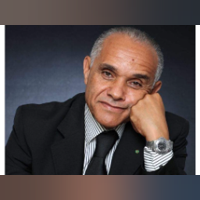
Directeur Technique et du Développement de la Confédération Africaine d'Athlétisme. Passionné du Maroc, passionné d'Afrique. Concerné par ce qui se passe, formulant mon point de vue quand j'en ai un. Humaniste, j'essaye de l'être, humain je veux l'être. Mon histoire est intimement liée à l'athlétisme marocain et mondial. J'ai eu le privilège de participer à la gloire de mon pays .


8900

33.0

Vice Of The Pacifist; Virtue of The Martial 34

Life is not measured by the number of breaths we take or the length of our survival. Life is measured by integrity, by the courage to uphold principle even when the world threatens to extinguish us. Who you are is inseparable from what you stand for. To compromise principle for comfort, safety, or the approval of others is not merely cowardice; it is existential death. The body may endure, but the self, the moral and existential self, ceases to exist. Atoms and cells continue to function, yet the human being has already perished. As Jean-Paul Sartre argued, “Man is nothing else but what he makes of himself,” and to abandon principle is to negate the self one has the responsibility to define. Integrity is costly. Courage is its currency. Only those willing to risk everything, including their life, reputation, and comfort, can truly exist. Those unwilling to pay this cost are the pacifists, the appeasers, and the virtue-signaling opportunists. They prioritize convenience and safety over principle. They negotiate with evil, bow to tyrants, and perform morality without risk. History offers many such examples: the collaborators who betrayed Omar Mukhtar to the Italians, the political allies who handed Patrice Lumumba to colonial powers, and the appeasers who enabled Hitler’s advance. These individuals survive physically, yet morally and existentially, they are already dead. Friedrich Nietzsche observed, “He who has a why to live can bear almost any how.” To those without a why defined by principle, survival is hollow. Martial virtue is fundamentally different from mere courage. Courage without the exertion of force, without the aggression necessary to impose principle, is insufficient to preserve integrity. To be martial is to act decisively, to shape reality, to confront danger proactively, and to preserve principle against overwhelming odds. Martial virtue exists on battlefields, in courts, in laboratories, and in the halls of governance. It is the combination of courage, principle, strategic intelligence, and decisive action. As Aristotle noted, virtue is an activity of the soul in accordance with reason, and the highest virtues manifest precisely when reason guides decisive action under risk. Omar Mukhtar, the Lion of the Desert, confronted Italian colonization of Libya. He did not merely resist; he organized, strategized, and struck decisively against an enemy that vastly outnumbered him. For twenty years he led guerilla campaigns, forcing the Italians to respect his operations. Every attack and maneuver carried mortal risk. He accepted this risk because surrender or compromise would have meant the death of principle, the erasure of Libya’s sovereignty, and his own existential annihilation. William Wallace faced England’s conquest of Scotland. Survival alone was impossible without aggressive action. Wallace led assaults to reclaim territory, inspired revolt, and refused offers of mercy that would have preserved his life at the cost of principle. He was captured and executed, yet he exists eternally in history because he acted decisively to defend what defined him. The Scottish nobles who swore fealty to England preserved their land and life, but their essence, the part of them that could stand, act, and uphold principle, was gone. Martial virtue is not limited to armies or battlefields. It manifests wherever principle must be imposed through courage, strategic intelligence, and force. Socrates challenged the authorities of Athens, exposing hypocrisy and questioning the foundations of civic belief. He could have compromised or moderated his questions, but to do so would have been death to the self that defined him. By speaking truth boldly and confronting power with reason, Socrates acted decisively. He imposed intellectual force upon his society, and by accepting the consequences, he lived fully even as his body was executed. Bennet Omalu confronted the National Football League and a culture determined to ignore the dangers of repeated head trauma. He could have preserved his career by silence, yet he persisted. He published his research, confronted institutional power, and forced the truth into public consciousness. He took these risks because moral and existential survival demanded it. Without such action, his courage would have been meaningless, and the self defined by principle would have died. Nikola Tesla defied societal and corporate pressures to pursue revolutionary inventions. He could have sought compromise, easy gains, or social approval, but he did not. He exerted intellectual and inventive force, shaping reality despite ridicule and financial hardship. The self defined by principle and vision persisted because he risked everything for its preservation. Not all who risk life fully exercise martial virtue. Patrice Lumumba, the first Prime Minister of Congo, faced Belgian and Western exploitation with courage and principle. Yet he lacked the strategic and martial capacity to exert force decisively. He was betrayed, outmaneuvered, and executed. Courage alone preserved moral integrity partially, but without martial action, principle could not survive. Gandhi and Martin Luther King Jr. acted courageously, risking life and liberty, yet they operated within quasi-democratic structures where outcomes could be achieved without aggressive force. They could leverage social systems and public opinion to preserve principle. Their courage was admirable, but it did not require the full exertion of martial power. These figures are morally admirable but occupy the silver lining of pacifist mentality: courageous, principled, but not fully martial. The true vice lies with those who never risk principle. Pacifists, appeasers, and virtue-signaling opportunists compromise principle to preserve comfort, safety, or social standing. They enable tyranny, betray allies, and perform morality without cost. Life without principle is death disguised as survival. Immanuel Kant reminds us that morality demands duty independent of self-interest. To act otherwise is to forfeit existence in the truest sense. Existence is inseparable from courage, principle, and the exertion of force to defend or impose truth. To compromise, avoid risk, or surrender for comfort is to die before the body ceases. To act decisively, aggressively, and strategically in defense of what defines you is to live fully. The martial may fall physically, yet they exist fully in history, morality, and existential reality. The pacifist survives physically, yet has already died in every meaningful sense. Courage is the currency. Principle is the inheritance. Strategic action and the exertion of force are the tools. Only those willing to wield them truly live. Who you are is inseparable from what you stand for. Compromise it, and you do not exist. Survival without principle is not life. To risk everything to uphold it is to truly live.
bluwr.com/

Christopher Ross or Diplomacy Against the Current 114

It sometimes happens that diplomats, once their mission is complete, opt for the discretion demanded by their former status. Others prefer to continue intervening in debates they themselves helped complicate. Christopher Ross clearly belongs to this second category. In a recent article, the former envoy for the Moroccan Sahara has once again taken a stance on this sensitive issue. With the benefit of hindsight, his analysis has gained neither nuance nor critical distance. Reading his text suggests quite the opposite: the same interpretive framework, the same assumptions, and above all, the same indulgence toward Algiers. This persistence raises a fundamental question: what is Ross seeking today by intervening again in a dossier where he was one of the most contested mediators? Appointed in 2009 by Ban Ki-moon, he succeeded a series of envoys who had faced the same difficulty: breaking out of a diplomatic impasse inherited from the Cold War. This conflict indeed traces its roots to the geopolitical upheavals of the 1970s. Morocco consolidated its historical sovereignty over the region in 1975, prompting Spain's withdrawal, while the Polisario, backed politically, financially, and militarily by Algeria and Libya, claimed the creation of an independent state. The dossier took on an international dimension with the creation, in 1991, of the MINURSO, tasked with supervising a referendum; an idea proposed by the late Hassan II in a speech delivered in Nairobi at an OAU summit. Very quickly, the obstacles created by the Polisario, particularly regarding voter identification, made this project nearly impossible, and the process stalled. It was then that Morocco proposed, in 2007, a major political initiative: a plan for broad autonomy for the southern provinces under Moroccan sovereignty. The project was presented to the Security Council as a realistic and pragmatic solution and garnered growing international support, described as "serious and credible" in several resolutions. It marked a true turning point in diplomatic realism. Since then, the diplomatic landscape around the Sahara has profoundly evolved. Numerous states now view Morocco's autonomy plan as the most credible basis for a lasting political solution. In 2020, the Trump administration officially announced recognition of Morocco's sovereignty over the Sahara, a major turning point in the dossier's diplomatic balance. In its wake, several Western powers reaffirmed their support for the autonomy plan, while Arab, European, and African countries opened consulates in Laâyoune or Dakhla, de facto recognizing Moroccan administration of the territory. Within the UN, the terminology used in Security Council resolutions has also evolved: the notion of a "realistic, pragmatic, and durable political solution" has become the guiding principle of the process. This shift toward a pragmatic approach reflects a simple reality: the referendum envisioned in the 1990s is no longer seen as a viable option. It is precisely this diplomatic turning point that Ross, still prisoner to an outdated vision, seems to refuse to integrate. In his recent statements, he continues to defend an interpretation of the conflict harking back to a bygone era, clinging to diplomatic frameworks long surpassed by geopolitical realities. This stance even calls into question the man's integrity. During his tenure, the Kingdom had already expressed serious reservations about his impartiality and officially demanded his replacement in 2012, as trust had been gravely undermined. A mediator, by definition, must maintain equitable distance between the parties. When that distance vanishes, mediation loses its credibility. In fact, Ross never truly dispelled suspicions of closeness to the Algerian position. Algeria's role in this conflict is central. One of the most controversial points in his discourse concerns precisely Algiers' place in the dossier. For fifty years, Algeria has officially claimed to be merely an "observing country" in this conflict. The diplomatic and strategic reality is entirely different. Algiers hosts, arms, and finances the Polisario, and shelters thousands of refugees in Tindouf, a significant portion of whom are not even from the territory in question. There is little doubt that the conflict is primarily a dispute pitting Algeria against Morocco, an analysis now widely shared by the main international actors. No lasting solution can emerge without Algiers' direct involvement in the negotiations. In this context, Ross's repeated positions appear anachronistic and undermine his credibility. By continuing, in effect, to align with Algeria and the Polisario, he gives the impression of prolonging a political fight rather than illuminating the debate. The responsibility of former international mediators is thus in question. When a former UN representative speaks out so trenchantly in public, he indirectly engages the image of the institution he served. Yet the credibility of international diplomacy rests precisely on the neutrality of its intermediaries. The diplomatic history of the Sahara is dotted with mediation attempts, successive plans, and failed initiatives. Before Ross, other envoys had tried to unblock the situation, notably James Baker, who proposed a transition plan in the early 2000s that was ultimately rejected. Each attempt has recalled a fundamental truth: without regional political will, no framework can succeed. This is precisely why current international diplomacy favors a realistic solution based on autonomy and regional cooperation, rather than maximalist constructs inherited from the Cold War. In essence, the question is not whether Ross has the right to express an opinion. Like any former diplomat, he can, of course, participate in the debate. But when he persists in defending a vision that ignores major geopolitical shifts, his discourse takes on the appearance of a rearguard battle. The world has changed, as have regional balances. The Sahara under Moroccan sovereignty is no longer merely a decolonization issue: it now lies at the heart of a strategic reconfiguration of the Atlantic and North Africa. Faced with these transformations, international diplomacy seems to have chosen pragmatism. Christopher Ross, by contrast, appears to have chosen nostalgia for a bygone paradigm. In international affairs, history shows that those who cling to past paradigms almost always end up swimming against the current of present realities.