Think Forward.

"Le sens de l’Histoire : le Maroc consolide, l’Algérie s’enlise" 2350

La diplomatie, la géopolitique régionale et les dynamiques d’interprétation stratégique en Afrique du Nord ont profondément évolué depuis un bout de temps. Cela remonte à 2007, lorsque le Conseil de sécurité a accueilli favorablement la proposition marocaine d’autonomie, ouvrant ainsi la voie à un règlement définitif du dossier du Sahara dans le cadre de la souveraineté du Royaume du Maroc. Ce fut un choix difficile pour le Maroc, mais éminemment pragmatique. Cette initiative s’inscrivait dans une vision d’intégration régionale à long terme, fondée sur la coopération et la complémentarité dans la région. Voyant l’Algérie embourbée dans ses contradictions, Rabat pensait pouvoir lui tendre une bouée de sauvetage. Mais peut-être avait on sous-estimé l’instabilité du régime voisin, incapable ou refusant obstinément de corriger sa trajectoire. Loin de saisir l'opportunité, Alger opta pour la surenchère, multipliant les déclarations hostiles et les actes provocateurs. Le changement de dirigeants avait pourtant suscité un espoir de dégel du côté marocain. Le Roi du Maroc est allé jusqu’à leur adresser deux appels solennels au dialogue. La réponse fut un refus catégorique. Plutôt que de formuler une contre-proposition, l’Algérie a persisté dans sa stratégie de confrontation, ignorant les dynamiques nouvelles. Les discours belliqueux et les décisions unilatérales à l’encontre du Maroc se sont multipliés à profusion. Alger s’enfonce dès lors dans une forme de déni, coupée des réalités géopolitiques contemporaines. On en vient à se demander si les décideurs algériens vivent dans le même monde. Lors du vote de la résolution de 2024 renouvelant le mandat de la MINURSO, l’Algérie, membre non permanent du CS pourtant, s’est retrouvée isolée, impuissante. Un moment aussi pathétique que révélateur. Le soutien massif des pays arabes et africains à l’intégrité territoriale du Maroc, de même que le revirement croissant de nombreux États, n’a pas infléchi l’entêtement algérien, devenu une constante. La décision espagnole d’adhérer à la vision marocaine a provoqué à Alger une crise d’hystérie symptomatique. La lettre du président Macron et les discours d'après ont davantage encore crispé les autorités algériennes. Ils finiront par se rétracter sans contre partie sinon l’humiliation. Aucune proposition constructive n’a jamais émergé de leur côté. Rien de concret. Rien d’utile. Comme si l’insulte, la calomnie et la diffamation constituaient désormais des outils diplomatiques recevables : les déclarations se sont faites de plus en plus virulentes, parfois abjectes, trahissant une perte de contrôle émotionnel. Dernièrement, à la suite de la réaffirmation claire de la position américaine en faveur du plan d’autonomie marocain, l’Algérie a publié un communiqué marqué par l’ambiguïté, l’approximation et de graves faiblesses rédactionnelles, tant en français qu’en arabe. On aurait dit les propos confus d’un boxeur groggy, titubant après un KO technique. Ce communiqué peut être interprété de plusieurs façons, toutes révélatrices d’un même désarroi. Il semble d’abord illustrer une volonté de diluer l’importance du message américain, le noyant dans un fatras de références juridiques déformées, de rappels historiques approximatifs et d’arguments idéologiques ridicules. Une tentative de minimiser l’impact du soutien américain auprès de l’opinion publique intérieure et des quelques partenaires encore fidèles. On y perçoit aussi une forme d’incompréhension, feinte ou sincère, des nouvelles réalités diplomatiques. Les cercles algériens, qui détiennent les clés de la décision s’accrochent à une lecture du dossier devenue caduque. Sont-ils réellement convaincus d’un possible retournement ?. Ils insinuent que les positions internationales restent ambiguës ou négociables, alors que tout démontre le contraire. S’ils y croient vraiment, ils sont bien seuls alors. Le communiqué traduit surtout un refus obstiné de reconnaître les faits. L’Algérie a probablement compris le message américain : il s’agit d’un soutien clair et renouvelé à la souveraineté du Maroc sur son Sahara. Mais, pour des raisons de politique intérieure et de posture régionale, elle choisit délibérément de l’ignorer; une manière de sauver la face… mais est-ce vraiment tenable? Chaque jour qui passe renforce la position du Maroc sur la scène internationale. Le pragmatisme, la cohérence, la diplomatie active et l’intelligence stratégique du Royaume finissent par payer. Le front interne marocain reste quant à lui solide, uni et constant: un atout majeur. La dynamique diplomatique portée par le Maroc est aujourd’hui partagée et soutenue par les grandes puissances, dans un contexte géopolitique où les intérêts économiques et sécuritaires prennent le pas sur les slogans du passé. L’Algérie, quant à elle, reste engluée dans une posture rigide et stérile, au détriment faut il le souligner, de son propre peuple, otage d’une affaire dans laquelle il n’a jamais été réellement consulté. Voilà bientôt 50 ans qu’il subit les conséquences d’un entêtement idéologique sans le moindre bénéfice tangible. Et les choses pourraient bien se compliquer davantage. En s’opposant désormais aux pays du Sahel, notamment le Mali, Alger compromet même ses alliances traditionnelles. La Russie observe avec inquiétude la déstabilisation d'une zone qu’elle considère comme stratégique. À se demander quel est le cap de la diplomatie d'Alger et s’il reste quelqu’un de lucide à la barre. Le fait que de Mistura ait été interrogé au Département d’État américain est lourd de sens, d’autant qu’il a été reçu par une subalterne. Lisa Kenna responsable des affaires politiques lui a transmis un message clair : les États-Unis veulent une résolution rapide, et une seule solution est désormais sur la table. Sans marge, son rôle est désormais d’inviter les parties à s’y inscrire. Parmi ces parties, l’Algérie figure bien en première ligne, que cela lui plaise ou non. Comme si cela ne suffisait pas, le congressman Joe Wilson a annoncé son intention de déposer une loi visant à classer le Polisario comme organisation terroriste, en raison de ses connexions avec l’Iran. Il est hautement probable que le projet aboutisse. L’étau se resserrera encore davantage autour du régime algérien, qui aura définitivement perdu toute latitude d’action. Il est temps d’en finir avec cette mascarade idéologique, ces marionnettes agitant encore des slogans poussiéreux dans les couloirs de l’Union Africaine, au frais du contribuable algérien, épuisé par les files d’attente pour le lait et l’huile. La patience, la sagesse et la persévérance du Royaume chérifien portent leurs fruits. Le Maroc savait que ce n’était qu’une question de temps. Ceux qui en doutaient comprennent désormais qu’on ne joue pas impunément avec les intérêts du plus anciens États-nations du monde. L’Algérie aurait pu éviter cette débâcle, si elle avait eu, un jour, la clairvoyance de voir ce qui était évident pour tous : le sens de l’histoire.

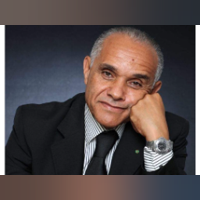
Aziz Daouda Aziz Daouda

Aziz Daouda

Directeur Technique et du Développement de la Confédération Africaine d'Athlétisme. Passionné du Maroc, passionné d'Afrique. Concerné par ce qui se passe, formulant mon point de vue quand j'en ai un. Humaniste, j'essaye de l'être, humain je veux l'être. Mon histoire est intimement liée à l'athlétisme marocain et mondial. J'ai eu le privilège de participer à la gloire de mon pays .


8100

33.0

Chapter 5: Synthesis- The Consilience of the Framework 117

The evidentiary power and utility of this integrated framework—Orbits, Latticework, Pipeline—lies in its consilience. It weaves breakthroughs from wildly disparate fields into a single, coherent explanatory tapestry, revealing a universal pattern of successful inquiry. From Ballpark to Trading Floor: The narratives of Moneyball and The Big Short are isomorphic: Both begin with a philosophical reframing of value (what makes a baseball player valuable; what is the true risk of a mortgage bond). Both proceed through scientific, data-driven discovery of a massive market inefficiency (OBP vs. price; real default risk vs. AAA ratings). Both culminate in the formulation and execution of a winning model (a roster of undervalued players; a portfolio of credit default swaps). They are the same story, told in different arenas. From Sideline to Boardroom- José Mourinho’s Tactical Objectivity: The strategic success of football manager José Mourinho, particularly in his early career at Porto, Chelsea, and Inter Milan, can be precisely deconstructed through this lens. Lacking a storied playing career, he was unburdened by the sport’s internal, dogmatic "ways of knowing." His Outer Orbit philosophy was defined with stark clarity: winning is the sole aesthetic. His Middle Orbit work became legendary: obsessive, scientific analysis of opponents, involving countless hours of video to identify specific tactical vulnerabilities in individual players and systemic gaps in team shape. His Inner Orbit genius was in formulation: he would design rigorous, often defensively-oriented game models tailored to exploit those precise weaknesses, demanding robotic discipline from his players. His famous 1-0 victories, frequently derided as "anti-football" or "boring," were direct, logical products of pursuing objective victory over subjective aesthetic approval. He demonstrated that objectivity often requires enduring backlash from a consensus invested in a different, more romantic model of the game. From Factory Flow to Protein Fold: Taiichi Ohno’s andon cord and Demis Hassabis’s AlphaFold: Both are profound interventions based on latticework understanding. Ohno designed a human-technological system to make local truth (a defect) instantly global, optimizing a physical manufacturing lattice. Hassabis built a computational system to infer the spatial relationship lattice of amino acids from evolutionary data, optimizing our understanding of the biological lattice. One is mechanical and human, the other digital and abstract, but both are solutions born from seeing a problem as a network of relationships to be modeled and managed. The Contemporary Imperative-The Age of the Synthesist: The historical drift of knowledge since the Enlightenment has been from integration toward fragmentation. The Renaissance ideal of the uomo universale (universal man) gave way to the Industrial Age’s demand for the hyper-specialist. The 20th century perfected the silo. The 21st century, however, presents us with a stark imperative that demands a synthesis, a return to integrated thinking, but now armed with powerful new tools and facing problems of unprecedented scale. Two convergent forces make the orbital, latticework methodology not merely beneficial, but essential for competent navigation of our time. The Nature of Our Tools: Our most powerful analytical engines—Artificial Intelligence (particularly machine learning and large language models) and, on the horizon, Quantum Computing—are inherently cross-orbital and lattice-native. Deploying AI effectively on any complex problem, from drug discovery to climate modeling to ethical dilemma resolution, requires precise philosophical framing (defining objectives, values, and constraints to avoid perverse outcomes), robust and curated scientific data grounding, and exquisite mathematical formulation of the model architecture and training paradigm. These tools fail, often catastrophically and insidiously, with fragmented, siloed, or philosophically unexamined input. They demand, and therefore will select for, synthesist thinkers who can navigate all three orbits and think in terms of interconnected systems. The Nature of Our Challenges: The existential problems that define our epoch are quintessential latticework challenges. They cannot be contained within academic departments or government agencies. They are not "physics problems" or "economics problems." They are system problems. The specialized intellect, trained to dig ever deeper into a single vertical silo, is architecturally unequipped to even properly define them, let alone solve them. These challenges demand minds capable of orbital thinking across the lattice, minds that can hold multiple models, trace second- and third-order consequences, and formulate strategies that are robust across multiple domains of reality. Objectivity as the Foundational Operating System. The pursuit of objective truth is not a passive state of receiving revealed wisdom. It is an active, disciplined, and often confrontational chase. It requires the moral courage to question foundational premises in the Outer Orbit, the intellectual rigor to map reality without favor or illusion in the Middle Orbit, and the creative potency to formally synthesize understanding in the Inner Orbit. It demands that we see the world not as a collection of unrelated events, but as a vast, dynamic lattice of interlocking causes and effects. And it is best navigated with the structured, self-correcting protocol of the Objectivity Pipeline. This framework proposes objectivity not as the cold, emotionless province of a narrow scientism, but as a universal operating system for understanding, a scalable, rigorous, and ultimately humane methodology applicable with equal force to the equations of a physicist, the ethical calculus of a jurist, the investment thesis of a historian, the innovation of an engineer, and the strategy of a state. Subjectivity is the fog of un-modeled complexity. The Orbits Model, the Latticework Theory, and the Objectivity Pipeline constitute the navigation system—the charts, the compass, and the piloting protocol. In an epoch defined by overwhelming information, pervasive misinformation, and tools of god-like power whose misuse carries existential risk, mastering this chase is no longer an intellectual luxury or a philosophical pastime. It is the essential meta-skill, the foundational logic upon which reliable judgment, effective action, and meaningful progress depend. The choice before us is not between a subjective world and an objective one, but between wandering in the fog and building a lighthouse. The architecture for the lighthouse is here. The materials are the disciplines of thought we have inherited and refined. The builders must now be us.

Chapter 4: The Objectivity Pipeline- A Sequential Protocol for Execution 121

A theoretical framework, no matter how elegant, remains an intellectual curiosity unless it can be translated into a practical, repeatable protocol. The Orbits Model and the Latticework Theory converge into a disciplined, sequential, and recursive process I call ‘The Objectivity Pipeline’. This seven-stage pipeline provides the operational scaffolding to move from a nebulous, subjective problem to an objective, actionable solution. Define: Articulate the core problem, obstacle, or Wildly Important Goal (WIG) with surgical, unambiguous precision. Vague, multifaceted, or emotionally charged aims guarantee vague, conflicted outcomes. This is a pure Outer Orbit activity. Identify Variables: Catalog the key agents, forces, constraints, and measurable factors involved in the system. Move into the Middle Orbit. What are the inputs, outputs, and actors? Distinguish between independent variables (potential levers) and dependent variables (outcomes). Map Relationships: Diagram the causal, correlational, inhibitory, and influential links between the identified variables. This is the cartography of the latticework. Tools include causal loop diagrams, systems maps, influence diagrams, and process flows. The goal is to visualize the system's structure, revealing feedback loops, bottlenecks, and leverage points. Model: Construct a formal representation of the mapped system. This is the decisive leap to the Inner Orbit. The model can take many forms: a set of statistical equations, a system of differential equations, an agent-based computer simulation, a Bayesian network, or even a rigorously structured qualitative framework. The model is a simplified but functional analogue of reality, designed for manipulation and testing. Simulate: Run the model. Conduct experiments in silico. Test scenarios, stress-test assumptions under extreme conditions, and observe the range of potential outcomes the system logic produces. This stage provides a safe, low-cost environment for failure and learning before committing real-world resources. Verify: Return to the Middle Orbit. Collect new, out-of-sample empirical data—data not used to build the model—and check the model’s predictions against this observed reality. Does the world behave as the model forecasts? If not, the error is not in "reality"; it lies in an earlier stage of the pipeline. The process must recursively return to Definition, Variable Identification, Relationship Mapping, or Model Formulation for correction. Optimize: With a reasonably verified model, adjust the controllable variables within it to find the most efficient, effective, or robust path to achieve the goal defined in Stage 1. This is the stage of generating prescriptions and strategies. The Four Disciplines of Execution (4DX): The corporate strategy framework developed by McChesney, Covey, and Huling (The 4 Disciplines of Execution, 2012) is a streamlined, commercialized instantiation of the Objectivity Pipeline, designed for team-level implementation. Define: Focus on the Wildly Important Goal (WIG)—no more than one or two overwhelming priorities. Identify Variables: Differentiate between Lag Measures (the ultimate outcome metrics, like revenue or customer satisfaction) and Lead Measures (the predictive, influenceable activities that drive the lag measures, like sales calls or quality checks). Map Relationships: Create a Compelling Scoreboard that is simple, public, and visually maps, in real-time, the relationship between lead measure activity and progress toward the WIG. Model & Cadence: Establish a recurring Cadence of Accountability, a short, rhythmic meeting (e.g., weekly) where team members report on commitments, review the scoreboard, and plan new commitments. This cadence functions as a live, human-powered simulation, verification, and optimization loop, embodying stages 5-7 of the pipeline in a behavioral rhythm. The Lucas Paradox and the Anatomy of Perceived Risk: The Lucas Paradox, introduced by Nobel Prize winning economist Robert Lucas in 1990, refers to the persistent empirical observation that capital does not flow from capital-rich countries to capital-poor countries at the scale predicted by neoclassical growth theory, despite higher marginal returns to capital in poorer economies. This phenomenon is not a failure of investor rationality, nor is it primarily a behavioral anomaly. It is a failure of overly narrow models of risk and return. In its simplest form, the canonical model assumes that capital responds to differences in marginal productivity adjusted for measurable risk. Under those assumptions, capital should flow aggressively toward emerging and frontier markets. It does not. The paradox arises because the model omits structural variables that dominate realized outcomes in cross-border investment. The conventional framing treats the problem as one of portfolio optimization under uncertainty, focusing on variables such as growth rates, inflation, fiscal balance, political stability indices, and currency volatility. These variables are necessary but insufficient. Empirical research following Lucas has repeatedly shown that capital flows are far more sensitive to institutional quality, property rights enforcement, legal predictability, capital controls, sovereign credibility, and the risk of expropriation than to marginal productivity alone. Once these variables are incorporated, much of the paradox dissolves. A latticework-consistent approach does not redefine the problem as “exploiting irrational fear.” It reframes it as identifying structural wedges between theoretical returns and realizable returns. The relevant distinction is not between perceived and actual risk in a behavioral sense, but between modeled risk and true system risk, much of which is institutional, legal, and political rather than financial. A pipeline-compliant analysis therefore proceeds differently. It defines the problem as understanding why expected returns fail to materialize when capital is deployed across jurisdictions. It expands the variable set to include enforceability of contracts, durability of political coalitions, susceptibility to policy reversal, credibility of monetary and fiscal regimes, depth of domestic financial markets, and exposure to global liquidity cycles. It models the interaction between these variables, recognizing that risk is not additive but multiplicative. Weak institutions amplify shocks, truncate upside, and skew return distributions through tail events rather than through mean variance alone. Failing to be conscientious in pursuing objectivity using pipeline steps can have severe consequences at a global level making it an approach valid for consideration and study.

The Radiance of a Lady 119

​Your love illuminates my heart, And you have forbidden me to reveal this honor. How can the light of your brilliance be dimmed When it radiates from everywhere? It shines like a sapphire, a diamond, or a jewel, And dazzles everyone with your blonde beauty. You do not believe in my love, In turn, While I can love no one else but you; This is my destiny, this is my faith. You are my heart and my soul, You are my destiny, you are my law. I cannot bear it when you are far away, beautiful woman, You who soothe my heart in flames. In you, I find all my vows, You who make my days happy. ​Dr. Fouad Bouchareb Inspired by an Andalusian music piece, "Bassit Ibahane" December 13, 2025 https://youtu.be/wlvhOVGyLek?si=5tt6cm0oChF1NQJJ

Chapter 3: The Latticework Theory- Reality as an Interdependent, Multi-Layered System 272

The conceptual framework commonly referred to as “Latticework Theory” integrates formal ontological analysis with applied epistemic reasoning. Willard Van Orman Quine’s analytic ontology, as outlined in "On What There Is" (1948), establishes rigorous criteria for identifying entities, categories, and relations within complex systems, providing a foundation for understanding which elements and interactions are structurally significant. Charlie Munger’s notion of a “latticework of mental models,” as articulated in his speeches and compiled in "Poor Charlie's Almanack" (2005), complements this by advocating for the disciplined integration of knowledge across domains to improve strategic decision-making under uncertainty. Together, these perspectives underpin a framework in which authority, information, and incentives propagate across layers of agents and institutions, producing outcomes that cannot be inferred from the isolated properties of components. Deviations at any node can be corrected when feedback is accurate, timely, and actionable. Failures occur when feedback is impaired, misaligned, or ignored. This framework provides a lens for analyzing industrial operations, national governance, financial systems, and technological risk in a unified, empirically grounded manner. The Toyota Production System (TPS), developed by Taiichi Ohno and detailed in "Toyota Production System: Beyond Large-Scale Production" (1988), exemplifies this framework at the operational level. TPS integrates authority, information, and incentives to align local actions with system-level objectives. The andon system, which allowed assembly line workers to halt production upon detecting defects, transmitted local observations directly to organizational decision nodes, enabling immediate corrective action. Empirical analyses, including studies of manufacturing efficiency, demonstrate that this configuration reduced defect propagation, accelerated problem resolution, and increased overall reliability compared to designs that optimized individual workstations independently. For instance, companies implementing TPS principles have reported defect rate decreases of around 60 percent, reflecting the structural alignment of authority, information, and incentives rather than isolated interventions. Singapore under Lee Kuan Yew illustrates the same principle at the national level. Between 1965 and 2020, per-capita GDP rose from approximately $517 to $61,467 in current U.S. dollars. By 2020, public housing coverage reached approximately 78.7% of resident households. Scholarly analyses attribute these outcomes to a central coordinating constraint: administrative meritocracy combined with credible enforcement. Recruitment and promotion emphasized competence and performance, anti-corruption measures ensured policy credibility, and social and industrial policies aligned skill formation, investment, and housing. These mechanisms were mutually reinforcing, producing system-level outcomes that cannot be explained by any single policy instrument but rather by ontological reasoning. Financial markets and strategic advisory practice demonstrate analogous dynamics. Many successful hedge fund managers and macro investors, such as George Soros (who studied philosophy with a strong historical focus) and Ray Dalio (who emphasizes historical pattern recognition in his investment principles), draw on deep historical expertise. Studies and industry insights highlight the value of humanities backgrounds in finance, with hedge funds actively recruiting liberal arts graduates for their ability to provide broader contextual understanding. This expertise enables pattern recognition across interacting variables, resource constraints, institutional incentives, technological change, political legitimacy, leadership behavior, and stochastic shocks, while facilitating analogical judgment about systemic regimes. George Soros’s concept of reflexivity formalizes the empirical reality that market prices and participant beliefs mutually influence one another. In feedback-dominated systems, quantitative models fail unless interpreted in historical and structural context. Historical insight therefore provides an advantage in long-horizon investing, geopolitical risk assessment, and capital allocation, as evidenced by the track records of such practitioners. The Boeing 737 MAX incidents of 2018 and 2019 provide a negative case that clarifies the ontology’s conditions. Investigations revealed that the MCAS system relied on single-sensor inputs, information about its behavior and failure modes was inconsistently communicated to operators, and engineering authority was constrained by commercial and schedule pressures. Incentives prioritized rapid certification and cost containment over systemic reliability. Local anomalies propagated to produce two hull-loss accidents with 346 fatalities. Analysis demonstrates that robust interconnection alone is insufficient. Outcomes depend on the alignment of authority, accurate information, and incentive structures that empower corrective action. Across manufacturing, national governance, finance, and technology, the same structural principle emerges: effective outcomes require the alignment of authority, information, and incentives, with feedback channels possessing sufficient fidelity and remedial capacity. Misalignment in any dimension produces fragility and amplifies errors. The Orbits Model operates within this substrate, with inner orbits requiring empirical validation and outer orbits constrained by systemic coherence. Empirical evaluation relies on archival records, institutional data, and observable system outcomes, providing a unified framework for analyzing complex adaptive systems. The Latticework framework thus integrates ontology, applied epistemics, and structural empirics, combining theoretical rigor with practical observation across domains.

Theosophy 319

Theosophy is a spiritual movement that emerged in the late nineteenth century with the ambition of bringing religion, philosophy, and science into a single, coherent vision of truth. Drawing on both Eastern and Western mystical traditions, it promotes the idea of a timeless or “perennial” philosophy underlying all world religions. Central to this outlook is the belief that the soul evolves over long cycles of reincarnation and karma, gradually awakening to deeper spiritual realities. The movement was formally established in 1875 by Helena Petrovna Blavatsky (1831-1891) and her collaborators with the founding of the Theosophical Society, and it went on to shape many of the spiritual, philosophical, and artistic currents of the modern era. At the heart of Theosophical thought is the idea of a divine, impersonal Absolute that lies beyond the limits of human understanding—an idea comparable to the Hindu concept of Brahman or the Neoplatonic One. From this unknowable source, all levels of existence are said to unfold, descending through a hierarchy of spiritual planes and beings until they manifest in the material world. This cosmological vision reflects strong influences from Indian philosophy, especially Vedanta and Buddhism, while also incorporating elements of Western esoteric traditions such as Neoplatonism, Hermeticism, and Kabbalah. A defining feature of Theosophy is its emphasis on spiritual evolution. In The Secret Doctrine (1888), Blavatsky’s most influential work, she presents an elaborate account of planetary and human development governed by the laws of karma and reincarnation. According to this framework, humanity is currently passing through the fifth of seven “root races,” each representing a stage in the unfolding spiritual and psychic capacities of the species. The ultimate goal is a conscious return to divine unity, achieved through inner transformation and esoteric knowledge. Blavatsky maintained that her teachings were not purely her own but were inspired by highly advanced spiritual beings known as the Mahatmas or Masters. Said to live in remote regions of the world, these adepts were described as guardians of ancient wisdom and exemplars of humanity’s spiritual potential. Whether understood literally or symbolically, they expressed the Theosophical ideal of enlightenment and supported the Society’s mission of awakening latent spiritual capacities in all people. The influence of Theosophy reached well beyond the boundaries of the Theosophical Society itself. It played an important role in introducing Western audiences to ideas such as karma, reincarnation, and subtle energy systems, and it helped spark broader interest in Eastern religions. Its impact can be seen in the work of artists like Wassily Kandinsky (1866-1944), composers such as Gustav Holst (1874-1934), and spiritual thinkers including Rudolf Steiner (1861-1925), who later founded Anthroposophy, and Jiddu Krishnamurti (1895-1986), who was once proclaimed a World Teacher before ultimately distancing himself from the movement. Despite internal disagreements and the often complex nature of its teachings, Theosophy laid important groundwork for the later New Age movement and for modern forms of spiritual pluralism. Its effort to present a shared mystical heritage across cultures anticipated contemporary conversations linking science and spirituality, psychology and mysticism, and Eastern and Western worldviews. In this sense, Theosophy is more than a historical curiosity. It represents an ambitious attempt to reinterpret ancient wisdom for a modern world, grounded in the belief that spiritual truth is universal and that humanity’s deeper purpose lies in awakening to its own divine origins.