Think Forward.

GERIATRIE : LA NUTRITION FACE AU VIEILLISSEMENT PHYSIOLOGIQUE DES PERSONNES ÂGÉES - PARTIE 1 3486

«QUAND ON AVANCE EN ÂGE, MIEUX VIVRE C’EST MIEUX SE NOURIR» L’équilibre nutritionnel de la personne âgée (PA) est plus précaire car tributaire de modifications physiologiques et de l’émergence de pathologies. Les personnes âgées ont tendance par ailleurs à diminuer leur apport alimentaire sans que leurs besoins énergétiques ne soient réduits : leurs réserves étant amoindries, tout incident rompt un équilibre déjà précaire et la dénutrition fait son apparition. L'IMPACT DU VIELLISSEMENT PHYSIOLOGIQUE SUR LA NUTRITION Avec l’âge, l’altération des perceptions des odeurs et du goût stimule moins l’appétit : la capacité discriminative s’affaiblit d’où une difficulté à identifier les aliments ; le seuil de détection des 4 saveurs de base augmente (multiplié par 11,6 pour le salé, 7 pour l’amer, 4,3 pour l’acide et 2,7 pour le sucré). Près de 400 médications (anti-inflammatoires, antidiabétiques oraux, inhibiteurs de l’enzyme de conversion…), des carences en zinc ou en vitamine B3, la cirrhose du foie ou la déshydratation perturbent le goût. La malnutrition aggrave ces déficiences, ralentissant ainsi le renouvellement cellulaire indispensable à la régénération des acteurs sensoriels. La perte d’appétit découle aussi d’une sénescence des glandes salivaire. Les aliments n’étant plus correctement imbibés, les molécules porteuses de saveurs appétissantes sont moins actives. De plus, la dégradation dentaire et la prédilection pour des aliments plus liquides diminuent les mouvements masticatoires ce qui va encore réduire cette sécrétion. La sécheresse buccale (xérostomie) est alors fréquente, exacerbée par de nombreux médicaments (diurétiques, benzodiazépines, antihistaminiques…), elle va favoriser les caries dentaires, les mycoses buccales et œsophagiennes, occasionnant des brûlures lors de l’ingestion et, in fine, gênant l’élocution et la déglutition. La muqueuse gastrique, en s’atrophiant, sécrète moins d’acide chlorhydrique, d’où une pullulation bactérienne consommatrice de nutriments (folates) et un retard à l’évacuation gastrique de 2 à 3 fois plus long, qui prolonge la phase d’anorexie post-prandiale. L’accélération plus importante chez la PA du transfert du chyme de la partie supérieure de l’estomac (le fundus) à la partie inférieure (l’antre) avec une distension précoce de cette dernière joue par ailleurs un rôle prépondérant dans le sentiment précoce de satiété. Un peptide, le CCK sérique (cholecystokime -pancreozymine), produit par le duodénum au cours du repas, stimule la sécrétion par le pancréas de la trypsine qui inhibe en retour la sécrétion de CCK. L’insuffisance pancréatique exocrine, liée à l’âge ou aggravée par une dénutrition, lève ce rétrocontrôle, d’où une production accrue de CCK à l’origine elle aussi d’une satiété précoce. La survenue plus fréquente chez la PA d’ulcères et de gastrites chroniques, en liaison avec une incidence plus élevée d’infection par Hélicobacter pylori, renforce encore le risque anorexique. Le vieillissement musculaire et la diminution du capital musculaire (sarcopénie) est un phénomène presque inéluctable qui commence à 40 ans pour l’homme contre 50 ans pour la femme. La perte -de 3 à 8 % tous les dix ans- s’accélère après 60 ans et réduit la musculature à 17% du poids du corps à 70 ans contre 30% à 30 ans. La composition en fibres du muscle se modifie : les fibres de type II, ou fibres blanches, à contraction rapide, mais peu résistantes à la fatigue, s’atrophient ; les fibres de type I ou fibres rouges, à contraction lente, générant peu de force, mais une forte endurance, sont moins affectées et leur densité serait même plus importante. Outre cette réduction de la force musculaire malgré une certaine préservation de l’endurance, le système nerveux contrôle moins bien ces contractions. Plusieurs facteurs génétiques, médicamenteux, nutritionnels ainsi que l’augmentation des cytokines (état inflammatoire provenant de l’accroissement de la masse grasse) conditionnent l’apparition de cette sarcopénie. Les hormones sexuelles joueraient aussi un rôle dans le contrôle de l’appétit au cours du vieillissement. La diminution des taux circulants de testostérone observée au moment de l’andropause induirait la perte d’appétit chez l’homme âgé et précipiterait le développement de la sarcopénie. À l’inverse, la réduction de sécrétion des œstrogènes à la ménopause protégerait les femmes de cette perte. Les répercussions de la sarcopénie sont considérables : risques infectieux par baisse des réserves protéiques nécessaires aux défenses immunitaires, chutes et fractures éventuelles compromettant l’autonomie de la PA… Un moindre volume musculaire expose aussi la PA aux troubles de la thermorégulation, la baisse de l’intensité du frissonnement qui en découle rendant la PA plus démunie face à l’exposition au froid. Dr MOUSSAYER KHADIJA الدكتورة خديجة موسيار Spécialiste en médecine interne et en Gériatrie en libéral à Casablanca. Présidente de l’Alliance Maladies Rares Maroc (AMRM) et de l’association marocaine des maladies auto-immunes et systémiques (AMMAIS), Vice-présidente du Groupe de l’Auto-Immunité Marocain (GEAIM) - REFERENCE MOUSSAYER KHADIJA Doctinews N° 25 Août/Septembre 2010, ACTUALISATION JUIN 2024 - POUR EN SAVOIR PLUS : La plupart des personnes âgees souffrent de maladies chronique le plus souvent d'origine auto-immune Les maladies auto-immunes résultent d’un dysfonctionnement du système immunitaire, censé nous protéger des agressions extérieures, qui va le conduire à s’attaquer à notre propre organisme. Elles constituent un important problème de santé publique du fait de leur poids économique et humain : 3ème cause de morbidité dans le monde après les maladies cardiovasculaires et les cancers, elles touchent en effet près de 10 % de la population mondiale et occupent le deuxième ou le troisième poste du budget de la santé dans beaucoup de pays. Enfin, dernier point méconnu mais pas le moindre, ces maladies concernent les femmes dans plus de 75 % des cas : une femme sur six en est atteinte au cours de sa vie ! Passons donc en revue ce que sont ces pathologies et les actions de l’associations AMMAIS UN PROCESSUS D'AUTODESTRUCTION DE L'ORGANISME Notre système immunitaire est composé notamment de cellules spécialisées comme les lymphocytes et de substances (les anticorps) chargées normalement de nous défendre contre toute attaque extérieure provenant de différents virus, bactéries, champignons et autres produits délétères. Lors d’une maladie auto-immune (MAI) ou à manifestations auto-immunes, des éléments de ce système se trompent d’ennemi et s’en prennent à nos tissus et cellules. Certains anticorps devenus nos adversaires s’appellent alors « auto-anticorps ». Au total, il existe près d’une centaine de ces troubles.
Dr Moussayer khadija Dr Moussayer khadija

Dr Moussayer khadija

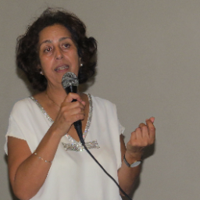
Dr MOUSSAYER KHADIJA الدكتورة خديجة موسيار Spécialiste en médecine interne et en Gériatrie en libéral à Casablanca. Présidente de l’Alliance Maladies Rares Maroc (AMRM) et de l’association marocaine des maladies auto-immunes et systémiques (AMMAIS), Vice-présidente du Groupe de l’Auto-Immunité Marocain (GEAIM)


5100

0

Maduro, from Sovereign to American Defendant... or The last night of Raiss Maduro... 266

The scenario is now factual: capture, transfer to New York, indictment for narcoterrorism. A historic precedent. Now it's time for "Debates" or "Opinions." From head of state to cartel leader: the Maduro case, or when power redefines the law. An incumbent president is extracted from his palace: Bombs are dropped in the distance; diversion of attention and paralysis of defense systems; A perfectly mastered and executed scenario. A head of state has been abducted by a foreign army and then paraded in handcuffs before the cameras in New York: the scene recalls the end of Manuel Noriega in 1989. This time, it's not the Panamanian general but the revolutionary Nicolás Maduro, a sort of Bolivarian relic, head of the Venezuelan state since 2013, now officially prosecuted for narcoterrorism by American justice and incarcerated in Brooklyn. The message is crystal clear: when a superpower decides, a president can cease to be a subject of international law to become just another cartel leader. Power will determine both the qualification and the fate: in a different unfolding, Gaddafi and Saddam met different ends but also at the hands of foreign powers. The keystone of this operation is less military than narrative. Washington does not present Maduro as a political enemy, but as the mastermind of a transnational criminal conspiracy, extending the indictment already filed in 2020 before the New York federal court. This simple categorical shift, from political to penal, from sovereign to trafficker, allows it to bypass the contemporary obsession with sovereignty, head-of-state immunity, and the need for a UN multilateral mandate. The image is no longer that of an invasion, but of an "extraterritorial police operation" aimed at protecting American public health, a narrative well-honed since the "war on drugs" in Latin America. It feels like watching a TV series scene: DEA agents and special forces, reading of rights, transfer to a federal detention center, solemn announcement by the prosecutor. In reality, it's a demonstration of strategic power. The arrest of a head of state in his bed, with his security apparatus caught off guard and possibly complicit, signals less a military victory than a systemic humiliation: that of a regime that dreamed of being an anti-imperialist bastion and discovers it cannot protect its own president. The Chavista "tiger" reveals itself to be a paper tiger: strong on slogans, weak in real capacity. Jurists will rightly recall that international law protects the immunity of sitting heads of state, except in very narrowly defined exceptions. But history offers another, less comfortable lesson: from Noriega to the International Criminal Court's warrants against Omar el-Bashir or Vladimir Putin, the boundary between sovereignty and penal responsibility has steadily eroded. Already in 1998, the arrest of Augusto Pinochet in London on the basis of a Spanish warrant inaugurated the era of universal jurisdiction against former leaders. Today, with Maduro, another step is taken: this is no longer a sick ex-dictator on a medical visit, but a sitting president, captured by force and tried abroad for narcoterrorism endangering specifically American citizens. The international reaction underscores the brutality of this epochal shift. A few capitals denounce a "cowboy method" contrary to the UN Charter; others take refuge in cautious verbal indignation, quickly diluted in press releases. But the most striking aspect is elsewhere: many leaders who, just yesterday, posed complacently with Maduro, accepted his decorations, and praised his "Bolivarian courage," suddenly discover they have short memories. The archives are full of these now-embarrassing embraces: they remind us that diplomacy loves grand words, sovereignty, dignity, resistance, as long as they cost nothing. Abdelmadjid Tebboune must today regret his recent insulting remarks toward the powers and others who have explicitly recognized the Moroccanness of the formerly Spanish Sahara. In the Maduro affair, Donald Trump has found his formula: topple a regime without uttering the word "war," capture a president without recognizing him as such. The operation de facto violates the spirit of international law, but it cloaks itself in the language of American criminal law, with its charges, judges, juries, and procedures. In Congress, a few voices raise alarms about the precedent created. However, U.S. political history shows that, when faced with what is defined as a "vital interest", fight against drugs, terrorism, territorial protection—partisan quarrels quickly give way to a reflex of unity. Now, the scene shifts to the New York federal court. Maduro, very wealthy, will be supported by prestigious lawyers, will challenge the legitimacy of the procedure, denounce a political trial, and attempt to turn the courtroom into an anti-imperialist platform. The U.S., for its part, will highlight its fight against a "narco-state" that allegedly flooded their market with cocaine in league with Colombian armed groups and criminal networks. At this stage, it matters little whether judicial truth is fully established: the image of the Venezuelan president in the defendant's cage will weigh more durably than all televised speeches. For part of Latin America and beyond, this arrest elicits real relief: that of seeing a leader accused of authoritarian drift, massive corruption, and collusion with narcotrafficking finally answer before a judge. This sentiment is understandable. But should we stop there? For this episode recalls a disturbing truth: sovereignty, in the current international system, has become conditional. Conditional on the ability to defend oneself, to weave effective alliances, to not cross certain red lines set by others. Conditional, above all, on the narrative that the powerful impose on the rest of the world. The Maduro case must neither make us forget the brutality of his regime, nor mask the precedent it creates. It has provoked the exile of more than 8 million people. That a president suspected of serious crimes be judged, many will applaud it. That a power arrogate to itself the unilateral right to abduct and try him on its soil, without an indisputable international mandate, should worry even its allies. These tools, once created, risk no longer being confined to a single "enemy." Those who reassure themselves today thinking they will never be the target of such practices risk discovering, tomorrow, to their detriment, that the narrative has changed there too. It was the last night of Raiss Maduro...

The Urantia Book 306

The Urantia Book was first published in Chicago in 1955 by the Urantia Foundation. It presents itself as a spiritual revelation delivered by celestial beings through a human intermediary in the early twentieth century—but the details of that process are intentionally left vague. There’s no named prophet, no signature author, and no formal church behind it. Instead, the book’s influence has spread quietly over the decades through small study groups and individuals drawn to its holistic spiritual vision. The text opens with a dense Foreword that tries to build a philosophical framework for what follows, then unfolds through 196 “papers” that move from abstract metaphysics to cosmic history and, finally, to a vivid retelling of Jesus’ life. At its center is the idea of God as the “Universal Father,” the source and sustainer of all reality, surrounded by a co-eternal Trinity and a vast, multidimensional universe that radiates outward from an unmoving spiritual core called Paradise. This universe includes a central realm, seven "superuniverses", and countless local creations, each governed by ranks of spiritual personalities. One of the book’s most distinctive ideas is the “Thought Adjuster”—a fragment of God said to live within each person, quietly shaping conscience and character, and drawing the soul toward eternal life. Spiritual progress, in this view, happens not through ritual or doctrine but through everyday moral choices: kindness, honesty, courage, and faithfulness to truth. While the book accepts biological evolution, it also claims that human civilization and religion have been guided at key moments by celestial administrators. It calls for what it terms a “religion of personal experience”—a faith rooted in direct communion with God, intellectual curiosity, service to others, and practical compassion. The final and longest section retells the life and teachings of Jesus in remarkable detail, from his childhood and early travels to his ministry, crucifixion, and post-resurrection appearances. Here, Jesus is portrayed as the living example of unselfish love and God-centered trust—a model of how divine ideals can be lived in ordinary human life. Usually readers engage with The Urantia Book quietly: through private study, meditation, and informal discussions rather than through any institutional structure. Reception has always been mixed. Admirers are drawn to its vast cosmology, moral vision, and integration of science, theology, and philosophy. Critics point to its unverifiable origins, speculative science, and cultural assumptions that mirror the mid-twentieth century. Today, it remains outside traditional religion and academia, often grouped among modern revelatory or “channeled” texts. Whether approached with faith, doubt, or simple curiosity, The Urantia Book invites readers to imagine a universe where the quest for truth, goodness, and beauty is really one journey toward God—where spiritual growth unfolds quietly within the rhythms of everyday life.

When Algeria insists on sailing against the tide of history… 625

What, then, has gotten into the Algerian president for him, in his latest speech before Parliament, to choose so resolutely to position himself against the arc of history and current international dynamics? While the United Nations Security Council has, de facto, settled the question of the Moroccan Sahara by endorsing the option of **autonomy under Moroccan sovereignty**, the Algerian head of state continues to repeat the same old talking points: “despoiled Sahrawi people”, “self‑determination referendum”, as if time in Algiers had frozen in the 1980s. In his remarks, international law is invoked… then ignored. The paradox, not to say the inconsistency, is all the more striking as the Algerian president invokes international law while pretending to ignore that it is precisely the Security Council that is one of its main interpreters and norm‑setting bodies. Yet the law has spoken. The successive Security Council resolutions have long since abandoned any reference to a referendum that has become impracticable, unrealistic, and politically obsolete. In its place, a political, pragmatic, and lasting solution has emerged: autonomy for the Sahara within the framework of Moroccan sovereignty. This evolution is neither accidental nor circumstantial. It stems from a shared assessment within the international community: the territory of the Sahara is, historically, legally, and politically, an integral part of the Kingdom of Morocco. And in order to take into account Algerian sensitivities, a country that has invested tens of billions of dollars for nearly half a century in this artificial conflict the Security Council has, in a sense, “split the difference” by endorsing broad regional autonomy without calling Moroccan sovereignty into question. It was thought this would offer Algiers an honourable way out. It did not seize it. An isolated Algeria facing a global realignment By persisting in this posture, Algeria is not defying Morocco; it is taunting the major powers. The United States, Spain, Germany, the Netherlands, several Central European countries, and many African and Arab states have clearly or implicitly rallied to the Moroccan position. Some state it openly; others, for historical, ideological, or domestic political reasons, move more cautiously. This is the case for Russia and China, which did not vote against the latest Security Council resolution. But all act accordingly: opening consulates in Laayoune and Dakhla, signing economic agreements, making large‑scale investments, and forging strategic partnerships with Rabat. Meanwhile, Algeria is locking itself into a diplomacy of denial, unable to read the real balance of power. At a time when Morocco is establishing itself as an African, Atlantic, and Euro‑Mediterranean hub, Algiers keeps stoking the embers of a conflict that no longer mobilizes anyone other than itself and a few ridiculous residual ideological mouthpieces. A regime from another era, ruling over a suffering population, is at the helm in Algiers. Certain clumsy words used by the president and his facial expressions are in fact open insults directed at many countries and not minor ones, that support Morocco’s position. Even more worrying is the abyssal gap between this ideological discourse and the reality experienced by the Algerian population. The military regime seems to be operating on another planet. The president appears unmoored, disconnected from the daily concerns of a people scarred by repeated shortages: basic foodstuffs, medicines, tyres, essential products. In a country that is nonetheless rich in hydrocarbons, economic and social management borders on the absurd, and the manipulation of statistics has become a national sport. This raises a pressing question: who benefits from this chronic obstinacy? Certainly not Algerians. Above all, it serves to perpetuate a political system that needs an external enemy to mask its repeated domestic failures, justify the army’s grip on power, and distract from a deep‑seated structural crisis. At all costs, the real Algeria must be concealed: the one that is hemmed in at the regional level. The signals on this front are just as troubling. Accused by several Sahel countries of contributing, directly or indirectly, to their destabilization, Algeria is gradually finding itself diplomatically encircled. Mali, Niger, and Burkina Faso no longer hide their mistrust toward Algiers. To this we must add the total rupture with Morocco and relations with Spain that are durably strained. Algerian influence in Africa is receding just as the Sherifian Kingdom is consolidating its economic, religious, and security footprint across the continent. What immediate consequences, then? In the medium term, this stance is likely to have serious consequences: - Heightened diplomatic isolation, - Loss of international credibility, - Weakening of Algeria’s voice in multilateral forums, - Worsening of domestic social malaise, - And, paradoxically, a strengthening of the legitimacy of Morocco’s position. History shows that artificial conflicts always end up turning against those who instrumentalize them. By refusing to accept the reality of the Sahara dossier, Algeria is not delaying the solution; it is delaying its own political and regional normalization. It is putting off to the Greek calends its exit from crisis and its development. The Sahara issue is now closed at the strategic level, even if it remains rhetorically open for Algiers. To cling to it is less a matter of conviction than an admission of powerlessness. By stubbornly sailing against the current, the Algerian regime risks finding itself alone, stranded on the shores of a bygone past, while the region moves forward without it. There is, however, one explanation for this hasty and ill‑judged outburst by the Algerian president: the major success of the Africa Cup of Nations in Football held in Morocco. The Kingdom’s success and the overall praise it has received seem to irritate the Algerian regime, which has no answers for its citizens who travelled there and saw with their own eyes the extent, clumsiness, and absurdity of the propaganda inflicted on them by the military regime. Some do not hesitate to conclude that Morocco has taken a 50‑year lead over their country. Be that as it may, official Morocco will certainly not respond to the Algerian president’s remarks. The Kingdom stands on its rights, as recognized by the international community. It continues steadily along its path, developing a little more each day and notching up success after success.