Think Forward.
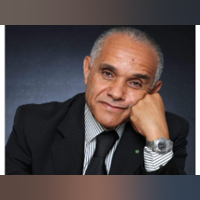
Aziz Daouda
3841343
Directeur Technique et du Développement de la Confédération Africaine d'Athlétisme.
Passionné du Maroc, passionné d'Afrique.
Concerné par ce qui se passe, formulant mon point de vue quand j'en ai un.
Humaniste, j'essaye de l'être, humain je veux l'être.
Mon histoire est intimement liée à l'athlétisme marocain et mondial.
J'ai eu le privilège de participer à la gloire de mon pays .
History can be ruthless to nations that miss major technological turning points. Two centuries ago, the steam engine and the Industrial Revolution profoundly reshaped the global balance of power. The countries that still dominate the world economy today are, for the most part, those that quickly adopted industrial innovations, developed them, and turned them into instruments of economic, military and cultural power.
By contrast, states that stayed outside that transformation gradually lost their strategic autonomy. The Sherifian Empire, like much of the non-Western world, suffered the consequences of this historical delay. The inability to fully enter the Industrial Revolution contributed to a progressive weakening that culminated in the establishment of a protectorate at the start of the 20th century.
Today, history seems to be repeating itself in another form.
Artificial intelligence, robotics, quantum computing and advanced technologies are producing a transformation as profound as that caused by the steam engine in the 19th century. A new global hierarchy is being built before our eyes. The United States, China, India, South Korea and Gulf countries are investing tens or even hundreds of billions of dollars in research, digital infrastructure and tech start-ups.
Meanwhile, Morocco risks being content with the role of spectator.
Yet the warning signs have been known for a long time. More than ten years ago, a decision was made to raise scientific research spending to 2% of the national budget. That ambition responded to a strategic necessity: to prepare the country for the technological challenges of the 21st century. It is, however, clear that this goal was never achieved.
And in the current global competition, even a 2% effort now appears insufficient. Countries that want to be players in AI devote considerable resources to research, innovation and talent development. Morocco should probably aim for much more ambitious investment levels, closer to 5% of public spending, if it truly wants a place in the new knowledge economy.
Perhaps most worrying is the silence in political debate. While the election campaign seems already underway, few political parties place scientific research, innovation or artificial intelligence at the heart of their national programs. Discussions often focus on daily urgencies, which are legitimate, but the question of technological sovereignty is largely absent from stated priorities. Populism and the mediocrity of some so-called politicians are far removed from this issue. Some would even like to take us back to the Stone Age.
Yet the stakes far exceed mere economic modernization. This is about preserving the country’s strategic independence. Nations that master tomorrow’s technologies will control value chains, financial flows, defense systems, critical infrastructure and, increasingly, decision-making capabilities themselves.
But financial investment alone will not be enough.
Morocco must also undertake a deep reform of its regulatory environment. In a world where innovation is measured in milliseconds, and soon in nanoseconds, many Moroccan entrepreneurs still face long, complex and sometimes discouraging administrative procedures. Constraints tied to capital transfers, international payments, technology subscriptions, investment in digital platforms or participation in global innovation ecosystems often pose major obstacles.
The regulatory framework inherited from another era must be rethought. Without abandoning the imperatives of control and transparency, it is essential to adapt the mechanisms of the foreign exchange authority to the realities of the global digital economy. When a young entrepreneur in Casablanca must wait for authorizations to access tools or international markets, while rivals in Bangalore, Shenzhen or Dubai operate in real time, the competitive handicap becomes obvious.
The battle for artificial intelligence is not only technological; it is also administrative, regulatory and cultural.
Morocco nevertheless has considerable assets: a talented youth, universities in transformation, recognized political stability and a privileged geographic position between Europe and Africa. But these assets will only yield results if supported by a clear national vision, massive investments and sustained political will.
The appointment before us today is probably the most important since independence. The country already paid the price of technological delay two centuries ago. History rarely offers a second chance. The opportunity represented by artificial intelligence today must not be missed.
Because in the world taking shape, nations that do not innovate will depend on those that do. And tomorrow’s technological dependence could become the most subtle, but also the most enduring, form of loss of sovereignty.
The real task for Morocco: rebuilding trust... 427
As elections approach, debates often focus on economic growth, employment, investment, social protection or large infrastructure projects. All these subjects are essential. Yet behind each of them lies a more fundamental, deeper — and perhaps more urgent — question: that of trust.
Populists, great masters of deceit, understand this very well. Their popularity and success are inversely proportional to the level of trust. They overplay and excel at the role of victim or at offering simple, easy solutions, thereby sowing doubt among citizens and eroding their trust capital. Nihilists also profit and add another layer. The citizen who doubts and loses confidence becomes an easy mark.
Some politicians, through irresponsibility, naivety, incompetence or clumsiness, also contribute — by their narratives — to eroding the trust capital in the social project and, beyond that, in the institutions themselves.
It is therefore legitimate today to ask the question with the utmost seriousness. The near and long‑term future of the country and of future generations is at stake.
And yet Mohamed Ouahbi and his teammates offer us a new dynamic, a new value: self‑confidence, trust in who we are simply. How do you explain being so dominated for one half and then finding the resources to overcome the handicap, transform yourselves and score three times?
What if the real task for Morocco in the coming years were simply that of trust?
Trust is an invisible capital but one that is extremely essential. It does not appear in any budget and cannot be measured in kilometers or billions invested. Yet it constitutes the pillar of any collective success. Hakimi, Díaz, Talbi, Mazraoui, Bounou, Ounahi, Rahimi and the others demonstrated that to us. Without it, the best public policies produce limited results. With it, even the most complex challenges become surmountable.
Today, it must be acknowledged that Moroccans primarily place their trust in the royal institution, which remains, for a large majority of citizens, the main anchor of stability, continuity and hope. This reality represents a considerable strength for the country.
But what about trust in other institutions?
Do citizens fully trust their health system? When families still have to turn to the private sector despite financial difficulties, the question deserves to be asked.
Do they trust their education system? When many parents try by all means to enroll their children in private schools, sometimes at great sacrifice, this often reflects doubt about the public school’s ability to deliver the hoped‑for social mobility.
Do they trust the judiciary, the administrations, political parties, local authorities, or certain local products? Again, answers are nuanced and vary according to individual experiences.
It would be unfair and incorrect to generalize. Morocco has made remarkable, even exceptional, progress in many areas. Infrastructure has been modernized, public services are digitizing, social coverage is expanding, universities are multiplying, hospitals are developing and many civil servants carry out their duties with competence and dedication.
But despite these advances, a diffuse feeling of mistrust remains present in part of society. Even the most optimistic citizens can sometimes doubt their future or that of their children, while no nation can sustainably build its development on distrust.
Economic history shows this: successful countries are often those where citizens trust their institutions, their rules and their prospects for the future.
The Nordic countries are a frequently cited example. High levels of trust in the state, schools, justice and public services encourage respect for rules, civic engagement and acceptance of reform.
In Asia, countries like South Korea built their economic transformation not only on investment and education, but also on strong collective adherence to a shared national project.
Conversely, when trust erodes the consequences are multiple: civic disengagement, electoral abstention, brain drain, an informal economy, corruption and retreat into individual survival strategies at the expense of the collective project.
Trust creates and nurtures a sense of belonging. It makes people want to participate, to build, to invest, to share and to stay.
A young person who believes in their country will be more inclined to develop their project there. An entrepreneur who trusts the institutions will invest more. A citizen who believes in the fairness of the system will more readily accept their fiscal and civic duties.
The challenge is therefore immense. It is not merely a question of communicating more or multiplying slogans and lies, as some do. Trust is built through tangible results.
It is built when public schools offer the same opportunities to all.
It is built when public hospitals treat with efficiency and dignity.
It is built when competence is rewarded and recognized.
It is built when public services respond quickly to citizens’ needs.
It is built when officials are held accountable and promises are kept.
On the eve of the elections, political parties would do well to place this question at the heart of their platforms. Beyond sectoral promises, Moroccans expect a contract of trust.
The real issue is not only which project will be presented to citizens. It is whether citizens will believe enough in that project to commit to it.
Morocco has considerable assets: its monarchy, its stability, its youth, its geographic position, its infrastructure, its strategic vision and its international ambitions. But to turn these assets into lasting power, it must strengthen that invisible bond that ties citizens to their country.
The task of rebuilding trust is surely the hardest of all. But it is also the most decisive. For when a people gains or regains confidence in themselves, in their institutions and in their future, they become capable of achieving what once seemed impossible.
It is at that price that the Kingdom will recover its long‑dormant greatness. Thanks to our national team for reminding us that trust is the most precious capital.
"Send Them Back": the day the European Parliament applauded xenophobia... 544
There are sometimes images that alone sum up an era. That of Members of the European Parliament, elected to defend the founding values of the European Union, chanting in chorus "Send them back!" at the end of the vote authorising member states to expel migrants to centres located outside European territory will remain one of the most disturbing.
This slogan, borrowed from the bluntest vocabulary of nationalist movements, goes far beyond the fight against illegal immigration. It does not only target people in an irregular situation. In the imagination of part of the European far right, it designates everyone unfortunate enough to be different: Africans, Arabs, Amazighs, Latinos, Muslims, refugees or simply foreigners. In a few words, a vision of Europe expresses itself: a closed, suspicious Europe obsessed with the purity of its borders.
The worst thing is not that this rhetoric exists — it always has and will probably continue to exist. The worst thing is that it now finds an echo inside the European Parliament chamber, with the complicity of traditional right‑wing parties that, out of electoral opportunism, conviction or perhaps simple stupidity, choose to echo far‑right themes rather than fight them.
Fine. "Send them back," they say. Let us therefore push this intellectual exercise to its conclusion.
Send them all back.
Send back the nurses who came from Africa and keep European hospitals running.
Send back the care assistants who look after the growing number of elderly people, many of them impoverished.
Send back the construction workers, bus drivers, cleaners, agricultural workers who harvest the fruits and vegetables.
Send back the couriers who feed those many people unable to do their own shopping.
Send back the engineers, doctors, researchers and students who enliven universities and hospitals.
Send back the foreign entrepreneurs who create businesses and pay taxes.
Send back the footballers and athletes who bring joy to young people and to nations.
Send them all back, these "undesirables", and find elsewhere, on another planet, those who will make Europe run tomorrow.
The demographic reality is merciless, members of Parliament. Europe is visibly ageing. Its fertility rate is below the generational replacement threshold in almost all countries. Former suppliers of labour and brains in Eastern Europe have become more prosperous; their inhabitants prefer to stay at home. The working population is shrinking while retirees are increasing. Health systems, pensions and public services already rely heavily on workers from immigration.
All the major international institutions remind us: without immigration, large parts of the European economies will lack labour in the coming decades. Not only are migrants not an economic burden, but they are often part of the solution to the demographic — and therefore economic — crisis threatening the continent.
The irony is striking: those whom some present as "undesirables" have precisely become indispensable to the daily functioning of your societies.
Sending them back en masse would weaken hospitals, transport, agriculture, construction, catering and a multitude of already strained sectors. The human and economic consequences would be considerable, sometimes disastrous.
Europe also seems to forget another historical truth.
For centuries, Europeans left their continent by the millions to seek a better life elsewhere: to the Americas, Australia or Africa. More recently still, millions of Europeans emigrated to escape wars, dictatorships or poverty. Today, the continent that long produced migrants wants to forbid others from following the same path.
This paradox reveals a troubling moral crisis.
The European Union likes to recall that it is founded on human rights, dignity and solidarity. These principles should not disappear as soon as the subject is immigration. Controlling borders is a sovereign right. Fighting people‑smuggling networks is a necessity. Organising legal migration is essential. But turning human beings into scapegoats and echoing slogans of hatred is a political and ethical failure.
When elected representatives applaud the cry "Send them back", they do not lower the people targeted. They surely demean the institution they represent.
A democracy is judged by how it treats its minorities, its foreigners and the most vulnerable. If the European Parliament becomes a platform where xenophobia is applauded, then the very idea of Europe is in danger.
Yes, send them back then... and then see who will treat your sick, build your housing, harvest your fruit, finance your pensions and keep an economy — already condemned by ageing to a shortage of labour — alive.
On that day, Europe may discover that those it called "undesirables" had, in reality, become indispensable.
And it may be too late to call them back. Their countries will also prosper sooner or later — as Ibn Khaldun reminded us.
Beyond the victory: Morocco won far more than a match... 547
Yes, Morocco beat the Netherlands. The result will remain in the statistics, but it would be reductive to see it as merely a sporting victory. Some matches tell more than a score. They reveal an identity, a culture, values, a way of thinking and behaving in the face of adversity. This one belongs to that category.
The first lesson is one of character strength paired with great humility. Achraf Hakimi and company dominated their opponent, created opportunities but failed to convert them. A shame. Many teams would have begun to doubt, to rush, to lose their shape and their lucidity. They continued to believe in their football, with patience and conviction, until the final whistle. It was a match of resilience and confidence. That ability to never give up is one of this team’s greatest strengths.
The draw had not been kind to the Moroccans. Being placed in the second pot would take its toll. They had to start the tournament against a Brazil galvanized by its history; then face a revenge-seeking Scotland; and finish with Haiti, who had nothing left to lose.
And then, bam — they had to travel far. Cross the United States from north to south and land on the other side of the border, in Mexico, to face one of football’s greatest powers. The country of Neeskens, Cruyff, Van Basten and so many others. The country where a certain Ștefan Kovács, called Pisti, invented total football, possession football. He had come from Cluj-Napoca, in Romanian Transylvania, to coach Steaua Bucharest before winning two European titles with Ajax... That’s where it all began. His imprint is now everywhere in the world. One day a great stadium should bear his name somewhere. FIFA should think about it. He revolutionized football and made it more spectacular and more colorful.
Brazil — Morocco and the Netherlands respectively 5th, 6th and 7th in the FIFA rankings.
The second lesson is managerial courage. First, the courage to trust Mohamed Ouahbi. A young coach with almost no record. He came to give the country its first-ever U20 world title. Not a small feat: a world title for the Kingdom of Morocco, and now he is well on his way to a second and is doing everything to achieve it. Mohamed, raised in Moroccan culture, steeped in the country’s values, bearer of the history of migration and its challenges, is a fine technician endowed with composure and steadiness under all circumstances: exactly what is needed for a Moroccan team.
And then the young coach performs wonders in strategy, match planning and tactics. He does not hesitate to throw into the deep end, at a crucial moment, players born in 2005, entrusting them with responsibilities that many coaches would have reserved for older, more experienced players. Trusting youth is never an easy bet. But great teams, great countries, are precisely built on the ability to prepare the future without sacrificing the present. By giving these young talents their chance, the coach sends them a powerful message: merit matters more than age or any other consideration. What an example for the country’s managers, for Moroccan political parties, for Morocco as a whole. Trust in our talented young people, full of goodwill and love for the country. The feeling of belonging, a nation’s capital, has never been so strong and so manifest. It is the message of these young people who came out at dawn, fervent, shouting their pride and joy at being born Moroccan.
This victory is also that of a culture of challenge. For several years, Moroccan football has refused to be content with existing. It wants to compete with the best nations. That ambition is found in every duel, every sprint, every contested ball. The Lions of the Atlas no longer play with the inferiority complex of small teams; they play with the certainty that they can beat any opponent.
Another major lesson: resilience. Being behind on the scoreboard without abandoning one’s game plan is the mark of great teams. Too often, a team that concedes a goal abandons its principles in favor of long balls or disordered play. Morocco remained true to its identity. The players continued to build, to press, to create, convinced that their football would eventually be rewarded. This fidelity to the collective project is surely the most beautiful proof of maturity.
At the heart of this success is also an inspired coach. His calm on the bench contrasts with the intensity on the field. He transmits neither nervousness nor panic. On the contrary, he exudes a communicative serenity that reassures his players in difficult moments. Great teams often have a great coach, not only for tactical skills, but also for the ability to instill unshakable confidence.
Finally, this team is strong because it is deeply Moroccan. Behind the technical performances lies a culture: one of solidarity, respect, family and friendship. A culture where humility always accompanies ambition, where humanism remains a fundamental value, where each person accepts running for the other before thinking of themselves. This cohesion is not improvised; it is built around shared values.
At the final whistle, the players did not hesitate for an instant to go and console their opponents. What an image.
At its core, this victory over the Netherlands far exceeds the realm of sport. It demonstrates that a united collective, carried by a clear vision, solid values and unshakable confidence, can overturn the most difficult situations. It is a lesson that goes beyond football. It is a lesson in management, leadership and society.
But above all, this victory is the fruit of a vision born in 2008, when His Majesty the King, may God assist him, addressed the famous letter to the sport conference and the day he inaugurated the Mohammed VI Academy. That was 28 March 2010. For several years now, Morocco has been investing massively in its football: modern infrastructures, development academies, professionalization of clubs and a long-term vision. The results the national team is reaping today are not a matter of chance. They are the logical consequence of a project built with patience, rigor and ambition.
But beyond football itself, Morocco did not just win a match. It confirmed that it now possesses a champion’s identity and it won hearts. All over the world, football fans have vibrated for this team, waved Moroccan flags and worn shirts in the country’s colors. Immeasurable.
Morocco–Canada: heroic qualification, acrobatic refereeing and a whistle with variable geometry... 690
There are matches won by talent, others by mentality, and still others despite the referee. Morocco, against Canada, achieved the full set. In this World Cup round of 16, the Lions of the Atlas not only had to face one of the tournament’s most aggressive teams — that day even more so than before — they also had to cope with a referee whose speed at whipping out cards seemed less an act of sporting justice than a Pavlovian reflex whenever a white shirt entered his field of vision. Good thing they weren’t wearing red, those brave Moroccans...
The tally is almost poetic in its absurdity: a rough Canadian team, committed to excess, sometimes plainly brutal, and yet it’s the Moroccans who come away with the largest collection of yellow cards. Six for Morocco, three for Canada. One would think that in the realm of the whistle, the guilty party is not the one who deals the blows but the one who has the bad taste to receive them — and even worse if he dares protest. Even if he happens to be the team captain.
The referee, it must be admitted, had a real talent: drawing a card faster than his shadow whenever a Moroccan player dared commit the “unforgivable”: a slightly forceful tackle, a protest, sometimes even a single look too intent. It was like Lucky Luke, but in FIFA refereeing: the yellow seemed to appear before the foul was even finished. By contrast, when it came to blows aimed at the Moroccans, the cowboy suddenly went near-sighted, contemplative, almost philosophical. Certain brutalities were clearly imperceptible to the referee’s eye.
Hakimi’s case alone deserves a small chapter in the manual of football misunderstandings. An obvious assault, a gesture that, in a normally governed world, would have at least called for a red card, or failing that a stern rebuke. But no. The referee saw nothing. Or, more precisely, he did not wish to see. The same scenario for Mazraoui, also the victim of a rough treatment that the man with the whistle filed under minor incidents. One imagines he must have been saving his severity for graver offences, such as, say... celebrating a goal with too much enthusiasm.
And then there was that delightful, almost surreal scene: Morocco’s second goal scored by Azzedine Ounahi. A clear, quick, radiant action, executed with such inevitability that it seemed to wrench from the referee a strange gesture, like an involuntary admission. Arms raised, looking apologetic, he seemed to be telling the world — and probably the Canadians, or perhaps the sponsors, if there were any — “Excuse me, I really tried everything, but this time I couldn’t find a way to stop the play.” Perhaps that is the most beautiful involuntary tribute paid to Moroccan football: even the referee, for an instant, appeared disarmed by the beauty of the move.
Should we therefore sink into bar-room conspiracy theories and imagine FIFA in the shadows, handing out scripts like a TV producer? Let’s be serious. Or rather, let’s remain reasonably ironic. There is no need to doubt the entire institution to question certain appointments. Canada belongs to the Commonwealth, the referee was English: enough, at minimum, to raise a few eyebrows. Add to that the eternal condescension of a certain footballing establishment toward “small teams” that have the fault of not respecting the prewritten hierarchy, and you have a cocktail troubling enough to fuel café conversations for years.
Of course, we will probably never know. Referees, like diplomats, often take their secrets to the grave. Everyone will keep their certainties, suspicions, denials and silences. But in truth, the essential thing lies elsewhere. It lies in that immense qualification, won not only against a rough opponent but against a context that was no red carpet. It lies in the technical mastery of an Ounahi, the solidity of an Amrabat, the class of a Hakimi, the courage of a Mazraoui, the inspiration of a Bounou, and the collective intelligence of a group that kept its composure where others would have lost their heads.
Because this Moroccan team does not merely play football: it tells a story. It tells of a country that is rising, that respects itself, that looks forward. It tells of a collective that no longer accepts the folkloric role so often assigned to African or Arab selections: look pretty, run a lot, then go home with the gallery’s compliments. No. This Morocco wants to win, wants to last, wants to disturb. And it disturbs precisely because it is no longer there merely to make up the scenery.
This victory therefore tastes like revenge, but above all like affirmation. A whole nation rejoices, carried by its players, its staff, and by a broader dynamic that goes beyond the simple realm of sport. Behind this epic lies a vision, an ambition, a recovered pride. Football does not explain everything, but it reveals much: a mindset, discipline, confidence. And what the Lions of the Atlas show today is a Morocco that has stopped asking permission to exist at the highest level.
Now remains the next step: France. And with it another question, already almost a ritual before kick-off: who will referee? Because at that level, the naming of the man in black begins to resemble the announcement of the menu. We will soon know whether Morocco is invited to the banquet... or is itself on the menu.
In any case, one thing is certain: this Morocco has already won something precious. It has won the respect of its own people, the admiration of millions of supporters, and the certainty that it can look any great nation straight in the eye. And if, in addition, it must defeat the opponent, doubt and the referee, then it might as well do so with panache. After all, the greatest epics were never written with an impartial whistle.
Morocco return to GMT: a belated decision on an all-too-perfectly timed calendar 872
Morocco is about to close a chapter that was opened eight years ago. As of 20 September 2026, the Kingdom will definitively — perhaps — abandon the permanent GMT+1 time regime and return to its so‑called legal time: GMT. For many Moroccans, this announcement is a relief. But behind that satisfaction lies a political question worth asking: why wait until the end of the government’s term and, above all, why schedule this return only a few days before a decisive election?
GMT was first decreed in 1913, before switching to GMT+1 in 1918. There were a few periodic changes, particularly during World War II, but it was in 1967 that the choice of GMT was definitively settled.
In the era of the Sharifian Empire, there was no official time: each city set its clocks by the sun. Choosing GMT was political, but also an obvious geographical and astronomical decision. Days were organized in harmony with sunrise and sunset, a rhythm that structured economic, social and religious life.
In 2008 Morocco reintroduced daylight saving time, which had already been tried before. The stated aim was to save energy and align the country’s hours more closely with Europe for part of the year. Moroccans gradually got used to the seasonal changes, despite recurring criticism.
The real break, however, came in October 2018. By decree of Prime Minister Saadeddine El Othmani, adopted a few days before the usual clock change, the government decided to permanently maintain GMT+1, reverting to GMT only during the month of Ramadan. This decision, taken without genuine public debate or thorough consultation, permanently disrupted citizens’ daily lives.
The justifications offered were familiar: improve economic competitiveness, facilitate exchanges with European partners and optimize administrative organization. But the negative effects quickly appeared. The government had simply forgotten to readjust public administration hours and school schedules in particular. It did not bother to measure the social consequences of the decision, nor to adjust certain daily rhythms.
Millions of pupils now leave their homes before sunrise for several months of the year. Biological rhythms are disrupted. Families report chronic fatigue, especially among young children. Teachers, employees and many professionals mention adaptation difficulties that became permanent. Gradually, maintaining GMT+1 stopped being a mere technical issue and became a symbol of a decision imposed without popular support. That opposition never disappeared.
Every year, as Ramadan approached and the ensuing clock adjustments resurfaced the debate, social networks rekindled the discussion. Petitions circulated, associations challenged the authorities. Even experts were far from unanimous about the real economic benefits of the measure. In other words, the government cannot reasonably claim to be discovering the extent of the rejection today. That is precisely what makes the current decision politically interesting.
The return to GMT is not the result of a sudden revelation. It represents the culmination of a long-standing demand that the authorities had until now chosen to ignore. So the real question is no longer whether returning to GMT is a good decision — many would answer yes — but rather why this moment was chosen and why there is no objective assessment of the economic and social gains or losses since 2018.
Legally, nothing is disputable. The government fully has the power to set the country’s legal time. The decree adopted in the Council of Government falls within the executive’s competences. But politics is never reducible to law.
When a measure directly affects the daily lives of nearly forty million citizens, its timing also becomes a political act. It also impacts many economic sectors connected to Europe.
20 September 2026 falls squarely within an electoral period, just days before a highly anticipated legislative vote. Can we seriously believe such timing is purely coincidental?
It is hard to ignore the symbolic force of a decision that precisely erases one of the reforms whose unpopularity was revived every Ramadan, at the moment when voters will head to the polls. Suspicion becomes inevitable.
Three explanations can be advanced.
The first is that of a belated correction. The government would have finally recognized that permanently maintaining GMT+1 was a political and social mistake that needed fixing before leaving office.
The second rests on electoral calculation. By removing a daily source of irritation, the executive could be seeking to restore part of its sympathy capital at a time when every vote matters.
The third is political messaging. Every government prefers to end its term with a popular decision rather than with the memory of a widely contested reform.
These hypotheses are not mutually exclusive. It is perfectly possible that a government sincerely corrects a mistake while also choosing the moment when that correction will have the greatest political effect. It is precisely this ambiguity that fuels the debate. At bottom, the affair goes far beyond the mere question of clock hands: it raises questions about how governments make decisions and, above all, how they accept — or refuse — to acknowledge their mistakes.
Why allow such widespread discontent to persist for eight years before responding? Why wait until the last days of a mandate to return to a solution that geography, history and a large part of public opinion considered the most natural? In politics, decisions count, but their timing often speaks as loudly as their content.
The return to GMT will likely ease the daily lives of millions of Moroccans. It is probably a sensible decision. Yet the choice of timing leaves a lingering impression: that of a government waiting until the polls approached to listen to what citizens had been repeating, rightly or wrongly, for eight years. Official time may finally be back in step with Morocco. The question remains whether political time has not arrived a little too late.
In any case, we are about to change the clocks without a genuine, measurable scientific assessment of the beneficial or harmful effects of the 2018 change.
What is going on with British democracy? 1093
Long presented as the model par excellence of modern parliamentarism, the United Kingdom today looks like a political system losing stability and possibly running out of steam. The recent resignation of the Prime Minister — the eighth in just ten years — raises a fundamental question: can a great power be governed effectively when leadership changes hands almost every year?
For nearly two centuries, the Westminster model was held up as a universal reference. From London to Ottawa, from Canberra to New Delhi, and across many former colonies, British institutions inspired constitutions, electoral systems and parliamentary practices. The idea was simple: a government accountable to Parliament, an organized opposition, peaceful alternation and a remarkable continuity of the state.
This model long worked because it rested on solid pillars: two major parties capable of governing over the long term, a powerful civil service, a constitutional monarchy above partisan quarrels, and a political culture favoring compromise rather than confrontation. Today, that architecture shows worrying cracks. Its functioning is running out of breath.
Since the Brexit referendum in 2016, British political life has entered an almost permanent period of turbulence. Prime ministers have succeeded one another at an unprecedented rate: David Cameron, Theresa May, Boris Johnson, Liz Truss, Rishi Sunak, Keir Starmer — not to mention all others — and now another head of government soon to follow. Eight leaders in ten years: a number one would usually associate with an unstable democracy or a regime in crisis, certainly not with the world’s oldest parliamentary democracy.
This instability is not only the result of elections. Most of these leaders were not removed by voters but by their own parties. The British prime minister depends above all on the confidence of their parliamentary majority. As soon as that confidence erodes, MPs mount an internal rebellion, change leader and, consequently, change the head of government without consulting the electorate.
Constitutionally, the mechanism is perfectly legal. Democratically, however, it raises a fundamental question: how far can top leaders be replaced without asking citizens again, when the Constitution defines citizens as the true decision-makers?
The case of Liz Truss in 2022 remains emblematic. A near-unique political anecdote — except perhaps for some recent developments in France and in different systems — she was elected leader of the Conservative Party and lasted only forty-nine days, forced to resign after markets lost confidence. Her successor, Rishi Sunak, came to power without a general election. And now the scenario seems to be repeating.
This volatility has concrete consequences. Every new prime minister arrives with a team, priorities, promises and sometimes a vision radically different from their predecessor. Reforms are launched then abandoned. Economic strategies shift. international partners struggle to identify a durable policy line. Investors hesitate in the face of such unpredictability.
Can long-term public policies be pursued when governments live in a perpetual campaign?
The energy transition, modernization of the health system, immigration reform and economic recovery require constancy and rock-solid stability. Yet that stability is increasingly hypothetical.
The paradox is striking. Defenders of the British system see in this ability to replace a leader quickly proof of its vitality: an unpopular or ineffective prime minister can be removed without causing a major institutional crisis. The system would thus correct its own mistakes.
One can also see it as a symptom of a democracy hijacked by party machines. Voters choose a program and a leader; months later they sometimes discover another prime minister, with another orientation, without having been consulted.
The crisis goes beyond personalities. It reveals a deep transformation of British politics: party fragmentation, the rise of populisms, loss of confidence in elites, the growing influence of social networks, extreme personalization of power and difficulty building durable majorities. Cronyism and vested interests are never far away.
Brexit did not create these fractures; it revealed and amplified them.
This evolution also calls into question the international prestige of the British model. For a long time, London lectured the rest of the world on governance. Today, some countries that once looked to Westminster now watch its inventor’s troubles with surprise. British democracy is no longer the model of stability it once claimed to embody. Some of us once thought it the perfect template that could be transplanted to Morocco.
Should we conclude it is in decline? That would be premature. British institutions retain considerable strengths: an independent judiciary, a free press, a competent civil service and a deeply rooted parliamentary tradition. Few countries would weather such a string of crises without questioning their constitutional order.
But another truth is clear: the political stability that was the system’s main strength is no longer guaranteed. When a country changes its head of government eight times in a decade, it can no longer rely on tradition alone to reassure citizens or convince the world. Extremes are watching.
The United Kingdom remains a resilient democracy. It is, however, no longer the uncontested example it was for two centuries. Its recent history reminds us of a often-forgotten truth: no democracy, however old, is immune to institutional wear and tear.
The question is therefore no longer whether the British model is in crisis. The facts already answer affirmatively. The real question is different: is this a temporary crisis tied to the exceptional shocks of Brexit and economic upheavals, or the first signs of a deeper exhaustion of a political system that for nearly two centuries shaped many contemporary democracies without always delivering the promised stability?
God save the King.
The International Olympic Committee Facing Its Contradictions... 1135
The International Olympic Committee (IOC) likes to present itself as the guardian of sport’s universal values, of excellence and self-transcendence. Yet behind this carefully maintained image lies a reality that is increasingly hard to justify: an organization that no one voted for, which generates billions of dollars from the Olympic Games while stubbornly refusing to redistribute that wealth fairly to those who actually produce it—the athletes.
For several years now, the question of paying Olympic athletes has repeatedly resurfaced. It is neither new nor revolutionary. It simply concerns a basic principle of economic justice. Without athletes there would be no Olympic Games, no television audiences, no sponsors, no marketing rights, no commercial revenues. Sport is a collection of disciplines that are nothing more than bodily expressions demanding from their practitioners: sacrifice, physical effort, financial outlay and perseverance. Athletes are therefore the raw material of the Olympic spectacle. Yet they remain the only participants in this vast industry who do not directly benefit from the revenues they generate.
Added to this injustice is the fundamental role of host states and cities, which mobilize considerable resources—drawn from taxes and public labor—to stage the Games. Infrastructure, security, transport, accommodation, organization: the costs are largely borne by taxpayers while the largest revenues flow back to the IOC. The Olympic economic model thus rests on a massive contribution from athletes, their clubs, their federations and their states—and, of course, from host countries—while profits remain largely concentrated at the top of the pyramid.
Facing growing pressure from athletes’ commissions, federations and public opinion, the IOC has just announced the creation of a new aid program called the “Fit for the Future Olympian Grant.” For the first time in history, Olympic participants will be eligible for a $10,000 stipend intended to support their sporting careers or professional reintegration. A total envelope of $140 million per Olympiad was announced by Pau Gasol, chair of the IOC Athletes’ Commission, during the IOC’s 146th Session recently held in Lausanne.
Presented as a historic advance, this initiative resembles more a political response than a genuine structural reform.
First, because the amounts announced remain modest compared with Olympic revenues. Income generated by broadcast rights, global partnerships and marketing programs amounts to billions of dollars each Olympic cycle. Compared with that windfall, the $140 million pool appears more a symbolic gesture than a real redistribution of wealth.
Second, because this aid does not address the athletes’ central demand: to be recognized as full economic actors of the Olympic movement. The IOC continues to regard athletes as recipients of assistance rather than as producers of value. That nuance is crucial. A grant remains a form of charity. Revenue-sharing, by contrast, constitutes recognition of a right—a compensation for the effort made.
This distinction explains why the IOC’s announcement fools few informed observers. The organization clearly seeks to defuse criticism without calling its economic model into question. It is taking a small step to avoid taking a much larger one: the establishment of a transparent mechanism to redistribute Olympic revenues. That is what happened in athletics beginning in the 1980s, when, under pressure from athletes, the IAAF agreed to award bonuses to competitors and compensation for preparation to federations at the World Championships.
The IOC’s traditional argument is that it already redistributes part of its resources through international federations, national Olympic committees and the Olympic Solidarity program. But that defense today shows its limits.
Olympic Solidarity, in particular, has become an instrument whose effectiveness deserves serious questioning. Its administrative workings are costly, complex and highly bureaucratic. Despite decades of existence, its results remain difficult to measure in many countries. The sporting performances of the least developed nations have not seen the spectacular rise that might have justified the investments made. A significant portion of resources appears absorbed by the management mechanisms themselves rather than by the direct development of athletes.
The paradox is striking: while the IOC has the financial means to transform permanently the training and career-transition conditions of thousands of athletes, it continues to favor indirect schemes whose impact remains limited. One can even argue that the aid and grants allocated through Olympic Solidarity never actually reach the athletes.
The debate opening now goes far beyond the question of the announced $10,000. It concerns the governance of the Olympic movement itself. Can we still justify an organization accumulating considerable financial reserves while refusing a fairer sharing of revenues with the main actors of its success? Can we continue to invoke Olympic amateurism when the Games have become one of the world’s most profitable commercial events?
Sooner or later, the IOC will have to answer these questions. The creation of the “Fit for the Future Olympian Grant” is an implicit admission: pressure from athletes is now producing effects. But it also reveals the institution’s persistent desire to retain absolute control over the redistribution of Olympic wealth.
History shows, however, that no economic system can indefinitely ignore those who create its value. Olympic athletes are not asking for charity. They are simply demanding their fair share.
And on that score, the IOC still has a long way to go.
Crisis of leadership: A nation will only have the leaders it deserves... 1144
Man is born first with a basic reflex: to defend himself. To protect his body, his immediate territory, his survival. This instinct is ancient, almost animal. With social and intellectual evolution, that horizon widens. Man becomes capable of defending his family, his clan, and sometimes a community. But few are able to conceive of and sustain the defense of an entire nation’s interest. Yet it is precisely this capacity that distinguishes a true statesman from a mere political actor or a follower citizen.
This reality sheds light on a major difficulty modern systems face in producing real leaders, especially in developing regions where the standard of living often correlates with the level of consciousness and clarity of vision.
Most individuals naturally reason from their immediate interests. Even in the most advanced democracies, many political leaders put their careers first, their electoral clientele, their regional, ethnic, economic or ideological group. Few manage to break free from that logic and adopt a long-term national vision.
World political history is full of examples illustrating this fundamental difference between a manager and a leader. A manager administers what exists. A leader transforms a society by carrying a vision that transcends his own interest.
When General Charles de Gaulle returned to power in 1958, France was deeply divided by the Algerian War. He could have chosen the easy political path by aligning with the most powerful groups of the moment. Instead he chose a painful course he considered consonant with France’s strategic interest. That ability to think of the nation before immediate passions precisely defines historic leadership.
Similarly, Nelson Mandela could have governed South Africa in a spirit of revenge after twenty-seven years in prison. He chose national reconciliation. Again, he no longer defended a group, but a higher idea of the nation. His successors squandered the capital he had built.
Many countries today suffer from permanent political fragmentation. Parties become electoral machines focused on internal balances, personal ambitions, or short-term calculations. Political debate is then reduced to a quantitative competition: how many seats, how many votes, which coalitions.
This is precisely where the theoretical role of political parties comes in.
In modern democracies, parties should not be mere instruments for electoral conquest. Their fundamental mission is much nobler and more difficult: to identify, train, and promote personalities capable of rising above particular interests to embody the general interest.
Yet this mission has become extremely complex.
Mass media, the dominance of social networks and the politics of buzz often favor the most visible profiles rather than the most visionary. The ability to produce a viral line is rewarded more than the ability to build a national strategy for twenty years. Media time has become faster than political time.
This drift explains why so many societies now experience a leadership crisis. Leaders are sometimes elected by statistical mechanism more than by genuine adherence to a vision. Universal suffrage remains essential, but it does not automatically guarantee the emergence of the best. It mainly makes it possible to designate those most capable of winning a majority.
Between being elected and being a historic leader, however, there is a vast difference.
A true leader possesses several rare characteristics: the capacity for personal sacrifice, long-term vision, the courage to accept temporary unpopularity, and above all the aptitude to reconcile conflicting interests around a national project.
That is why great nations invest heavily in training their political, administrative and intellectual elites. Universities, grandes écoles, military or diplomatic institutions often play a major role in shaping leaders. The United States has Harvard University, Yale University or Stanford; France has Sciences Po or the former ENA; the United Kingdom has relied for centuries on the University of Oxford and the University of Cambridge.
These institutions do not automatically produce political geniuses. But they create spaces where a culture of the State and the nation is built.
In developing countries, the difficulty is even greater. The weight of local, tribal, economic or clientelist affiliations can sometimes prevent the emergence of a genuine national consciousness. The political leader then becomes the defender of a segment of society or an interest group rather than the servant of the whole nation.
Yet no nation can sustainably progress without leaders able to elevate collective debate above immediate interests.
The great political challenge of the 21st century is therefore not only economic or technological. It is human. How do we train men and women capable of thinking beyond themselves? How do we produce leaders who sometimes accept political loss in order to make their country win historically?
In this respect, the situation unfolding in Morocco starkly illustrates this leadership crisis, with exhausted parties unable to renew their elites and discourses, while the political field oscillates between the noisy populism of some, the silence or assumed incompetence of others, and the proliferation of specialists in lies and hollow promises, with less than three months to go before crucial legislative elections for the country's future. Where do we stand with personalities such as Allal El Fassi, Abderrahim Bouabid, Abdelkhalek Torres, Mohamed Hassan El Ouazani and others? They were all products of a consciousness and a historical context. What then of the real challenges, of conscience and responsibility? What of the context that leaves us no choice? Where to move forward: consolidate the country's upward trajectory or, conversely, miss the technological turn as we missed the mechanization turn. The consequences are known to all: the Sherifian Empire eventually ended up placed under a protectorate and dismembered.
Many citizens today are convinced that the answer cannot come solely from the ballot box. It also depends on education, political culture, the quality of institutions, citizens' honesty and the maturity of society.
For at bottom, a nation often gets the leaders it prepares, values... and deserves.
When football studios become platforms for ill‑informed geopolitics... 1156
The World Cup is first and foremost a celebration of sport, a moment when tactics, technique, predictions and collective narrative take center stage. Yet at every major tournament lately, some studio panels turn into makeshift political arenas. Discussions meant to be about the game too often slide into poorly handled geopolitical sparring, to the detriment of sporting analysis and mutual respect among peoples.
Television offers valuable visibility. For a pundit, columnist or host, being invited on a panel is an opportunity to clarify, inform and share expertise. But fame does not equal competence. Recently we’ve seen a worrying trend: contributors whose legitimacy rests on football morph into occasional political scientists when the topic is North African national teams. Instead of explaining a tactical choice, a technical performance or analyzing physical preparation, some use the microphone to denounce or instrumentalize historical and diplomatic tensions. The tone becomes aggressive and remarks turn ridiculous, veering into antisemitism, gutter invective and obsessive denigration.
This drift is not harmless. It rests on a category error: talking about football requires sporting expertise; discussing international relations demands mastery of facts, historical perspective and rhetorical caution. The two fields rely on different methodologies. Reducing one to the other endangers the quality of public debate.
The media magnifying effect means visibility should be paired with responsibility.
The second problem is impact. A TV panel is watched by thousands, even millions. Statements made live are picked up and amplified on social media, sometimes stripped of context. When a pundit issues a sweeping opinion about history or diplomacy, the audience can take it as an authoritative verdict. This is particularly dangerous because it can present a partisan vision, deliberately shaped into a media “truth,” feeding resentments and stereotypes among closely connected peoples.
One obvious reminder is needed: no commentator speaks for a people. Delegated speech in a media democracy is not a mandate. Confusing a pundit’s voice with that of a nation is an error as common as it is harmful. Sporting passions should not trample centuries‑old ties.
While verbal fireworks make talk shows thrive, they must not obscure a firmer reality: ties between the peoples of the Maghreb rest on centuries of shared history, economic and cultural exchanges and family solidarities. These bonds usually withstand the excesses of studio debates and the lapses of some “politicians.” Sporting rivalries often exist within a framework of healthy competitiveness; they should not be turned into political conflict whose only aim is to mask one weakness or another.
Distinguishing the rule from the exception is therefore essential. Outbursts happen, but they do not represent the totality of human and cultural relations in the region or the real situation of any given country. By contrast, the majority of supporters, sports journalists and analysts work to make sport a vector of exchange, not a pretext for polarizing societies.
The shows that allowed these excesses would do well to return to best practices if they want to reclaim constructive debate. It is possible to restore program quality; media leaders and those in government have a duty to ensure this—unless it suits them otherwise. Unless they are complicit, some practical recommendations apply:
- Clarify the formats: clearly separate sports segments from socio‑political debates, with hosts who steer discussions back on track when they degenerate.
- Encourage nuance: promote well‑documented, sourced and balanced interventions rather than gratuitous theatrics and provocation.
- Hold media accountable: establish editorial charters that set consultants’ scope and sanction factual departures.
- Train contributors: offer sports pundits briefings on historical and diplomatic issues, and vice versa.
- Respect expertise: invite qualified specialists (academics, historians, diplomats) for geopolitical topics and distinguish them from sports debates.
These measures are not meant to muzzle speech but to make it more legitimate and useful. They will not necessarily deter troublemakers. Beyond ethical comfort, the stake is concrete: the credibility of public debate. When ignorance masquerades as expertise, the whole audience loses. Viewers tune in for explanations about a team’s performance, not a truncated history lesson serving hatred and discrimination. The risk is to normalize intellectual sloppiness and to instrumentalize television as an echo chamber for poorly informed grudges and cheap propaganda.
Football deserves better than being hijacked for premature, ill‑founded polemics. Sports studios should remain spaces for game analysis, celebration of performance and respectful exchange. When politics must be discussed, call qualified voices and give them time to analyze. Ending makeshift geopolitics is a way to restore sport’s primary function: bringing peoples closer, not driving them apart.
Polemic and insults do not diminish a country’s achievements, nor do they ennoble those who spread them.
Demography: Morocco’s existential challenge in the 21st century... 1165
Dealing with demography is often seen as a statistical exercise reserved for demographers, economists or specialized institutions. History, however, shows that no single factor shapes a nation’s destiny more than changes in its population. Economic power, social cohesion, military capacity, innovation, pensions, public health and territorial balances all depend on demographic dynamics.
Publications by the High Commission for Planning and reports from the Economic, Social and Environmental Council regularly describe ongoing transformations. But the strategic significance of these changes is rarely addressed, as if population ageing were merely one natural phenomenon among many rather than one of Morocco’s main challenges for the coming decades.
The country counts nearly 37 million inhabitants. That number is significant regionally, but modest compared with many emerging powers. Morocco is undergoing an accelerated demographic transition. Fertility, which was 5.78 children per woman in the 1980s, has fallen to levels that threaten generational replacement.
This trend reflects advances in education, the improvement of women’s status, rising urbanisation and better access to healthcare. It also carries its own set of challenges.
When generations become smaller, the age pyramid gradually changes: the base narrows while the top widens, and society ages. Morocco therefore risks ageing before it has become fully wealthy.
Unlike European countries, which benefited from a century of prosperity before confronting ageing, the Kingdom will have to manage development demands and the needs of an increasingly older population at the same time. A true trap.
Japan, often cited as the global reference for ageing, became an economic power before it aged. Morocco, by contrast, could experience a rapid demographic transition without having sufficient wealth to absorb the consequences: social and health expenditures and the cost of caring for the elderly will soar. The number of contributors supporting pension systems will fall, with fewer active workers supporting more dependents. No pension system can sustainably resist that mathematical reality.
The issue becomes more strategic in light of the Kingdom’s economic ambitions. Under the leadership of His Majesty King Mohammed VI, the country has embarked on a deep transformation of its economic model. Modern infrastructure, renewable energy, the automotive and aeronautics sectors, emerging defence industries, digital technologies, major logistics projects and the Football World Cup are pillars of this new economy. But behind the investments and infrastructure remains the same decisive factor: human capital.
Who will work in tomorrow’s factories and build future infrastructure? Who will ensure agricultural production as rural areas empty? Who will fund national solidarity mechanisms?
The Moroccan paradox is already clear. The country simultaneously suffers from high unemployment and labour shortages in many sectors. Construction, agriculture, crafts, certain manufacturing industries and several technical trades struggle to recruit. This contradiction reflects a growing mismatch between the economy’s needs and the aspirations of part of the youth, who legitimately or not seek specific conditions and better-paid jobs. At the same time, interest is waning in some occupations that are nonetheless essential to the economy. The phenomenon is not exclusive to Morocco: it also affects Europe and North America. Here it is aggravated by other factors, including the low social status of certain trades, the size of the informal sector and shortcomings in vocational training after the abandonment of traditional apprenticeship, wrongly stigmatized as child labour. Manual and technical work is insufficiently valued even though it is the backbone of many high-performing economies.
Another question is quietly emerging: what if Morocco became a country of structural immigration?
This hypothesis may surprise in a country historically marked by emigration. Morocco already hosts thousands of workers and students mainly from sub-Saharan Africa. Tomorrow, these flows could become indispensable to certain economic sectors. The real question is not whether immigration will exist, but what kind of immigration Morocco wants to organise.
Skilled immigration or temporary labour migration?
Regional African immigration integrated into the Kingdom’s continental strategy?
This reflection must start today to avoid future improvisation.
Demography is also a matter of sovereignty. The great powers of the 21st century possess a balance of territory, population, economy and innovation. China, India, the United States and other regional powers base their influence on that combination.
For Morocco, demography has a particular dimension. The Kingdom harbours continental economic ambitions, plays an increasing diplomatic role, develops its maritime fronts and strengthens its presence in global value chains. All these ambitions require an engaged, motivated, active, dynamic, qualified and sufficiently numerous population.
The challenge is strategic: Morocco needs a demographic pact to face these challenges. A national debate is necessary.
The reflection should go beyond the sole question of birth rates. It must encompass family policies, housing, youth employment, education, vocational training, pensions, immigration, health, territorial planning and investment. In other words, a cross-cutting policy involving all public stakeholders.
Morocco has always shown its capacity to anticipate major strategic challenges: energy policy, port infrastructure and water resource management are examples. Demography deserves the same level of attention today. A country is not reduced to its roads, its factories or its macroeconomic indicators; it rests first and foremost on men and women able to produce, innovate, pass on knowledge, defend and build the future. The real challenge is therefore not only economic or social: it is demographic.
And it is precisely because it is silent that it may be the most important of all.
Consume Moroccan: what if the State finally made national preference a massive employment lever? 2087
For decades Morocco has searched for the formula that would sustainably reduce unemployment, ease inequalities, and strengthen its economic sovereignty. Plans and strategies follow one another; yet one economic truth remains: employment is not decreed, it is created by demand.
No factory hires if no one buys its products. No artisan survives without customers. No industrial sector grows without a solid market. Industrial powers understood this long ago: to create jobs, you must first steer national consumption toward national production.
Morocco already knows this mechanism. The social housing sector is a telling example: tax exemptions and support mechanisms enabled the emergence of a complete ecosystem. The result: hundreds of thousands of direct and indirect jobs in construction, carpentry, materials, transport and other finishing trades.
Why not apply this logic to Morocco’s automotive industry, for example? Here the paradox is striking. The kingdom is the largest car manufacturer in Africa. Renault and Stellantis export hundreds of thousands of vehicles per year; popular models are assembled locally and Neo Motors embodies the ambition of a national brand. And yet, in the public sphere as well as among many private citizens, purchases of imported vehicles remain predominant. What message are we sending our industrialists if the State itself favors foreign products? Is it acceptable that administrations, which are heavy vehicle consumers, procure imported vehicles en masse? That should simply be avoided.
An individual choosing to buy a vehicle not made in Morocco to commute or carry their family is their choice; it is another matter when the State does it.
That is why a policy encouraging national purchases seems economically logical and easy to imagine: bonuses for buying vehicles produced in Morocco (for example a rebate of 30,000 dirhams for some national electric vehicles, 20,000 for popular locally-made models), targeted tax exemptions and access to preferential loans for cars with a high national industrial content. These measures may seem costly at first glance. But one must measure the chain effect: when a vehicle made in Morocco is purchased, the factory raises production, subcontractors hire, carriers create value, the State collects more tax revenue and social contributions, and wages injected into the economy revive other sectors. A national car is not just a purchase; it activates an entire economic sector.
Precedents elsewhere support this approach. The Buy American Act in the United States, China’s strategic protection of key industries, European green bonuses favouring local production, and Germany’s industrial policies show that privileging domestic production is not an isolationist reflex but a common instrument of industrial policy. Why would what is considered smart elsewhere be labeled “excessive protectionism” when applied in Morocco?
How to explain that offices are fitted with imported furniture while many carpenters complain of a lack of demand? How is it that the rugs used in some public spaces and offices do not come from Rabat, Taznakht, or the Atlas? Thousands of jobs could be created in this way.
The Moroccan State has a major lever: its public procurement. Ministries, local authorities and public institutions spend billions every year. If every public dirham spent abroad is potentially a lost job, imagine a simple rule: mandatory priority to Moroccan products when a local alternative exists. That would change everything. Administrative furniture made in Morocco, public vehicles manufactured locally, handicrafts integrated into public buildings, local materials for public works: these decisions would introduce structural and lasting demand for thousands of Moroccan companies.
Public buildings could become showcases of national know‑how because the issue goes beyond industry: it touches culture and heritage. Morocco has one of the richest artisan traditions in the world: zellige, tadelakt, carved wood, ironwork, carpets, leather, traditional ceilings—yet many public spaces display a standard without identity. Requiring a significant share of Moroccan craftsmanship in new public constructions would not only be symbolic: it would be massive support for artisans, SMEs, skills transmission, and cultural tourism.
What impact on employment? One direct job in industry often generates 3 to 5 indirect jobs (subcontracting, logistics, maintenance, trade, financial services). If public procurement shifted toward “Made in Morocco,” tens of thousands of jobs could be created or consolidated over several years. In crafts and local materials, the social effect would be even stronger, since these sectors are very labor-intensive.
Advocating “consume Moroccan” is not closed nationalism. The country must obviously remain open to trade and foreign investment; that openness has been a success factor. But smart openness also requires consolidating a domestic productive base. Producing without consuming your own goods means remaining dependent on volatile external demand and exposing yourself to international shocks. Economic sovereignty begins with confidence in our productive capacities.
The real obstacle may be cultural: for a long time imported goods were considered superior in many post‑colonial societies. Yet the facts speak: cars made in Morocco run in Europe; Moroccan wiring and parts equip global brands; the national aeronautics and textile sectors work for multinationals. The challenge is often how we view ourselves.
In reality, unemployment will fall when local production finds strong and lasting national demand. Every time a Moroccan chooses a product made in Morocco, they support a wage, a family, a workshop, a factory, a craft and contribute to greater social stability. Economic patriotism is not a slogan: it is a development strategy. If the country combines industrial determination, targeted support and cultural transformation, Morocco’s greatest wealth could become not only what it exports, but also what its citizens choose proudly to produce and consume.
South Africa: twilight of a model and recomposition of African leadership? 2536
For three decades, South Africa embodied the image of a modern, industrialized Africa reconciled with its history. The end of apartheid in 1994 raised immense hope. With Nelson Mandela, the country seemed to demonstrate that a peaceful transition between communities long opposed was possible.
The assessment is now more nuanced. The country is going through a period of deep economic, social and institutional turbulence that calls into question its ability to retain its status as the continent’s leading power.
The difficulties are not due simply to an unfavorable economic conjuncture, but reflect structural weaknesses that have gradually accumulated over the years.
The economy, long considered the most developed in Africa, is struggling to regain its dynamism. Growth remains weak while unemployment reaches alarming levels. Statistics South Africa reports 32% for the overall rate and 45% among youth in 2025, fueling social frustrations and a sense of downward mobility. Added to this are persistent failures of infrastructure. Power cuts, difficulties in the rail network, deterioration of public services as well as governance problems in state-owned companies weigh heavily on the competitiveness of the economy. The country’s attractiveness to investors, who for a long time considered South Africa the natural gateway to the continent, is strongly affected.
Economic indicators are not, however, sufficient to measure the scale of the current challenges. The security question constitutes one of the main concerns. With more than 27,000 homicides each year, or nearly 76 murders per day, it is one of the most violent countries. In Johannesburg, Pretoria or Durban, security is a real concern. Neighborhoods protected by sophisticated security systems are multiplying; Orania is the archetype. Companies devote large budgets to private security, hence a general climate of distrust further weakening national cohesion.
Tensions also manifest themselves in recurring xenophobic violence. Migrants are accused of being the actors of insecurity and become the scapegoats of a social frustration fueled by economic difficulties.
At the same time, a part of the white population expresses a growing feeling of marginalization. Debates around affirmative action policies, land reform and economic redistribution feed perceptions of injustice and exclusion. The country struggles to build a durable balance between historical redress, social justice and national cohesion.
For many years, the African National Congress (ANC) benefited from immense political capital inherited from the struggle against apartheid. This historical credit has eroded. Corruption scandals have deeply marked public opinion. The work of the Zondo commission on "state capture" highlighted the extent of networks of influence that affected the functioning of the state and several strategic public companies.
More and more South Africans now consider that the country’s current difficulties can no longer be explained solely by the legacy of the past. Questions of governance, administrative efficiency and public management now occupy a central place in the national debate.
Recent electoral results, which forced the ANC to govern within a coalition, illustrate this progressive loss of political hegemony.
For several decades, South Africa largely dominated the continent on industrial, financial and technological levels. Today, new growth poles are emerging. Morocco is the most significant example of this evolution. Thanks to a coherent industrial strategy, the Kingdom has established itself as a major player in the automotive, aeronautics, renewable energies and logistics sectors. The Tanger Med port is the leading port platform in Africa and the Mediterranean, linking the Kingdom to more than 180 international ports. Moroccan automobile exports have reached record levels. The country is now the most industrialized on the continent. This hurts Pretoria.
This progress does not mean the replacement of South Africa. The two economies have different structures and many complementary strengths. It nevertheless illustrates a gradual rebalancing of the continent’s economic centers of gravity.
South Africa’s difficulties raise a strategic question rarely addressed: where will capital, skills and talent seeking more stable environments go?
Economic history shows that transition periods are often accompanied by movements of capital, know-how and investments toward economies offering the best prospects.
In this context, Morocco has considerable assets: institutional stability, modern infrastructure, proximity to European markets, free trade agreements, an attractive regulatory framework and a long-term economic vision. The challenge for Rabat is not to take advantage of Pretoria’s difficulties but to position itself as the major platform of African growth in the twenty-first century.
It would be premature to announce the irreversible decline of South Africa. The country retains considerable assets: a diversified economy, leading universities, a sophisticated financial sector, significant industrial infrastructure and remarkable human capital. However, the experience recalls a fundamental reality: no leadership is permanently acquired. Economic power does not rely only on past achievements; it depends on the quality of governance, security, innovation capacity and the confidence a country inspires in its own citizens as well as foreign investors.
South Africa remains an essential actor on the continent, but the rise of Morocco and other emerging poles in West Africa shows that African leadership is entering a new phase.
The question is not who will dominate the continent, but which countries will best meet the demands of competitiveness, stability and innovation to be the leaders of tomorrow.
In this regard, Morocco appears as one of the main beneficiaries of the ongoing geoeconomic recompositions, progressively confirming its ambition to become the strategic center of African development in the twenty-first century. Better informed about the Kingdom, many South Africans would be tempted to undertake and, why not, settle there. Large companies are already present.
U.S.–Iran Agreement: A Ray of Hope in a Middle East Worn Out by War... 3124
The announcement of an agreement between Washington and Tehran is undoubtedly one of the most significant diplomatic developments in the Middle East in recent years. It is not, to be sure, a final settlement. The most sensitive questions remain unresolved, and the coming weeks will be decisive in turning this step into the durable framework of stability so widely hoped for. Nevertheless, the mere fact that both parties chose negotiation over escalation already constitutes a victory for reason. Reason is badly needed these days.
In a region where crises seem to follow one another without pause, this development brings a breath of hope to populations exhausted by decades of tension, conflict, and uncertainty. Beyond strategic considerations, ordinary citizens always pay the heaviest price of geopolitical confrontations: inflation, economic slowdown, generalized insecurity and a loss of confidence in the future.
Donald Trump, who made the denunciation of the 2015 nuclear deal a hallmark of his foreign policy, can now claim a significant diplomatic advance. Both his critics and his supporters acknowledge that opening a channel of dialogue with Iran had become necessary to avert the risk of regional conflagration. If this preliminary agreement leads to a broader settlement, it will be one of the major achievements of his return to the White House.
But every diplomatic progress also creates winners and losers. Among the latter is undoubtedly Israeli Prime Minister Benjamin Netanyahu. For several years his singular political strategy has relied heavily on the perception of a permanent existential threat that justifies ever‑harsher security policies. A détente between Washington and Tehran would substantially weaken that narrative.
After the tragedies experienced in Gaza, the regional tensions and the growing fractures within Israeli society itself, Netanyahu’s political record may be judged harshly by his fellow citizens. Tens of thousands of victims, massive destruction and collective trauma will leave deep scars for generations. The fundamental question remains: what will be left of these wars once the ideological narratives that fueled them have faded?
Another question is whether Israel is actually more secure after so much death and destruction in the region.
Recent Middle Eastern history shows that military victories are often short‑lived while the human consequences endure. Hatred begets hatred. Attacks lead to reprisals. Bombings provoke counter‑bombings. Today’s humiliations become tomorrow’s conflicts. As long as extremists on all sides continue to impose their logic of confrontation, peace will remain fragile.
Faced with this reality, Morocco has for decades offered a particularly relevant counter‑model. Under the leadership of His Majesty King Mohammed VI, the Kingdom has consistently preferred diplomacy, interfaith dialogue and negotiated solutions to regional crises. Whether through support for the Middle East peace process, chairing the Al‑Quds Committee, or the numerous initiatives that foster rapprochement between peoples, Morocco has persistently promoted moderation and coexistence.
This Moroccan vision rests on a simple conviction: no lasting peace can be imposed by force alone. True security arises from dialogue, economic development, mutual respect and recognition of the dignity of all peoples. In an increasingly polarized international environment, this approach seems more relevant than ever.
For more than fifty years Morocco has endured a permanently belligerent climate at its borders, yet it has not lost its composure nor ceased to call for dialogue. This is not a sign of weakness but rather an expression of steady and enduring strength.
The U.S.–Iran agreement, imperfect as it may be, recalls a fundamental truth: when weapons fall silent, even temporarily, hope is reborn. Young generations across the Middle East — Iranian, Israeli, Palestinian, Lebanese and others — primarily aspire to live, study, work and build a better future. They cannot remain forever hostage to the political calculations of leaders who profit from division.
For the moment, the world can breathe. Perhaps sleep a little easier. But the real question remains: for how long?
The future will depend on the ability of the region’s peoples to favor builders of peace over merchants of war. Beyond national interests and strategic rivalries, one truth stands out: the Middle East finally deserves to turn the page on endless conflict.
Faithful to its diplomatic tradition and its commitment to peace, Morocco will doubtless continue to remind the world of a truth some sometimes forget: no victory is greater than the one that allows peoples to live together in stability, security and dignity.
For now, let us all take a breath and pray. Today everyone asks why these wars happen and what they truly change on the ground or in history… Past wars certainly changed things; whether today’s will, remains uncertain.
Reward or Rehabilitation? Ban Ki‑moon Receives an Honour in Algiers That Raises Questions... 3123
The gesture spoke as loudly as the medal. When Algerian President Abdelmadjid Tebboune presented a “prestigious medal,” one of the nation’s highest distinctions, to Mr. Ban Ki‑moon, former UN secretary‑general, it was not merely a ceremonial protocol. It was a political message, heavy with intent. The question is to whom that message was addressed, why, and why now.
On substance, the gesture is therefore troubling. Ban Ki‑moon, whose UN tenure remains associated with sensitive episodes in the Sahara dossier, was being honoured by a government that continues to fuel regional tensions and sustain a conflict whose contours are highly politicized. More than the medal itself, it was the media reception, the diplomatic embraces, the chosen silences that revealed the strategy behind the move: offering moral and international endorsement capable of whitewashing a once‑contested posture. Is this recognition, even belated, for services rendered?
The recipient did not merely accept the distinction; he went further, lavishing praise on President Tebboune, commending his “leadership” and his action for “world peace.” Those words — “WORLD PEACE” — echoed loudly.
Local media rejoiced.
Beyond their courteous tone, these remarks raise a legitimate question: what motivates a former international official to be thus associated with a regime engaged in continuous confrontational diplomacy? Is it an acceptance of a symbolic role, political ambiguity, or a simple personal opportunity?
The answer deserves scrutiny.
From the Algerian side, the operation appears explicitly calculated. In international politics, nothing is free. A decoration is an image instrument, an attempt at symbolic rehabilitation. Algiers seems intent on multiplying visible supports — international figures, media, ceremonies — to contest the isolation of a diplomatic discourse losing traction. The choice of Ban Ki‑moon, given his UN past and past tensions with Rabat, is therefore far from innocent. It rather feeds the idea of a political or ideological closeness that some observers had already whispered about.
This sequence above all highlights a strategic weakness: a diplomacy more oriented toward staging than toward concrete crisis resolution. While Morocco consolidates its partnerships, develops its Southern provinces and accumulates international recognitions of its sovereignty, Algiers appears to invest in symbols and image operations — practices inherited from an era when influence was measured in protocol and grand declarations rather than deeds.
But the world has changed. Public opinion and governments now judge states on their ability to build, stabilize and produce prosperity, not on their capacity to hand out decorations. Algeria’s strategy, based on recycling former international actors and seeking diplomatic varnish, seems outdated in the face of concrete development and regional integration challenges.
The most acute question remains: why now? Why does Tebboune honour Ban Ki‑moon at this precise moment — to revive a diplomatic narrative, to send a signal to Morocco, to address the UN, or simply as a domestic PR operation intended to mask internal difficulties?
The most likely hypothesis is that it is a mix of all three, an attempt at international display to compensate for a deficit of real influence.
In any case, these symbolic gestures neither promote peace in North Africa nor foster the emergence of a shared regional future. Worse, they risk cementing sterile polarization: a diplomacy of stagecraft versus a diplomacy of action. And perhaps that is ultimately the most worrying aspect. Algiers does not seem to be changing, even when cornered by international pressure. It remains faithful to its passivity and lack of initiative and hides behind symbols — here a decoration that tastes more like a belated reward, but a reward nonetheless. Ban Ki‑moon shows here that he was not neutral in the Sahara affair...
The question that remains is: who will be the next to be decorated?
World Cup 2026: Sovereignty Reclaims Its Legitimate Rights... 3156
A few days ago I published an article titled “World Cup 2026: when states remind FIFA who really calls the shots.” I tried there to explain why a country’s sovereign laws cannot be overridden by the rules of an international association.
Sovereignty and security are attributes of states and only of states. That the United States, in this case, refused entry on its soil to people who were supposed to participate in the FIFA World Cup is a decision solely for that country to make. President Infantino, powerless, will acquiesce and be forced to acknowledge the supremacy of American domestic law. He will need to remember that if, in 2030, Spain, Portugal or Morocco decide to impose specific visas or quotas on nationals of certain countries, or to deny entry to certain individuals.
This time I was tempted to title the piece “When the United States reminds FIFA that it is only an association.” In the end I chose the headline you see at the top.
In practice, this edition of the Football World Cup has become one of questioning principles, practices and habits long considered definitive and non‑negotiable.
For years FIFA grew accustomed to imposing its conditions on countries hosting major competitions: tax exemptions, special legal regimes, administrative privileges, customs facilitation. Almost systematically, candidate states for hosting a World Cup often agreed to set aside part of their sovereignty to meet Zurich’s demands.
But the United States has just reminded us of a fundamental truth: no private association, however powerful, stands above the laws of a sovereign state.
The signals have multiplied in recent weeks: the case of the Somali referee turned away, the difficulties some delegations encountered obtaining visas, restrictions targeting supporters of several nationalities, limits on travel and stays imposed on Iranians, and Senegalese players confronted with the strictness of U.S. immigration and border controls. Each time the same conclusion is clear: American laws prevail over FIFA’s regulations.
Today a new episode confirms that reality. In the United States, FIFA will have to pay taxes on income generated during the 2026 World Cup. A small revolution.
Until now, FIFA typically demanded near‑total exemptions from host countries for its revenues. The billions of dollars generated by broadcast rights, marketing, partnerships and merchandise were largely shielded from national taxation before being transferred to the organization’s accounts in Switzerland. This time the scenario is different, and we must measure the symbolic weight of that decision. It means the United States regards FIFA not as an international organization or supranational institution, but simply as a private association conducting economic activity on American soil.
Even Gianni Infantino — whose rise to the FIFA presidency owes much to the geopolitical balances that favored his candidacy — is discovering the limits of his power when faced with the American administration and the political will of President Donald Trump. The message is clear: American laws are non‑negotiable.
This lesson deserves reflection from future host countries, notably Morocco, which will co‑host the 2030 World Cup with Spain and Portugal. Why should a sovereign state renounce legitimate tax revenues in favor of an organization already among the richest on the planet? I do not know the status of negotiations with FIFA for 2030, but the United States has opened our eyes and challenged decision‑makers in Spain, Portugal and Morocco about what rights to grant FIFA.
Moroccan companies, Moroccan merchants, Moroccan employees and Moroccan taxpayers all meet their fiscal obligations. Should FIFA be exempt while it will be engaged in profitable economic activity here?
The question must be asked plainly. When an economic activity generates income on Moroccan territory, it must contribute to financing the infrastructure, public services and investments that make hosting an event of this magnitude possible. That is the very basis of the social contract.
The American example thus recalls an essential democratic principle: the internal rules of an international sporting federation can never override laws passed by a parliament representing the popular will. For too long, some international sports organizations have cultivated the idea that they constitute a sort of superior authority capable of imposing their norms on states. The United States has demonstrated the opposite.
The World Cup belongs to FIFA. Sovereignty belongs to nations. If the two collide, national laws must prevail. That may be the most important political lesson already taught by World Cup 2026.
World Cup: when states remind FIFA who really calls the shots... 3178
For several days now, with delegations gradually arriving in the United States, Mexico and Canada for the 2026 World Cup, part of international public opinion seems to be discovering a reality that is, however, far from new: the primacy of national laws over the regulations of international sporting bodies.
The treatment recently meted out to certain African, Middle Eastern and other delegations has sparked indignation, debate and sometimes accusations of discrimination. Yet none of this is truly new. Those who know the history of international sport are aware that the great Western powers have never relinquished their sovereignty on security matters to federations and international sporting bodies.
Moroccan sporting history is full of telling examples. As early as 1984, the Moroccan delegation to the Los Angeles Olympic Games spent hours blocked at the American airport because of security procedures. At the Sydney Games, Moroccan athletes, officials and accompanying staff underwent particularly rigorous checks after more than twenty‑four hours of travel: interminable searches, interrogations, luggage inspected down to the smallest detail. The great powers apply their laws with cold efficiency, regardless of the supposed prestige of the competitions. The corridors supposedly set up to speed up procedures are in reality true security airlocks, pushed to the extreme. Passengers who arrived on the same flights as the athletes clear the border much more quickly. Being a qualified athlete for an international competition does not entitle one to preferential treatment. Djokovic was refused entry to Australia because he was unvaccinated. He was indeed the world No. 1 in the ATP rankings and the Australian tournament needed him for more than one reason.
The reality is simple: no serious state hands over its national security to FIFA, the IOC or any sporting organisation. It is legitimate for a host country to apply its own laws with heightened vigilance when it receives hundreds of thousands of people from around the world. Zero risk does not exist. Large sporting gatherings are potential targets for all kinds of threats.
In this context, outraged reactions often seem disconnected from geopolitical realities. The Somali referee turned away at Miami airport despite his visa remains, above all, a national of a country subject to particular entry restrictions into the United States. The Iranian players represent a state in open confrontation with Washington, and it is known that the sporting delegations of some regimes are often closely supervised by their security or diplomatic apparatuses.
In 2022, the United States hosted the World Athletics Championships in Eugene, the temple of the sport in North America. Athletes from more than twenty African countries were unable to obtain visas to take part. The president of the African Athletics Confederation, himself a member of World Athletics, was unable to travel to the United States. American laws prevailed over the minor rules of the international federation, (World Athletics) which supposedly obliges the host country to accept all qualified athletes and their accompanying persons on its territory.
This is neither automatic racism nor gratuitous hostility. It is, first and foremost, state logic, sovereignty and security. The real problem lies elsewhere.
It lies in the attitude of certain “third‑world” countries that continue to regard the specifications of the major sporting bodies as sacred and indisputable. In many developing countries, FIFA, the IOC and other federations impose sometimes absurd requirements in terms of architecture, luxury, urban planning or security organisation, without local authorities daring to truly challenge them. How ridiculous it is to see some members of FIFA or the IOC — to name only the most visible, sometimes of dubious competence — inspect hotels, airports, hospitals, buses, and even public toilets with unbearable arrogance.
Yet these organisations are not global governments. They have no democratic legitimacy superior to that of states. Their regulations cannot prevail over laws passed by sovereign parliaments and enforced by national institutions accountable to their people.
The normal mission of a continental or world sporting federation should be limited to technical matters, the rules of the game and the sporting organisation itself. Once it claims to dictate security policies, architectural choices, lavish expenditures or urban orientations to sovereign states, it clearly oversteps its remit.
The 2026 World Cup perhaps reminds us of an essential truth many had forgotten: it is not states that belong to FIFA, but FIFA that depends on states. What would football be without the colossal budgets that governments dedicate to it, sometimes at the expense of other sectors that are arguably more pressing? Yet that same FIFA, whenever a government seeks to put its football in order, sometimes wages war on it.
We should perhaps thank the United States, Mexico and Canada for reminding everyone of the true nature of this competition: a great sporting celebration, certainly, but not a supranational authority capable of erasing laws, borders and national sovereignty.
Anyone who fantasizes about a World Cup of caprice and privileges should abstain. Consider yourselves warned.
+
The spy and the monarchy: Postcolonial fantasies or the spy who frightens… the newsrooms 3726
'In Morocco, Mohammed VI’s spy who worries the palace,' better still: 'In Morocco, the secret war of Mohammed VI’s spies: there is an atmosphere of end of reign' — the headlines alone are enough to make one smile. Or rather to provoke a burst of laughter. Outrageous headlines that a certain French press loves when it comes to the Kingdom of Morocco: activist, ideologized, nostalgic for a time when Paris still believed it could hand out certificates of legitimacy to sovereign nations.
There is something almost pathetic in this obsession. As soon as an obscure official, a former agent or a subordinate in breach appears somewhere between Madrid, Paris or Brussels, certain newspapers immediately start fantasizing about a faltering Moroccan monarchy, a worried palace, a kingdom on the verge of an earthquake. As if the Moroccan state, millennial in its roots, could be shaken by the wanderings of one man on the run.
One must really know Morocco very poorly to imagine that, or perhaps be ill-intentioned and deeply afflicted with a genuine anti-monarchical syndrome.
The Kingdom has gone through wars, plots, attempted coups, major regional crises, terrorism, the geopolitical upheavals of the Maghreb and the Sahel, and the Sahara affair manufactured out of whole cloth by a poorly inspired neighbor. And today they would like us to believe that an agent on the run could 'worry the king'? We are no longer in journalism; we are in a penny‑dreadful novel.
What comes through above all, behind this kind of headline, is an old French fascination for the Moroccan monarchy. A century-old fascination, mixed with incomprehension and often envy. And it is understandable: the Kingdom of Morocco is bewitching, fascinating. It has been and will remain so forever. Its monarchy is millennial. Along with those of Japan and Great Britain, it exerts an irresistible fascination everywhere in the world and for many in France.
France, for its part, decapitated its king in an unbelievable excess of zeal, dressed up as a people's revolution; a narrative invented from scratch which, in reality, no one fully believes. It spent centuries seeking replacement figures: emperors, providential presidents, strongmen, republican monarchies in disguise. This country is deeply monarchic.
Meanwhile, the Moroccan monarchy remained standing, rooted, respected and deeply linked to the country's history. A monarchy wanted, almost fusionally, by a whole people. Morocco is the oldest durable nation-state in the world.
This bothers certain French ideological circles who dream of seeing the fall of traditional institutions everywhere, especially when they still function and retain popular support. A certain nostalgia resurfaces on the occasion.
The most comical thing remains the tendency of this press, for a long time now, to turn every minor affair into a 'state scandal'. An individual flees? It immediately becomes 'the palace earthquake'. A hostile book appears? They announce 'the end of the regime'. An influencer posts a video? Some already see an imminent revolution. The trouble is that this press spares nothing, not even resorting to blackmail of the Kingdom, even if it gets caught red-handed.
Meanwhile, Morocco moves forward.
The country builds its infrastructures, develops its industries, invests massively in renewable energies, prepares for the 2030 World Cup, strengthens its diplomatic presence in Africa and consolidates its strategic partnerships with the world's great powers, including France. The country has solid institutions that it advances and evolves at its own pace in the service of its people. But all this interests certain editors less than the grotesque staging of a pseudo-'spy' supposed to make Rabat tremble.
There is, in this affair, a mixture of ignorance, arrogance and postcolonial fantasy: as if Morocco must forever be viewed through the prism of Oriental intrigues, obscure palaces and sensationalist narratives intended to feed a shrinking readership, hungry for clichés.
The reality is much simpler: serious states do not collapse because an agent deserts, speaks or flees. Otherwise no power in the world would survive long.
His Majesty KING Mohammed VI certainly did not wait for French editorialists craving sensation to understand that services, rivalries and betrayals exist in all countries of the world.
The difference is that in Morocco the State continues to function while others manufacture sensational headlines to mask the emptiness of their thinking.
You understood, I spoke of the wanderings of 'Libération' and 'l'Express', two French newspapers, of a drifting left, that the upcoming state visit of the Moroccan sovereign to Paris and the historic agreements that will be signed on the occasion disturb a lot. Relations between the two countries have taken a step and will be stronger than ever regardless — to the displeasure of a certain press and its probable sponsors.
De Mistura's Visit to Algiers: The Final Curtain of a Narrative? 3930
The brief stop by UN Secretary-General’s personal envoy for the Sahara, Staffan de Mistura, in Algiers and then Tindouf, was far from a routine diplomatic visit. Behind the standard communiqués and diplomatic smiles, this tour reveals a geopolitical reality increasingly difficult to conceal: the Algerian regime is now cornered by the shifting international balance of power over the Sahara issue.
The visit is first and foremost symbolic because of its timing. As the first significant tour since 2025, it unfolds in a context utterly different from that of previous decades. For years, Algiers successfully imposed its narrative on this conflict: that of a supposed decolonization struggle pitting a “Sahrawi people” against Morocco, which Algeria labels the “occupier.” Yet this narrative is gradually collapsing under the weight of diplomatic, historical, and geostrategic realities.
It is important to remember that this visit follows meetings in Madrid and Washington, where the four involved countries—including Algeria, of course—sat at the same table under U.S. auspices. The Trump administration seeks to swiftly end this artificial conflict and move on.
In Tindouf, De Mistura visited camps maintained for nearly half a century outside international refugee law standards—a unique anomaly worldwide. The populations living there have never been registered, despite repeated requests from the UN High Commissioner for Refugees. Why this permanent refusal to register them? Because it would expose an embarrassing truth for Algiers: the diverse origins of camp inhabitants and the political instrumentalization of their situation.
Among these populations coexist a minority of committed separatists, families trapped for decades, as well as individuals from Mauritania, the Sahel, and even some regions of Algeria itself. Maintaining demographic ambiguity has always been Algiers’ strategic tool to artificially amplify the human and political dimension of the conflict. Today, however, the international context has changed.
The main turning point is clearly American. Since the United States recognized Morocco’s sovereignty over its Sahara, global diplomacy has gradually adopted a new framework. This recognition was not merely a gesture by the Trump administration; it has become a lasting geopolitical fact, reinforced by U.S. strategic continuity and the growing support of several international powers for Morocco’s autonomy plan. This is precisely where Algeria’s stance becomes extremely difficult—explaining the inconsistency in the recent positions and rhetoric of Algeria’s president and top diplomat.
Support for the Polisario Front has never been just a diplomatic issue for Algiers. It currently stands as one of the foundational pillars of the country’s entire policy. Since the 1970s, perhaps even since the nation’s creation on July 5, 1962, the Algerian regime has built part of its regional and ideological legitimacy on fierce opposition to the Kingdom of Morocco—sometimes covert, sometimes overt and declared, especially since the rise of the Chengriha–Tebboune tandem. For Algeria’s leadership, the Sahara conflict is an internal political asset, a tool for nationalist mobilization, and a geostrategic lever in its rivalry with Rabat.
Abandoning this issue would mean the regime acknowledging fifty years of strategic errors, colossal financial investments, and diplomatic manipulations. More seriously, it would signal the collapse of a historical narrative that long served as the cement of Algeria’s military power.
Yet Washington now pushes for a realistic, pragmatic, and definitive solution. This solution has a precise name: autonomy under Moroccan sovereignty.
Facing this new reality, Algiers appears to have no real room for maneuver. Its official discourse still claims it “is not a party to the conflict,” even though everything proves the opposite: financing, arming, diplomatic management, political control of the camps, and direct appointment of Polisario leaders. The whole world knows this. The contradiction is becoming increasingly difficult to defend before the international community.
Meanwhile, Morocco is reaping success after success. Diplomatically, the massive opening of consulates in the Southern provinces and the expanding international support for the autonomy plan demonstrate growing triumph. Economically, Laâyoune and Dakhla are transforming into investment hubs and gateways for African connectivity. On the security front, the Kingdom is establishing itself as a credible and stable partner amid Sahelian turbulence.
The contrast is striking. On one side, Morocco builds, invests, secures, and projects a continental strategic vision. On the other, Algeria remains trapped in a Cold War-era confrontation logic, even as it faces increasingly visible economic, social, and geopolitical fragilities.
De Mistura’s visit thus illustrates less a revival of the political process than a phase of historical transition. Time now clearly favors Morocco. International balances have shifted. Today, major powers prioritize regional stability, counterterrorism, and concrete economic partnerships over old ideological frameworks. The international community is more convinced than ever that Algeria has offered nothing but perpetual confusion since the beginning.
The real question is no longer whether the Sahara issue will evolve toward a solution under Moroccan sovereignty, but when Algiers will accept this reality and how the Algerian regime will politically manage this immense strategic retreat.
This is the entire tragedy of Algeria’s leadership. It is almost impossible for it to exit a conflict it itself elevated to an identity and diplomatic foundation for nearly half a century—unless it undergoes radical changes at all levels, especially at the top of the military apparatus. It would require sacrificing an entire generation that knew only one doctrine: fuel an artificial conflict and make Morocco the classic enemy, the eternal enemy. Unfortunately for Algiers, it is now clear that this imaginary enemy has definitively won the game.
Mr. Staffan de Mistura’s visit may well be the last of its kind in the region... The final curtain is imminent.
Un Security Council resolution 2797: a test of truth for Algeria... 4272
Resolution 2797 of the UN Security Council has undeniably marked a turning point in the so‑called Sahara dossier. Morocco’s autonomy plan is no longer merely described as “serious and credible,” as in previous resolutions; it has become the central framework around which the international community now wishes to organize a political solution. This diplomatic shift is significant. It means that fifty years of Algeria’s strategy around the Polisario have reached a historical dead end.
In a recent statement, Algeria’s foreign minister tried to present a near‑new narrative: Algeria as a peaceful country committed to dialogue and negotiations, while sidestepping his government’s core responsibility in this manufactured conflict. That new portrayal is surprising given the actual history of Moroccan‑Algerian relations since Algeria’s independence. For more than half a century Morocco has lived under constant security pressure on its eastern borders, forced to devote a substantial share of its resources to defense at the expense of many other sectors.
The Sahara conflict has never been a simple confrontation between Rabat and the Polisario, as Attaf claims. In capitals around the world it is well known that the Polisario would not exist militarily, diplomatically, or financially without massive Algerian backing. The Tindouf camps are on Algerian soil, arms have historically come from Algiers, and Algerian diplomacy has made this file the cornerstone of its foreign policy since the 1970s. Recent UN resolutions implicitly acknowledge Algeria’s decisive role in the conflict by linking it directly to the political process.
The history of relations between the two countries largely explains the distrust that animates Morocco. From the moment of Algerian independence, border tensions surfaced quickly despite the considerable support Morocco had earlier given to Algeria’s anticolonial struggle. Moroccan territory had served as a rear base for the FLN; Algerian leaders found refuge, funding, and logistical support there. Yet barely independent, Algeria — aligned with the region’s military regimes — triggered the Sand War with Morocco in 1963. The logic of confrontation was thus firmly established and the rivalry became structural. The Algerian regime, built around military power, sought to assert itself as the region’s dominant force in the Maghreb and Africa. In that logic, Morocco appeared as a historic and strategic rival to be contained. The Sahara then became the ideal lever: a costly, interminable conflict was activated to wear down Morocco economically, diplomatically, and militarily.
For decades Algiers invested billions of dollars in this confrontation. Significant hydrocarbon revenues were mobilized to fund a global diplomatic war, arm the Polisario, secure political backers, and sustain an expensive propaganda apparatus. Meanwhile, the peoples of North Africa paid the price: closed borders, stalled economic integration, and paralysed exchanges.
Resolution 2797 therefore deeply changes the parameters of the dossier. The Security Council now regards Moroccan autonomy as “the most realistic and viable solution.” Major Western powers explicitly support this orientation. Even the abstentions by Russia and China reflect a notable evolution: no major power wished to oppose this new dynamic outright. Above all, the resolution marks a major diplomatic and strategic shift that places the Moroccan plan at the centre of the political process.
For Morocco, this development represents a considerable diplomatic victory won after decades of effort and patience. The Kingdom multiplied economic partnerships across Africa, strengthened its Western alliances, and rapidly developed the Southern provinces. Roads, ports, energy investments, sports infrastructure and industrial projects have transformed the region. This momentum gradually convinced many states that regional stability now requires a pragmatic solution founded on Moroccan sovereignty.
Algeria, for its part, now appears to be seeking an honorable way out. But one question remains: can the page be turned so easily if Algeria does not acknowledge its historical responsibility in a conflict that has deeply destabilised the region?
For many Moroccans the issue is not only territorial; it is also memorial and strategic. The wounds accumulated since the mass expulsions of Moroccans from Algeria in 1975, the permanent military tensions, the closed borders, the near‑daily insulting rhetoric in Algerian state media toward the Kingdom, and the relentless diplomatic war feed deep resentment.
Debates therefore regularly return to the question of moral, political and territorial reparations: compensation for lives lost, for resources swallowed by an imposed confrontation, for decades wasted by the entire Maghreb. Moroccans have not forgotten territories expropriated in favour of French Algeria. This is documented and archived. Behind the Sahara conflict lies the historical failure of Maghreb integration.
The future will now hinge on Algiers’ ability to recognise and assume its responsibilities and to accept the new regional balance of power. The world is changing. States today seek stability, trade corridors, energy security and strategic cooperation. The “revolutionary” and ideological logics inherited from the Cold War have lost their influence. Where they prevailed they brought only misfortune.
Morocco increasingly appears as a stable regional actor, connected to Europe, Africa and the Atlantic world. The current diplomatic dynamic favours it. But durable peace in the Maghreb will require more than a diplomatic victory. It will demand a genuine change of political doctrine in Algiers: abandonment of the confrontation paradigm, acceptance of the principle of reparations, recognition of new geopolitical realities, and the establishment of regional cooperation built on the interests of the peoples rather than the reflexes of a military apparatus.
Ultimately, the real stake goes beyond the Sahara. It is whether the Maghreb can finally emerge from half a century of sterile rivalries to become a space of prosperity and collective power. That now depends on the Algerian people.
Morocco in the big leagues, full steam ahead... 4535
Morocco no longer moves on tiptoe. It now walks with the assurance of football’s great nations.
What a striking image: our Lions leaving the tarmac at Rabat-Salé airport bound for New York. Impeccable dark suits, red ties in the nation’s colors, a red carpet rolled out under their feet… A powerful symbol. Of a country that has understood modern football is also about stature, representation and a winning culture.
In the middle of that almost Hollywood scene, one man naturally draws the eye: Mohamed Ouahbi. Calm smile, serene gaze, controlled posture, perfectly adjusted glasses. He exudes that apparent tranquility known only to those driven by an immense inner pressure. People who have already held responsibility know what that means: reassuring the troops, inspiring confidence, hiding doubt to feed hope. I know this from years of experience. It is hard to lead men to the summit where all eyes converge and emotions run high.
Ouahbi precisely possesses that rare mix: know-how, personality and conviction. He knows his players. Above all, he knows he leads a generation no longer afraid of anyone. He also knows he will play with our nerves and emotions like never before.
Morocco’s 2026 national team is not only talented. It is hungry.
- Hungry for recognition.
- Hungry for careers.
- Hungry for trophies.
- Hungry to write its own name in Moroccan football history.
These young men know global football gives no one gifts. They know a great tournament can change a life, open the doors of the biggest clubs and firmly establish a career. That truth often sparks the greatest epics. They also know — and above all — that Morocco is offering each of them the chance of a lifetime. They understand that in a World Cup what matters is the collective, and they form one: bonded, unbreakable.
In this group, several players arrive with the energy of the ambitious and the pride of competitors. Boys who want to seize their chance with both hands. Players who are not here to take part but to leave their mark. They play for and represent a Morocco that no longer sees top-level participation as a miracle but as an obligation, reflecting a King, a nation and a people.
Perhaps that is the greatest change.
For a long time Morocco was invited to the table of football’s great nations with the modesty of the “underdog.” We were happy to be there, happy to compete, sometimes simply happy to exist. We were placed at the end of the table… That era is over.
Since the historic achievement at the 2022 World Cup, the world’s view has changed. Morocco is watched, respected and expected. Today, when the Lions step onto a pitch, they represent a school, a project and a continental ambition. They carry the hopes of a country, but also of an Africa that wants to look football’s giants in the eye.
And it must be said clearly: Morocco has done everything to reach the summit.
- World-class infrastructure.
- An ambitious training policy.
- Modern centres.
- A structured federation.
- A royal vision that has placed sport at the heart of the country’s influence.
- An exceptional diaspora that continually enriches our football.
The whole world sees it today.
Of course, only God knows what the competition will bring. Football remains unpredictable, sometimes cruel, often magical. But one thing is certain: this Moroccan squad no longer leaves with an inferiority complex. They leave with a mission: to do everything possible to bring a World Cup home and to confirm that Morocco now belongs in the circle of football’s great nations.
And when those young Lions boarded the plane at Rabat-Salé, elegant, focused and proud to wear the nation’s red, an entire people boarded with them. On the plane they did not yet know they were now seventh in the FIFA world rankings... That is how New York welcomed them.
Mehdi Tazi – Mohamed Bachiri: the duo that could reinvent Moroccan business leadership... 4560
The election of Mehdi Tazi and Mohamed Bachiri to the head of the CGEM is not just a change of leadership; it may mark a cultural, economic, even political turning point in how the company, wealth, and those who take the risk to invest are perceived.
What’s most striking is how quickly they have begun to take the field, proposing initiatives and showing that they do not see the CGEM as just another institution but as a genuine driving force at a particularly sensitive moment. The country is investing, infrastructure projects are scaling up, and 2030 is looming. The automotive industry is asserting itself, aeronautics is advancing, and other sectors are rising. Morocco aims to become an energy, logistics and industrial platform.
But another reality persists: administrative burdens, taxation seen as discouraging, difficult access to finance for SMEs, regulatory rigidities, a culture of suspicion toward business, and the lack of a true national narrative around entrepreneurs.
This is where the duo can become more than a mere employers’ leadership and help change the perception of the businessman. In part of the collective imagination, he is often caricatured as a predator, a privileged figure removed from social realities. Certain practices and collusions feed that perception.
That vision has become unfair to thousands of entrepreneurs who create, invest, export, innovate, and shoulder hundreds of thousands of jobs. Starting a company is a daily fight. You must face international competition, costs, tax pressure, late payments, market fluctuations, banking constraints, social tensions and, sometimes, regulatory instability. Behind every factory that opens, every SME that survives, every successful export, there are citizens taking considerable risks.
The CGEM’s major cultural challenge is to rehabilitate the act of entrepreneurship: to make people understand that producing wealth is not a moral fault; earning money honestly is not a scandal. Business is not the enemy of citizens but their protection against unemployment and precariousness.
The CGEM can no longer be content to be a union. In major economies, employers’ organizations shape economic doctrines, inspire tax reforms and steer debates on labor, investment, competitiveness and innovation.
In Morocco, political parties speak more about redistribution than about wealth creation. A country cannot redistribute what it does not produce. The duo must shift the debate and push it toward structural issues: further freeing private investment, lightening bureaucracy, making taxation more stimulating for productive investment, accelerating dirham convertibility and loosening currency restrictions, turning SMEs into African champions and fostering a new generation of industrial and tech entrepreneurs.
Morocco has often operated with a cautious, managed and controlled economy. That approach has brought stability. But the world is changing at brutal speed. Only countries that dare move forward.
Will they have the boldness to propose reforms?
Taxation is often perceived as heavy for value creators. Many businesses feel penalized for growing rather than encouraged to take risks. Currency restrictions, despite positive developments, also continue to limit certain international ambitions, notably for startups. The next government will need to make courageous choices, and the CGEM must move out of a defensive posture to become an offensive source of proposals, with less corporatism and more national vision.
At heart, the real question is simple: does Morocco want only to manage its economy or to truly become a full-fledged economic power?
Si Mehdi’s profile intrigues for another reason: his relationship to sport. An excellent triathlete, he belongs to that category for whom physical effort is not a social pastime but a way of life. That is no small detail.
Triathlon is one of the sports that best reveals human character. It demands speed, power, endurance, mental toughness, the ability to manage pain and intelligence in deploying effort. Exactly what the Moroccan economy needs today:
- Speed to accelerate transformations.
- Power to impose reforms.
- Endurance to withstand resistance.
Sport also teaches another essential value: a culture of results. In sport, excuses produce nothing; only performance counts. Perhaps this is the culture Si Mehdi and Mohamed will inject into Moroccan business leadership: less rhetoric, more execution.
First impressions reveal a particular dynamic between the two men. One seems to bring energy for projection, movement and mobilization; the other offers a direct, sharp temperament.
In an era dominated by technological, energy and geopolitical transitions, that complementarity is a major asset. Morocco is entering an extremely tough global competition: Africa attracts every major power, industrial value chains are being recomposed, markets are shifting and traditional economic models are being challenged by AI and new forms of production.
In this context, the CGEM can no longer be a mere representative body; it must become a true national strategic laboratory.
Morocco today possesses rare assets: stability, modern infrastructure, an exceptional geographic position, proximity to Europe, depth in Africa and growing international credibility. But economic history also teaches that opportunities never last forever. The country must therefore accelerate.
And perhaps this election comes at precisely the moment when the country needs a more offensive, more assertive, more visible and more engaged employers’ movement in the global economic battle. Success will not be measured only by reports produced or meetings held, but by a deeper question: transforming the country’s economic culture, where the financial sector remains dominated by banks, with a modest participatory segment and only 77 listed companies, even if that represents 47.1% of GDP (AfDB).
Will they succeed in contributing to a Morocco where the entrepreneur is no longer suspected as a matter of principle, but recognized as a central actor of national sovereignty, employment and collective prosperity?
If so, then their mandate will far exceed the bounds of a trade association.
Oxford, Fez, or the Enigma of Decline... 5652
It has now been nearly ten days since I have been walking through Oxford. What a pleasure it is to wander here. Ten days roaming its narrow streets, brushing against its stone walls, breathing in its immaculate gardens and its centuries-old colleges with their majestic façades. Ten days entering libraries where silence feels like a religion. Ten days visiting museums that are free, open to all, rich with objects, ideas, and the memory of humanity. Here, knowledge is not confined. It circulates. It is shared. It is breathed in. It lives.
Each museum is a lesson in humility. The story of humanity is told with care, delicacy, patience, and pride. One can spend hours there without fatigue. Upon leaving, one already longs to return. Even the botanical garden feels like a constant invitation to understand the earth, plants, life, the universe, and the distant unknown.
But for ten days now, a question has also been following me.
It struck me suddenly at the Science Museum when I discovered astrolabes from our lands, from Morocco, from the Muslim world, displayed with respect, as symbols of a time when we were among the producers of global knowledge.
And so a question becomes an obsession: how did we lose that lead?
It is important to recall a historical truth that is often forgotten: the University of Al Quaraouiyine in Fez was the first university in the world. At a time when much of Europe was still in the shadows of the Middle Ages, Fez was already radiating through theology, mathematics, astronomy, medicine, philosophy, and the sciences of language. Scholars taught there while Europe was still learning how to structure its institutions of knowledge.
On world maps tracing the history of human knowledge, Fez clearly appears as one of humanity’s great intellectual centers.
So what happened?
At what point did Oxford and Cambridge take the lead? Why did science continue to progress here while, in our lands, the momentum gradually stalled?
Why did Europe transform universities into permanent engines of innovation and development, while we ended up sanctifying the past instead of building the future?
The answer cannot be simplistic. No people decline overnight by accident. No civilization collapses by chance.
The divergence of the Muslim world, and particularly Morocco, is the result of a long historical process in which powerful forces played a role.
First, there was the gradual closing of the critical mind. For centuries, the Muslim world had made intellectual curiosity a central value. Greek, Persian, and Indian works were translated. People debated. They experimented. They wrote and taught. Scholars held prestige. Doubt was permitted, admired, even. Then, little by little, fear of change and conservatism replaced intellectual dynamism. Scholars were condemned, killed, persecuted; their books burned. Teaching was reduced to repetition rather than invention.
Meanwhile, Europe experienced the Renaissance, then the scientific revolution, then the Enlightenment. Oxford and other European universities understood something essential: a university is not merely a place for transmitting fixed knowledge, it is a place where knowledge is produced and innovation is born.
There, libraries became modern cathedrals. Here, books are still too often seen as secondary objects. There, research was funded, protected, encouraged. Here, even today, how many researchers still live in precarity and indifference?
But there is something even deeper.
Oxford impresses through something rare: continuity.
Here, traditions were not destroyed in the name of modernity; they were integrated into it. Students still proudly wear black attire for examinations and carnations on their lapels. Professors continue to wear their centuries-old academic gowns. Academic rituals endure as a matter of course. And yet, no one sees this as incompatible with technological or scientific innovation. Perhaps this, too, is one of the great differences. What has become of the rituals of Al Quaraouiyine that once inspired universities across the world?
Today, we tend to believe that modernity requires a brutal break with our traditions. They have understood that identity can be a strength when it accompanies progress rather than opposes it.
Here, colleges are respected because they embody a living history. Buildings are maintained with almost sacred care. Students seem aware that they belong to something greater than themselves. They sit on prestigious benches. Knowledge is not merely a tool for social mobility; it is a collective mission.
This is reflected even in behavior. People are calm, disciplined, curious, respectful, not because they are inherently superior, but because centuries of strong institutions have shaped a culture of civic responsibility and respect for public space.
The real tragedy of the Muslim world may not be only economic or political. It is cultural. We have ceased to sustainably protect our institutions of knowledge. Too often, we have replaced merit with networks, a culture of research with a culture of diplomas, scientific patience with political urgency.
While others were building libraries, we were sometimes building certainties.
But all is not lost.
What is most fascinating about Oxford is not its material wealth. It is its enduring belief in knowledge, its willingness to invest in books, museums, laboratories, gardens, students, and teachers as one would invest in the very future of the nation.
The real question, then, is not only: why did we decline?
Perhaps the real question is: do we still have the will to become a civilization that produces knowledge, rather than a society that merely consumes it?
History shows one essential truth: no advantage is eternal, not that of empires, nor of universities, nor of civilizations.
Fez has already illuminated the world. Nothing prevents it, nor Marrakech, Rabat, or Benguerir, from doing so again.
Provided we understand that progress cannot be decreed. It is built in schools, in libraries, in intellectual freedom, in respect for teachers, in the protection of science, and in the reconciliation between identity and modernity.
The real gap did not widen only in budgets or infrastructure.
It widened in our relationship to knowledge
Wahbi and the gamble of a hybrid Morocco: toward a game of control… 5596
In contemporary football, the great nations are no longer defined solely by the intrinsic quality of their players, but by their ability to shift gears without losing their identity. That is precisely the ambition Mohamed Wahbi seems to embody through his reading of the game and the composition of his squad for the 2026 World Cup.
Much of the analysis and criticism has remained confined to a traditional framework, that of the “best players selected.” This approach misses the point. Wahbi is not merely assembling individuals; he is constructing functions. His squad is not built on hierarchy, but on scenarios. Each profile corresponds to a match situation, a tactical configuration, a strategic necessity.
In other words, he is not building a team; he is designing an evolving, adaptive, and pragmatic system.
What we are witnessing, then, is a transformed continuity.
Wahbi’s project does not break with the Regragui era; it extends it intelligently.
Morocco’s 2022 campaign will remain one of the greatest performances in African football history, built on elite defensive organization, remarkable collective discipline, and clinical use of transitions. But such a model, by nature, quickly reaches its limits if it becomes predictable. That is precisely what must now change.
Wahbi appears to have internalized this reality. He is not seeking to erase that legacy, but to enrich and refine it. To solidity without the ball, he adds ambition with the ball, the ambition to control, dictate, impose, and vary play. He already demonstrated this convincingly with the U20s.
Morocco no longer wants merely to survive matches; it wants to learn how to govern and master them. Hybridization is the doctrine Wahbi is now imposing on the squad.
The central concept of Wahbi’s project is that of a hybrid team, not indecisive, but polymorphic, capable of changing structure and dynamics at any moment within the same match.
At the highest level, rigidity is a weakness. Top national teams know how to navigate between multiple states of play within a single game: defending in a low block or pressing high; monopolizing possession or attacking quickly; slowing the tempo or neutralizing opposition transitions. This adaptability defines competitiveness.
Against a powerhouse like Brazil, ball control becomes a defensive tool. Against a low block, it becomes an attacking weapon. In a physical contest, it must be paired with the ability to win second balls and sustain intensity.
Wahbi clearly rejects a Morocco that is reactive by nature; he wants a team capable of imposing itself while adjusting in real time.
To achieve this, his selections prioritize profiles capable of both understanding and embodying this doctrine. The squad thus reflects a functional reading of football.
Within this framework, Achraf Hakimi goes far beyond his role as a full-back. He becomes a constant source of imbalance, a wide creator whose attacking freedom structures the team’s overall equilibrium, something he already executes brilliantly at PSG.
Ayoub El Kaabi is not just a finisher. He is a focal point, an axial reference who stretches defensive lines and frees intermediate spaces.
Soufiane Rahimi provides constant vertical threat, essential for pinning back opposition blocks and discouraging aggressive pressing.
Ismaël Saibari embodies the role of a connective false nine, capable of linking lines, absorbing pressure, and fluidifying attacking patterns, while remaining highly unpredictable for defenders.
Wahbi does not duplicate profiles; he multiplies solutions and expands his options.
This should translate into a genuine technical upgrade and increased efficiency.
Another strong signal also emerges: a clear intent to elevate Morocco toward a possession-based game.
Around players like Ounahi, El Khannouss, Bouaddi, El Aynaoui, and Brahim Díaz, a midfield core is taking shape that can resist pressing, organize build-up play, and control tempo. This reflects a clear cultural evolution.
Long confined to a physical or transitional identity, African national teams have struggled to be recognized as sides capable of controlling games. Morocco aims to break that implicit ceiling by embracing intelligent possession football, rooted in game intelligence and technical quality.
This ambition is supported by a generation trained in demanding tactical environments, capable of interpreting multiple roles and adapting to varied contexts, and of accepting risk as a necessary passage.
Because this project naturally carries a degree of uncertainty.
A hybrid team can lose clarity if its reference points are not fully assimilated. A wealth of options can create indecision. Possession-based football requires time, automatisms, and high collective intelligence. But Wahbi accepts this risk. Where others might hide behind a proven model, he chooses evolution, embedding his project in a long-term vision.
Wahbi is betting on a simple truth: at World Cup level, defensive solidity alone is no longer enough. One must also be able to control the ball, impose sequences, break down blocks, and manage difficult phases in ways other than mere resistance. Our national team will genuinely change status.
Ultimately, this squad reflects a deeper transformation.
Morocco no longer wants to be just a team capable of producing upsets; it aspires to become one that imposes its authority. This shift is as much mental as it is tactical.
For Wahbi, the challenge goes beyond selecting a starting eleven. It is about building a team capable of reading the game, accelerating when needed, slowing it down when required, enduring without collapsing, controlling to dominate, attacking depth to make the difference, and above all, knowing when to change gears without losing coherence.
That mastery of moments is the hallmark of great teams.
And it is precisely toward that standard that Mohamed Wahbi seems intent on leading this side.
As for us, informed observers or not, experts or not, we must remain patient and united. To those not selected, it must be said: such is football. It is not injustice, but strategy. A team, by definition, is a limited group.
On the day of his appointment, I said that Wahbi had the mindset to win a World Cup at senior level. Today, I believe it even more strongly. God willing.
Football held hostage by the culture of excuses: when defeat becomes a conspiracy... 5833
Football is a sport of passion, emotion, and collective identity. It is often an extension of a national, regional, or popular feeling. This emotional power explains its greatness, but it also explains its excesses. For several years now, a worrying trend has been taking hold in world football: the growing inability of some coaches, officials, and other actors in the game to simply acknowledge the superiority of the opponent or their own shortcomings. Every defeat becomes suspicious. Every refereeing decision is turned into a scandal. Every elimination feeds a conspiracy theory. This culture of excuses is no longer marginal. It has become frequent enough to constitute a real moral, institutional, and security problem in football.
The 2025 AFCON is a perfect example. The latest episode clearly illustrates this drift: the coach of Egypt’s U17 team blamed his side’s defeat on refereeing. Even at a youth level, where sporting education should take precedence over controversy, some officials would rather discredit referees than honestly assess their team’s weaknesses.
Defeat is no longer accepted as a sporting reality
Football is nevertheless based on a fundamental principle: there is a winner and a loser. Defeat is an integral part of sport. It should be analyzed, understood, and used as a lever for progress. Yet more and more, some coaches refuse this obvious truth. They prefer to point to outside culprits:
- the referee;
- the institutions;
- VAR;
- the fixtures;
- the weather conditions;
- alleged continental or international conspiracies.
Rarely do they mention:
- their poor tactical choices;
- the lack of commitment from certain players;
- their team’s technical or mental weaknesses;
- poor preparation;
- or simply the superior quality of the opponent.
This attitude reflects a deep crisis of responsibility in modern football.
A dangerous diversion tactic
In many cases, blaming refereeing is primarily a way to protect the image of the coach or the club. Admitting mistakes takes courage. Accusing the referee, by contrast, helps deflect supporters’ anger. This strategy may seem effective in the short term, but it causes major damage.
First, it fuels constant distrust toward national football institutions, continental confederations such as the Confederation of African Football, and even FIFA. Second, it helps radicalize supporters. When a coach publicly claims that a defeat is the result of injustice or manipulation, he legitimizes the anger, aggression, and sometimes even the violence of thousands of people. In some contexts, such accusations have led to assaults on referees, pitch invasions, urban violence, sporting diplomatic breakdowns, and online hate campaigns.
Football then stops being a space of competition and becomes a field of permanent suspicion. The poison of sporting conspiracy thinking is obvious.
The poison of sporting conspiracy
One of the most serious phenomena is the rise of true football conspiracy thinking. Some defeats are said to be caused not by the opponent’s merit but by hidden forces: corrupt referees, biased federations, hostile confederations, and orchestrated decisions. This logic is destructive because it eliminates any culture of self-criticism.
How can teams improve tactically if they refuse to admit their mistakes? How can young players be taught sportsmanship if they are told defeat is always unjust? How can credible institutions be built when they are constantly attacked without evidence?
What is most worrying is that this mindset now reaches youth categories. Yet youth football should precisely teach respect, learning, mental discipline, and acceptance of the sporting result. When a U17 coach prefers to blame refereeing rather than acknowledge his team’s limits, he sends an extremely harmful message to younger generations.
Great coaches take responsibility
Football history shows that the greatest coaches are often those who know how to acknowledge their mistakes. Top-level managers such as Carlo Ancelotti, Pep Guardiola, and Jürgen Klopp have regularly admitted tactical errors, poor lineup choices, mental shortcomings in their teams, or the superiority of the opponent. This attitude does not diminish their standing; on the contrary, it strengthens their credibility.
Acknowledging defeat is not humiliation. It is a sign of maturity, competence, and responsibility.
Should irresponsible accusations be punished?
The question now deserves serious attention: how far should we allow some officials to freely discredit football institutions? Freedom of expression must of course be protected. Refereeing mistakes do happen. Criticism of football is legitimate. But there is a fundamental difference between a reasoned critique and a permanent accusation aimed at delegitimizing referees and institutions without evidence.
Stricter regulations should be considered to sanction unfounded accusations, statements that incite hatred against referees, conspiracy-driven remarks without factual basis, and systematic smear campaigns against sporting institutions. Such sanctions could include fines, suspensions, mandatory public retractions, or even temporary touchline bans.
Protecting refereeing authority and institutional credibility is not a luxury; it is a necessity if football is to have a future.
We must restore responsibility
Football urgently needs to recover this essential value. A coach should be able to say:
- “We lost because we were not good enough.”
- “My tactical plan did not work.”
- “My players were below the required level.”
- “The opponent was better.”
These phrases should be normal in elite sport. Yet they are becoming rare. By turning every setback into a scandal, football drifts away from its core values of merit, effort, learning, and respect for competition.
The greatness of sport lies not only in victory. It also lies in the dignity with which defeat is accepted. I do not know whether Pape Thiaw will agree with this view. He should. The media should too.
Oxford, Where Cultures Meet... 6303
At Oxford, one does not simply visit a university or a city. One moves through a history, a way of inhabiting knowledge, where ancient stones converse with the ambitions of a global youth. Each college has its own distinctive entrance, sometimes understated yet imposing, its own soul, its architecture, its rituals, its silent gardens, its libraries heavy with centuries. Yet some places leave a deeper mark than others. Among them, Oriel College holds a special place.
Founded in the 14th century, it conveys a rare balance between tradition and movement. Behind its austere walls lies an intense intellectual life, carried by students from all corners of the world and teachers who seem almost angelic, with smiles that are both learned and human. In its cobbled courtyards, footsteps intersect, often fleeting, light, almost imperceptible. One hears a blend of African, Asian, European, and American accents, and more besides. This diversity is not an institutional slogan; it is visible in cafés, libraries, in front of food trucks, in streets and alleyways.
Leaving the edges of High Street to reach Oriel Square, crossing Broad Street, Catte Street, or Cornmarket Street, one quickly understands that Oxford lives to the rhythm of its ever-renewing youth. Bicycles and scooters, now electric, rush between Gothic buildings. Bookshops overflow with students. Terraces hum with conversation. Drinks are refreshing and inspiring. Here, the city seems to belong first and foremost to its students.
Unlike certain large American universities such as Harvard, where the presence of researchers, professors, and doctoral students can sometimes create the impression of a scholarly city dominated by the academic elite, with relatively few undergraduates, Oxford appears above all to breathe student life. In the narrow streets lined with its centuries-old colleges, it is mainly young people one encounters: hurried students, groups conversing in multiple languages, readers absorbed in their books on the lawns of Christ Church Meadow or around Radcliffe Square.
This constant youth gives Oxford a distinctive energy. Tradition does not stifle the future; it nourishes and shapes it. Each college represents a small, autonomous world with its own customs, residences, dining halls, gardens, and nourishing libraries. Yet all take part in a shared academic civilization where intellectual curiosity remains a central value, a reason for being.
Among the places that best illustrate this continuity of knowledge is the History of Science Museum. Nestled on Broad Street, facing the historic heart of the university, the museum reminds us that science has never been the work of a single civilization. One discovers, in particular, magnificent Moroccan astrolabes of exceptional precision and beauty, bearing witness to the major role played by Moorish scholars in the history of astronomy, mathematics, cartography, and navigation.
These ancient instruments tell a truth often forgotten: long before modern Europe, cities such as Fez, Marrakech, and Cordoba were already major centers of scientific and philosophical production. The astrolabes displayed in Oxford symbolize this circulation of knowledge between civilizations.
As a Moroccan visitor, I feel a particular emotion when confronted with certain names and works, a moment when nostalgia merges with reality.
There, one encounters, in no particular order, the intellectual shadow of great figures such as Abbas Ibn Firnas, a pioneer of mechanical science and astronomy; Al-Idrissi, whose maps profoundly shaped knowledge of the world; and Ibn Battuta, the embodiment of learned travel across continents and cultures.
The museum also preserves instruments linked to the Muslim scientific tradition developed by scholars such as Al-Khwarizmi and Ibn al-Haytham, whose work on optics had a lasting influence on European science. Through these objects, Oxford quietly reminds us that the European Renaissance was also nourished by Arabic translations, Mediterranean exchanges, and knowledge from the Maghreb and Al-Andalus. The most intense intellectual exchanges occurred particularly during the 12th and 13th centuries, with the school of translators led by Gerard of Cremona, who promoted the translation of Arabic texts into Latin. Through this process, many medieval thinkers came to know Greek philosophers.
The spirit of Ibn Sina, Ibn Rushd, and Al-Kindi mingles with that of Newton and so many others to whom humanity owes so much.
Seeing Moroccan objects preserved in one of the most prestigious universities in the world evokes a deep emotion. It is tangible proof that the contributions of Moroccan scholars fully belong to the universal heritage. These instruments are not mere museum pieces; they are silent witnesses to a time when Moroccan, Andalusian, and Muslim scholars observed the stars while medieval Europe was still passing through centuries of uncertainty. What a powerful feeling to see the name of Abdallah Ben Sassi engraved in Oxford, while in Safi, his hometown, the cemetery where he rested has been permanently erased, no trace remains of such a scholar in his own city.
Oxford thus offers a discreet yet profound lesson: great universities do not merely produce graduates. They create spaces where cultures meet, where scientific memories intersect, and where differences become intellectual wealth. In a world often tempted by identity-based withdrawal, this visible diversity in every street of Oxford appears as a civilizational strength.
Perhaps this is what strikes one most when walking through Oxford’s colleges: the harmonious coexistence of heritage and openness. The buildings seem unchanged for centuries, yet the faces constantly renew themselves. Each year, a new generation from around the world breathes life into these ancient places. It is precisely this circulation of ideas, languages, and cultures that allows universities like Oxford to remain centers of global excellence.
Leaving the courtyards of Oriel College, walking along High Street under an unusually bright English light (26°C today), or stepping out of the hushed rooms of the History of Science Museum, one understands that the greatness of a university does not lie solely in its academic prestige. It lies above all in its ability to welcome the world, to transmit knowledge without borders, and to foster dialogue between civilizations across generations.
But Oxford is also a fine model of shoes...
It is from this particular and inspiring atmosphere that I wish you Eid Mubarak.
Algiers’ reversal on the Moroccan Sahara: a diplomatic admission or an awkward strategic repositioning? 6473
The recent statement by Algeria’s Minister of Foreign Affairs, Ahmed Attaf, did not go unnoticed. The tone is solemn, the delivery measured and deliberate, and the emphasis pronounced. The moment appears serious.
By asserting from the outset that his country’s objective has always been to promote negotiations between “the parties concerned”, namely, in his view, Morocco and the Polisario, while portraying Algeria as merely a neighboring observer alongside Mauritania, Attaf is clearly attempting to redefine his country’s role in the Sahara issue.
This narrative, likely aimed at the Algerian public, contradicts reality. Algeria is indeed involved as a party, just like Mauritania. This stance raises many questions, as it conflicts not only with the rest of the statement but, more importantly, with decades of Algeria’s political, military, diplomatic, and logistical involvement in this artificial regional conflict, an involvement that is difficult to deny given the tangible evidence.
Since the 1970s, Algeria has been the Polisario’s main supporter, arguably its only real backer. The separatist movement has benefited on Algerian soil from a political and military sanctuary in Tindouf, a fallback territory, financial support, substantial weaponry, and consistent diplomatic backing in international organizations. Polisario leaders even travel aboard aircraft bearing Algeria’s official insignia, something not even government ministers routinely do.
For a long time, Algiers framed this involvement as simple support for the “right of peoples to self-determination.” Yet historical facts point to a much deeper commitment. The clashes of Amgala in 1976 are a revealing episode. Morocco captured Algerian soldiers there, including the well-known Chengriha, who were directly engaged alongside Polisario fighters, triggering serious tensions between the two countries. The question remains: what were they doing in Amgala? Hassan II would later address the matter.
In this context, the current attempt to reduce Algeria’s role to that of an “observer” lacks credibility. No serious observer of the issue ignores that the Polisario depends entirely on Algerian support for its political and military survival.
The international context has evolved significantly, and Algeria is becoming painfully aware of it. If this statement is being made now, it is likely no coincidence. The diplomatic balance of power is shifting in Morocco’s favor.
The United States’ recognition of Moroccan sovereignty over the Sahara in 2020 marked a major turning point. Since then, several influential countries have adopted positions increasingly aligned with Morocco’s autonomy plan, which a growing number of capitals now view as the most realistic and pragmatic solution.
In this context, Algiers appears to be seeking, perhaps desperately, to disengage from a conflict that has become costly both diplomatically and economically. The multiplication of regional crises in the Sahel, in which Algeria is often implicated, tensions with several international partners, and internal economic difficulties have further weakened its position. Algeria is indeed facing a persistent internal crisis, marked by a fragile social and economic situation. Despite its substantial gas resources, the country struggles to convert this wealth into sustainable development. Inflation, periodic shortages, youth unemployment, and declining trust in institutions are fueling deep unease. While the war in Ukraine temporarily strengthened Algeria’s energy leverage vis-à-vis Europe, this advantage has diminished as Europe diversified its supply sources.
In this context, maintaining a frozen conflict for nearly half a century represents a political and financial burden that is increasingly difficult to sustain. Morocco, meanwhile, continues to register economic and diplomatic successes, particularly in its southern provinces.
The issue of Tindouf has become sensitive, irritating, and particularly embarrassing for Algiers. The camps remain one of the most problematic aspects of the dossier. For years, international voices have called for a precise census of the populations living there, a demand regularly supported by Morocco and consistently rejected by Algeria. From a legal standpoint, Tindouf constitutes a form of sequestration. The populations there do not enjoy the rights typically afforded to refugees.
Moreover, it is widely acknowledged that a significant portion of the camp populations are not originally from the Moroccan Sahara but come from other regions of the Sahel and from Algeria itself. The continued absence of an official census fuels questions about the demographic and security realities within the camps.
For Algiers, this issue is all the more delicate given the sharp deterioration of the security environment in the Sahel, marked by the proliferation of armed groups, cross-border trafficking, and terrorist networks. Some even accuse Algeria of playing an ambiguous role in certain regional dynamics, particularly in light of recent developments in Mali, where elements of the Polisario have reportedly been involved.
The recent evolution in Algerian rhetoric may be interpreted as an attempt to prepare for a post-Polisario phase. By seeking to reposition itself as a mere “observer,” Algiers appears intent on reducing its direct responsibility in a conflict whose diplomatic outcome seems increasingly unfavorable to separatist positions.
For its part, Morocco, confident and composed, continues to promote its autonomy plan under Moroccan sovereignty as the sole and definitive solution. This proposal is gaining ground internationally, supported by active diplomacy and the opening of numerous consulates in Laayoune and Dakhla.
The Kingdom now considers that any realistic solution must fall within this framework, effectively ruling out the referendum option, which has become impractical on the ground.
Ahmed Attaf’s statement may therefore signal less a rupture than a transition, an imposed adjustment of Algeria’s official discourse in response to a shifting geopolitical reality.
After decades of confrontation over the Sahara, Algeria seems to be acknowledging that the status quo is becoming increasingly difficult to maintain. It remains to be seen whether this evolution will lead to genuine regional de-escalation or whether it is merely a tactical maneuver aimed at preserving appearances, as Algiers has so far appeared to favor a strategy of postponement.
One thing, however, seems clear: the Sahara issue is entering a new phase, in which international power dynamics, regional security imperatives, and internal economic constraints will weigh more heavily than the ideological legacies of the Cold War.
“‘Hargaoui’: The Word Exposing Morocco’s Deep Social Divide” 6462
It took just one word, picked up by Hassan El Fad, to spark a massive controversy. As is often the case, a comedian succeeded where sociologists, political scientists, and editorialists sometimes struggle: provoking debate and putting simple words to a complex phenomenon.
The term “Hargaoui,” as used and explained by Hassan El Fad, goes far beyond comedic caricature. It actually describes a social attitude that has become familiar in contemporary Moroccan society, a posture marked by incivility, social arrogance, constant frustration, and above all a near-pathological refusal to acknowledge any collective progress.
The Hargaoui is never satisfied. He lives in a permanent contradiction: fully benefiting from the country’s transformations while systematically denigrating them.
This distinctly Moroccan sociological figure deserves serious analysis, as it reveals deep fractures within society.
The Hargaoui is not necessarily poor, marginalized, or excluded, quite the opposite. He is often found among those who have materially succeeded. Some of the newly wealthy have even become its most caricatural expression: recent money, rapid social ascent, lack of civic culture, and a constant desire to display social dominance.
Everything becomes permissible:
- Traffic laws? Optional.
- Respect for public spaces? Useless.
- Basic politeness? A weakness.
- Common rules? For others.
The Hargaoui believes that financial success grants him every right. He confuses freedom with the absence of limits and turns economic success into a license for contempt.
But the phenomenon does not stop there.
The Hargaoui is often inflated with a sense of his own power, real or imagined. He turns his frustration into a constant demonstration of domination over society. With an iron bar in hand, he displays violence the way others display success. He smashes cars, vandalizes stadiums, destroys public property, never realizing that behind every broken window or torn-out seat, it is the entire community he is attacking.
On his motorcycle, it is no longer driving but a kind of urban rodeo where danger becomes spectacle. On the highway, speed limits apply only to others. At 180 km/h, he believes he is defying the world, when in reality he is defying death. In city streets, driving at 60 km/h feels almost humiliating to him.
Even when dropping his children off at school, he disregards the most basic rules. Double parking becomes an acquired right; blocking traffic and imposing his disorder on everyone else does not bother him in the slightest.
The Hargaoui rejects any collective constraint because, deep down, he does not see society as a shared space, but as a territory to dominate.
There is also, unfortunately a political, intellectual, and media version of the Hargaoui: one who systematically denies Morocco’s progress, whatever it may be. Infrastructure, diplomacy, sports, industry, tourism, energy, major projects, African influence, high-speed rail, the organization of the 2030 World Cup, everything must be minimized, suspected, or ridiculed.
In this logic, acknowledging national success becomes almost an act of naivety. Pessimism is seen as a sign of superior intelligence. Yet no society can sustainably advance through permanent self-denigration.
Criticism is, of course, necessary, indeed indispensable. A nation progresses through debate, questioning, and civic demands. But there is a fundamental difference between constructive criticism and collective psychological destruction.
The Hargaoui rejects this distinction.
The Hargaoui is also that politician who talks nonsense, makes implausible promises, lies as easily as breathing, produces incoherent statements, and shows contempt for citizens, while believing himself to be the only intelligent one. He is the elected official who, during a meeting, stands up, insults his colleagues, breaks furniture, and then leaves… calmly.
He does not seek to improve; he seeks to belittle. His discourse is not driven by concern for the common good, but by diffuse anger, sometimes rooted in social frustration, sometimes in resentment, sometimes simply in a form of identity void or pathological jealousy.
The Hargaoui is also that neighbor who sees himself as God’s defender on earth, constantly lecturing others on righteousness while lacking it himself. He claims to stand for great causes, but far from real battlegrounds. He waves another country’s flag while forgetting that his first duty is to defend his own. He is the athlete who, after two good passes and a first bonus, already thinks he is a star. The young man who, after a few musical notes, calls himself an artist and demands recognition in the street.
The Hargaoui is also the tax cheat, the perpetually absent civil servant, the teacher who sleeps in class.
Social media has greatly amplified this phenomenon. It has given immense visibility to performative incivility, unapologetic vulgarity, and constant outrage. The more shocking the behavior, the more attention it attracts; the more outrageous the discourse, the more it goes viral.
The digital Hargaoui has emerged:
- He cuts in line and then films his “achievement.”
- He humiliates others to exist.
- He turns insults into opinions.
- He treats cynicism as proof of lucidity.
And yet, this behavior appears paradoxically at a time when Morocco is experiencing one of the most significant periods in its contemporary history. The country is investing heavily in infrastructure, accelerating industrial modernization, consolidating diplomatic gains, and preparing for major global events.
This historical acceleration clearly demands something else: mature citizenship.
Morocco’s real challenge is no longer only economic; it is becoming cultural and behavioral. One can build the finest roads, the largest ports, and the most modern stadiums, if civic responsibility does not follow, modernity will remain incomplete.
This is where the controversy around the word “Hargaoui” becomes interesting, because it touches on a sensitive truth, one that disturbs precisely because it is visible in everyday life.
Morocco is changing rapidly. But some behaviors remain trapped in a mindset where individual success is built against the collective rather than contributing to its advancement.
Ultimately, the question raised by Hassan El Fad is simple: do we want to become a modern society only through infrastructure, or also through behavior?
The answer will likely determine the true face of Morocco tomorrow.
Brahim Ghali, or the Art of Governing an Invisible Republic 7236
Some letters must be read to grasp how painfully detached from reality those who long ago chose to flee it can be. The two-page letter Brahim Ghali sent to the Secretary-General of the United Nations on 10 May 2026, in the English we all know, belongs to that fantastic strain of political literature that rewrites the world with the disarming conviction of someone who still believes the 1970s never ended.
In this “solemn document,” dated from “Bir Lahlou”, a mythic location used more as an epistolary backdrop than as a real diplomatic capital, the Polisario leader denounces almost everyone. No one is spared: Morocco, the great powers, the Kingdom’s international supporters, the media, resolutions interpreted to suit his purposes, and probably tomorrow the Earth’s rotation around the Sun.
What’s most striking about this “revolutionary” prose is the unfailing ability to speak as if the Polisario stood at the center of the world. It revives the old rhetorical reflexes of Third-Worldist movements preserved in ideological formalin: “occupation,” “colonialism,” “aggression,” “open war,” “international crime”… All that’s missing are a few Castro references, a Che quotation on a clandestine radio, and the clack of Soviet typewriters.
Meanwhile, the real world keeps moving.
Countries are recognizing Morocco’s sovereignty over the Sahara or openly backing Morocco’s autonomy plan. Even states that were traditionally cautious are taking positions with growing pragmatism. Major capitals now speak of investment, Atlantic corridors, regional stability and energy security. Yet in Tindouf, communiqués continue to be written as if the Berlin Wall were still standing.
The text turns unintentionally comic when it accuses Morocco of “disinformation” while describing an almost planetary war that apparently only the Polisario’s authors, or their back office 1,824 kilometers away, can see. A war so intense that tourists are flocking to Dakhla, investments are booming in Laâyoune, and foreign consulates keep opening in the southern provinces.
The contrast is striking.
On one side, a Morocco building ports, roads, infrastructure, industrial zones and pursuing Atlantic ambitions. On the other, a separatist leadership still dispatching indignant letters to the UN in hopes of rebooting a diplomatic software even its former backers have started to uninstall.
The most revealing passage may be where Brahim Ghali speaks of an “open war” while simultaneously calling for a return to a ceasefire his movement has repeatedly declared defunct since 2020. It’s circular logic worthy of the best absurdist sketches: the ceasefire is dead, yet we must return to what no longer exists so we can denounce who destroyed it, all while proclaiming we continue the war, a war that has not altered a single balance of power on the ground.
In this letter, the Polisario resembles those ruined aristocrats who keep signing checks from an abandoned chateau with no funds. The tone is grandiose and the accusations thunderous, but behind the stagecraft lies a brutal fact: the political exhaustion of an apparatus that survives by diplomatic inertia rather than historical momentum.
And then there is the constant obsession with Morocco. Everything revolves around the Kingdom. The Polisario lives against Morocco, speaks of Morocco, thinks of Morocco, accuses Morocco, dreams Morocco.
While Rabat talks globalization, Atlantic Africa, the 2030 World Cup and economic integration, separatist leaders keep composing letters like forgotten resistants of a “revolution” History has already archived. That is, assuming Ghali actually wrote the letter, which he is incapable of doing. Everyone knows that too.
The cruelest thing for Brahim Ghali may not be that the world proves him wrong.
It is that the world is gradually, simply, stopping listening.
That must be hard for him and his people... so let us pity these lost souls and laugh rather than condemn.
If Nabyl Lahlou were still with us and had read these two pages, he would likely have imagined a play titled: Brahim Ghali, or the Art of Governing an Invisible Republic from an Imaginary Geography. He had a knack for the absurd.
Smara, the Polisario, and a Risky Undertaking… 7822
Once again Smara, an emblematic city in southern Morocco, was targeted. Once again, projectiles fired by the Polisario served as a reminder that behind the fixed diplomatic rhetoric in the region there remains a far harsher reality: a state and an armed movement that refuse to move the Sahara issue toward a realistic, definitive political solution.
Why Smara in particular?
It is probably for symbolic reasons. It is a center of Moroccan Sufism and it is where the region’s tribes pledged allegiance to the sultans of the Sharifian Empire. It is also the starting point of the new road link to Mauritania. That road is set to play an important role in the region’s development and in opening up the Sahel.
This time, however, something has changed. The world did not simply watch in silence as the Polisario engaged in reckless acts. Condemnations were swift, firm, and explicit. The United States, both through its mission at the UN and its embassy in Algiers, adopted a particularly harsh tone. France likewise condemned without ambiguity these attacks targeting a civilian area. Spain, the EU, the United Arab Emirates and dozens of other countries also expressed their displeasure. Meanwhile, Algiers has shut itself up in a telling silence…
That silence is not neutral. It is political.
For it is becoming increasingly difficult to maintain that Algeria is “not party to the conflict” while hosting, arming, financing, and diplomatically protecting a movement that openly claims responsibility for terrorist operations against Morocco. The gap between Algeria’s official discourse and the geopolitical reality has become too visible to be credible.
The attack on Smara comes at a particularly sensitive moment in the Sahara file. For several years now, international momentum has clearly shifted in Morocco’s favor. US recognition of Moroccan sovereignty over the Southern Provinces opened a new diplomatic chapter. Spain has radically changed its position. France has progressively hardened its support for the autonomy plan and sees the region’s future only under Moroccan sovereignty. Several African, Arab and Latin American countries have consolidated their positions in favor of Rabat.
And now Japan, a world power known for extreme diplomatic caution, has also joined the movement of states that now regard the Moroccan plan as the only serious and credible basis for resolving an artificial conflict that has gone on for too long. This is not a minor detail. When a country like Japan moves, it means that international balances have shifted profoundly.
Faced with this dynamic, the Polisario finds itself trapped in a strategic dead end. Its “revolutionary” rhetoric without a revolution belongs to another era. Its capacity for international mobilization is eroding. Its Third-World narrative no longer attracts many in a context dominated by the imperatives of stability, economic integration and regional security. Increasingly, states realize the scam. Tindouf is not populated by nationals who fled Morocco. It is, rather, mostly people of various origins confined within a military zone without any rights, and a minority of Moroccans originally from the region in question.
So what remains for the Polisario?
Military tension.
Not to win a war it knows it cannot win, but to try to influence future negotiations and above all the future of MINURSO. Because behind the sporadic attacks lies a precise political logic, likely not the idea of the Polisario alone: to prevent any definitive normalization of the issue and to keep alive the notion of an “open conflict” at least until the end of the Trump presidency.
How delighted they would be in Tindouf and Algiers to see MINURSO’s mandate renewed! That would of course imply a conflict between equals, but above all the persistence of the buffer zone that Morocco has voluntarily made available to MINURSO, the strip the Polisario calls the liberated zone!
However, with the new balance, the Polisario and its Algerian sponsor know perfectly well that over time the status quo favors their cause less and less. Paradoxically, they also know that a swift and definitive resolution of the conflict would consecrate their historic strategic failure. So they play for time, come what may.
Making the conflict last has become Algeria’s main objective.
Not to reach an outcome, but precisely to prevent a solution from imposing itself definitively around autonomy under Moroccan sovereignty. Maintaining permanent tension allows Algeria to retain a geopolitical lever against Morocco, to fuel a rivalry that has become structural, and to divert attention from some of its own internal vulnerabilities.
In this logic, every Moroccan diplomatic advance mechanically provokes a rise in tensions orchestrated by the Polisario. Every international opening toward Rabat prompts an attempt at political or security sabotage. The Americans are not fooled. As true masters of the game, they demand the immediate dismantling of the camps.
The problem for Algiers is that the international context is no longer that of the 1970s or 1980s. They have just felt it in Ankara. Today the great powers view the Sahara through the prism of stability, the fight against terrorism in the Sahel, Atlantic trade routes and strategic African investments. Thus, they cannot count on either Russia or China, whose economic interests in Morocco are not negligible.
And in this equation, Morocco increasingly appears as a pole of stability while the Polisario looks like a destabilizing actor.
The attack on Smara therefore risks producing exactly the opposite of what was intended. Instead of reviving the Polisario’s diplomatic centrality, it accelerates its isolation. Instead of weakening Morocco, it reassures those who now believe that the Moroccan autonomy initiative represents the only credible way out.
Diplomatic timing is now working against Algiers and its protégé. And that is precisely what makes the current period particularly dangerous. One cannot know what might happen in the heads of desperados who have lost 50 years of their lives and a pile of billions of dollars only to be told basta. The game is over.
The proposal by Joe Wilson and Jimmy Panetta has gained a lot of support in Congress. They now have 12 co-sponsors. That will count for a lot in the near future. The attacks in Smara and Mali vindicate their position and lend them greater credibility.
Farewell Hamad Kalkaba Malboum, my friend, my brother, my president. 8041
The passing of Hamad Kalkaba Malboum, my friend, my brother, my president, marks a painful turning point for African sport. With him fades one of the last great builders of a generation that believed Africa could claim its place in global sports institutions not through complaints, victimhood, or marginalization, but through work, organization, and consistency.
Born in 1950 in Kawadji, near Kousséri (Far North of Cameroon), the country he cherished so deeply, Hamad Kalkaba Malboum lived several lives in one existence. He was a soldier, gendarme, athlete, administrator, sports diplomat, and above all, a tireless advocate for Cameroonian and African sport.
Shaped by the rigor of a senior army and gendarmerie officer, he understood early on that sport was not merely entertainment, but an instrument of sovereignty, influence, and national cohesion. He himself practiced handball and athletics in his youth, representing Cameroon in the 1970s.
But it was especially off the tracks that he would leave a historic mark.
When Hamad Kalkaba gradually rose to continental sports responsibilities, African athletics was still in the shadow of Western powers. African champions already existed, but decision-making centers remained elsewhere. Africa supplied the talent, rarely the decision-makers.
He devoted his life to changing that balance.
At the helm of the National Olympic and Sports Committee of Cameroon from the late 1990s, and especially as president of the African Athletics Confederation starting in 2003, he became one of the continent's most listened-to voices in international sports circles.
His fight was constant: giving Africa the means to organize, govern, and think its own sport.
In 2006, when I left the Royal Moroccan Athletics Federation, as soon as he heard the news, he picked up the phone and said to me: "It's a shame for Morocco that you've left the Federation. Do you want to serve Africa by my side?" That's how he convinced me to say yes. "Serve": Kalkaba's watchword.
Those who knew him know that was his philosophy of life: to serve. First, rigorous planning was put in place. A ten-year plan was adopted at the general assembly, followed by a second one ten years later. The course was set, clear, with the goal of all-around development of African athletics. Continental championships for U18s and U20s were established, along with cross-country. The number of participating countries was to increase, and that of athletes double. Training centers were opened for athletes in Lomé, Port Harcourt, and Abidjan. The missions of the centers in Mauritius, Cairo, and Nairobi were revisited. Emphasis was placed on training athletes and coaches. And the results came quickly. Africa won the Intercontinental Cup several times. The level of African athletes improved, and at least three countries ranked among the top 10 at every edition of the world championships and Olympics.
Under his impetus, African championships gained visibility, became structured, and several African countries began hosting major international events. He relentlessly defended the idea that athletics is Africa's true king of sports, the one that offers the continent its greatest Olympic emotions and global recognition.
Just days before his passing, he reiterated this deep conviction: "Africa remains an important cradle of world athletics."
That sentence sums up his entire vision.
For him, Africa was not merely a reservoir of talent destined to enrich other nations. It had to become an organized, respected, and influential sports power, denouncing the brain drain of talents, the mass naturalizations of African athletes, and the lack of state investment in sports infrastructure.
His activism extended far beyond athletics. He played a key role in military sport through the CISM, which he presided over, and as vice president of the Organization of Islamic States Sports. Recently, he brought his peers together to form CASOL, an body uniting African Sports Confederations.
Hamad Kalkaba believed in sport as a diplomatic and geopolitical tool. In a recent lecture at Cameroon's Institute of International Relations, he explained that sport had become a major instrument of soft power, peace, and international influence for African nations. He understood, before many others, that the global sports world was also an arena of political, economic, and cultural power struggles.
He belonged to that generation of African leaders with a continental vision of sport. Like Lamine Diack, to whom he recently paid moving tribute, Hamad Kalkaba saw African athletics as a common heritage to defend collectively.
Criticism was never lacking during his long tenure. Like any power figure spanning decades, he was sometimes accused of embodying an outdated, overly vertical system that was insufficiently renewed. But even his adversaries acknowledged his exceptional knowledge of global sports mechanisms and his rare ability to defend African interests in major international bodies.
His passing comes just as he was preparing the major continental athletics events.
With Hamad Kalkaba Malboum disappears a certain idea of the African sports leader: a man of the field, networks, conviction, and strategic patience. A man who believed Africa must learn to weigh in on international institutions rather than simply participate in them.
His legacy now transcends medals, congresses, or organized competitions. To the end, he remained in service to African sport, which must no longer be a mere extra in world history, but one of its central actors.
Today, African athletics loses more than a leader. It loses a militant.
His final battle was to get adoption of the proposal that World Athletics Council members be elected in their respective continents, according to a quota reserved for each. Who, after him, will defend this constructive idea that he had adopted at the continental level? That's what we were discussing at my place just ten days ago, and on the phone the day before yesterday...
Rest in peace, my friend, my brother, my president. Nothing will ever be the same at the CAA.
Hamad also sang in his youth. Here he sings to the glory of God. Have a look on the link hereby.
You are leaving Bluwr.
We cannot guarantee what's on the other side of this link:
Abdelwahab Doukkali, or the Nobility of a Morocco That Sings ... 8283
Abdelwahab Doukkali, or the nobility of a Morocco that still sings; that has always sung and will sing forever.
There are artists we admire.
And then there are those we love deeply, because they end up becoming part of our own intimate memory, of ourselves simply. Abdelwahab Doukkali belonged, and will belong until the last breath, to this rarest of categories for many people among us.
With his passing, Morocco loses more than a great singer. It loses a voice of civilization. A way of being Moroccan with elegance, depth, modesty, and grandeur. He had a unique way of making the modernity and the soul of this Western land that is Morocco dialogue with the so-called Arab East, without ever betraying either one.
Doukkali was not just an interpreter. He was a fine architect of emotion. In him, every note seemed thoughtful, inhabited, almost meditated. He sang as one recounts a noble wound, a sincere love, a burning pain, a bittersweet nostalgia, with that restraint that characterized the great artists of his generation. Those who knew that power lies not in excess, but in mastery and sincerity.
I will always keep in memory a moment of rare human intensity. One evening, almost intimately, he sang me أغار عليك (“I Am Jealous”). Few artists could give such emotional depth to this piece. He was surprised that I knew such a rarely performed work. For another, this song would have been simply beautiful. For Doukkali, it became a sentimental vertigo. He told me how, on the road back from Marrakech to Casablanca one day, he had the genius to add a word to such a beautiful poem whose potential he didn't know how to unlock. A little word added to lyrics spoken by a woman… قالت (“She said”). Thus, he gave himself the right to sing jealousy on the edge of madness; the obsession that only women hold the secret to, transforming pain into sublimated romance.
His voice did not just sing the words. It gave them a second life, the Abdelwahab Doukkali life.
And how can we not mention this other artistic feat, that of having sublimated مرسول الحب (“Marsoul L’hob”)? Was Tayeb Laalej aware of what his lyrics, composed in his car, would become...
Many interpret, many compose, many sing. Few improve the note, the word, the melody, the emotion. Doukkali did so with that musical intelligence belonging only to the very greatest. He instinctively understood where to place the breath, where to suspend the silence, where to let the orchestra fade before pure emotion, where to place a word, sketch a smile, address the audience.
That is genius.
Modern Morocco owes so much to men like Abdelwahab Doukkali. A generation that carried Moroccan culture throughout the Arab world and beyond. One day, he found himself singing in French… Go ask him why he sang *Je suis jaloux* with dignity and refinement.
This generation that produced cultured, elegant, rooted, and universal artists at once is almost gone… Cursed be this year that took Belkhayate and Doukkali from us… Thank you, Fès, for giving us these two and so many others…
Today, listening to his songs again, we also measure what our era has lost: artistic patience, the choice of poetry and words, respect for the public, the cult of work well done.
Abdelwahab Doukkali belonged to that time when Moroccan song was a work of art and not a product. His passing brings immense sadness to all who knew him, loved him, or simply listened to him one day with the heart. But great artists have this mysterious victory over death: they continue to inhabit our lives long after their departure.
As long as in Morocco a voice hums أغار عليك, as long as a heartbroken lover discovers كان يا ما كان, Abdelwahab Doukkali will never truly leave this country. Madly in love with this land, he built there forever a rampart… That of fine taste with ما أنا إلا بشر (“I Am Only Human”).
There goes Doukkali to rejoin friends: Tayeb Laalej, Nizar Qabbani, Abderrahim Sekkat, Ahmed Chajai, Lamghari, Abdelhay Skalli, Mohamed Fouiteh, Abdelhadi Belkhayate, Naima Samih. The others will forgive me for not naming them. In this moment of pain, it's a bit complicated.
Tonight, Oum Kaltoum, Farid El Atrach, Abdelhalim Hafid, El Mouji, Baligh Hamdi, Mohamed Abdelwahab, Riad Sounbati... will welcome him.
Artists of this caliber do not die.
They become national memory.
As good Muslims, let us simply say: “We are to God and to Him we return,” and pray. Pray for Doukkali to rest in peace.
Those who pass not far from his grave will surely hear him humming this or that song they adore from him.
You are leaving Bluwr.
We cannot guarantee what's on the other side of this link:
Get Actionable Feedback From Writers Who Want You to Succeed
Skip the noise. Inside Bluwr’s Discord, you’ll connect with real writers who give precise, helpful advice: so every piece you post gets better, faster.