

Think Forward.

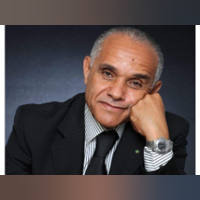
Aziz Daouda

2170519
Directeur Technique et du Développement de la Confédération Africaine d'Athlétisme. Passionné du Maroc, passionné d'Afrique. Concerné par ce qui se passe, formulant mon point de vue quand j'en ai un. Humaniste, j'essaye de l'être, humain je veux l'être. Mon histoire est intimement liée à l'athlétisme marocain et mondial. J'ai eu le privilège de participer à la gloire de mon pays .
8300
33.0

Man, people and humanity 7830

People have always aspired to freedom and prosperity. They always wanted to live from their work. Their pleasure is to see their offspring play, learn and prosper. People have always wanted peace as a way of life. Living in peace…a whole concept, a chimera. Alas It has never been completely like this. Except for brief, precious and rare moments that history could not remember. These moments remain exceptional, they were brief, even ephemeral. People have always sought to not be exploited by anyone, all the while they tend to exploit others. Sometimes, unfortunately, by dehumanizing with immeasurable cruelty. A history of exploitation while giving yourself a clear conscience. In fact, peoples are groups of humans with common traits. People are formed over time and coalesce around common interests. To defend himself and his interests, man can only live in community among a people. Man aspires to freedom and peace; humans say they have values but humanity does not care. The course of history unfortunately demonstrates this. Humanity imagined a way to aspire to this freedom to live in harmony: Involve everyone in the decision and give man the impression that he is part of his destiny. Nothing better than a word with Greek etymology to make it serious and credible: Democracy. This sounds very good. Yes, Democracy is there in principle to free us and make our voices heard. To realize our desires and respond to our need to live in peace. To live together. To respect others in their human dimension. To limit ourselves to our rights without encroaching on those of others. Democracy is a sort of safeguard for each and every one. At least that is how it was perhaps imagined and designed. It allows us, in theory, to express ourselves, defend and assert our rights from the most basic to the most sophisticated. Democracy is sold to us as the one and only model for the prosperity of people and their moral and material well-being. Now democracy is playing a dirty trick on us: handing over with tied hands the most mediocre among us, the most ferocious, the hungriest, the most bloodthirsty; to those who rejoice when graves are dug, when blood flows, when a child cries or a woman cries. Downside... I was born in a moment of peace, one of the few, just a few years after a cruel war started by Europeans. At the beginning they killed each other. They will then involve poor Africans as cannon fodder. Absolute cruelty for years. Millions of innocent people thrown underground. The break will be short. Without wasting time, humanity will experience the Korean War, that of Vietnam, that of Iraq, that of the Falklands, lots of squabbles in Africa and so on...The instigators and authors are always the same. Each time it's good versus evil...Each time democracy is involved, rightly or wrongly. The democratic world against the other...A democratic world which defines itself in absolute, total, integral contentment, with double standards as the only alternative of "reasoning" and "judgment" too; eliminating all others from the good square at will. Each time, genocide, each time cruelty, each time dehumanization. Each time faced with the helplessness of the man who only wants to live in peace. As for whether humanity ever existed. Will it exist one day... You understand, I don't want to talk about Palestine, the wound is still fresh and the criminals are still alive. Aziz Daouda

Style is the man 8355

The particular imprint of exceptional humans has marked history, if not made history. Georges-Louis Leclerc de Buffon, French naturalist and mathematician and member of the Académie Française, undoubtedly marked by the rigor of the exact sciences, stated in his reception speech: ‘Style is the man himself’. Even if Buffon only spoke of literature and science, style thus becomes an objective constant of each of those who mark history with a particular legacy. Foreshadowing what the Crown Prince would grow to be when King, the late His Majesty Hassan II of Morocco will take up the notion of style, precisely quoting Buffon. He said in a notorious interview : ‘Style is the man’. No one wanted to announce that the reign of His Majesty King Mohammed VI of Morocco was going to be different from his own, although in the logical continuity of history. Today the trend is to confuse style with a more modern notion of ephemerality: the look. If the look, which will summarize an outfit, a haircut, colors, is circumstantial and therefore contingent on the moment, style is a constant of the person and accompanies him throughout his life. Style will experience an evolution but in a logical continuum. If style ends up being validated and confirmed by history’s objective appreciation, the look is not necessarily in symbiosis with style. The look is tainted by subjectivity. It depends on each person’s perception, image and imagination. It is marked by the appreciation we have of the person we meet in a particular circumstance, a particular environment. The look is a subjective composition which can be modeled simply through a photograph which falls into your hands, a video viewed on a train or on a plane, so many images that forcefully invite themselves into the intimacy of the onlooker by forcing the screen from a phone or a tablet, through advertisements and social media. The look can go so far as to contrast with the style. It is the subjective assessment that we make of the person being scrutinized; and will be even more biased if it is accompanied by a comment even if it is the antipode of objectivity. A film actor can thus be stuck by his look and his acting, the personality traits of a character, when all he has done is succeed in restoring them to us for the duration of a film. The look is appreciated as long as it coincides with the image we have of the person at the very moment of meeting. It depends on the success of the approach and the reaction of the person encountered. It is conditioned by the circumstances of this encounter, the degree of surprise and the emotional level it arouses. The first glance will be decisive here. The look generates admiration: everyone will form an idea of the person they meet based on their own appreciation, their emotions and their state of mind at the moment. The degree of sympathy expressed or shared can thus lead to idolatry. The style commands respect and generates love and appreciation. It is a constant that evolves slowly, surely, and becomes significant. It is assessed on rather objective and verified criteria. Style is indelible and is linked to action through art and manner. Style leaves a mark forever. It is this imprint that allows us to judge and define its contours. History is judge of style. Aziz Daouda

Sports performance, Africa has only one choice... 7741

The extraordinary experience of Nezha Bidouane, Hicham El Guerrouj, Khalid Skah, Brahim Boutayeb, Nawal El Moutawakel, Salah Hissou, Hasna Benhassi, Zahra Ouaziz, Said Aouita, Jawad Gharib, Ali Ezzine and so many others has made Morocco a super power of world athletics. At that time, Morocco was among the notable countries in world athletics with dazzling results and a continuity of almost a quarter of a century. Morocco was even fifth in the world in 1999, during the world championships in Seville. Very high-level performances, charismatic athletes, Moroccan coaches trained properly in Morocco, an inspired federal policy, unconditional support from the State, generous royal concern have made this Morocco great for athletics. At the world level, for the training of high-level athletes, there are two successful and time-honoured experiences, two ways of training and producing performance and a third which is gaining a good place, which is even becoming the more productive, the one invented and implemented in Morocco. This Moroccan method has been emulated. It was adopted by the IAAF at the time, by the African Confederation and also by more than one country. Roughly speaking, you have the American system with large, very rich universities having all the means to train very high-level athletes. American universities are developing scientific research in sports performance, investing in large laboratories in exercise physiology, psychology and other cognitive sciences, sports sociology and all other areas of physical activity for well-being and the production of sports performance. They invest in sporting performance to improve and consolidate their respective image, in a major inter-university competition. They are therefore the most productive in the world, benefiting from developed knowledge, an unrivaled level of supervision and an inspiring historical record. They are a super power and provide the USA with all-round sporting power. So the USA has always been one step ahead of the rest of the world. Alongside the American system there is the European system with large clubs supported by very rich local authorities and very generous sponsors. This system therefore produces the second largest sporting power in the world and this is seen at the various world championships and the Olympic Games every four years. In Africa we have neither of these systems, nor could we have one in the near future. So, in Morocco, we invented our own path which is to design and set up a national institution which brings together very talented young people selected from a good prospecting and talent detection system. The selected ones are then placed in an environment of high competence, optimized performance, under the leadership of 100% Moroccan executives. Having an exclusively national framework is of great importance on a cultural, sociological and emotional level. We must never forget that sporting performance is a cultural expression. Everyone's motivation is the same: to represent the country with dignity. This is what allowed us for more than 20 years to be among the ten greatest nations in the world, to have dozens of titles and world records. I think this is the path for African countries. In Kenya too, almost all athletes come from a similar system initiated by certain equipment manufacturers and by the IAAF in the past. Ethiopia has adopted the same path. This is also the path that the CAA is currently developing by multiplying the African Athletics Development Centers -AADC-. These are executive training and training units for young athletes. Unfortunately the system is threatened by lack of resources, World Athletics having chosen not to follow the CAA in this voice. Such a system can only work on the basis of an intelligently thought out and effectively carried out detection system. Why don't we see new generations of great Moroccan athletes, would be the question that more than one would ask me? Sports performance, if it depends on the will of leaders and a favorable environment, it depends above all and above all on the men who work in the system, on their commitment and their genius. Structures and funding are not sufficient to generate high performance. We are here in a cultural domain of permanent creativity, based on a vision which combines will with cultural aspects but without neglecting the consideration of scientific advances at the highest level. The foresight of decision-makers, the level of confidence in management, the continuity of the system are all factors which will impact the process of producing sporting performance. As soon as one of these factors is disturbed, the machine jams. We must therefore conclude that to produce sporting performance, the continent has only one choice: that of training centers. This is what football does brilliantly in certain African countries including Morocco. Aziz Daouda

But what is Gamal Abdel Nacer still doing in Conakry... 7921

What was my surprise when I was told that for my stay of only 3 nights in Conakry, I was going to stay at the « Hôtel de L'Université » which is in fact called Gamal Abdel Nacer University. We must return to both the recent and distant history of Guinea Conakry to understand what Gamal Abdel Nacer is doing, or rather was doing, in this region of Africa. The University is now some 60 years old. It has no less than 35,000 students and some 620 teachers. The students represent nearly twenty countries. It is a university that aims to be innovative and competitive in the service of socio-economic development and environmental balance in Guinea, in the region and in the world. Built with the support of the Soviet Union in 1962, it was known until 1984 as the Polytechnic Institute of Conakry. The University was then named in honor of Egyptian President Gamal Abdel Nasser. It served for a long time to provide the country with its elites. Here Gamal is honored, elsewhere he was named Paper Tiger or even Tiger of Falouga, so much so that he puffed out his chest and suffered a series of defeats and disasters that his country continues to pay till today. An excess of "philosophical" vision undoubtedly misguided, meaningless slogans, based on an ideology without anchor, neither social nor even less cultural or historical, if not just a dream. The Officer who called himself free had, with a group of friends, overthrown the very young egyptian Monarchy as a Kingdom. Previously, Egypt had Sultans. Fouad II overthrown by Gamal and his barracks friends, acceded to the throne in July 1952, aged only 7 months and 10 days, after the abdication of his father Farouk. Farouk thought that by abdicating, leaving the throne to his baby with a regent who seemed to be accepted, he would calm the ardor of the officers and thus save his young monarchy. It didn't work. Farouk ended up leaving the country with honors, thus avoiding a bloodbath and confrontation between the military and pro-monarchist forces. The free officers will then name Mohammed Naguib president of the Arab Republic of Egypt in June 1953. An Arab Republic in Africa, heir to the greatest civilization that the African continent and the world had given birth to. Gamal was appointed prime minister in April 1954 but not for long...A few months later, on November 14, 1954, poor Naguib was kindly thanked and Gamal succeeded him quite naturally. Naguib born in Sudan will then go and write books...At the time it should be remembered, Sudan was part of Egypt but under shared sovereignty with the United Kingdom. Sudan will be declared an independent state in January 1956. The free officers of Egypt in fact, carried a project of national independence, believing that Egypt was not in fact free and that the English still had an ascendancy over the monarchy. There was also there, and above all an air of revenge of the common people, who were the young army officers, on a Cairo bourgeoisie or even nobility, speaking mostly in French, moreover, of Turkish or very close. The officers naively promised and no doubt dreamed of rapid economic development for the benefit of all...A somewhat special vision of communism and a socialism which was sought for a long time without ever succeeding, based on the doctrine of the Baathist Michel Aflak, a Syrian which skillfully combines socialism and pan-Arabism. Michel Aflak is a fan of secularism and freedom from Western interests. The Baath subtly opposed socialism to Marxism, a way of satisfying the deeply religious populations, predominantly Muslim and not only, and for whom Marxism was synonymous with atheism. We are here in the Middle East, the cradle and heart of all monotheistic religions... The Baath found in Gamal the ideal tribune. His inflammatory speeches met with an immense echo in Egypt and the Arab world: the army then appeared as the savior of an enlarged nation. The Arab Nation… Nacer's speeches mobilized and inflamed crowds at home and beyond. Its Cairo Radio, then received on short wave throughout the so-called Arab world, would play a capital role in propaganda that would restore pride to populations who had not yet emerged from the yoke of colonization in the region. Mohamed Abdelwahab will add a nice layer with the song Douae Echark (Call of the Orient) to the words of the great poet Mahmoud Hassan Ismail. It is undoubtedly one of the most beautiful pieces of music by the Egyptian virtuoso. Oum Kaltoum will do his part in 1964 with Ala Bab Masr (At the Gates of Egypt); words by Kamal Echanaoui and a composition once again by Mohamed Abdelwahab. She will also sing among others Ya Gamal ya Mital Alwatania (Gamal Example of nationalism or patriotism...). But the one who sang the most on the occasion of the July 23 celebrations was the young singer of that time, Abdel Halim Hafez, notably with his famous song Ihna Chaab (We the people). In fact, we are here faced with an extremely well-oiled system serving a cause that wanted to be pan-Arabist in the service of a military regime that wanted to be exportable to all countries with the Arabic language as the common denominator. The revolution was intended to be Egyptian but was to extend to the entire Arab world. It will succeed in overthrowing regimes almost everywhere, in Iraq, Libya, Syria... it will settle in Algeria and fail to make Hassan II of Morocco bend for example... The war of sands (Guerre des sables) was imposed to him but his solidity and his political sense will surprise them...

Africa, the share of sport in the economy 5479

It is difficult to assess the true share of sport in GDP across the African continent, as it is clear that this share varies greatly from one country to another. In Morocco, for example, this share is estimated at 1%. The study of market shares in the sports business also shows that Africa only picks up crumbs. Africa is barely present in global statistics. The continent is undergoing globalization but benefits very little from it. Africa only plays the role of talent reserve; a kind of nursery. The weakness of Africa's weight in the world economy is glaring here. The continent benefits little from the financial windfall from sport, just as it benefits little from the fair value of the wealth it “generously” offers to the world economy. The very nature of sporting activity generates this anachronistic situation. Sport in America or Europe and increasingly in Asia as well, lives in part thanks to the talents that only Africa can provide on a genetic and phenotypic level. Many sports, particularly the most popular and economically promising, require particular qualities and human potential that fit perfectly with the type of young people Africa abounds with. It is almost the only continent to offer this particularity. There is also the informal economy which has established itself as a saving palliative for young people since it allows them to benefit from cheap sports equipment. Even counterfeit or second-hand, this particularly individual equipment still allows a certain practice at a certain level. This informal activity, if encouraged and guided, can constitute the basis of a local sports economy and move into the formal sector. Aziz Daouda