Think Forward.

GERIATRIE : LA NUTRITION FACE AU VIEILLISSEMENT PHYSIOLOGIQUE DES PERSONNES ÂGÉES - PARTIE 1 4437

«QUAND ON AVANCE EN ÂGE, MIEUX VIVRE C’EST MIEUX SE NOURIR» L’équilibre nutritionnel de la personne âgée (PA) est plus précaire car tributaire de modifications physiologiques et de l’émergence de pathologies. Les personnes âgées ont tendance par ailleurs à diminuer leur apport alimentaire sans que leurs besoins énergétiques ne soient réduits : leurs réserves étant amoindries, tout incident rompt un équilibre déjà précaire et la dénutrition fait son apparition. L'IMPACT DU VIELLISSEMENT PHYSIOLOGIQUE SUR LA NUTRITION Avec l’âge, l’altération des perceptions des odeurs et du goût stimule moins l’appétit : la capacité discriminative s’affaiblit d’où une difficulté à identifier les aliments ; le seuil de détection des 4 saveurs de base augmente (multiplié par 11,6 pour le salé, 7 pour l’amer, 4,3 pour l’acide et 2,7 pour le sucré). Près de 400 médications (anti-inflammatoires, antidiabétiques oraux, inhibiteurs de l’enzyme de conversion…), des carences en zinc ou en vitamine B3, la cirrhose du foie ou la déshydratation perturbent le goût. La malnutrition aggrave ces déficiences, ralentissant ainsi le renouvellement cellulaire indispensable à la régénération des acteurs sensoriels. La perte d’appétit découle aussi d’une sénescence des glandes salivaire. Les aliments n’étant plus correctement imbibés, les molécules porteuses de saveurs appétissantes sont moins actives. De plus, la dégradation dentaire et la prédilection pour des aliments plus liquides diminuent les mouvements masticatoires ce qui va encore réduire cette sécrétion. La sécheresse buccale (xérostomie) est alors fréquente, exacerbée par de nombreux médicaments (diurétiques, benzodiazépines, antihistaminiques…), elle va favoriser les caries dentaires, les mycoses buccales et œsophagiennes, occasionnant des brûlures lors de l’ingestion et, in fine, gênant l’élocution et la déglutition. La muqueuse gastrique, en s’atrophiant, sécrète moins d’acide chlorhydrique, d’où une pullulation bactérienne consommatrice de nutriments (folates) et un retard à l’évacuation gastrique de 2 à 3 fois plus long, qui prolonge la phase d’anorexie post-prandiale. L’accélération plus importante chez la PA du transfert du chyme de la partie supérieure de l’estomac (le fundus) à la partie inférieure (l’antre) avec une distension précoce de cette dernière joue par ailleurs un rôle prépondérant dans le sentiment précoce de satiété. Un peptide, le CCK sérique (cholecystokime -pancreozymine), produit par le duodénum au cours du repas, stimule la sécrétion par le pancréas de la trypsine qui inhibe en retour la sécrétion de CCK. L’insuffisance pancréatique exocrine, liée à l’âge ou aggravée par une dénutrition, lève ce rétrocontrôle, d’où une production accrue de CCK à l’origine elle aussi d’une satiété précoce. La survenue plus fréquente chez la PA d’ulcères et de gastrites chroniques, en liaison avec une incidence plus élevée d’infection par Hélicobacter pylori, renforce encore le risque anorexique. Le vieillissement musculaire et la diminution du capital musculaire (sarcopénie) est un phénomène presque inéluctable qui commence à 40 ans pour l’homme contre 50 ans pour la femme. La perte -de 3 à 8 % tous les dix ans- s’accélère après 60 ans et réduit la musculature à 17% du poids du corps à 70 ans contre 30% à 30 ans. La composition en fibres du muscle se modifie : les fibres de type II, ou fibres blanches, à contraction rapide, mais peu résistantes à la fatigue, s’atrophient ; les fibres de type I ou fibres rouges, à contraction lente, générant peu de force, mais une forte endurance, sont moins affectées et leur densité serait même plus importante. Outre cette réduction de la force musculaire malgré une certaine préservation de l’endurance, le système nerveux contrôle moins bien ces contractions. Plusieurs facteurs génétiques, médicamenteux, nutritionnels ainsi que l’augmentation des cytokines (état inflammatoire provenant de l’accroissement de la masse grasse) conditionnent l’apparition de cette sarcopénie. Les hormones sexuelles joueraient aussi un rôle dans le contrôle de l’appétit au cours du vieillissement. La diminution des taux circulants de testostérone observée au moment de l’andropause induirait la perte d’appétit chez l’homme âgé et précipiterait le développement de la sarcopénie. À l’inverse, la réduction de sécrétion des œstrogènes à la ménopause protégerait les femmes de cette perte. Les répercussions de la sarcopénie sont considérables : risques infectieux par baisse des réserves protéiques nécessaires aux défenses immunitaires, chutes et fractures éventuelles compromettant l’autonomie de la PA… Un moindre volume musculaire expose aussi la PA aux troubles de la thermorégulation, la baisse de l’intensité du frissonnement qui en découle rendant la PA plus démunie face à l’exposition au froid. Dr MOUSSAYER KHADIJA الدكتورة خديجة موسيار Spécialiste en médecine interne et en Gériatrie en libéral à Casablanca. Présidente de l’Alliance Maladies Rares Maroc (AMRM) et de l’association marocaine des maladies auto-immunes et systémiques (AMMAIS), Vice-présidente du Groupe de l’Auto-Immunité Marocain (GEAIM) - REFERENCE MOUSSAYER KHADIJA Doctinews N° 25 Août/Septembre 2010, ACTUALISATION JUIN 2024 - POUR EN SAVOIR PLUS : La plupart des personnes âgees souffrent de maladies chronique le plus souvent d'origine auto-immune Les maladies auto-immunes résultent d’un dysfonctionnement du système immunitaire, censé nous protéger des agressions extérieures, qui va le conduire à s’attaquer à notre propre organisme. Elles constituent un important problème de santé publique du fait de leur poids économique et humain : 3ème cause de morbidité dans le monde après les maladies cardiovasculaires et les cancers, elles touchent en effet près de 10 % de la population mondiale et occupent le deuxième ou le troisième poste du budget de la santé dans beaucoup de pays. Enfin, dernier point méconnu mais pas le moindre, ces maladies concernent les femmes dans plus de 75 % des cas : une femme sur six en est atteinte au cours de sa vie ! Passons donc en revue ce que sont ces pathologies et les actions de l’associations AMMAIS UN PROCESSUS D'AUTODESTRUCTION DE L'ORGANISME Notre système immunitaire est composé notamment de cellules spécialisées comme les lymphocytes et de substances (les anticorps) chargées normalement de nous défendre contre toute attaque extérieure provenant de différents virus, bactéries, champignons et autres produits délétères. Lors d’une maladie auto-immune (MAI) ou à manifestations auto-immunes, des éléments de ce système se trompent d’ennemi et s’en prennent à nos tissus et cellules. Certains anticorps devenus nos adversaires s’appellent alors « auto-anticorps ». Au total, il existe près d’une centaine de ces troubles.

Dr Moussayer khadija Dr Moussayer khadija

Dr Moussayer khadija

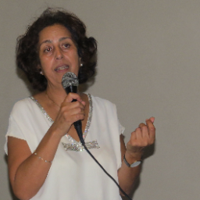
Dr MOUSSAYER KHADIJA الدكتورة خديجة موسيار Spécialiste en médecine interne et en Gériatrie en libéral à Casablanca. Présidente de l’Alliance Maladies Rares Maroc (AMRM) et de l’association marocaine des maladies auto-immunes et systémiques (AMMAIS), Vice-présidente du Groupe de l’Auto-Immunité Marocain (GEAIM)


5300

0

Eternal Morocco, Unbreakable Morocco: The Identity That Triumphs Over Exile... 217

There are affiliations that geography dissolves over time, and others that it strengthens as distance sets in. The Moroccan experience undoubtedly falls into the second category. Across generations, sometimes up to the third or fourth, a phenomenon intrigues. Women and men born far from Morocco continue to recognize themselves in it, to feel attached to it, to project themselves into it. They have left the country or never lived there long-term; they were born far away, but Morocco has never left them. How to explain such persistence? Why does this loyalty cut across social classes, faiths, degrees of religiosity, and even nationalities acquired elsewhere? How is a memory so indelible? How does it withstand the test of time, distance, and new cultural acquisitions, if not through the profound weight of national consciousness? Morocco is not merely a modern state born from 20th-century recompositions. It is an ancient historical construct, shaped by centuries, even millennia, of political and civilizational continuity. Dynasties like the Almoravids, Almohads, Merinids, Saadians, or Alaouites forged a stable political and symbolic space whose permanence transcends apparent ruptures. This historical depth irrigates the collective imagination. It gives Moroccans, including those in the diaspora, the sense of belonging to a history that precedes and surpasses them. Being Moroccan is not just a nationality. It is an inscription in a continuity, a composite identity forged by inclusion. Moroccan identity has been built through sedimentation. It is Amazigh, African, Arab, Andalusian, Hebraic. These are layers that coexist in a singular balance, complementing and interweaving without exclusion. This ancient plurality explains Moroccans' ability to embrace diversity without identity rupture. Thus, a Jewish Moroccan in Europe or a naturalized Muslim elsewhere often shares a common affective reference to Morocco, not out of ignorance of differences, but because they fit into a shared historical and geographical framework. This inclusive identity enables a rarity: remaining deeply Moroccan without renouncing other affiliations, with the monarchy serving as a symbolic thread. In this complex architecture, the monarchy plays a structuring role. Under Mohammed VI, it embodies historical continuity and contemporary stability. For Moroccans abroad, the link to the Throne goes beyond politics. It touches the symbolic and the affective, a dimension fully grasped only by Moroccans. It acts as a fixed point in a shifting world, offering permanence amid changes in language, environment, or citizenship. This transmission occurs invisibly in the family, in rituals. It is not a memory but living, sensitive memories. The diffusion and transfer also manifest in cuisines with ancestral recipes, in music and sounds, in living rooms echoing with Darija, through summers "back home," gestures, intonations, moussems, or hiloulas. Moroccan identity is transmitted less through discourse than through sensory experiences: tastes, smells, rhythms, hospitality. Thus, generations born abroad feel a belonging not formally learned, an active loyalty blending affection and claimed will. The diaspora does not settle for abstract attachment. It acts. Financial transfers, investments, public commitments, and defense of Moroccan positions internationally bear witness. This operational patriotism extends affection into action, a duty to the nation, a Moroccan loyalty. Moroccans may be exiles, but never uprooted. For the Moroccan diaspora, attachment transcends oceans. Even in political, economic, or academic roles abroad, Moroccains carry their country of origin explicitly or implicitly. The otherness of host societies reinforces this identity. The external gaze consolidates this sense of belonging to a culture so distinctive that it crystallizes, is claimed, and magnified. This phenomenon, intense among Moroccans, compels us to name what went without saying in the homeland: a continuity at a distance. Neither frozen nostalgia nor mere inheritance, this relationship is a profound dynamic. Morocco is not just a place; it is the bond that spans generations, adapts without diluting, reminding us that exile does not undo all affiliations. Morocco is in our daily lives, in a perennial, solid, and unyielding memory that defies borders and time.

My Pain Qualifies Me 358

At an immersion meeting for psychoanalysts, I heard the phrase: “My pain qualifies me,” and immediately, like a lightning bolt, it struck deeply within me and, with the speed of a thought, made complete sense. I was able to perceive it with a clarity that, honestly, I don’t recall ever experiencing before in my entire life. It was so intense that I felt certain I was in the right place, investing in a career that, until not long ago, I couldn’t have imagined myself pursuing even in my dreams. Although this discovery is recent, given the fascination it caused me, perhaps it had been stored in my unconscious all along, likely as a repressed desire, even due to my own prejudice regarding matters of the human mind. Because of unsuccessful past experiences, I had come to doubt the effectiveness of psychotherapy, even considering it at times as a way of making easy money at the expense of others’ suffering. I believed that a person in distress could simply rely on friends and family to vent, share their problems, and relieve tension, while medications prescribed by doctors would do their part. However, upon hearing that my pain qualified me, now, of course, with a different mindset and studying psychoanalysi, I felt as though I was experiencing a kind of gnosis. I know my pain, or rather, my pains, and I fully understand this statement. When we set out to help someone who carries their own pain, we can even through a simple look, convey to the analysand that we understand what they are going through. This phenomenon is what we call countertransference: emotions, feelings, and thoughts that arise in our unconscious in relation to the analysand. These feelings and emotions are developed by the therapist during a therapy session. In that space, we become aware that there are two souls facing each other, one pouring out their thoughts, anxieties, and traumas, and the other offering attentive listening, care, and guidance, helping them find their path and providing tools to manage their struggles and move forward in life as best as possible. And for the therapist who has experienced, or still experiences pain, it also becomes an opportunity for self-analysis, which undoubtedly gives full meaning to the exchange that takes place between two souls standing face to face with their pains.

AFCON 2025: The Trophy that Sets the Savannah Ablaze.. 461

There are moments when football stops being a game and becomes a brutal revealer of a continent's institutional and political fragilities. The current crisis surrounding the Africa Cup of Nations (AFCON) is the perfect illustration. Between the rigorous application of regulations, the credibility of the Confederation of African Football (CAF), media pressure, and reactions from the Senegalese Football Federation, the affair now extends far beyond sports into a much broader realm, intertwining law, sovereignty, and diplomacy. At its origin, a disciplinary decision that, under normal circumstances, would have been a simple sporting dispute. But the context, symbolism, and players involved have turned this file into a full-blown crisis. The CAF, as the regulatory body, faces a fundamental demand: to enforce its own rules without yielding to pressure. Any weakness in applying the law would open the door to widespread challenges to its authority, including revisiting past decisions and verdicts. In this sense, the decision taken, however contested, fits into a logic of institutional preservation. However, law, as essential as it is, cannot be entirely divorced from its political and emotional environment. Today's events provide perfect proof. The Senegalese side's reaction, perceived as an offense or challenge to the decision, reveals a deeper malaise: a sense of injustice, real or supposed, amplified by a public opinion whipped into a frenzy by a flood of increasingly belligerent statements and remarks. Social media, TV panels, and certain official discourses have turned a legal matter into a symbolic clash between nations. In response, the Royal Moroccan Football Federation remains silent, stoic, calm, and discreet. This is where the main danger lies. Beyond texts and procedures, it is historical relations, built over decades of solidarity and brotherhood, that are now exposed to unnecessary tension. African football, long presented as a vector of unity, risks here becoming a factor of division. And this drift, if not contained, could leave lasting scars. That's precisely what the occult forces, or not so occult, stoking the fire are aiming for. In this climate of escalation, the temptation is great for each side to harden its position. Yet, the history of sports conflicts shows that escalation is rarely a solution. It weakens institutions, undermines competition credibility, and, above all, distances the public from the essentials: fair and credible play. The central question then becomes: how far will this showdown go? A peaceful outcome necessarily requires a return to calm and reason. This does not mean renouncing one's rights or silencing disagreements, but framing them in a controlled manner. Appeal mechanisms exist, whether through direct sports jurisdictions or, if necessary, the international body that is the Court of Arbitration for Sport (CAS). Its role is precisely to settle such disputes with impartiality and rigor. Awaiting the verdict from this body, even if it is slow, means accepting that law takes precedence over emotion. It also means recognizing that the credibility of African football's components depends on their ability to resolve disputes in line with the rules they have set for themselves. Any other path, pressure, excessive politicization, or media confrontation, would only entrench and worsen the crisis. At its core, this affair raises an essential question about the governance model for African football. A model subject to power plays and momentary emotions, or one based on solid, respected institutions capable of enforcing the law, even when it stings? Ultimately, African football bodies didn't fall from the sky. They are the emanation of a democratic process in which Africa's 54 countries participate in good conscience. The answer to this question will determine not only the outcome of this crisis but also the future of football on the continent. Beyond the present case, the credibility of an entire sports architecture is at stake. In the immediate term, one thing is clear: the time for appeasement must follow that of confrontation and escalation. Preserving the essentials and consolidating fraternity among African peoples is worth far more than a sports victory, even an Africa Cup of Nations trophy. Alas, this is beyond those whose vision doesn't extend past the end of their nose. The CAS will speak soon. Then we'll see who is right or wrong under strict application of the law, with no further recourse possible except a return to reason. Wouldn't it be better, in the meantime, to keep a cool head, maintain lucidity, and calm down? A trophy is only raised when it is deserved—truly deserved.