Think Forward.

Les Soupirs d'Azemmour 4768

Allant vers Oualidia, histoire de profiter de sa belle lagune, de ses huitres et poissons, ma fille, mon épouse et moi-même décidâmes de faire une petite halte à Azemmour. Je m’étais promis d’y amener ma fille à la première occasion qui se présente. Nous sommes ici à une encablure de Casablanca, à une poignée de kilomètres d’El-Jadida et non loin de Jorf Lasfar, une fierté de l’industrialisation du Maroc moderne. J’ai personnellement un petit quelque chose pour cette ville. Rares sont les villes aussi envoutantes. Je ne puis m’expliquer pourquoi. Très vite vous y êtes tantôt berbère en Jellaba courte, tchamir et babouches à la tête arrondie ou pointue ; tantôt phénicien drapé de blanc un peu comme s’habillaient les grecs en leur temps de gloire ; tantôt portant la toge d’un citoyen romain fier ou le turban bleu d’un Berghouata rugueux. Vous y imaginez des portugais chantant leur triomphe à la prise de la ville. Vous y entendez, le bruit de vos pas sur un pavé vieilli, évoquant celui de l’armée Saadienne reprenant possession des remparts. Le bruit et vociférations des soldats y résonnent encore et toujours ; mais en silence. Au tournant d’une ruelle de la cité antique, vous entendez la voix lointaine et confuse de Sidi Abderahman El Mejdoub, criant sa douleur devant le mal, questionnant le monde et l’univers. Au tourant de l’autre vous interpelle la voix chuchotant, à peine perceptible, de Rabbi Abraham Moul Ness et ses prières à l’aube et au crépuscule. Sidi Brahim pour les musulmans…les deux religions peinent à se donner des frontières ici… D’ailleurs c’est une sorte de miracle qui révéla aux deux communautés qu’Abraham était bien un saint…Les citoyens venaient d’installer un moulin juste en face de la grotte où il passait son temps à méditer et prier…Les bêtes qui faisaient tourner le moulin tombaient vite malades et mourraient l’une après l’autre. On comprit alors qu’Abraham ne voulait pas être dérangé dans sa méditation…depuis il est Rabbi Abraham pour les juifs, Sidi Brahim pour les musulmans, saint pour les deux. Plus loin dans la ville, ce sont des jeunes plutôt silencieux, à l’air certainement soucieux, le regard cafardeux, qui vous font face au tournant d’une ruelle. Certains de ceux qui vous croisent ont le regard étonnamment hagard, comme pour exprimer une lassitude ou un dégout ; peut-être même une colère profonde et des blessures répétées. Au coin de la rue d’en face, sur une petite place difforme c’est le son saccadé d’un métier à tisser qui vous interpelle. L’un des rares Deraz encore en activité tisse comme chaque jour des écharpes et des foulards en laine ou en soie…Les touristes aiment ça mais ne viennent pas souvent… Il ne se lasse pas. Il travaille, aime beaucoup son métier et attend des jours meilleurs ou tout au moins que la guerre au moyen orient s’arrête… Au fond de lui, il doit souhaiter que ses amis israéliens reviennent à la raison et chassent vite du pouvoir leurs dirigeants actuels ; des névrosés assoiffés de sang plus qu’autre chose. Il attend le Moussem mais ne sait pas si les marocains juifs qui reviennent annuellement pour le pèlerinage seraient encore nombreux. La maison de l’artisan est silencieuse et attend aussi… Elle attend souvent qu’un petit groupe passe par là pour enfin s’animer un petit peu, pour une heure ou deux. Les maitres artisans qui y séjournent semblent plutôt regarder filer le temps. Leurs yeux sont nostalgiques d’un passé proche sans doute idéalisé et d’un passé plus lointain chargé de richesse et de puissance à jamais révolu. Une dame d’un âge certain, sans gêne aucune, vêtue d’un pyjama qui en a vu des vertes et des pas mûres, est là devant chez elle sur un tabouret, assise. La porte de sa modeste demeure peinte en bleu est grande ouverte. La dame déborde un peu la petite dimension de son tabouret. Son regard est vide. Elle ne remarque pas nos silhouettes et semble ne pas entendre nos pas involontairement légers, comme pour ne pas déranger l’histoire ou remuer la colère des murs abandonnés, des maisons aux portes murées, celles que le temps a abattues et celles qui attendent passivement le signal de la dégringolade de pierres millénaires fatiguées et qui ne tiennent plus à rien. Derrière des portes d’antan de quelques bâtisses encore debout - et il y en encore beaucoup Dieu merci - et quelques maisons non encore fermées aux cadenas ou tombées dans l’oubli des temps et des humains, on devine des jeunes filles s’affairer à la broderie. Elles ne sont plus très nombreuses à éprouver une passion pour cet art ancestral spécifique à la ville avec ses couleurs vives et ses dragons. Que font les dragons ici sinon rappeler un passé si lointain qu’on n’en perçoit pas le fond. Par oui dire certaines disent que c’est un marchand portugais qui introduisit cet art entre les murs de la ville. Au coin d’une petite place, comme il y en beaucoup dans la cité, devant une épicerie aussi petite que peu soignée, se tiennent des jeunes oisifs. L’un d’eux ressemble forcément à Mustapha Azemmouri, celui dit Esteban le Maure ou encore Estevanico. Peut être même qu’il en porte les gênes. Sans Estevanico, jamais l’Amérique du Nord n’aurait été ce qu’elle est aujourd’hui. Quelle destinée! Partir d’une telle contrée pour aller déterminer l’histoire d’une autre de l’autre côté de l’Atlantique. En sortant par l’une des portes de la cité ancienne vous avez une seule pensée : Azemmour se cherche un présent qui ne vient pas. Elle agonise et se meurt assurément. Peut-être même qu’elle est déjà morte. Voilà quelques temps Karim Boukhari, dans un article en disait : « J’ai visité Azemmour. Un ami, originaire de la ville, m’a prévenu : attention, m’a-t-il dit, c’est une ville morte. » Pour s’en apercevoir faites une balade au pied de la muraille coté oued. Une esplanade que mon ami Zaki Semlali a aménagé avec le peu de moyens dont il dispose pour redonner vie à cette relation particulière qu’a la ville avec Oum Rebi3. Aujourd’hui le plastique y est hélas plus abondant que les poissons. Finies l'alose et les belles ombrines charnues… Certains pans de la muraille et des habitations coulent vers l’oued comme des larmes de la peine subie. La nostalgique Azemmour lorgne l’Atlantique et regarde impuissante se fracasser les vagues au loin… J’implore le tout puissant pour que ce bout de notre histoire précieuse puisse enfin bénéficier de l’attention de nos gouvernants. Ma fille, mon épouse et moi-même sommes repartis tristes, blessés au plus profond de nos âmes mais la voix sublime de Sanaa Marahati chantant quelques poèmes écrits quelque part dans la cité nous fait croire à un avenir meilleur pour Azemmour.
youtu.be/T4BIRCsXQWs?si=BUG42ZIT...
Aziz Daouda Aziz Daouda

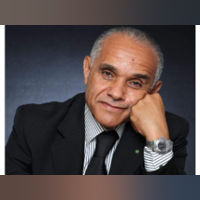
Aziz Daouda

Directeur Technique et du Développement de la Confédération Africaine d'Athlétisme. Passionné du Maroc, passionné d'Afrique. Concerné par ce qui se passe, formulant mon point de vue quand j'en ai un. Humaniste, j'essaye de l'être, humain je veux l'être. Mon histoire est intimement liée à l'athlétisme marocain et mondial. J'ai eu le privilège de participer à la gloire de mon pays .


9300

33.0

Eternal Morocco, Unbreakable Morocco: The Identity That Triumphs Over Exile... 223

There are affiliations that geography dissolves over time, and others that it strengthens as distance sets in. The Moroccan experience undoubtedly falls into the second category. Across generations, sometimes up to the third or fourth, a phenomenon intrigues. Women and men born far from Morocco continue to recognize themselves in it, to feel attached to it, to project themselves into it. They have left the country or never lived there long-term; they were born far away, but Morocco has never left them. How to explain such persistence? Why does this loyalty cut across social classes, faiths, degrees of religiosity, and even nationalities acquired elsewhere? How is a memory so indelible? How does it withstand the test of time, distance, and new cultural acquisitions, if not through the profound weight of national consciousness? Morocco is not merely a modern state born from 20th-century recompositions. It is an ancient historical construct, shaped by centuries, even millennia, of political and civilizational continuity. Dynasties like the Almoravids, Almohads, Merinids, Saadians, or Alaouites forged a stable political and symbolic space whose permanence transcends apparent ruptures. This historical depth irrigates the collective imagination. It gives Moroccans, including those in the diaspora, the sense of belonging to a history that precedes and surpasses them. Being Moroccan is not just a nationality. It is an inscription in a continuity, a composite identity forged by inclusion. Moroccan identity has been built through sedimentation. It is Amazigh, African, Arab, Andalusian, Hebraic. These are layers that coexist in a singular balance, complementing and interweaving without exclusion. This ancient plurality explains Moroccans' ability to embrace diversity without identity rupture. Thus, a Jewish Moroccan in Europe or a naturalized Muslim elsewhere often shares a common affective reference to Morocco, not out of ignorance of differences, but because they fit into a shared historical and geographical framework. This inclusive identity enables a rarity: remaining deeply Moroccan without renouncing other affiliations, with the monarchy serving as a symbolic thread. In this complex architecture, the monarchy plays a structuring role. Under Mohammed VI, it embodies historical continuity and contemporary stability. For Moroccans abroad, the link to the Throne goes beyond politics. It touches the symbolic and the affective, a dimension fully grasped only by Moroccans. It acts as a fixed point in a shifting world, offering permanence amid changes in language, environment, or citizenship. This transmission occurs invisibly in the family, in rituals. It is not a memory but living, sensitive memories. The diffusion and transfer also manifest in cuisines with ancestral recipes, in music and sounds, in living rooms echoing with Darija, through summers "back home," gestures, intonations, moussems, or hiloulas. Moroccan identity is transmitted less through discourse than through sensory experiences: tastes, smells, rhythms, hospitality. Thus, generations born abroad feel a belonging not formally learned, an active loyalty blending affection and claimed will. The diaspora does not settle for abstract attachment. It acts. Financial transfers, investments, public commitments, and defense of Moroccan positions internationally bear witness. This operational patriotism extends affection into action, a duty to the nation, a Moroccan loyalty. Moroccans may be exiles, but never uprooted. For the Moroccan diaspora, attachment transcends oceans. Even in political, economic, or academic roles abroad, Moroccains carry their country of origin explicitly or implicitly. The otherness of host societies reinforces this identity. The external gaze consolidates this sense of belonging to a culture so distinctive that it crystallizes, is claimed, and magnified. This phenomenon, intense among Moroccans, compels us to name what went without saying in the homeland: a continuity at a distance. Neither frozen nostalgia nor mere inheritance, this relationship is a profound dynamic. Morocco is not just a place; it is the bond that spans generations, adapts without diluting, reminding us that exile does not undo all affiliations. Morocco is in our daily lives, in a perennial, solid, and unyielding memory that defies borders and time.

My Pain Qualifies Me 363

At an immersion meeting for psychoanalysts, I heard the phrase: “My pain qualifies me,” and immediately, like a lightning bolt, it struck deeply within me and, with the speed of a thought, made complete sense. I was able to perceive it with a clarity that, honestly, I don’t recall ever experiencing before in my entire life. It was so intense that I felt certain I was in the right place, investing in a career that, until not long ago, I couldn’t have imagined myself pursuing even in my dreams. Although this discovery is recent, given the fascination it caused me, perhaps it had been stored in my unconscious all along, likely as a repressed desire, even due to my own prejudice regarding matters of the human mind. Because of unsuccessful past experiences, I had come to doubt the effectiveness of psychotherapy, even considering it at times as a way of making easy money at the expense of others’ suffering. I believed that a person in distress could simply rely on friends and family to vent, share their problems, and relieve tension, while medications prescribed by doctors would do their part. However, upon hearing that my pain qualified me, now, of course, with a different mindset and studying psychoanalysi, I felt as though I was experiencing a kind of gnosis. I know my pain, or rather, my pains, and I fully understand this statement. When we set out to help someone who carries their own pain, we can even through a simple look, convey to the analysand that we understand what they are going through. This phenomenon is what we call countertransference: emotions, feelings, and thoughts that arise in our unconscious in relation to the analysand. These feelings and emotions are developed by the therapist during a therapy session. In that space, we become aware that there are two souls facing each other, one pouring out their thoughts, anxieties, and traumas, and the other offering attentive listening, care, and guidance, helping them find their path and providing tools to manage their struggles and move forward in life as best as possible. And for the therapist who has experienced, or still experiences pain, it also becomes an opportunity for self-analysis, which undoubtedly gives full meaning to the exchange that takes place between two souls standing face to face with their pains.

AFCON 2025: The Trophy that Sets the Savannah Ablaze.. 466

There are moments when football stops being a game and becomes a brutal revealer of a continent's institutional and political fragilities. The current crisis surrounding the Africa Cup of Nations (AFCON) is the perfect illustration. Between the rigorous application of regulations, the credibility of the Confederation of African Football (CAF), media pressure, and reactions from the Senegalese Football Federation, the affair now extends far beyond sports into a much broader realm, intertwining law, sovereignty, and diplomacy. At its origin, a disciplinary decision that, under normal circumstances, would have been a simple sporting dispute. But the context, symbolism, and players involved have turned this file into a full-blown crisis. The CAF, as the regulatory body, faces a fundamental demand: to enforce its own rules without yielding to pressure. Any weakness in applying the law would open the door to widespread challenges to its authority, including revisiting past decisions and verdicts. In this sense, the decision taken, however contested, fits into a logic of institutional preservation. However, law, as essential as it is, cannot be entirely divorced from its political and emotional environment. Today's events provide perfect proof. The Senegalese side's reaction, perceived as an offense or challenge to the decision, reveals a deeper malaise: a sense of injustice, real or supposed, amplified by a public opinion whipped into a frenzy by a flood of increasingly belligerent statements and remarks. Social media, TV panels, and certain official discourses have turned a legal matter into a symbolic clash between nations. In response, the Royal Moroccan Football Federation remains silent, stoic, calm, and discreet. This is where the main danger lies. Beyond texts and procedures, it is historical relations, built over decades of solidarity and brotherhood, that are now exposed to unnecessary tension. African football, long presented as a vector of unity, risks here becoming a factor of division. And this drift, if not contained, could leave lasting scars. That's precisely what the occult forces, or not so occult, stoking the fire are aiming for. In this climate of escalation, the temptation is great for each side to harden its position. Yet, the history of sports conflicts shows that escalation is rarely a solution. It weakens institutions, undermines competition credibility, and, above all, distances the public from the essentials: fair and credible play. The central question then becomes: how far will this showdown go? A peaceful outcome necessarily requires a return to calm and reason. This does not mean renouncing one's rights or silencing disagreements, but framing them in a controlled manner. Appeal mechanisms exist, whether through direct sports jurisdictions or, if necessary, the international body that is the Court of Arbitration for Sport (CAS). Its role is precisely to settle such disputes with impartiality and rigor. Awaiting the verdict from this body, even if it is slow, means accepting that law takes precedence over emotion. It also means recognizing that the credibility of African football's components depends on their ability to resolve disputes in line with the rules they have set for themselves. Any other path, pressure, excessive politicization, or media confrontation, would only entrench and worsen the crisis. At its core, this affair raises an essential question about the governance model for African football. A model subject to power plays and momentary emotions, or one based on solid, respected institutions capable of enforcing the law, even when it stings? Ultimately, African football bodies didn't fall from the sky. They are the emanation of a democratic process in which Africa's 54 countries participate in good conscience. The answer to this question will determine not only the outcome of this crisis but also the future of football on the continent. Beyond the present case, the credibility of an entire sports architecture is at stake. In the immediate term, one thing is clear: the time for appeasement must follow that of confrontation and escalation. Preserving the essentials and consolidating fraternity among African peoples is worth far more than a sports victory, even an Africa Cup of Nations trophy. Alas, this is beyond those whose vision doesn't extend past the end of their nose. The CAS will speak soon. Then we'll see who is right or wrong under strict application of the law, with no further recourse possible except a return to reason. Wouldn't it be better, in the meantime, to keep a cool head, maintain lucidity, and calm down? A trophy is only raised when it is deserved—truly deserved.

Faceless War, Disoriented World, Trapped Citizen... 466

There was a time when war made sense, or at least appeared to. It pitted identifiable camps against each other, produced winners and losers, and sometimes ended in peace, even imperfect peace, sometimes signed in a train car. Before that, it unfolded in battles for which appointments were even set, far from civilians. They observed each other, sized one another up, and collectively decided the start time of the clashes. A true war of the brave. There were always winners and losers. Thank cinema for reliving those scenes, more or less romanticized, but scenes nonetheless... From World War I to the Cold War, closer to us, conflicts, however tragic, followed a certain historical intelligibility. Since then, joysticks have crept in, and computers have taken over... Things changed; dare we say: they dehumanized. Contemporary war, as it emerges in the triangular confrontation between the United States, Israel, and Iran, seems to have broken with that old logic. It's no longer just complex: it's become ungraspable, unintelligible to ordinary mortals like us. It doesn't just oppose forces; it dissolves the very landmarks that once allowed us to understand what war is. Who is the victor? Who is the vanquished? The question feels almost out of place. For this modern war produces no clear verdict, but a succession of competing narratives saturated with propaganda, disinformation, and what we now call "fakes." Truth itself becomes a battlefield, fragmented, manipulated, inaccessible. Lies are baked into the system. Reality wavers and fades. Yet lives are lost in anonymity, buildings surely turned to mush, billions of dollars vanished, likely burned in milliseconds by traders, exploded without a trace except by making poor people everywhere. In this war, roles seem interchangeable. One of those who triggered the hostilities seeks to extricate itself, as if suddenly discovering the vertigo of what it initiated. The second? Who knows. Its war logic has long been impenetrable. It presents itself as the aggressed party, refuses all negotiation, or pretends to, while expanding the theater of operations. The one retaliating, the third protagonist, loses its leaders, gets hammered daily for over a month, yet seems driven by an endless escalation logic too. Toward what horizon? It strikes beyond its declared adversaries without provoking proportional reactions. Part of its war is waged against those who don't want it and resist with all their might, without retaliation. How long will this last? We must ask: what does "winning" mean in a war with no clear limits or identifiable final objective? We are thus confronted with a profound mutation of war: it is no longer a means in service of a political end, as once thought, but an autonomous, self-sustaining process, almost abstract. A war that no longer aims for peace, but for its own perpetuation. And yet, this distant war is not so distant. Beyond strategies and rhetoric, it's civil societies that pay the price. Here in Morocco, elsewhere in the world, the effects hit with silent brutality. Energy prices climb, threatening psychological thresholds unthinkable just forty days ago: 20 dirhams per liter of gasoline soon. Tomatoes, fish, chicken, lentils, and the rest will follow... Anxiety is very real. The economy becomes war prolonged by other means. The citizen becomes an adjustment variable. It's they who foot the bill. Even when they don't want war, they must still pay for it, wherever they are, even at the ends of the earth. Faced with this, governments seem powerless. They dust off old solutions, already tested and already ineffective, as if economic history itself were trapped in eternal recurrence. This political impotence amplifies the sense of injustice and abandonment. Thus arises the question, almost metaphysical: what have we done to deserve this? This so-human question may be ill-posed. For it assumes an immanent justice in the world's course, a moral logic linking our acts to our collective fate. Yet the tragedy of our era is precisely the absence of that coherence. The world is not just: it is unstable, chaotic, traversed by forces beyond us. Perhaps that's the price of calling ourselves democratic, living in or under democracies... or not. Perhaps we need to rephrase the question. Not: why is this happening to us? But: how to keep living in a world where meaning slips away beneath our staggering feet? That is probably the true philosophical challenge of our time. Not understanding war, for it now escapes classical understanding, but preserving, despite everything, a capacity to think, to resist confusion, to refuse letting lies become the norm. If modern war is faceless, endless, and truthless, then the only possible victory is internal to each of us: upholding, against all odds, a demand for lucidity, a touch of humanism, hope, a dream.

African Football: Between Emotional Populism and Institutional Order.. 1034

The CAF dealt the Senegal national football team an implacable administrative defeat, awarding a default victory to the Moroccan national team in the 2025 AFCON final. This sanction, rooted in the CAF's disciplinary regulations, punishes any abandonment of the pitch, even if temporary. At one point in the match, the Senegalese coach consciously decided to have his players leave the field. Only one remained on the pitch. Under football rules, a match requires at least seven players on the field to continue to its conclusion. Despite winning after a rollercoaster extra time, the team paid the price for blatant indiscipline: unleashed supporters, partial pitch invasion, assaults and injuries, prolonged interruption during which the players returned to the locker rooms on their coach's dramatic order. Forget the simplistic narrative of a "Morocco vs. Senegal" clash that some, particularly on the Senegalese side, push to imply political motives. Nothing could be further from the truth. The affair stems from an initial clash between the Royal Moroccan Football Federation (FRMF) and the CAF. The FRMF asked the CAF to apply its own rules and those of FIFA, questioning their non-enforcement. Recall that the Moroccan national team strictly followed the referee's directives, even resuming play alone on the pitch for 14 minutes while the Senegalese headed to the locker rooms. The question, then, is: why did the referee refrain from applying the rules? The answer lies in the CAF's backrooms. A "CAF official" allegedly ordered the referee to flout the rules and not sanction the team that left the pitch. The FRMF took the matter to the CAF's bodies, which referred it to its Disciplinary Committee, normally chaired by a Senegalese. For convenience's sake, this committee rejected the FRMF's request. Far from giving up, surprised by the decision, the FRMF appealed. In appeal, it is not members who decide, but independent judges selected across the continent. The ruling was unequivocal: applying the rules, the Moroccan national team is declared the 2025 AFCON winner. The dispute between the FRMF and the CAF thus ended. Up to this point, the matter is purely sporting. The Senegalese Football Federation (FSF), unhappy with the Appeal Jury's ruling and defending the on-pitch result, refers the case to the Court of Arbitration for Sport (CAS). Senegal does not merely contest the decision: it launches a frontal assault on regulatory sovereignty, legally demanding an international corruption probe into the bodies. It is the Senegalese government that responds to the CAF and escalates the case. To prove corruption, it will need to identify the corrupted party and the corrupter... Through its decision, the CAF prioritized law over on-pitch emotion—an emotion unfortunately fueled off-pitch by the stupidity of those who, for a few more followers or AdSense dollars, spread indescribable hatred between two brotherly peoples. This is not a Senegal-Morocco issue, but a sporting one between the FRMF and the CAF, and between the FSF and the CAF. Some reminders are in order for the instigators on both sides, without defending the CAF and its bodies, which will answer the corruption accusations. The CAF's regulatory fortress rests on three impregnable pillars, bolstered by these regulation excerpts: **WITHDRAWALS** **ARTICLE 82** If, for any reason, a team withdraws from the competition or fails to appear for a match, or refuses to play or leaves the pitch before the regulatory end of the match without the referee's authorization, it will be deemed to have lost and will be definitively eliminated from the ongoing competition. The same applies to teams previously disqualified by CAF decision. **ARTICLE 84** The team that breaches the provisions of Articles 82 and 83 will be definitively excluded from the competition. It loses the match 3-0. If the opposing team was leading by a more favorable score at the time of the match stoppage, that score will be maintained. Additional measures may be taken by the Organizing Committee. The three pillars underpinning the decision are thus: **Absolute compliance**: Article 82 defines any team withdrawal as abandonment, triggering automatic forfeit. The 14 Senegalese minutes fall squarely under it, without ambiguity. **Mechanical proportionality**: The sanction is not discretionary; it flows verbatim from the texts and is validated by CAS jurisprudence. **Institutional primacy**: The referee tolerated a de facto resumption under pressure, but the CAF holds the power to rule on discipline. What will the CAS say if it is indeed seized by the Senegalese side? Conservative by nature, the CAS never positions itself as a sports judge; it upholds bodies when rules are clear. As an inflexible guardian of stability, it will reject any Senegalese "symbolic legitimacy." To prevail, Senegal must outmaneuver: invoke a resumption invalidating the abandonment, a "disproportionate" sanction, or the "spirit of the game." Fragile ploy: the CAS has systematically dismissed such escapes when texts are explicit. Several African federations, including the FRMF in the 2015 AFCON affair, as well as various clubs and CAF-affiliated associations, have appealed to the CAS against sanctions for forfeits, withdrawals, or regulatory breaches. In these cases, the CAS has consistently favored a strict reading of applicable regulations, dismissing arguments based on force majeure or mitigating circumstances when texts provided for automatic sanctions. The affair's outcome will inevitably be the CAF's victory, confirming the Appeal Jury's judgment. The Senegalese forfeit will be upheld, the title confirmed for Morocco. Jurisprudence will emerge strengthened by the triumph of law, shielding future competitions from chaos. One slim surprise remains possible: a replay or revision if the CAS rules the abandonment was not definitive. But will it risk unprecedented instability by overriding such clear rules? This is not a matter of interpretation, but of pure rule application. The CAS will crown the CAF, exposing Senegal's precarious position. Far from a bilateral duel, this crisis pits rule respect against populist temptation. Law will prevail: the CAF will reaffirm its sovereignty, for an African football governed by legislation, not emotional riots. The 2025 AFCON, not confiscated, will mark the consolidation of a continental legal order.

Oil Taxation, Aid Efficiency, and Social Justice: What Strategy for Morocco Facing Energy Shocks? 1461

When the Russia-Ukraine war broke out, global energy markets were brutally disrupted. The barrel price crossed historic thresholds, triggering an immediate surge in pump prices in net importer countries like Morocco. In response, the government opted for direct aid to transporters to contain inflation and prevent pass-through to goods and services prices. However, the experience revealed its limits. Despite the subsidies, transport prices did indeed rise, pulling up the cost of all products and services in their wake. This gap between intention and reality raises a central question: how to effectively cushion an energy shock in a liberalized economy without widening inequalities or fueling rents? The decision to specifically aid transporters rested on the implicit assumption that they would act as shock absorbers, absorbing part of the increase. Yet, in a market with tight margins and fierce competition, it is economically rational for operators to pass on costs to fares, despite public support. Several factors explain this relative failure: - Lack of binding mechanisms. No strict obligation prevented pass-through to final prices. - Windfall effect. Some companies received aid without altering their pricing policy. - Targeting difficulties. Aid benefited a specific segment without ensuring a broad, lasting impact on the economy. This observation is all the more troubling since Morocco remains heavily dependent on refined product imports following the closure of the Samir refinery. Today, tensions around the Strait of Hormuz are reigniting fears of a new oil shock. This maritime corridor, through which about 20% of global oil transits, is a critical chokepoint in worldwide energy supply. Any disruption sends prices soaring and, mechanically, pump prices in Morocco. States worldwide have adopted varied strategies, with mixed results: - Price caps. Effectiveness is immediate, with tariff shields on electricity and gas, sometimes paired with fuel caps. These measures contain short-term inflation at the cost of very high budgetary expense, disincentives to energy sobriety, and windfalls for the wealthiest consumers. - Direct transfers. A social but imperfect response. Some countries issued energy checks or lump-sum aid to households. Politically popular, these tools are often criticized for their inflationary nature, lack of precise targeting, and risk of fostering dependence on one-off aid. - Tax modulation, a structural lever. Several states, like Austria, Spain, Italy, or Japan, chose to temporarily cut fuel taxes to limit pump price hikes. This approach directly affects the final price paid by all consumers, without intermediaries. It relies on principles of readability and shared effort between the state and users. In Morocco's case, a significant portion of the pump price consists of taxes—such as TIC and VAT—which heavily influence the per-liter price and give the state major leverage in price formation. Temporarily reducing these taxes would establish an explicit shock-sharing mechanism between the state and citizens, rather than concentrating aid on one sector. This option offers several advantages: - Universality: it benefits everyone, from truck drivers to salaried workers using their car for commuting. - Transparency: the reduction is immediately visible at the pump, boosting trust and the readability of public action. - Economic efficiency: it directly lowers fuel costs. - Social justice: by forgoing part of the fiscal rent on a now-essential product, the state clearly shoulders its share of the effort. Targeted and temporary reduction of oil taxation thus emerges as the most effective and democratic solution to cushion an energy quake. This path is not new in Moroccan debate, as evidenced by the widespread support via the Compensation Fund, phased out from 2015 onward. Lightening fuel costs through subsidies has already been implemented without achieving the theoretically expected results. Need we remind? Any tax reduction, if enacted, cannot be unlimited or permanent but must be strictly time-bound, calibrated to budgetary capacity, and linked to broader hydrocarbon market reform (competition, margins, strategic storage, reopening or alternative to national refining capacity). In other words, tax modulation should not be a short-term reflex but the tool of a comprehensive energy security strategy. Morocco faces a strategic choice: persist with one-off aid to transporters or embrace shock-sharing via taxation. If it chooses the latter and loses short-term revenue, it will gain in social cohesion and economic predictability, with three key lessons: - Prioritize direct mechanisms via taxation, a key pump price component, as the most effective tool for rapid, universal, and democratic action. - Avoid market distortions. Targeted aid without strict controls produces opposite effects; it fuels rents without protecting the end consumer. - Think long-term. Energy issues cannot be divorced from industrial sovereignty (refining, storage) and state budgetary resilience. Beyond conjunctural management, it is a true social contract around energy that must be rethought. In a country where the car is both a work tool, a means of access to essential services, and a vector of mobility, fuel price is a deeply political issue at the intersection of social justice and budgetary sustainability. Rather than multiplying one-off devices for a single sector, Morocco would benefit from a more systemic approach based on fiscal transparency, equity, and economic efficiency. Fuel tax modulation, as a universal and immediate lever, better meets democratic demands. It is a more credible response to current shocks and those to come.