Think Forward.

The Sighs of Azemmour 5367

As we were heading towards Walidia, just to enjoy its beautiful lagoon, oysters and fish, my daughter, my wife, and I decided to make a short stop in Azemmour. I had promised myself I woud show my daughter the city as soon as I had the chance. We are here a stone's throw from Casablanca, a handful of kilometers from El-Jadida and not far from Jorf Lasfar, a pride of the industrialization of modern Morocco. Personally, I am rather fond of this city. Few are so captivating. I cannot explain why. There, you can be at times a berber in short Jellaba, tchamir and rounded or pointed toe slippers; sometimes a Phoenician clad in white in the style of the Greeks in their time of glory; sometimes wearing the toga of a proud Roman citizen or the blue turban of a rough Berghouata. You can daydream about the Portuguese singing their triumph at the capture of the city. You hear, the sound of your steps on an aged pavement, evoking that of the Saadian army taking possession of the city walls. The noise and vociferations of the soldiers resound there again and again; but in silence. At the turn of an alley of the ancient city, you hear the distant and confused voice of Sidi Abderahman El Mejdoub, wailing his pain in front of evil, questioning the world and the universe. At the turn of a street, you are greeted by the whispering voice, barely audible, of Rabbi Abraham Moul Ness and his prayers at the rising of the sun and its setting Sidi Brahim for Muslims. Religions struggle to find boundaries here... Moreover, it is a sort of miracle that revealed to the two communities that Abraham was indeed a saint. The citizens had just installed a mill right in front of the cave where he spent his time meditating and praying. The animals that powered the mill quickly fell ill and died one after the other. It was then understood that Abraham did not want to be disturbed in his meditation. Since then, he is Rabbi Abraham for the Jews, Sidi Brahim for the Muslims, holy for both. Farther inside the city, you can see rather silent young people, looking sullen, crestfallen, who face you at the turn of a lane. Some of those who walk by you look haggard, as though they expressed weariness or disgust; perhaps even deep anger and repeated hurt. At the corner of neighbouring street, on a small shapeless square, it is the jerky sound of a loom that catches your ear. One of the last Deraz still in activity weaves silken or woolen scarves. Tourists like them but do not come often... He works, he loves his job and keeps doing it, waiting for better days to come; or at least hoping that the war in the Middle East stops. Deep down, he must wish that his Israeli friends return to reason and quickly drive out their current leaders; neurotics thirsty for blood more than other thing. He is waiting for the Moussem but does not know if the Jewish Moroccans who return annually for the pilgrimage will still be numerous. The Arts and Crafts House is silent and expectant too. It spends long spells of time waiting that a small group would pass by to finally enliven it for an hour or so. The master craftsmen who stay there seem to contemplate the passage of time. Their eyes are nostalgic for a recent past certainly idealized, and a more distant past loaded with wealth and power, forever gone. A lady of a certain age, without any discomfort, dressed in battered pajamas, is there in front of her home, sitting on an stool. The blue door of her modest house, is wide open. The lady is a bit too large for her stool. Her gaze is blank. She does not notice our silhouettes and seems not to hear our involuntarily light steps, as if not to disturb the history or stir the anger of abandoned walls, houses with walled doors, those that time has knocked down and those that passively wait for the signal of the tumbling of tired stones that no longer have anything to hold onto. Behind the heavy doors of ancient buildings - and there are still many thank God - and some houses not yet walled up or fallen into oblivion of time and humans, we can guess the presence of young girls busying themselves with embroidery. Few are those who still have a passion for this ancestral art specific to the city with its bright colours and dragons. What are dragons doing here, if not recall a past so distant that it fades into the background of history. Some say that it is a Portuguese merchant who introduced this art behind the walls of the city. At the corner of a small square, as there are many in the city, in front of a small and neglected grocery store, stand idle young men. One of them must look like Mustapha Azemmouri, also called Esteban the Moor or Estevanico. He may even carry his genes. Without Estevanico, North America would never have been what it is now. What a destiny. To leave one country and travel so far, and change the course of history on the other side of the Atlantic Ocean. Walking out through one of the gates of the ancient city, one only has one thought: Azemmour is looking for a present that does not come. It is dying and dying. Maybe it is already dead. Some time ago, Karim Boukhari wrote in an article « I have visited Azemmour. A friend, from the city, warned me: Watch out, he said, it is a dead city. » Go and walk the promenade around the city walls. An esplanade that my friend Zaki Semlali has laid out with the little he had to revive this special relationship that the city has with river Oum Rebi3. Today, plastic is unfortunately more abundant than fish. Gone are the shad and the beautiful, fleshy ambrines. Some sections of the wall and houses collapse and flow towards the oued like tears of agony. The nostalgic Azemmour peeks at the Atlantic Ocean and watches, helplessly, the waves smashing in the distance. I pray the Almighty that this piece of our precious history can finally benefit from the attention of our rulers. My daughter, my wife, and I left the place sad, wounded in the depths of our souls; but the sublime voice of Sanaa Marahati singing some poems written somewhere in the city makes us hope for a better future for Azemmour.
youtu.be/T4BIRCsXQWs?si=KmRqI3mq...
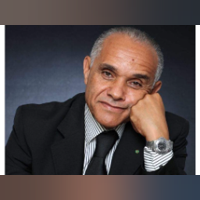
Aziz Daouda Aziz Daouda

Aziz Daouda

Directeur Technique et du Développement de la Confédération Africaine d'Athlétisme. Passionné du Maroc, passionné d'Afrique. Concerné par ce qui se passe, formulant mon point de vue quand j'en ai un. Humaniste, j'essaye de l'être, humain je veux l'être. Mon histoire est intimement liée à l'athlétisme marocain et mondial. J'ai eu le privilège de participer à la gloire de mon pays .


8100

33.0

Sports performance Vs Players market value 123

🌍⚽ Reflecting on my participation as a panelist at MedDays 2025, hosted by the Amadeus Institute I had the opportunity to speak on the theme: “Beyond the pitch: football as a vector of development,” analyzing the key drivers that are transforming Moroccan football into a continental model for Africa. 🇲🇦 1. A transformation driven by a royal vision since 2008 Morocco’s victory at the U20 World Cup is no coincidence. It is the direct result of a long-term strategy built around: - the vision of His Majesty King Mohammed VI - the launch of the Mohammed VI Football Academy - massive nationwide infrastructure plan - the Evosport Morocco model for professionalizing youth development - methodological continuity from U15 → U20 - and the decisive work of the Royal Moroccan Football Federation (FRMF) since the appointment of Fouzi Lekjaa. 🏆 2. Morocco U20 vs Argentina: a sporting… and economic victory 🇲🇦 Morocco U20 squad value: €11M 🇦🇷 Argentina U20 squad value: €62M ➡️ Despite a 6x difference in market value, Morocco dominated Argentina and won the World Cup. Yet: only 13% of our players exceed €1M in valuation. In the Botola, no player is valued above €1,000,000 while the average market value of players in Argentina’s domestic league is €2M (and €4M for Argentinians playing abroad). 👉 Our performances far exceed our market valuation. For those interested in going deeper, I am sharing below (in the link) a data-driven comparative analysis on U20 talent valuation. 📊 3. DATA: the next strategic frontier To close the valuation gap, Morocco must accelerate its data structuring efforts. In this context, innovative Moroccan solutions are emerging and leading the way, such as Reborn, developed by Youssef MAAROUFI and Fayçal Amine Louryagli, recently awarded in the NBA Africa Start-up Program—a strong signal that local innovation can reinforce our digital transformation. Special mention to Fayçal Bouchafra (Evosport Morocco) for his continued support. 💹 4. Agents & access to top leagues The world’s biggest clubs rely on a small and trusted circle of top-tier agents. Without direct access to these networks, sporting performance alone is not enough to trigger major transfers. 5) Key message delivered at MedDays: The U20 World Cup proves that Morocco is not underperforming—it is undervalued. The next battle is no longer sporting; it is economic. Producing champions is no longer enough: we must now convert performance into long-term market value for our clubs, our league, and the entire Moroccan football ecosystem.
linkedin.com/feed/update/urn:li:...

Kaftan Evening (Soirée Kaftan) 222

​In a Kaftan evening's glow, Colors compete in vibrant show, And tales of ancient times they sow. They blend within the multi-hue, Granting the festivity its view. The lovely ladies each embrace their dance, To music's rhythm that puts them in a trance. ​Each region of Morocco, for its kaftan, must innovate, The Sefrioui kaftan, adorned with cherries, is great. It pleases me and makes my head spin, The Queen of Cherries is full of grace, She is beautiful, she has class. The yellow Fassi kaftan is sublime, The pink Marrakchi kaftan is intimate. The green Oujdi kaftan is simply top-tier, The red Meknassi kaftan extremely pleases me here. The multicolored Berber kaftan leaves me dreaming and pale, The beige Soussi kaftan I adore and hail. The Sahraoui sky-blue kaftan seduces me as well, The Rifian royal blue kaftan charms like a spell. The red and green Casablanca kaftan is magical, The Rbati kaftan is fantastical. The white Tetouani kaftan is lordly and grand, The pistachio Tangerois kaftan brings emotion to the land. The Chefchaouni kaftan leaves me astounded and mute, The Moroccan kaftan is simply royal in its pursuit. The Safi sky-blue kaftan is very beautiful, From Tangier to Lagouira, It perpetuates since the dawn of time the style of a tailoring, a witness to a great culture's spring, Whose secret and honor only the Cherifian Kingdom keeps, To the great dismay of the envious and the thieves. ​Dr. Fouad Bouchareb All rights reserved December 11, 2025

Kaftan Evening (Soirée Kaftan) 245

​In a Kaftan evening's glow, Colors compete in vibrant show, And tales of ancient times they sow. They blend within the multi-hue, Granting the festivity its view. The lovely ladies each embrace their dance, To music's rhythm that puts them in a trance. ​Each region of Morocco, for its kaftan, must innovate, The Sefrioui kaftan, adorned with cherries, is great. It pleases me and makes my head spin, The Queen of Cherries is full of grace, She is beautiful, she has class. The yellow Fassi kaftan is sublime, The pink Marrakchi kaftan is intimate. The green Oujdi kaftan is simply top-tier, The red Meknassi kaftan extremely pleases me here. The multicolored Berber kaftan leaves me dreaming and pale, The beige Soussi kaftan I adore and hail. The Sahraoui sky-blue kaftan seduces me as well, The Rifian royal blue kaftan charms like a spell. The red and green Casablanca kaftan is magical, The Rbati kaftan is fantastical. The white Tetouani kaftan is lordly and grand, The pistachio Tangerois kaftan brings emotion to the land. The Chefchaouni kaftan leaves me astounded and mute, The Moroccan kaftan is simply royal in its pursuit. The Safi sky-blue kaftan is very beautiful, From Tangier to Lagouira, It perpetuates since the dawn of time the style of a tailoring, a witness to a great culture's spring, Whose secret and honor only the Cherifian Kingdom keeps, To the great dismay of the envious and the thieves. ​Dr. Fouad Bouchareb All rights reserved December 11, 2025

Kaftan Evening (Soirée Kaftan 245

) ​In a Kaftan evening's glow, Colors compete in vibrant show, And tales of ancient times they sow. They blend within the multi-hue, Granting the festivity its view. The lovely ladies each embrace their dance, To music's rhythm that puts them in a trance. ​Each region of Morocco, for its kaftan, must innovate, The Sefrioui kaftan, adorned with cherries, is great. It pleases me and makes my head spin, The Queen of Cherries is full of grace, She is beautiful, she has class. The yellow Fassi kaftan is sublime, The pink Marrakchi kaftan is intimate. The green Oujdi kaftan is simply top-tier, The red Meknassi kaftan extremely pleases me here. The multicolored Berber kaftan leaves me dreaming and pale, The beige Soussi kaftan I adore and hail. The Sahraoui sky-blue kaftan seduces me as well, The Rifian royal blue kaftan charms like a spell. The red and green Casablanca kaftan is magical, The Rbati kaftan is fantastical. The white Tetouani kaftan is lordly and grand, The pistachio Tangerois kaftan brings emotion to the land. The Chefchaouni kaftan leaves me astounded and mute, The Moroccan kaftan is simply royal in its pursuit. The Safi sky-blue kaftan is very beautiful, From Tangier to Lagouira, It perpetuates since the dawn of time the style of a tailoring, a witness to a great culture's spring, Whose secret and honor only the Cherifian Kingdom keeps, To the great dismay of the envious and the thieves. ​Dr. Fouad Bouchareb All rights reserved December 11, 2025

The 2025 Africa Cup of Nations (CAN) vs FIFA: Should Africa Always Settle for a Secondary Role? 841

Just days before the kickoff of la CAN 2025 au Maroc, a FIFA decision reignites an old debate: the real consideration given to African competitions within the global football structure. By reducing the mandatory release period for African players by European clubs to à cinq jours seulement, the world football governing body again seems to favor those same clubs… to the detriment of African national teams. This measure, seemingly technical at first glance, speaks volumes about the implicit hierarchy in world football and the true place FIFA continues to reserve for the African continent. How can a major competition like la CAN, a flagship event in African football, watched by hundreds of millions, and an important economic, social, and political driver in the region, be seriously prepared with only cinq jours de rassemblement? No team, anywhere in the world or on any continent, can build tactical cohesion, assimilate game plans, develop automatisms, or even physically recover in such a short time. It is therefore legitimate to ask: - Is this a rational measure? - Or a decision that trivializes la CAN, as if this competition deserves neither respect nor optimal conditions? - Or could it be structural discrimination against Africa? But the fundamental question remains the same. It is not new: is world football truly equal? The decision on player release is only the visible part of a larger system, where les compétitions et les équipes africaines are structurally disadvantaged. Take FIFA rankings as an example, which determine the pot placements for major competition draws. Points depend on the level of opponents faced. A team playing mainly in Africa will mechanically face lower-ranked teams, thus earning fewer points, even when winning. Conversely, a European team, with higher-ranked opponents, gains more points even with similar results. This system maintains a cercle fermé: the best ranked stay at the top, the lower ones remain stuck at the bottom. Where then is the promised meritocracy? The ranking openly dictates the World Cup path. The recent decision to guarantee that the quatre meilleures équipes mondiales do not meet before the 2026 World Cup semi-finals is a major turning point. This means the already biased ranking now plays a crucial role in the very structure of the competition. We have even seen the draw master, probably connected by earpiece to a decision-maker, place teams in groups without explaining why… This openly protects the giants and locks others into a calculated destiny. It is a logic of preserving the powerful, typical of a system where sport, apparently universal, bows to economic and media imperatives of major markets. This raises the question: is FIFA an institution funded… by those it marginalizes? A paradox emerges: - States, especially in developing countries, are the primary investors in football: infrastructure, academies, stadiums, subsidies, competitions. La CAN est une affaire de ces États. - National football, notably the World Cup between nations, is FIFA’s most lucrative product. - The emotion, history, and prestige of football largely come from the nations, not clubs. - Yet, it is les clubs européens, entités privées ou associations who seem to dictate the conditions. African federations, essential contributors of the global talent pool, players, skills, audiences, and emerging markets, find their room to maneuver much reduced. Is Africa highly valued as a supplier of talents, but not as a decision-making actor? This situation echoes a well-known pattern on the continent: Produce raw material, but let value-added happen elsewhere. In football as in the global economy, Africa trains, supplies, feeds, but often remains spectator when it comes to governance, revenues, interests, or influence. Instead of being seen as a strategic pillar of the global calendar, La CAN is treated as a logistical complication, even though a continental competition cannot progress if constantly relegated to second place. Football in certain regions only advances through regional and continental competitions. These form objectives for most teams and are sometimes the only visibility opportunity for some nations. Again, this raises the question: is world football truly democratized? FIFA presents itself as an inclusive house, guarantor of equity, solidarity, and development. In theory, yes. In practice, the scales tip heavily to one side. Recent decisions reveal an organization focused on protecting the immediate interests of football’s economic powers, mainly in Europe, to the detriment of sporting fairness. So, should we keep pretending? Should Africa be content to applaud, stay silent, and provide its players like a product in the global market? Isn’t the time ripe for une affirmation africaine? The 2025 CAN, organized in Morocco, with all the effort and resources invested, could become a turning point. Morocco’s dedication deserves respect. It demonstrates that the continent has the means, modern infrastructure, massive audiences, and world-class talent, but lacks recognition and du poids dans les décisions. It is time that FIFA treats African competitions with the respect they deserve. Not out of charity or rhetoric, but out of justice, coherence, and because world football cannot continue ignoring a continent that remains one of its main human and cultural engines. Africa is undoubtedly proud to be part of FIFA, but the strapontin no longer suits it. Africans themselves no longer tolerate the contempt.

Magickal Paths 900

In magick, “right-hand path” (RHP) and “left-hand path” (LHP) name two different orientations toward power and the sacred—not simple good/evil lanes. The RHP aims at theurgy: purifying the self, aligning with a transcendent order, and uniting with something higher—the Godhead, Nous, Holy Guardian Angel, True Will. Authority flows downward through lineage, consecration, and rule. You clean the vessel first—banishings, abstinences, prayer, graded initiations—then invoke to become more transparent to the divine. The ethic is about humility, service, and character. Power’s legitimate when it’s bound by vow and used to heal, protect, and teach. That’s one posture. The LHP, by contrast, aims at apotheosis—exalting and individuating the magician until the self becomes its own godform. Authority here flows outward, from the practitioner’s will, forged through ordeal, trance, pacts, and direct negotiation with spirits. Rather than shun taboo currents, the LHP learns to contain and integrate them—to harvest force from desire, fear, rage, or eros and bind it to a chosen aim. You don’t surrender ego so much as refine and weaponize it, ideally with awareness of cost. Ethics turn on accountability: you pay what you promise, own your collateral, and live with your bargains. Both paths draw from the same toolbox—banishing, centering, consecration, circles and triangles, timing, offerings, divination—but sequence and intent differ. An RHP working might banish, consecrate, invoke a solar intelligence, make a petition aligned with vow, and then give thanks and charity. An LHP one might cross a boundary—graveyard, crossroads—under wards, evoke a chthonic spirit, strike a contract with careful terms, and pay every offering to the letter. In the RHP, spirits stand as teachers in a hierarchy; in the LHP, they’re contractors in a negotiated economy. You can see echoes of this back in Tantra—dakṣiṇācāra (conventional) vs. vāmacāra (heterodox)—and in the Western split between theurgy and goetia. Rosicrucian and Golden Dawn rites leaned toward theosis; other traditions, from Crowley’s “True Will” to explicitly LHP currents, tilt toward sovereignty and self-deification. Modern magicians mix freely. A Thelemite might invoke the Holy Guardian Angel on Sunday, then perform an uncrossing at a graveyard Tuesday night. Chaos magicians switch hands almost by instinct, tailoring each operation to its need. Every approach has hazards. The RHP can fall into moralism, spiritual bypass, or dependence on external authority. The LHP can slide into narcissism, thrill-seeking, or treating everything—people included—as currency. That’s why mature practice always builds guardrails: divination before and after; clarity of aim; wards; records; fulfillment of obligations; aftercare for the psyche and for relationships touched by the work. A small litmus test helps: Does the working increase lucidity, steadiness, and the capacity to keep one’s word without needless harm? If not, change the method. It’s all experiment, after all. Choosing which hand to use isn’t about belonging to a tribe—it’s about the task. Healing old patterns, steadying life, and cultivating virtue thrive in RHP containers. Breaking paralysis, reclaiming agency, confronting shadow material, or working under pact lean LHP. Most of us end up ambidextrous anyway: vow on Sunday, crossroads on Tuesday, always with a ledger of costs—and enough honesty to pay when the bill comes due. Both paths can sanctify or corrupt. The art is knowing which hand opens which door—and closing it properly when you are done.

My five witnesses of love 901

Of this love that I have for you I have five witnesses: My frail body which has lost its plumpness! My hot tears despite your good care!! My hands that tremble when you are far away!!! My poor heart beating very hard in its little corner!!!! And the hope of meeting you, one day, a few minutes…. at least !!!!! ​Dr Fouad Bouchareb All rights are protected