Think Forward.

La politique marocaine en Afrique : une dynamique engagée et fédératrice... 1753

Le Maroc, sous le règne de Sa Majesté le Roi Mohammed VI, mène une politique africaine volontariste et inclusive, visant à renforcer ses liens économiques, politiques, sociaux et culturels avec le continent. Cette stratégie privilégie un bilatéralisme pragmatique, favorisant l’intégration économique africaine, la coopération sud-sud et des partenariats stratégiques. Des accords ont été signés avec plus de 40 pays africains. Le retour du Royaume à l’Union africaine en 2017 a quant à lui marqué un tournant majeur dans cette stratégie et devenu un véritable accélérateur. Le Maroc s’intéresse aussi à la Zone de libre-échange continentale africaine (ZLECAf) comme relais de croissance. Parmi les projets clés dans cette perspective, le gazoduc Nigeria-Maroc, long de 5 600 km. Il reliera l’Afrique de l’Ouest à celle du Nord, et transportera quelques 30 milliards de m³ de gaz naturel par an. Il améliorera l’accès à l’énergie pour pas moins de 400 millions de personnes dans 13 pays. Il s’inscrit dans la stratégie marocaine de transition énergétique. Estimé à plus de 25 milliards de dollars, ce projet apporte des retombées majeures pour la sécurité énergétique et le développement régional dans la complémentarité. Le Maroc s’engage aussi fortement dans l’éducation et la formation des compétences, offrant chaque année près de 15 000 bourses à des étudiants de 49 pays. Environ 20 000 étudiants africains sont accueillis annuellement, dans des domaines tels que ingénierie, médecine, finance ou sciences sociales, grâce à l’Agence Marocaine de Coopération Internationale (AMCI). Ce programme ambitieux se veut former une nouvelle génération de cadres et renforce les échanges scientifiques et culturels. L’économie marocaine est pour sa part bien implantée en Afrique avec plus de 1 000 entreprises actives dans les secteurs bancaire, immobilier, télécom, agriculture et infrastructures. Attijariwafa Bank et BMCE Bank of Africa ou encore le Groupe Banque Populaire, sont présents dans plus de 26 pays, générant des centaines de millions de dirhams en Afrique subsaharienne. Ces institutions, avec 45 filiales et 4 succursales, réalisent environ 23% de leur chiffre d’affaires sur le continent, facilitant le financement des projets et l’intégration financière régionale. Wafa Assurance et le groupe Saham renforcent également cette présence dans de nombreux pays. Le système de santé marocain, reconnu pour ses infrastructures modernes et son personnel compétent, attire chaque année des milliers d’Africains pour des soins divers, renforçant les liens humains. Le Maroc développe aussi des projets dans l’agriculture durable, les énergies renouvelables, la formation professionnelle et les infrastructures, soutenus par la Fondation Mohammed VI pour le Développement Durable. Plus de 60 % des IDE marocains sont dirigés vers l’Afrique. Les échanges commerciaux du Maroc avec l’Afrique restent encore modestes par rapport à ses échanges totaux : environ 7 à 8 % du commerce extérieur marocain. La marge de progression est très grande et prometteuse. Ces échanges ont fortement progressé. En 2023, le volume total des échanges commerciaux entre le Maroc et les pays africains s’est élevé à 52,7 milliards de dirhams. Cela représente une croissance de 45 % par rapport à 2013, où ce volume était de 36 milliards de dirhams avec une croissance annuelle moyenne d’environ 10%. Maroc Telecom, présent dans 10 pays, dessert environ 54 millions de clients et contribue à l’intégration numérique. Des groupes comme Ynna Holding, Alliances ou Addoha mènent des projets majeurs dans plusieurs pays, notamment la construction de logements et de centres hospitaliers. En agriculture, OCP Africa opère dans 18 pays, formant plus d’1,5 million d’agriculteurs et fournissant des engrais adaptés aux terres et types d'agricultures locales. Son programme Agribooster facilite l’accès aux intrants, financements et marchés, stimulant la productivité et la sécurité alimentaire. OCP investit aussi dans des unités de mélange et de stockage d’engrais dans plusieurs pays et collabore à des projets innovants avec USAID et la Banque mondiale, notamment dans la production d’ammoniac vert. SOMAGEC, acteur portuaire marocain majeur, réalise des projets en Guinée équatoriale, au Sénégal, en Mauritanie, au Bénin et à Djibouti, employant des milliers de personnes. Africa Motors, filiale d’Auto Hall, développe la production et la distribution automobile en partenariat avec Dongfeng pour plusieurs marchés africains. Le sport est également un levier de coopération: la Fédération Royale Marocaine de Football a signé plus de 43 partenariats avec des fédérations africaines. À travers ses entreprises et projets, le Maroc consolide son rôle clé dans le développement africain, fondé sur la solidarité, l’intégration économique et la prospérité partagée, suscitant jalousie et reconnaissance. La coopération marocaine en Afrique est un pilier stratégique fondé sur le partage d’expertise, le développement économique et le renforcement des liens culturels. Grâce à son positionnement géographique et historique, le Maroc joue un rôle majeur dans l’intégration régionale, en soutenant des projets d’infrastructures, de formation, et d’innovation. Cette coopération se caractérise par un engagement durable visant à promouvoir la paix, la sécurité et le développement durable sur le continent africain. Le désenclavement proposé pour les pays du Sahel, par le recours au futur port de Dakhla va sans doute aucun davantage accélérer l'intégration recherchée à l'avantage des centaines de millions de pays africains. L’idée de construire des ports comme celui de Dakhla s’appuie beaucoup sur la géographie stratégique du Maroc. C’est un atout qui saute aux yeux quand on regarde la carte. Le Maroc dispose d’un littoral de plus de 3 500 km, tourné à la fois vers l’Europe, l’Afrique de l’Ouest et l’Amérique. Dakhla, en particulier, se situe à mi-chemin entre l’Europe et l’Afrique subsaharienne, ce qui en fait un point d’escale maritime naturel. La côte atlantique marocaine se trouve sur la voie qui relie la Méditerranée (via Gibraltar) à l’Afrique de l’Ouest et à l’Amérique. Cela permet de capter une partie des flux logistiques mondiaux. Le Maroc est à moins de 15 km de l’Europe à Gibraltar et en même temps relié à l’Afrique de l’Ouest. Le port de Dakhla s’inscrit dans cette logique : servir de hub logistique et industriel entre les deux continents. La zone de Dakhla offre des conditions naturelles favorables: eaux profondes et faible houle permettant de construire un port capable d’accueillir de grands navires, ce qui est rare sur la côte ouest-africaine. Avec la Zone de libre-échange continentale africaine, un port comme Dakhla permettra donc au Maroc d’être une porte d’entrée des flux commerciaux vers l’Afrique de l’Ouest et au-delà vers le Mali, le Niger, le Sénégal, la Côte d’Ivoire et plus. Le Maroc a compris, les partenaires africains aussi. L'avenir sera radieux main dans la main.

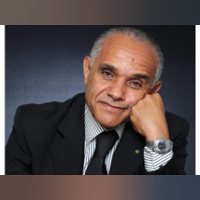
Aziz Daouda Aziz Daouda

Aziz Daouda

Directeur Technique et du Développement de la Confédération Africaine d'Athlétisme. Passionné du Maroc, passionné d'Afrique. Concerné par ce qui se passe, formulant mon point de vue quand j'en ai un. Humaniste, j'essaye de l'être, humain je veux l'être. Mon histoire est intimement liée à l'athlétisme marocain et mondial. J'ai eu le privilège de participer à la gloire de mon pays .


8100

33.0

Light Pollution and the End of the Construction of Imagination – Part 2 20

Well, as I said in the previous article, I grew up and became a scientist. Not an astronomer, but a biologist. A biologist passionate about the stars. And many may ask: why didn’t you study astronomy? There are three reasons for that. The first is that I love biology. The second is that I was never good at mathematics. And the third is that I discovered that astronomers nowadays barely look at the sky. Telescopes work automatically, providing data to be analyzed later. That romantic astronomy of the past no longer exists. It was almost poetic, because imagination was the fuel for those scientists. Therefore, in cases like mine, it is much better to remain an amateur. This reminds me of a curious anecdote in which the writer Isaac Asimov is said to have refused an invitation to visit a factory where robots performed tasks on assembly lines, because he did not want to compromise his imagination. Returning to my story, when I was 21 years old, my father surprised me by taking me to a well-known store and buying a telescope. It was a relatively simple instrument, with a 60 mm aperture, but it allowed me to see the surface of the Moon perfectly, as well as Jupiter’s four largest moons and even Saturn’s rings. I don’t even need to say how I felt, do I? I became a child again! And that telescope is still here with me today, 30 years later. But here comes the bad part, which gives these two articles their title… Light pollution has reached extremely high levels, to the point that in large cities, when you look at the sky, you see very few stars, only the brightest ones. City lights have erased the night sky. What child today will look up at the sky and be enchanted by all that immensity? Who will feel themselves on the shores of the cosmic ocean, as Carl Sagan said in the first episode of the classic series Cosmos? How will imagination be built? In the same way, the inspiration of many poets and artists will be compromised. A child today, upon hearing stories of a time when the sky was filled with shining stars, might think that either the batteries ran out and no one replaced them, or that the bulbs burned out and no one changed them. It is still a child using their imagination, but without having experienced one of the most beautiful spectacles of creation. That spectacle is still there, happening, and it will continue to happen for a very, very long time. Or rather, as long as time exists, it will continue, but with a curtain separating the stage from the audience. Today there are movements and campaigns aimed at solving this issue, but I believe it is a great challenge to overcome. Until then, one alternative is to leave large urban centers and seek regions far away, at least 50 km from these cities, where one can truly enjoy the magical view of a clear and genuinely dark sky. I always wish clear skies to everyone, and ad astra!

CAF Sanctions: Disciplinary Justice with Variable Geometry? 296

The decisions by the Confederation of African Football (CAF) Disciplinary Commission regarding the incidents that marred the CAN final between Senegal and Morocco are now known. They were awaited, scrutinized, sometimes feared. But beyond their mere announcement, it is their **coherence, proportionality, and equity** that raise questions today. At first glance, the CAF sought to strike hard, giving the impression of sanctioning both parties to preserve a posture of balance. The CAF simply forgot that at its core, the conflict was squarely between Senegal and the referee, not with the Moroccan team, and thus, in the end, pitted Senegal against this very same CAF, responsible for the organization and officiating. Senegal and Morocco have thus, according to the commission's logic, presided over by a Senegalese, let us recall, been sanctioned to varying degrees. Yet, a close reading of the facts, confronted with the very content of the decisions rendered, reveals an **asymmetry that is hard to justify** between the severity of the acts observed and the weight of the sanctions imposed. The ridiculous is not far off. The central problem, namely, the officiating, has simply been swept aside. The most troubling element undoubtedly lies in the **total absence of any reference to the referee** in the Commission's ruling. As if he had never existed. Yet, the images and testimonies align: in the final moments, the referee displayed **manifest irresponsibility**. How can one justify resuming play when the minimum safety conditions were clearly not met? The stadium had been invaded by official Senegalese supporters, equipment had been vandalized, and tensions were at a boiling point. In such circumstances, the rules are clear: absolute priority must be given to the safety of players, officials, and the public. By ignoring this dimension, the Disciplinary Commission misses an **essential link in the chain of responsibilities**. They are, however, clearly identified. This is not to fully exonerate the Moroccan side. Reprehensible behaviors existed, and some hot-headed reactions could have been avoided. But the nature and gravity of these acts remain **incommensurable** with those attributable to the Senegalese delegation and its immediate environment. The most striking example remains the sanction imposed on Achraf Hakimi. Reproaching him for attempting to remove a towel belonging to the Senegalese goalkeeper—an object that, incidentally, had no business on the pitch—smacks more of a **search for artificial balance** than rigorous application of disciplinary principles. Can one seriously equate this gesture with outbursts involving pitch invasions and infrastructure damage? This harms the image of world football, beyond just African football. The inclusion of such an amalgam in the dossier and the proportionality of the sanctions are manifestly debatable. It is precisely on the terrain of proportionality that the CAF's decision falters. The sanctions imposed on the Moroccan camp appear **relatively heavy** given the facts reproached to them, especially when compared to those concerning the Senegalese side, which was linked to structurally far graver incidents. This disproportion undermines the narrative of those in Senegal and elsewhere who decried Morocco's supposed "stranglehold" on CAF bodies. If such influence truly existed, how to explain that Morocco itself ends up heavily sanctioned? Where is this alleged institutional protection when the disciplinary decisions, on the contrary, seem applied with particular rigor against it? One can only regret the missed opportunity for the CAF to show a new face of power and justice. The CAF Disciplinary Commission squandered a precious chance: to **clarify responsibilities, reaffirm the central role of officiating, and lay credible foundations** for managing crises in African competitions. By opting for punitive symmetry rather than a fine analysis of the facts, it perpetuates unease, fuels suspicions, and leaves the game's actors—players, officials, and fans, in a gray zone where perceived injustice becomes more damaging than the sanction itself. African football deserves better than disciplinary justice with variable geometry. It deserves an authority capable of owning its choices, naming responsibilities where they truly lie, and protecting the essentials: the integrity of the game and the safety of those who bring it to life. Today, some chuckle under their breath for escaping truly proportional sanctions for their misdeeds; others are stunned; still others conclude the immaturity of this African body, like other continental instances. A pitiful image for a continent whose youth aspires to development and a bright future, with football and footballers as role models. Has African football missed the chance to set an example? Did the CAF issue the wrong communiqué or target the wrong match? In any case, there is one clear winner slipping under the radar: the party at the origin of it all. Like a fugitive, the commission released its statement at an impossible hour... Funny, no? One wonders whether to hold out hope and pursue the process further, or resign oneself to admitting there is no hope for a just and credible African football body.