Think Forward.

Congratulations Mr Donald Trump, 47th President of the United States of America 11366

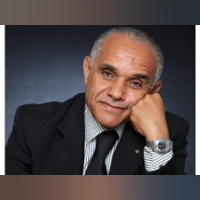
Trump is now the 47th President of the USA, after having been the 45th. It's a new and interesting development. During his first term, he broke with what the world had become accustomed to from the USA. He even went so far as to make contact with Kim Jong-Un, supreme leader of Pyongyang and of more than 26 million North Koreans. His relationship with Putin was marked by respect, and China was able to trade with him without ideological difficulties. His philosophy is basic: USA first. Anything that serves his country's interests is welcome. In his mind, there are no allies, only economic rivals, not even the Europeans. NATO is a heavy burden for him, and defending anyone is none of his business. He'll say to the Europeans, you want NATO to defend you, pay up. European leaders, intervening in scattered order, came begging for his blessing and protection, to no avail. All they got was disdain, if not humiliation. Merkel and Macron know all about it. World leaders, Europeans and others stayed up late on Tuesday, November 5, 2024, and watched helplessly as the USA's most atypical president was re-elected. The man who turned all North American electoral habits on their head. Many of them had a headache, a very bad one indeed. Most of them had secretly hoped for Kamala's election in the hope of a political and strategic continuum, that of the Democrats, embodied by Biden. They will be jostling to offer their congratulations: Congratulations Mr. President. Trump knocked out Kamala and his $2.8 billion campaign fund, while he, despite Elon Musk's boundless support, didn't raise more than $1.8 billion. Kamala's forced and cartoonish smile wasn't enough. Having never lost an election in her life, she didn't even have the courage to address her supporters on the election night. Kamala couldn't shake off Biden's tainted image. It has stuck to her. The economic success of his mandate wasn't enough; neither was the $1,000 billion invested in infrastructure. American housewives, young executives and blue-collar workers alike held him responsible for the decline in their purchasing power, and let Kamala know it at the ballot box. It's not totally untrue. The inflation that has raged around the world is largely due to the Russo-Ukrainian war, which the Biden administration has kept going with its generous arms and ammunition aid to the man who went straight from a TV series to a presidential mandate in a country that is, to say the least, bizarre since it broke away from the USSR. Wasn't there room for negotiation, particularly if we had revived the Minsk agreements, signed under the aegis of the Europeans, led by Germany and with the blessing of the Americans? That's all Putin wanted. The tensions stirred up with China also helped in this inflationary crisis that impacted the whole world, with catastrophic consequences for small economies and the 8 billion people on earth. Kamala paid for this, but also for the fact that her words were confusing and that, instead of presenting a plan for the future of Americans, she merely dug her own grave, getting bogged down in the rhetoric that Trump deftly lured her into. Her advisors and communicators failed to grasp the trick. On January 20, just after the pleasure of celebrating Christmas and New Year's Eve; victorious, Trump will deliver his sermon. Between now and then, he'll be fine-tuning his plans and putting together a team of loyal followers. He doesn't want to relive the first term and its defections from his team. And he'll be a strong 47th President of the USA, unopposed in the US Congress, his party having won a majority in both houses. The Supreme Court will also be his. He'll have the upper hand. There's more in the world than only Europe and China, or India and Russia, there's also Africa. In his previous term of office, he didn't even look at it. Biden, on the other hand, paid attention to what was happening on the black continent, and to the growing intrusion of Russia, India, Turkey and, above all, China. He saw this as a threat to American interests and began to act to counter it. He accused his rivals of exploiting African resources without fair compensation. He called for greater justice in a partnership that respected the dignity of Africans. Biden will even organize a U.S.-Africa summit and shake hands with African leaders as no U.S. president before him has done. Not even Kenya's Obama. Joe made Kenya a strategic partner and received the Kenyan president on a state visit, a privilege no African leader had enjoyed for over forty years. He spoke of integrating Africa into the global market, facilitating the mobilization of capital to finance major projects. 55 billion will be mobilized for this purpose. Among other projects, the Lobito Corridor railroad line will be financed, integrating Angola with its Benguela line and linking it with Zambia and the DRC. Africans and Europeans alike have legitimate questions about the place Donald Trump will reserve for them in his foreign policy, especially his economic policy. Many were undoubtedly hoping to take advantage of Kamala's skin color and her origins... But that's not knowing the mentality of Americans of all origins. The ones who should be worried are the Palestinians. Trump is all about Israel. After all, he's the president who moved the US embassy from Tel Aviv to Jerusalem. No president before him had the courage to do so. Netanyahu must have followed the American elections closely and slept very well that night. Despite his unconditional support, Trump will seek to restore peace in the Middle East. Does he seek to impose a lasting solution: probably. He would like history to remember that. But at what cost to the Palestinians? The consequences of October 7 are likely to harm them in more ways than one. In Trump's mind, they'll make up for it. In any case, the day after the election, the price of oil fell drastically and the dollar recovered. For Moroccans, Trump is adored. This is the American president who solemnly recognized the legitimacy of the Cherifian Kingdom's sovereignty over its southern provinces, and who will no doubt speed things up even further. As for our friend Zelenski, there's a good chance that the play will be over for him this time.
Aziz Daouda Aziz Daouda

Aziz Daouda

Directeur Technique et du Développement de la Confédération Africaine d'Athlétisme. Passionné du Maroc, passionné d'Afrique. Concerné par ce qui se passe, formulant mon point de vue quand j'en ai un. Humaniste, j'essaye de l'être, humain je veux l'être. Mon histoire est intimement liée à l'athlétisme marocain et mondial. J'ai eu le privilège de participer à la gloire de mon pays .


9600

33.0

Éliphas Lévi 153

Éliphas Lévi (1810–1875), whose real name was Alphonse Louis Constant, was a French occult philosopher, writer, and former Catholic seminarian who played a major role in the revival of Western esoteric traditions during the nineteenth century. He was born in Paris, France, in 1810 and grew up in a modest family. As a young man, he entered a Catholic seminary with the intention of becoming a priest. However, he eventually left the religious path after becoming involved in political and social movements of the time. During the early part of his life, Lévi was interested in social reform and political ideas, and he even spent time in prison because of his writings. Over time, his interests shifted toward philosophy, mysticism, and the study of ancient traditions. He became fascinated with subjects such as Kabbalah, alchemy, ceremonial magic, astrology, and Hermetic philosophy, and he began studying how these traditions related to religion and human spirituality. Lévi believed that magic was not superstition, but rather a hidden science that explained the relationship between the spiritual and physical worlds. He argued that ancient traditions preserved symbolic knowledge about the structure of the universe and human consciousness. According to Lévi, symbols, rituals, and sacred texts were ways of expressing deeper truths about nature. His most famous work is Dogme et Rituel de la Haute Magie (1854–1856), or Dogma and Ritual of High Magic. In this book, he explained his theories about magic, symbolism, and the spiritual forces that connect all things. The book became very influential among later occultists and helped shape modern ceremonial magic. Lévi is also famous for creating the well-known image of Baphomet, a symbolic figure with a goat’s head, wings, and both male and female characteristics. Contrary to popular belief, Lévi did not present Baphomet as a devil. Instead, he described it as a symbol of balance and unity, representing the harmony between opposites such as light and darkness, spirit and matter, and male and female energies. Another important idea promoted by Lévi was the connection between the Tarot and the Kabbalah. He suggested that the Tarot cards contained hidden spiritual knowledge and that the 22 Major Arcana corresponded to the 22 letters of the Hebrew alphabet. Although historians debate the accuracy of this idea, it became extremely influential and later shaped the teachings of groups like the Hermetic Order of the Golden Dawn. Throughout his life, Lévi wrote several books on magic and philosophy, including The History of Magic (1860) and The Key of the Mysteries (1861). His writings combined religion, symbolism, philosophy, and mysticism, making him one of the most important figures in the development of modern occultism. Today, Éliphas Lévi is remembered as a key thinker who helped transform magic from something associated with superstition into a philosophical and symbolic system. His ideas influenced many later occult traditions, writers, and magical orders, and his work continues to be studied by people interested in esotericism, mysticism, and Western magical traditions.

Doping: Move Beyond Fiction, Confront the Public Health Issue... 196

It’s tempting to dismiss the recent doping cases in Moroccan football with a wave of the hand, reducing them to individual errors, mishaps, or even injustices. It’s tempting, but dangerous. What’s at stake today goes far beyond a few disciplinary sanctions. Doping, in its contemporary form, is no longer just cheating: it’s a brutal revealer of a deeper dysfunction—an out-of-control sports and health ecosystem, sustained by a comfortable illusion: “football isn’t affected.” For a long time, football has sheltered itself behind a convenient fiction: that of a sport relatively spared from doping, an illusion maintained on a global scale despite well-documented precedents. In Morocco, this fiction persists: every case is treated as an anomaly, never as a signal. That said, what has recently come to light does concern football, but it’s far from the only sport affected. The rise of the Moroccan Anti-Doping Agency (AMAD) and the significant increase in controls have changed the game: what we’re seeing today isn’t necessarily more doping, but more truth. And that truth is unsettling. The narrative of “accidental doping” is increasingly holding up poorly against the facts. The dominant discourse is well-rehearsed: athletes are victims of involuntary doping, from contaminated supplements, poorly prescribed medications, and good-faith errors. This discourse isn’t entirely false. It’s simply incomplete. Because behind “involuntary doping” lies a more troubling reality: a widespread normalization of substance ingestion, in a culture where presumed immediate performance gains take precedence over knowledge, caution, and medical oversight. Yet it’s nearly impossible to prove that ingesting this or that substance enhances sports performance. What is certain and proven, however, are the inevitable health consequences. Anti-doping law is implacable: the athlete is responsible for everything they consume, whether they intended to cheat or not. This principle of strict liability isn’t an injustice, it’s a safeguard. But athletes must first be given the real means to understand what they’re ingesting. Clearly, that’s not the case for a large portion of them today. For elite athletes, controls are there to deter and sanction when necessary. The problem becomes even graver for young people—and not-so-young—who train for themselves, outside the most visible circuits. That’s where supplements represent a new gray area and the heart of the issue, widely underestimated. Supplements have become the gateway to a diffuse, invisible, insidious form of doping. Uncertified products, uncontrolled imports, aggressive marketing: everything conspires to maintain an illusion of safety, while these products are a sanitary blind spot. Their massive consumption among young people is rarely medically supervised. It relies on informal recommendations, locker-room advice, impromptu sellers, and sometimes even social media “influencers.” You can even find them in some souks and dairies. The result is unequivocal: careers shattered over a few grams of unidentified powder, but above all, and most alarmingly, weakened bodies, hormonal disorders, metabolic imbalances appearing earlier and earlier. Doping is no longer just a sports fraud; it’s becoming a full-fledged public health issue. The silence and sometimes passive complicity of clubs and gyms is another blind spot in the system. It takes courage to ask the uncomfortable question: where are the clubs in all this? Few gyms are truly spared. Some don’t hesitate to sell, without the slightest scruple, products whose true composition and potential effects on users’ bodies are known only to their suppliers. And how do you respond to a young person who challenges you: “You tell us these products aren’t good, but the coach says we have to take them”? In many cases, medical oversight is insufficient, if not nonexistent. Young people evolve in an environment where physical appearance is glorified, but scientific and medical culture remains marginal. This void is filled by improvisation and worse, a form of collective abdication of responsibility. When the scandal breaks, the athlete faces the sanction alone. The club vanishes from the story. Yet the law clearly defines the various levels of responsibility: products don’t fall from the sky. This asymmetry is no longer sustainable. Responsibility can no longer be considered solely individual. Doping in Moroccan football, ever since two high-level players have been implicated, can no longer be analyzed solely through the lens of personal fault. It’s the product of an insufficiently regulated supplements market, a lack of structured medical oversight, increasingly early performance pressure, and a sports culture that values results over understanding, in denial of an existing law. In response, the AMAD, based on strict rules, has been tasked with implementing the national anti-doping policy, and it does so brilliantly. For it, mechanically applying rules without fine-tuned adaptation to local realities and without massive education isn’t enough. Sanctioning without educating treats symptoms while ignoring the disease. What needs to change now is no longer marginal correction: the system must be rethought. Concretely: - Mandate medical oversight in all clubs. - Create a national list of certified, controlled, and traceable supplements. - Systematically train young athletes and their coaches on substance risks. - Hold clubs and staff legally accountable, so they can no longer hide behind ignorance or good faith. And above all: drop the general hypocrisy and face reality. Morocco isn’t an isolated case. It’s simply at a turning point. What’s at play today is the shift from marginal doping to a systemic form, not organized, but diffuse, cultural, almost unconscious. Refusing to see it is accepting that a generation of young people will pay the price for this blindness. Doping isn’t just a matter of cheating. It’s a public health issue, and now, a matter of collective responsibility.

GITEX Africa in Marrakech: Showcase of Ambition or Revealer of Contradictions? 197

In Marrakech, GITEX Africa is closing its doors amid a now-familiar buzz: thousands of exhibitors, tens of thousands of visitors, international delegations, and African startups seeking visibility. Morocco is thus displaying a clear ambition: to become a continental tech hub, or even a Euro-African platform for innovation. But behind this seductive showcase, one question arises acutely: is the country truly giving itself all the means to match its ambitions, however legitimate they may be? Morocco certainly starts with undeniable advantages. Its political stability, modern infrastructure, strategic geographic positioning, investments in telecoms and renewable energies, and the undoubtedly competitive level of its youth and universities make it a serious candidate to host Africa's digital economy. Institutions like UM6P or Technopark Maroc are contributing to the emergence of a dynamic entrepreneurial ecosystem. The talent is there. The will, surely. The ideas, too. And yet. Innovation cannot be decreed; it must be unleashed. The economy of artificial intelligence and startups rests on a fundamental principle: speed. Speed of execution, decision-making, and transactions. Yet in Morocco, this speed is often slowed, hampered. The heart of the problem lies in the paradox of wanting to build a modern digital economy while maintaining administrative logics inherited from a control economy, or one from another era. Initiative and innovation require freedom. Freedom to invest, transfer, trade, test, and often fail. The more constraints there are, the more innovation contracts. Thus, the foreign exchange lock is a structural handicap. The role of the Office des Changes is central in this equation. Designed to protect macroeconomic balances, its regulatory framework now appears out of sync with the demands of the digital age. A Moroccan entrepreneur wanting to pay for a cloud service abroad, raise international funds, sell a SaaS solution overseas, or simply test a global business model often faces delays, caps, or procedures incompatible with modern market realities. Meanwhile, their counterpart in France, London, the "Silicon Valley" of Europe, or today in Germany, Sweden, and the Netherlands, major players supported by strong innovation dynamics and investments in AI and SaaS, can move and close deals much faster. Here, the new economy has found the most fertile ground. Where a startup must act in milliseconds, here it sometimes waits days, even weeks. In a world of instant competition, this lag is fatal. Let’s stay on our continent and ask why other African countries are advancing faster? It’s a disturbing question, but one worth asking without complex: why do countries, sometimes less endowed with infrastructure, attract tech and AI giants more? Ecosystems like those in Lagos, Accra, Nairobi, Mauritius, or Kigali have grasped one essential thing: in the digital economy, regulation must support, not hinder. Rwanda bets on an agile, pro-business administration. Kenya benefits from a liberated and innovative fintech ecosystem. Nigeria, despite its challenges, offers market depth and operational flexibility that seduce investors. Meanwhile, major tech players hesitate to establish a lasting presence in Morocco, despite its structural assets. The risk is becoming a showcase without substance. The danger is clear: events like GITEX Africa could become shiny vitrines disconnected from on-the-ground realities, where others come to do business and leave. A digital economy is not built through international trade shows, but through deep structural reforms. Without that, Morocco risks remaining a stopover rather than an anchor for innovation. To turn ambition into reality, several levers must be activated without delay: - Gradually liberalize the exchange regime. - Enable startups to freely open foreign currency accounts, transfer funds without administrative burdens, and operate internationally in real time. - Establish a true specific framework for tech exporting companies. - Create a “regulatory sandbox” for AI and fintech. Inspired by international models, this setup would allow startups to test innovations in a relaxed framework, under supervision, without immediately facing all regulatory constraints. A "regulatory sandbox" is a controlled testing space for technological innovations. It enables AI and fintech startups to test products in a lightened regulatory environment, supervised by authorities. This is a key concept. Drawing from models like the UK’s FCA or the EU’s AI Act, it creates a secure space where companies experiment without full authorizations and compliance upfront. Regulators oversee to assess risks, limit consumer impact, and adapt future laws. - Accelerate administrative digitalization. Drastically reduce processing times, automate authorizations, and introduce “silence means approval” logic in some cases. - Encourage international venture capital. Facilitate entry and exit for foreign investors, simplify fundraising mechanisms, and secure cross-border operations legally. - Bet on freedom as a strategic driver. This may be the most decisive point. Innovation does not thrive in a climate of suspicion or excessive control. It needs trust. Morocco stands at a crossroads. It can either continue prioritizing control, at the risk of braking its own momentum, or make a bold turn toward greater economic freedom. GITEX Africa is a tremendous opportunity. But it will be an empty symbol if not accompanied by a profound paradigm shift. In the artificial intelligence economy, presence is not enough. Competitiveness is key. The watchword: the modern economy flourishes in milliseconds, needs freedom, and does not tolerate endless administrative delays and controls. If history shows how we missed the industrial revolution, let’s not miss the digital one, as it could weigh on generations to come and thus on the country’s future.

Glitches: The Past and The Future have no existence besides being embedded in the Present 479

Creation is finished. God created the universe and everything in it, every possible action, every possible event, every possible chain of events. He then gave it to Adam to live in it, to give it life. The role of of Man is therefore not to create, but to navigate creation, and through that navigation arises the feeling of Time. The universe itself is timeless, it is achronic, the concept of time does even apply to it, aside from the broader metaphorical sense: *:== It all happened at the "same time", and therefore there is no time. ==:* There is not even a multi-verse, instead there is a unique universe that is a plural universe. A universe of many possibility: *In my father's house, there a mare many mansions*. Man, Adam, consciousness, in that sense is also not subject to time either, he experiences time through his role as the steward of creation: the meaning giver, the measure and measurer of all things. He is as timeless as the universe, but his consciousness navigates states, and a state is a whole that contains: past, present and future. Take a book, open it at a random a page. The characters are there, and they have a past in previous pages and a future in the next pages, add all pages exist at the same time. Moving to a different state is like opening another book at a different page, a book with similar characters but a different story. A book where different things happened in the past, and different things will happen in the future and this is how you get "Glitches". When you hold a book, you see that the full story is there in your hands, laying in the eternal now, your present.The same is true for states, Future and Past have no reality besides being embedded in the eternal present of a state. Just like with a book you can hold it in your hands, examine it, open it at a random page and decide if you like it. If you don't you can put it back and take up another one that you like better, at a different page.

Motsepe, Tightrope Walker of African Football: Between Senegal and Morocco, Who is the True Winner of the 2025 AFCON? 630

Patrice Motsepe's recent visit to Senegal and then Morocco was anything but casual or celebratory. Officially, it was a courtesy tour and follow-up on African football dossiers. Unofficially, it came amid simmering tensions over an explosive question: Who is the true winner of the 2025 AFCON? This edition left deep scars, with palpable disappointment already evident during the medal and trophy ceremony. Behind the forced smiles, a clear malaise: the title had been wrested by force. Recall: Morocco hosted an exemplary AFCON, filling CAF's coffers like never before, with sponsors galore, record attendance, unprecedented TV coverage, and elevated play thanks to unmatched infrastructure. But that ruffles feathers. Bitter jealousies and warning signs peaked in the final. Accustomed to the neighbor to the east's pathological provocations, Moroccans were stunned: the main saboteurs were their closest brothers, those they had welcomed most warmly, the Senegalese and Egyptians. In the final, spurred by an excitable coach, Senegal left the pitch over an unfounded refereeing controversy. Faced with certain facts, the act seems premeditated. Overheated Senegalese fans worsened the scene. What followed was a chaotic procedure. First, a disciplinary committee chaired by a Senegalese rejected Morocco's appeal, which challenged the result for non-compliance with regulations. It sanctioned minor on-field incidents while ignoring the blatant violation. Morocco overturned this verdict before the appeals jury, which restored the truth by applying CAF rules. Senegal, which had once benefited from a similar decision to qualify for the 2022 World Cup, only accepts refereeing that favors it. It rejected the ruling, issuing a state, not federal, statement accusing CAF of corruption. Implication: CAF corrupted, Morocco the corrupter. During his visits, then, Motsepe faced the inevitable: "Who is the 2025 AFCON winner?" In Senegal, his goal was clear: preserve ties with a continental football powerhouse. Facing President Bassirou Diomaye Faye, he reaffirmed CAF's respect for Senegalese institutions and their role in promoting African football, without mentioning corruption accusations, at least publicly. But the implicit message clearly aimed to curb Senegal's excessive defiant drift: heavy sanctions could follow otherwise. In Morocco, the tone shifted. True to form, Motsepe praised the Kingdom's structuring power. Facing the Royal Moroccan Football Federation and its president Fouzi Lekjaa, a CAF pillar and FIFA vice-president, he struck a laudatory note. Questioned on the sensitive issue, he found himself cornered: ruling would rekindle fractures. As CAF president, his role is to prevent a sports controversy from escalating into an institutional crisis. His hesitation reveals the complexity of a system where politics, symbolism, and sport intertwine. The AFCON is more than a competition: it's a lever for prestige and diplomacy, a field of regional rivalries. Morocco asserts itself as a football powerhouse through its performances, massive infrastructure investments generously shared with CAF and many African countries, academies like Mohammed VI's in Salé that export talent, and successful hosting of numerous men's and women's AFCONs. It is an indispensable CAF pillar. Motsepe's visit there felt like recognition, underscoring CAF's dependence on Morocco to advance African football. A constrained diplomacy is taking shape. These two stops expose, in practice, the limits of current African football governance: navigating political balances, economic stakes, and national ambitions on sight. Motsepe, a South African businessman turned sports executive, is no political finesse expert. His silence on the "true winner" reflects a reality: sporting truth often yields to diplomatic necessities. African football depends on states and their funding; alienating a country is suicidal. These two trips raise a crucial question: Does CAF remain a neutral body, or does it bow to its power centers? Senegal embodies sporting and historical legitimacy; Morocco adds investment and strategic vision. Motsepe implicitly maintains a fragile balance at the cost of silence and ambiguity. The crisis thus reveals the body's fragility. The tour won't settle the 2025 AFCON winner, that wasn't the goal, but it laid bare the strengths and especially the weaknesses of African football. A football that transcends the pitch. In this game, Motsepe is neither juggler nor dribbler: he is a tightrope walker. Yet he knows. He knows full well who will get the Cup and the $10 million that comes with it. He'll just avoid revealing it and getting booed. Thus, he'll remain welcome in both Senegal and Morocco. It's the CAS that will decide, not him... Coincidentally, FIFA has excluded Ndala, the "cursed" referee of the final who bore all the incompetence and excesses. A precursor sign before the Court of Arbitration for Sport's verdict?

Morocco-Egypt: Strategic Reunion or Fleeting Truce Beneath the Sands of Pragmatism? 1127

Could anyone have imagined this scene in Cairo and Rabat just a short time ago? Yet, just a few days ago, Prime Ministers Aziz Akhannouch, flanked by seven of his ministers, and Mostafa Madbouly, no less well-equipped, signed and oversaw twenty-two agreements, some more significant than others, under the flash of cameras. Official speeches celebrated a "relationship at an unprecedented level." Broad smiles fueled hopes for the long-desired rapprochement between two economic powerhouses in the MENA zone. At first glance, it looks like a grand reunion. But behind this staging, doubtless sincere, a question lingers. Is this a historic turning point or merely an opportunistic convergence driven by recent geopolitical developments? To see clearly, let's dive back into a history heavy with mistrust. As early as 1963, the Sand War saw Gamal Abdel Nasser's Egypt align with Algeria, even pushing it against Morocco, in the name of a Third World pan-Arabism that stigmatized Rabat as a "Western pawn," they chorused. They thought they were on the right side, that of the "Bolshevik revolutionaries"... The goal was obviously to destabilize the monarchy and, why not, bring it down. The debacle was unequivocal. Egypt lost feathers there... and a high-profile prisoner: Hosni Mubarak, who would later become president. Hassan II, in lordly fashion, returned him to Egypt as a magnanimous gift. Later, on the Moroccan Sahara issue, Cairo adopted a cautious but oh-so-vague ambiguity: neither support for the Polisario nor frank backing for Morocco; a tightrope walk that, in Morocco, passed for latent perfidy, especially amid triumphant embraces between Egyptians and Algerians. It was Hosni Mubarak who came begging Hassan II to release the prisoners of war that Boumédiène had lost on the ground at Amgala, with the illustrious Chengriha on the list... Egypt thus seemed to blow hot and cold on the matter. The recent summit undoubtedly marks a pivot. Twenty-two agreements signed to accelerate exchanges and elevate them to levels deemed impossible just days earlier. But the highlight of the meeting is Egypt's alignment with UN Resolution 2797, validating the Kingdom's proposed autonomy as the only viable framework. Rabat, in discreet diplomatic fashion, downplays this support as if it were a given. It's not gratis: it reflects an Arab realignment, possibly ending the ideological divides of the 1960s and prioritizing pragmatism. Iranian threats, and perhaps even Turkish ones, may well play a role. Sisi's Egypt, through this rapprochement, gains a stable ally: the Sharifian Kingdom, a truly diversified and coherent Arab counterweight in all its endeavors. Economically, however, the picture is mixed. The 2006 Agadir Agreements, already linking Morocco, Egypt, and Jordan in a free-trade zone, failed to deliver on all promises. Exchanges have grown, but remain timid due to persistent bureaucracy. Worse, a crisis erupted over cars produced in Morocco, blocked by protectionist taxes. Egypt deemed them insufficiently Moroccan, reigniting the Kingdom's frustrations. These twenty-two new commitments thus aim to rev up the engine, with cross-investments to anchor Morocco in East Africa and open doors for Egypt to the West. The key argument is clear: numbers trump grudges. That said, recent crises—not so distant—prove the situation's fragility, until proven otherwise. We must remain confident in a lasting reconciliation, even if recent popular imaginaries hold it back. Egyptian sports media, in particular, remains broadly virulent against Morocco, betraying a tenacious rivalry. Geopolitically, Algiers will react sharply, forcing Cairo into its usual ambiguity. Will Egypt bow to an Algerian diktat in the name of shared history? It's not out of the question to see Egypt dispatch an envoy to tell the Algerians what they want to hear, softening the disappointment. There are also Egypt's internal vagaries and frequent reshuffles, creating instabilities that threaten the whole. Arab history teaches that alliances are extremely volatile. Yes, a pragmatic era has indeed begun, conditioned by economic convergence beyond the Agadir Agreements. It drives regional stability and the triumph of calculation over ideology. Let's dare hope it's not an emotional reconciliation, but a certain strategic normalization, placing the past in parentheses for the service of the present and at least 150 million people. The agreements must also weather the storms of the Middle East and North Africa, forming a foundation that could seduce the rest of the region's countries toward a true economic continuum respecting the geographic and demographic one. So, Moroccans and Egyptians, appeased and confident, will listen together to Oum Kaltoum sing *Aghadan alqak*... and savor a good tea in the shade of a pyramid or the Hassan Tower...