Think Forward.

Guterres snobe Attaf à Luanda : l’ONU rompt avec l’impolitesse algérienne sur le Sahara 1522

Lors du sommet Afrique-Europe tenu à Luanda, un incident filmé et diffusé, avec en scène, António Guterres, Secrétaire Général de l’ONU, et Ahmed Attaf, ministre algérien des Affaires étrangères, a mis en lumière de manière spectaculaire une tension diplomatique profonde. Une vidéo montrant ce moment est rapidement devenue virale sur les réseaux sociaux, suscitant un vif débat et plein de moqueries. Le geste brusque de Guterres, qui a adressé un salut formel et froid avant de tourner précipitamment le dos à Attaf, alors que ce dernier tentait désespérément d’échanger avec lui, dépasse la simple maladresse protocolaire. Le geste est parfaitement volontaire. Il symbolise de façon frappante une relation conflictuelle, chargée d'agacement entre l’ONU et l’Algérie, le Secrétaire Général affichant ainsi une posture claire de l’institution; on ne peut plus officielle. À un niveau diplomatique aussi élevé, les gestes ne sont jamais anodins ni improvisés. Guterres, en fin de mandat, n’a plus de temps ni de patience pour tolérer certains comportements, y compris ceux d’un ministre des Affaires étrangères d'un pays à l'insistance harcelante, éreintante, assommante. Politiquement, ce refus de l’échange public ne peut s’interpréter comme un simple accident ou hasard. Il s’agit d’une manifestation explicite d’exaspération face à la posture adoptée par l’Algérie. Il montre aussi que le Ministre n'a sans doute pas réussi à avoir une entrevue avec le Secrétaire Général. Le contexte est lourd : la question du Sahara marocain anime une dynamique tendue par une Algérie poursuivant une stratégie offensive et systématique de contestation des rapports et résolutions onusiens, accusant l’ONU de partialité. Alger adopte un discours de soi-disant neutralité, qui masque maladroitement la réalité. C'est elle qui entretient le conflit et l'alimente depuis qu'elle l'a engendré avec la Libye de Kadhafi voilà un demi-siècle déjà. Et ça tout le monde le sait... Le pouvoir algérien ne cesse de critiquer l’ONU dans ses médias officiels, usant fréquemment d’invectives parfois surprenantes en diplomatie. Aucun des pays, ayant reconnu la marocanité du Sahara ex espagnol, ni leurs dirigeants, de Donald Trump à Pedro Sánchez, en passant par Emmanuel Macron jusqu’au Cheikh Mohammed ben Zayed, n’a échappé à ces attaques acerbes et aux insultes des médias officiels et acolytes d'Alger. Israël et le sionisme aussi y sont mêlés, comme par magie. Tout est bon pour faire bomber le torse au vaillant peuple algérien, auquel on fait croire à son rôle de gardien du temple de la liberté et de la démocratie, en attendant qu'arrivent sur les étals: huile, semoule, lentilles et haricots. Une telle débauche d’impolitesse politique est inédite au niveau international. Le discours de Amar Bendjama, représentant de l'Algérie, après le vote de la résolution 2797 était dans ce texte, particulièrement révélateur, mêlant mimique dédaigneuse et propos irrespectueux envers le Conseil de Sécurité de l’ONU. Ce climat de tensions répétitives a engendré un véritable blocage diplomatique pour Alger, cherchant désespérément à influencer les mécanismes des Nations Unies par des pressions publiques répétées, en rupture avec les usages traditionnels de la diplomatie. Alger s'est faite avoir à son propre jeu. Le geste de Guterres peut être lu comme un signal politique fort, un rejet tacite d’une posture jugée déstabilisante et contre-productive, d'Alger. Par ce geste, le Secrétaire Général envoie un message clair au ministre algérien : « ça suffit ». Gageons qu'il n'en tiendra pas compte. L'entêtement est génétique en Algérie. Mais jusqu'à quand peut on se questionner. Cet épisode s’inscrit dans un contexte géopolitique plus large, où les divisions autour de questions clés affaiblissent la capacité de l’ONU à jouer son rôle d’arbitre crédible. Pour une fois que le Conseil de Sécurité arrive à voter à la quasi unanimité un texte sur un conflit qui n'a que trop durer, il est difficile d'accepter encore les tribulations d'un pays dont les agissements coutent cher à toute une région depuis trop longtemps. L’Algérie, quasi-exclusive défenseure internationale de ce qu’elle appelle « le peuple sahraoui », entité contestée hors de son propre lexique, se retrouve de plus en plus isolée sur la scène mondiale. L’image d’un ministre algérien ignoré dans un sommet d’une telle envergure illustre bien l’affaiblissement du poids politique d’Alger dans ces enceintes multilatérales. Pendant ce temps, le Maroc renforce son influence diplomatique à la fois régionale et globale. Enfin, ce geste dépasse la seule dimension individuelle : il traduit une rupture symbolique dans les relations entre Alger et l’ONU, exacerbée par la récente résolution onusienne mentionnant clairement les quatre parties au différend du Sahara marocain. Après un effort d’Alger pour minimiser et déformer cette résolution, sa réaction souvent véhémente ainsi que ses critiques publiques ont fini par irriter certains hauts responsables onusiens, ce qui explique en partie la brusquerie de Guterres. Alger n'a plus aucun choix sinon que celui de s'assoir à la table des négociations. Son nom est explicitement cité aux cotés de son rejeton le polisario, de la Mauritanie et du Maroc. A l'ordre du jour une seule solution, celle de l'autonomie sous souveraineté marocaine. Difficile à digérer pour Alger qui même à l'occasion du sommet du G20, n'est point arrivé à piper mot sur le Sahara Marocain. Pourtant le sommet se tenait en Afrique du Sud, véritable soutien d'Alger pour encore quelques temps. Au-delà de ce seul incident, cet épisode rappelle les limites de la diplomatie informelle dans les grands forums internationaux, où l’insistance hors protocole d’un acteur jugé agressif se heurte à la nécessité d’équilibre et de rigueur des interactions. Par ce geste, Guterres lance non seulement un avertissement diplomatique, mais également un rejet politique clair, témoignant de l’irritation croissante autour du dossier du Sahara Marocain, d’autant plus que les grandes puissances ont décidé publiquement de mettre fin à ce qu’elles considèrent comme un caprice algérien. Pendant longtemps elles ont tolérés les agissements hors sol des gouvernants algériens sans doute dans l'attente d'une prise de conscience de ces derniers, de leur bêtise. Ils se sont montrés incapables de raison malgré les appels répétés à la réconciliation du Souverain Marocain. Les enjeux géopolitiques en Méditerranée et en Afrique sont trop importants pour que la communauté internationale continue à tolérer les agissements d’un pays qui a fait de la déstabilisation régionale sa doctrine. L'Algérie n’aura réussi, au final, qu’une terminologie nouvelle: celle de «Sahara occidental». C’est justement, aujourd'hui, ce qui a ravivé la question du «Sahara oriental». De plus en plus, les jeunes puisent dans l’histoire et publient les preuves de la marocanité de ces territoires rattachés par la France à sa colonie d’alors...
Aziz Daouda Aziz Daouda

Aziz Daouda

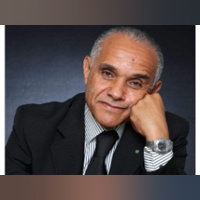
Directeur Technique et du Développement de la Confédération Africaine d'Athlétisme. Passionné du Maroc, passionné d'Afrique. Concerné par ce qui se passe, formulant mon point de vue quand j'en ai un. Humaniste, j'essaye de l'être, humain je veux l'être. Mon histoire est intimement liée à l'athlétisme marocain et mondial. J'ai eu le privilège de participer à la gloire de mon pays .


8100

33.0

CAF Sanctions: Disciplinary Justice with Variable Geometry? 259

The decisions by the Confederation of African Football (CAF) Disciplinary Commission regarding the incidents that marred the CAN final between Senegal and Morocco are now known. They were awaited, scrutinized, sometimes feared. But beyond their mere announcement, it is their **coherence, proportionality, and equity** that raise questions today. At first glance, the CAF sought to strike hard, giving the impression of sanctioning both parties to preserve a posture of balance. The CAF simply forgot that at its core, the conflict was squarely between Senegal and the referee, not with the Moroccan team, and thus, in the end, pitted Senegal against this very same CAF, responsible for the organization and officiating. Senegal and Morocco have thus, according to the commission's logic, presided over by a Senegalese, let us recall, been sanctioned to varying degrees. Yet, a close reading of the facts, confronted with the very content of the decisions rendered, reveals an **asymmetry that is hard to justify** between the severity of the acts observed and the weight of the sanctions imposed. The ridiculous is not far off. The central problem, namely, the officiating, has simply been swept aside. The most troubling element undoubtedly lies in the **total absence of any reference to the referee** in the Commission's ruling. As if he had never existed. Yet, the images and testimonies align: in the final moments, the referee displayed **manifest irresponsibility**. How can one justify resuming play when the minimum safety conditions were clearly not met? The stadium had been invaded by official Senegalese supporters, equipment had been vandalized, and tensions were at a boiling point. In such circumstances, the rules are clear: absolute priority must be given to the safety of players, officials, and the public. By ignoring this dimension, the Disciplinary Commission misses an **essential link in the chain of responsibilities**. They are, however, clearly identified. This is not to fully exonerate the Moroccan side. Reprehensible behaviors existed, and some hot-headed reactions could have been avoided. But the nature and gravity of these acts remain **incommensurable** with those attributable to the Senegalese delegation and its immediate environment. The most striking example remains the sanction imposed on Achraf Hakimi. Reproaching him for attempting to remove a towel belonging to the Senegalese goalkeeper—an object that, incidentally, had no business on the pitch—smacks more of a **search for artificial balance** than rigorous application of disciplinary principles. Can one seriously equate this gesture with outbursts involving pitch invasions and infrastructure damage? This harms the image of world football, beyond just African football. The inclusion of such an amalgam in the dossier and the proportionality of the sanctions are manifestly debatable. It is precisely on the terrain of proportionality that the CAF's decision falters. The sanctions imposed on the Moroccan camp appear **relatively heavy** given the facts reproached to them, especially when compared to those concerning the Senegalese side, which was linked to structurally far graver incidents. This disproportion undermines the narrative of those in Senegal and elsewhere who decried Morocco's supposed "stranglehold" on CAF bodies. If such influence truly existed, how to explain that Morocco itself ends up heavily sanctioned? Where is this alleged institutional protection when the disciplinary decisions, on the contrary, seem applied with particular rigor against it? One can only regret the missed opportunity for the CAF to show a new face of power and justice. The CAF Disciplinary Commission squandered a precious chance: to **clarify responsibilities, reaffirm the central role of officiating, and lay credible foundations** for managing crises in African competitions. By opting for punitive symmetry rather than a fine analysis of the facts, it perpetuates unease, fuels suspicions, and leaves the game's actors—players, officials, and fans, in a gray zone where perceived injustice becomes more damaging than the sanction itself. African football deserves better than disciplinary justice with variable geometry. It deserves an authority capable of owning its choices, naming responsibilities where they truly lie, and protecting the essentials: the integrity of the game and the safety of those who bring it to life. Today, some chuckle under their breath for escaping truly proportional sanctions for their misdeeds; others are stunned; still others conclude the immaturity of this African body, like other continental instances. A pitiful image for a continent whose youth aspires to development and a bright future, with football and footballers as role models. Has African football missed the chance to set an example? Did the CAF issue the wrong communiqué or target the wrong match? In any case, there is one clear winner slipping under the radar: the party at the origin of it all. Like a fugitive, the commission released its statement at an impossible hour... Funny, no? One wonders whether to hold out hope and pursue the process further, or resign oneself to admitting there is no hope for a just and credible African football body.

Najib Salmi, a Conscience Fades, a Legacy Endures 270

Najib Salmi has passed away, and with him closes one of the most beautiful chapters of Moroccan sports journalism. But beyond the collective tribute, it's also an intimate page of my own life as a columnist, colleague, and friend that turns. He leaves behind an immense professional legacy and, above all, an indelible human imprint. He was undoubtedly the greatest pen in Moroccan sports for decades. For over forty years, Najib Salmi embodied a certain idea of sports journalism, one that was demanding and responsible. In fact, he founded a school of sports journalism, having stumbled into it somewhat by chance and grown to love it. A central figure at the daily *L’Opinion*, where he directed the sports page, he marked generations of readers, especially through his cult column "Les points sur les i" (*Dotting the i's*), a rare space where freedom of tone blended with intellectual rigor and a sense of the public interest. He was an institution in himself. He belonged to that generation for which sports journalism was neither empty entertainment nor a echo chamber for blind passions, but an act of public service. At a time when Moroccan sports was entering the era of professionalization, money, and excessive media coverage, his pen knew how to denounce excesses, pinpoint responsibilities, and salute, with the same honesty, real progress and achievements when they were genuine. Najib Salmi was not just a great columnist; he was also a builder. At the helm of the Moroccan Association of Sports Press from 1993 to 2009, he fought for the profession's recognition, the defense of its ethics, and the dignity of those who practice it. He helped embed Moroccan sports journalism in regional and international bodies, earning credibility through seriousness and consistency. Wasn't it at a congress he organized in Marrakech that our friend Gianni Merlo was elected president of AIPS? Wasn't it he alone who headlined young prodigy Said Aouita after he set a new national 1500m record? He rightly predicted that Aouita would go far. He was the unwavering supporter of generations of great athletes. He attended every world championship and Olympic Games. He supported me too, with strength and determination. A man of principles, discreet but inflexible on essentials, he believed that respect for the reader and the truthfulness of information were non-negotiable. This moral uprightness, rare in an environment often subject to pressures and interests, earned him recognition from his peers as a true school of sports journalism. Abdellatif Semlali, the legendary Minister of Youth and Sports and his friend, delighted in calling him "Monsieur à côté" (*The Man on the Side*). He truly was. He never fit anyone else's mold, even during a brief stint at *Le Matin du Sahara*, then masterfully directed by Moulay Ahmed Alaoui. For me, Najib Salmi was more than a professional reference; he was a friend, a brother, and a mentor. It was thanks to his trust that I was able to write for years in *L’Opinion*'s sports pages, learning the craft day by day, line by line, under his attentive and benevolent gaze, enduring his mood swings and, above all, his corrections to style and syntax. He passed on to me more than writing techniques: a vision of what a column should be, rooted in integrity, thorough groundwork, and a rejection of shortcuts. Even today, if I continue to write, it's also because that inner voice he helped instill remains, the one that reminds us not to betray sport, the reader, or the truth. Najib Salmi passed away at the age of 78, after a long battle with illness, leaving an immense void in the newsrooms of *L’Opinion* and *Challenge*, to which he contributed with strength and diligence. He leaves a huge void in the hearts of all who crossed his path. He will rest in the Chouhada Cemetery in Rabat, where he himself had accompanied so many other friends, acquaintances, loved ones, and colleagues, and many who grew up under the benevolent shadow of his pen. May God welcome him in His mercy. To the friend, the brother, the master who showed me the way, I can say only one thing: thank you, Najib, for the delightful moments shared, for the words, the lessons, and the example. Readers will miss Najib Salmi; the family, the inner circle, and I will bury Said Hejaj. Said Hejaj departs peacefully to rest. Najib Salmi will live on in history.

From Passion to Meaning: The CAN as a Test of Truth for Africanity... 272

The Royal Cabinet's communiqué, published on January 22, 2026, following the CAN 2025 brilliantly hosted by Morocco, combines a call for calm after the Senegalese withdrawal episode with a celebration of an organizational success hailed across Africa and beyond. Through a measured and forward-looking tone, it transforms a sports tension into a demonstration of responsible continental leadership, faithful to a long-term vision for a united and prosperous Africa. Through the tone and content of the royal message, we understand that once the passion subsides, inter-African fraternity will naturally prevail: Morocco's success is also Africa's success. The CAN 2025 confirmed Morocco's ability to turn a continental tournament into a lever for development and influence. The smooth organization, modernized infrastructure, massive influx of supporters, and revitalization of key sectors such as tourism, transport, commerce, and services generated billions of dirhams in returns and around 100,000 direct and indirect jobs, with over 3,000 companies mobilized and some 500,000 supporters transported by Royal Air Maroc. The royal message places this success within a broader trajectory: that of a "great African country" which, in twenty-four months, has gained the equivalent of a decade of development in infrastructure and expertise, in service of its people and its continent. Without overlooking the "unfortunate" nature of the incidents in the Morocco-Senegal final, the communiqué opts for elevation over controversy. By recalling that once the passion has calmed, "inter-African fraternity will naturally prevail," it offers a mature reading of collective emotions and emphasizes that the Moroccan people "know how to put things in perspective" and reject resentment. The sports defeat thus turns into a symbolic and diplomatic victory: "hostile designs" and denigration are neutralized by strategic consistency, self-confidence, and the Kingdom's African anchoring. The Moroccan public in the stadium witnessed a grotesque tragedy, deliberately and premeditatedly staged, but was not fooled. They quickly understood, kept their calm and composure despite being deeply wounded. A noted and remarkable behavior that honors them and honors the Kingdom. In practice, as in history, Morocco-Senegal relations are imbued with a consolidated fraternity, strengthened on every occasion. The royal message thus takes on particular significance toward this brother country, with which relations are described as "exceptional and strategic," founded on shared memory, assumed African solidarity, deep religious fraternity, and strong economic convergences. The holding, on January 26 and 27 in Rabat, of the 15th Morocco-Senegal Joint High Commission, accompanied by an economic forum, gives concrete content to this resilient fraternity by relaunching investments, joint projects, and South-South cooperation in service of the two peoples and, by extension, all those in the region. Beyond the finalists, the communiqué addresses all African peoples by recalling that "nothing can alter the proximity cultivated over centuries" nor the "fruitful cooperation" forged with countries on the continent. It situates the CAN 2025 within a long-term strategy: capitalizing on intangible capital made of trust, visibility, and credibility, and using it as a springboard toward upcoming events, notably the 2030 World Cup, in an Africa that assumes its place on the world stage, seeks to establish it through continuity, and consolidate it. In this spirit, it is essential to reject deviations, racism, hate speech, media or ideological manipulations, from tarnishing our Africanity or denying its profound dignity. Being African means first sharing a geography, a history, cultures, struggles, and a common destiny, beyond borders, sports results, or political contingencies. We are not condemned to reproduce stupidity and hostility; on the contrary, we have the collective responsibility to make public space a place of encounter, listening, and fraternization, where intelligence, unconditional respect for human dignity, and curiosity about the other prevail over insult and stigmatization. In the straight line of the royal message, this CAN must remain a reminder: our African future will not be built in hatred or by imitating the worst reflexes, but in the ability to transform tensions into learning, competitions into bridges, and disagreements into opportunities for dialogue. We are Africans, together, through memory and through the future, and it is this shared consciousness that can make our stadiums, our cities, and our debates spaces of elevation rather than scenes of division. Attempts at destabilization orchestrated by some may, at best, cloud the horizon for the duration of a competition, but they cannot sustainably embed themselves in the consciousness of peoples. As facts emerge, they turn against their authors, now exposed to the world's gaze, unable to indefinitely mask their failures, the poverty of their mindset, and the pettiness of their designs. Where manipulation exhausts itself, truth always ends up prevailing, and with it the dignity of nations that bet on construction, fraternity, and the future rather than on intrigue and division.

African Football’s Leading Force: The Moroccan Model Amidst Regional Headwinds 509

The curtain fell on AFCON 2025, leaving a trail of striking contrasts. While the event confirmed the Kingdom’s supremacy as a world-class logistical hub, the tensions witnessed during the final on January 18, 2026, in Rabat, served as a stark reminder of the contingencies still weighing on continental football. Between the seamlessness of the infrastructure and the archaic nature of certain disciplinary attitudes, a fundamental question emerges: how will the transition from CAF’s regulatory framework to that of FIFA in 2030 reshape the management of these organic crises? This shift represents more than a mere scaling up; it is a true paradigmatic rupture where technocratic neutrality will serve to sanctify Moroccan excellence. I. Moroccan Excellence: A Technological Showcase for Africa The massive investment deployed by the Kingdom—ranging from the deep modernization of sports complexes to the systemic integration of VAR—presented the world with the image of a modern, rigorous, and visionary Morocco. This material success, lauded by international observers, aimed to establish an African benchmark. However, this pursuit of perfection encountered a persistent psychological phenomenon: the "host country complex." In this configuration, organizational mastery is sometimes perceived by competitors not as shared progress, but as a lever of dominance, mechanically fueling theories of favoritism. The events of the final illustrate this at its peak. The disallowed goal for Ismaïla Sarr and the late-match penalty became, through the lens of regional suspicion, instruments of controversy rather than technically grounded officiating decisions. Yet, data from DM Sport reveals the opposite: Morocco was among the most penalized teams in the tournament. This discrepancy highlights a major flaw: technology is insufficient to validate a result unless it is protected by a jurisdictional authority perceived as exogenous. II. Solidary Leadership and the Diplomacy of Resentment It would be erroneous, however, to view this quest for excellence as a desire for isolation. On the contrary, Morocco maintains deep and unwavering historical ties with the majority of its sister nations across the continent. Faithful to its African roots, the Kingdom continues to actively promote continental football within CAF, offering its infrastructure and expertise to federations seeking professionalization. This "open-hand" policy ensures that Moroccan success translates into success for all of Africa. Nevertheless, such leadership breeds friction. A "diplomacy of resentment" has emerged from certain foreign media spheres—particularly in specific Arab and African countries—aiming to tarnish the prestige of the Moroccan organization. By framing Morocco as a favored "ogre," these narratives attempt to transform factual superiority into moral injustice. This media harassment specifically targets the emergence of a governance model that now aligns with the most demanding global standards. III. The Advent of "Cold Justice": Legal Sanctification The transition to FIFA’s aegis in 2030 will signal the end of the geographical proximity that fosters such smear campaigns. Unlike the continental framework, the globalization of officiating bodies will dismantle zonal rivalries. Where CAF must often navigate between diplomatic compromise and sporting imperatives, FIFA deploys a "cold justice"—purely procedural in nature. The chaos observed in Rabat would meet a surgical response in 2030. Article 10 of the FIFA Disciplinary Code is unequivocal: any refusal to resume play results in an automatic forfeit and severe sanctions. In 2030, the rule of law will act as a protective cleaver for the host, rendering victimhood narratives obsolete. IV. Technology and the "2030 Bloc": Toward an Indisputable Truth The 2030 edition, spearheaded by the Morocco-Spain-Portugal trio, will benefit from total judgment automation (Shadow VAR, semi-automated offside) and absolute transparency. The FIFA Hosting Agreement will prevail as a superior norm, guaranteeing impartiality. This legal framework will serve as a shield, preventing disciplinary incidents from being politically instrumentalized against the Kingdom. AFCON 2025 was a successful demonstration of organizational strength for Morocco, confirming its role as the driving force of African football. However, it also revealed that excellence remains vulnerable to peripheral noise. In 2030, the definitive anchoring in FIFA law will allow the Kingdom to transform its organizational prowess into a lasting institutional legacy. Sport, finally shielded from geopolitical dross, will align with the strategic vision of a Morocco turned toward the universal, making the rule of law the bedrock of its global legitimacy.

Light Pollution and the End of the Construction of Imagination – Part 1 584

One of the memories I carry most fondly is when my interest in everything related to outer space first awakened. I clearly remember that in 1980 I saw a TV report about a lunar eclipse that we would be able to observe. The images shown on the news program impacted me so deeply that I could hardly sleep that night. The sight of the lunar craters, caught in that characteristic interplay of light and shadow, became etched in my mind. The next day, I questioned a teacher who was a friend of my family almost to the point of exhausting him, asking so many questions about the subject. Next year, I also saw TV advertisements announcing the theatrical release of "The Empire Strikes Back". In a way, my imagination was launched in a manner analogous to the catapult effect that spacecraft and space probes use when they swing around planets. There wasn’t a single clear night when I didn’t spend hours looking up at the sky, at the immensity of the universe. At that time, the night sky was truly dark, since light pollution caused by city lights did not yet have as significant an effect as it does today. In 1982, Carl Sagan’s series "Cosmos" also premiered on television, and even its soundtrack struck me deeply. Then, in 1984, with the debut of several animated series, two of them being "Groizer X" and "Star Blazers", the American version of "Space Battleship Yamato", I experienced yet another “gravitational catapult” effect, further fueling my imagination. In 1986, the passage of Halley’s Comet took over newspapers, magazines, TV programs, and even my school science books. That was it! This was the definitive confirmation of my passion for the space. At that time, however, I still lived in the realm of fantasy, driven solely by what my imagination brought me. I would look at the sky on clear nights and think that traveling through space was like it was in the movies, challenging, full of adventures and dangers, yet seeming simple and even comfortable. After all, in science fiction films, many aspects of physics were disregarded, using a kind of poetic license. But I grew up. I became a scientist. My gaze acquired a new perspective, yet without ever losing the magic of imagination from the beginning of this story. What came next? In the second part of this story, I will conclude… Clear skies to all, and Ad astra!

Trump’s “Council of Peace”: Strategic Pragmatism or Alarm Signal for the International Order? 1338

The invitation extended by U.S. President Donald Trump to His Majesty King Mohammed VI to join the new “Council of Peace” marks a significant turning point in contemporary international relations practice. It stems neither from protocol nor symbolism, but fits into an assumed reconfiguration of global conflict management mechanisms. The Sovereign's acceptance of this invitation, while the Algerian president was not invited and Africa remains largely underrepresented, if not ignored, highlights a selective logic based not on geography or ideology, but on political utility as perceived by the USA as a global actor. In the official communiqué announcing the Sovereign's acceptance, Morocco's diplomatic fundamentals regarding the Palestinian issue were explicitly reiterated, particularly the two-state solution with states living side by side. The trust-based relations with the concerned Arab parties, especially Palestinians in Gaza and the West Bank on one side, and Israel on the other, perfectly foreshadow the role the Kingdom will play in establishing peace and rebuilding the region. Isn't this a direct way to consecrate a results-oriented diplomacy in the face of the long-ailing multilateralism that has been faltering for quite some time? For decades, major international institutions, starting with the UN, have struggled to resolve protracted conflicts. The Security Council is paralyzed by the veto right, peace processes are stalled, UN missions lack a clear political horizon: the symptoms of a saturated system are evident. Donald Trump's envisioned Council of Peace, by contrast, follows a logic of rupture. It seeks neither to produce international law nor to impose universal norms, but to create an informal framework for direct negotiation among influential actors, including those the UN system struggles to integrate operationally. In this context, Morocco is undoubtedly a stability actor and a discreet, credible, and effective mediator. The presence of the King of Morocco in this body reflects international recognition of a diplomatic model founded on stability, continuity, and pragmatism. Morocco has established itself as an actor capable of dialoguing with partners of divergent interests while maintaining a clear strategic line, and everyone knows that it is His Majesty himself who initiated this vision and leads this distinguished diplomacy. This explains the particular nature of the invitation addressed to the Sovereign. Conversely, the exclusion of certain states reveals the limits of a diplomacy based on permanent conflictuality and blind ideological posturing. In a Trumpian logic, effectiveness trumps representativeness. Pragmatism prevails over sterility and outdated ideological blindness. The question then becomes: in this context, is the UN being marginalized or pushed toward reform? This Council does not signal the immediate end of the UN, but it exposes its existential crisis. If a parallel body achieves tangible results quickly, as claimed on certain African dossiers, among others, then the question of the UN system's functional legitimacy will arise acutely. President Trump's initiative can thus be seen as a trigger: either for a progressive weakening of the UN, which he has little fondness for, or for a profound reform of its decision-making mechanisms, particularly the Security Council. And since President Trump is already midway through his term and cannot run again, things will move very quickly. The context is also highly particular, with a transatlantic fracture revealing a malaise that has been simmering since Trump's first term, he no longer accepts defending a hostile Europe that is increasingly dependent on American budgets for its defense. The refusal of European countries, including France, to join this new body translates a growing strategic divergence between Europe and the United States. While Washington prioritizes power dynamics and direct negotiation, Europe remains attached to a normative multilateralism, sometimes disconnected from ground realities. Its diplomatic hypocrisy and double standards on many issues are laid bare here. Its position and quagmire in Ukraine testify to the anachronistic state of its strategy. The invitation to Vladimir Putin accentuates this fracture, especially in the context of the Ukraine conflict and geopolitical tensions in the Arctic. Europe no longer knows on what ground to engage with President Trump. How to interpret President Macron's statement at Davos, where he said he did not accept the law of the strongest without naming it? Who is the strongest, then, when the one he alludes to is precisely the initiator of the new Council? Isn't this truly a sharing of power? Why refuse to be part of it! And then Trump responds to Macron by declining an invitation to a G7 meeting... For now, Donald Trump's Council of Peace is neither a complete institutional alternative to the UN nor a mere conjunctural initiative. It is the symptom of a world impatient with the ineffectiveness of traditional frameworks. In this context, the role that the King of Morocco will play illustrates the rise of actors capable of articulating pragmatism, stability, and international credibility. More than an architectural change, this initiative reveals a profound transformation of the implicit rules of global governance. And since the Council's seat is not yet known, why not envision it being established in Morocco? The special invitation addressed to His Majesty King Mohammed VI is a good omen and could even be understood in this light. Morocco would thus become the nerve center of Peace in the world.

The First Kill and the Conquest of Outer Space 1732

When I watched "2001: A Space Odyssey" for the first time, directed by Stanley Kubrick, I must have been around 12 to 14 years old. Obviously, I understood absolutely nothing. I watched it driven purely by my affinity for science fiction, more specifically for the theme of space. However, when I watched it again almost 20 years later, already graduated as a biologist, I arrived at an understanding of the first act that I believe few people have had. At least that was my perception, since none of the people I spoke to about it saw the connection that I am about to present. There is a striking scene in the film that I call “The Cut”: the abrupt transition from the first to the second act, in which an ancestral primate of humankind, holding a bone, throws it into the air, and the camera follows the bone as it rises until the director cuts to a space station in a future time. The message I perceived was that, at the moment these hominids began to consume meat, since before that they gathered seeds, ate roots and vegetables alongside herbivorous animals, there was a significant change that, in my view, represented an evolutionary leap. When an individual noticed the skeleton of an animal, there was a long, robust bone, probably a femur. He picked up this bone and began to manipulate it until he discovered that it could be used as a weapon. Wisely, the director alternates scenes of this individual testing the new weapon with scenes of him killing an animal that lived among them, followed immediately by scenes of them feeding on the meat of that slaughtered animal. We know that, among all sources of protein, meat has the highest protein content in the diet, and it is very likely that this increase in protein intake in the diet of our ancestors enabled an increase in brain mass and, consequently, an increase in cranial volume. This can be observed by comparing skulls of other closely related primates, such as chimpanzees, gorillas, and orangutans, and even fossil skulls that have been found. This difference is evident, allowing us to conclude that this was what propelled us evolutionarily in relation to our relatives within the primate order. It is clear in the scenes that, in addition to using the bone as a tool to kill prey, it was also used as a weapon to attack other groups or to defend against them, since behavior related to dispute and conquest has always been part of our construction as a biological species. And what is the relationship between all of this and the famous “cut” at the end of the film’s first act? It is that, at the moment our ancestors began to feed on meat, a process of brain enlargement began, which led to an increase in intelligence, an essential condition that would later make possible the conquest of outer space, as shown in the abrupt cut from the scene of the bone being thrown into the air to a space station in orbit. Well, this was my free interpretation of that important moment in the film. For this reason, I invite everyone to take a careful look at the messages that are conveyed, whether in films, songs, or works of art in general. The author has the need to communicate something through their art.