No Religion in Science But Ethics in Citizenship
15776
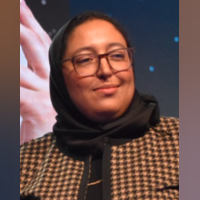
I write these words with deep respect and a sense of emotion. Professor Jamal Fezza my former high school philosophy teacher and later my thesis co-supervisor is currently facing an unfair wave of criticism. And I feel the need to publicly express my support.
Those who know him understand how deeply he embodies intellectual rigor, ethical integrity, and an unwavering commitment to what science is meant to be: a space for free thought, beyond identity-based boundaries.
In emotionally charged moments, it’s easy to withdraw into national or personal reactions. I know this I’ve experienced it myself. Once, I was faced with a difficult decision, and I chose not to attend a scientific event, out of loyalty to my country. But that decision was mine alone. I never asked anyone else to follow suit, nor did I demand that scientific spaces be shaped to reflect my personal stance.
That’s what Jamal Fezza is reminding us of today and that’s what I stand by: science should never be confused with foreign policy. Refusing to engage with researchers based on nationality is not an act of resistance it’s a step away from dialogue and intellectual integrity.
This doesn’t mean turning a blind eye to injustice. It means preserving the university as a place where ideas, not identities, are confronted.
I am proud to have had Professor Fezza as a teacher, and later as a mentor. But beyond the personal bond, I am above all grateful for the example he continues to set with clarity, honesty, and courage.
We need voices like his, especially when they are inconvenient.
Share:
No Religion in Science But Ethics in Citizenship
copy:
https://bluwr.com/p/246521392
Closing a Year, Opening Paths ...
14535
Some endings mean more than just the conclusion of an academic calendar. The final session with my Royal Army students young women I’ve guided through two intense years will remain etched in my memory as a suspended moment, full of emotion, meaningful silences, and eyes that said everything.
They are now being deployed across the Kingdom. Some will find themselves in remote units, far from one another, but I know that an invisible, unbreakable bond will continue to connect us.
These two years weren’t easy. The demands of military training, the discipline of the institution, the academic expectations... But through it all, I made a point of keeping something alive; their humanity. Alongside knowledge, structure, and rigor, I wanted them to preserve and protect their capacity for empathy, presence, and sensitivity.
On the last day, they briefly broke with military protocol. In the middle of their march, they stopped. A rare gesture. Almost forbidden. But deeply sincere. They wanted to say goodbye. To show me, in their own way, that something had mattered in our shared journey.
I know they wanted to hug me. And even though they didn’t, I am certain they will now know how to offer those “hugs” differently through kind words, quiet support, and a respectful gaze to anyone in need.
As I left the center, I realized something essential; to teach is often to plant a seed in soil we may never see again. But we do it with the faith that it will grow.
See you next year with new students, new souls to guide.
Share:
Closing a Year, Opening Paths ...
copy:
https://bluwr.com/p/205616848
“Sport for All”: A Shared Space for Humanity
14984
During the training I recently led for sports coordinators and facilitators, my goal wasn’t simply to transfer knowledge. I aimed for something deeper: to inspire. To encourage these men and women to wear different hats not just as instructors, but as educators, mediators, trusted figures… and most of all, as conveyors of meaning.
The concept of “sport for all” goes far beyond facilities and access. It is, first and foremost, a human project. At its core lie two essential foundations:
- self-acceptance,
- acceptance of others.
From this dual acceptance arises the possibility of truly inclusive spaces, where everyone feels legitimate to participate, to grow, and to belong.
Throughout the training, I saw something rare in the eyes of the participants; a genuine interest, a hunger for understanding. They weren’t just passively absorbing models, tools, or theories. They wanted to go deeper. They wanted each concept to connect with the complex human realities they encounter every day in their communities and sport programs.
This experience reminded me once again that sport reflects the human condition. It can exclude or unite. It can reinforce inequality or break it down. It can become a space of judgment or a space for healing and resilience.
The individuals we train today will shape what "sport for all" becomes tomorrow.
To capture the spirit of this training, I’m sharing below a short recap video that reflects both the energy and the shared humanity we experienced.
Share:
“Sport for All”: A Shared Space for Humanity
copy:
https://bluwr.com/p/205611333
Does having had an infectious disease improve one's perception of health? A global study that questions our representations A paradox in global health brought to light
14888
Infectious diseases such as tuberculosis, malaria, or dengue are often seen as synonymous with suffering, lower quality of life, and in many cases, mortality. However, a large international study conducted across 187 countries challenges this assumption: people who have experienced one or more infectious diseases report, on average, a better perceived state of health than those who have never had any.
Data from a global sample
With nearly 88,000 participants, this study is based on a questionnaire distributed both online and on paper in some countries, including Morocco and Algeria. Researchers examined two key pieces of information: the participants’ experiences with nine infectious or parasitic diseases (including typhoid, cholera, and filariasis) and their response to a simple question: "How healthy do you feel on a scale of 1 to 11?"
Surprising but consistent results
The results are unexpected: people who have contracted at least one of these diseases rate their health better than those who have never had one. This phenomenon is even more pronounced among those who have had multiple infections. On a scale from 1 to 11, non-exposed individuals had an average rating of 7.4, compared to 8.3 for those with multiple exposures. Even though the statistical difference is modest, it remains significant.
This result was confirmed through various statistical methods, including mixed models that accounted for country differences and propensity score matching to reduce bias.
Hypotheses to explore
Why do people who have been ill feel generally healthier? Several possibilities can be considered:
A psychological resilience effect: Having overcome a serious illness could boost confidence in one's body.
An implicit comparison: These individuals may feel "healthy" in comparison to what they have experienced.
A selection bias: Only people who survived and regained good physical condition participated in the survey.
What does this mean for Morocco?
In Morocco, as in other middle-income countries, infectious diseases remain a reality, especially in rural areas or among vulnerable populations. However, these results might encourage a rethink of our health prevention and education campaigns. Instead of focusing solely on the fear or severity of diseases, it could be beneficial to adopt a more positive approach, highlighting the skills developed by individuals who have overcome an infection: endurance, knowledge of the body, and adaptability.
Additionally, using simple indicators such as self-reported health could be useful in Moroccan public policies. Cost-effective to implement, these indicators provide a global sense of well-being that is difficult to measure with biological analyses alone.
Conclusion: when the experience of illness becomes a strength
This study invites us to deconstruct a widely held belief: having suffered from an illness does not necessarily mean one will feel more vulnerable afterward. For many people around the world, and perhaps in Morocco as well, illness is experienced as a formative trial. What if the key to better mental and physical health lay in how we perceive our own bodies?
Invitation to read the article:
I invite you to read this interesting article that explores the psychological factors influencing sports performance in Spanish elite athletes. The study highlights key elements that can enrich our understanding of the links between sports psychology and success on the field. You can read the full article here: https://www.sciencedirect.com/science/article/pii/S0033350625001039
Share:
Does having had an infectious disease improve one's perception of health? A global study that questions our representations A paradox in global health brought to light
copy:
https://bluwr.com/p/148004141