Think Forward.

L'homme, le peuple et l'humanité... 2526

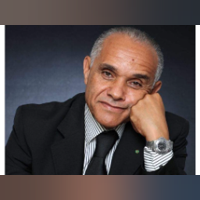
Les peuples ont toujours aspiré à la liberté et à la prospérité. Ils ont toujours voulu vivre de leur labeur. Leur plaisir est de voir leurs progénitures jouer, apprendre, prospérer. Les peuples ont toujours voulu la paix comme mode de vie. Le vivre en paix…tout un concept, une chimère. Hélas Il n'en n'a jamais complètement été ainsi sinon à des moments brefs, précieux et rares que l'histoire ne put retenir, sauf à oublier qu’ils restent exceptionnels, qu’ils étaient brefs, voire éphémères. Les peuples ont toujours cherché à ne pas être exploités par qui que ce soit, alors qu’ils ont toujours tendance à vouloir exploiter l’autre, parfois en le déshumanisant avec une férocité incommensurable, un sadisme nauséabond. En fait les peuples se sont des ensembles d’humains avec des traits en commun. Les peuples se constituent dans le temps et coalisent autour d’intérêts partagés en fait les intérêts de chacun. Pour se défendre et défendre ses intérêts, l’homme ne peut que vivre en communauté parmi un peuple. Seul il est faible et vulnérable, alors il se confond dans son peuple et s'y noie . L’homme aspire à la liberté pour lui et à la paix pour lui, il ne regarde pas celle des autres, l’humain se dit avoir des valeurs quand cela l'arrange mais l’humanité n’en a que faire, son prisme de vue est différent. Le cours de l’histoire le démontre ainsi hélas. Un jour l’humanité s'essaya et imagina une façon d'aspirer à cette liberté de vivre en harmonie pour tous: Elle tentera alors de faire participer tout le monde à la décision. L’homme eut l’impression qu’il est ainsi maitre de son destin…Il croira ainsi participer à la vie politique et peser sur l'avenir. Pas mieux qu'un mot à étymologie grecque pour faire sérieux et crédible : Démocratie. Cela sonne très bien. Oui La démocratie est là en principe pour nous libérer et faire entendre notre parole, concrétiser nos désirs et répondre à notre besoin de vivre en paix, de vivre ensemble, de respecter l’autre dans sa dimension humaine, de nous limiter à nos droits sans empiéter sur ceux de l’autre et des autres. La démocratie est en quelque sorte un garde-fou… pour chacun et tous, du moins c’est ainsi qu’elle fut peut-être imaginée et conçue. Elle nous permet, en théorie j’entends, de nous exprimer de nous défendre et de faire valoir nos droits, des plus élémentaires au plus sophistiqués. La démocratie nous est vendue comme le seul, l’unique modèle pour la prospérité des peuples et leur bien être moral et matériel. La démocratie nous fait miroiter au loin des droits universels, des droits de l’homme là où il est, tel qu’il est, partout où il est. Il est l’HOMME, pivot de l’histoire et de l’humanité, axe central de l’existence. Or voilà que la démocratie nous joue un sale tour celui de nous livrer les mains liées aux plus médiocres parmi nous, aux plus féroces, aux plus affamés, au plus assoiffés de sang ; à ceux qui jubilent quand se creusent des tombes, quand dégouline du sang, quand crie un enfant et pleure une femme, quand s'écrase une église, tombe une mosquée, brûle une synagogue. Revers de la médaille. Je suis né dans un moment de paix, l’un des rares, quelques années seulement après une guerre cruelle que l’occident appela mondiale, alors que c’était juste entre européens au début qu’ils se sont entretués. Ils y associeront de pauvres africains du nord comme du sud, pour des besoins de chair à canon, pour ensuite y entrainer asiatiques et américains. La cruauté absolue des années durant. Des millions d’innocents précipités sous terre. La pause sera de courte durée. Sans perdre de temps l’humanité va connaitre la guerre de Corée, celle du Vietnam, celle de l’Iraq, celle des Malouines, plein de guéguerres en Afrique et j’en oubli…Les instigateurs et auteurs étant toujours les mêmes, le même profil: des élus de la démocratie. A chaque fois c’est le bien contre le mal…A chaque fois la démocratie y est mêlée à tord ou à raison. Le monde démocratique contre l’autre…Un monde démocratique qui se définit lui-même dans un contentement absolu, total, intégral, avec le deux poids deux mesures comme seule alternative de « raisonnement » et de « jugement» aussi ; éliminant à volonté tous les autres de la case du bien. Sur La case du bien ils ont écrit: Réservée en permanence. A chaque fois, génocide, à chaque fois cruauté, à chaque fois souffrance, à chaque fois déshumanisation et ce devant l’impuissance de l’homme qui lui ne veut que vivre en paix parmi son peuple. Quant à l’humanité a-t-elle un jour existée. Existera-t-elle un jour… Vous l’avez compris je ne veux pas parler de Palestine, la blessure est encore vive et les criminels encore en vie. Aziz Daouda

Aziz Daouda Aziz Daouda

Aziz Daouda

Directeur Technique et du Développement de la Confédération Africaine d'Athlétisme. Passionné du Maroc, passionné d'Afrique. Concerné par ce qui se passe, formulant mon point de vue quand j'en ai un. Humaniste, j'essaye de l'être, humain je veux l'être. Mon histoire est intimement liée à l'athlétisme marocain et mondial. J'ai eu le privilège de participer à la gloire de mon pays .


8100

33.0

A Historical Triptych: How Morocco, Spain, and Portugal are Forging the Success of the 2030 World Cup 79

The assignment of the 2030 FIFA World Cup hosting rights to the unprecedented trio of Morocco, Portugal, and Spain marks the opening of a new chapter in the history of international and sporting relations. The joint organization of this event confirms an unparalleled dynamic, engaging the three nations in a triangular cooperation whose efficiency will be the decisive marker of this global event's success. This trilateral partnership transcends mere logistical collaboration to become a true lever for strategic development. The question is no longer whether bilateral relations are ready, but how their integration into a strengthened trilateral framework will guarantee the success of a mega-event poised to connect, for the first time, two continents through the medium of sport. Historical ties and geographical proximity provide a fertile ground for a remarkable intensification of relations between these three partners. The announcement of their tripartite bid has, in fact, elevated the need for harmonized coordination in the logistical, economic, and security domains to the level of a strategic imperative. I. The Political and Economic Foundations of Enhanced Cooperation The alignment around the 2030 project is not fortuitous; it is rooted in deep political and economic considerations that mutualize the interests of the three countries. •⁠ ⁠The Imperative of Convergence suffers no ambivalence: Spain and Portugal, while operating within the structural framework of the European Union, recognize Morocco as an essential strategic partner, a genuine gateway and pivot to the African continent. This dynamic is not unilateral; the Kingdom is consolidating its Euro-African anchor with heightened clarity through this same alliance. The World Cup deadline, far from being a simple calendar constraint, acts as a powerful lever, forcing the acceleration—often judged too slow—of regulatory, customs, and security convergence processes among the three capitals. Crucially, the political will displayed at the highest level—symbolized by the direct monitoring of Moroccan commitments by His Majesty King Mohammed VI—stands as a decisive catalyst, ensuring the establishment of a unified and enduring policy line, even in the face of contingencies and fluctuations in political majorities within the allied states. •⁠ ⁠Mutualization of Investments and Benefits: On the economic front, the World Cup represents an unprecedented opportunity to boost trade and investment. The trilateral agreements directly influence the planning of major works: the goal is no longer to build isolated infrastructures, but integrated networks (ports, air links, potential high-speed rail connections) designed for interoperability. The harmonization of tourism offerings and incentivizing fiscal regimes for sponsors and investors is crucial to maximize shared benefits. The success of coordination in the logistical, economic, and security domains will not be merely a performance indicator; it will be the symbol of a collective capacity to manage a complex event on a transcontinental scale. II. Managing Complexities: The Challenges of Co-Development An event of this magnitude, operated by three sovereign states, naturally generates frictions and coordination challenges that require first-rate diplomatic and technical management. •⁠ ⁠The Challenge of Global Security and Integrated Transport: The primary obstacle is the creation of a unified security space for the millions of supporters on the move. This demands real-time information sharing, coordination of law enforcement agencies, and the harmonization of emergency protocols. Concurrently, the transport system must be conceived as a single network. The transit of teams and supporters between Europe and Africa must be fluid, reliable, and ecological, necessitating targeted investments in airport capacity and maritime services. •⁠ ⁠The Cultural and Civilizational Vector: Beyond sport, the World Cup is a diplomatic platform. The secondary, but fundamental, challenge is to move beyond simple technical organization to present an ideal model of intercultural coexistence. Morocco, Spain, and Portugal must invest in promoting their cross-cultural heritages, consolidating the values of peace and mutual respect. This involves qualifying national institutions not only in logistics but also in public management and global media interaction, to avoid the pitfalls of fragmented or sensationalist coverage. III. The Structuring Influence of Bilateral Agreements on Logistics The influence of existing agreements between the three countries is vital for infrastructure development. The current stage is characterized by high anticipation from the private sectors and sports observers, who are watching for the concrete acceleration of construction projects. The overall efficiency of the operation—whether considering the pre-event phase, execution during the tournament, or the post-realization legacy—rests entirely on the solidity of the triangular commitment. The transformation of infrastructures, from stadiums to training centers and reception areas, must be carried out in a spirit of normative alignment. In conclusion, the 2030 World Cup is not merely the sum of three national organizations; it is a project of strategic co-development. The strong historical relations uniting the Kingdom of Morocco, Portugal, and Spain, amplified by a constant and high-level political will, constitute the decisive element for transforming this bid into a resounding success, offering the world a precedent of successful integration between two shores.

Law 30-09: A “Tree with Bitter Fruits” Hindering the Development of Moroccan Sports 80

While Morocco’s recent performances on the international stage—particularly in football—demonstrate its growing dynamism, the legal framework governing the sports sector seems unable to keep pace with this evolution. Conceived in the wake of the 2008 Royal Letter and enacted in 2010, Law No. 30-09, which was meant to modernize the national sports system, now reveals—fifteen years after its delayed implementation—serious limitations. Marked by internal inconsistencies, deficient enforcement, and pervasive state interference, the law ultimately undermines its original purpose: to professionalize Moroccan sport and align it with international standards. I. Excessive Requirements and Forgotten Sanctions Born from a clear political will to reform Moroccan sport and provide it with a modern legal framework, Law 30-09 has quickly become a rigid and impractical instrument. One of its most emblematic—and controversial—provisions is the obligation imposed on certain sports associations to establish sports corporations (Sociétés Anonymes). While the intent was to ensure sound governance, fiscal transparency, and executive accountability, practice has revealed the limits of this approach. •⁠ ⁠A disproportionate constraint. Most associations lack the financial and organizational capacity to comply with such structural obligations. •⁠ ⁠A flawed and inapplicable framework. The law establishes three non-cumulative conditions triggering the obligation to form a sports company. Only the first has been clarified by regulation, while the other two—relating to turnover and payroll—were never defined by governmental decree. As a result, the rule remains largely inoperative, especially since the penalties for non-compliance are systematically ignored. •⁠ ⁠An unfinished reform. Even among the few clubs that have complied, the parent association still holds the majority of the share capital. This structural lock prevents the opening of capital to private investors, thus maintaining dependency on the old associative model rather than promoting professionalization. II. The Persistent Shadow of the State: An Interference Contrary to Autonomy Principles By its very nature, sport is a sphere of autonomy, an ethos enshrined in the Moroccan Constitution and in the regulations of international organizations such as FIFA. Yet Law 30-09 establishes the supervising ministry as the true guardian of the sector, concentrating significant and often excessive powers: •⁠ ⁠An extensive right of scrutiny. The ministry approves statutes, grants accreditation, and confers authorization to national federations. •⁠ ⁠A pronounced power of interference. The administration may impose standard contracts and, more seriously, revoke authorization or dissolve a federation in the event of a “serious violation.” Such prerogatives contradict the spirit of the Constitution, which reserves this power to the judiciary. •⁠ ⁠Institutional omnipresence. A state representative must sit within the governing bodies of both the national federations and the Moroccan National Olympic Committee (CNOM), reinforcing state oversight at the expense of autonomy. This predominant executive control contradicts the principles of independence that underpin both national constitutional law and the global sports governance model. III. The Ambiguous Status of Athletes: The Law’s Major Omission Beyond institutional deficiencies, Law 30-09 exposes a serious legal vacuum regarding the status of athletes. The professional athlete’s contract is treated as an ordinary employment contract—an assimilation that raises significant difficulties. •⁠ ⁠The legislator had to create several exceptions to the Labour Code (five-year fixed-term contracts, exclusivity clauses, conditions for unilateral termination), resulting in an incoherent hybrid regime. •⁠ ⁠Although classified as “employees,” professional athletes do not enjoy the social protection and retirement benefits normally afforded to workers. •⁠ ⁠As for amateur athletes, their status remains completely unaddressed by the law. The provisions aimed at supporting athlete training and post-career reconversion are equally deficient. They are neither mandatory nor widely implemented, few training centers exist, and many athletes lack the educational background needed to benefit from such programs. IV. The Need for a Moroccan Sports Code Faced with these structural weaknesses, a piecemeal revision of the law is no longer adequate. The codification of sports law—through the adoption of a comprehensive Moroccan Sports Code—is now an imperative step toward supporting the country’s international ambition. Drawing inspiration from the French model, such a reform would serve several key purposes: 1.⁠ ⁠Clarifying and consolidating the dispersed legal texts, regulations, and case law to facilitate specialization among legal practitioners. 2.⁠ ⁠Correcting inconsistencies by redefining the jurisdictional competences of the State and creating a sui generis legal status for professional and amateur athletes. 3.⁠ ⁠Modernizing the legal framework by integrating fiscal and social regimes specific to sports entities and individuals. Despite its initial promise of modernization, Law 30-09 has become a “tree with bitter fruits.” Instead of fostering professionalism, it has constrained the sector and amplified its institutional fragility. Only a complete codification—reflecting Morocco’s socio-economic realities and the principles of good governance—can ensure a coherent, autonomous, and sustainable framework for the country’s sports development.

Chapter 5: Synthesis- The Consilience of the Framework 212

The evidentiary power and utility of this integrated framework—Orbits, Latticework, Pipeline—lies in its consilience. It weaves breakthroughs from wildly disparate fields into a single, coherent explanatory tapestry, revealing a universal pattern of successful inquiry. From Ballpark to Trading Floor: The narratives of Moneyball and The Big Short are isomorphic: Both begin with a philosophical reframing of value (what makes a baseball player valuable; what is the true risk of a mortgage bond). Both proceed through scientific, data-driven discovery of a massive market inefficiency (OBP vs. price; real default risk vs. AAA ratings). Both culminate in the formulation and execution of a winning model (a roster of undervalued players; a portfolio of credit default swaps). They are the same story, told in different arenas. From Sideline to Boardroom- José Mourinho’s Tactical Objectivity: The strategic success of football manager José Mourinho, particularly in his early career at Porto, Chelsea, and Inter Milan, can be precisely deconstructed through this lens. Lacking a storied playing career, he was unburdened by the sport’s internal, dogmatic "ways of knowing." His Outer Orbit philosophy was defined with stark clarity: winning is the sole aesthetic. His Middle Orbit work became legendary: obsessive, scientific analysis of opponents, involving countless hours of video to identify specific tactical vulnerabilities in individual players and systemic gaps in team shape. His Inner Orbit genius was in formulation: he would design rigorous, often defensively-oriented game models tailored to exploit those precise weaknesses, demanding robotic discipline from his players. His famous 1-0 victories, frequently derided as "anti-football" or "boring," were direct, logical products of pursuing objective victory over subjective aesthetic approval. He demonstrated that objectivity often requires enduring backlash from a consensus invested in a different, more romantic model of the game. From Factory Flow to Protein Fold: Taiichi Ohno’s andon cord and Demis Hassabis’s AlphaFold: Both are profound interventions based on latticework understanding. Ohno designed a human-technological system to make local truth (a defect) instantly global, optimizing a physical manufacturing lattice. Hassabis built a computational system to infer the spatial relationship lattice of amino acids from evolutionary data, optimizing our understanding of the biological lattice. One is mechanical and human, the other digital and abstract, but both are solutions born from seeing a problem as a network of relationships to be modeled and managed. The Contemporary Imperative-The Age of the Synthesist: The historical drift of knowledge since the Enlightenment has been from integration toward fragmentation. The Renaissance ideal of the uomo universale (universal man) gave way to the Industrial Age’s demand for the hyper-specialist. The 20th century perfected the silo. The 21st century, however, presents us with a stark imperative that demands a synthesis, a return to integrated thinking, but now armed with powerful new tools and facing problems of unprecedented scale. Two convergent forces make the orbital, latticework methodology not merely beneficial, but essential for competent navigation of our time. The Nature of Our Tools: Our most powerful analytical engines—Artificial Intelligence (particularly machine learning and large language models) and, on the horizon, Quantum Computing—are inherently cross-orbital and lattice-native. Deploying AI effectively on any complex problem, from drug discovery to climate modeling to ethical dilemma resolution, requires precise philosophical framing (defining objectives, values, and constraints to avoid perverse outcomes), robust and curated scientific data grounding, and exquisite mathematical formulation of the model architecture and training paradigm. These tools fail, often catastrophically and insidiously, with fragmented, siloed, or philosophically unexamined input. They demand, and therefore will select for, synthesist thinkers who can navigate all three orbits and think in terms of interconnected systems. The Nature of Our Challenges: The existential problems that define our epoch are quintessential latticework challenges. They cannot be contained within academic departments or government agencies. They are not "physics problems" or "economics problems." They are system problems. The specialized intellect, trained to dig ever deeper into a single vertical silo, is architecturally unequipped to even properly define them, let alone solve them. These challenges demand minds capable of orbital thinking across the lattice, minds that can hold multiple models, trace second- and third-order consequences, and formulate strategies that are robust across multiple domains of reality. Objectivity as the Foundational Operating System. The pursuit of objective truth is not a passive state of receiving revealed wisdom. It is an active, disciplined, and often confrontational chase. It requires the moral courage to question foundational premises in the Outer Orbit, the intellectual rigor to map reality without favor or illusion in the Middle Orbit, and the creative potency to formally synthesize understanding in the Inner Orbit. It demands that we see the world not as a collection of unrelated events, but as a vast, dynamic lattice of interlocking causes and effects. And it is best navigated with the structured, self-correcting protocol of the Objectivity Pipeline. This framework proposes objectivity not as the cold, emotionless province of a narrow scientism, but as a universal operating system for understanding, a scalable, rigorous, and ultimately humane methodology applicable with equal force to the equations of a physicist, the ethical calculus of a jurist, the investment thesis of a historian, the innovation of an engineer, and the strategy of a state. Subjectivity is the fog of un-modeled complexity. The Orbits Model, the Latticework Theory, and the Objectivity Pipeline constitute the navigation system—the charts, the compass, and the piloting protocol. In an epoch defined by overwhelming information, pervasive misinformation, and tools of god-like power whose misuse carries existential risk, mastering this chase is no longer an intellectual luxury or a philosophical pastime. It is the essential meta-skill, the foundational logic upon which reliable judgment, effective action, and meaningful progress depend. The choice before us is not between a subjective world and an objective one, but between wandering in the fog and building a lighthouse. The architecture for the lighthouse is here. The materials are the disciplines of thought we have inherited and refined. The builders must now be us.

Chapter 4: The Objectivity Pipeline- A Sequential Protocol for Execution 216

A theoretical framework, no matter how elegant, remains an intellectual curiosity unless it can be translated into a practical, repeatable protocol. The Orbits Model and the Latticework Theory converge into a disciplined, sequential, and recursive process I call ‘The Objectivity Pipeline’. This seven-stage pipeline provides the operational scaffolding to move from a nebulous, subjective problem to an objective, actionable solution. Define: Articulate the core problem, obstacle, or Wildly Important Goal (WIG) with surgical, unambiguous precision. Vague, multifaceted, or emotionally charged aims guarantee vague, conflicted outcomes. This is a pure Outer Orbit activity. Identify Variables: Catalog the key agents, forces, constraints, and measurable factors involved in the system. Move into the Middle Orbit. What are the inputs, outputs, and actors? Distinguish between independent variables (potential levers) and dependent variables (outcomes). Map Relationships: Diagram the causal, correlational, inhibitory, and influential links between the identified variables. This is the cartography of the latticework. Tools include causal loop diagrams, systems maps, influence diagrams, and process flows. The goal is to visualize the system's structure, revealing feedback loops, bottlenecks, and leverage points. Model: Construct a formal representation of the mapped system. This is the decisive leap to the Inner Orbit. The model can take many forms: a set of statistical equations, a system of differential equations, an agent-based computer simulation, a Bayesian network, or even a rigorously structured qualitative framework. The model is a simplified but functional analogue of reality, designed for manipulation and testing. Simulate: Run the model. Conduct experiments in silico. Test scenarios, stress-test assumptions under extreme conditions, and observe the range of potential outcomes the system logic produces. This stage provides a safe, low-cost environment for failure and learning before committing real-world resources. Verify: Return to the Middle Orbit. Collect new, out-of-sample empirical data—data not used to build the model—and check the model’s predictions against this observed reality. Does the world behave as the model forecasts? If not, the error is not in "reality"; it lies in an earlier stage of the pipeline. The process must recursively return to Definition, Variable Identification, Relationship Mapping, or Model Formulation for correction. Optimize: With a reasonably verified model, adjust the controllable variables within it to find the most efficient, effective, or robust path to achieve the goal defined in Stage 1. This is the stage of generating prescriptions and strategies. The Four Disciplines of Execution (4DX): The corporate strategy framework developed by McChesney, Covey, and Huling (The 4 Disciplines of Execution, 2012) is a streamlined, commercialized instantiation of the Objectivity Pipeline, designed for team-level implementation. Define: Focus on the Wildly Important Goal (WIG)—no more than one or two overwhelming priorities. Identify Variables: Differentiate between Lag Measures (the ultimate outcome metrics, like revenue or customer satisfaction) and Lead Measures (the predictive, influenceable activities that drive the lag measures, like sales calls or quality checks). Map Relationships: Create a Compelling Scoreboard that is simple, public, and visually maps, in real-time, the relationship between lead measure activity and progress toward the WIG. Model & Cadence: Establish a recurring Cadence of Accountability, a short, rhythmic meeting (e.g., weekly) where team members report on commitments, review the scoreboard, and plan new commitments. This cadence functions as a live, human-powered simulation, verification, and optimization loop, embodying stages 5-7 of the pipeline in a behavioral rhythm. The Lucas Paradox and the Anatomy of Perceived Risk: The Lucas Paradox, introduced by Nobel Prize winning economist Robert Lucas in 1990, refers to the persistent empirical observation that capital does not flow from capital-rich countries to capital-poor countries at the scale predicted by neoclassical growth theory, despite higher marginal returns to capital in poorer economies. This phenomenon is not a failure of investor rationality, nor is it primarily a behavioral anomaly. It is a failure of overly narrow models of risk and return. In its simplest form, the canonical model assumes that capital responds to differences in marginal productivity adjusted for measurable risk. Under those assumptions, capital should flow aggressively toward emerging and frontier markets. It does not. The paradox arises because the model omits structural variables that dominate realized outcomes in cross-border investment. The conventional framing treats the problem as one of portfolio optimization under uncertainty, focusing on variables such as growth rates, inflation, fiscal balance, political stability indices, and currency volatility. These variables are necessary but insufficient. Empirical research following Lucas has repeatedly shown that capital flows are far more sensitive to institutional quality, property rights enforcement, legal predictability, capital controls, sovereign credibility, and the risk of expropriation than to marginal productivity alone. Once these variables are incorporated, much of the paradox dissolves. A latticework-consistent approach does not redefine the problem as “exploiting irrational fear.” It reframes it as identifying structural wedges between theoretical returns and realizable returns. The relevant distinction is not between perceived and actual risk in a behavioral sense, but between modeled risk and true system risk, much of which is institutional, legal, and political rather than financial. A pipeline-compliant analysis therefore proceeds differently. It defines the problem as understanding why expected returns fail to materialize when capital is deployed across jurisdictions. It expands the variable set to include enforceability of contracts, durability of political coalitions, susceptibility to policy reversal, credibility of monetary and fiscal regimes, depth of domestic financial markets, and exposure to global liquidity cycles. It models the interaction between these variables, recognizing that risk is not additive but multiplicative. Weak institutions amplify shocks, truncate upside, and skew return distributions through tail events rather than through mean variance alone. Failing to be conscientious in pursuing objectivity using pipeline steps can have severe consequences at a global level making it an approach valid for consideration and study.

The Radiance of a Lady 210

​Your love illuminates my heart, And you have forbidden me to reveal this honor. How can the light of your brilliance be dimmed When it radiates from everywhere? It shines like a sapphire, a diamond, or a jewel, And dazzles everyone with your blonde beauty. You do not believe in my love, In turn, While I can love no one else but you; This is my destiny, this is my faith. You are my heart and my soul, You are my destiny, you are my law. I cannot bear it when you are far away, beautiful woman, You who soothe my heart in flames. In you, I find all my vows, You who make my days happy. ​Dr. Fouad Bouchareb Inspired by an Andalusian music piece, "Bassit Ibahane" December 13, 2025 https://youtu.be/wlvhOVGyLek?si=5tt6cm0oChF1NQJJ