Think Forward.

Les régimes militaires : promesses révolutionnaires, désillusions nationales certaines... 570

Depuis les indépendances du milieu du XXᵉ siècle, une large partie du monde en développement a été traversée par la tentation militaire. En Afrique, en Amérique latine ou en Asie, les armées, souvent les seules institutions *organisées, hiérarchisées et disciplinées*, à la suite du départ des colonisateurs, ont pris le pouvoir au nom de la stabilité, de la justice sociale ou de la révolution. Pourtant, l’histoire révèle que, derrière les slogans pompeux de « démocratique », «populaire » ou « révolutionnaire », ces régimes ont rarement laissé place à autre chose que la répression, la corruption, la stagnation et bien plus encore. Les lendemains d’indépendance ont vu certaines armées se positionner en sauveuses autoproclamées. Toutes n'ont laissé derrière elles que le KO, le sous-développement et la misère. Dans les années 1960 et 1970, l’Afrique nouvellement indépendante connaît une flambée de coups d’État militaires. Entre 1958 et 1980, plus de 60 putschs militaires sont recensés sur le continent. Certains leaders charismatiques des indépendances se sont vus dépossédés du pouvoir de la pire des façons. Au Ghana, Kwame Nkrumah, pionnier du panafricanisme, est renversé en 1966 par un coup d’État militaire. En 1968, Moussa Traoré dépose Modibo Keïta au Mali, mettant fin à un projet socialiste naissant. Ould Dadda de Mauritanie ne connaitra pas un meilleur sort. Plus tôt, c'était Patrice Lumumba qui subissait les pires atrocités. Le roi Farouk est poussé à la porte de l'Égypte. Kaddafi dépose le vieux Senoussi. Benbella subissait le dictat de Boumedienne. En Amérique latine, la même mécanique se répète : l’armée prétend « sauver la nation » du chaos. Au Brésil, le coup d’État de 1964 installe une dictature pour 21 ans sous le prétexte de combattre le communisme. Au Chili, le général Augusto Pinochet renverse en 1973 le président démocratiquement élu Salvador Allende, inaugurant un régime de terreur responsable de plusieurs milliers de morts et disparus. En Asie, la Birmanie illustre une domination militaire persistante. Depuis le coup d’État de 1962 du général Ne Win jusqu’à la junte née du putsch de février 2021, l’armée contrôle le pays, étouffant toute opposition et maintenant une pauvreté structurelle. Nombre de ces régimes militaires se sont enveloppés dans un vernis idéologique. Ils se sont dits « révolutionnaires », comme le régime de Thomas Sankara au Burkina Faso (1983-1987), ou « démocratiques et populaires », à l’image des régimes du Congo-Brazzaville ou de l’Éthiopie de Mengistu Haile Mariam (1974-1991). Mais cette promesse de transformation sociale a presque toujours débouché sur la confiscation du pouvoir. Les libertés civiles furent suspendues, les opposants emprisonnés ou éliminés, tandis que les économies nationales sombrèrent dans la gabegie et la prédation. La rhétorique des régimes « populaires, démocratiques et révolutionnaires » s'avère tout aussi mensongère qu'improductive, pour ne pas dire plus. Le Nigeria, avec ses six coups d’État entre 1966 et 1999, est emblématique de cette spirale. Les régimes successifs de Yakubu Gowon, Murtala Mohammed et Sani Abacha ont dilapidé les revenus pétroliers d’un des pays les plus riches d’Afrique. À la mort d’Abacha en 1998, le pays était exsangue : corruption généralisée, dette abyssale, répression politique. Malgré l'évidence, certains pays continuent à endurer ce genre de régime, avec une recrudescence ces derniers temps en Afrique occidentale et au Sahel. Il est difficile de porter un jugement sur ces régimes naissants. Attendons. Le temps nous dira. Ils promettent tous de remettre le pouvoir aux civiles après une période de transition. Souvent ils y gouttent au plaisir de la vie et s'y plaisent... Aujourd’hui, les États encore dominés par une junte militaire sont moins nombreux qu'avant en Afrique. L’Algérie demeure tout de même un exemple notable, vestige des régimes installés dans les années soixante. L’armée reste ici le véritable centre de pouvoir depuis l’indépendance en 1962. Officiellement dirigée par des civils, la réalité est différente, notamment depuis le coup de force de janvier 1992, qui interrompit un processus électoral et plongea le pays dans une guerre civile meurtrière. Près de 200 000 personnes y perdirent la vie, selon Amnesty International. Trente ans plus tard, malgré les apparences institutionnelles, la présidence d’Abdelmadjid Tebboune (depuis 2019) reste sous étroite influence militaire. Il est toujours flanqué du général chef des armées. Le mouvement du Hirak, né en 2019, avait dénoncé ce système opaque décrit comme un « pouvoir militaire sans uniforme ». Aujourd'hui, la situation ayant conduit au Hirak ne s'est pas améliorée : l’économie, dépendante du pétrole, s’enlise, tandis que la jeunesse s'exile massivement. Les illusions sont encore une fois perdues. Le dinar dégringole alors que le pays dépend de l'importation pour ses besoins primaires. Les régimes se prétendant « du peuple » ont souvent retourné leurs armes contre ce même peuple. Des pays riches en ressources comme le Nigeria, le Congo, le Soudan, la Libye, l'Algérie ou la Birmanie, pour ne citer que quelques exemples, sont devenus des laboratoires de la désillusion. Les massacres, abus et dilapidation des richesses laissent toujours des cicatrices profondes. La tendance mondiale, marquée par la disparition des régimes militaires, n'est pas pour plaire à tout le monde, notamment aux armées dans certaines régions, quitte à plonger le pays dans le KO. Le cas du Soudan donne des signaux très alarmants. C'est alors qu'une leçon s’impose : aucune dictature en uniforme n’a réussi à bâtir durablement la prospérité ou la paix, nul part. L’histoire des régimes militaires est celle d’une promesse trahie. Derrière le discours du redressement national, de la défense des intérêts du pays, ces pouvoirs ont produit la peur, l’appauvrissement et le désenchantement. L’armée, censée protéger la nation, l’a souvent tenue en otage. Là où elle persiste encore à s'accaparer le pouvoir, elle incarne surtout les dernières résistances d’un modèle condamné par l’histoire. À bon entendeur, salut !

Aziz Daouda Aziz Daouda

Aziz Daouda

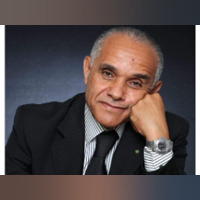
Directeur Technique et du Développement de la Confédération Africaine d'Athlétisme. Passionné du Maroc, passionné d'Afrique. Concerné par ce qui se passe, formulant mon point de vue quand j'en ai un. Humaniste, j'essaye de l'être, humain je veux l'être. Mon histoire est intimement liée à l'athlétisme marocain et mondial. J'ai eu le privilège de participer à la gloire de mon pays .


8100

33.0

Chapter 3: The Latticework Theory- Reality as an Interdependent, Multi-Layered System 59

The conceptual framework commonly referred to as “Latticework Theory” integrates formal ontological analysis with applied epistemic reasoning. Willard Van Orman Quine’s analytic ontology, as outlined in "On What There Is" (1948), establishes rigorous criteria for identifying entities, categories, and relations within complex systems, providing a foundation for understanding which elements and interactions are structurally significant. Charlie Munger’s notion of a “latticework of mental models,” as articulated in his speeches and compiled in "Poor Charlie's Almanack" (2005), complements this by advocating for the disciplined integration of knowledge across domains to improve strategic decision-making under uncertainty. Together, these perspectives underpin a framework in which authority, information, and incentives propagate across layers of agents and institutions, producing outcomes that cannot be inferred from the isolated properties of components. Deviations at any node can be corrected when feedback is accurate, timely, and actionable. Failures occur when feedback is impaired, misaligned, or ignored. This framework provides a lens for analyzing industrial operations, national governance, financial systems, and technological risk in a unified, empirically grounded manner. The Toyota Production System (TPS), developed by Taiichi Ohno and detailed in "Toyota Production System: Beyond Large-Scale Production" (1988), exemplifies this framework at the operational level. TPS integrates authority, information, and incentives to align local actions with system-level objectives. The andon system, which allowed assembly line workers to halt production upon detecting defects, transmitted local observations directly to organizational decision nodes, enabling immediate corrective action. Empirical analyses, including studies of manufacturing efficiency, demonstrate that this configuration reduced defect propagation, accelerated problem resolution, and increased overall reliability compared to designs that optimized individual workstations independently. For instance, companies implementing TPS principles have reported defect rate decreases of around 60 percent, reflecting the structural alignment of authority, information, and incentives rather than isolated interventions. Singapore under Lee Kuan Yew illustrates the same principle at the national level. Between 1965 and 2020, per-capita GDP rose from approximately $517 to $61,467 in current U.S. dollars. By 2020, public housing coverage reached approximately 78.7% of resident households. Scholarly analyses attribute these outcomes to a central coordinating constraint: administrative meritocracy combined with credible enforcement. Recruitment and promotion emphasized competence and performance, anti-corruption measures ensured policy credibility, and social and industrial policies aligned skill formation, investment, and housing. These mechanisms were mutually reinforcing, producing system-level outcomes that cannot be explained by any single policy instrument but rather by ontological reasoning. Financial markets and strategic advisory practice demonstrate analogous dynamics. Many successful hedge fund managers and macro investors, such as George Soros (who studied philosophy with a strong historical focus) and Ray Dalio (who emphasizes historical pattern recognition in his investment principles), draw on deep historical expertise. Studies and industry insights highlight the value of humanities backgrounds in finance, with hedge funds actively recruiting liberal arts graduates for their ability to provide broader contextual understanding. This expertise enables pattern recognition across interacting variables, resource constraints, institutional incentives, technological change, political legitimacy, leadership behavior, and stochastic shocks, while facilitating analogical judgment about systemic regimes. George Soros’s concept of reflexivity formalizes the empirical reality that market prices and participant beliefs mutually influence one another. In feedback-dominated systems, quantitative models fail unless interpreted in historical and structural context. Historical insight therefore provides an advantage in long-horizon investing, geopolitical risk assessment, and capital allocation, as evidenced by the track records of such practitioners. The Boeing 737 MAX incidents of 2018 and 2019 provide a negative case that clarifies the ontology’s conditions. Investigations revealed that the MCAS system relied on single-sensor inputs, information about its behavior and failure modes was inconsistently communicated to operators, and engineering authority was constrained by commercial and schedule pressures. Incentives prioritized rapid certification and cost containment over systemic reliability. Local anomalies propagated to produce two hull-loss accidents with 346 fatalities. Analysis demonstrates that robust interconnection alone is insufficient. Outcomes depend on the alignment of authority, accurate information, and incentive structures that empower corrective action. Across manufacturing, national governance, finance, and technology, the same structural principle emerges: effective outcomes require the alignment of authority, information, and incentives, with feedback channels possessing sufficient fidelity and remedial capacity. Misalignment in any dimension produces fragility and amplifies errors. The Orbits Model operates within this substrate, with inner orbits requiring empirical validation and outer orbits constrained by systemic coherence. Empirical evaluation relies on archival records, institutional data, and observable system outcomes, providing a unified framework for analyzing complex adaptive systems. The Latticework framework thus integrates ontology, applied epistemics, and structural empirics, combining theoretical rigor with practical observation across domains.

Theosophy 107

Theosophy is a spiritual movement that emerged in the late nineteenth century with the ambition of bringing religion, philosophy, and science into a single, coherent vision of truth. Drawing on both Eastern and Western mystical traditions, it promotes the idea of a timeless or “perennial” philosophy underlying all world religions. Central to this outlook is the belief that the soul evolves over long cycles of reincarnation and karma, gradually awakening to deeper spiritual realities. The movement was formally established in 1875 by Helena Petrovna Blavatsky (1831-1891) and her collaborators with the founding of the Theosophical Society, and it went on to shape many of the spiritual, philosophical, and artistic currents of the modern era. At the heart of Theosophical thought is the idea of a divine, impersonal Absolute that lies beyond the limits of human understanding—an idea comparable to the Hindu concept of Brahman or the Neoplatonic One. From this unknowable source, all levels of existence are said to unfold, descending through a hierarchy of spiritual planes and beings until they manifest in the material world. This cosmological vision reflects strong influences from Indian philosophy, especially Vedanta and Buddhism, while also incorporating elements of Western esoteric traditions such as Neoplatonism, Hermeticism, and Kabbalah. A defining feature of Theosophy is its emphasis on spiritual evolution. In The Secret Doctrine (1888), Blavatsky’s most influential work, she presents an elaborate account of planetary and human development governed by the laws of karma and reincarnation. According to this framework, humanity is currently passing through the fifth of seven “root races,” each representing a stage in the unfolding spiritual and psychic capacities of the species. The ultimate goal is a conscious return to divine unity, achieved through inner transformation and esoteric knowledge. Blavatsky maintained that her teachings were not purely her own but were inspired by highly advanced spiritual beings known as the Mahatmas or Masters. Said to live in remote regions of the world, these adepts were described as guardians of ancient wisdom and exemplars of humanity’s spiritual potential. Whether understood literally or symbolically, they expressed the Theosophical ideal of enlightenment and supported the Society’s mission of awakening latent spiritual capacities in all people. The influence of Theosophy reached well beyond the boundaries of the Theosophical Society itself. It played an important role in introducing Western audiences to ideas such as karma, reincarnation, and subtle energy systems, and it helped spark broader interest in Eastern religions. Its impact can be seen in the work of artists like Wassily Kandinsky (1866-1944), composers such as Gustav Holst (1874-1934), and spiritual thinkers including Rudolf Steiner (1861-1925), who later founded Anthroposophy, and Jiddu Krishnamurti (1895-1986), who was once proclaimed a World Teacher before ultimately distancing himself from the movement. Despite internal disagreements and the often complex nature of its teachings, Theosophy laid important groundwork for the later New Age movement and for modern forms of spiritual pluralism. Its effort to present a shared mystical heritage across cultures anticipated contemporary conversations linking science and spirituality, psychology and mysticism, and Eastern and Western worldviews. In this sense, Theosophy is more than a historical curiosity. It represents an ambitious attempt to reinterpret ancient wisdom for a modern world, grounded in the belief that spiritual truth is universal and that humanity’s deeper purpose lies in awakening to its own divine origins.

Waking Up in the Dark: School Schedules Adapted to Morocco's 21st-Century Child... 193

What inspired these lines is a letter published by a father on social media, which states in essence: "I am writing to you as a concerned parent, but also as a citizen exhausted by a government choice that, year after year, ignores common sense: maintaining a schedule where our children wake up when it's still pitch black to go to school. Every morning, it's the same absurd scenario: wake-up at dawn, children torn from sleep, eyes still closed, bodies tired, forced to go out into the darkness, sometimes in the cold, to reach their school. Sleepy students in class, weakened concentration, growing irritability. How can we talk about quality learning in these conditions?" Beyond fatigue, there is danger. Many parents lack the means to accompany their children. These children walk alone on streets still shrouded in darkness, exposed to risks of traffic accidents, assaults, or incivilities. This fact alone should question the relevance of this schedule. Yet the government persists in defending this choice in the name of economic or energy arguments, without ever weighing the well-being, health, and safety of our children against them. We are not asking for the impossible, only a return to a human rhythm, adapted to the reality of our society. Through this letter, I hope this debate will finally be opened seriously. Our children are not adjustable variables. They deserve a normal wake-up, in daylight, and a school that respects their fundamental needs." It lays out the ordeal experienced by children and parents and challenges the school rhythm imposed on our children. In fact, current school schedules are based on an organization largely inherited from the early 20th century, designed for a society with more stable temporalities, not at all connected and less exposed to constant stimulation. However, scientific studies have converged for some time on a single observation: there is a growing gap between these institutional frameworks and the biological, cognitive, and psychosocial needs of the contemporary child. Even better, the 21st-century child evolves in an environment marked by the omnipresence of screens, the multiplication of digital interactions, and the porosity between school time, family time, and leisure time. Research in chronobiology clearly establishes that exposure to artificial light, particularly blue light emitted by screens, delays melatonin secretion, the key hormone for falling asleep. This late-night exposure permanently disrupts wake-sleep cycles in children and adolescents, making early bedtime biologically difficult, regardless of the educational rules set by families. In this context, maintaining very early school schedules amounts to instituting a chronic sleep debt in the child. Yet, the role of sleep in learning is now solidly documented. Neurosciences show that sleep is essential for memory consolidation, emotional regulation, and the proper functioning of executive functions such as attention, planning, and cognitive control. Regular sleep deprivation is associated with decreased academic performance, increased irritability, and attention disorders that can exacerbate learning difficulties. North American studies provide particularly instructive insights: delaying the start of classes, associated with improved sleep time, leads to better academic results, attendance, mental health, and a reduction in road accidents involving adolescents. The American Academy of Pediatrics explicitly recommends later school schedules for adolescents, in line with their naturally shifted circadian rhythm. Lacking precise studies in Morocco, let's look at what is said elsewhere. Research shows that during adolescence, the biological clock physiologically shifts toward a later bedtime. Forcing a very early wake-up thus directly conflicts with a normal biological process. Ignoring this well-established data undermines the very conditions of learning and well-being. To cognitive fatigue are added issues of safety and social inequalities. The early schedules still imposed in Morocco expose many children to travel in darkness, increasing road and urban risks. For example, OECD studies emphasize that learning conditions extend beyond the classroom: travel time, accumulated fatigue, and family context strongly influence academic trajectories. The most modest families have less leeway for adaptation in accompaniment, secure transport, and educational compensation, turning school schedules into an indirect but real factor of inequalities. Economic, organizational, or energy imperatives cannot justify the status quo. Several international analyses show the exorbitant long-term costs of sleep deprivation: in terms of school dropout, anxiety disorders, reduced productivity, and health problems. These cumulative costs far exceed the adjustments needed for a reform of schedules. The OECD regularly insists on the importance of investing in student well-being as a condition for the effectiveness of education systems. Rethinking school schedules is therefore neither about comfort, laxity, nor whimsy. It is a rational approach, grounded in robust scientific data. Pedagogical effectiveness is not measured by the number of hours spent at school or the earliness of wake-up, but by the quality of attention, the cognitive availability of children, and the engagement of students and teachers. This reflection must fit into a comprehensive approach. Experts emphasize the need to coordinate school schedules, screen time management, workload, balance between family and educational life, and mental health. A high-performing education system is one capable of integrating scientific insights and evolving with the society it serves. In the era of permanent connectivity, persisting with rigid patterns institutionalizes fatigue from childhood. Taking into account the needs of the child, rather than the constraints of the adult world, is not a pedagogical utopia. It is a scientific, social, and ultimately political imperative. Morocco has all the means to undertake a genuine reflection on the issue and should initiate it as the basis for a true education reform.

Chapter 1: Core Premise 279

I observe a pervasive but rarely examined habit in contemporary thought: human inquiry is arranged along an implicit spectrum of objectivity. Physics, chemistry, and formal mathematics are placed at one extreme, treated as paradigms of certainty grounded in measurement, reproducibility, and invariant law. This placement arises not from intrinsic epistemic superiority but from historically contingent access to precise measurement, tractable variables, and high signal-to-noise environments, which permit cumulative knowledge to develop rapidly. At the opposite extreme, the humanities and much of the social sciences are relegated to a realm of supposed subjectivity, governed by interpretation, cultural contingency, and perspective. This relegation is enforced institutionally and socially, producing professional hierarchies that shape curricula, research funding, and the perceived legitimacy of knowledge. Between these poles sit disciplines that trouble the classification itself, including economics, management, medicine, and the biological sciences, which are alternately criticized as insufficiently rigorous or regarded as scientific yet compromised by complexity, variability, and ethical constraint. These hybrid domains demonstrate that epistemic rigor is not a function of disciplinary label but of methodological discipline, computational capacity, and explicit assumption. When this hierarchy is treated as natural, it imposes lasting intellectual costs. Entire domains are exempted from the expectation of cumulative, model-driven understanding, while others are placed under perpetual suspicion. This work advances a precise claim: the pursuit of objective understanding constitutes a single methodological enterprise across all domains of inquiry, including the humanities and social sciences. What varies is not epistemological kind but the sharpness of feedback, the density of noise, the degree of reflexivity, and the number of interacting causes. Across domains, the foundational sequence is constant: assumptions and value premises must be made explicit; relevant variables must be operationalized; formal models must be constructed to generate discriminating implications; and these models must be tested, revised, and compared against empirical and practical constraints. Recent advances in computational power, large-scale data availability, causal inference, machine learning, and large language models expand the frontier of tractable analysis, allowing patterns, structures, and regularities to be extracted from domains previously dismissed as irreducibly interpretive. All phenomena—physical, social, abstract, or experiential—can, in principle, be made objective. Subjectivity is transient, caused by incomplete models, missing information, or limited computation. Closing these gaps allows objectivity to emerge. Mastery of this principle enables the solving of any problem at any scale. Philosophy, science, and mathematics function as concentric orbits guiding this process: philosophy frames questions, establishes principles, and explores meaning; science observes, measures, and maps relationships; mathematics and computation formalize, predict, and optimize outcomes. Inquiry begins at the periphery, where concepts are clarified and commitments articulated. It moves inward through observation and measurement, where claims encounter resistance from reality, and converges through formalization, where ambiguity is reduced to structure. Truth functions as a limit rather than a possession. Progress is measured by the narrowing of plausible explanations rather than by rhetorical victory. Subjectivity arises when models omit variables, when data under samples reality, or when available methods cannot discriminate among competing models. Bias and intuition are temporary artifacts, not permanent human limitations, and their systematic reduction across domains is a procedural goal. Reality itself is a lattice of interdependent facts and relationships; knowledge emerges by mapping these connections rather than through siloed disciplines. Abstract, social, and physical phenomena obey universal principles of causality and interdependence. Truth can be formalized without stripping meaning or emotion from human experience. Framing the right question is the first step toward convergence, and philosophy provides principles and direction that prepare for empirical investigation. Observation across atomic, molecular, neural, societal, and abstract layers uncovers interdependent patterns and reveals leverage points. Probabilistic, chaotic, and quantum systems remain tractable under formal modeling, and extreme human phenomena such as beauty, creativity, morality, and emotion can be represented as multi-layered functions connecting biochemistry, cognition, and culture. Insight arises from cross-layer, interconnected modeling, not from adherence to disciplinary silos. Observation, therefore, is universal; patterns are extractable across domains once measurement, computation, and lattice connections are sufficient. Formalization then converts observation into quantifiable prediction and optimization. The objectivity pipeline proceeds as follows: define, identify variables, map relationships, model, simulate, verify, and optimize. Framing from philosophy guides the science layer, while mathematics converges all domains into predictive structures. Algorithms, AI, simulation, and probabilistic reasoning serve as tools of universal objectivity. Multi-layer latticework modeling connects human, natural, and abstract systems, transforming observation into scalable, actionable insight. This pipeline ensures that domains previously deemed “interpretive” achieve the same procedural rigor as classical sciences. Applications demonstrate the universality of this approach. Supply chains, healthcare, infrastructure, climate, poverty, geopolitical strategy, ethics, cognition, and AI alignment are analyzable as interdependent networks. Objectivity identifies leverage points missed by siloed approaches. Bias, both cognitive and institutional, becomes a transient artifact rather than a limiting factor. Knowledge functions as infrastructure: scalable, auditable, and self-improving frameworks for human and organizational reasoning. The final proposition is simple and universal: objectivity is a meta-method, a universal operating system for truth, creativity, and progress. It is scalable from the smallest ethical dilemma to planetary-scale systemic challenges. Convergence toward truth is procedural, measurable, and general. The pursuit of objectivity is not limited by domain, disciplinary prestige, or cultural convention; it is constrained only by the current state of models, data, and computation. The following chapter establishes this framework, embedding all concepts, thinkers, and orbits into a single, cohesive narrative of rigorous inquiry.
bluwr.com/chasingtruth/chapter-1...

The Radiance of a Lady 361

​Your love illuminates my heart, And you have forbidden me to reveal this honor. How can the light of your brilliance be dimmed When it radiates from everywhere? It shines like a sapphire, a diamond, or a jewel, And dazzles everyone with your blonde beauty. You do not believe in my love, In turn, While I can love no one else but you; This is my destiny, this is my faith. You are my heart and my soul, You are my destiny, you are my law. I cannot bear it when you are far away, beautiful woman, You who soothe my heart in flames. In you, I find all my vows, You who make my days happy. ​Dr. Fouad Bouchareb Inspired by an Andalusian music piece, "Bassit Ibahane" December 13, 2025 https://youtu.be/wlvhOVGyLek?si=5tt6cm0oChF1NQJJ

Mustapha Hadji, African Ballon d’Or: From the Silence of the Pastures to the Voice of the Stadiums... 374

Mustapha Hadji's record of achievements fits into a few lines, but each one carries immense weight in the history of African football, Moroccan youth, and especially for Mustapha himself. African Ballon d’Or in 1998, key architect of Morocco's epic run at the World Cup in France, respected international, elegant playmaker, discreet ambassador for football and the youth of Morocco's pre-desert interior. Titles, distinctions, numbers. And yet, reducing Hadji to his record would miss the essence: a rare human journey, almost cinematic, that begins far from the spotlight. For before the European pitches, before the anthems and trophies, there was a douar near Guelmim. A harsh, rugged region where childhood unfolds to the rhythm of the sun and the herds. The wind is dry and fierce. The horizon stretches endlessly. Children there gaze at the Atlas and the majesty of its summits at every moment. The soil is hard and rocky. Like many children his age, Mustapha became a shepherd as soon as he could walk, as soon as he could be independent. He quickly became the guardian of what his family and douar held most precious: goats and sheep. He learned patience, solitude, and observation early on. Qualities that would later make him a unique player, able to read the game before others, sense the ball, and adjust his movement. The turning point came with family reunification. Destination: France. The shock was immense. Change of language, climate, social codes. At school, Mustapha struggled to fit in. He didn't understand everything, spoke little, often withdrawing into himself. But where words failed, the ball became his language. It was on neighborhood fields that his talent began to shine. Instinctive, fluid football, almost poetic. No calculations, just the joy of playing, of finally expressing himself, of showing what he was capable of. Around him, kind eyes lingered. Coaches, educators, humanistic figures who saw beyond academic or linguistic struggles. And above all, there was a father who rose early to work and a mother who watched over them. A constant, demanding, protective presence. She guided, encouraged, reminded them of the importance of work and discipline. It was in her genes. She knew where she came from. Nothing was left to chance. From there, the ascent became unstoppable. Club by club, Mustapha Hadji refined his game. He wasn't the strongest or the fastest, but he understood football. The ball adopted and loved him. He played between the lines, made others play, elevated the collective. His style stood out in an era dominated by physicality. He imposed a different grammar: that of intelligence and creativity. 1998 marked the pinnacle. The World Cup in France revealed Hadji to the wider public. Morocco captivated, impressed, came close to a feat. Hadji was its technical soul. Months later, the African Ballon d’Or crowned this singular trajectory. Continental recognition, but also a powerful symbol: a child of Guelmim becoming a reference in African football. Without ever denying his roots, he elevated them in his story. He always evokes them with nostalgia and gratitude. After the heights, Mustapha Hadji didn't turn into a flashy icon. He remained true to a certain sobriety. That of the Moor descending from the man of Jbel Ighoud. Like his 40 million compatriots, he embodies 350,000 years of history, no scandals, few bombastic statements. Rare elegance, on and off the pitch. Later, he would pass on knowledge, support, advise, always with the same discretion. Mustapha Hadji's story deserves more than a one-off tribute. It calls for a series, a long-form narrative. Because it speaks of exile and integration, transmission and merit, raw talent shaped by effort and human guidance. Above all, it reminds us that behind every trophy hides a child, often silent, who learned to turn fragility into strength. In a modern football world sometimes afflicted by amnesia, Mustapha Hadji's path remains a lesson. A lesson in play, but above all a lesson in life. During the 4th African Days of Investment and Employment, dedicated to football as a vector for socio-economic inclusion, held at the Faculty of Legal and Social Sciences - Souissi, in Rabat, Mustapha was invited to the stage by Dounia Siraj, the icon of sports journalism, another example of success from innovative, committed, confident youth. She masterfully directed a ceremony where she had to, among other things, give the floor to Fouzi Lakjaa and Midaoui. She did so without flinching, with a steady voice and dignified posture. Mustapha spoke and shared his story. The words were powerful, precise, and true. The posture was dignified. The audience was moved. The many young students listened in awe. They were living a unique moment. Rare inspiration. Mustapha, smiling, recounted. The words flowed in a breathtaking narrative. That's when I spoke up to challenge Moroccan cinema. Doesn't this unique story, like so many others, deserve to be told in a film, in a series? Mustapha's words and expressions are so powerful that, translated into images, they could show all emerging youth the values of work, seriousness, self-confidence, and commitment. The Marrakech Festival had just closed the day before. As Mustapha spoke, I dreamed of seeing a film about Mustapha Hadji win the Golden Star... at a future edition. Moroccan cinema should play that role too. That of perpetuating the Kingdom's youth successes. Cinema must tell us, and especially the youth, these great stories of achievement in countless fields—and God knows there are many. Don't the stories of Nezha Bidouane, Hicham El Guerrouj, Said Aouita, Salah Hissou, Moulay Brahim Boutayeb, Abdelmajid Dolmy, Si Mohamed Timoumi or Achik, Nawal El Moutawakel deserve to be told in books, in films? Those of Jilali Gharbaoui, Mohamed Choukri, Abdelouhab Doukkali, Abdelhadi Belkhayat, Tayeb Seddiki, Tayeb Laalj, Fatna Bent Lhoucine, Fadoul, Miloud Chaabi, Haj Omar Tissir (Nesblssa), and many more—don't they deserve to be brought to the screen? Thank you, Si Mustapha, for being a great player, a national pride, and above all for continuing to do what you do with brilliance: motivating and inspiring our youth, sharpening our national pride through this renewed education, the pillar of a sovereign Morocco that lifts its youth toward a prosperous and enlightened future.