Think Forward.

African Cup of Nations: will the public be there? 10536

African Cup of Nations: will the public be there? The 2030 World Cup is fast approaching, but even closer to home is the African Cup of Nations, which we will be hosting at the end of this year. Many people are asking questions about the renovation and rebuilding of the stadiums. The photos and a few videos picked up here and there show that things are progressing well and that soon, certainly before the opening of the African Cup of Nations, all the stadiums will be operational. Those in charge should be a little more transparent on this subject and hold press briefings from time to time. This would put everyone's minds at rest, put a stop to the lies and untruths told by some and, above all, encourage the population to support the success of this organization. The success of such competition also depends on the support of the public, who should feel concerned. After all, it's with their taxes that stadiums are built and it's to boost the progress of our country that we host this kind of event. We would do well to look at them not just as consumers of events, but as a key element in their success. The success of an event depends on the quality of the organization, and there is no need to worry about that. Morocco has always shown great expertise and mastery in this field. Combined with the secular hospitality of the Moroccan people, all the events organized on Moroccan soil have met with immeasurable success. Success also depends on the level of infrastructure on offer. Here too, there is no problem, as the country has been a master of major projects for some time now. The engineering, architecture and work carried out by national companies have shown great efficiency and a level of mastery worthy of the world's greatest nations. Morocco will deliver true monuments to the glory of sport. And there will be much to be proud of. Let's just hope that the Moroccan touch will not be omitted and that many craftsmen will be involved in the finishing touches and decorations. This would create a lot of jobs and boost the sector in much the same way as the Hassan II mosque did. The third pillar of success is, of course, a Moroccan victory. A country that hosts international sporting events also does so to shine. It's been almost 50 years since the Moroccans last lifted the African trophy. That's still a lot for the country that was the first to represent the continent, the first African country to get past the first round and top of the group, if you please, and the first just recently to reach the semi-finals of the World Cup. Morocco are feeling the pressure, even if their performance in Côte d'Ivoire was disappointing. The public, and the footballing public in particular, cannot imagine anyone other than the Moroccan captain lifting the famous Cup. The fourth element of success is public support, and not just when it comes to the Moroccan team's matches. Success is also measured by the number of spectators present at all matches. There are some real concerns here, and there are certainly questions to be asked and answers to be found. Morocco already hosted an African Cup of Nations in 1988. While the Moroccan matches were sold out, the others were played in an embarrassingly intimate atmosphere. I was a member of the organizing committee and frankly we were ashamed and had no explanation to give to the leaders of the participating nations. We all thought that we were a football country and that the stadiums were going to be packed. So the question was asked in 1988, but has anything changed since then? Developments in recent years show us that we have several types of football fans. We have club supporters. We have the fanatics who only travel for their club. Let's not dwell on some of the behavior of the latter, which has led many football fans to stop going to the stadium. We have the national team fans. And that's another sociological profile. We also have the millions of spectators in cafés who follow European competitions in particular. Many also support certain prestigious foreign clubs, organize themselves into communities and even travel to support their teams. Who will fill the CAN stadiums? In March, we will have the chance to experience a real-life test. Morocco will be hosting no fewer than twelve African matches as part of the World Cup qualifiers, in six different cities. While there will be no problems in Oujda, where the Moroccan national team will be playing, what will happen in Meknes, where Côte d'Ivoire will be playing Burundi? It would be incomprehensible for the African champions to perform in a sparsely packed stadium. The same goes for Berkane, where Mali, a direct opponent of the national team, will be playing, or Eljadida, where Burkina Faso, known for their high-quality, shimmering football, will be playing. But what about the Larbi Zaouli stadium in Casablanca, which will host both Mali and Egypt, with world-class stars on both sides. We are here in Casablanca, the most populous city where club fanaticism is at its peak. Would things be better at the El Houceima stadium, where Ghana will be playing? There is no doubt that Africans and the world press would be astonished to see top-level matches taking place without a crowd or atmosphere. Let's wait and see, but right now things don't seem very clear. There is virtually no coverage in the media and that is a bad omen. The press must play its part in informing and encouraging the public to go and enjoy such world-class performances. Coming back to the CAN, we also need to think about the realities of the continent. First of all, let's not forget the size of Africa and the scarcity of air links, which make air fares very expensive. Those who make comparisons with Europe are very much mistaken. It takes 3? hours to fly from Moscow to Paris, exactly the same as from Casablanca to Dakar. On the other hand, it takes 5h30 to get to Yaoundé or Douala, for example. Not to mention East or South Africa... In other words, it's up to the Moroccans to fill the stadiums, both in March and next December, and to do so we must not forget to work on the issue of football culture. Moroccans certainly love football when it involves them. They have to love it for the quality of the spectacle and make the effort to show it even when it's not their club or their national team playing. This is no mean feat. It has to be taken seriously - the success of a test event before 2030 and the economic profitability of the project are at stake.

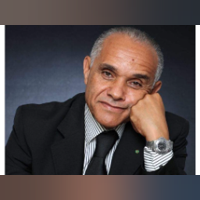
Aziz Daouda Aziz Daouda

Aziz Daouda

Directeur Technique et du Développement de la Confédération Africaine d'Athlétisme. Passionné du Maroc, passionné d'Afrique. Concerné par ce qui se passe, formulant mon point de vue quand j'en ai un. Humaniste, j'essaye de l'être, humain je veux l'être. Mon histoire est intimement liée à l'athlétisme marocain et mondial. J'ai eu le privilège de participer à la gloire de mon pays .


8100

33.0

Agentic AI Beyond Benchmarks: Meta-Agents & the Future of AI Evaluation with Khalil Mrini 222

I recently sat down with Khalil Mrini to talk about his work and international experiences. He has spent time in Marrakech, Switzerland, India, and the United States, each place influencing his perspective in different ways. We also mentioned his visit at the UM6P, his experience of the university, students and innkvative AI curriculum. Khalil presented his new paper on agentic AI. The paper focuses on the use of autonomous agents to evaluate and benchmark other agents: essentially, systems that can test one another’s capabilities. He described how this approach could provide a more dynamic and optimal method for measuring progress in AI research. We ended the conversation by discussing AI ethics. Our exchange raised open questions about responsibility, transparency, and how the field can ensure that increasingly autonomous systems align with human values.
youtu.be/zE7PKRjrid4

A Historical Triptych: How Morocco, Spain, and Portugal are Forging the Success of the 2030 World Cup 339

The assignment of the 2030 FIFA World Cup hosting rights to the unprecedented trio of Morocco, Portugal, and Spain marks the opening of a new chapter in the history of international and sporting relations. The joint organization of this event confirms an unparalleled dynamic, engaging the three nations in a triangular cooperation whose efficiency will be the decisive marker of this global event's success. This trilateral partnership transcends mere logistical collaboration to become a true lever for strategic development. The question is no longer whether bilateral relations are ready, but how their integration into a strengthened trilateral framework will guarantee the success of a mega-event poised to connect, for the first time, two continents through the medium of sport. Historical ties and geographical proximity provide a fertile ground for a remarkable intensification of relations between these three partners. The announcement of their tripartite bid has, in fact, elevated the need for harmonized coordination in the logistical, economic, and security domains to the level of a strategic imperative. I. The Political and Economic Foundations of Enhanced Cooperation The alignment around the 2030 project is not fortuitous; it is rooted in deep political and economic considerations that mutualize the interests of the three countries. •⁠ ⁠The Imperative of Convergence suffers no ambivalence: Spain and Portugal, while operating within the structural framework of the European Union, recognize Morocco as an essential strategic partner, a genuine gateway and pivot to the African continent. This dynamic is not unilateral; the Kingdom is consolidating its Euro-African anchor with heightened clarity through this same alliance. The World Cup deadline, far from being a simple calendar constraint, acts as a powerful lever, forcing the acceleration—often judged too slow—of regulatory, customs, and security convergence processes among the three capitals. Crucially, the political will displayed at the highest level—symbolized by the direct monitoring of Moroccan commitments by His Majesty King Mohammed VI—stands as a decisive catalyst, ensuring the establishment of a unified and enduring policy line, even in the face of contingencies and fluctuations in political majorities within the allied states. •⁠ ⁠Mutualization of Investments and Benefits: On the economic front, the World Cup represents an unprecedented opportunity to boost trade and investment. The trilateral agreements directly influence the planning of major works: the goal is no longer to build isolated infrastructures, but integrated networks (ports, air links, potential high-speed rail connections) designed for interoperability. The harmonization of tourism offerings and incentivizing fiscal regimes for sponsors and investors is crucial to maximize shared benefits. The success of coordination in the logistical, economic, and security domains will not be merely a performance indicator; it will be the symbol of a collective capacity to manage a complex event on a transcontinental scale. II. Managing Complexities: The Challenges of Co-Development An event of this magnitude, operated by three sovereign states, naturally generates frictions and coordination challenges that require first-rate diplomatic and technical management. •⁠ ⁠The Challenge of Global Security and Integrated Transport: The primary obstacle is the creation of a unified security space for the millions of supporters on the move. This demands real-time information sharing, coordination of law enforcement agencies, and the harmonization of emergency protocols. Concurrently, the transport system must be conceived as a single network. The transit of teams and supporters between Europe and Africa must be fluid, reliable, and ecological, necessitating targeted investments in airport capacity and maritime services. •⁠ ⁠The Cultural and Civilizational Vector: Beyond sport, the World Cup is a diplomatic platform. The secondary, but fundamental, challenge is to move beyond simple technical organization to present an ideal model of intercultural coexistence. Morocco, Spain, and Portugal must invest in promoting their cross-cultural heritages, consolidating the values of peace and mutual respect. This involves qualifying national institutions not only in logistics but also in public management and global media interaction, to avoid the pitfalls of fragmented or sensationalist coverage. III. The Structuring Influence of Bilateral Agreements on Logistics The influence of existing agreements between the three countries is vital for infrastructure development. The current stage is characterized by high anticipation from the private sectors and sports observers, who are watching for the concrete acceleration of construction projects. The overall efficiency of the operation—whether considering the pre-event phase, execution during the tournament, or the post-realization legacy—rests entirely on the solidity of the triangular commitment. The transformation of infrastructures, from stadiums to training centers and reception areas, must be carried out in a spirit of normative alignment. In conclusion, the 2030 World Cup is not merely the sum of three national organizations; it is a project of strategic co-development. The strong historical relations uniting the Kingdom of Morocco, Portugal, and Spain, amplified by a constant and high-level political will, constitute the decisive element for transforming this bid into a resounding success, offering the world a precedent of successful integration between two shores.

Law 30-09: A “Tree with Bitter Fruits” Hindering the Development of Moroccan Sports 344

While Morocco’s recent performances on the international stage—particularly in football—demonstrate its growing dynamism, the legal framework governing the sports sector seems unable to keep pace with this evolution. Conceived in the wake of the 2008 Royal Letter and enacted in 2010, Law No. 30-09, which was meant to modernize the national sports system, now reveals—fifteen years after its delayed implementation—serious limitations. Marked by internal inconsistencies, deficient enforcement, and pervasive state interference, the law ultimately undermines its original purpose: to professionalize Moroccan sport and align it with international standards. I. Excessive Requirements and Forgotten Sanctions Born from a clear political will to reform Moroccan sport and provide it with a modern legal framework, Law 30-09 has quickly become a rigid and impractical instrument. One of its most emblematic—and controversial—provisions is the obligation imposed on certain sports associations to establish sports corporations (Sociétés Anonymes). While the intent was to ensure sound governance, fiscal transparency, and executive accountability, practice has revealed the limits of this approach. •⁠ ⁠A disproportionate constraint. Most associations lack the financial and organizational capacity to comply with such structural obligations. •⁠ ⁠A flawed and inapplicable framework. The law establishes three non-cumulative conditions triggering the obligation to form a sports company. Only the first has been clarified by regulation, while the other two—relating to turnover and payroll—were never defined by governmental decree. As a result, the rule remains largely inoperative, especially since the penalties for non-compliance are systematically ignored. •⁠ ⁠An unfinished reform. Even among the few clubs that have complied, the parent association still holds the majority of the share capital. This structural lock prevents the opening of capital to private investors, thus maintaining dependency on the old associative model rather than promoting professionalization. II. The Persistent Shadow of the State: An Interference Contrary to Autonomy Principles By its very nature, sport is a sphere of autonomy, an ethos enshrined in the Moroccan Constitution and in the regulations of international organizations such as FIFA. Yet Law 30-09 establishes the supervising ministry as the true guardian of the sector, concentrating significant and often excessive powers: •⁠ ⁠An extensive right of scrutiny. The ministry approves statutes, grants accreditation, and confers authorization to national federations. •⁠ ⁠A pronounced power of interference. The administration may impose standard contracts and, more seriously, revoke authorization or dissolve a federation in the event of a “serious violation.” Such prerogatives contradict the spirit of the Constitution, which reserves this power to the judiciary. •⁠ ⁠Institutional omnipresence. A state representative must sit within the governing bodies of both the national federations and the Moroccan National Olympic Committee (CNOM), reinforcing state oversight at the expense of autonomy. This predominant executive control contradicts the principles of independence that underpin both national constitutional law and the global sports governance model. III. The Ambiguous Status of Athletes: The Law’s Major Omission Beyond institutional deficiencies, Law 30-09 exposes a serious legal vacuum regarding the status of athletes. The professional athlete’s contract is treated as an ordinary employment contract—an assimilation that raises significant difficulties. •⁠ ⁠The legislator had to create several exceptions to the Labour Code (five-year fixed-term contracts, exclusivity clauses, conditions for unilateral termination), resulting in an incoherent hybrid regime. •⁠ ⁠Although classified as “employees,” professional athletes do not enjoy the social protection and retirement benefits normally afforded to workers. •⁠ ⁠As for amateur athletes, their status remains completely unaddressed by the law. The provisions aimed at supporting athlete training and post-career reconversion are equally deficient. They are neither mandatory nor widely implemented, few training centers exist, and many athletes lack the educational background needed to benefit from such programs. IV. The Need for a Moroccan Sports Code Faced with these structural weaknesses, a piecemeal revision of the law is no longer adequate. The codification of sports law—through the adoption of a comprehensive Moroccan Sports Code—is now an imperative step toward supporting the country’s international ambition. Drawing inspiration from the French model, such a reform would serve several key purposes: 1.⁠ ⁠Clarifying and consolidating the dispersed legal texts, regulations, and case law to facilitate specialization among legal practitioners. 2.⁠ ⁠Correcting inconsistencies by redefining the jurisdictional competences of the State and creating a sui generis legal status for professional and amateur athletes. 3.⁠ ⁠Modernizing the legal framework by integrating fiscal and social regimes specific to sports entities and individuals. Despite its initial promise of modernization, Law 30-09 has become a “tree with bitter fruits.” Instead of fostering professionalism, it has constrained the sector and amplified its institutional fragility. Only a complete codification—reflecting Morocco’s socio-economic realities and the principles of good governance—can ensure a coherent, autonomous, and sustainable framework for the country’s sports development.