Think Forward.

For once, the PJD is proposing to set up a national sports council 9480

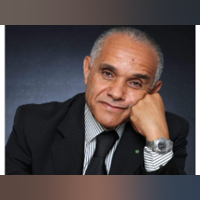
It's not customary, but this Sunday, April 6, 2025, the article is about sports. I don't usually like to talk about it unless I'm forced to. It's paradoxical, given that I've dedicated my life to sports and made it my profession. Many are convinced that it's very difficult to make changes, as mediocrity is deeply rooted, good intentions are disrupted, undesirable skills are present, dedication is not valued, and honesty is perceived as questionable. The opportunity arose due to two political parties, as it's not common for both parties to show interest in sports within a week. The PJD and the FFD have done so. I found this very interesting because usually, parties only address the subject after unacceptable results. Then, succumbing to emotion, they take advantage of the situation to question the government and, for a while, take a stand, criticizing the responsible minister and blaming the federations. This was the case recently following the disappointing results at the Paris Olympics. Afterwards, there was complete silence. During the preparation of electoral campaign programs, some parties, though rare, mention sports in simple narratives that are generally devoid of meaning; just to say it's important, without specifying why or how they plan to address it once in parliament or government. This quickly translates into a lack of vision in the inaugural speeches of prime ministers, now chiefs of government. We settle for a few phrases picked up here and there to say that sports are not forgotten. From memory, I can cite a few exceptions that confirm the rule. The Ittihad Addoustouri, in its program at its creation, dedicated a good chapter to sports. I contributed significantly to it. The USFP, during the last elections, also invited me to a reflection that served as the basis for the party's program. I also remember participating in similar work a long time ago with the Istiqlal under the impetus of Si Belmahi, the valiant president of the FRM cycling federation. This time, it's the PJD that has taken a stand by proposing, according to the press, a bill to create a National Sports Council in place of the current responsible department, namely the small sports department under the Ministry of National Education, Preschool, and Sports. The structure of Si Akhanouch's Government and its revised version continues to astonish, reducing sports to a simple department without prominence among the prerogatives of a ministry bogged down in endless reforms, without us seeing the end of the tunnel. Since independence, national education has been in perpetual reform. The latest one dates back to just last week. Let's hope it's not the last. Since this attachment, the two ministers in charge seem not to have time for sports. The PJD has come boldly with this project, which is not new. The first sports conferences in the early sixties already mentioned it. Since then, sports have experienced at least 14 or 15 upheavals, going from an independent department to being attached to youth, national education, passing through a secretariat attached to the prime minister. It was even attached to labor during the time of the late Arsalane El Jadidi. Sports will continue on its path with more or less success, but mostly repetitive failures. The only time it experienced some stability was during the time of the late Abdellatif Semlali, who still holds the record for longevity as a sports official. His tenure as Secretary of State and then Minister lasted eleven good years. We talked then about a sports takeoff. It was a relatively happy period that saw a restructuring of the sports field with sponsorship, the second round in the World Cup, the creation of the National Athletics School, and a resurgence of youth in more than one sport discipline. The PJD, which led the government, didn't it realize the malaise that sports were experiencing during its ten years of glory? Better late than never. Moving to a sports management system that escapes political time is a necessity. It's an evident demand made by many specialists for a long time, without the political world following up. Sports time is longer than political time. Preparing high-level athletes requires 7 to 8 years of continuous and linear work. Sports performance requires time and stability. The number of ministers in charge of sports who have succeeded each other in a short period shows how much we need this stability, and that's one of the flaws, but not the only one. Due to ignorance of this history, some say that the project is inspired by what happened in France with the creation of an agency to handle sports. This is completely false. The demand in Morocco is much older. For about forty years, it has been discussed. Already during the government of Driss Jettou, it was on the table but did not succeed for many reasons, including a certain resistance that does not want this highly promising sector to leave the political sphere. National sports can only thank the PJD for this bold move, even if it doesn't have much chance of succeeding, given how things are going in the current parliament. The PJD, being largely in the minority and without real support from its partners in the opposition, will have at least succeeded in opening the debate in the right direction. The supporters of Si Benkirane rightly refer to the royal letter of 2008. They cite the law 30.09 without saying that it was catastrophic for national sports. This could be the subject of a future article. The second party that raised the issue of sports did so just yesterday. It is the Front of Democratic Forces. The party, under the leadership of Si Mustapha Benali, has brought back to the forefront the discussion of public sports policies with an extremely wide and varied panel of specialists and sports leaders, and in the presence of representatives from political parties of the same persuasion. The debates were of very good quality with a broad consensus around solutions that seem obvious and the surprise that they are not being implemented. This kind of debate is as necessary as it is urgent. Morocco, which makes sports and football in particular a driver of development, cannot wait any longer, lest it see its colossal efforts wasted and thus dangerous for its near and distant future.

Aziz Daouda Aziz Daouda

Aziz Daouda

Directeur Technique et du Développement de la Confédération Africaine d'Athlétisme. Passionné du Maroc, passionné d'Afrique. Concerné par ce qui se passe, formulant mon point de vue quand j'en ai un. Humaniste, j'essaye de l'être, humain je veux l'être. Mon histoire est intimement liée à l'athlétisme marocain et mondial. J'ai eu le privilège de participer à la gloire de mon pays .


8100

33.0

Agentic AI Beyond Benchmarks: Meta-Agents & the Future of AI Evaluation with Khalil Mrini 280

I recently sat down with Khalil Mrini to talk about his work and international experiences. He has spent time in Marrakech, Switzerland, India, and the United States, each place influencing his perspective in different ways. We also mentioned his visit at the UM6P, his experience of the university, students and innkvative AI curriculum. Khalil presented his new paper on agentic AI. The paper focuses on the use of autonomous agents to evaluate and benchmark other agents: essentially, systems that can test one another’s capabilities. He described how this approach could provide a more dynamic and optimal method for measuring progress in AI research. We ended the conversation by discussing AI ethics. Our exchange raised open questions about responsibility, transparency, and how the field can ensure that increasingly autonomous systems align with human values.
youtu.be/zE7PKRjrid4

A Historical Triptych: How Morocco, Spain, and Portugal are Forging the Success of the 2030 World Cup 389

The assignment of the 2030 FIFA World Cup hosting rights to the unprecedented trio of Morocco, Portugal, and Spain marks the opening of a new chapter in the history of international and sporting relations. The joint organization of this event confirms an unparalleled dynamic, engaging the three nations in a triangular cooperation whose efficiency will be the decisive marker of this global event's success. This trilateral partnership transcends mere logistical collaboration to become a true lever for strategic development. The question is no longer whether bilateral relations are ready, but how their integration into a strengthened trilateral framework will guarantee the success of a mega-event poised to connect, for the first time, two continents through the medium of sport. Historical ties and geographical proximity provide a fertile ground for a remarkable intensification of relations between these three partners. The announcement of their tripartite bid has, in fact, elevated the need for harmonized coordination in the logistical, economic, and security domains to the level of a strategic imperative. I. The Political and Economic Foundations of Enhanced Cooperation The alignment around the 2030 project is not fortuitous; it is rooted in deep political and economic considerations that mutualize the interests of the three countries. •⁠ ⁠The Imperative of Convergence suffers no ambivalence: Spain and Portugal, while operating within the structural framework of the European Union, recognize Morocco as an essential strategic partner, a genuine gateway and pivot to the African continent. This dynamic is not unilateral; the Kingdom is consolidating its Euro-African anchor with heightened clarity through this same alliance. The World Cup deadline, far from being a simple calendar constraint, acts as a powerful lever, forcing the acceleration—often judged too slow—of regulatory, customs, and security convergence processes among the three capitals. Crucially, the political will displayed at the highest level—symbolized by the direct monitoring of Moroccan commitments by His Majesty King Mohammed VI—stands as a decisive catalyst, ensuring the establishment of a unified and enduring policy line, even in the face of contingencies and fluctuations in political majorities within the allied states. •⁠ ⁠Mutualization of Investments and Benefits: On the economic front, the World Cup represents an unprecedented opportunity to boost trade and investment. The trilateral agreements directly influence the planning of major works: the goal is no longer to build isolated infrastructures, but integrated networks (ports, air links, potential high-speed rail connections) designed for interoperability. The harmonization of tourism offerings and incentivizing fiscal regimes for sponsors and investors is crucial to maximize shared benefits. The success of coordination in the logistical, economic, and security domains will not be merely a performance indicator; it will be the symbol of a collective capacity to manage a complex event on a transcontinental scale. II. Managing Complexities: The Challenges of Co-Development An event of this magnitude, operated by three sovereign states, naturally generates frictions and coordination challenges that require first-rate diplomatic and technical management. •⁠ ⁠The Challenge of Global Security and Integrated Transport: The primary obstacle is the creation of a unified security space for the millions of supporters on the move. This demands real-time information sharing, coordination of law enforcement agencies, and the harmonization of emergency protocols. Concurrently, the transport system must be conceived as a single network. The transit of teams and supporters between Europe and Africa must be fluid, reliable, and ecological, necessitating targeted investments in airport capacity and maritime services. •⁠ ⁠The Cultural and Civilizational Vector: Beyond sport, the World Cup is a diplomatic platform. The secondary, but fundamental, challenge is to move beyond simple technical organization to present an ideal model of intercultural coexistence. Morocco, Spain, and Portugal must invest in promoting their cross-cultural heritages, consolidating the values of peace and mutual respect. This involves qualifying national institutions not only in logistics but also in public management and global media interaction, to avoid the pitfalls of fragmented or sensationalist coverage. III. The Structuring Influence of Bilateral Agreements on Logistics The influence of existing agreements between the three countries is vital for infrastructure development. The current stage is characterized by high anticipation from the private sectors and sports observers, who are watching for the concrete acceleration of construction projects. The overall efficiency of the operation—whether considering the pre-event phase, execution during the tournament, or the post-realization legacy—rests entirely on the solidity of the triangular commitment. The transformation of infrastructures, from stadiums to training centers and reception areas, must be carried out in a spirit of normative alignment. In conclusion, the 2030 World Cup is not merely the sum of three national organizations; it is a project of strategic co-development. The strong historical relations uniting the Kingdom of Morocco, Portugal, and Spain, amplified by a constant and high-level political will, constitute the decisive element for transforming this bid into a resounding success, offering the world a precedent of successful integration between two shores.

Law 30-09: A “Tree with Bitter Fruits” Hindering the Development of Moroccan Sports 391

While Morocco’s recent performances on the international stage—particularly in football—demonstrate its growing dynamism, the legal framework governing the sports sector seems unable to keep pace with this evolution. Conceived in the wake of the 2008 Royal Letter and enacted in 2010, Law No. 30-09, which was meant to modernize the national sports system, now reveals—fifteen years after its delayed implementation—serious limitations. Marked by internal inconsistencies, deficient enforcement, and pervasive state interference, the law ultimately undermines its original purpose: to professionalize Moroccan sport and align it with international standards. I. Excessive Requirements and Forgotten Sanctions Born from a clear political will to reform Moroccan sport and provide it with a modern legal framework, Law 30-09 has quickly become a rigid and impractical instrument. One of its most emblematic—and controversial—provisions is the obligation imposed on certain sports associations to establish sports corporations (Sociétés Anonymes). While the intent was to ensure sound governance, fiscal transparency, and executive accountability, practice has revealed the limits of this approach. •⁠ ⁠A disproportionate constraint. Most associations lack the financial and organizational capacity to comply with such structural obligations. •⁠ ⁠A flawed and inapplicable framework. The law establishes three non-cumulative conditions triggering the obligation to form a sports company. Only the first has been clarified by regulation, while the other two—relating to turnover and payroll—were never defined by governmental decree. As a result, the rule remains largely inoperative, especially since the penalties for non-compliance are systematically ignored. •⁠ ⁠An unfinished reform. Even among the few clubs that have complied, the parent association still holds the majority of the share capital. This structural lock prevents the opening of capital to private investors, thus maintaining dependency on the old associative model rather than promoting professionalization. II. The Persistent Shadow of the State: An Interference Contrary to Autonomy Principles By its very nature, sport is a sphere of autonomy, an ethos enshrined in the Moroccan Constitution and in the regulations of international organizations such as FIFA. Yet Law 30-09 establishes the supervising ministry as the true guardian of the sector, concentrating significant and often excessive powers: •⁠ ⁠An extensive right of scrutiny. The ministry approves statutes, grants accreditation, and confers authorization to national federations. •⁠ ⁠A pronounced power of interference. The administration may impose standard contracts and, more seriously, revoke authorization or dissolve a federation in the event of a “serious violation.” Such prerogatives contradict the spirit of the Constitution, which reserves this power to the judiciary. •⁠ ⁠Institutional omnipresence. A state representative must sit within the governing bodies of both the national federations and the Moroccan National Olympic Committee (CNOM), reinforcing state oversight at the expense of autonomy. This predominant executive control contradicts the principles of independence that underpin both national constitutional law and the global sports governance model. III. The Ambiguous Status of Athletes: The Law’s Major Omission Beyond institutional deficiencies, Law 30-09 exposes a serious legal vacuum regarding the status of athletes. The professional athlete’s contract is treated as an ordinary employment contract—an assimilation that raises significant difficulties. •⁠ ⁠The legislator had to create several exceptions to the Labour Code (five-year fixed-term contracts, exclusivity clauses, conditions for unilateral termination), resulting in an incoherent hybrid regime. •⁠ ⁠Although classified as “employees,” professional athletes do not enjoy the social protection and retirement benefits normally afforded to workers. •⁠ ⁠As for amateur athletes, their status remains completely unaddressed by the law. The provisions aimed at supporting athlete training and post-career reconversion are equally deficient. They are neither mandatory nor widely implemented, few training centers exist, and many athletes lack the educational background needed to benefit from such programs. IV. The Need for a Moroccan Sports Code Faced with these structural weaknesses, a piecemeal revision of the law is no longer adequate. The codification of sports law—through the adoption of a comprehensive Moroccan Sports Code—is now an imperative step toward supporting the country’s international ambition. Drawing inspiration from the French model, such a reform would serve several key purposes: 1.⁠ ⁠Clarifying and consolidating the dispersed legal texts, regulations, and case law to facilitate specialization among legal practitioners. 2.⁠ ⁠Correcting inconsistencies by redefining the jurisdictional competences of the State and creating a sui generis legal status for professional and amateur athletes. 3.⁠ ⁠Modernizing the legal framework by integrating fiscal and social regimes specific to sports entities and individuals. Despite its initial promise of modernization, Law 30-09 has become a “tree with bitter fruits.” Instead of fostering professionalism, it has constrained the sector and amplified its institutional fragility. Only a complete codification—reflecting Morocco’s socio-economic realities and the principles of good governance—can ensure a coherent, autonomous, and sustainable framework for the country’s sports development.