Think Forward.

Le style c'est l'homme. 3279

Voilà quelques années, je signais l'article ici-bas dans la revue marocaine VH. C'était à l'occasion d'une édition spéciale consacrée au Roi Mohammed VI, Roi du Maroc. L'accueil réservé cette semaine à "Qasr Al Watan" à Abou Dhabi, à Sa Majesté le Roi Mohammed VI par Son Altesse Cheikh Mohammed Ben Zayed Al-Nahyane, Président de l’État des Émirats Arabes Unis : l’entrée du palais par le portail "Zayed", l'escorte des cavaliers, la marche jusqu'au portail "Al Hisn", la revue des troupes folkloriques, l'équipe nationale de voltige "Al Fursan" dans le ciel, les 21 coups de canon en signe de bienvenue, l'arrivée au portail "Al Hisn" et l'accolade chaleureuse ont encore une fois souligné la classe, l'élégance et l'aisance de Sa Majesté le Roi dans les grands moments protocolaires et les décorum fantastiques, exactement comme dans une grande surface, habillé d'un jean et d'un tee-shirt, un bonnet sur la tête ou encore au volant d'une voiture au milieu des foules. Sa personnalité forte, son naturel, son pas déterminé et rythmé sont tant d'indices de traits de caractère particuliers et donc de style. Ces images fortes et attachantes, venues à nous des Émirats Arabes Unis, relevées et vécues avec fierté par les Marocains et bien d’autres encore, m'ont rappelé cet article, alors je le partage ici avec vous. Il est plus que jamais d'actualité. **** Aussi loin que l’on remonte dans le temps, l’empreinte particulière d’humains exceptionnels a jalonné l’histoire, pour ne pas dire fait l’histoire. Plus tard, au 17ᵉ siècle, Blaise Pascal évoquera la question et l’expliquera par le respect. Il dira que le respect de la personne se fonde sur son caractère. Il résumera ses traits de caractère dans le style : « Le style, c’est l’homme ». Le comte de Buffon, sans doute marqué par la rigueur des sciences exactes, martèlera dans un discours resté célèbre à l’Académie française : « Le style est l’homme lui-même ». Même si Buffon ne parlait alors que de littérature et de sciences, le style devient ainsi une constante objective de chacun de ceux qui marquent l’histoire par un legs particulier. Évoquant la projection de ce qu’allait être le prince héritier une fois roi, feu Sa Majesté Hassan II reprendra la notion de style, citant justement Blaise Pascal. Il dira dans une interview restée culte : « Le style, c’est l’homme ». Sans doute voulait-il annoncer que le règne de Sa Majesté le Roi Mohammed VI allait être différent du sien, quoique dans la continuité logique de l’histoire. Aujourd’hui, la tendance est de confondre le style avec une notion plus moderne, empreinte d’éphémère : le look. Si le look, que va résumer une tenue vestimentaire, une coupe de cheveux, des couleurs, est circonstancié et obéit donc au code de la circonstance et du moment, le style lui est une constante de la personne et l’accompagne tout au long de sa vie. Le style connaîtra sans doute une évolution, mais dans un continuum logique. Si le style force l’histoire par l’objectivité qui finit par l’imposer, le look n’est pas forcément en symbiose avec le style, car il est entaché de subjectivité. Il dépend de la perception de chacun, de l’image et de l’imaginaire. Il est marqué par l’appréciation que l’on se fait de la personne rencontrée dans une circonstance particulière, un environnement particulier. Le look est une composition subjective qui peut se modeler simplement à travers une photographie qui vous tombe entre les mains, une vidéo visionnée dans un train ou dans un avion, des images qui s’invitent dans l’intimité de soi en forçant l’écran d’un téléphone ou d’une tablette, à travers les réseaux sociaux. Le look peut aller jusqu’à contraster avec le style. Il est l’appréciation subjective que l’on fait de la personne scrutée et sera encore plus biaisé si elle est accompagnée d’un commentaire, même s’il est à l’antipode de l’objectivité. Un acteur de cinéma peut ainsi se faire coller, par son look et son jeu, les traits de caractère d’un personnage, alors qu’il n’aura fait que réussir à nous les restituer le temps d’un film. Le look est apprécié dès lors qu’il coïncide avec l’image que l’on se fait de la personne à l’instant même de la rencontre. Il dépend de la réussite de l’approche et de la réaction de la personne rencontrée. Il est conditionné par les circonstances de cette rencontre, le degré de surprise et le niveau émotionnel qu’elle suscite. Le premier coup d’œil va être ici déterminant. Le look suscite l’admiration : chacun se fera une idée de la personne rencontrée en fonction de sa propre appréciation, de son affectif et de son état d’âme sur le moment. Le degré de sympathie dégagée ou partagée peut ainsi pousser à l’idolâtrie. Le style, lui, force le respect et suscite l’amour. C’est une constante qui évolue lentement, sûrement, et devient marquante. Il est apprécié sur des critères plutôt objectifs et vérifiés. Le style est indélébile et est lié à l’action par l’art et la manière. Il grave à jamais une empreinte. C’est cette empreinte qui permet d’en juger et d’en définir les contours. Le juge ici, c’est l’histoire. Aziz Daouda

Aziz Daouda Aziz Daouda

Aziz Daouda

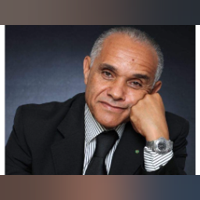
Directeur Technique et du Développement de la Confédération Africaine d'Athlétisme. Passionné du Maroc, passionné d'Afrique. Concerné par ce qui se passe, formulant mon point de vue quand j'en ai un. Humaniste, j'essaye de l'être, humain je veux l'être. Mon histoire est intimement liée à l'athlétisme marocain et mondial. J'ai eu le privilège de participer à la gloire de mon pays .


8100

33.0

Agentic AI Beyond Benchmarks: Meta-Agents & the Future of AI Evaluation with Khalil Mrini 327

I recently sat down with Khalil Mrini to talk about his work and international experiences. He has spent time in Marrakech, Switzerland, India, and the United States, each place influencing his perspective in different ways. We also mentioned his visit at the UM6P, his experience of the university, students and innkvative AI curriculum. Khalil presented his new paper on agentic AI. The paper focuses on the use of autonomous agents to evaluate and benchmark other agents: essentially, systems that can test one another’s capabilities. He described how this approach could provide a more dynamic and optimal method for measuring progress in AI research. We ended the conversation by discussing AI ethics. Our exchange raised open questions about responsibility, transparency, and how the field can ensure that increasingly autonomous systems align with human values.
youtu.be/zE7PKRjrid4

A Historical Triptych: How Morocco, Spain, and Portugal are Forging the Success of the 2030 World Cup 433

The assignment of the 2030 FIFA World Cup hosting rights to the unprecedented trio of Morocco, Portugal, and Spain marks the opening of a new chapter in the history of international and sporting relations. The joint organization of this event confirms an unparalleled dynamic, engaging the three nations in a triangular cooperation whose efficiency will be the decisive marker of this global event's success. This trilateral partnership transcends mere logistical collaboration to become a true lever for strategic development. The question is no longer whether bilateral relations are ready, but how their integration into a strengthened trilateral framework will guarantee the success of a mega-event poised to connect, for the first time, two continents through the medium of sport. Historical ties and geographical proximity provide a fertile ground for a remarkable intensification of relations between these three partners. The announcement of their tripartite bid has, in fact, elevated the need for harmonized coordination in the logistical, economic, and security domains to the level of a strategic imperative. I. The Political and Economic Foundations of Enhanced Cooperation The alignment around the 2030 project is not fortuitous; it is rooted in deep political and economic considerations that mutualize the interests of the three countries. •⁠ ⁠The Imperative of Convergence suffers no ambivalence: Spain and Portugal, while operating within the structural framework of the European Union, recognize Morocco as an essential strategic partner, a genuine gateway and pivot to the African continent. This dynamic is not unilateral; the Kingdom is consolidating its Euro-African anchor with heightened clarity through this same alliance. The World Cup deadline, far from being a simple calendar constraint, acts as a powerful lever, forcing the acceleration—often judged too slow—of regulatory, customs, and security convergence processes among the three capitals. Crucially, the political will displayed at the highest level—symbolized by the direct monitoring of Moroccan commitments by His Majesty King Mohammed VI—stands as a decisive catalyst, ensuring the establishment of a unified and enduring policy line, even in the face of contingencies and fluctuations in political majorities within the allied states. •⁠ ⁠Mutualization of Investments and Benefits: On the economic front, the World Cup represents an unprecedented opportunity to boost trade and investment. The trilateral agreements directly influence the planning of major works: the goal is no longer to build isolated infrastructures, but integrated networks (ports, air links, potential high-speed rail connections) designed for interoperability. The harmonization of tourism offerings and incentivizing fiscal regimes for sponsors and investors is crucial to maximize shared benefits. The success of coordination in the logistical, economic, and security domains will not be merely a performance indicator; it will be the symbol of a collective capacity to manage a complex event on a transcontinental scale. II. Managing Complexities: The Challenges of Co-Development An event of this magnitude, operated by three sovereign states, naturally generates frictions and coordination challenges that require first-rate diplomatic and technical management. •⁠ ⁠The Challenge of Global Security and Integrated Transport: The primary obstacle is the creation of a unified security space for the millions of supporters on the move. This demands real-time information sharing, coordination of law enforcement agencies, and the harmonization of emergency protocols. Concurrently, the transport system must be conceived as a single network. The transit of teams and supporters between Europe and Africa must be fluid, reliable, and ecological, necessitating targeted investments in airport capacity and maritime services. •⁠ ⁠The Cultural and Civilizational Vector: Beyond sport, the World Cup is a diplomatic platform. The secondary, but fundamental, challenge is to move beyond simple technical organization to present an ideal model of intercultural coexistence. Morocco, Spain, and Portugal must invest in promoting their cross-cultural heritages, consolidating the values of peace and mutual respect. This involves qualifying national institutions not only in logistics but also in public management and global media interaction, to avoid the pitfalls of fragmented or sensationalist coverage. III. The Structuring Influence of Bilateral Agreements on Logistics The influence of existing agreements between the three countries is vital for infrastructure development. The current stage is characterized by high anticipation from the private sectors and sports observers, who are watching for the concrete acceleration of construction projects. The overall efficiency of the operation—whether considering the pre-event phase, execution during the tournament, or the post-realization legacy—rests entirely on the solidity of the triangular commitment. The transformation of infrastructures, from stadiums to training centers and reception areas, must be carried out in a spirit of normative alignment. In conclusion, the 2030 World Cup is not merely the sum of three national organizations; it is a project of strategic co-development. The strong historical relations uniting the Kingdom of Morocco, Portugal, and Spain, amplified by a constant and high-level political will, constitute the decisive element for transforming this bid into a resounding success, offering the world a precedent of successful integration between two shores.