Think Forward.

Le compagnonnage, une piste oubliée pour réinsérer les jeunes NEET... 1527

S'il y a une situation à laquelle il faut répondre vite, très vite même, c'est celle des NEET. Ces jeunes ne vont pas s'évaporer. Au fur et à mesure qu'ils avancent en âge, leurs problèmes, et donc les nôtres, deviendront de plus en plus difficiles à apprivoiser et à contenir. Le gouvernement se doit de trouver des solutions durables pour réinsérer ces jeunes sans emploi ni formation, les fameux NEET: Not in Employment, Education or Training. Une voie ancienne pourrait s’avérer étonnamment moderne : le compagnonnage. Héritée des traditions artisanales, cette forme d’apprentissage direct, qui a fait ses preuves tout au long de notre histoire, n'a pas été abandonnée ailleurs. Dans de nombreux pays européens, l’apprentissage en atelier est un pilier de la formation professionnelle. L'idée devrait inspirer un nouveau modèle marocain d’insertion et de transmission des savoir-faire, en redonnant sens à l’apprentissage par le contact avec les métiers. Dans un passé pas si lointain cela a été le cas même pour certains métiers modernes : coiffure, mécanique et autres. Il est temps de repenser tous cela et également de regarder ce qui se passe ailleurs dans les pays où l'enfance et ses droits sont parfaitement protégés, mais où il n'est pas interdit d'apprendre un métier en atelier, bien au contraire. En Suisse ou en Allemagne, le système dit « dual » associe enseignement théorique et pratique en entreprise. Il permet aux jeunes d’acquérir une qualification reconnue tout en participant à la vie productive du pays. C'est par exemple le pilier incontournable de l'excellence suisse en horlogerie. Ce modèle d'apprentissage valorise la transmission et la rigueur du geste, et permet de maintenir vivantes des professions manuelles et artisanales, tout en réduisant le chômage des jeunes. Or, aujourd'hui, force est de constater que bon nombre de métiers traditionnels marocains sont en perte de vitesse et risquent la disparition faute de Maâlems. Le compagnonnage met au cœur de la formation la relation entre le maître et l’apprenti, la mobilité entre ateliers, ainsi que la réalisation de chefs-d’œuvres auxquels l'apprenti participe fièrement et voit se concrétiser ses efforts, dont l'appréciation du client est l'indice unique d'évaluation. Les écoles de formation professionnelle ne peuvent offrir une telle approche émotionnelle avec les métiers. Le compagnonnage valorise la patience, l’excellence et la fierté du métier : des valeurs qui résonnent avec la culture artisanale marocaine. Au Maroc, la situation est étonnamment paradoxale. Les politiques de lutte contre le travail des enfants ont permis des avancées spectaculaires certes : le nombre de mineurs travailleurs a chuté de près de 94% en vingt ans. Mais la législation, dans son zèle protecteur, ne distingue pas clairement le travail illégal de l’apprentissage encadré. Le résultat est sans équivoque, des ateliers où se transmettaient autrefois les savoirs du bois, du cuir ou du métal ferment les uns après les autres, faute de pouvoir accueillir des apprentis sans enfreindre la loi, alors que des centaines de milliers de jeunes sont abandonnés à la rue et ses risques. Cette confusion entre «exploitation» et « formation pratique » prive aujourd’hui des centaines de jeunes d’une voie d’apprentissage réelle, et fragilise un pan entier du patrimoine artisanal national. Afin de récupérer au plus vite cette force historique pour l'absorption des NEET, un cadre juridique revisité, adapté et souple est une urgence. La leçon peut encore une fois nous venir d’Europe. Les comparaisons internationales peuvent nous offrir un éclairage précieux. En Suisse, la formation professionnelle repose sur une véritable alliance entre écoles, entreprises et collectivités locales. L’apprentissage y est valorisé comme une voie d’excellence. Les jeunes ont la possibilité et la chance d'alterner cours et pratique en atelier. Ils acquièrent une solide expérience et obtiennent un certificat fédéral reconnu. Ce système assure une insertion rapide sur le marché du travail, tout en garantissant une protection claire des mineurs et une reconnaissance institutionnelle du statut d’apprenti. Le résultat de ce pragmatisme est que les métiers manuels et artisanaux y demeurent vivants et respectés. En Allemagne, le modèle dual associe également formation théorique et apprentissage en entreprise. Il permet aux jeunes d’intégrer très tôt le monde du travail avec un statut protégé et encadré. Le système est reconnu pour sa capacité à prévenir le chômage des jeunes et à maintenir un haut niveau de compétence technique, notamment dans les métiers industriels et artisanaux. Le Maroc, en revanche, peine encore à structurer cette articulation entre apprentissage et formation. L’apprentissage artisanal y reste largement informel, soumis à une législation restrictive qui tend à confondre accompagnement formatif et travail illégal. Si la protection des mineurs est globalement forte, elle demeure floue dès qu’il s’agit de formation pratique. Cela a pour conséquence une insertion inégale des jeunes selon les secteurs, alors que de nombreux métiers traditionnels pourtant créateurs de richesse, sont aujourd’hui menacés de disparition faute de relève. La philosophie directrice de la réforme nécessaire aujourd'hui, devrait être la réhabilitation du rôle du Maalem. Le Maroc dispose heureusement encre d’un atout inestimable : son réseau d’artisans maîtres, ou Maâlems, gardiens de traditions séculaires dans la ferronnerie, la bijouterie, la menuiserie ou la poterie. Redonner une place légale et formatrice à ces maîtres serait un premier pas vers la création d’un compagnonnage marocain, adapté aux réalités locales et tourné vers la modernité. Cela impliquerait de réformer la loi sur le travail des enfants pour distinguer l’apprentissage structurant, du travail précaire, et de créer des passerelles institutionnelles entre l’artisanat traditionnel et les programmes de formation professionnelle formelle. C'est une voie d’avenir pour les jeunes NEET et ces milliers de jeunes marocains déscolarisés. Le compagnonnage pourrait devenir une porte de sortie de la précarité, voire de la délinquance menaçante. L’apprentissage auprès d’un Maalem n’est pas un retour en arrière, mais une réinvention moderne du lien entre savoir, travail et dignité. Le Maâlems est un maitre est un éducateur, un transmetteur de valeurs fortes. Et puis n'oublions pas que c'est ainsi que Fès était une ville industrielle, que Marrakech a gardé une authenticité qui lui donne son cachet particulier, que Ouarzazate est Ouarzazate ou que Chefchaouen soit Chefchaouen. Encadré par l’État, reconnu par les institutions et soutenu par des incitations locales, ce modèle pourrait contribuer à redonner espoir à une jeunesse en quête de sens, tout en préservant les métiers patrimoniaux qui font la richesse culturelle du Maroc, ce qui le distingue et ce qui fait sa force. En chaque apprenti, germe un bon citoyen, en chaque apprenti dort une PME.
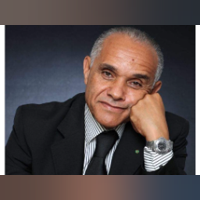
Aziz Daouda Aziz Daouda

Aziz Daouda

Directeur Technique et du Développement de la Confédération Africaine d'Athlétisme. Passionné du Maroc, passionné d'Afrique. Concerné par ce qui se passe, formulant mon point de vue quand j'en ai un. Humaniste, j'essaye de l'être, humain je veux l'être. Mon histoire est intimement liée à l'athlétisme marocain et mondial. J'ai eu le privilège de participer à la gloire de mon pays .


8100

33.0

African Football’s Leading Force: The Moroccan Model Amidst Regional Headwinds 297

The curtain fell on AFCON 2025, leaving a trail of striking contrasts. While the event confirmed the Kingdom’s supremacy as a world-class logistical hub, the tensions witnessed during the final on January 18, 2026, in Rabat, served as a stark reminder of the contingencies still weighing on continental football. Between the seamlessness of the infrastructure and the archaic nature of certain disciplinary attitudes, a fundamental question emerges: how will the transition from CAF’s regulatory framework to that of FIFA in 2030 reshape the management of these organic crises? This shift represents more than a mere scaling up; it is a true paradigmatic rupture where technocratic neutrality will serve to sanctify Moroccan excellence. I. Moroccan Excellence: A Technological Showcase for Africa The massive investment deployed by the Kingdom—ranging from the deep modernization of sports complexes to the systemic integration of VAR—presented the world with the image of a modern, rigorous, and visionary Morocco. This material success, lauded by international observers, aimed to establish an African benchmark. However, this pursuit of perfection encountered a persistent psychological phenomenon: the "host country complex." In this configuration, organizational mastery is sometimes perceived by competitors not as shared progress, but as a lever of dominance, mechanically fueling theories of favoritism. The events of the final illustrate this at its peak. The disallowed goal for Ismaïla Sarr and the late-match penalty became, through the lens of regional suspicion, instruments of controversy rather than technically grounded officiating decisions. Yet, data from DM Sport reveals the opposite: Morocco was among the most penalized teams in the tournament. This discrepancy highlights a major flaw: technology is insufficient to validate a result unless it is protected by a jurisdictional authority perceived as exogenous. II. Solidary Leadership and the Diplomacy of Resentment It would be erroneous, however, to view this quest for excellence as a desire for isolation. On the contrary, Morocco maintains deep and unwavering historical ties with the majority of its sister nations across the continent. Faithful to its African roots, the Kingdom continues to actively promote continental football within CAF, offering its infrastructure and expertise to federations seeking professionalization. This "open-hand" policy ensures that Moroccan success translates into success for all of Africa. Nevertheless, such leadership breeds friction. A "diplomacy of resentment" has emerged from certain foreign media spheres—particularly in specific Arab and African countries—aiming to tarnish the prestige of the Moroccan organization. By framing Morocco as a favored "ogre," these narratives attempt to transform factual superiority into moral injustice. This media harassment specifically targets the emergence of a governance model that now aligns with the most demanding global standards. III. The Advent of "Cold Justice": Legal Sanctification The transition to FIFA’s aegis in 2030 will signal the end of the geographical proximity that fosters such smear campaigns. Unlike the continental framework, the globalization of officiating bodies will dismantle zonal rivalries. Where CAF must often navigate between diplomatic compromise and sporting imperatives, FIFA deploys a "cold justice"—purely procedural in nature. The chaos observed in Rabat would meet a surgical response in 2030. Article 10 of the FIFA Disciplinary Code is unequivocal: any refusal to resume play results in an automatic forfeit and severe sanctions. In 2030, the rule of law will act as a protective cleaver for the host, rendering victimhood narratives obsolete. IV. Technology and the "2030 Bloc": Toward an Indisputable Truth The 2030 edition, spearheaded by the Morocco-Spain-Portugal trio, will benefit from total judgment automation (Shadow VAR, semi-automated offside) and absolute transparency. The FIFA Hosting Agreement will prevail as a superior norm, guaranteeing impartiality. This legal framework will serve as a shield, preventing disciplinary incidents from being politically instrumentalized against the Kingdom. AFCON 2025 was a successful demonstration of organizational strength for Morocco, confirming its role as the driving force of African football. However, it also revealed that excellence remains vulnerable to peripheral noise. In 2030, the definitive anchoring in FIFA law will allow the Kingdom to transform its organizational prowess into a lasting institutional legacy. Sport, finally shielded from geopolitical dross, will align with the strategic vision of a Morocco turned toward the universal, making the rule of law the bedrock of its global legitimacy.

Light Pollution and the End of the Construction of Imagination – Part 1 375

One of the memories I carry most fondly is when my interest in everything related to outer space first awakened. I clearly remember that in 1980 I saw a TV report about a lunar eclipse that we would be able to observe. The images shown on the news program impacted me so deeply that I could hardly sleep that night. The sight of the lunar craters, caught in that characteristic interplay of light and shadow, became etched in my mind. The next day, I questioned a teacher who was a friend of my family almost to the point of exhausting him, asking so many questions about the subject. Next year, I also saw TV advertisements announcing the theatrical release of "The Empire Strikes Back". In a way, my imagination was launched in a manner analogous to the catapult effect that spacecraft and space probes use when they swing around planets. There wasn’t a single clear night when I didn’t spend hours looking up at the sky, at the immensity of the universe. At that time, the night sky was truly dark, since light pollution caused by city lights did not yet have as significant an effect as it does today. In 1982, Carl Sagan’s series "Cosmos" also premiered on television, and even its soundtrack struck me deeply. Then, in 1984, with the debut of several animated series, two of them being "Groizer X" and "Star Blazers", the American version of "Space Battleship Yamato", I experienced yet another “gravitational catapult” effect, further fueling my imagination. In 1986, the passage of Halley’s Comet took over newspapers, magazines, TV programs, and even my school science books. That was it! This was the definitive confirmation of my passion for the space. At that time, however, I still lived in the realm of fantasy, driven solely by what my imagination brought me. I would look at the sky on clear nights and think that traveling through space was like it was in the movies, challenging, full of adventures and dangers, yet seeming simple and even comfortable. After all, in science fiction films, many aspects of physics were disregarded, using a kind of poetic license. But I grew up. I became a scientist. My gaze acquired a new perspective, yet without ever losing the magic of imagination from the beginning of this story. What came next? In the second part of this story, I will conclude… Clear skies to all, and Ad astra!

Trump’s “Council of Peace”: Strategic Pragmatism or Alarm Signal for the International Order? 1129

The invitation extended by U.S. President Donald Trump to His Majesty King Mohammed VI to join the new “Council of Peace” marks a significant turning point in contemporary international relations practice. It stems neither from protocol nor symbolism, but fits into an assumed reconfiguration of global conflict management mechanisms. The Sovereign's acceptance of this invitation, while the Algerian president was not invited and Africa remains largely underrepresented, if not ignored, highlights a selective logic based not on geography or ideology, but on political utility as perceived by the USA as a global actor. In the official communiqué announcing the Sovereign's acceptance, Morocco's diplomatic fundamentals regarding the Palestinian issue were explicitly reiterated, particularly the two-state solution with states living side by side. The trust-based relations with the concerned Arab parties, especially Palestinians in Gaza and the West Bank on one side, and Israel on the other, perfectly foreshadow the role the Kingdom will play in establishing peace and rebuilding the region. Isn't this a direct way to consecrate a results-oriented diplomacy in the face of the long-ailing multilateralism that has been faltering for quite some time? For decades, major international institutions, starting with the UN, have struggled to resolve protracted conflicts. The Security Council is paralyzed by the veto right, peace processes are stalled, UN missions lack a clear political horizon: the symptoms of a saturated system are evident. Donald Trump's envisioned Council of Peace, by contrast, follows a logic of rupture. It seeks neither to produce international law nor to impose universal norms, but to create an informal framework for direct negotiation among influential actors, including those the UN system struggles to integrate operationally. In this context, Morocco is undoubtedly a stability actor and a discreet, credible, and effective mediator. The presence of the King of Morocco in this body reflects international recognition of a diplomatic model founded on stability, continuity, and pragmatism. Morocco has established itself as an actor capable of dialoguing with partners of divergent interests while maintaining a clear strategic line, and everyone knows that it is His Majesty himself who initiated this vision and leads this distinguished diplomacy. This explains the particular nature of the invitation addressed to the Sovereign. Conversely, the exclusion of certain states reveals the limits of a diplomacy based on permanent conflictuality and blind ideological posturing. In a Trumpian logic, effectiveness trumps representativeness. Pragmatism prevails over sterility and outdated ideological blindness. The question then becomes: in this context, is the UN being marginalized or pushed toward reform? This Council does not signal the immediate end of the UN, but it exposes its existential crisis. If a parallel body achieves tangible results quickly, as claimed on certain African dossiers, among others, then the question of the UN system's functional legitimacy will arise acutely. President Trump's initiative can thus be seen as a trigger: either for a progressive weakening of the UN, which he has little fondness for, or for a profound reform of its decision-making mechanisms, particularly the Security Council. And since President Trump is already midway through his term and cannot run again, things will move very quickly. The context is also highly particular, with a transatlantic fracture revealing a malaise that has been simmering since Trump's first term, he no longer accepts defending a hostile Europe that is increasingly dependent on American budgets for its defense. The refusal of European countries, including France, to join this new body translates a growing strategic divergence between Europe and the United States. While Washington prioritizes power dynamics and direct negotiation, Europe remains attached to a normative multilateralism, sometimes disconnected from ground realities. Its diplomatic hypocrisy and double standards on many issues are laid bare here. Its position and quagmire in Ukraine testify to the anachronistic state of its strategy. The invitation to Vladimir Putin accentuates this fracture, especially in the context of the Ukraine conflict and geopolitical tensions in the Arctic. Europe no longer knows on what ground to engage with President Trump. How to interpret President Macron's statement at Davos, where he said he did not accept the law of the strongest without naming it? Who is the strongest, then, when the one he alludes to is precisely the initiator of the new Council? Isn't this truly a sharing of power? Why refuse to be part of it! And then Trump responds to Macron by declining an invitation to a G7 meeting... For now, Donald Trump's Council of Peace is neither a complete institutional alternative to the UN nor a mere conjunctural initiative. It is the symptom of a world impatient with the ineffectiveness of traditional frameworks. In this context, the role that the King of Morocco will play illustrates the rise of actors capable of articulating pragmatism, stability, and international credibility. More than an architectural change, this initiative reveals a profound transformation of the implicit rules of global governance. And since the Council's seat is not yet known, why not envision it being established in Morocco? The special invitation addressed to His Majesty King Mohammed VI is a good omen and could even be understood in this light. Morocco would thus become the nerve center of Peace in the world.