Think Forward.

Strategic Release of Boualem Sansal: Saving Face for Algiers... 7393

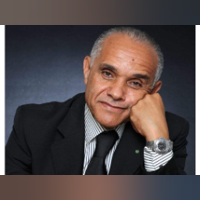
Algerian writer Boualem Sansal, who is also French and 81 years old, was arrested at Algiers airport on November 16, 2024, following an interview in which he addressed certain historical truths that, according to Algerian authorities, constituted a threat to the integrity of the country. Welcoming President Macron's decision to recognize Moroccan sovereignty over the Sahara, Sansal notably asserted that France had mutilated Morocco by attaching significant territories to Algeria—a particularly sensitive issue for Algerian leadership. In March 2025, a court sentenced Sansal to five years in prison for “undermining national unity,” a very serious accusation. To the general surprise, or almost, on November 12, President Abdelmadjid Tebboune granted Sansal a pardon following an express request from German President Frank-Walter Steinmeier. Sansal was transferred to Germany and immediately hospitalized. The man, suffering from cancer, had seen his health deteriorate considerably during incarceration. The rapid evolution of this case follows German mediation, whereas repeated calls from France for Sansal’s release had gone unanswered. Officially, the pardon was presented as a “humanitarian, generous act.” Nevertheless, this release cannot be viewed outside of geopolitical stakes and is obviously, in essence, a strategic maneuver to defuse the Franco-Algerian crisis that has intensified in recent months. The German mediation came, as everyone knows, in a tense context between Algiers and Paris. In October 2024, France recognized Morocco’s sovereignty over the Moroccan Sahara, provoking Algerian outrage and a swift and significant cooling of bilateral relations. Sansal’s arrest, as a dissenting Algerian figure, was seen as a pressure tactic on France, whose nationality Sansal also holds. Efforts were in vain: In January, the European Parliament condemned the arrest and demanded the author’s release, but Algeria remained unmoved. What explains Germany’s surprise role, when other countries had reportedly tried unsuccessfully to make Algiers relent? In fact, Germany maintains more neutral relations with Algeria than France and thereby offers Algiers a diplomatically acceptable way out, avoiding a major loss of prestige. Boualem Sansal had become a real hot potato that needed to be dealt with quickly. It is even said, here and there in Algiers, that his arrest had been a mistake. The fact that President Tebboune was treated in Germany further strengthens these ties. Through this channel, Algiers enhances its international image without capitulating directly to France, dampening the perception of surrender. It should also be noted that Sansal is highly appreciated and read in Germany, where he received the country’s most prestigious literary awards. This partly explains the unexpected mediation. The release appears to be part of an Algerian strategy to manage international pressures without direct compromise with Paris, thus preserving the regime’s image. Germany, as an intermediary, helps to ease tensions while maintaining Algerian internal political stability. As always, Algerian media were quick to organize debates lauding the “humanism” and “great wisdom” of President Tebboune. They kept declaring victory—although it’s not clear over whom, victory nonetheless. As usual, debates invoked in no particular order: Zionism, the makhzen, the French enemy, defense of the homeland, etc. Sansal is pardoned but remains the nation’s execrable traitor. The truth is that Algeria’s current economic and strategic situation no longer allows it to posture confidently. Facing growing diplomatic isolation, dependence on hydrocarbons, and a slowing economy with a historic devaluation of the dinar, the Algerian regime uses Sansal’s release as a symbolic act to refurbish its image—as even its historic partners, Russia and China, have turned to Morocco. One might also interpret the situation in terms of intersecting interests. Germany likely served as a useful intermediary, indirectly addressing the interests of both France and Algeria. For Paris, passing mediation to Berlin sustains a humane posture without direct confrontation with Algiers. For Algiers, responding to a German request avoids symbolic retreat before its former colonizer. The implications are clear. The Algerian regime retains its authoritarian framework; Sansal’s release does not indicate weakness. Algerian media even try to show the affair reveals France’s loss of influence, claiming Paris sought to isolate Algiers. Thanks to the release, Algerian diplomacy allegedly becomes multipolar. In reality, compromise was necessary to reduce Algeria’s diplomatic and economic isolation. The country’s structural challenges remain significant. Algerian media are eager to present Sansal’s release by German mediation as evidence of profound change in the regional diplomatic balance in Algeria’s favor. They claim France has lost its historic near-monopoly in relations, confronted by a sovereign Algerian state that has diversified its European partnerships. According to these media narratives, this development symbolically weakens Paris and strengthens Algeria’s conquering, multipolar diplomacy. Beyond certain arguably ridiculous remarks meant to calm Algeria’s internal front, this release will have a positive impact on Franco-Algerian relations and, beyond that, on German diplomacy in the region. For Germany, this diplomatic success consolidates its geopolitical role in the Mediterranean and North Africa, giving it new political, economic, and security leverage. Berlin’s standing with Algerian authorities and neighboring countries improves and its strategic partnerships in this key region are reinforced. Recall that Germany had already voiced positive support for the Moroccan self-determination project in the Sahara. The release of Boualem Sansal therefore goes well beyond humanitarian matters; it becomes a point of diplomatic, symbolic, and economic convergence. Germany’s selection as intermediary allowed Algeria to respond to international pressure while apparently preserving its image vis-à-vis France—at least for its own population. France achieved its objective: freeing Boualem Sansal. Yet, for Algiers, it was always a matter of national dignity.
Aziz Daouda Aziz Daouda

Aziz Daouda

Directeur Technique et du Développement de la Confédération Africaine d'Athlétisme. Passionné du Maroc, passionné d'Afrique. Concerné par ce qui se passe, formulant mon point de vue quand j'en ai un. Humaniste, j'essaye de l'être, humain je veux l'être. Mon histoire est intimement liée à l'athlétisme marocain et mondial. J'ai eu le privilège de participer à la gloire de mon pays .


9600

33.0

Brain Drain and Demographic Decline: Morocco's Silent Double Penalty... 586

Beyond the conventional rhetoric on the Kingdom's modernization and attractiveness, a more worrying reality is gradually emerging: brain drain. Long seen as a side effect of globalization, it is now becoming a structural factor in socio-economic fragility. This dynamic is taking on new proportions as a demographic transition marked by slowdown, or even contraction, of the national pool of talent takes hold. The hemorrhage is old, but it is now becoming critical. The migration of skills is not new in Morocco. For decades, engineers, doctors, researchers, or senior executives have headed to Europe, North America, or more recently, Gulf countries. The reasons are well-known: higher salaries, more attractive working conditions, greater professional recognition, more mature innovation ecosystems, advantageous taxation. In a context of strong demographic growth, this loss was partly absorbed by the continuous expansion of the base of graduates. The education system, despite its limitations, fed a sufficient flow to compensate—at least quantitatively—for the departures. But this equation is changing. The demographic transition, a turning point that cannot be underestimated, will exacerbate the situation further. Morocco has entered an advanced phase of its demographic transition. The decline in the fertility rate, which began in the 1990s, is accelerating and is accompanied by a progressive aging of the population. This phenomenon, often interpreted as a sign of modernization, actually carries profound economic implications. The working-age population, the engine of growth, is tending to stagnate and then decline. The "demographic dividend," which has long supported the country's development, is eroding. In this context, every departure of talent is no longer simply an individual loss; it becomes a systemic shortfall, difficult to compensate for. The socio-economic cost of departures is rising and will be felt more each year. This is where the heart of the problem lies: brain drain, combined with relative demographic decline, generates a cumulative and growing socio-economic cost. First, on the productive front. The loss of rare skills directly affects innovation capacity, business competitiveness, and the country's overall attractiveness. Strategic sectors, health, digital, engineering, scientific research, are the first hit. The case of Moroccan doctors practicing abroad strikingly illustrates this tension. Training a doctor represents a considerable public investment, the benefits of which are often unfortunately captured by other economies. Next, on the fiscal front. Highly qualified profiles are also those who contribute the most to tax revenues and value creation. Their departure shrinks the tax base, undermines budgetary balances, and limits public investment capacities. Finally, on the social front. The scarcity of skills exacerbates territorial and sectoral inequalities. Certain regions or public services find themselves in chronic shortage of qualified personnel, fueling a sense of abandonment and deepening internal fractures. Beyond economic indicators, brain drain leads to an erosion of the "positive externalities" associated with trained elites. An engineer, a researcher, or a doctor does not produce only individual value. They contribute to the diffusion of knowledge, the training of future generations, the emergence of innovative and sustainable ecosystems. When these actors leave the territory, an entire chain of transmission is weakened. The country loses not only skills but also development multipliers. The question is also whether having a large diaspora abroad constitutes an opportunity or merely a compensatory illusion? Faced with this reality, the diaspora argument is often put forward as a counterweight. Financial transfers from Moroccans residing abroad are indeed a significant resource. Similarly, diaspora networks can facilitate investments and know-how transfers. However, this view deserves nuance. Financial remittances, however significant, do not replace the physical presence of skills nor their daily contribution to the national economy. As for returns of experience or investments, they remain marginal compared to the scale of departures. It is therefore necessary to imagine and implement a genuine strategy for retaining and circulating talent. Faced with this double constraint, brain drain and demographic contraction, Morocco can no longer settle for partial responses. This is now a major, even urgent, strategic challenge. Several levers can be considered: - Improve working conditions and remuneration in key sectors, particularly health and research. - Deeply reform the education system to better align training with market needs and promote scientific and technical fields. - Encourage the return of skills through targeted incentives (fiscal, professional, academic). - Develop innovation ecosystems capable of retaining talent by offering career prospects and opportunities for creation. - Implement a "brain circulation" policy, favoring back-and-forth movements rather than permanent departures. What was yesterday a worrying problem is today a structural threat and therefore demands strategic urgency. In a context of progressively scarce qualified human resources, every departure counts more, every loss weighs heavier. Brain drain, combined with the demographic transition, thus constitutes a silent double penalty for Morocco. It calls for awareness on the scale of the stakes: no longer just curbing departures, but rethinking the development model in depth to make human capital, rare and precious, the heart of the national strategy. For, in the end, a country's true wealth lies neither in its natural resources nor in its infrastructure, but in the quality, creativity, and commitment of its women and men.

The International Judo Federation should change its name and leave Judo alone 609

Judo has a deep tradition: the gentle way. Judo is an extremely refined and sophisticated system of wrestling based on a deep understanding of momentum, leverage and body mechanics. Judo has answers for any type of situations, any body types, any types of matching. This is fundemental to Judo and a hallmark of any true martial art, it transcends physical power and gives the lighter, weaker, shorter party a chance. But Judo goes beyond that, it's name literally means the "gentle way". It is a physical representation of the ideals and values of Judo values. The practice of true Judo provides not only ways of neutralizing stronger opponents, but also to do so in a way that is gentle and respectful. A good Judoka is in control of the situation, and through years of practice controls even the landing of the adversary, allowing him to exercise restraint and gentleness in what otherwise would be dangerously chaotic situations. In 2010 the IJF (the body controling Olympic Judo) probably dealt the biggest blow to Judo in Judo's history: they banned leg grabs. While historical bans of techniques have focused on safety. The justification for this one was that leg grabs made Judo look too much like wrestling, and made it less visually appealing. An absurd vain reason, leg grabs are fundementals of Judo, older than olympic wrestling, or even modern olympic games. Leg grabs are half of standing Judo, leg grabs are essential to meaningful counters. Leg grabs are essential when dealing with taller and heavier opponents. It is true that around that time going straight for the legs had become a staple of certain styles. Overshadowing sometimes the beautifully impressive throws unique to Judo. However, banning them is the less Judo answer imaginable. A total negation of Judo's philosophy and martial roots. Judo has answers to leg grabs, this was a beautiful opportunity to have Judo grow, become bigger and demonstrate its high versatility. Instead the IJF made Judo smaller. Yesterday, I realized that most of the current generation of Judokas has never seen a single leg grab. As a result, they constantly make mistakes, exposing themselves to major counters. Their movement vocabulary is severely reduced, they spend more time pushing and pulling than using momentum and balance. Their understanding of balance is off, they spend more time crouched and less time standing straight. A straighter stance being a hallmark of Judo and the way to most of Judo's spectacular throws. In summary the IJF decision completely backfired it made Judo less impressive, less interesting, more physical and more like wrestling: less gentle. This is probably the biggest betrayal to Judo's root and traditions. The saddest thing of all, modern Judokas are vulnerable in front of wrestlers, this never was the case before. Thankfully, leg grabs have be reinstated in competitions in Japan in a slightly limited way (no diving for the legs). The result is that Japanese competitions are the best and the exciting Judo competitions to watch. Another backfire to the IJf decision. After my yesterday's realization of the loss suffered by the latest Judoka generation. I believe that the IJF should change it's name. The IJF has invented a sport derived from Judo, but IJF-Judo, is not Judo.

Will AI coding replace me as a Software Engineer in Germany? 807

Will AI coding replace me as a Software Engineer in Germany? Today, my coworker showed me a Golf-Assistant app his friend built using claude code. It is fully functional, includes GPS tracking and a payment system, and it took him a couple of weekends to finish. It would take a Senior Software Engineer a couple of months to finish this, not using AI. Then he said "one day, we won't need us anymore" Will this really be the case though? Most companies use openai and anthropic as their LLM providers, and seeing the goofy mistake of anthropic not hiding sourcemap files while releasing a new version doesn't help with trust. For german companies, this is a gigantic no. Here someone has to be responsible. Someone has to pay the price in case of a problem, and the price is often high and heavy. Take H&M Hennes & Mauritz Online Shop as an example: managers illegally collected data on the private lives of their employees, this resulted in a 35.3 Million Euro fine, or Vodafone being fined a total of 45 Million Euros for two major breaches: 1-failing to oversee third party sales agencies, leading to fraud and 2- fro security flaw in their MeinVodafone Portal which allowed unauthorized access to customer eSim Profile. And these are man made errors ! What about potential AI-made errors? Most companies use chatgpt or claude as their LLM provider. So what if the AI Model made an error? Who would be responsible in the eyes of the law? Certainly not OpenAI or Anthropic Would the company itself be responsible for not having a good enough prompt to cover every single area of mistake the AI could make? What would be the extent of such a mistake? Would the company haft for not having another AI to double check what the initial AI did? If so, this would have to be an agentic system that react intelligently. How would such an agentic system look like and how much would it cost? And if the system becomes that big, how would you have it certified? tested? Could it scale easily? Does that have limits? In order for companies (still talking about Germany) to replace us with AI and 1- be completely covered in the eyes of the law and 2- follow the german standard of quality, this would roughly mean that: 1- The life cycle of the Data is 100% trackable and securely managed 2- AI doesn't make a single fatal mistake 3- There is a clear process that companies can follow to build a By-AI-Managed company and scale it afterwards 4- All of the previous questions (and many many more) are not only answered, but have specific and very detailed law texts. How long would this last? For a law to be passed nowadays it must go through a process that takes in average 1 to 2 years. Furtheremore, discussing before even proposing ONE new law text takes at least a couple of months. So would AI replace me as a software engineer in Germany? Curious to hear about how it is in your country?
linkedin.com/in/fares-aouani-che...