Think Forward.

Mondial 2026 : risque d’un tournoi réservé aux plus riches ? Une inflation sans précédent. 1410

La Coupe du monde 2026, organisée conjointement par les États-Unis, le Canada et le Mexique, s’annonce comme un événement hors normes : un format élargi à 48 équipes, 104 matchs, des installations de pointe et une couverture médiatique estimée comme la plus massive de l’histoire du sport. Mais à mesure que les premières informations sur la billetterie et les coûts logistiques se dévoilent, une inquiétude grandit parmi les passionnés : **le Mondial nord-américain pourrait devenir la Coupe du monde la plus chère jamais organisée**, au point de remettre en cause l’accessibilité même de l’événement. Au cœur de cette inquiétude figure le modèle américain du *dynamic pricing*, un système où les prix ne sont jamais fixes. Ils évoluent en fonction de la demande, du volume de requêtes en ligne, de la réputation de l'affiche, et même de paramètres algorithmiques sur lesquels le consommateur n’a aucune prise. Ainsi, une chambre d'hôtel vendue normalement à environ 200 USD ne sera pas proposée à moins de 500, voire 600 USD, et probablement davantage pour les retardataires. Ce mécanisme, courant dans le sport professionnel américain, pourrait transformer l’achat de billets pour le Mondial en une course effrénée, voire injuste. Certains tickets pour la finale sont déjà annoncés entre 5 000 et 20 000 dollars, un niveau totalement inédit. Les billets des matchs de poules pourraient connaître des fluctuations quotidiennes, rendant quasi impossible toute projection financière pour les fans étrangers. Les supporters américains, déjà habitués à des prix très élevés en NBA, NFL ou MLB, semblent mieux armés pour naviguer dans ce système. En revanche, pour le fan marocain, brésilien, sénégalais, égyptien ou indonésien, ce modèle représente un obstacle presque infranchissable. À ce tableau déjà ombragé s’ajoute la question de la plateforme officielle de revente.**FIFA Official Ticket Resale Platform**. Dans l’idéal, elle permet d’éviter le marché noir et de sécuriser les transactions. Mais dans un marché dominé par la logique spéculative, elle pourrait devenir le nouveau terrain de jeu d’acteurs cherchant à maximiser leurs profits, d'autant plus que FIFA prend une commission au passage. FIFA n’a pas encore communiqué sur les garde-fous qu’elle compte mettre en place. Sans régulation stricte, la revente pourrait amplifier la volatilité des prix, surtout pour les matchs les plus prisés : phases finales, rencontres impliquant des équipes à forte diaspora, ainsi que le match d’ouverture et la finale. L’un des éléments les plus déconcertants de ce Mondial est la vente anticipée de billets sans affectation précise. Aux USA, sur les **6 millions de billets prévus**, près de **2 millions ont déjà trouvé preneur**, alors que leurs détenteurs ne savent pas encore pour quels matchs ils ont payé. Cela reflète plusieurs dynamiques : - Une confiance totale du public américain dans l’organisation de l’événement ; - Le pouvoir d’achat élevé d’un public prêt à investir massivement dans des expériences sportives ; - Une asymétrie structurelle entre supporters américains et fans internationaux, ces derniers étant contraints d’attendre les affectations pour planifier voyages et budgets. Cette situation alimente la crainte que les stades soient massivement occupés par des spectateurs locaux, au détriment des supporters venant soutenir leurs équipes depuis l’étranger. Les USA comptent parmi les marchés hôteliers les plus chers du monde, et les villes retenues ne dérogent pas à la règle : **New York, Los Angeles, Miami, Seattle, Dallas** ou encore **San Francisco** figurent régulièrement en tête des classements des destinations les plus coûteuses. Une véritable inflation est attendue dans tout le secteur hôtelier. Lors d’événements sportifs d’envergure, les prix des chambres peuvent doubler ou tripler. Pour une Coupe du monde étalée sur plus d’un mois, les projections sont encore plus alarmantes : certains opérateurs évoquent déjà des tarifs « jamais vus ». Les fans devront anticiper : - des hausses massives des prix des hôtels ; - une saturation prévisible des logements alternatifs ; - des coûts de transport interne très élevés, puisque les distances entre villes hôtes exigent souvent le recours à l’avion. L’ensemble de ces paramètres pose une question centrale : **à qui s’adressera réellement la Coupe du monde 2026 ?** Les 250 millions de licenciés du football dans le monde se sentiront quelque peu frustrés. Leur sport leur échappe. Le modèle nord-américain, dominé par les logiques commerciales et les mécanismes spéculatifs, semble incompatible avec la tradition du football en tant que sport populaire. On pourrait assister à l’émergence d’un Mondial à deux vitesses : - **Une Coupe du monde premium**, largement fréquentée par le public nord-américain et les supporters les plus aisés ; - **Une Coupe du monde à distance** pour des millions de fans internationaux qui devront se contenter des retransmissions télévisées, faute de moyens suffisants pour se rendre sur place. Pour les supporters venant de pays où le revenu médian est largement inférieur à celui des États-Unis, qu’il s’agisse de nations africaines, latino-américaines, asiatiques ou même européennes, l’expérience pourrait devenir inaccessible. La FIFA est visiblement face à un dilemme stratégique. Elle devra tôt ou tard répondre à cette problématique. Certes, le choix des États-Unis garantit des infrastructures de haut niveau, des recettes record, un marché publicitaire colossal et une organisation logistique d’une fiabilité rare. Mais cette logique financière pourrait entrer en contradiction directe avec la mission sociale et symbolique du football : **rassembler, fédérer, inclure**. Si le Mondial 2026 se transforme en événement élitiste, il risque de laisser une trace négative durable dans l’opinion publique. Le football moderne, déjà critiqué pour sa dérive commerciale, pourrait faire face à une contestation accrue venant des fans, ces mêmes fans qui font vivre ce sport, d'autant plus que les revenus de la FIFA vont passer de 7,5 à 13 milliards USD. Le Mondial est ainsi sous tension. En 2026, il sera sans doute spectaculaire sur le plan sportif et organisationnel. Mais il pourrait aussi devenir un tournant dans l'histoire de la Coupe du monde : celui où l’événement cesse d’être un rendez-vous populaire et accessible pour se transformer en produit premium destiné à un public privilégié. Entre inflation des billets, explosion des prix hôteliers, distances logistiques et modèle économique américain, **le risque est réel de voir cette édition entrer dans l’histoire comme la plus exclusive, la plus chère et la moins accessible**. La FIFA, les organisateurs et les villes hôtes devront trouver les moyens d’atténuer cette dynamique pour ne pas sacrifier l’essence même du football : un sport universel, qui appartient à tous. La proximité de Gianni Infantino avec Donald Trump, voire l'amitié qui lie les deux hommes, pourra-t-elle aider en quelque chose ?

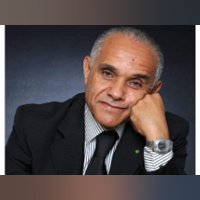
Aziz Daouda Aziz Daouda

Aziz Daouda

Directeur Technique et du Développement de la Confédération Africaine d'Athlétisme. Passionné du Maroc, passionné d'Afrique. Concerné par ce qui se passe, formulant mon point de vue quand j'en ai un. Humaniste, j'essaye de l'être, humain je veux l'être. Mon histoire est intimement liée à l'athlétisme marocain et mondial. J'ai eu le privilège de participer à la gloire de mon pays .


8100

33.0

Light Pollution and the End of the Construction of Imagination – Part 2 235

Well, as I said in the previous article, I grew up and became a scientist. Not an astronomer, but a biologist. A biologist passionate about the stars. And many may ask: why didn’t you study astronomy? There are three reasons for that. The first is that I love biology. The second is that I was never good at mathematics. And the third is that I discovered that astronomers nowadays barely look at the sky. Telescopes work automatically, providing data to be analyzed later. That romantic astronomy of the past no longer exists. It was almost poetic, because imagination was the fuel for those scientists. Therefore, in cases like mine, it is much better to remain an amateur. This reminds me of a curious anecdote in which the writer Isaac Asimov is said to have refused an invitation to visit a factory where robots performed tasks on assembly lines, because he did not want to compromise his imagination. Returning to my story, when I was 21 years old, my father surprised me by taking me to a well-known store and buying a telescope. It was a relatively simple instrument, with a 60 mm aperture, but it allowed me to see the surface of the Moon perfectly, as well as Jupiter’s four largest moons and even Saturn’s rings. I don’t even need to say how I felt, do I? I became a child again! And that telescope is still here with me today, 30 years later. But here comes the bad part, which gives these two articles their title… Light pollution has reached extremely high levels, to the point that in large cities, when you look at the sky, you see very few stars, only the brightest ones. City lights have erased the night sky. What child today will look up at the sky and be enchanted by all that immensity? Who will feel themselves on the shores of the cosmic ocean, as Carl Sagan said in the first episode of the classic series Cosmos? How will imagination be built? In the same way, the inspiration of many poets and artists will be compromised. A child today, upon hearing stories of a time when the sky was filled with shining stars, might think that either the batteries ran out and no one replaced them, or that the bulbs burned out and no one changed them. It is still a child using their imagination, but without having experienced one of the most beautiful spectacles of creation. That spectacle is still there, happening, and it will continue to happen for a very, very long time. Or rather, as long as time exists, it will continue, but with a curtain separating the stage from the audience. Today there are movements and campaigns aimed at solving this issue, but I believe it is a great challenge to overcome. Until then, one alternative is to leave large urban centers and seek regions far away, at least 50 km from these cities, where one can truly enjoy the magical view of a clear and genuinely dark sky. I always wish clear skies to everyone, and ad astra!

CAF Sanctions: Disciplinary Justice with Variable Geometry? 450

The decisions by the Confederation of African Football (CAF) Disciplinary Commission regarding the incidents that marred the CAN final between Senegal and Morocco are now known. They were awaited, scrutinized, sometimes feared. But beyond their mere announcement, it is their **coherence, proportionality, and equity** that raise questions today. At first glance, the CAF sought to strike hard, giving the impression of sanctioning both parties to preserve a posture of balance. The CAF simply forgot that at its core, the conflict was squarely between Senegal and the referee, not with the Moroccan team, and thus, in the end, pitted Senegal against this very same CAF, responsible for the organization and officiating. Senegal and Morocco have thus, according to the commission's logic, presided over by a Senegalese, let us recall, been sanctioned to varying degrees. Yet, a close reading of the facts, confronted with the very content of the decisions rendered, reveals an **asymmetry that is hard to justify** between the severity of the acts observed and the weight of the sanctions imposed. The ridiculous is not far off. The central problem, namely, the officiating, has simply been swept aside. The most troubling element undoubtedly lies in the **total absence of any reference to the referee** in the Commission's ruling. As if he had never existed. Yet, the images and testimonies align: in the final moments, the referee displayed **manifest irresponsibility**. How can one justify resuming play when the minimum safety conditions were clearly not met? The stadium had been invaded by official Senegalese supporters, equipment had been vandalized, and tensions were at a boiling point. In such circumstances, the rules are clear: absolute priority must be given to the safety of players, officials, and the public. By ignoring this dimension, the Disciplinary Commission misses an **essential link in the chain of responsibilities**. They are, however, clearly identified. This is not to fully exonerate the Moroccan side. Reprehensible behaviors existed, and some hot-headed reactions could have been avoided. But the nature and gravity of these acts remain **incommensurable** with those attributable to the Senegalese delegation and its immediate environment. The most striking example remains the sanction imposed on Achraf Hakimi. Reproaching him for attempting to remove a towel belonging to the Senegalese goalkeeper—an object that, incidentally, had no business on the pitch—smacks more of a **search for artificial balance** than rigorous application of disciplinary principles. Can one seriously equate this gesture with outbursts involving pitch invasions and infrastructure damage? This harms the image of world football, beyond just African football. The inclusion of such an amalgam in the dossier and the proportionality of the sanctions are manifestly debatable. It is precisely on the terrain of proportionality that the CAF's decision falters. The sanctions imposed on the Moroccan camp appear **relatively heavy** given the facts reproached to them, especially when compared to those concerning the Senegalese side, which was linked to structurally far graver incidents. This disproportion undermines the narrative of those in Senegal and elsewhere who decried Morocco's supposed "stranglehold" on CAF bodies. If such influence truly existed, how to explain that Morocco itself ends up heavily sanctioned? Where is this alleged institutional protection when the disciplinary decisions, on the contrary, seem applied with particular rigor against it? One can only regret the missed opportunity for the CAF to show a new face of power and justice. The CAF Disciplinary Commission squandered a precious chance: to **clarify responsibilities, reaffirm the central role of officiating, and lay credible foundations** for managing crises in African competitions. By opting for punitive symmetry rather than a fine analysis of the facts, it perpetuates unease, fuels suspicions, and leaves the game's actors—players, officials, and fans, in a gray zone where perceived injustice becomes more damaging than the sanction itself. African football deserves better than disciplinary justice with variable geometry. It deserves an authority capable of owning its choices, naming responsibilities where they truly lie, and protecting the essentials: the integrity of the game and the safety of those who bring it to life. Today, some chuckle under their breath for escaping truly proportional sanctions for their misdeeds; others are stunned; still others conclude the immaturity of this African body, like other continental instances. A pitiful image for a continent whose youth aspires to development and a bright future, with football and footballers as role models. Has African football missed the chance to set an example? Did the CAF issue the wrong communiqué or target the wrong match? In any case, there is one clear winner slipping under the radar: the party at the origin of it all. Like a fugitive, the commission released its statement at an impossible hour... Funny, no? One wonders whether to hold out hope and pursue the process further, or resign oneself to admitting there is no hope for a just and credible African football body.

Najib Salmi, a Conscience Fades, a Legacy Endures 460

Najib Salmi has passed away, and with him closes one of the most beautiful chapters of Moroccan sports journalism. But beyond the collective tribute, it's also an intimate page of my own life as a columnist, colleague, and friend that turns. He leaves behind an immense professional legacy and, above all, an indelible human imprint. He was undoubtedly the greatest pen in Moroccan sports for decades. For over forty years, Najib Salmi embodied a certain idea of sports journalism, one that was demanding and responsible. In fact, he founded a school of sports journalism, having stumbled into it somewhat by chance and grown to love it. A central figure at the daily *L’Opinion*, where he directed the sports page, he marked generations of readers, especially through his cult column "Les points sur les i" (*Dotting the i's*), a rare space where freedom of tone blended with intellectual rigor and a sense of the public interest. He was an institution in himself. He belonged to that generation for which sports journalism was neither empty entertainment nor a echo chamber for blind passions, but an act of public service. At a time when Moroccan sports was entering the era of professionalization, money, and excessive media coverage, his pen knew how to denounce excesses, pinpoint responsibilities, and salute, with the same honesty, real progress and achievements when they were genuine. Najib Salmi was not just a great columnist; he was also a builder. At the helm of the Moroccan Association of Sports Press from 1993 to 2009, he fought for the profession's recognition, the defense of its ethics, and the dignity of those who practice it. He helped embed Moroccan sports journalism in regional and international bodies, earning credibility through seriousness and consistency. Wasn't it at a congress he organized in Marrakech that our friend Gianni Merlo was elected president of AIPS? Wasn't it he alone who headlined young prodigy Said Aouita after he set a new national 1500m record? He rightly predicted that Aouita would go far. He was the unwavering supporter of generations of great athletes. He attended every world championship and Olympic Games. He supported me too, with strength and determination. A man of principles, discreet but inflexible on essentials, he believed that respect for the reader and the truthfulness of information were non-negotiable. This moral uprightness, rare in an environment often subject to pressures and interests, earned him recognition from his peers as a true school of sports journalism. Abdellatif Semlali, the legendary Minister of Youth and Sports and his friend, delighted in calling him "Monsieur à côté" (*The Man on the Side*). He truly was. He never fit anyone else's mold, even during a brief stint at *Le Matin du Sahara*, then masterfully directed by Moulay Ahmed Alaoui. For me, Najib Salmi was more than a professional reference; he was a friend, a brother, and a mentor. It was thanks to his trust that I was able to write for years in *L’Opinion*'s sports pages, learning the craft day by day, line by line, under his attentive and benevolent gaze, enduring his mood swings and, above all, his corrections to style and syntax. He passed on to me more than writing techniques: a vision of what a column should be, rooted in integrity, thorough groundwork, and a rejection of shortcuts. Even today, if I continue to write, it's also because that inner voice he helped instill remains, the one that reminds us not to betray sport, the reader, or the truth. Najib Salmi passed away at the age of 78, after a long battle with illness, leaving an immense void in the newsrooms of *L’Opinion* and *Challenge*, to which he contributed with strength and diligence. He leaves a huge void in the hearts of all who crossed his path. He will rest in the Chouhada Cemetery in Rabat, where he himself had accompanied so many other friends, acquaintances, loved ones, and colleagues, and many who grew up under the benevolent shadow of his pen. May God welcome him in His mercy. To the friend, the brother, the master who showed me the way, I can say only one thing: thank you, Najib, for the delightful moments shared, for the words, the lessons, and the example. Readers will miss Najib Salmi; the family, the inner circle, and I will bury Said Hejaj. Said Hejaj departs peacefully to rest. Najib Salmi will live on in history.

From Passion to Meaning: The CAN as a Test of Truth for Africanity... 464

The Royal Cabinet's communiqué, published on January 22, 2026, following the CAN 2025 brilliantly hosted by Morocco, combines a call for calm after the Senegalese withdrawal episode with a celebration of an organizational success hailed across Africa and beyond. Through a measured and forward-looking tone, it transforms a sports tension into a demonstration of responsible continental leadership, faithful to a long-term vision for a united and prosperous Africa. Through the tone and content of the royal message, we understand that once the passion subsides, inter-African fraternity will naturally prevail: Morocco's success is also Africa's success. The CAN 2025 confirmed Morocco's ability to turn a continental tournament into a lever for development and influence. The smooth organization, modernized infrastructure, massive influx of supporters, and revitalization of key sectors such as tourism, transport, commerce, and services generated billions of dirhams in returns and around 100,000 direct and indirect jobs, with over 3,000 companies mobilized and some 500,000 supporters transported by Royal Air Maroc. The royal message places this success within a broader trajectory: that of a "great African country" which, in twenty-four months, has gained the equivalent of a decade of development in infrastructure and expertise, in service of its people and its continent. Without overlooking the "unfortunate" nature of the incidents in the Morocco-Senegal final, the communiqué opts for elevation over controversy. By recalling that once the passion has calmed, "inter-African fraternity will naturally prevail," it offers a mature reading of collective emotions and emphasizes that the Moroccan people "know how to put things in perspective" and reject resentment. The sports defeat thus turns into a symbolic and diplomatic victory: "hostile designs" and denigration are neutralized by strategic consistency, self-confidence, and the Kingdom's African anchoring. The Moroccan public in the stadium witnessed a grotesque tragedy, deliberately and premeditatedly staged, but was not fooled. They quickly understood, kept their calm and composure despite being deeply wounded. A noted and remarkable behavior that honors them and honors the Kingdom. In practice, as in history, Morocco-Senegal relations are imbued with a consolidated fraternity, strengthened on every occasion. The royal message thus takes on particular significance toward this brother country, with which relations are described as "exceptional and strategic," founded on shared memory, assumed African solidarity, deep religious fraternity, and strong economic convergences. The holding, on January 26 and 27 in Rabat, of the 15th Morocco-Senegal Joint High Commission, accompanied by an economic forum, gives concrete content to this resilient fraternity by relaunching investments, joint projects, and South-South cooperation in service of the two peoples and, by extension, all those in the region. Beyond the finalists, the communiqué addresses all African peoples by recalling that "nothing can alter the proximity cultivated over centuries" nor the "fruitful cooperation" forged with countries on the continent. It situates the CAN 2025 within a long-term strategy: capitalizing on intangible capital made of trust, visibility, and credibility, and using it as a springboard toward upcoming events, notably the 2030 World Cup, in an Africa that assumes its place on the world stage, seeks to establish it through continuity, and consolidate it. In this spirit, it is essential to reject deviations, racism, hate speech, media or ideological manipulations, from tarnishing our Africanity or denying its profound dignity. Being African means first sharing a geography, a history, cultures, struggles, and a common destiny, beyond borders, sports results, or political contingencies. We are not condemned to reproduce stupidity and hostility; on the contrary, we have the collective responsibility to make public space a place of encounter, listening, and fraternization, where intelligence, unconditional respect for human dignity, and curiosity about the other prevail over insult and stigmatization. In the straight line of the royal message, this CAN must remain a reminder: our African future will not be built in hatred or by imitating the worst reflexes, but in the ability to transform tensions into learning, competitions into bridges, and disagreements into opportunities for dialogue. We are Africans, together, through memory and through the future, and it is this shared consciousness that can make our stadiums, our cities, and our debates spaces of elevation rather than scenes of division. Attempts at destabilization orchestrated by some may, at best, cloud the horizon for the duration of a competition, but they cannot sustainably embed themselves in the consciousness of peoples. As facts emerge, they turn against their authors, now exposed to the world's gaze, unable to indefinitely mask their failures, the poverty of their mindset, and the pettiness of their designs. Where manipulation exhausts itself, truth always ends up prevailing, and with it the dignity of nations that bet on construction, fraternity, and the future rather than on intrigue and division.