Think Forward.

L’étrange syndrome de l’odeur du poisson pourri 3431

Le syndrome de l’odeur du poisson pourri, appelé la triméthylaminurie, est un désordre métabolique rare où l’organisme est incapable de transformer une substance volatile mal odorante (la triméthylamine) en une autre sans odeur (oxyde de triméthylamine). Cette pathologie est connue en anglais sous le nom de Fish odor syndrome » (FOS) La triméthylamine (TMA) provient de certains aliments notamment les poissons de mer, les cacahuètes, les œufs et certains légumes. En l’absence de sa dégradation, elle s’accumule dans l'organisme et s’évapore par la sueur, l'urine et l'expiration, avec une forte odeur de poisson. LES CAUSES C’est une défaillance génétique de l’enzyme qui dégrade la TMA produite elle-même de la dégradation bactérienne intestinale d’aliments riches en ses précurseurs (choline, lécithine et carnitine). La TMA ainsi produite dans l’intestin sera rapidement transformée dans le foie et éliminée dans les urines sous forme d’oxyde de TMA. L’enzyme peut être totalement absente et la maladie s’exprime alors chez les enfants dès la diversification alimentaire. Si cette absence est partielle, les mauvaises odeurs sont intermittentes. Les personnes atteintes ont deux copies du gène défectueux . Les parents eux-mêmes peuvent n'avoir qu'une seule copie du gène défectueux et la pathologie sera transmise uniquement si les deux parents sont tous les deux porteurs d’une ou deux copies du gène défectueux ; ce qui signifie qu'une personne atteinte ne transmettra la maladie que si son partenaire est porteur. LES SIGNES Une odeur corporelle de poisson extrêmement désagréable que le corps dégage par la sueur, l’urine, la salive et l’haleine et même l’air expiré. L’intensité de cette odeur est variable d’une personne à l’autre et avec le temps. Ces symptômes difficiles à vivre peuvent entraîner un isolement, de l’anxiété et la dépression. On estime que plus de 200 personnes en seraient touchées dans le monde. LE TRAITEMENT DE CE SYNDROME Il n’existe actuellement aucun traitement curatif de la maladie. Les symptômes peuvent être fortement atténués par l’éviction de certains produits riches en TMA et ses précurseurs. Certains antibiotiques sont utiles en cures courtes pour réduire l’activité microbienne intestinale. Se laver fréquemment avec un savon acide et faire des exercices intenses avec sudation suivis par un lavage permet aussi une réduction des odeurs. Dr MOUSSAYER KHADIJA الدكتورة خديجة موسيار Spécialiste en médecine interne et en Gériatrie, Présidente de l’association marocaine des maladies auto-immunes et systémiques (AMMAIS), Présidente de l’Alliance Maladies Rares au Maroc (AMRM) اختصاصية في الطب الباطني و أمراض الشيخوخة رئيسة الجمعية المغربية لأمراض المناعة الذاتية و والجهازية , رئيسة ائتلاف الأمراض النادرة المغرب BIBLIOGRAPHIE - S. Nicolas and al, Le « Fish odor syndrome » : une maladie socialement invalidante - Fish odor syndrome : A socially disabling disorder, La Revue de Médecine Interne Volume 43, Issue 3, March 2022, Pages 178-180 https://doi.org/10.1016/j.revmed.2021.12.010 - Qu’est-ce que le syndrome de l’odeur du poisson ? Fréquence Médicale https://www.frequencemedicale.com/oncothoracique/patient/25623-Qu-est-ce-que-le-syndrome-de-l-odeur-du-poisson - Messenger J, Clark S, Massick S, Bechtel M. A review of trimethylaminuria: (fish odor syndrome). J Clin Aesthet Dermatol. 2013 Nov;6(11):45-8. PMID: 24307925; PMCID: PMC3848652. OVERVIEW Trimethylaminuria, or fish odor syndrome (FOS), is a condition characterized by the presence of trimethylamine (TMA)—a tertiary amine whose odor is described as resembling that of rotting fish—in the urine, sweat, and expired air. POUR EN SAVOIR PLUS, D’AUTRES EXEMPLES DE MALADIES TRES RARES On estime qu’une maladie est rare lorsqu’elle touche une faible fraction de la population. En Europe, le seuil est fixé à moins d’une personne sur 2 000. Certaines de ces pathologies ne peuvent concerner que quelques centaines de personnes dans le monde. Ainsi à titre d’exemple : Progéria La progéria, est une maladie génétique extrêmement rare qui accélère le vieillissement des nouveau-nés. Sa prévalence est exceptionnellement faible : 1 nouveau-né sur 7 000 000. Il n’y a pas de remède pour cette maladie génétique et la plupart des patients décèdent avant l’âge de 13 ans, atteignant exceptionnellement l’âge de 20 ans. Atrophie hémifaciale progressive Cette maladie affecte la peau, les muscles faciaux et les structures osseuses du visage. Elle n’implique généralement qu’un seul des plans de la tête (d’où son nom, hémifacial). L’atrophie unilatérale donne au patient un aspect très étrange, comme si la moitié de son visage était en train de se décomposer. Il n’y a pas de traitement pour cette affection, mais on emploie souvent la chirurgie esthétique pour en réduire le phénomène L'ostéogenèse imparfaite L’ostéogenèse imparfaite, ou maladie « des os de verre », est une affection génétique, caractérisée par une fragilité osseuse et une faible masse osseuse à l’origine de fractures à répétition, survenant à la suite de traumatismes bénins L'on compte environ un malade pour 10 000 à 20 000 personnes et elle ne peut donc être considérée comme "très rare" L’ostéogenèse imparfaite chez l'enfant ainsi que ces troubles annexes peuvent être traitées par différents traitements médicaux et chirurgicaux : traitement des fractures : en évitant les immobilisations trop rigides et trop prolongées, lutte contre la douleur des fractures du tassement vertébral par des médications ou par des contentions, apport régulier de vitamine D avec des ajouts de calcium si besoin… L’ALLIANCE DES MALADIES RARES AU MAROC (AMRM) Depuis sa création en 2017, l’ALLIANCE travaille au quotidien avec beaucoup d’associations marocaines spécifiques pour une maladie donnée. Elle a d'ailleurs déjà signé des conventions de partenariat « stratégiques » avec 12 associations de patients : 1/Association de syndrome de Rett (AMSR) , 2/ Association de Solidarité avec les Enfants de la Lune au Maroc (A.S.E.L.M.) , 3/ Association de l’amyotrophie spinale (SMA) , 4 / association SOS Pku , 5/ association marocaine des malades d’angioedème héréditaire (AMMAO) , 6/ Association Marocaine pour la Santé de l’Enfant et de la Mère (AMSEM) , 7/ Association S.O.S Marfantime (S.O.S.M.) , 8/Association Prader Willi Maroc (P.W.M.) , 9/ Association Flamme d'Espoir pour les Autistes et les Patients atteints de la PKU , 10/ Association marocaine pour les enfants souffrant d’ostéoporose (Ostéogenèse imparfaite) A.M.E.O.S , 11/ Association Marocaine de Mucoviscidose (AMM) , 12/ Association Fragile X Maroc (FxMa) . Au sein du bureau de l’Alliance, la présidente est entourée notamment du : Dr Fouzia Chraibi, ,Vice –Présidente , Dr Mounir Filali, Secrétaire général, M Mohammed Elaidi, Secrétaire général adjoint, Mme Najat Kababi, Trésorière et de Mme Fatima Lahouiry, Trésorière adjointe
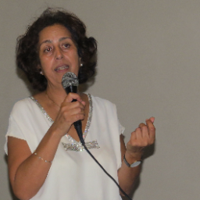
Dr Moussayer khadija Dr Moussayer khadija

Dr Moussayer khadija

Dr MOUSSAYER KHADIJA الدكتورة خديجة موسيار Spécialiste en médecine interne et en Gériatrie en libéral à Casablanca. Présidente de l’Alliance Maladies Rares Maroc (AMRM) et de l’association marocaine des maladies auto-immunes et systémiques (AMMAIS), Vice-présidente du Groupe de l’Auto-Immunité Marocain (GEAIM)


5300

0

April 2026 or the Certain Confirmation of the Moroccan Victory... 130

We are entering a decisive month of April. The international dynamic is shifting even further in Morocco's favor on the Sahara issue. April once again promises to be a pivotal moment in the international handling of the Moroccan Sahara question. This structuring diplomatic ritual corresponds to the presentation of the annual report by the UN Secretary-General's Personal Envoy to the Security Council. But this year, the context is profoundly different. The lines have shifted, balances have been redrawn, and a new dynamic is taking hold, clearly favorable to Morocco, a logical follow-up to the adoption of Resolution 2797, with strong structuring potential. The adoption of this resolution marks an essential milestone. It goes beyond simply renewing the existing framework. It consolidates a political direction initiated over several years, by enshrining the preeminence of a realistic, pragmatic, and sustainable political solution, centered exclusively on the Moroccan autonomy initiative. This resolution fits into a strategic continuity that progressively marginalizes unrealistic options, those that long relied on outdated or inapplicable references in the current geopolitical context. It also increases pressure on the parties to engage in a credible political process under the exclusive auspices of the United Nations, but in reality under strong American pressure. The United States has directly engaged in favor of the Kingdom, with the return of roundtables in Madrid and then Washington as key pivots. These meetings have confirmed a diplomatic reality that is now hard to contest. The format of the gatherings, including Morocco, Mauritania, the Polisario Front, and Algeria despite itself, is the only relevant framework for progress. It implicitly enshrines Algeria's central role, long eager to present itself as a mere observer. Its active participation, even forced, places it at the heart of the dispute, profoundly altering the reading of the conflict and redistributing political responsibilities. Madrid and Washington are not insignificant venues. They reflect the growing involvement of Western powers in seeking a resolution, with increasing convergence around the Moroccan proposal. One of the expected developments this month concerns the future of MINURSO. The time has come to redefine the mission. From its inception, it has never fulfilled the role for which it was established. A major evolution is likely emerging in support of implementing autonomy in the southern provinces within the framework of the Kingdom's sovereignty. Long confined to monitoring the ceasefire, the mission will see its name change and its mandate evolve to adapt to on-the-ground realities and the demands of a renewed political process. Such a change would be highly significant. It would mark the end of UN inertia and reflect the international community's will to move from managing the status quo to an active and definitive resolution logic. Much to the dismay of those who, for 50 years, have done everything to perpetuate the conflict through their proxy; the latter is increasingly suffering from the shifting landscape. Washington has toughened its tone and put the Polisario in its sights. Algeria is evidently feeling the effects. The introduction in the US Congress of a proposal to designate the Polisario as a terrorist organization represents a potentially major turning point. If successful, such a designation would have considerable political, financial, and diplomatic consequences. It would further isolate the movement, weaken its supporters, and reshape the balance of power. Above all, it would reinforce the security reading of the dossier, in a Sahel-Saharan context marked by rising transnational threats. This adds to a Security Council increasingly aligned with the Moroccan position. The Council's current composition clearly leans in favor of Moroccan positions. Several influential members explicitly or implicitly support the autonomy initiative, seen as the most serious and credible basis for settlement. This shift is no accident. It results from active, coherent, and consistent Moroccan diplomacy, which has successfully embedded the Sahara issue within logics of regional stability, counter-terrorism, and economic development. Algeria, for its part, faces its contradictions. In this context, the Algerian regime appears increasingly beleaguered. Its positioning, long structured around ideological rhetoric and systematic opposition to Morocco, now seems out of step with international system evolutions. Algiers' relative diplomatic isolation, including in its Sahelian environment, contrasts with its regional ambitions. Internally, economic and social challenges exacerbate tensions in a country with considerable resources but unevenly distributed benefits. Algerian populations suffer from much injustice and lack the essentials. The Sahara issue, instrumentalized for decades as a lever for foreign policy and internal cohesion, thus reveals the limits of a politically exhausted model. The trend thus confirms a historic turning point depriving the Algerian regime of its artificial political rent. All elements converge toward one conclusion: April 2026 could mark a decisive step in the evolution of the Moroccan Sahara dossier. Without prejudging an immediate outcome, current dynamics are progressively narrowing the space for blocking positions. More than ever, resolving this conflict seems to hinge on recognizing geopolitical realities and adhering to a pragmatic political solution. In this perspective, Morocco appears in a position of strength, bolstered by growing legitimacy and increasingly assertive international support. The question remains whether other actors, particularly Algeria, will adapt to this new reality or choose to oppose it at the risk of greater isolation in a world where balances of power evolve rapidly. There will undoubtedly be a before and after April 2026, and above all, the consolidation of a Moroccan position oriented toward further development of the southern provinces. The Security Council's output is awaited in this direction.

Eternal Morocco, Unbreakable Morocco: The Identity That Triumphs Over Exile... 515

There are affiliations that geography dissolves over time, and others that it strengthens as distance sets in. The Moroccan experience undoubtedly falls into the second category. Across generations, sometimes up to the third or fourth, a phenomenon intrigues. Women and men born far from Morocco continue to recognize themselves in it, to feel attached to it, to project themselves into it. They have left the country or never lived there long-term; they were born far away, but Morocco has never left them. How to explain such persistence? Why does this loyalty cut across social classes, faiths, degrees of religiosity, and even nationalities acquired elsewhere? How is a memory so indelible? How does it withstand the test of time, distance, and new cultural acquisitions, if not through the profound weight of national consciousness? Morocco is not merely a modern state born from 20th-century recompositions. It is an ancient historical construct, shaped by centuries, even millennia, of political and civilizational continuity. Dynasties like the Almoravids, Almohads, Merinids, Saadians, or Alaouites forged a stable political and symbolic space whose permanence transcends apparent ruptures. This historical depth irrigates the collective imagination. It gives Moroccans, including those in the diaspora, the sense of belonging to a history that precedes and surpasses them. Being Moroccan is not just a nationality. It is an inscription in a continuity, a composite identity forged by inclusion. Moroccan identity has been built through sedimentation. It is Amazigh, African, Arab, Andalusian, Hebraic. These are layers that coexist in a singular balance, complementing and interweaving without exclusion. This ancient plurality explains Moroccans' ability to embrace diversity without identity rupture. Thus, a Jewish Moroccan in Europe or a naturalized Muslim elsewhere often shares a common affective reference to Morocco, not out of ignorance of differences, but because they fit into a shared historical and geographical framework. This inclusive identity enables a rarity: remaining deeply Moroccan without renouncing other affiliations, with the monarchy serving as a symbolic thread. In this complex architecture, the monarchy plays a structuring role. Under Mohammed VI, it embodies historical continuity and contemporary stability. For Moroccans abroad, the link to the Throne goes beyond politics. It touches the symbolic and the affective, a dimension fully grasped only by Moroccans. It acts as a fixed point in a shifting world, offering permanence amid changes in language, environment, or citizenship. This transmission occurs invisibly in the family, in rituals. It is not a memory but living, sensitive memories. The diffusion and transfer also manifest in cuisines with ancestral recipes, in music and sounds, in living rooms echoing with Darija, through summers "back home," gestures, intonations, moussems, or hiloulas. Moroccan identity is transmitted less through discourse than through sensory experiences: tastes, smells, rhythms, hospitality. Thus, generations born abroad feel a belonging not formally learned, an active loyalty blending affection and claimed will. The diaspora does not settle for abstract attachment. It acts. Financial transfers, investments, public commitments, and defense of Moroccan positions internationally bear witness. This operational patriotism extends affection into action, a duty to the nation, a Moroccan loyalty. Moroccans may be exiles, but never uprooted. For the Moroccan diaspora, attachment transcends oceans. Even in political, economic, or academic roles abroad, Moroccains carry their country of origin explicitly or implicitly. The otherness of host societies reinforces this identity. The external gaze consolidates this sense of belonging to a culture so distinctive that it crystallizes, is claimed, and magnified. This phenomenon, intense among Moroccans, compels us to name what went without saying in the homeland: a continuity at a distance. Neither frozen nostalgia nor mere inheritance, this relationship is a profound dynamic. Morocco is not just a place; it is the bond that spans generations, adapts without diluting, reminding us that exile does not undo all affiliations. Morocco is in our daily lives, in a perennial, solid, and unyielding memory that defies borders and time.

My Pain Qualifies Me 618

At an immersion meeting for psychoanalysts, I heard the phrase: “My pain qualifies me,” and immediately, like a lightning bolt, it struck deeply within me and, with the speed of a thought, made complete sense. I was able to perceive it with a clarity that, honestly, I don’t recall ever experiencing before in my entire life. It was so intense that I felt certain I was in the right place, investing in a career that, until not long ago, I couldn’t have imagined myself pursuing even in my dreams. Although this discovery is recent, given the fascination it caused me, perhaps it had been stored in my unconscious all along, likely as a repressed desire, even due to my own prejudice regarding matters of the human mind. Because of unsuccessful past experiences, I had come to doubt the effectiveness of psychotherapy, even considering it at times as a way of making easy money at the expense of others’ suffering. I believed that a person in distress could simply rely on friends and family to vent, share their problems, and relieve tension, while medications prescribed by doctors would do their part. However, upon hearing that my pain qualified me, now, of course, with a different mindset and studying psychoanalysi, I felt as though I was experiencing a kind of gnosis. I know my pain, or rather, my pains, and I fully understand this statement. When we set out to help someone who carries their own pain, we can even through a simple look, convey to the analysand that we understand what they are going through. This phenomenon is what we call countertransference: emotions, feelings, and thoughts that arise in our unconscious in relation to the analysand. These feelings and emotions are developed by the therapist during a therapy session. In that space, we become aware that there are two souls facing each other, one pouring out their thoughts, anxieties, and traumas, and the other offering attentive listening, care, and guidance, helping them find their path and providing tools to manage their struggles and move forward in life as best as possible. And for the therapist who has experienced, or still experiences pain, it also becomes an opportunity for self-analysis, which undoubtedly gives full meaning to the exchange that takes place between two souls standing face to face with their pains.

AFCON 2025: The Trophy that Sets the Savannah Ablaze.. 723

There are moments when football stops being a game and becomes a brutal revealer of a continent's institutional and political fragilities. The current crisis surrounding the Africa Cup of Nations (AFCON) is the perfect illustration. Between the rigorous application of regulations, the credibility of the Confederation of African Football (CAF), media pressure, and reactions from the Senegalese Football Federation, the affair now extends far beyond sports into a much broader realm, intertwining law, sovereignty, and diplomacy. At its origin, a disciplinary decision that, under normal circumstances, would have been a simple sporting dispute. But the context, symbolism, and players involved have turned this file into a full-blown crisis. The CAF, as the regulatory body, faces a fundamental demand: to enforce its own rules without yielding to pressure. Any weakness in applying the law would open the door to widespread challenges to its authority, including revisiting past decisions and verdicts. In this sense, the decision taken, however contested, fits into a logic of institutional preservation. However, law, as essential as it is, cannot be entirely divorced from its political and emotional environment. Today's events provide perfect proof. The Senegalese side's reaction, perceived as an offense or challenge to the decision, reveals a deeper malaise: a sense of injustice, real or supposed, amplified by a public opinion whipped into a frenzy by a flood of increasingly belligerent statements and remarks. Social media, TV panels, and certain official discourses have turned a legal matter into a symbolic clash between nations. In response, the Royal Moroccan Football Federation remains silent, stoic, calm, and discreet. This is where the main danger lies. Beyond texts and procedures, it is historical relations, built over decades of solidarity and brotherhood, that are now exposed to unnecessary tension. African football, long presented as a vector of unity, risks here becoming a factor of division. And this drift, if not contained, could leave lasting scars. That's precisely what the occult forces, or not so occult, stoking the fire are aiming for. In this climate of escalation, the temptation is great for each side to harden its position. Yet, the history of sports conflicts shows that escalation is rarely a solution. It weakens institutions, undermines competition credibility, and, above all, distances the public from the essentials: fair and credible play. The central question then becomes: how far will this showdown go? A peaceful outcome necessarily requires a return to calm and reason. This does not mean renouncing one's rights or silencing disagreements, but framing them in a controlled manner. Appeal mechanisms exist, whether through direct sports jurisdictions or, if necessary, the international body that is the Court of Arbitration for Sport (CAS). Its role is precisely to settle such disputes with impartiality and rigor. Awaiting the verdict from this body, even if it is slow, means accepting that law takes precedence over emotion. It also means recognizing that the credibility of African football's components depends on their ability to resolve disputes in line with the rules they have set for themselves. Any other path, pressure, excessive politicization, or media confrontation, would only entrench and worsen the crisis. At its core, this affair raises an essential question about the governance model for African football. A model subject to power plays and momentary emotions, or one based on solid, respected institutions capable of enforcing the law, even when it stings? Ultimately, African football bodies didn't fall from the sky. They are the emanation of a democratic process in which Africa's 54 countries participate in good conscience. The answer to this question will determine not only the outcome of this crisis but also the future of football on the continent. Beyond the present case, the credibility of an entire sports architecture is at stake. In the immediate term, one thing is clear: the time for appeasement must follow that of confrontation and escalation. Preserving the essentials and consolidating fraternity among African peoples is worth far more than a sports victory, even an Africa Cup of Nations trophy. Alas, this is beyond those whose vision doesn't extend past the end of their nose. The CAS will speak soon. Then we'll see who is right or wrong under strict application of the law, with no further recourse possible except a return to reason. Wouldn't it be better, in the meantime, to keep a cool head, maintain lucidity, and calm down? A trophy is only raised when it is deserved—truly deserved.

Faceless War, Disoriented World, Trapped Citizen... 728

There was a time when war made sense, or at least appeared to. It pitted identifiable camps against each other, produced winners and losers, and sometimes ended in peace, even imperfect peace, sometimes signed in a train car. Before that, it unfolded in battles for which appointments were even set, far from civilians. They observed each other, sized one another up, and collectively decided the start time of the clashes. A true war of the brave. There were always winners and losers. Thank cinema for reliving those scenes, more or less romanticized, but scenes nonetheless... From World War I to the Cold War, closer to us, conflicts, however tragic, followed a certain historical intelligibility. Since then, joysticks have crept in, and computers have taken over... Things changed; dare we say: they dehumanized. Contemporary war, as it emerges in the triangular confrontation between the United States, Israel, and Iran, seems to have broken with that old logic. It's no longer just complex: it's become ungraspable, unintelligible to ordinary mortals like us. It doesn't just oppose forces; it dissolves the very landmarks that once allowed us to understand what war is. Who is the victor? Who is the vanquished? The question feels almost out of place. For this modern war produces no clear verdict, but a succession of competing narratives saturated with propaganda, disinformation, and what we now call "fakes." Truth itself becomes a battlefield, fragmented, manipulated, inaccessible. Lies are baked into the system. Reality wavers and fades. Yet lives are lost in anonymity, buildings surely turned to mush, billions of dollars vanished, likely burned in milliseconds by traders, exploded without a trace except by making poor people everywhere. In this war, roles seem interchangeable. One of those who triggered the hostilities seeks to extricate itself, as if suddenly discovering the vertigo of what it initiated. The second? Who knows. Its war logic has long been impenetrable. It presents itself as the aggressed party, refuses all negotiation, or pretends to, while expanding the theater of operations. The one retaliating, the third protagonist, loses its leaders, gets hammered daily for over a month, yet seems driven by an endless escalation logic too. Toward what horizon? It strikes beyond its declared adversaries without provoking proportional reactions. Part of its war is waged against those who don't want it and resist with all their might, without retaliation. How long will this last? We must ask: what does "winning" mean in a war with no clear limits or identifiable final objective? We are thus confronted with a profound mutation of war: it is no longer a means in service of a political end, as once thought, but an autonomous, self-sustaining process, almost abstract. A war that no longer aims for peace, but for its own perpetuation. And yet, this distant war is not so distant. Beyond strategies and rhetoric, it's civil societies that pay the price. Here in Morocco, elsewhere in the world, the effects hit with silent brutality. Energy prices climb, threatening psychological thresholds unthinkable just forty days ago: 20 dirhams per liter of gasoline soon. Tomatoes, fish, chicken, lentils, and the rest will follow... Anxiety is very real. The economy becomes war prolonged by other means. The citizen becomes an adjustment variable. It's they who foot the bill. Even when they don't want war, they must still pay for it, wherever they are, even at the ends of the earth. Faced with this, governments seem powerless. They dust off old solutions, already tested and already ineffective, as if economic history itself were trapped in eternal recurrence. This political impotence amplifies the sense of injustice and abandonment. Thus arises the question, almost metaphysical: what have we done to deserve this? This so-human question may be ill-posed. For it assumes an immanent justice in the world's course, a moral logic linking our acts to our collective fate. Yet the tragedy of our era is precisely the absence of that coherence. The world is not just: it is unstable, chaotic, traversed by forces beyond us. Perhaps that's the price of calling ourselves democratic, living in or under democracies... or not. Perhaps we need to rephrase the question. Not: why is this happening to us? But: how to keep living in a world where meaning slips away beneath our staggering feet? That is probably the true philosophical challenge of our time. Not understanding war, for it now escapes classical understanding, but preserving, despite everything, a capacity to think, to resist confusion, to refuse letting lies become the norm. If modern war is faceless, endless, and truthless, then the only possible victory is internal to each of us: upholding, against all odds, a demand for lucidity, a touch of humanism, hope, a dream.