Think Forward.

XERODERMA PIGMENTOSUM : la maladie des enfants de la lune 2535

Les enfants de la lune sont atteints d'une maladie héréditaire, le xeroderma pigmentosum (XP), qui provoque une hypersensibilité aux rayonnements ultraviolets. En l'absence de protection totale face au soleil, ils sont exposés à des cancers cutanés et des dommages oculaires graves qui nécessitent de nombreuses opérations chirurgicales. DES CONDITIONS DE VIE « IMPOSSIBLES » Les malades ne peuvent se déplacer sans danger que la nuit, un rythme qui bouleverse la vie des familles concernées Il n’existe actuellement aucun traitement curatif et les mesures de protection sont contraignantes et coûteuses. Il faut ainsi compter près de 1 800 dhirams par mois pour l’achat des crèmes solaires et d’écran total, sachant que la consommation d’un tube d’écran par jour s’impose. Le port d'équipements protecteurs s’impose également: chapeau, masque ou lunettes anti-UV, gants et vêtements spéciaux… Un masque de protection ventilé pour le visage coûte à lui tout seul environ 1 700 dirhams). Les familles doivent équiper les lieux de vie et de déplacement (maison, voiture…) de vitres, de lumières anti-UV (des ampoules LED qui ne diffusent pas d’UV)… UNE PATHOLOGIE HEREDITAIRE Le xeroderma pigmentosum (XP) est une pathologie génétique héréditaire, caractérisée par une sensibilité extrême aux rayonnements ultraviolets présents dans la lumière du soleil et dans certaines sources lumineuses artificielles. Ce nom scientifique signifie en latin : derme sec et pigmenté : la peau est sèche et épaisse avec des anomalies variées de la pigmentation. La sévérité des atteintes et l'âge d'apparition varient considérablement et dépendent en partie de l'exposition solaire. LES MANIFESTATIONS Classiquement, elle se déclare par l’apparition dès les premiers mois d’érythèmes , de taches de rousseur et de dégradations graves de la peau. Ces atteintes déclenchent des lésions cutanées souvent cancéreuses (dès l’âge de 2 ans) et oculaires (à 4 ans) à la moindre exposition au soleil. Ce risque de cancer est ainsi 4.000 fois plus élevé que dans la population générale. La pathologie peut s'accompagner également de troubles neurologiques : pertes de l'audition, microcéphalie, troubles du développement et réflexes tendineux diminués ou absents… et cela dans 20 à 30 % des cas. Il existe aussi une forme atténuée mais sévère tout de même de la maladie, le XP variant. Présente chez un quart des malades environ, elle se traduit par l’apparition des premiers signes plus tardivement, entre 15 et 40 ans, et par une progression plus lente. ORIGINE Les rayonnements du soleil induisent régulièrement des mutations génétiques dans la structure de l’ADN de nos cellules. Ces altérations se réparent facilement chez un individu sain, à raison de milliers de fois par jour. Les enfants de la lune sont par contre dépourvus de cette capacité de réparation, d’où une accumulation de mutations dans les cellules de la peau et des yeux. Des protéines anormales sont produites et des cellules tumorales apparaissent. Par ailleurs, la maladie, touchant les deux sexes, est récessive : les deux parents sont porteurs du gène déficient mais n’ont pas développé la maladie, les enfants malades ont reçu les deux gènes mutés des parents. DIAGNOSTIC La maladie est diagnostiquée assez tôt, des brûlures apparaissant dès les premières expositions au soleil. Le diagnostic doit se faire dès la petite enfance . Pour le confirmer, on pratique une biopsie en prélevant des cellules appelées fibroblastes situées dans le derme (couche profonde de la peau, recouverte par l'épiderme) LA FREQUENCE DE LA MALADIE On estime que le XP toucherait environ 1 personne sur un million aux Etats-Unis et en Europe. Elle est beaucoup plus élevée au Japon et surtout au Pakistan et en Afrique du Nord (au moins 1 sur 100 000). Cette forte fréquence est due à la forte consanguinité des populations, de par la tradition des mariages intrafamiliaux (entre cousins) qui perdure. Ainsi dans les pays arabes (et selon une étude du département de génétique médicale de l’Institut national d’hygiène marocain publiée en 2017), ce taux de consanguinité est de 15,25% au Maroc. Bien d’autres pays arabes dépassent ce taux : Algérie (22 à 25%), Liban (25%) ou encore Arabie Saoudite (51,3%) En France, on recense, selon l'association française des enfants de la lune, 91 cas en France (chiffre 2017), la plupart étant d’origine maghrébine. PREVENTION Pour lutter contre ce mal, le traitement repose essentiellement sur la photoprotection : aucune parcelle de la peau ne doit être exposée à la lumière du jour. L’enfant devra vivre dans un environnement protégé contre tout UV, et cela grâce à un dosimètre, dont sont souvent dépourvus les familles au Maroc Un enfant non protégé efficacement (comme c’est le cas pour beaucoup au Maroc, au Maghreb ou dans le reste de l’Afrique) ne survit pas en général au-delà de l’âge de dix ans. En cas de protection, il peut espérer vivre jusqu’à 20 ans et même un peu plus. TRAITEMENT DES CANCERS L'ablation chirurgicale des tumeurs est la règle. On réalise aussi des greffes de peau prélevée sur le malade lui-même pour favoriser la cicatrisation. Les autres traitements du cancer (chimiothérapie et radiothérapie) peuvent s’imposer quand la tumeur est difficile à opérer. LA RECHERCHE PROGRESSE L’espoir réside dans la thérapie génique : le remplacement du gène malade par un gène sain. C’est une technique dont la mise au point demande de nombreux efforts car il s’agit de pouvoir reproduire des cellules de peau, les modifier génétiquement et les greffer sur les malades sans qu'il y ait de rejet. Une équipe de l'Inserm a fait cependant un pas important dans un autre domaine : elle a mis au point une crème sur des souris porteuses de la maladie, dont les premiers résultats sont encourageants. Cette crème ne remplacerait pas la photoprotection toujours aussi indispensable mais elle contient une molécule, fonctionnant sur le principe de la thérapie génique, qui aide à la réparation de l’ADN. UN CONCERT CARITATIF EN 2019 Les enfants de la lune ont été mis à l’honneur au Maroc en avril 2019 grâce à l’initiative d’un club de passionnés de la Moto, les « skulls of Sahara Mc », qui ont organisé un grand concert de solidarité pendant trois jours, avec le soutien de l’Alliance des Maladies Rares au Maroc (AMRM). Enfin, on ne peut en terminer sans évoquer l’icône de la maladie au Maroc, Fatima Zahra El Ghazaoui. Elle est décédée en 2023, à l’âge de 31 ans. Nous n'oublierons jamais son optimisme inébranlable, sa joie de vivre malgré ses souffrances, et son engagement pour la cause de tous les enfants de la lune. Son père est président de l'Association de Solidarité avec les Enfants de la Lune au Maroc (A.S.E.L.M.) et membre du bureau de l’Alliance des Maladies Rares au Maroc Dr MOUSSAYER KHADIJA الدكتورة خديجة BIBLIOGRAPHIE Xeroderma pigmentosum https://www.orpha.net/consor/cgi-bin/OC_Exp.php?Lng=FR&Expert=910 ENFANTS DE LA LUNE – l’association https://www.enfantsdelalune.org/
Dr Moussayer khadija Dr Moussayer khadija

Dr Moussayer khadija

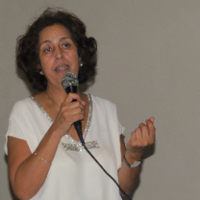
Dr MOUSSAYER KHADIJA الدكتورة خديجة موسيار Spécialiste en médecine interne et en Gériatrie en libéral à Casablanca. Présidente de l’Alliance Maladies Rares Maroc (AMRM) et de l’association marocaine des maladies auto-immunes et systémiques (AMMAIS), Vice-présidente du Groupe de l’Auto-Immunité Marocain (GEAIM)


5100

0

Agentic AI Beyond Benchmarks: Meta-Agents & the Future of AI Evaluation with Khalil Mrini 123

I recently sat down with Khalil Mrini to talk about his work and international experiences. He has spent time in Marrakech, Switzerland, India, and the United States, each place influencing his perspective in different ways. We also mentioned his visit at the UM6P, his experience of the university, students and innkvative AI curriculum. Khalil presented his new paper on agentic AI. The paper focuses on the use of autonomous agents to evaluate and benchmark other agents: essentially, systems that can test one another’s capabilities. He described how this approach could provide a more dynamic and optimal method for measuring progress in AI research. We ended the conversation by discussing AI ethics. Our exchange raised open questions about responsibility, transparency, and how the field can ensure that increasingly autonomous systems align with human values.
youtu.be/zE7PKRjrid4

A Historical Triptych: How Morocco, Spain, and Portugal are Forging the Success of the 2030 World Cup 267

The assignment of the 2030 FIFA World Cup hosting rights to the unprecedented trio of Morocco, Portugal, and Spain marks the opening of a new chapter in the history of international and sporting relations. The joint organization of this event confirms an unparalleled dynamic, engaging the three nations in a triangular cooperation whose efficiency will be the decisive marker of this global event's success. This trilateral partnership transcends mere logistical collaboration to become a true lever for strategic development. The question is no longer whether bilateral relations are ready, but how their integration into a strengthened trilateral framework will guarantee the success of a mega-event poised to connect, for the first time, two continents through the medium of sport. Historical ties and geographical proximity provide a fertile ground for a remarkable intensification of relations between these three partners. The announcement of their tripartite bid has, in fact, elevated the need for harmonized coordination in the logistical, economic, and security domains to the level of a strategic imperative. I. The Political and Economic Foundations of Enhanced Cooperation The alignment around the 2030 project is not fortuitous; it is rooted in deep political and economic considerations that mutualize the interests of the three countries. •⁠ ⁠The Imperative of Convergence suffers no ambivalence: Spain and Portugal, while operating within the structural framework of the European Union, recognize Morocco as an essential strategic partner, a genuine gateway and pivot to the African continent. This dynamic is not unilateral; the Kingdom is consolidating its Euro-African anchor with heightened clarity through this same alliance. The World Cup deadline, far from being a simple calendar constraint, acts as a powerful lever, forcing the acceleration—often judged too slow—of regulatory, customs, and security convergence processes among the three capitals. Crucially, the political will displayed at the highest level—symbolized by the direct monitoring of Moroccan commitments by His Majesty King Mohammed VI—stands as a decisive catalyst, ensuring the establishment of a unified and enduring policy line, even in the face of contingencies and fluctuations in political majorities within the allied states. •⁠ ⁠Mutualization of Investments and Benefits: On the economic front, the World Cup represents an unprecedented opportunity to boost trade and investment. The trilateral agreements directly influence the planning of major works: the goal is no longer to build isolated infrastructures, but integrated networks (ports, air links, potential high-speed rail connections) designed for interoperability. The harmonization of tourism offerings and incentivizing fiscal regimes for sponsors and investors is crucial to maximize shared benefits. The success of coordination in the logistical, economic, and security domains will not be merely a performance indicator; it will be the symbol of a collective capacity to manage a complex event on a transcontinental scale. II. Managing Complexities: The Challenges of Co-Development An event of this magnitude, operated by three sovereign states, naturally generates frictions and coordination challenges that require first-rate diplomatic and technical management. •⁠ ⁠The Challenge of Global Security and Integrated Transport: The primary obstacle is the creation of a unified security space for the millions of supporters on the move. This demands real-time information sharing, coordination of law enforcement agencies, and the harmonization of emergency protocols. Concurrently, the transport system must be conceived as a single network. The transit of teams and supporters between Europe and Africa must be fluid, reliable, and ecological, necessitating targeted investments in airport capacity and maritime services. •⁠ ⁠The Cultural and Civilizational Vector: Beyond sport, the World Cup is a diplomatic platform. The secondary, but fundamental, challenge is to move beyond simple technical organization to present an ideal model of intercultural coexistence. Morocco, Spain, and Portugal must invest in promoting their cross-cultural heritages, consolidating the values of peace and mutual respect. This involves qualifying national institutions not only in logistics but also in public management and global media interaction, to avoid the pitfalls of fragmented or sensationalist coverage. III. The Structuring Influence of Bilateral Agreements on Logistics The influence of existing agreements between the three countries is vital for infrastructure development. The current stage is characterized by high anticipation from the private sectors and sports observers, who are watching for the concrete acceleration of construction projects. The overall efficiency of the operation—whether considering the pre-event phase, execution during the tournament, or the post-realization legacy—rests entirely on the solidity of the triangular commitment. The transformation of infrastructures, from stadiums to training centers and reception areas, must be carried out in a spirit of normative alignment. In conclusion, the 2030 World Cup is not merely the sum of three national organizations; it is a project of strategic co-development. The strong historical relations uniting the Kingdom of Morocco, Portugal, and Spain, amplified by a constant and high-level political will, constitute the decisive element for transforming this bid into a resounding success, offering the world a precedent of successful integration between two shores.

Law 30-09: A “Tree with Bitter Fruits” Hindering the Development of Moroccan Sports 269

While Morocco’s recent performances on the international stage—particularly in football—demonstrate its growing dynamism, the legal framework governing the sports sector seems unable to keep pace with this evolution. Conceived in the wake of the 2008 Royal Letter and enacted in 2010, Law No. 30-09, which was meant to modernize the national sports system, now reveals—fifteen years after its delayed implementation—serious limitations. Marked by internal inconsistencies, deficient enforcement, and pervasive state interference, the law ultimately undermines its original purpose: to professionalize Moroccan sport and align it with international standards. I. Excessive Requirements and Forgotten Sanctions Born from a clear political will to reform Moroccan sport and provide it with a modern legal framework, Law 30-09 has quickly become a rigid and impractical instrument. One of its most emblematic—and controversial—provisions is the obligation imposed on certain sports associations to establish sports corporations (Sociétés Anonymes). While the intent was to ensure sound governance, fiscal transparency, and executive accountability, practice has revealed the limits of this approach. •⁠ ⁠A disproportionate constraint. Most associations lack the financial and organizational capacity to comply with such structural obligations. •⁠ ⁠A flawed and inapplicable framework. The law establishes three non-cumulative conditions triggering the obligation to form a sports company. Only the first has been clarified by regulation, while the other two—relating to turnover and payroll—were never defined by governmental decree. As a result, the rule remains largely inoperative, especially since the penalties for non-compliance are systematically ignored. •⁠ ⁠An unfinished reform. Even among the few clubs that have complied, the parent association still holds the majority of the share capital. This structural lock prevents the opening of capital to private investors, thus maintaining dependency on the old associative model rather than promoting professionalization. II. The Persistent Shadow of the State: An Interference Contrary to Autonomy Principles By its very nature, sport is a sphere of autonomy, an ethos enshrined in the Moroccan Constitution and in the regulations of international organizations such as FIFA. Yet Law 30-09 establishes the supervising ministry as the true guardian of the sector, concentrating significant and often excessive powers: •⁠ ⁠An extensive right of scrutiny. The ministry approves statutes, grants accreditation, and confers authorization to national federations. •⁠ ⁠A pronounced power of interference. The administration may impose standard contracts and, more seriously, revoke authorization or dissolve a federation in the event of a “serious violation.” Such prerogatives contradict the spirit of the Constitution, which reserves this power to the judiciary. •⁠ ⁠Institutional omnipresence. A state representative must sit within the governing bodies of both the national federations and the Moroccan National Olympic Committee (CNOM), reinforcing state oversight at the expense of autonomy. This predominant executive control contradicts the principles of independence that underpin both national constitutional law and the global sports governance model. III. The Ambiguous Status of Athletes: The Law’s Major Omission Beyond institutional deficiencies, Law 30-09 exposes a serious legal vacuum regarding the status of athletes. The professional athlete’s contract is treated as an ordinary employment contract—an assimilation that raises significant difficulties. •⁠ ⁠The legislator had to create several exceptions to the Labour Code (five-year fixed-term contracts, exclusivity clauses, conditions for unilateral termination), resulting in an incoherent hybrid regime. •⁠ ⁠Although classified as “employees,” professional athletes do not enjoy the social protection and retirement benefits normally afforded to workers. •⁠ ⁠As for amateur athletes, their status remains completely unaddressed by the law. The provisions aimed at supporting athlete training and post-career reconversion are equally deficient. They are neither mandatory nor widely implemented, few training centers exist, and many athletes lack the educational background needed to benefit from such programs. IV. The Need for a Moroccan Sports Code Faced with these structural weaknesses, a piecemeal revision of the law is no longer adequate. The codification of sports law—through the adoption of a comprehensive Moroccan Sports Code—is now an imperative step toward supporting the country’s international ambition. Drawing inspiration from the French model, such a reform would serve several key purposes: 1.⁠ ⁠Clarifying and consolidating the dispersed legal texts, regulations, and case law to facilitate specialization among legal practitioners. 2.⁠ ⁠Correcting inconsistencies by redefining the jurisdictional competences of the State and creating a sui generis legal status for professional and amateur athletes. 3.⁠ ⁠Modernizing the legal framework by integrating fiscal and social regimes specific to sports entities and individuals. Despite its initial promise of modernization, Law 30-09 has become a “tree with bitter fruits.” Instead of fostering professionalism, it has constrained the sector and amplified its institutional fragility. Only a complete codification—reflecting Morocco’s socio-economic realities and the principles of good governance—can ensure a coherent, autonomous, and sustainable framework for the country’s sports development.