Think Forward.

Track and Field, the most representative sport on the African continent 5771

4 months ago I published this article in French. Today, as I'm getting ready to leave for Accra for the All African Games, I thought it would be a good idea to republish it, this time in English. It's a reminder of the dynamism of African athletics and its place on the continent and the world stage. I am here using an old wording: instead of Athletics i used Track and Field as title...A kind of nostalgia of the old days. XXXXXXXXXXXXXXXXXXXXXXX One of Africa's most dynamic sporting bodies is the Confederation of African Athletics. This dynamism is obviously the result of the fact that it manages the continent's most representative sport, but it also comes from its component parts, which are of course the national federations, of which the CAA is simply an offshoot. Its role is to encourage, channel and coordinate efforts to develop athletics on the continent. Athletics is the sport that has won, is winning and will continue to win the most titles and glories for the continent for a long time to come. To this end, the CAA, under the leadership of its President Hamad Kalkaba Malboum, has made great efforts to develop the sport. It has succeeded in setting up an initial ten-year strategic plan, the objectives of which have almost all been achieved: in particular, revitalizing the most precarious national federations and developing youth sport by introducing regional and continental competitions for U18s. This plan was aimed at popularization and more quantitative aspects: number of countries and athletes taking part in African competitions, number of African countries and athletes taking part in world competitions. The 2nd plan, launched in 2019, also covers a ten-year period and aims to consolidate and strengthen the gains made by moving a little closer to the quality of the activity as a whole, by reducing the disparities between members and regions. Aware of the importance of scientific aspects for the development of athletics, the CAA has based a large part of its strategy on collaboration with universities in each of its member countries: for the training of executives and for research and development in governance and management. If Africa accounts for more than 35% of world athletics, it is because it also has close relations with the world body, which is done in perfect harmony. There are, of course, points of disagreement that the two parties are trying to overcome to ensure perfect complementarity. World Athletics has delegated a number of prerogatives to the CAA, including development. This policy of decentralization is working rather well, to the satisfaction of both parties. The CAA's other major partner is ANOCA (Association of National Olympic and Sports Committees), with which we are in the process of establishing a close working relationship. ANOCA is the IOC's arm on the continent. This body, which has a major impact on sporting activity on the continent, particularly since it took over responsibility for the All-Africa Games, has entrusted the task of developing sport in Africa to M Hamad Kalkaba Malboum, President of the CAA. The athletics development model thus inspires all sports in Africa. A great deal of cooperation has also been undertaken with the African Union, which is linked to the CAA by a very important agreement with multiple objectives. Of course, the AAC will not succeed without collaboration with its members, their respective governments and the respective NOCs. Funding remains the major challenge. It is difficult to put forward figures as it is impossible to compile all the money spent or invested in athletics. We have the involvement of local authorities, governments and the NOCs, as well as what is certainly a very significant contribution from individuals and civil society through associations and clubs. If today athletics is practiced in all 54 African countries and all of them take part in continental competitions, it is because this is accompanied by substantial budgets. But more is still needed. Paradoxically, there are some countries, without naming them, that invest more than 10 million dollars a year in the running of their athletics federation and hundreds of millions in infrastructure. Others don't spend more than 20 or 30 thousand USD. This is understandable, given the GDP of some countries and the lack of interest shown by some governments in athletics, even though it is the most basic of sports. Funding is made difficult in many countries by the weakness of the economic fabric, characterized by monopolies, low levels of consumption and the stranglehold of certain multinationals, which make no effort to promote local development and are far from supporting the development of young people through sport. CAA has placed youth development at the heart of its strategy. It has made this its exclusive mission. It believes that the development of athletics on the continent must be centered on the athlete. Based on this philosophy, management training is a key lever. Young people need to be supervised by competent managers. As a result, it now has eight centers whose mission is to train managers as well as athletes. These are known as AADC: African Athletics Development Centers. And it's working so well that new centers are being planned. A center has just been launched in Abidjan in 2023 and another is about to be launched in Praia, Cape Verde, for Portuguese-speaking countries. This is how CAA, its partners and member federations are responding to the pressing need for development, by bringing its actions closer to the beneficiaries. The CAA has also signed agreements with federations in "wealthy" African countries to ensure that their infrastructures and know-how benefit the "less wealthy". In particular, it has signed an agreement with the Royal Moroccan Federation and with those of Ethiopia and South Africa. The CAA has also set up training units in more than one country. These are groups of talented youngsters who train under the guidance of qualified coaches appointed by the CAA. All financed by the CAA. The aim is to improve standards in the continent's least developed events and to help countries that are having difficulty setting up a good athlete training system. The CAA believes that African athletes should have the opportunity to compete on the continent, and has thus ensured the continuity of a competition system that Covid has unfortunately disrupted. In addition to the African championships in three age categories in cross-country and athletics, the CAA organizes an African Tour of one-day meetings in three categories Gold, Silver and Bronze, in addition to the Diamond League in Rabat, the Kip Keino Classic in Nairobi and the Botswana Golden in Gaborone.
caaweb.org
Aziz Daouda Aziz Daouda

Aziz Daouda

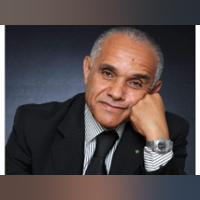
Directeur Technique et du Développement de la Confédération Africaine d'Athlétisme. Passionné du Maroc, passionné d'Afrique. Concerné par ce qui se passe, formulant mon point de vue quand j'en ai un. Humaniste, j'essaye de l'être, humain je veux l'être. Mon histoire est intimement liée à l'athlétisme marocain et mondial. J'ai eu le privilège de participer à la gloire de mon pays .


8100

33.0

Agentic AI Beyond Benchmarks: Meta-Agents & the Future of AI Evaluation with Khalil Mrini 232

I recently sat down with Khalil Mrini to talk about his work and international experiences. He has spent time in Marrakech, Switzerland, India, and the United States, each place influencing his perspective in different ways. We also mentioned his visit at the UM6P, his experience of the university, students and innkvative AI curriculum. Khalil presented his new paper on agentic AI. The paper focuses on the use of autonomous agents to evaluate and benchmark other agents: essentially, systems that can test one another’s capabilities. He described how this approach could provide a more dynamic and optimal method for measuring progress in AI research. We ended the conversation by discussing AI ethics. Our exchange raised open questions about responsibility, transparency, and how the field can ensure that increasingly autonomous systems align with human values.
youtu.be/zE7PKRjrid4

A Historical Triptych: How Morocco, Spain, and Portugal are Forging the Success of the 2030 World Cup 346

The assignment of the 2030 FIFA World Cup hosting rights to the unprecedented trio of Morocco, Portugal, and Spain marks the opening of a new chapter in the history of international and sporting relations. The joint organization of this event confirms an unparalleled dynamic, engaging the three nations in a triangular cooperation whose efficiency will be the decisive marker of this global event's success. This trilateral partnership transcends mere logistical collaboration to become a true lever for strategic development. The question is no longer whether bilateral relations are ready, but how their integration into a strengthened trilateral framework will guarantee the success of a mega-event poised to connect, for the first time, two continents through the medium of sport. Historical ties and geographical proximity provide a fertile ground for a remarkable intensification of relations between these three partners. The announcement of their tripartite bid has, in fact, elevated the need for harmonized coordination in the logistical, economic, and security domains to the level of a strategic imperative. I. The Political and Economic Foundations of Enhanced Cooperation The alignment around the 2030 project is not fortuitous; it is rooted in deep political and economic considerations that mutualize the interests of the three countries. •⁠ ⁠The Imperative of Convergence suffers no ambivalence: Spain and Portugal, while operating within the structural framework of the European Union, recognize Morocco as an essential strategic partner, a genuine gateway and pivot to the African continent. This dynamic is not unilateral; the Kingdom is consolidating its Euro-African anchor with heightened clarity through this same alliance. The World Cup deadline, far from being a simple calendar constraint, acts as a powerful lever, forcing the acceleration—often judged too slow—of regulatory, customs, and security convergence processes among the three capitals. Crucially, the political will displayed at the highest level—symbolized by the direct monitoring of Moroccan commitments by His Majesty King Mohammed VI—stands as a decisive catalyst, ensuring the establishment of a unified and enduring policy line, even in the face of contingencies and fluctuations in political majorities within the allied states. •⁠ ⁠Mutualization of Investments and Benefits: On the economic front, the World Cup represents an unprecedented opportunity to boost trade and investment. The trilateral agreements directly influence the planning of major works: the goal is no longer to build isolated infrastructures, but integrated networks (ports, air links, potential high-speed rail connections) designed for interoperability. The harmonization of tourism offerings and incentivizing fiscal regimes for sponsors and investors is crucial to maximize shared benefits. The success of coordination in the logistical, economic, and security domains will not be merely a performance indicator; it will be the symbol of a collective capacity to manage a complex event on a transcontinental scale. II. Managing Complexities: The Challenges of Co-Development An event of this magnitude, operated by three sovereign states, naturally generates frictions and coordination challenges that require first-rate diplomatic and technical management. •⁠ ⁠The Challenge of Global Security and Integrated Transport: The primary obstacle is the creation of a unified security space for the millions of supporters on the move. This demands real-time information sharing, coordination of law enforcement agencies, and the harmonization of emergency protocols. Concurrently, the transport system must be conceived as a single network. The transit of teams and supporters between Europe and Africa must be fluid, reliable, and ecological, necessitating targeted investments in airport capacity and maritime services. •⁠ ⁠The Cultural and Civilizational Vector: Beyond sport, the World Cup is a diplomatic platform. The secondary, but fundamental, challenge is to move beyond simple technical organization to present an ideal model of intercultural coexistence. Morocco, Spain, and Portugal must invest in promoting their cross-cultural heritages, consolidating the values of peace and mutual respect. This involves qualifying national institutions not only in logistics but also in public management and global media interaction, to avoid the pitfalls of fragmented or sensationalist coverage. III. The Structuring Influence of Bilateral Agreements on Logistics The influence of existing agreements between the three countries is vital for infrastructure development. The current stage is characterized by high anticipation from the private sectors and sports observers, who are watching for the concrete acceleration of construction projects. The overall efficiency of the operation—whether considering the pre-event phase, execution during the tournament, or the post-realization legacy—rests entirely on the solidity of the triangular commitment. The transformation of infrastructures, from stadiums to training centers and reception areas, must be carried out in a spirit of normative alignment. In conclusion, the 2030 World Cup is not merely the sum of three national organizations; it is a project of strategic co-development. The strong historical relations uniting the Kingdom of Morocco, Portugal, and Spain, amplified by a constant and high-level political will, constitute the decisive element for transforming this bid into a resounding success, offering the world a precedent of successful integration between two shores.