Think Forward.

Dopage, un problème de santé publique... 3278

Je viens de passer une journée mémorable à Khouribga, le 30 décembre de l’année écoulée à l’invitation de l’Agence Marocaine Antidopage que préside la vaillante Fatima Abouali. C’était à l’occasion de l’une des étapes de la Caravane Nationale « Sport sans dopage », visant la sensibilisation des jeunes quant aux dangers des substances dopantes sur la santé; caravane placée sous le haut patronage de Sa Majesté le Roi , que Dieu l'assiste. A chacune de ces invitations, car ce n'est pas la première puisque j'avais participé à l'étape de Laayoune et d'Errachidia, l'occasion m'est donnée pour m'adresser aux autorités et personnalités présentes mais surtout aux dirigeants sportifs et aux jeunes. AMAD est l’autorité marocaine compétente en matière de lutte contre le dopage. Elle est assez récente puisque n’a été créée que suite aux directives royales contenues dans la lettre historique aux assises du sport en 2008. Elle compte aujourd'hui 3 ans d'âge. Cela ne veut point dire que les sportifs marocains n’étaient pas contrôlés avant la création de l’AMAD. C’était alors les fédérations internationales, puis une agence régionale qui contrôlait les sportifs dans toute la région d’Afrique du Nord. Sa Majesté disait en substance en 2008, dans cette lettre : « …Cela vaut également pour le dopage, qui constitue un phénomène étranger à nos traditions et à notre culture et qui est répréhensible par la loi et l'éthique sportive. C'est pourquoi Nous engageons les autorités compétentes à sévir vigoureusement contre cette pratique et à faire preuve d'intransigeance dans la répression de l'utilisation et de la commercialisation des substances dopantes, et ce, conformément à la législation nationale et à nos engagements internationaux en la matière. » C’est à cela que travaille sans répit l’AMAD. Outre de veiller sur les sportifs de haut niveau soumis de par la règlementation internationale à des protocoles strictes de contrôles réguliers, en compétition et surtout et beaucoup en dehors des compétitions, L’agence s’attaque aussi à un phénomène dont nous tardons probablement à prendre conscience, celui du recours par les amateurs adeptes de la culture du corps à des produits apparemment innocents et inoffensifs mais qui peuvent constituer un danger véritable pour la santé notamment des jeunes, souvent inconscients, insoucieux ou mal informés et formés. Le recours à des produits tels que certains compléments alimentaires, d’origine des fois douteuses, constitue un danger de santé publique et c’est pour en informer les populations que l’AMAD a initié la caravane qui sillonne le territoire national pour justement mettre beaucoup d’informations à la portée des jeunes. Prendre des produits d’une certaine nature peut s’avérer extrêmement dangereux avec des répercussions des fois irréversibles pouvant aller à des myopathies graves, des troubles de pression artérielle, des troubles graves de la sexualité et tant d’autres problèmes de santé. C’est dire qu’il ne s’agit pas d’effets secondaires auxquels on pourrait s’accommoder. Le professeur Moulay Ahmed Belimam, secrétaire général de l’AMAD, n’arrête pas de le répéter et d’alerter sur ces dangers d’un autre genre, des dangers des temps modernes. Certains compléments alimentaires comptent dans leurs compositions des stéroïdes anabolisants et autres molécules non autorisées et non admises dans la pratique sportive pour leur nocivité et parce que détournée de leur usage thérapeutique normal. Il s’agit en fait de contourner l’inefficacité des produits de fabrication de base de ses compléments alimentaires en y ajoutant des molécules et composants dont les effets sont connus, par exemple sur le volume musculaire notamment par leurs effets la rétention d’eau. Le volume musculaire, outre la question de l’apparence laisse donner une impression de force, hélas oh combien illusoire. les personnes prenant ces produits, apparemment forts, ne sont même pas aussi forts que la moyenne des personnes non entrainées. Les recherches ont aussi montré le caractère addictif de ces produits ; le consommateur se retrouve ainsi pris dans un engrenage qu’il ne va plus maitriser. Qu'une discipline sportive isolée soit contaminée par le phénomène de dopage, on peut toujours objecter qu'il s'agit d'un fléau que l’on peut possiblement circonscrire. On peut alors prendre des mesures appropriées et corriger l'anomalie. La gravité découle ici du fait que de nombreuses disciplines sportives et pratiques physiques pour ne pas dire toutes sont contaminées. Des jeunes dont l’objet de la pratique n’est pas la compétition ou encore des jeunes qui pratiquent sans la moindre volonté de faire partie du mouvement sportif national sont aujourd’hui victimes insoucieuses de pratiques nocives pour leur santé et illicites vis à vis de la loi. Cela devient préoccupant. Il y a là un problème de santé publique et de mise en œuvre de la loi. S’imposent ainsi des mesures de contrôle des produits suspects, de leur traçabilité et de la nature de leurs composants tout aussi bien que s’impose de débusquer les circuits d’approvisionnement et de la commercialisation frauduleuses. Et il y a urgence. Reste aussi à persévérer dans la voie de la lutte contre les pratiques de dopage car c'est aussi de la triche ; c’est interdit et encadré par les règlements sportifs mais également par la loi. Les consommateurs/utilisateurs de produits et pratiques interdites doivent en être dissuadés. Ceux qui en font la promotion, ceux qui en font commerce, sportifs, dirigeants doivent savoir que c'est à la fois dangereux et illicite. Tous doivent comprendre que c’est une triche inadmissible et qu’il y a au Maroc une loi qui prévoit des punitions sévères pour cette triche-là spécifiquement. Celui ou celle qui se dope, finit toujours par se faire attraper car toute substance introduite dans le corps est détectable. Tous ce que vous mettez dans votre corps à peine consommé laisse des traces ; des traces détectables en laboratoire. La loi aujourd’hui ne punit plus que le sportif en cas de dopage mais également toute personne en relation avec le cas confondu. En 2022, l’AMAD a effectué un total de 919 tests, dont 704 effectués par l’AMAD en qualité d’autorité de contrôle et 215 prélèvements, comme autorité de prélèvement réalisés pour le compte et à la demande d’autres organismes.
blogger.com/blog/posts/924802102...
Aziz Daouda Aziz Daouda

Aziz Daouda

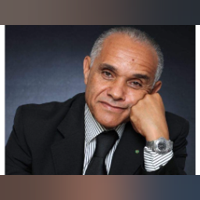
Directeur Technique et du Développement de la Confédération Africaine d'Athlétisme. Passionné du Maroc, passionné d'Afrique. Concerné par ce qui se passe, formulant mon point de vue quand j'en ai un. Humaniste, j'essaye de l'être, humain je veux l'être. Mon histoire est intimement liée à l'athlétisme marocain et mondial. J'ai eu le privilège de participer à la gloire de mon pays .


8100

33.0

Kaftan Evening (Soirée Kaftan) 41

​In a Kaftan evening's glow, Colors compete in vibrant show, And tales of ancient times they sow. They blend within the multi-hue, Granting the festivity its view. The lovely ladies each embrace their dance, To music's rhythm that puts them in a trance. ​Each region of Morocco, for its kaftan, must innovate, The Sefrioui kaftan, adorned with cherries, is great. It pleases me and makes my head spin, The Queen of Cherries is full of grace, She is beautiful, she has class. The yellow Fassi kaftan is sublime, The pink Marrakchi kaftan is intimate. The green Oujdi kaftan is simply top-tier, The red Meknassi kaftan extremely pleases me here. The multicolored Berber kaftan leaves me dreaming and pale, The beige Soussi kaftan I adore and hail. The Sahraoui sky-blue kaftan seduces me as well, The Rifian royal blue kaftan charms like a spell. The red and green Casablanca kaftan is magical, The Rbati kaftan is fantastical. The white Tetouani kaftan is lordly and grand, The pistachio Tangerois kaftan brings emotion to the land. The Chefchaouni kaftan leaves me astounded and mute, The Moroccan kaftan is simply royal in its pursuit. The Safi sky-blue kaftan is very beautiful, From Tangier to Lagouira, It perpetuates since the dawn of time the style of a tailoring, a witness to a great culture's spring, Whose secret and honor only the Cherifian Kingdom keeps, To the great dismay of the envious and the thieves. ​Dr. Fouad Bouchareb All rights reserved December 11, 2025

Kaftan Evening (Soirée Kaftan) 103

​In a Kaftan evening's glow, Colors compete in vibrant show, And tales of ancient times they sow. They blend within the multi-hue, Granting the festivity its view. The lovely ladies each embrace their dance, To music's rhythm that puts them in a trance. ​Each region of Morocco, for its kaftan, must innovate, The Sefrioui kaftan, adorned with cherries, is great. It pleases me and makes my head spin, The Queen of Cherries is full of grace, She is beautiful, she has class. The yellow Fassi kaftan is sublime, The pink Marrakchi kaftan is intimate. The green Oujdi kaftan is simply top-tier, The red Meknassi kaftan extremely pleases me here. The multicolored Berber kaftan leaves me dreaming and pale, The beige Soussi kaftan I adore and hail. The Sahraoui sky-blue kaftan seduces me as well, The Rifian royal blue kaftan charms like a spell. The red and green Casablanca kaftan is magical, The Rbati kaftan is fantastical. The white Tetouani kaftan is lordly and grand, The pistachio Tangerois kaftan brings emotion to the land. The Chefchaouni kaftan leaves me astounded and mute, The Moroccan kaftan is simply royal in its pursuit. The Safi sky-blue kaftan is very beautiful, From Tangier to Lagouira, It perpetuates since the dawn of time the style of a tailoring, a witness to a great culture's spring, Whose secret and honor only the Cherifian Kingdom keeps, To the great dismay of the envious and the thieves. ​Dr. Fouad Bouchareb All rights reserved December 11, 2025

Kaftan Evening (Soirée Kaftan 103

) ​In a Kaftan evening's glow, Colors compete in vibrant show, And tales of ancient times they sow. They blend within the multi-hue, Granting the festivity its view. The lovely ladies each embrace their dance, To music's rhythm that puts them in a trance. ​Each region of Morocco, for its kaftan, must innovate, The Sefrioui kaftan, adorned with cherries, is great. It pleases me and makes my head spin, The Queen of Cherries is full of grace, She is beautiful, she has class. The yellow Fassi kaftan is sublime, The pink Marrakchi kaftan is intimate. The green Oujdi kaftan is simply top-tier, The red Meknassi kaftan extremely pleases me here. The multicolored Berber kaftan leaves me dreaming and pale, The beige Soussi kaftan I adore and hail. The Sahraoui sky-blue kaftan seduces me as well, The Rifian royal blue kaftan charms like a spell. The red and green Casablanca kaftan is magical, The Rbati kaftan is fantastical. The white Tetouani kaftan is lordly and grand, The pistachio Tangerois kaftan brings emotion to the land. The Chefchaouni kaftan leaves me astounded and mute, The Moroccan kaftan is simply royal in its pursuit. The Safi sky-blue kaftan is very beautiful, From Tangier to Lagouira, It perpetuates since the dawn of time the style of a tailoring, a witness to a great culture's spring, Whose secret and honor only the Cherifian Kingdom keeps, To the great dismay of the envious and the thieves. ​Dr. Fouad Bouchareb All rights reserved December 11, 2025

The 2025 Africa Cup of Nations (CAN) vs FIFA: Should Africa Always Settle for a Secondary Role? 747

Just days before the kickoff of la CAN 2025 au Maroc, a FIFA decision reignites an old debate: the real consideration given to African competitions within the global football structure. By reducing the mandatory release period for African players by European clubs to à cinq jours seulement, the world football governing body again seems to favor those same clubs… to the detriment of African national teams. This measure, seemingly technical at first glance, speaks volumes about the implicit hierarchy in world football and the true place FIFA continues to reserve for the African continent. How can a major competition like la CAN, a flagship event in African football, watched by hundreds of millions, and an important economic, social, and political driver in the region, be seriously prepared with only cinq jours de rassemblement? No team, anywhere in the world or on any continent, can build tactical cohesion, assimilate game plans, develop automatisms, or even physically recover in such a short time. It is therefore legitimate to ask: - Is this a rational measure? - Or a decision that trivializes la CAN, as if this competition deserves neither respect nor optimal conditions? - Or could it be structural discrimination against Africa? But the fundamental question remains the same. It is not new: is world football truly equal? The decision on player release is only the visible part of a larger system, where les compétitions et les équipes africaines are structurally disadvantaged. Take FIFA rankings as an example, which determine the pot placements for major competition draws. Points depend on the level of opponents faced. A team playing mainly in Africa will mechanically face lower-ranked teams, thus earning fewer points, even when winning. Conversely, a European team, with higher-ranked opponents, gains more points even with similar results. This system maintains a cercle fermé: the best ranked stay at the top, the lower ones remain stuck at the bottom. Where then is the promised meritocracy? The ranking openly dictates the World Cup path. The recent decision to guarantee that the quatre meilleures équipes mondiales do not meet before the 2026 World Cup semi-finals is a major turning point. This means the already biased ranking now plays a crucial role in the very structure of the competition. We have even seen the draw master, probably connected by earpiece to a decision-maker, place teams in groups without explaining why… This openly protects the giants and locks others into a calculated destiny. It is a logic of preserving the powerful, typical of a system where sport, apparently universal, bows to economic and media imperatives of major markets. This raises the question: is FIFA an institution funded… by those it marginalizes? A paradox emerges: - States, especially in developing countries, are the primary investors in football: infrastructure, academies, stadiums, subsidies, competitions. La CAN est une affaire de ces États. - National football, notably the World Cup between nations, is FIFA’s most lucrative product. - The emotion, history, and prestige of football largely come from the nations, not clubs. - Yet, it is les clubs européens, entités privées ou associations who seem to dictate the conditions. African federations, essential contributors of the global talent pool, players, skills, audiences, and emerging markets, find their room to maneuver much reduced. Is Africa highly valued as a supplier of talents, but not as a decision-making actor? This situation echoes a well-known pattern on the continent: Produce raw material, but let value-added happen elsewhere. In football as in the global economy, Africa trains, supplies, feeds, but often remains spectator when it comes to governance, revenues, interests, or influence. Instead of being seen as a strategic pillar of the global calendar, La CAN is treated as a logistical complication, even though a continental competition cannot progress if constantly relegated to second place. Football in certain regions only advances through regional and continental competitions. These form objectives for most teams and are sometimes the only visibility opportunity for some nations. Again, this raises the question: is world football truly democratized? FIFA presents itself as an inclusive house, guarantor of equity, solidarity, and development. In theory, yes. In practice, the scales tip heavily to one side. Recent decisions reveal an organization focused on protecting the immediate interests of football’s economic powers, mainly in Europe, to the detriment of sporting fairness. So, should we keep pretending? Should Africa be content to applaud, stay silent, and provide its players like a product in the global market? Isn’t the time ripe for une affirmation africaine? The 2025 CAN, organized in Morocco, with all the effort and resources invested, could become a turning point. Morocco’s dedication deserves respect. It demonstrates that the continent has the means, modern infrastructure, massive audiences, and world-class talent, but lacks recognition and du poids dans les décisions. It is time that FIFA treats African competitions with the respect they deserve. Not out of charity or rhetoric, but out of justice, coherence, and because world football cannot continue ignoring a continent that remains one of its main human and cultural engines. Africa is undoubtedly proud to be part of FIFA, but the strapontin no longer suits it. Africans themselves no longer tolerate the contempt.

Magickal Paths 809

In magick, “right-hand path” (RHP) and “left-hand path” (LHP) name two different orientations toward power and the sacred—not simple good/evil lanes. The RHP aims at theurgy: purifying the self, aligning with a transcendent order, and uniting with something higher—the Godhead, Nous, Holy Guardian Angel, True Will. Authority flows downward through lineage, consecration, and rule. You clean the vessel first—banishings, abstinences, prayer, graded initiations—then invoke to become more transparent to the divine. The ethic is about humility, service, and character. Power’s legitimate when it’s bound by vow and used to heal, protect, and teach. That’s one posture. The LHP, by contrast, aims at apotheosis—exalting and individuating the magician until the self becomes its own godform. Authority here flows outward, from the practitioner’s will, forged through ordeal, trance, pacts, and direct negotiation with spirits. Rather than shun taboo currents, the LHP learns to contain and integrate them—to harvest force from desire, fear, rage, or eros and bind it to a chosen aim. You don’t surrender ego so much as refine and weaponize it, ideally with awareness of cost. Ethics turn on accountability: you pay what you promise, own your collateral, and live with your bargains. Both paths draw from the same toolbox—banishing, centering, consecration, circles and triangles, timing, offerings, divination—but sequence and intent differ. An RHP working might banish, consecrate, invoke a solar intelligence, make a petition aligned with vow, and then give thanks and charity. An LHP one might cross a boundary—graveyard, crossroads—under wards, evoke a chthonic spirit, strike a contract with careful terms, and pay every offering to the letter. In the RHP, spirits stand as teachers in a hierarchy; in the LHP, they’re contractors in a negotiated economy. You can see echoes of this back in Tantra—dakṣiṇācāra (conventional) vs. vāmacāra (heterodox)—and in the Western split between theurgy and goetia. Rosicrucian and Golden Dawn rites leaned toward theosis; other traditions, from Crowley’s “True Will” to explicitly LHP currents, tilt toward sovereignty and self-deification. Modern magicians mix freely. A Thelemite might invoke the Holy Guardian Angel on Sunday, then perform an uncrossing at a graveyard Tuesday night. Chaos magicians switch hands almost by instinct, tailoring each operation to its need. Every approach has hazards. The RHP can fall into moralism, spiritual bypass, or dependence on external authority. The LHP can slide into narcissism, thrill-seeking, or treating everything—people included—as currency. That’s why mature practice always builds guardrails: divination before and after; clarity of aim; wards; records; fulfillment of obligations; aftercare for the psyche and for relationships touched by the work. A small litmus test helps: Does the working increase lucidity, steadiness, and the capacity to keep one’s word without needless harm? If not, change the method. It’s all experiment, after all. Choosing which hand to use isn’t about belonging to a tribe—it’s about the task. Healing old patterns, steadying life, and cultivating virtue thrive in RHP containers. Breaking paralysis, reclaiming agency, confronting shadow material, or working under pact lean LHP. Most of us end up ambidextrous anyway: vow on Sunday, crossroads on Tuesday, always with a ledger of costs—and enough honesty to pay when the bill comes due. Both paths can sanctify or corrupt. The art is knowing which hand opens which door—and closing it properly when you are done.

My five witnesses of love 809

Of this love that I have for you I have five witnesses: My frail body which has lost its plumpness! My hot tears despite your good care!! My hands that tremble when you are far away!!! My poor heart beating very hard in its little corner!!!! And the hope of meeting you, one day, a few minutes…. at least !!!!! ​Dr Fouad Bouchareb All rights are protected

FIFA World Cup 2026: risk of a tournament reserved for the wealthiest? An unprecedented inflation... 954

The 2026 World Cup, jointly organized by the **États-Unis, le Canada et le Mexique**, promises to be an extraordinary event: an expanded format with 48 teams, 104 matches, state-of-the-art facilities, and what is expected to be the most massive media coverage in sports history. However, as initial details about ticketing and logistical costs emerge, growing concern is palpable among fans: **the North American World Cup could become the most expensive World Cup ever organized**, to the point of calling into question the very accessibility of the event. At the heart of this concern is the American model of *dynamic pricing*, a system where prices are never fixed. They fluctuate according to demand, the volume of online requests, the status of the match, and even algorithmic parameters beyond the consumer’s control. For example, a hotel room normally priced around 200 USD might not be offered for less than 500 or even 600 USD, probably more for late bookers. This mechanism, common in American professional sports, could turn World Cup ticket purchases into a frenzied and even unfair race. Some final tickets are already priced between $5,000 and $20,000, a completely unprecedented level. Group stage tickets could see daily price swings, making financial planning nearly impossible for foreign fans. American supporters, already used to high prices in the NBA, NFL, or MLB, seem better equipped to navigate this system. Conversely, for Moroccan, Brazilian, Senegalese, Egyptian, or Indonesian fans, this model represents an almost insurmountable barrier. Adding to this cloudy scenario is the question of the official resale platform: **FIFA Official Ticket Resale Platform**. Ideally, it prevents black-market sales and secures transactions. But in a market dominated by speculative logic, it could become a playground for actors seeking to maximize profits, especially since FIFA takes a commission. FIFA has not yet communicated safeguards it plans to implement. Without strict regulation, resale could amplify price volatility, particularly for highly sought-after matches: final rounds, games involving teams with strong diasporas, as well as the opening match and final. One of the most puzzling aspects of this World Cup is the early sale of tickets without specific match assignments. In the USA, out of the **6 millions de billets prévus**, nearly **2 millions ont déjà trouvé preneur**, while buyers do not yet know which matches they paid for. This reflects several dynamics: - Total confidence from the American public in the event's organization; - The high purchasing power of an audience willing to invest heavily in sports experiences; - A structural asymmetry between American supporters and international fans, the latter compelled to wait for match assignments to plan trips and budgets. This situation fuels fears that stadiums will be largely filled with local spectators, to the detriment of fans supporting their teams from abroad. The USA ranks among the world’s most expensive hotel markets, and the selected cities are no exception: **New York, Los Angeles, Miami, Seattle, Dallas ou encore San Francisco** regularly top lists of the priciest destinations. A genuine inflation is expected across the hotel sector. During major sporting events, room prices can double or triple. For a month-long World Cup, projections are even more alarming: some operators are already talking about "prices never seen before." Fans should expect: - Massive hikes in hotel prices; - Predictable saturation of alternative accommodations; - Very high internal transport costs, since distances between host cities often require air travel. All these factors raise a central question: who will the 2026 World Cup really serve? The 250 million registered football players worldwide may feel somewhat frustrated. Their sport is slipping away. The North American model, dominated by commercial logic and speculative mechanisms, seems incompatible with football’s tradition as a popular sport. We might witness the emergence of a two-speed World Cup: - A premium World Cup, largely attended by North American audiences and wealthier supporters; - A remote World Cup for millions of international fans who must content themselves with televised broadcasts due to insufficient means to attend. For supporters from countries where median income is far lower than in the United States, be they African, Latin American, Asian, or even European nations, the experience could become inaccessible. FIFA clearly faces a strategic dilemma. Sooner or later, it will have to address this issue. Certainly, the choice of the United States guarantees top-level infrastructure, record revenues, a colossal advertising market, and a logistics organization of rare reliability. But this financial logic could directly contradict football’s social and symbolic mission: to bring people together, unite, and include. If the 2026 World Cup turns into an elitist event, it risks leaving a lasting negative impression in public opinion. Modern football, already criticized for its commercial drift, could face increased pushback from fans—the very fans who keep the sport alive—especially as FIFA’s revenues rise from $7.5 billion to $13 billion. The World Cup is thus under tension. In 2026, it will likely be spectacular both sportingly and organizationally. But it could also mark a turning point in World Cup history: when the event stops being a popular and accessible gathering and turns into a premium product for a privileged audience. Between ticket inflation, skyrocketing hotel prices, logistical distances, and the American economic model, the real risk exists that this edition will go down as the most exclusive, most expensive, and least accessible. FIFA, the organizers, and host cities will have to find ways to mitigate this dynamic to preserve football’s very essence: a universal sport that belongs to everyone. Could the proximity between Gianni Infantino and Donald Trump, even their friendship, help in any way?

CAN 2025 in Morocco: Reflection of a Major Probable Migratory and Social Transformation... 984

Three weeks before the Africa Cup of Nations in Morocco, it seems appropriate to revisit key insights from the 2024 General Population and Housing Census (RGPH 2024). This event will undoubtedly have a powerful impact on the country's perception, through the positive images it is already broadcasting and, consequently, on future demographic data. The census shows that out of 36.8 million recorded inhabitants, 148,152 people are foreign nationals, representing nearly 0.4% of the total population, an increase of over 76% compared to 2014. Behind this relatively modest figure lies a structural transformation: the rise of Sub-Saharan African migrants, partial feminization of flows, strong urban concentration, and increasingly qualified profiles. Morocco's geographical position and economic evolution have, in a relatively short time, transformed it from a country of emigration into a space of settlement and transit for migrants with varied profiles. The National Strategy on Immigration and Asylum (SNIA), adopted in 2013, along with the regularization campaigns of 2014 and 2017, have established a more inclusive approach in Morocco and better statistical knowledge of the populations concerned. Sub-Saharan African nationals now represent nearly 60% of migrants, compared to about 27% in 2014. The share of Europeans has declined to just over 20%. That of MENA region nationals is only 7%. Morocco's continental anchoring is thus confirmed. In terms of nationalities, Senegal and Côte d'Ivoire account for more than one-third of foreigners, ahead of France, which remains the leading European nationality with nearly 14% of foreign residents. Other countries like Guinea, Mali, Congo-Brazzaville, Cameroon, or Syria complete this panorama. Foreign residents in Morocco are mostly recent arrivals: more than half report arriving since 2021, and more than one-third between 2011 and 2020, testifying to a very recent acceleration of arrivals. A majority of this population will fill the stands during the CAN. Economic motives overwhelmingly dominate: more than 53% of migrants cite work as the main reason, confirming Morocco's role as a regional attraction pole in sectors such as construction, services, agriculture, and the informal economy. Family reasons follow (a little over 20%), reflecting the growing weight of family reunification and medium- to long-term settlement projects, then studies and post-graduation (about 14%), a sign of the country's academic attractiveness to Sub-Saharan students. Humanitarian motives, flight from conflicts, insecurity, racism, or climate change effects—remain numerically minor. Morocco thus appears as a hybrid space where labor migrations, student mobility, family reunifications, and international protection needs coexist. The vast majority of foreign residents live in cities: nearly 95% are settled in urban areas, confirming the role of major agglomerations as entry points and integration spaces. Two regions clearly dominate: Casablanca-Settat, which hosts more than 43% of foreigners, and Rabat-Salé-Kénitra with a little over 19%, though the latter's share has declined compared to 2014 in favor of Casablanca. Nearly 56% of this population are men, but feminization is progressing, particularly among certain nationalities like Ivorian women and Filipinos, who are very present in personal services and domestic work. More than 80% of foreign residents are between 15 and 64 years old, making them essentially a working-age group, with a non-negligible presence of children and a minority of elderly people. Nearly half of people aged 15 and over are single, while a little over 45% are married, showing the coexistence of individual mobility trajectories and stabilized family projects. The education level appears generally high: nearly 39% hold a higher diploma and 28% have reached secondary level. Employed workers are mostly private sector employees, while a minority work as independents, employers, or public sector employees, highlighting the diversity of professional integration modes. The relatively limited share of unemployed may mask forms of underemployment or precariousness in the informal sector. In 2024, more than 71,000 households include at least one foreign resident. About 31% are exclusively composed of foreigners, while about 69% are mixed households combining Moroccans and foreigners, a proportion sharply up from 2014. This rise in mixed households reflects a deepening of residential and social integration, through mixed marriages, welcoming relatives, or shared cohabitations linked to work and studies. In terms of housing, the majority of foreign households live in apartments, followed by modern Moroccan houses, reflecting integration into the ordinary urban fabric rather than segregated housing forms. Exclusively foreign households are overwhelmingly tenants, while mixed households are more often owners or co-owners, highlighting differentiated settlement trajectories based on household composition. The RGPH 2024 results confirm that the foreign presence in Morocco, though numerically limited, now constitutes a structural and lasting fact of society. The youth, the high proportion of active workers, the rise of family and mixed households, as well as the diversification of educational profiles, call for greater coordination between migration policies, urban, social, and educational policies.The major challenges concern valuing the economic and demographic potential of this population, access to education, health, housing, and decent work, and combating discrimination in a context of cultural pluralization. The SNIA mechanisms to meet Morocco's regional and international commitments in migration governance must also evolve. However, these figures and data will likely undergo real evolution in the coming years: the African media focus on the CAN, and later on the World Cup in Morocco, will reveal the country's assets and increase its attractiveness. These two events, through their combined media weight and the impressions reported by the thousands of expected spectators, should play a promotional role for the country. Deep Africa will discover Morocco and the multiple opportunities it offers, both economically and for studies.