Think Forward.

Morocco: Voices of Rebellion, From Najat Aatabou to El Grande Toto... 10786

The recent edition of Mawazine Music Festival did not go unnoticed and will be remembered. There were, of course, tens of thousands of citizens from all over Morocco and beyond enjoying the various stages, with Boutchart’s record simply making them sing along, as well as that great diva singing in playback, provoking the anger of those who cried scam. But above all, there was El Grande Toto. This great star of Moroccan and global urban music, whom many dislike, or dislike intensely. El Grande Toto packed the audience, but also sparked a large number of articles and reactions, mostly unfavorable, with only a few exceptions. The majority of these reactions were rather critical, some almost scathing. *Let me say it straight away: I am not a fan of El Grande Toto nor of his type of music. At my age, it would be an insult to my musical tastes, as I can only be soothed in my Arabic version by Doukkali, Abdelhalim, Belkhayat, Samih, Farid, Oum Kaltoum, and Abdelwahab; in my French version by Brel, Reggiani, Piaf, Barbara; and in my English version by Dylan, Clapton, BB King, James Brown, and many others.* That said, I cannot judge those who dislike him, nor those who love El Grande Toto’s musical genre—that is, all the youth who identify with this style, who resonate with his intonations and rejoice in absorbing his lyrics. It is their time and their music. This reminds me that about thirty years ago, Najat Aatabou could only be heard by accident, passing by a cassette seller’s stall in a souk or secretly in one’s car. Her music seemed annoying and her lyrics vulgar. It took a long time before she was finally accepted, and later adored. What brings me to this topic is that there is something in the artistic trajectories of Najat Aatabou and El Grande Toto that resembles a broken mirror: the shards oppose and scatter, yet, upon closer look, they reflect the same reality. That of a multiple, rebellious Morocco, torn between its traditions and its desires for modernity. A Morocco that thinks it is what it is only little or not really. What it has never truly been except in a falsely constructed imagination. Najat Aatabou is the hoarse voice of the Zemours, the one who emerged in Khémisset, carried by the winds of the Middle Atlas and the whispers of a society still constrained by honor, the gaze of others, and the strictness of conventions. In the 1980s, while the Kingdom was taking its first steps toward social openness, Najat dared to sing what so many women whispered in silence: thwarted loves, betrayal, emancipation, wounded pride, desire—all in rather raw language. Her “Hadi Kedba Bayna” (“It’s an obvious lie”) resonates like a cry, soft but firm, in popular weddings, shared taxis, and the cozy living rooms of the Moroccan diaspora in Europe. With her, chaâbi, the music of the people par excellence, becomes a vector of affirmation. Najat does not apologize for being a woman, an artist, Amazigh, a rebel. She disturbs, sometimes shocks, but she imposes herself. Her music was even used in a global advertisement. Forty years later, it is another Moroccan who shakes the walls of certainties: El Grande Toto, child of Casablanca’s suburbs, dyed hair, tattooed face and arms, and sharp tongue, imposes himself as the bard of an uninhibited Moroccan youth. With him, words snap in darija, intertwine with French and English, flirt unabashedly with taboos: drugs, money, sex, and challenge social hypocrisies. Where Najat Aatabou denounced half-words, Toto displays, claims, provokes. Certainly, the forms differ: Najat draws from the ancestral repertoire, her melodies reminiscent of village weddings and the ululations of yesteryear. Toto, on the other hand, drinks from the sources of global rap, trap, and social networks, where punchlines matter more than silences. But behind these differences, the same sap nourishes their works: the thirst to speak, whatever the cost, without feeling guilty about anything. Najat Aatabou paid a high price for breaking taboos. We still remember the harsh criticisms, the heavy judging looks, the outraged fathers. But time proved her right: she is now respected, even adored, seen as one of the great voices of popular Morocco. El Grande Toto, meanwhile, is still in the midst of the storm. It will take him a long time before he is finally tolerated and accepted. Repeated controversies, court summons, accusations of indecency… Yet, his success does not wane. The numbers speak: millions of streams on platforms, growing international influence, a Moroccan youth that recognizes itself in his anger and dreams. They sing their reality and find themselves in him, whether we like it or not. Ultimately, from the 1980s to today, across centuries, Morocco has never stopped telling its story through its most unsettling artists. There were others before: Zahra Elfassia, Fatna Bent El Houcine, and many known or unknown Chikhates, female voices of the frustrations and hopes of a silenced generation. El Grande Toto, the insolent spokesperson of an urban youth in search of recognition, space, freedom, embodies this spirit today. We must not forget there were others before him: Faddoul, Nass El Ghiwane, Ach Kayne, Rebel Moon, and Lbig, among others. There was also a tradition of rebellion and bold language in malhoun with qassidas that one would no longer dare to sing nowadays, even in the most intimate circles. Between them all, decades and universes, but also this invisible thread that connects those who dare to say out loud what others still keep silent. Perhaps that is what it means to be an artist in Morocco: to shake the established order, to hold a mirror to society, and to accept to pay the price, even if it is too high...
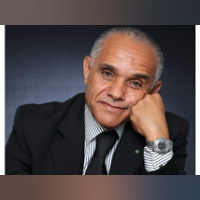
Aziz Daouda Aziz Daouda

Aziz Daouda

Directeur Technique et du Développement de la Confédération Africaine d'Athlétisme. Passionné du Maroc, passionné d'Afrique. Concerné par ce qui se passe, formulant mon point de vue quand j'en ai un. Humaniste, j'essaye de l'être, humain je veux l'être. Mon histoire est intimement liée à l'athlétisme marocain et mondial. J'ai eu le privilège de participer à la gloire de mon pays .


8400

33.0

Thelema 242

Thelema is a spiritual philosophy and religious system established by Aleister Crowley (1875–1947) in the early twentieth century. The system is based on the teachings found in The Book of the Law, which Crowley believed was revealed to him by a spiritual entity named Aiwass in Cairo in 1904. The name Thelema comes from a Greek word meaning “will.” At the heart of the philosophy is the concept of True Will, which Crowley described as the unique purpose or direction of each individual’s life. The central teaching of the tradition is expressed in the phrase: “Do what thou wilt shall be the whole of the Law.” In Thelemic philosophy this statement does not mean simple freedom to do anything one desires. Instead, it refers to discovering and fulfilling one’s True Will, which represents the natural path of a person within the larger order of the universe. According to Crowley, suffering and conflict often arise when people live in ways that are not aligned with their true nature. Another key phrase in Thelema is: “Love is the law, love under will.” This statement suggests that love and harmony should guide human actions, but that these expressions of love must be consistent with one’s deeper purpose. Crowley believed that human spiritual history unfolds through different Aeons, or epochs of consciousness. He proposed that humanity had recently entered the Aeon of Horus, a new era in which individuals would move beyond the authoritarian religious structures of the past and instead seek spiritual knowledge through personal discovery and self-realization. Thelema integrates ideas from many sources, including Hermetic philosophy, the Kabbalah, ceremonial magick, astrology, alchemy, and Eastern spiritual practices such as yoga and meditation. These traditions are used as practical systems of spiritual training designed to transform consciousness rather than merely a belief system. Practitioners of Thelema often use rituals, meditation, symbolic study, and magickal exercises to better understand themselves and align with their True Will. Crowley also established magickal orders to help organize and transmit these teachings, including the A∴A∴ and his later leadership within Ordo Templi Orientis. Today Thelema continues to influence modern ceremonial magick, occult philosophy, and spiritual movements that emphasize self-discovery, personal freedom, and conscious evolution. While interpretations vary among practitioners, the core idea remains the same: each individual has a unique role in the universe, and spiritual growth comes from discovering and fulfilling that role with clarity, discipline, and awareness.

Iran Facing the Reality Test: The End of a Regional Myth? 479

Another major sequence of tensions in the Middle East highlights the deep fragilities of the Iranian regime. Since its advent in 1979, the Islamic Republic has built itself on a political narrative of revolutionary power in direct opposition to the "Great Satan" the USA, unwavering defender of the Palestinian cause and Jerusalem's liberation. **This ideological positioning allowed Tehran to gain relays in parts of the Arab world, particularly among movements hostile to Israel. It developed an influence strategy based on creating, funding, and arming affiliated groups: Hezbollah in Lebanon, Shiite militias in Iraq, support for the Syrian regime, Houthis in Yemen, forming what it presents as the "axis of resistance." It surely finances other movements in many other countries, with an unnatural connivance with Sunni Islamists. An expansion strategy with destabilizing effects.** Where Iran has extended its influence, its footprint is inseparable from increased militarization and state fragmentation. The projection relies less on state-building than on the rise of parallel politico-military networks challenging national institutions. This has certainly enabled Tehran to hold leverage over its adversaries and position itself as the champion of "resistance" to the US-dominated regional order and its allies. But it has also prolonged conflicts, weakened already fragile state institutions, and exacerbated sectarian fractures. In the long term, the human and economic cost of this "strategy" is considerable for the affected countries and for Iran itself, subjected to severe sanctions and persistent international isolation. *The Palestinian cause is in fact more instrumentalized than defended, for nearly half a century, while the Iranian regime claims it as a central pillar of its diplomacy and revolutionary legitimacy.* Tehran has forged ties with armed Palestinian actors like Hamas or Islamic Jihad, presenting them as extensions of its own "resistance." Yet it must be acknowledged that Palestinians' situation has in no way improved: rampant occupation, colonization, and blockade continue, while cycles of violence recur without credible political prospects. Palestine has lost vast territory, lives, and even sympathy within the Arab world itself. Palestinian internal divisions, locking the cause into an essentially militarized logic absent diplomatic horizons, question the real effectiveness of this posture. Like the Gamal Abdel Nasser era marked by imprudent pan-Arabism, the current period has brought no progress. Iran has, in part, supplanted certain Arab leadership on the dossier without producing tangible results for a lasting settlement—nor concrete improvements in Palestinians' lives, quite the contrary. **Beyond geopolitics, the regime faces profound internal contestation. Recent protest movements, and those triggered after Jina Mahsa Amini's death in September 2022, revealed a major fracture between part of Iranian society and its leaders. Repression, as the sole response, resulted in thousands of deaths and arrests, documented by international organizations and UN mechanisms.** The rigidity of security and ideology contrasts with the aspirations of a connected youth seeking civic and individual freedoms. Today's Iran is no longer that of 1979: society has transformed, the regime has not. The gap between revolutionary discourse, promises of social justice, and socio-economic reality: inflation, unemployment, precarity, brain drain, corruption, diplomatic isolation—fuels disillusionment that undermines state legitimacy. Morocco officially severed ties with Iran in 2018, as Tehran supported the Polisario Front via Hezbollah and its embassy in Algiers, with Algeria's backing. Rabat holds evidence of arms deliveries and Polisario cadre training. Morocco's rupture appears as a strategic decision to prevent any perception of interference in its vital interests, particularly in the Sahara. It also fits into a broader realignment of regional alliances, marked by Rabat's rapprochement with certain Gulf partners and the USA, amid growing rivalries with the Iran-Algeria axis. Recent military and diplomatic developments highlight a troubling reality for Tehran: Iran often seems to react urgently rather than master the strategic tempo. The multiplication of peripheral fronts, from Lebanon to Gaza, Iraq to Yemen, occurs as its regional relays face growing pressures, sanctions, and targeted eliminations eroding "axis of resistance" cohesion. This situation can appear as much an admission of fragility. The ease with which the USA and Israel neutralize leaders even questions state competence. That said, announcing the regime's imminent collapse would be reckless. The security apparatus remains powerful, regional influence networks active. But will the regime once again demonstrate resilience, even at the cost of increased internal violence and harsh contestation management? **The regime must be clearly distinguished from the Iranian people, caught in a vise. Heir to a millennial civilization and rich intellectual tradition, it should not be reduced to the politico-religious elite's choices. Sanctions, repression, and isolation's sufferings weigh first on ordinary citizens, including those aspiring to peaceful change and the country's reintegration into the international community.** *History teaches much in identical situations. Transitions demand lucidity, responsibility, and an inclusive vision of the future. Regional stability will not arise from ideological escalation or destruction, but from rebalancing based on law, sovereignty, collective security, cooperation, and trust, today sorely eroded.* In this troubled sequence, solidarity first goes to the region's peoples, caught in dynamics beyond them. The mullahs will sooner or later answer to history—and to a simple but decisive question: did they serve the people, or sacrifice them to a political myth that time has made increasingly hard to sustain?

South Africa’s Democratic Model Under Scrutiny: Who Really Decides? 483

South Africa prides itself on being one of Africa's democratic models.Heir to a transition celebrated worldwide after apartheid, it claims solid institutions, a respected Constitution, and vigorous public debate.Yet recent developments raise a troubling question: can the country be so disorganized in conducting its strategic affairs, particularly African ones? The question "Who really decides?" is not purely rhetorical: several recent episodes highlight a genuine discipline problem at the top of the South African military, particularly around naval cooperation with Iran. The general staff allegedly ignored clear instructions from Cyril Ramaphosa to exclude Tehran from naval exercises off the country's coast in early 2026. Iran was nevertheless present and visible. Beyond official statements, therefore, a question persists: who really decides in South Africa when it comes to sensitive diplomatic positions or major geopolitical dossiers? Can this be extrapolated to the Moroccan Sahara issue? Does the country have a multi-voiced diplomacy? A military exercise is no trivial matter, especially when it involves a country like Iran... Officially, South Africa's foreign policy falls under the executive power, embodied by the president and his government. Under Cyril Ramaphosa's presidency, the country claims to defend the principles of international law, peoples' self-determination, and multilateralism. But when military or security actors seem to take initiatives that don't clearly align with the stated line of elected authorities, institutional coherence comes into question. Can a mature democracy tolerate military officials adopting positions or making decisions that indirectly engage foreign policy without explicit political validation? In any consolidated democracy, the army's subordination to civilian power is a cardinal principle. Yet any impression of strategic autonomy by the military, especially on sensitive diplomatic dossiers, sends a worrying signal. These internal ambiguities don't go unnoticed internationally. In the United States, President Donald Trump had already expressed dissatisfaction with certain South African orientations in the past. In a global geopolitical context marked by polarization, every diplomatic, and here military, gesture is scrutinized. If South Africa projects the image of a country with fuzzy decision-making centers, where the diplomatic line can be circumvented or opportunistically interpreted, it weakens its credibility. Washington's gaze then becomes an aggravating factor. A democracy perceived as disorganized becomes vulnerable to external pressures. It loses its influence capacity and sees its status as an African power erode. *One is entitled here to question South Africa's position on the Sahara dossier in recent years. Is it a matter of coherence or simply an ideological posture?* **The African National Congress (ANC), the ruling party, has historically adopted a position aligned with Algiers, supporting the Polisario in the name of self-determination. This line fits into an ideological tradition inherited from liberation struggles. During apartheid, the ANC had ideological and militant ties with other liberation movements, including the Polisario, notably via Algeria and the Tindouf camps. After 1994, democratic Pretoria consolidated this line and officially recognized the SADR in 2004, in keeping with a commitment made by Mandela.** But today, the African context has evolved. Many states on the continent have strengthened relations with Morocco, recognizing de facto or explicitly its sovereignty over its southern provinces. Moroccan diplomacy, both active and economic, has established itself as a structuring actor in Africa. In this framework, South Africa's position deserves debate: is it the fruit of a maturely considered national strategy based on recent developments, validated by all elected institutions, or the result of specific internal influences—ideological, partisan, or security-related? **The question becomes even more sensitive when proximity to the Algerian regime is mentioned, marked by strong military presence in the decision-making sphere. Algeria remains the central actor in the Saharan dossier and maintains historic relations with Pretoria.** If South African military officials act with significant autonomy, this can fuel the idea of connivance between security apparatuses beyond classical diplomatic channels. Even if this perception isn't entirely founded, it can impose itself in international analyses. The boundary between military impunity and strategic affinities easily erodes here. Yet in foreign policy, perception counts as much as reality. *South Africa remains incontestably an institutional democracy, with competitive elections, free press, and dynamic civil society. But a regime's solidity isn't measured solely by its constitutional texts; it's also judged by the clarity of its decision-making chain and the discipline of its institutions.* If decisions with diplomatic or strategic reach seem to escape direct political control, this undermines the image of a unified state. And in a world where geopolitical balances are rapidly redrawing, any ambiguity can be exploited. The question therefore isn't to deny South Africa's democratic nature, but to ask: is this democracy fully coherent in its exercise of power, particularly on sensitive African affairs? And above all, who really speaks for Pretoria when stakes cross national borders? Or further, who dictates decisions, and based on what interest? For once again, how to explain that the president says one thing and his army does another? That's precisely the case here. South Africa's position on the Moroccan Sahara could, who knows, stem from connivances between Pretoria's and Algiers' militaries rather than the explicit will of Pretoria's political authorities. *These interrogations, far from hostile, fit into a legitimate debate on the institutional maturity of a continental power called to play a major role in Africa. In any case, regarding the Moroccan Sahara, these days, it would be time for South Africa to re-examine itself, or rather, redeem itself.*

Walid Regragui: A Demonstration of Moroccan Competence... 871

Sometimes, we witness a rare moment when a man, a team, and a nation converge to write a page of history. They leave a lasting mark on collective memory and redefine our perception of our own capabilities. Having been both a participant and observer, I am perhaps better positioned than others to gauge its significance and depth. The Moroccan national team's epic at the Qatar World Cup undoubtedly belongs to this category. And at its heart stands one man: Walid Regragui. When he was appointed Morocco's head coach in August 2022, just three months before the World Cup, the national team's situation was uncertain. The previous coach had bluntly stated: "You don't have a team for the World Cup." The atmosphere around the squad was tense, with questions about group cohesion and doubts over its ability to compete with football's giants. Many thought we'd make a quick trip to Doha and head home. In just a few weeks, Regragui achieved what few coaches accomplish in years: rebuilding a cohesive unit, restoring confidence, and giving the national team a clear identity it had never had before. The results exceeded all expectations. The man appointed somewhat by default, somewhat by chance, simply stunned the world. At that World Cup, Morocco made history. The Atlas Lions topped their group ahead of Croatia and Belgium. In the round of 16, they eliminated Spain after an intense tactical battle decided on penalties. In the quarterfinals, they beat Portugal, and how! A tactical masterclass for Regragui and his squad. They became the first African nation to reach the semifinals. We couldn't even have dreamed it. This performance cemented Morocco's place in world football history. Such heights aren't reached by chance. It takes profound depth. This marked the start of a series of achievements, vindicating a royal vision launched when the Sovereign inaugurated the Mohammed VI Football Academy. But beyond the historic fourth-place finish, the epic's impact was immense. It transformed the international image of Moroccan football. Above all, it sparked a huge wave of pride across Morocco, Africa, and the Arab world. This success wasn't just sporting; it was deeply symbolic. Walid Regragui's journey first illustrates the rise of Moroccan talent. A former international who wore Morocco's colors for over a decade, he built a solid coaching career. His continental triumph with Wydad Athletic Club in the 2022 CAF Champions League was a major milestone. His contribution went beyond trophies. Regragui imposed a clear vision of play and human management. In a squad of players from Europe's top leagues: Spain, France, England, Italy, he forged remarkable unity with unyielding attacking power. He also leveraged the dual culture of many Moroccan internationals, turning diversity into collective strength. Tactically, his team stood out with rigorous defensive organization. Under his leadership, Morocco became one of the world's stingiest defenses, conceding few goals against the most fearsome attacks. But what truly impressed observers was the human dimension of his leadership. Regragui forged a direct bond between the national team and its public. Through simple, sincere, often emotional communication, he made fans feel the team truly belonged to them—to the point where public "interventionism" grew intrusive toward the end, irritating and hurting him. In a country where trust in national talent has often been debated, the Regragui experience is a shining demonstration. It proves Moroccan competence exists, can handle the biggest challenges, and excels at the highest level when trust is in place. In this sense, the 2022 epic transcends football. It bolstered collective confidence in our abilities. It reminded us Morocco can produce talent, not just players, but coaches, leaders, and sports executives. The Moroccan coaches trusted by the federation all overperformed. Morocco became a football powerhouse thanks to Sektoui, Amouta, Sellami, Baha, Dguig, Chiba, and of course, Mohamed Ouahbi. For those of us who devoted our lives to building national sport, this message is vital. Sports development isn't just about infrastructure, budgets, or competitions. It hinges, perhaps above all, on trusting our own competence. In months, Walid Regragui embodied that trust. He showed a Moroccan coach could lead at the world stage, face football's elite, and make history in the planet's most prestigious tournament. For all these reasons, his work deserves recognition and respect, just like that of the coaches who, alongside me, elevated Morocco to the top of world athletics rankings: Kada, Ouajou, Ayachi, Boutayeb, Sahere, Bouihiri, and others. Beyond results and stats, Regragui will be remembered as the man who made millions of Moroccans believe, during that World Cup and beyond, that anything was possible. In sport as in nations' lives, such moments are precious. They remind us collective success often starts with a simple conviction: belief in ourselves. For what he brought to Moroccan football, the image he gave our country, and the inspiration for future coaches and sports leaders, it's only right to say today, sincerely and gratefully: Thank you, Walid. I had the privilege of handing him his first "Best Coach of the Year" trophy. He had just won the title with FUS.

Floods in Morocco: An Emergency Mastered, Lessons to Be Learned... 872

The recent floods in Morocco have once again tested the resilience of the state and society. Faced with the sudden rise of waters, the authorities' response was remarkably comprehensive: over 180,000 citizens were quickly evacuated from at-risk areas, transported to safe locations, housed, fed, and provided medical care under conditions that earned admiration beyond our borders. In Ksar El Kébir, as in many surrounding douars and hamlets in neighboring provinces, residents have now returned home. During their absence, their homes and belongings were very well secured. This emergency phase, marked by the mobilization of security forces, civil protection, and local authorities, demonstrated that when it comes to protecting human lives, the Moroccan state knows how to act with great efficiency, remarkable speed, and unwavering humanism. Few countries in the world can rival the Kingdom in managing disasters. Now, with the emotion subsided and populations back home, it's time for assessments and accountability. The emergency was perfectly managed; the time for pinpointing responsibilities has arrived. No one can defy nature. That's a given. Extreme weather phenomena, set to multiply due to climate change, now strike with unpredictable intensity. Floods, flash floods, road or bridge collapses are not unique to Morocco. They affect the most developed countries, with the most sophisticated infrastructure. However, a legitimate question arises: do all the observed destruction stem solely from the force of nature? When recently built roads give way, when engineering structures collapse after just a few years or even months of use, when drainage systems prove manifestly undersized, it becomes essential to question the quality of technical studies, the rigor of specifications, site inspections, and the compliance of materials used. Incompetence on the part of some, shoddy work by others, or corruption by certain individuals, these three hypotheses must be examined without taboo. Technical studies may well be insufficient or outdated. Climate data has evolved. If infrastructure is designed based on old models, it becomes inherently vulnerable. Yesterday's "exceptional" floods may be tomorrow's normal ones. Sometimes, it's poor workmanship in project execution that causes problems. A bridge, a dam, or a road doesn't fail solely under water pressure; it also fails when standards are not respected, inspections are lax, or technical oversight is deficient. We cannot dismiss outright possible malfeasance and corrupt practices. This is the gravest hypothesis. When public budgets are allocated to infrastructure meant to open up areas, streamline communications, or protect populations, every dirham diverted becomes a factor of vulnerability. In a country with limited resources, squandering public funds is not just a moral failing; it becomes a direct threat to citizens' safety. Transparent investigations are therefore essential. This is not about fueling widespread suspicion or casting blame on all public or private actors. The recent mobilization proves the opposite: the state apparatus is capable of excellence and fully committing to effectively resolve grave problems. But it is precisely to preserve this credibility that serious, independent, and transparent investigations must be conducted on the damaged infrastructure. There is no doubt the administration will identify structures that degraded abnormally quickly; examine tender processes; and verify compliance with prevailing standards. It remains crucial to ensure the publication of findings and, where applicable, to sanction faults if identified and responsibilities clearly assigned. Impunity would send a disastrous message. Conversely, accountability would strengthen citizens' trust in institutions, and God knows we need it in these times. For the future, better to prevent than to cure. Floods will always happen; material damage too. But what is unacceptable is infrastructure supposed to withstand predictable floods from certain wadis collapsing due to negligence or greed. Every dirham invested in prevention must yield maximum security. In a constrained budget context, the efficiency of public spending becomes a strategic imperative. Investing in durable infrastructure, thoroughly studied, adapted to new climate realities, rigorously controlled, and shielded from corruption, is less costly than endless reconstruction after each disaster. This is a full collective responsibility. The flood episode, like the previous earthquakes in Al Hoceïma and the Haouz, showcased the best of Morocco: solidarity, mobilization, operational efficiency. The challenge now is to draw structural lessons in rigor. Protecting citizens doesn't stop at emergency evacuation. It begins much earlier—in engineering offices, tender committees, control labs, and the traceability and oversight of public contracts. The true tribute to the 180,000 evacuated citizens is not just praising their resilience, but ensuring rebuilt infrastructure meets the highest standards. Nature is powerful, but negligence and corruption are catastrophes we can—and must—prevent. One thing is already certain: no more building in flood-prone areas.

The Radiance of a Lady 1012

​Your love illuminates my heart, And you have forbidden me to reveal this honor. How can the light of your brilliance be dimmed When it radiates from everywhere? It shines like a sapphire, a diamond, or a jewel, And dazzles everyone with your blonde beauty. You do not believe in my love, In turn, While I can love no one else but you; This is my destiny, this is my faith. You are my heart and my soul, You are my destiny, you are my law. I cannot bear it when you are far away, beautiful woman, You who soothe my heart in flames. In you, I find all my vows, You who make my days happy. ​Dr. Fouad Bouchareb Inspired by an Andalusian music piece, "Bassit Ibahane" December 13, 2025 https://youtu.be/wlvhOVGyLek?si=5tt6cm0oChF1NQJJ

Le Monde and Morocco: Old Grudges and Media Neocolonialism from a Parisian Prosecutor... 2070

A certain Alexandre Aublanc recently penned a long article in Le Monde, the Parisian newspaper, with the evocative title: "Mohammed VI's Unfulfilled Democratic Promises." Nothing less. The tone is set: that of the self-proclaimed prosecutor, handing out good and bad marks to a sovereign state, as if the Moroccan monarchy had personally sworn an oath to him or the valiant Moroccan people had requested an audit from him. Pretentious and ridiculous. This exercise is nothing new. For decades, a segment of the French press, particularly the Parisian variety and especially this one, has maintained an ambiguous relationship with the Kingdom: fascination, condescension, and resentment. The impression is one of mourning a lost eldorado where everyone would have loved to live, but under a republic, probably the French kind. Indeed, the country is beautiful, the people welcoming, but they want neither a republic nor France. It's good living in Marrakech or strolling through the streets and fine avenues of Rabat, perfectly under a monarchy. For over 360 years, Moroccans have been attached to the world's oldest reigning dynasty. They love their King and the royal family, and this affection is perfectly and singularly reciprocal. It's a deliberate choice, and no one from abroad has the right to question it. Already under Hassan II, the Kingdom was regularly portrayed as the "troublesome pupil" of Western democracy, which they were desperate to impose on it. Today, it's Mohammed VI's turn to be summoned to account not to his people, but to a certain nostalgic Parisian intelligentsia. The posture here is neocolonial, barely veiled. One must recall a historical fact: the French protectorate ended in 1956. Morocco is no longer under tutelage, neither political nor moral. The recent years, before President Macron's visit to Rabat, are perfect proof for those who might have forgotten. The idea that a French editorialist could position himself as the guarantor of a foreign sovereign's "democratic promises" reeks of nostalgia for influence. That's called interference, and interference is unacceptable, as Jean-Noël Barrot was pleased to remind the Americans. He was beside himself: a close ally of President Trump had dared to comment on the murder of Quentin Deranque by far-left militants. Rest assured, this doesn't concern Moroccans. French affairs are for the French. Emmanuel Macron, for his part, will launch "To each his own, and the sheep will be well guarded"; France had just been criticized by Giorgia Meloni over the same affair. Charles de Gaulle, in founding the Fifth Republic amid decolonization, had sealed the end of an era. Yet some media discourses, particularly those in Le Monde, seem not to have fully freed themselves from this inherited moral verticality. It was the General himself who created Le Monde, need we remind you. It's not criticism that's the problem. It's legitimate. What raises questions is the lens: a partial, decontextualized reading that deliberately ignores the extraordinary institutional, social, and economic developments Morocco has experienced since 1999. A host of facts and achievements, simply extraordinary in the region under Mohammed VI's reign, are conveniently omitted: The 2011 constitutional reform, adopted by referendum, strengthening the head of government's powers and enshrining fundamental freedoms and rights. The establishment of governance and regulatory bodies: National Human Rights Council, National Integrity Authority, etc. An ambitious infrastructure policy. Unique social development indicators in the region. A structured African strategy, cemented by Morocco's return to the African Union in 2017. Nothing is perfect, no one claims otherwise. Morocco is a country in transformation, facing complex social, economic, and geopolitical challenges. But reducing 25 years of reforms to a curt formula of "unfulfilled promises" is more pamphlet than analysis. Let's call it folly. It's always delicate to hand out democracy certificates from a country itself racked by major social tensions: crisis after crisis, record distrust of institutions, rise of extremes, controversies over police violence or freedom of expression, unpopularity of institutions and leaders. Democracy isn't a patent one awards to others. It's a process, imperfect everywhere—and certainly in France. But here, regarding this article, it's just another manifestation of a recurrent Moroccan obsession. Le Monde, since its creation, has maintained a particular relationship with the Moroccan monarchy. Hassan II was long a central figure, often described with a mix of fascination and gratuitous severity. Today, the target changes, but the tone remains. The repetition of these attacks sometimes gives the impression of a frozen interpretive grid: Morocco is eternally summoned to "catch up" to a standard defined elsewhere, precisely in Paris, without acknowledging its own historical and institutional path. The author and his ilk are truly unaware of their own decadent system, the drift of their "democracy," yet still seek to export it. The line between legitimate criticism and ridiculous caricature is razor-thin. What shocks about the article in question isn't the existence of a debate on Moroccan governance. That's healthy. What raises questions is the accumulation of approximations, omissions, and shortcuts that end up sketching a tasteless caricature. Morocco is neither a frozen dictatorship nor a Scandinavian democracy, nor will it ever be. Morocco has its own personality, and its people don't want to resemble anyone, not even France or the French. It's a country in mutation, with its traditions, contradictions, advances, and delays. But it belongs first to Moroccans to debate it, judge it, and decide it. By insisting on speaking "in the name of" the Kingdom's democratic promises, certain editorialists mostly give the impression of speaking for Moroccans. And in 2026, that sounds singularly dated. Francophone Moroccan readers, for their part, read, compare, analyze, and often smile at these lessons dispensed from afar. Not out of blindness, but because they know a country's reality can never be reduced to the columns, however prestigious, of a Parisian daily. As for Mr. Aublanc, he'll have to learn to sweep in front of his own door before looking elsewhere. French-style democracy is hardly an ideal on this side of the Mediterranean.

Ramadan: When Morocco Gets Moving Between Devotion and Caution.. 2269

Every year, at the start of the holy month, a discreet but massive phenomenon transforms the streets of Moroccan cities. In Rabat, Casablanca, Marrakech, Tangier, or Fez, the corniches, parks, and local pitches fill up as iftar approaches. Clusters of walkers flood the boulevards, groups improvise soccer matches, gyms are packed, and beaches are overrun. The paradox is striking: while fasting imposes abstinence from food and drink from sunrise to sunset, physical activity surges dramatically. For many, Ramadan becomes a month of getting back in shape. People seek the benefits of aligning body and mind with natural discipline. Fasting structures the day, fixed schedules, visible excesses. This discipline fosters commitment to a sports routine. Many use this regularity to build habits that elude them the rest of the year. Indeed, physical exercise enables metabolic improvements, provided it is practiced moderately during fasting, by stimulating: - fat oxidation; - insulin sensitivity; - weight regulation; - reduction of oxidative stress. Walking 45 minutes before iftar or doing a light workout 1 to 2 hours after can promote better fat mass management and limit the weight gain often linked to lavish evening meals. Many people pack on pounds during Ramadan. Cardiovascular benefits are also significant. Brisk walking, light jogging, or cycling improve heart health, lower blood pressure, and boost endurance. Ramadan thus becomes an ideal time to introduce sedentary people to exercise and psychological and physiological well-being. Physical activity and sports during Ramadan also act as emotional regulators: - reduction of irritability from deprivation; - improved sleep quality; - sense of accomplishment; - social cohesion: neighborhood matches, group walks. In a month marked by spirituality, physical effort becomes an extension of moral striving. However, potential risks cannot be ignored, as the body has its limits. Crossing them can be seriously harmful. The sports fervor is not without danger, especially when improvised, poorly controlled, or excessive. The main risk remains water loss. Severe dehydration is never far off. Running in late afternoon under spring sun, without drinking, can cause: - dizziness; - hypotension; - muscle cramps; - concentration issues; - even fainting. Those pushing beyond a certain intensity are particularly prone to hypoglycemia. Intense effort while fasting can trigger a sharp drop in blood sugar, leading to: - tremors; - cold sweats; - blurred vision; - extreme fatigue. Diabetics or prediabetics, in particular, must exercise extra caution. There are also many risks of muscle injuries. Dehydration reduces muscle elasticity. Many dive into explosive soccer matches or intense weight sessions without gradual preparation. Result: strains, tears, ligament ruptures, lower back pain. Overloading the heart is another major risk if you ignore your body's signals. For the untrained or those with undiagnosed cardiovascular issues, intense fasting effort can be dangerous, even fatal. Thus, golden rules must be followed for a healthy sports-focused Ramadan, to maximize benefits and minimize risks: - Prioritize moderate intensity: brisk walking, light jogging, gentle strengthening. - Choose the right timing: 30 to 60 minutes before iftar, to rehydrate quickly; or 1 to 2 hours after iftar. - Strategic hydration between iftar and suhoor: sip water steadily, avoiding excess caffeine. - Balanced nutrition: proteins, fibers, complex carbs. - Listen to warning signs: dizziness, palpitations, unusual weakness. Beyond health, this activity surge reveals an intriguing reality—a sociological phenomenon: Ramadan acts as a collective catalyst. It creates an atmosphere conducive to behavior change. Where the rest of the year brings dispersion, the holy month provides structure, purpose, and motivation. Friendships and interest groups come alive again. The central question remains: why doesn't this momentum last after Ramadan? Perhaps because, more than a simple month of fasting, Ramadan is an accelerator of intention. It pushes everyone to become a better version of themselves, spiritually and physically. The challenge now is to transform this seasonal energy into a permanent culture of movement, physical exercise, and sports. If the body can fast, it must never stop moving, and thus living.

The Double Health-Demography Shock Threatening Morocco: It's Time to Act 2700

The physical and mental health status of Moroccans, combined with an accelerated demographic transition, outlines a worrying trajectory for the Kingdom's future economic, social, and strategic outlook. These issues should become the core of political programs and electoral debates, well ahead of short-term promises on employment, infrastructure, or any other generic or hollow topics. Today, nearly 59% of Moroccan adults have a body mass index in the overweight category, and 24% are already obese, almost one in four adults. In other words, the majority of the adult population lives with excess weight that could very well pave the way for an explosion of chronic diseases: diabetes, cardiovascular illnesses, cancers, all within a healthcare system already under strain. This reality mechanically translates into a continuous rise in medical expenses, a multiplication of sick leaves, and a decline in national productivity in sectors that rely on workers' physical strength and good health. To this bodily fragility is added a silent crisis in mental health: 48.9% of Moroccans aged 15 and over have experienced, are experiencing, or will experience symptoms of mental disorders, according to national surveys relayed by the Economic, Social, and Environmental Council. Depression, anxiety disorders, psychotic disorders, and suicidal behaviors now affect one in two Moroccans, in a context where specialized facilities are scarce, professionals insufficient, and stigma omnipresent. This massive psychological distress reduces learning, concentration, and innovation capacities, while undermining social cohesion by fueling addictions, violence, and withdrawal. Added to this are statistically high rates of drug and alcohol consumption. This is no longer a taboo, but a genuine topic for societal discussion and a ticking time bomb to which the country risks exposure if nothing is done to reverse the trends. Meanwhile, demography, long a strategic asset for the country, is turning into a source of vulnerability: the fertility rate has fallen to 1.97 children per woman in 2024, below the generational renewal threshold of 2.1. Over five decades, Morocco has gone from 7.2 children per woman in the 1960s to under 2 today, joining countries facing accelerated aging. In fact, nothing exceptional: this is precisely the case in all developed societies. Morocco is in full development. The proportion of youth under 15 is starting to decline, and by 2040, their number should drop from 9.76 million to 7.8 million, while older people will occupy a growing place in the age pyramid, bringing with it challenges for social coverage and pension funding. Thus, the country is heading toward a triple shock: an adult population where 59% are overweight and 24% obese, thus vulnerable to chronic diseases; a society where nearly one in two inhabitants has been or could be affected by a mental disorder; and a demography that no longer renews its generations, with a fertility rate of 1.97 signaling rapid aging. A Morocco that is less numerous, less physically robust, and more psychologically fragile will, tomorrow, face greater difficulties in producing, innovating, funding its social protection, and even ensuring its defense capabilities. If these figures do not become the foundation of party programs and thus future governments, the country will wake up in less than twenty years with a dramatic shortage of skilled labor, an army of poorly cared-for retirees, and public finances suffocated by the cumulative cost of obesity, associated diseases, and mental disorders. Political debates must stop relegating these issues to the rank of "technical files" and instead embrace them as the matrix of all economic, educational, social, and security policies. This requires an ambitious national prevention strategy: nutritional education from school onward, reduction in the supply of ultra-processed products, surtaxation of sugar-based products and sugar itself, promotion of physical activity in cities and countryside alike, early management of mental disorders in workplaces and schools, and massive development of nearby psychiatry and psychology services. Every dirham invested in body and mind health will save tens of dirhams tomorrow in hospitalizations, disabilities, lost production, and social tensions. But even a healthier Morocco will face an implacable arithmetic equation: with fertility below the replacement level, the reservoir of labor and vital productive forces will shrink progressively. The country will thus not have the luxury of letting its expensively trained talents leave or depriving itself of selected immigration, particularly student immigration. A policy to attract new immigrants, especially African, Arab, and other students, must be designed as a structuring axis of the population strategy: simplification of residency procedures, integration into the labor market, recognition of diplomas, social support. In parallel, Morocco must offer attractive return conditions to its own students trained abroad: qualified jobs, career prospects, research environments, decent remuneration, and institutional stability, to turn academic mobility into a national return on investment rather than permanent exodus. The significant remittances from Moroccans abroad are essential, but keeping these same people in Morocco would be even more productive. Billions of dirhams are invested each year in training thousands of young people who, once graduated, leave the country to contribute to other economies' wealth—even in the key and strained health sector. 700 doctors leave the country annually for several years now, while our needs are enormous. As long as obesity, mental health, demography, and brain drain remain treated as peripheral issues, Morocco risks moving backward while appearing modernized on the surface but weakened from within. It is still time to make health and human capital the compass of all public policy; tomorrow, it will be a race against the clock whose stakes we will no longer control, let alone its outcomes. This is what should form the basis of party programs and debates during the electoral campaign, which has in fact already begun in a subdued way.

Stars and Sands 2746

Today I can say without fear of being wrong that coincidences do not exist. Since I first became aware of my own existence, I have collected scattered and seemingly out-of-context events that, at the time, I could never have understood, given the randomness with which they presented themselves to me. Let me begin with my conviction that coincidences do not exist. When I was still a child, I was given an album by the band The Police titled "Synchronicity". I knew nothing about English and asked one of my mother’s cousins to tell me what it meant. She simply translated it into Portuguese, without explaining its meaning. I was satisfied with that answer and assumed it was the name of some kind of city. Later, that title would make perfect sense, because even before receiving that album, synchronicities were already happening to me. But what about the stars and sands? Where do they fit into this story? Well, I always watched many cartoons and films, and my favorites were those set in the desert. Cartoons like "Shazam"!, "The Arabian Knights", among others, truly captivated me. Those who have read my previous articles may have noticed that one of my passions is outer space. Therefore, it was only natural that films with this theme would deeply attract me. Then, for the first time on television, the film "Star Wars" was announced. I was thrilled, and on premiere day I was ready, sitting on the couch in front of the TV. The opening scene, with the Imperial ship pursuing the rebel vessel, was magnificent. And then, when the droids escape with the plans for the Death Star, where do they land? On the planet Tatooine, an entirely desert planet, and with two “suns”! A large portion of the story unfolds on that vast desert world. For my mind at the time, less than ten years old, how could I understand that a film about space battles, starships, and stations would spend so much time in a desert setting? I cannot explain it, but I absolutely loved it. Perhaps that explains why I later enjoyed the classic film "Dune" so much, a few years afterward. What surprised me was discovering that there was a film from which George Lucas had drawn inspiration, especially for the scenes on Tatooine. The name of that film is "Lawrence of Arabia". And there it was, another of my favorite movies. Continuing with the synchronicities, I learned about another film that was about to be released, called "Raiders of the Lost Ark". I do not even need to say where much of that film takes place, do I? As the years passed, the stars and sands were always with me. Until I discovered the books of Antoine de Saint-Exupéry, all inspired by the adventures of the early days of airmail. At the recommendation of a great friend, I read a book called "La Ligne", by Jean-Gérard Fleury, which tells in detail how airmail began, initially departing from France toward countries in West Africa, such as the enchanting Morocco. With every page, I could feel the dry wind, the scorching desert heat, as well as the freezing nights of the deep night. Thus, just like the stars, the sands are elements that compose and cradle my imagination. All of this thanks to the power of reading and the appreciation of the art found in great films. Today, with more than half a century of life behind me, I can carry my desert within my chest. It can be an important metaphor for the great adversities we face, not to mention the profound inspiration of the forty days spent in the desert by the Master of masters, a great lesson for all of us who intend to follow His steps. The sands move according to the will of the wind, sculpting natural works, reshaping landscapes, and even crossing oceans. It is estimated that there are more stars in the universe than grains of sand on our entire planet. Probably so. Should I understand this comparison as yet another synchronicity before me? Stars and sands? I believe so.

The Akashic Records 3134

The Akashic Records are described in esoteric philosophy as a universal, non-physical field of memory in which all events, thoughts, emotions, and actions are preserved. The term Akasha comes from Sanskrit and is commonly translated as ether, space, or subtle substance, referring to a primordial medium that supports and permeates all existence. Within this framework, nothing that occurs in the universe is ever truly lost; every experience leaves an enduring imprint upon the underlying structure of reality. The concept entered Western esoteric thought primarily through Theosophy in the late nineteenth century. Helena Blavatsky (1831–1891) described the Akashic Records as a form of cosmic memory inherent in nature itself. In this view, Akasha is not a physical location but a subtle plane of reality in which the history of the world and of humanity is inscribed. Rudolf Steiner (1861–1925) later expanded this idea within Anthroposophy, proposing that disciplined spiritual development could enable access to these records in order to study past civilizations, karmic processes, and the spiritual evolution of humanity. In esoteric literature, the Akashic Records are often portrayed metaphorically as a cosmic library or archive. This imagery is symbolic rather than literal, serving as a conceptual aid for understanding a non-material mode of information retention. The records are said to encompass not only the past but also potential futures, understood as tendencies or probabilities shaped by intention, moral choice, and collective action rather than as fixed or predetermined outcomes. Access to such information is typically associated with altered or heightened states of consciousness, including meditation, contemplative insight, or intuitive perception, and is understood as interpretive rather than mechanically exact. Comparable ideas appear across multiple intellectual and spiritual traditions, suggesting a recurring intuition that experience leaves enduring traces beyond individual memory. In Indian philosophical systems, Akasha functions as a subtle element associated with vibration and form; in Buddhist Yogācāra thought, the ālaya-vijñāna (storehouse consciousness) preserves karmic impressions; and in Western depth psychology, Carl Jung’s concept of the collective unconscious offers a symbolic parallel, framed in psychological rather than metaphysical terms. These parallels do not imply doctrinal equivalence but a shared effort to articulate how memory, causality, and meaning may persist beyond the individual mind. From a philosophical standpoint, the Akashic Records may also be interpreted through the lens of information metaphysics. Within this perspective, the concept functions as a hypothesis about the persistence of information in reality itself. Events, thoughts, and actions are understood to generate informational structures that are not annihilated but transformed, echoing broader philosophical debates about whether information is more fundamental than matter or energy. This approach does not require a literal cosmic archive; instead, it frames the Akashic Records as a symbolic model for the continuity of informational patterns across time and process. It is important to note that claims of direct access to the Akashic Records remain experiential and subjective, varying widely across traditions and individuals. Such claims are best understood as interpretive insights shaped by symbolic, cultural, and cognitive frameworks rather than as empirically verifiable observations. The Akashic Records represent an influential esoteric concept describing a universal field of memory that preserves the totality of experience. While central to Theosophical and related spiritual traditions, the idea is most productively approached as symbolic language for the persistence of information and meaning, or as a metaphysical hypothesis rather than as a defined or universally accepted spiritual mechanism.

Moroccan Sahara: The Algerian Lock Under American Pressure... 3195

For half a century, Algeria's military power has sought neither to definitively end the Sahara conflict nor to truly satisfy the Polisario's claims. The central goal is perpetuating a *controlled status quo*, sufficiently conflictual to remain useful but well-contained to avoid escalation. **In this logic, the Polisario is not an end in itself, but an instrument: a regional pressure proxy, activated or muted according to Algiers' strategic needs. Its leaders are mere officials on a mission, and the detainees in the camps no more than accomplices.**The aim is neither to build a viable state in the south nor to secure a total diplomatic victory, but to maintain low-level permanent destabilization in the region. A cynicism all too evident in a "frozen" yet profitable conflict for the Algerian regime. It sustains permanent strategic tension with Morocco, effectively blocking any real Maghreb integration. It justifies ongoing militarization and massive defense budgets in the name of a lasting threat. It nurtures the narrative of an external enemy, useful for diverting attention from internal economic, social, and political blockages. *In this framework, Morocco becomes a "structural enemy," not because it poses an objective existential threat, but because the Algerian system needs a designated adversary to cement internal cohesion and channel popular frustrations. The imaginary enemy as a method of governance.* The image of an expansionist and aggressive Morocco forms one of the pillars of Algeria's official discourse. It installs constant psychological pressure: externally, a neighbor portrayed as threatening; internally, the proclaimed need for strong power and an omnipresent security apparatus. This setup is not conjunctural; it is inherent to the regime's nature. In this political architecture, full and complete normalization with Rabat would be counterproductive, as it would deprive the military power of a central lever of legitimation. Some consider it suicidal for the regime. Thus, even when a "managed freeze" seems to settle in, as recently described by former Mauritanian Foreign Minister Ould Bellal, it is not a step toward peace, but a modality for managing the conflict. The status quo is adjusted, modulated, never abandoned. **This is where Washington becomes a true accelerator of the dossier. President Trump having made conflict resolution the nodal point of his term.** The Mauritanian reading is lucid on one point: the dossier only moves when Washington gets directly involved. Ould Bellal, a seasoned observer, emphasizes that "the direct American presence in recent meetings" marks a notable evolution from mere principled support for the UN process. The US has broken with its former posture. This dynamic confirms a strategic reality: the conflict's center of gravity is neither in Tindouf, nor in Laâyoune, nor even in Nouakchott, but in Algiers. This is what American officials have fully grasped. The repeated visits by Massad Boulos to Algiers, along with his firm yet coded statements, systematically recall the American line: support for a realistic political solution affirming Moroccan sovereignty over the territories; insistence on regional stability and Algiers' involvement as a stakeholder. *The implicit message is clear: without constructive engagement from the Algerian power, no lasting progress is possible, regardless of the UN framework or negotiation format.* What of Mauritania, between neutrality and vulnerability? It too is a stakeholder in the talks. Ould Bellal recalls that his country is "objectively concerned" by the conflict's outcomes, particularly due to the Lagouira area and the security and economic stakes linked to Nouadhibou. Lagouira indeed emerges as a strategic lock, both for Mauritania's security depth and for the configuration of Atlantic trade corridors. His proposal to organize an international conference aimed at clarifying and legalizing Mauritania's "positive neutrality" reflects acute awareness of the risks: a prolonged and instrumentalized conflict weakens the entire Sahelo-Maghreb continuum. Nouakchott knows the Algerian status quo is not neutral; it shapes regional balances and can turn into a factor of diffuse destabilization. It has been since 1976. If there is a lock here, it is indeed Algerian. At the end of the current sequence, the diagnosis is clear: the central problem is in Algiers, and a decisive part of the solution as well. As long as Algeria's military power views the Sahara as a lever for internal management and regional projection, no purely UN dynamic will suffice; the Polisario will remain a tool, not a sovereign decision-making actor. Under these conditions, only sustained, coherent, and if necessary coercive American pressure can alter Algiers' strategic calculus. Otherwise, the "managed freeze" evoked by Ould Bellal risks turning into diplomatic eternity, where the process's form changes, but the blocking logic persists. A kind of near-mathematical constancy. **The status quo is not an accidental impasse: it is an assumed policy. And as long as this policy remains profitable for Algiers, the conflict will stay suspended, not for lack of a solution, but for lack of will from the true decision-maker.** To break the lock, Washington is multiplying pressures on Algiers. *The latest is appointing a chargé d'affaires in Algiers, not an ambassador.* The chargé d'affaires status allows marking a form of "under-calibration" of representation, which can be interpreted as reflecting tensions over sensitive dossiers: Sahara, rapprochement with Moscow, counterterrorism; without escalating to open crisis. It is a signal from Washington showing that the relationship with Algiers is important, but not to the point of immediately dedicating a full ambassador while certain political adjustments are not made. Chevron will certainly do business with Sonatrach, but in politics, that is not enough. Algiers must move to earn American diplomatic trust: Trump's order. **In essence, the conflict is not a matter of maps or revolutionary slogans. It boils down to a simple equation: Algiers feeds on the status quo, but under President Trump's impetus, the "Sahara problem" will cease to be a historical drama to become what it should always have been: a settled dossier. The lock is about to break.**

Ramadan in Morocco: The Holy Month in the Mirror of Our Excesses... 3277

As Ramadan is here, Morocco shifts its rhythm and clock. Streets slow down by day and light up at night. Mosques fill up, hearts tighten around the essentials: faith, patience, solidarity, piety. *On paper, Ramadan is a month of restraint, piety, and self-focus. In economic reality, it paradoxically becomes a month of excess and waste. In fact, one must conclude with the paradox of the Moroccan table.* A few hours before iftar, markets burst with activity. Bags overflow. Baskets grow heavy. Bills do too. According to data from the High Commission for Planning, food already accounts for the largest share of Moroccan household budgets, especially for modest classes. **During Ramadan, food spending rises sharply, sometimes significantly, per consumption surveys, due to concentrated purchases over a short period and social pressure around the iftar table. Social pressure, but also pressure from the media, particularly television.Citizens are bombarded with messages promoting consumption as a marker of social success.** This translates to an 18% increase in spending. That's no small thing. It also means a sharp rise in demand for food products, not always necessities, putting upward pressure on prices. Yet, a non-negligible portion of this food sadly ends up in the trash. Levels can be alarming. Dumpsters overflow with prepared foods, cakes, pastries, bread, and other flour, butter and sugar based preparations. **According to a FAO study, this waste can reach nearly 85%.** In other words, a citizen spending 1,000 dirhams on food staples throws away the equivalent of 850 dirhams as waste. Astonishing. *Food waste in Morocco is structural, as highlighted by several FAO-backed studies. Ramadan amplifies it through multiplied dishes, domestic overproduction, impulse buys, and abundance seen as synonymous with hospitality and well-being.* The paradox is cruel: at the very moment spirituality calls for moderation, society settles into a display of abundance, in response to a silent social pressure. *Waste isn't just an economic issue. It's become cultural. Overall, a Moroccan citizen throws away about 132 kg of food per year, per a UNEP study. The FAO says 91 kg. Ramadan contributes significantly.* **The ftour or Iftar table has become a space of social representation. Failing to multiply dishes is sometimes seen as a lack of generosity, even stinginess. Chebakia, briouates, harira, multiple juices: the implicit norm demands variety. People put on airs. Ramadan's founding values take a serious hit. Sobriety is forgotten.** This pressure weighs even more on modest households, as recent years' food inflation has eroded purchasing power. When budgets are tight eleven months out of twelve, Ramadan becomes a month of disproportionate financial strain. The holy month turns into a tough budgetary equation. The media have crafted a "Ramadan spectacle." At nightfall, a near-generalized ritual begins: television. National channels concentrate their prime programming around the post-iftar slot. Light series, repetitive sitcoms, hidden cameras, family-oriented telefilms. All backed by unprecedented advertising bombardment. Ramadan has become peak advertising season. Food ads multiply, processed products invade screens, and commercial logic overshadows educational or cultural missions. The month of spirituality becomes an audience battle. Television doesn't create overconsumption alone, but it accompanies it, normalizes it, and sometimes celebrates it. Spirituality is thus put to the test. Ramadan is meant to teach hunger to better understand those who suffer from lack. Yet the contrast is striking: while some families struggle to provide essentials, others throw away surpluses. This contradiction raises questions about the responsibility of public authorities and media figures. Morocco isn't alone. In several Muslim countries, international organizations warn annually about the waste peak during the holy month. It's a recurring issue in regional public policies. But beyond the numbers, the question is moral: how to reconcile fasting and excess? How to preach restraint while practicing abundance? How to refocus the holy month? The solution isn't guilt-tripping or punitive. It's cultural. The duty today is to: - Rehabilitate simplicity in religious discourse. - Value modest tables as a sign of awareness, not poverty. - Encourage food redistribution initiatives. - Rebalance audiovisual programming with more educational, social, and spiritual content. Ramadan doesn't need to be spectacular to be intense. It doesn't need to be costly to be noble. It doesn't need to be abundant to be generous. Ultimately, the question isn't just economic. It's existential: Do we want to *live* Ramadan... or *consume* it? **Waste is unacceptable. Religion explicitly condemns it.**

Why doing more makes life worst? 3270

it is strange how 'busy' has become the default answer to 'how are you?'. Somehow, being overwhelmed turned into a sign that we are doing something right. But beneath that there is often a quiet exhaustion we do not talk about. But productivity, in itself, is not the problem and setting goals and working toward them can be meaningful and energizing. The problem begins when doing more becomes the only way we measure our worth or value. When a day without an achievement feels wasted or when we cannot watch a movie, take a walk, or just sit in silence without feeling guilty for having a rest or thinking about what else we should be doing. We start treating our lives like projects that need constant optimization. Every task and every hobby must be useful, every hour must be efficient. Even self-care becomes something to perfect. Instead of asking whether we are happy or fulfilled, we ask whether we have done enough. And the definition of enough keeps expanding.. There is also something deeper happening. Sometimes, staying busy can become a way of avoiding ourselves. When our minds are always occupied, we don’t have to sit with uncomfortable thoughts or unanswered questions. and productivity can feel like control. As long as we are achieving something, we don’t have to face the fear that we might not be enough without it. that is the issue. But maybe life is not a performance review. Some of the most important parts of being human cannot be measured in output. They do not show up on a checklist. They require time that is not optimized and moments that are not productive. So doing less does not mean giving up on ambition. It means remembering that achievement was never meant to replace living. Sometimes the most radical thing we can do in a world obsessed with output is to pause without guilt. Not because we have earned it, but because we are human.

The Emotional Algorithm: Are we training our brains like AI? 3266

What if emotions aren't random, but learned? We usually assume, anxity, happiness or sadness simply appear as natural reactions to life. But what if our emotional responses could be shaped the same way artificial intelligence is shaped? Through repetitions, patterns and exposures. AI learns from the data it consumes, and over time, it becomes better at predicting outcomes based on what it seen before. In a similar way, the human brain learns from what it experiences every day. The more often we react with stress, overthinking, or fear, the more our mind strengthens those pathways, until they become automatic. Without realizing it, we may be training our emotional system every single day. This is where the concept becomes powerful. Our daily life is our 'training dataset'. The conversations we engage in, the content we scroll through, the way we interpret situations, and even the thoughts we repeat in our minds all contribute to what our brain learns to expect. If we constantly consume negativity, compare ourselves to others, or assume the worst, the brain starts to treat these patterns as normal. Just like an algorithm trained on biased data will produce biased results, a mind trained on stress will start to generate stress even in moments that don’t truly require to be stressed in. The most dangerous part is that emotional patterns create feedback loops. If we believe the world is unsafe, we will definitely notice every sign of danger, and over time, the brain becomes incredibly efficient at producing the same emotional outputs, not because they are accurate, but because they are familiar. And familiarity often feels like truth. This is why breaking negative habits is so difficult. But the good thing is that if emotions can be trained, they can also be retrained. Which means we can change our emotional algorithm by changing its inputs. This doesn’t mean forcing positivity or pretending life is PERFECT, but becoming more intentional about what we feed our mind. And this can be done by starting with simple habits: questioning repetitive thoughts, limiting toxic environments, practicing mindfulness, and building habits that create calmer mental pathways. In the same way AI improves with better data, our emotional world improves when we choose better mental patterns. So, I think the real question is not why we feel the way we do, but the real question is: what have we been training our mind to become?

Patrice Motsepe: A CAF Presidency Undermined by Opacity and Conflicts of Interest... 3388

Elected in March 2021 to head the Confederation of African Football (CAF) during the General Assembly held in Rabat, Morocco, or should we remind you?, South African billionaire Patrice Motsepe promised a radical break from a past riddled with scandals and mismanagement. Absolute transparency, financial rigor, modernization of practices: these were the hallmarks of his campaign. Four years later, those commitments ring hollow. The institution languishes between smooth reform rhetoric and glaring opacities, amid internal tensions, refereeing controversies, and recurring suspicions of collusion between power and personal interests. The businessman's profile lies at the heart of a blatant conflict of interest. Owner of the South African club Mamelodi Sundowns, which he has entrusted to his son with FIFA's approval, Motsepe embodies the image of a thriving "corporate" manager, backed by colossal financial capital and international connections. But this profile reveals a major flaw: the virtually nonexistent boundary between his CAF presidency and his private interests. The CAF oversees the awarding of Africa Cup of Nations (AFCON) tournaments, interclub competitions, and World Cup qualifiers, wielding immense power over Africa's 54 federations. Motsepe thus navigates an ecosystem where every decision can favor his economic alliances or his club. This porosity fuels doubts: does he primarily serve African football, or is he consolidating a network of opaque personal influences for his business gain? The CAF is no ordinary administrative body. It generates hundreds of millions of viewers per AFCON, negotiating with governments, broadcasters, and sponsors. Yet under Motsepe, sports diplomacy remains a minefield of murky alliances, where decisions seem dictated by political balances and criteria tied to the president himself. His style increasingly relies on governance by ambiguity, masking inaction with a "strategy of permanent consensus." Structural decisions are endlessly deferred; signals of listening, profuse compliments, and radiant smiles everywhere conceal deliberate indifference. Federations, zonal unions, partners, and politicians struggle to grasp the man or discern any genuine policy for development and fairness. The result: chronic inability to decide. Refereeing controversies, organizational disputes, and contested awards pile up without public clarifications. Commissions are seized, reports announced... but nothing concrete or educational emerges. This technico-political dilution perpetuates opacity, shielding the presidency from direct accountability. In short, a facade of democracy and a dilution of reckoning. On paper, the Executive Committee, specialized commissions, and statutory votes promise modern governance. In practice, these bodies serve as a smokescreen. By referring sensitive files to commissions, Motsepe positions himself "above the fray," invoking "collective responsibility" to dodge criticism. His goal: emerge unscathed from every scandal or misstep, and there are many. No one is identifiable, no one is held accountable. Such a culture of impunity is incompatible with a serious sports institution, especially when the president combines private business with executive power. He keeps both the cabbage and the goat safe. Since 2021, fragilities have exploded: administrative tensions, complaints against executives, internal probes into mismanagement. The case of Secretary General Véron Mosengo-Omba, involving a Swiss investigation and internal audits, exemplifies this amateurism. The CAF touts a compliance department and "zero tolerance," but responses remain minimal: laconic press releases, no detailed public reports. No catharsis, no acknowledgment of flaws, no lessons learned or imposed reforms. Suspicions persist, fueled by presumed ties between the presidency and economic interests. This scandal highlights enduring opacities, where crises are handled in a closed circle, stoking doubts about governance and equity. Administratively, the CAF survives: competitions launched, sponsors reassured. But on the ground, the fiasco is evident. Vague rules, non-independent refereeing: these ills breed resentment among aggrieved federations, furious clubs, and disillusioned fans. The latest statement from the head of refereeing perfectly illustrates the situation following the scandal of the last AFCON final. This structural instability undermines the commercial and sporting credibility of continental football. The facade of balance conceals real frustrations; leadership is seen everywhere as complicit in the regrettable status quo. Motsepe has the network and influence to reform. Instead, his obsession with compromise preserves balances at the expense of the rupture promised in Rabat in March 2021: codifying transparency, publishing decisions, strictly framing conflicts of interest, starting with his own. By placating all sides, he satisfies none, nurturing toxic distrust. A deliberate behavior. In globalized football, where trust equals revenue, this drifting presidency risks costing Africa dearly. *Let's connect this to what happened in Morocco. The Kingdom promises grand things to Africa and delivers. It is rewarded in the worst way: its party is ruined, with no respect for the country, its efforts, or football itself. A pitiful image of African football circles the world. The responsible person, the one who must decide, remains indifferent as usual in such situations.* What does Motsepe do? He expresses discontent and promises reforms. More hollow promises. Has he truly kept a single one since 2021? Here too, he keeps the cabbage and the goat: business oblige, he sympathizes with Morocco, and everyone knows why, but says nothing about what must be done. He sails in his obsessive neutrality. He has still managed to disgust Moroccan citizens—and not only them. Many now demand turning their backs on the CAF. **A majority protests no longer want the Women's AFCON in Morocco or other competitions on national soil. Motsepe's response: the Women's AFCON will take place as scheduled. Some read this as a threat...** Moroccans are kind, welcoming, generous, *but above all not naive.* They are fed up with the man's and his institution's hypocrisy, and demand justice. He responds half-heartedly: "Go to the CAS if you want justice..." The lack of courage is blatant. The CAF under Motsepe is adrift.

Where Have Our Ministers Gone? When the Operational State Fills in for a Silent Government... 3384

The recent floods provided a striking demonstration of the effectiveness of Morocco's security and territorial apparatus. On the high instructions of His Majesty King Mohammed VI, agents from the Ministry of the Interior, elements of the Royal Armed Forces, and various intervention forces mobilized impressive human and logistical resources in just a few hours. Nearly 180,000 people were evacuated, transported, and relocated from disaster-stricken areas with a speed that commanded admiration, including abroad. In Portugal, for example, where some observers praised Morocco's promptness, deputies heatedly questioned the government over its handling of the country's own floods, urging it to take a leaf out of the Moroccans' crisis management book. But behind this undeniable efficiency lies a disturbing question: where were the other ministers and their bloated departments? Especially those in charge of social affairs and solidarity. The Moroccan government is not limited to the sovereign ministries alone. It includes numerous ministries officially responsible for social affairs, solidarity, inclusion, family, territorial cohesion, and the fight against precariousness. Yet once again, these departments shone by their absence. No notable initiatives. No visible measures. Not even reassuring communication. Silence as the only response to the distress of those affected and the justified curiosity of citizens. This is not an isolated episode. During the Covid-19 pandemic, the bulk of the response had already rested on the security architecture and exceptional mechanisms driven from the highest levels of the State. During the El Haouz earthquake, the same scenario: remarkable mobilization of rescue forces and territorial administration, but worrying silence from several departments supposed to embody national solidarity. This repetition raises questions. It challenges not only the performance of the current government but also the very architecture of our successive governments. What is the point of an inflation of ministries if, in critical moments, they are invisible? What good is multiplying state secretariats, attached agencies, and thematic departments if their real impact is undetectable when the country faces a trial? The debate is not ideological; it is budgetary and ethical. Every ministry, every cabinet, every central directorate represents salaries, vehicles, premises, operating expenses. When these structures provide no measurable added value, they become budget-devouring. They absorb public resources without tangible return for the citizen. Some provocatively invoke Argentine President Javier Milei's "chainsaw." Obviously, this is not about caricaturally copying foreign models, and certainly not that one. But the question of rationalizing the governmental apparatus deserves to be raised seriously. An effective government is not a hypertrophic, colossal one; it is a coherent, streamlined, responsible, and efficient formation. Beyond the symbolism, there is a macroeconomic stake. A civil servant or high official paid without measurable output mechanically contributes to unproductive public spending. When public spending rises without corresponding wealth creation, it fuels imbalances, tax pressure, and ultimately inflation. Distributing income financed by taxes or debt to structures that produce neither tangible services nor social efficiency weakens the purchasing power of the very citizens one claims to protect. An unacceptable, unfair contradiction. God knows the subject is sensitive. The Moroccan citizen is not happy with price hikes and the erosion of his purchasing power. With the September elections approaching, political parties can no longer settle for sectoral promises and catalogs of social programs. They must commit to reforming the governmental architecture itself: reducing the number of departments, clarifying competencies, mandating results, and public evaluation of performance. The next head of government and all those aspiring to be—should clearly announce their visions: how many ministries? With what precise missions? According to what performance indicators? And above all: with what political responsibility in case of inaction during crises? It is time to break with the logic of satisfying partisan balances at the expense of public efficiency. Multiplying posts to appease coalitions can no longer be financed by the taxpayer with impunity and without real counterpart. Every public dirham must be justified. The exemplary mobilization of intervention forces proves that the Moroccan State knows how to act with rigor and speed when the chain of command is clear and responsibility is assumed. The government, for its part, must now prove that it can exist beyond its organigram. Citizens, finally, bear a share of responsibility. Voting should not just be an act of adherence to slogans, but a rational choice in favor of sober, effective, and responsible governance. The stakes go beyond the conjuncture: they concern the sustainability of our public finances and the credibility of our institutional model. The question thus remains, simple and relentless: in moments when the nation faces great difficulty, as is the case today, who really acts, who coasts along, contenting themselves with existing on paper and collecting salaries and perks without reason?

At Night We Dream 3545

Once I watched a film about Frédéric Chopin, whose original title is: "A Song to Remember", which in my country was translated as “At Night We Dream.” I believe that the nocturnes composed by Chopin, which are truly beautiful, stand as musical references of the Romantic period. His nocturnes are perfect invitations to meditation, as they sharpen our minds to reflect upon the mysteries of the night. It is no coincidence that many poets have long drawn inspiration from the night and its elements, whether it be a clear sky sprinkled with stars, the light and refreshing breeze that not only caresses us, giving us a sense of pleasure as it touches our faces, but also moves the vegetation, the trees, and hanging objects, producing characteristic sounds with truly calming effects, much like the sounds of nocturnal wildlife. Not to mention the principal element, present in so many poems: our natural satellite, the Moon. I consider myself a selenophile, for ever since I can remember, the Moon has cast a kind of spell over me. In my moments of greatest distress, a simple glance at it is capable of bringing me to a halt, producing a kind of “reset” effect, essential for gathering strength and continuing to face life’s adversities. And what about dreams? Well, on countless occasions, I have awakened in the middle of the night after a dream, sometimes good, sometimes troubling, and I would rise and go to the outdoor area of my old house. In the silence of that hour, I felt as though I could open a kind of channel to another reality, which allowed me to sense the presence of other beings I could not see, some benevolent, others not so much. Yet on one of those occasions, I was certain that someone was with me, assuring my safety. I even received, in thought, the following message: “Do not forget, I am here.” Perhaps that certainty encouraged me for a long time to explore those moments. I can say that I have moved between different realities in dreams, and even when awake in the middle of the night, I felt that I was still living an extension of what I had seen and experienced in my dream. So what, then, is the purpose of sharing these experiences now? Today I am certain that much of what moves me is based on the inspirations I draw both from these dreams and from the moments immediately after waking, when I meditate upon them. I am, by nature, a contemplative person. I spend much of my time admiring what the Creator places before me, and my dreams, and the meditations that follow them, are like fuel for my imagination which I have spoken of so often in other articles and will certainly continue to speak about. I say to everyone: cherish the night. It is full of beauty and mystery. It is in the night that we most often find calm, silence, and peace, and these are the best conditions for looking within ourselves, evaluating what we have done throughout the day, and preparing our bodies for rest and our spirits to soar, renewing our strength for a new day and new experiences.

Violence Against One’s Own Spirit 3903

I begin this article by asking: have you ever violated your own spirit? I believe you have. And what is this violence against one’s own spirit? Well, we know that we cannot, and should not, do only what we want. Based on Freud’s concepts, if we were to do everything we desired, without any “filter,” it would mean that only the id was operating, without any kind of restraint, and that would certainly bring serious and grave consequences to ourselves and to many other people. Therefore, no, we cannot and should not do everything and only what we want. On the other hand, there is the opposite extreme: when we do nothing that we want. This means we do only what others want us to do, inevitably causing frustration. And that is where the violence begins. Because by continuing in this way, we suffocate our desires, our perceptions, our opinions, until we reach the point of losing our essence, or at least feeling as though we have, since that essence becomes stifled and consequently forgotten somewhere, as if buried beneath many layers in our mind, as I mentioned in one of my previous articles, titled “Mental Archaeology for the Rescue of My True Essence.” For when that essence remains buried for too long, it becomes harder to bring it back, requiring an archaeological effort, metaphorically speaking. Every time we fail to express our opinions or refrain from doing what we want, for example, to avoid contradicting someone else and causing them frustration, we violate our spirit. This happens when a person exerts some kind of control over us, for instance, someone who, instead of wanting to hear our opinions, wants only to hear their own echoed from our mouth. That is what nowadays is called a toxic person. Over the course of a lifetime, by accumulating these feelings, we generate a very high price to pay, almost always beginning with mental health, which inevitably compromises physical health. Along with this comes the feeling that precious time, which will never return, has been wasted. Often it is possible to reverse the situation; however, scars will remain as records of that time, and unfortunately some losses may be irreversible, at least in this life. My advice to young people is that they do everything possible not to commit such acts, for I believe that some of these marks may be carried into whatever lies beyond this time here, possibly returning with us in our new chances on this dense plane. Believe me: most of the time we do not realize when we begin to erase ourselves for the sake of certain people in our relationships, whether professional, marital, parental, and so on. At a moment when we still do not truly see reality, it is very easy to give in, with the feeling that we are doing something to please the other person, which is natural and even noble, depending on the situation and the person. Some people do deserve such kindness, because they reciprocate in the same way, showing themselves to be good and worthy individuals. But unfortunately, others do not. These, often driven by some psychological disorder, or simply by selfishness or extreme immaturity, seek to impose their will without any embarrassment, always ready to criticize any action of the other, many of which are normal and intended to please. And we, by suppressing our responses, continue violating our spirit, which becomes a little more ill each time. I imagine the spirit feeling pain, which reflects in us as sensations of discomfort in breathing, tightness in the chest, along with sadness and disappointment. Therefore, be strong and never allow anyone to control your life. Be the owner of yourself and of your desires, of course, always maintaining ethics and being just.

April 6, 2026: The day Morocco gets a parachute against economic storms... 3986

April 6, 2026, will mark a decisive turning point for the Moroccan economy: it's a new level for the country's "financial engine."It will change the way businesses manage risks and, indirectly, the daily lives of citizens. This is undoubtedly the country's most important financial reform in a long time. With officials showing little interest in explaining such news, let's do an "Economics for Dummies" version. I'm one of them. A Futures Market is a place where you sign contracts today to buy or sell later, at a price fixed in advance. Instead of buying a stock or index right away, like on the "spot" market, you commit to a future price. This protects against sudden rises or falls. It's like locking in your gas fill-up price right now for the next six months, avoiding nasty surprises. Morocco is thus adding another tool to the Casablanca Stock Exchange to stabilize the system: the first products will be futures contracts on stock indices, overseen by the AMMC, the Central Bank, and the financial ecosystem. The goal is to make the capital markets deeper, more liquid, and more resilient to external shocks. April 6 is not just a technical date. It's a structuring step for the Casablanca financial hub to modernize the capital markets and bring them closer to international standards. Risk management will improve for economic players in rates, indices, currencies, and commodities. The Stock Exchange will also attract more capital, especially foreign. The Futures Market is not a speculative gadget; it's a protection tool, a kind of umbrella that shields from storms, allowing businesses to anticipate and secure their costs or revenues. It improves visibility and investment decisions, especially in an economy like Morocco's, highly exposed to international prices and exchange rates. **Impact on the agricultural and agri-food sector:** Morocco exports products sensitive to world prices and currency fluctuations. So, a citrus exporter fearing a dollar drop can use the Futures Market to hedge risk, by tying into an index or contract that tracks that risk. Even if the dollar falls or international prices reverse, it protects part of their margin and secures revenues. This means fewer cooperative bankruptcies, more stable rural jobs, and less "sawtooth" incomes in the countryside. The textile and automotive sectors are highly sensitive to raw material prices (cotton, steel, energy) and international markets. A factory importing cotton could hedge cost increase risks via products linked to an index. An automotive plant, exposed to rising steel prices or demand shifts, can stabilize part of its margins through hedging strategies. If they better control costs, they can invest more, avoid layoffs in tough times, and keep competitive prices for consumers: clothing, vehicles, etc. In energy and mining, global price volatility is a major issue. OCP, heavily exposed to international phosphate prices, can use the Futures Market to smooth the impact of fluctuations on its results. Energy operators can better manage risks tied to electricity, fuel prices, or interest rates financing major projects: solar farms, wind farms. Better visibility fosters long-term heavy investments, thus more projects, more industrial jobs, and ultimately more stable energy costs for households. Transport, services, and tourism, pillars of the Moroccan economy, are highly dependent on international cycles, currencies, and geopolitical shocks. A hotel chain or airline can hedge part of its risks (financing costs, market indices) to stabilize accounts, boosting capacity to maintain jobs, invest in quality, and offer competitive deals for domestic and foreign tourists. The Futures Market has a huge impact on very small, small, and medium-sized enterprises (VSMEs, SMEs, MEs), which form the productive heart of the country—99.7% of Moroccan businesses generate about 38% of value added and provide nearly 74% of declared jobs. Even if, at launch, the Futures Market will mainly be reserved for institutional players and the most structured companies, it will eventually benefit VSMEs/SMEs/MEs indirectly. Better-protected, more stable large companies offer more orders to subcontractors. Banks and intermediaries can create "packaged" solutions integrating risk coverage, without the small business needing to be an expert in derivatives. If the VSME/SME/ME fabric becomes more resilient, employment gains stability. At first, individuals won't have direct access to the Futures Market. Authorities want a gradual rollout given the complexity and risks. However, citizens are at the center of the final ripple effects: more stable jobs. Prices will be more predictable with better control of raw materials, energy, and financing costs. Savings and pensions will also be better protected. Pension funds, life insurance, and mutual funds can use these instruments to hedge portfolios. For projects and infrastructure: deeper capital markets finance major works more easily, with huge ripple effects. The Moroccan citizen won't necessarily "trade futures" from their smartphone tomorrow morning, but they'll benefit from a more stable economic environment, sturdier businesses, and a financial market better armed against storms. The Futures Market is a powerful tool, but it can become risky if misunderstood or used for pure speculation. That's why authorities chose a gradual launch, starting with simple products. Access will be limited to professional players and companies able to understand risks, before broader democratization. Emphasis will be on financial education, transparency, and strengthened regulation. This is therefore not just "one more product" at the Casablanca Stock Exchange, but a change in the playing field. It equips the Moroccan economy with modern tools to better manage shocks, support investment, and ultimately protect jobs and citizens' purchasing power.

Under Attaf's Eyes, Ghali Begs for His "Peace Bill" in Madrid... 4034

It took guts. Ibrahim Ghali had them. From the Tindouf camps, this lawless, timeless no-man's-land, the Polisario leader saw fit to announce his willingness to "share the peace bill" with Morocco. Context is key to grasping the ploy. The statement came the day before his trip to Madrid, where the U.S. embassy would host a meeting this Sunday, with Morocco presenting its self-determination plan for the southern provinces. Worth noting: Mauritania would attend... and Algeria too. This Algeria, which had told itself it wasn't involved in the talks, is represented by the very same foreign minister who once wouldn't even entertain the idea... The declaration is so grotesque it deserves a direct spot in the museum of contemporary diplomatic absurdities. Let's get serious: How do you share a bill when you've never paid a dime? How do you talk peace when you've built your entire political existence on systematically rejecting every solution? How do you invoke compromise when you're surviving on financial, political, and security life support from your host country, incapable of the slightest autonomous move? Ibrahim Ghali isn't a peace actor. He is the cost, accumulated over nearly half a century. The most pathetic part of this outburst isn't its content, but what it reveals: a movement running on fumes, reduced to recycling technocratic jargon for lack of any credible ideology left. After the fantasized "armed struggle," after hollow threats of total war, after hundreds of martial communiqués drafted to sustain the illusion for a captive audience, here comes the era of political begging dressed up as responsibility. The Polisario liberates nothing, builds nothing, proposes nothing. It blocks, delays, confiscates. And now, it wants to bill. But bill for what? Exactly what "peace bill" is Ghali talking about? The decades of sequestering Sahrawi populations, deprived of basic rights? The diverted international humanitarian aid, resold and conveniently reinvested far from Tindouf? The human capital sacrificed on the altar of an obsolete separatism? Or the artificial survival of a politico-military apparatus that only exists because others prop it up? Those others now gasping for air themselves. It takes supreme cynicism to talk peace after living, or at least believing in, even a fictional war for fifty years. Ghali's sudden conversion to the language of moderation isn't some moral epiphany, obviously. It's dictated by panic. Panic at the dossier's irreversible evolution. Panic at the international realignment. Panic at the increasingly clear U.S. signals. Panic, above all, at the growing recognition of an obvious truth that even the Polisario's traditional backers no longer dare contest openly: the separatist project is dead, drained of all credibility. Its death certificate will be signed in Madrid this weekend, in the presence of its godfather. Yesterday, Ghali promised escalation. Today, he begs for talks. This isn't strategy—it's a survival reflex. When he claims the Polisario "won't substitute itself for the Sahrawis," the hypocrisy hits new heights. Who has spoken in their name without ever consulting them? Who confiscated their future under the pretext of representing them? Who turned entire generations into diplomatic bargaining chips? Certainly not Morocco, which invests, develops, and integrates. But a frozen apparatus, churning out nothing but outdated slogans dictated by its sponsor's services. **As for the ritual invocation of "international legality," it's now pure Pavlovian reflex. A magic formula mechanically repeated by a structure with no legal, political, or historical grounding anymore and likely no credibility left among the sequestered. The world has changed, international law evolves, and the Polisario keeps waving resolutions like relics, hoping for a miracle.** Reality is brutal: Morocco has no "peace bill" to share with the Polisario. It has already paid, and keeps paying, in investments, stability, political vision, and diplomatic credibility. The autonomy plan under Moroccan sovereignty isn't a concession: it's the solution. Everything else is ideological folklore. The Polisario, for its part, has nothing to offer. No territory. No project. No renewed legitimacy. Just political, moral, and human debts to the sequestered it's clumsily trying to offload onto others. Let Ibrahim Ghali keep his bills. Let him send them to those who host him, fund him, and still dictate his outbursts. The process marches on, reality asserts itself, and history's train doesn't stop for clandestine passengers waving expired tickets. Welcome to Madrid, Mr. Attaf but beware, neither Morocco nor the U.S. have time to waste. They have far better things to do than listen to you and put up with the idiocy. In Madrid, Morocco is represented by Nasser Bourita, Algeria by Ahmed Attaf, Mauritania by Mohamed Salem Ould Merzoug. Mohamed Yeslem Beissat will be there for the Polisario and listen like a good student to the dictation. In diplomatic precaution, lest anyone forget the UN's involvement, the UN Secretary-General's personal envoy, Staffan de Mistura, is invited. But no one's fooled: it's the U.S. steering the ship, with one agenda item: the autonomy plan under Moroccan sovereignty, and nothing else. Morocco has fleshed it out, expanding from the initial 5-page project to about forty pages today, no more.

Immigration: Spain Wins, Europe Shoots Itself in the Foot... 4344

Spain under Pedro Sánchez has adopted a pro-immigration policy in stark contrast to the hardening observed in most European countries. While Europe as a whole tightens the screws on migrants and pins all its weaknesses and dysfunctions on them, Madrid bets on their integration through work, reaping in return the continent's strongest economic growth in 2025. Most European nations base their migration policies on restriction and expulsion. The European Union is even considering return hubs outside its borders to speed up deportations and more harshly punish refusals to leave, under pressure from far-right forces. Countries like Germany, France, and Italy have tightened quotas and procedures in 2025, wrongly perceiving migrants as a source of social and economic tensions. Isn't this a real long-term economic and social suicide... Pedro Sánchez, for his part, reaffirms that legal immigration is an economic asset and a demographic necessity, with migrants already making up 13% of the country's workforce. In May 2025, a reform of the foreigners' regulations expanded corridors for agriculture, construction, tech, and healthcare, fast-tracking permits for graduates and startups. At the end of January 2026, the government announced the regularization of 500,000 undocumented migrants who arrived before the end of 2025, via an expedited procedure for those without criminal records. In 2025, Spain recorded +2.8% GDP growth, twice that of the eurozone, boosted by tourism, household consumption, and falling unemployment. Foreigners drove 80% of the increase in the active population from 2022-2024, offsetting the decline in native workers. A report forecasts a continued positive impact through 2026, with +0.5 points of GDP thanks to migratory inflows. Madrid is betting on integration through employment rather than exclusion. Sánchez presents this model as a blueprint for an aging Europe, highlighting the economic rationale of managed migration. Direct consequence: Spain enjoys a full-throttle economy despite internal criticism and tensions stirred by various right-wing forces. For 2026, Spain plans to digitize permit renewals and boost industrialization with foreign talent. This isolated choice strengthens its dynamism but exposes it to internal political tensions, while sparking a continental debate on the virtues of managed immigration. In contrast, restrictive Europe is paying a heavy price for its anti-immigration choices. While Spain prospers thanks to its openness, countries that have toughened their migration policies: Germany, France, Italy, face glaring labor shortages in vital sectors: agriculture, construction, healthcare, logistics, and hospitality. These essential jobs, unattractive to nationals, remain under strain, mechanically hampering economic growth due to a lack of hands and brains. The decline in fertility worsens this demographic impasse. With rates below 1.5 children per woman in most European countries, the active population is inexorably contracting, leading to more retirees to support, fewer young people to produce and contribute. Germany, for example, forecasts a shortfall of 7 million workers by 2035, while France sees its hospitals and fields suffering from staff shortages. Result: anemic growth, around 1% in the eurozone in 2025, far from Spain's 2.8%. How to reverse the trend? Options are dwindling: forced retirement age increases, which anger unions; timid natalist incentives, ineffective in the short term; or partial automation, costly and unsuited to manual jobs. Without regulated migratory inflows, these aging nations risk stagnation that can only lead to decline. Spain thus shows the way for those who want to integrate through work to turn a constraint into an engine. In these troubled times, proponents of the "great replacement" theory, this apocalyptic vision of a submerged Europe, unfortunately find growing popular echo, fueled by fears and also by the failures of restrictive policies. Yet the facts speak for themselves: it's the refusal of managed immigration that is suffocating economies, not reasoned welcoming. In reality, the various right-wing factions and their ideologues are against certain immigration, not others; except that the countries once suppliers of workers have changed. They are richer, industrializing, and facing birth rate deficits themselves. Sánchez, isolated but visionary, is in fact openly inviting Europe to a pragmatic awakening before it's too late.