Think Forward.

Football marocain : entre passion et violence, l’heure du choix décisif... 987

La violence dans les stades marocains n'est plus un épiphénomène. Chaque saison, les affrontements entre supporters, les dégradations d’infrastructures et, parfois, des drames humains rappellent que les joutes de football, censées être une fête populaire, tournent trop souvent en champ de bataille. La violence est physique, mais pas seulement. Les chants des "supporters" peuvent également être d'une violence inouïe envers les supporters adverses et de plus en plus souvent aussi envers les institutions. Le phénomène est en constante aggravation. Les comportements dangereux, bien que trop peu nombreux, du KACM et ceux de Dkheira, récemment promus en Botola, ou encore les faits perpétrés à Mansouria l'an passé, pour ne citer que quelques exemples, montrent combien la tendance est à la généralisation, même là où l'enjeu n'est pas important. La préoccupation dépasse désormais la simple gestion ponctuelle d'incidents divers : elle exige une prise de position ferme, morale, institutionnelle et médiatique pour restaurer un climat sain et sécurisé. Les incidents relevés en marge des manifestations de ce qui est désormais appelé Génération Z, montrent combien la frontière entre la violence dans les stades et dans la rue est plus que poreuse. Il s'agit des mêmes comportements d'une jeunesse désemparée, sensible aux discours nihilistes ambiants et certainement parfaitement bien manipulable. La jonction est facile. Les adeptes de la violence n'ont aucun mal à passer à l'acte, munis de slogans creux, pensant porter la bonne parole. Les clubs et la Fédération ne sont aucunement responsables dans cette situation alarmante, mais leur silence est lourd et peut engendrer des conséquences fâcheuses pour l'ensemble du pays, hors football. Les clubs de football marocains, ainsi que la Fédération Royale Marocaine de Football (FRMF), occupent une place centrale dans le système sportif, culturel et économique national, mais leur posture peut sembler ambiguë. Leur rôle n'est pas uniquement d'organiser des rencontres et des matchs; il s'étend bien au delà des enceintes sportives. Malgré les condamnations officielles des violences, une relation parfois tacite et passive persiste entre certains groupes radicaux de supporters et les clubs souvent impuissants, peut être inconscients de la profondeur de la problématique. Ils en deviennent souvent victimes. Leur rôle d'encadrements des fans étant loin de ce qu'il est supposé être. La ferveur spectaculaire qui remplit les stades et captive les médias certes, nourrit hélas également un engrenage de violence difficilement contrôlable. Des études montrent que les supporters violents sont souvent des jeunes issus de milieux socio-économiques modestes, principalement âgés de 18 à 34 ans. Beaucoup n'ont d'exutoire que le stade et d'identité que celle du club qu'ils supportent. Ils crée à chaque occasion une atmosphère où la passion se mêle dangereusement à la transgression. Pour une lutte crédible contre ce type de violence, une rupture claire est nécessaire : le football marocain doit se désolidariser totalement des groupes violents, en refusant tout chantage symbolique ou organisationnel. La persistance d’une complicité indirecte compromet les efforts déployés et retarde la mise en place d’une véritable politique contre Achaghab. Force est de relever aussi le rôle ambivalent des médias en particulier quand ils, jouent un rôle ambivalent. Ils couvrent abondamment les manifestations "spectaculaires" dans les tribunes: fumigènes, craquages, tifos gigantesques, chorégraphies pyrotechniques, souvent présentées comme des preuves de passion et de créativité, alors que certains de ces aspects sont interdits par les lois nationales et les règlements de la FIFA. Derrière des mises en scène festives peut se cacher une réalité beaucoup plus sombre, où violence et affrontements sont inhérents à ces pratiques. Cette glorification médiatique contribue involontairement à renforcer une "culture" devenue néfaste. Une couverture responsable devrait privilégier la valorisation du jeu, des initiatives éducatives, citoyennes, et des efforts des joueurs et entraîneurs plutôt que la mise en avant d’une spirale de violence. Ce changement d’angle médiatique est indispensable pour déconstruire le mythe que la violence appartient intrinsèquement au football, Ce n'est point vrai. Les exemples ne manquent pas. Il s'agit donc de déconstruire le mythe de la passion violente. Nombreux sont ceux qui justifient la violence dans les stades comme étant le revers inévitable de la ferveur populaire. Ce fatalisme est trompeur et dangereux. De grands championnats, à travers des politiques strictes et des investissements dans la sécurité et l’éducation sportive, ont réussi à encadrer et réduire drastiquement ces comportements. Le Maroc n’y échappera pas. Tôt ou tard il va falloir changer de cap. Mieux vaut tôt que tard. La violence est un problème social qu’il faut combattre avec détermination et non l'accepter comme une fatalité. Il ne s'agit pas de promulguer des lois, mais de les mettre en application, mais surtout de les accompagner de politiques et de programmes éducatifs et de dissuasion dans le cadre d'une responsabilité collective à assumer. La lutte contre la violence dans les stades ne peut être réduite à la seule action des forces de l’ordre. Plus on évitera de mettre face à face les jeunes et les forces de l'ordre mieux ca vaudra. Elle requiert une mobilisation collective et concertée : - Les clubs et la FRMF doivent clairement rompre avec les groupes violents et s'en désolidariser, mettant en place des sanctions strictes et des mesures pour protéger les stades. - Les médias doivent cesser la valorisation esthétique des actes violents et adopter un traitement plus sensible et éducatif du football. - L’État et les collectivités territoriales doivent investir dans l’éducation civique par le sport et offrir aux jeunes des espaces d’expression et de loisirs hors des tribunes, notamment dans les quartiers défavorisés où la frustration sociale est un facteur aggravant. - Les supporters responsables doivent être encouragés et protégés pour rééquilibrer l’image du public footballistique marocain, souvent déformée par une minorité violente. C'est là un choix sociétal déterminant. La problématique dépasse largement le cadre sportif pour toucher à la vision même de la société marocaine. Si le football est un miroir de la nation, il appartient à tous, institutions et citoyens, de décider si ce miroir doit refléter la passion, la créativité et l’unité, ou la haine, la destruction et la division. Il est grand temps que le football marocain choisisse clairement son camp, en mettant fin à toute complaisance vis-à-vis de la violence et en s’engageant résolument dans la construction d’une culture sportive et sociale pacifique, saine et constructive. Ce choix déterminera l’avenir et la grandeur de ce sport extrêmement populaire dans le Royaume. Aujourd'hui on est champion du monde.

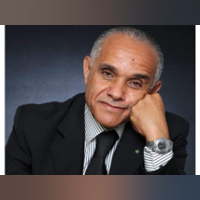
Aziz Daouda Aziz Daouda

Aziz Daouda

Directeur Technique et du Développement de la Confédération Africaine d'Athlétisme. Passionné du Maroc, passionné d'Afrique. Concerné par ce qui se passe, formulant mon point de vue quand j'en ai un. Humaniste, j'essaye de l'être, humain je veux l'être. Mon histoire est intimement liée à l'athlétisme marocain et mondial. J'ai eu le privilège de participer à la gloire de mon pays .


8000

33.0

FIFA World Cup 2026: risk of a tournament reserved for the wealthiest? An unprecedented inflation... 106

The 2026 World Cup, jointly organized by the **États-Unis, le Canada et le Mexique**, promises to be an extraordinary event: an expanded format with 48 teams, 104 matches, state-of-the-art facilities, and what is expected to be the most massive media coverage in sports history. However, as initial details about ticketing and logistical costs emerge, growing concern is palpable among fans: **the North American World Cup could become the most expensive World Cup ever organized**, to the point of calling into question the very accessibility of the event. At the heart of this concern is the American model of *dynamic pricing*, a system where prices are never fixed. They fluctuate according to demand, the volume of online requests, the status of the match, and even algorithmic parameters beyond the consumer’s control. For example, a hotel room normally priced around 200 USD might not be offered for less than 500 or even 600 USD, probably more for late bookers. This mechanism, common in American professional sports, could turn World Cup ticket purchases into a frenzied and even unfair race. Some final tickets are already priced between $5,000 and $20,000, a completely unprecedented level. Group stage tickets could see daily price swings, making financial planning nearly impossible for foreign fans. American supporters, already used to high prices in the NBA, NFL, or MLB, seem better equipped to navigate this system. Conversely, for Moroccan, Brazilian, Senegalese, Egyptian, or Indonesian fans, this model represents an almost insurmountable barrier. Adding to this cloudy scenario is the question of the official resale platform: **FIFA Official Ticket Resale Platform**. Ideally, it prevents black-market sales and secures transactions. But in a market dominated by speculative logic, it could become a playground for actors seeking to maximize profits, especially since FIFA takes a commission. FIFA has not yet communicated safeguards it plans to implement. Without strict regulation, resale could amplify price volatility, particularly for highly sought-after matches: final rounds, games involving teams with strong diasporas, as well as the opening match and final. One of the most puzzling aspects of this World Cup is the early sale of tickets without specific match assignments. In the USA, out of the **6 millions de billets prévus**, nearly **2 millions ont déjà trouvé preneur**, while buyers do not yet know which matches they paid for. This reflects several dynamics: - Total confidence from the American public in the event's organization; - The high purchasing power of an audience willing to invest heavily in sports experiences; - A structural asymmetry between American supporters and international fans, the latter compelled to wait for match assignments to plan trips and budgets. This situation fuels fears that stadiums will be largely filled with local spectators, to the detriment of fans supporting their teams from abroad. The USA ranks among the world’s most expensive hotel markets, and the selected cities are no exception: **New York, Los Angeles, Miami, Seattle, Dallas ou encore San Francisco** regularly top lists of the priciest destinations. A genuine inflation is expected across the hotel sector. During major sporting events, room prices can double or triple. For a month-long World Cup, projections are even more alarming: some operators are already talking about "prices never seen before." Fans should expect: - Massive hikes in hotel prices; - Predictable saturation of alternative accommodations; - Very high internal transport costs, since distances between host cities often require air travel. All these factors raise a central question: who will the 2026 World Cup really serve? The 250 million registered football players worldwide may feel somewhat frustrated. Their sport is slipping away. The North American model, dominated by commercial logic and speculative mechanisms, seems incompatible with football’s tradition as a popular sport. We might witness the emergence of a two-speed World Cup: - A premium World Cup, largely attended by North American audiences and wealthier supporters; - A remote World Cup for millions of international fans who must content themselves with televised broadcasts due to insufficient means to attend. For supporters from countries where median income is far lower than in the United States, be they African, Latin American, Asian, or even European nations, the experience could become inaccessible. FIFA clearly faces a strategic dilemma. Sooner or later, it will have to address this issue. Certainly, the choice of the United States guarantees top-level infrastructure, record revenues, a colossal advertising market, and a logistics organization of rare reliability. But this financial logic could directly contradict football’s social and symbolic mission: to bring people together, unite, and include. If the 2026 World Cup turns into an elitist event, it risks leaving a lasting negative impression in public opinion. Modern football, already criticized for its commercial drift, could face increased pushback from fans—the very fans who keep the sport alive—especially as FIFA’s revenues rise from $7.5 billion to $13 billion. The World Cup is thus under tension. In 2026, it will likely be spectacular both sportingly and organizationally. But it could also mark a turning point in World Cup history: when the event stops being a popular and accessible gathering and turns into a premium product for a privileged audience. Between ticket inflation, skyrocketing hotel prices, logistical distances, and the American economic model, the real risk exists that this edition will go down as the most exclusive, most expensive, and least accessible. FIFA, the organizers, and host cities will have to find ways to mitigate this dynamic to preserve football’s very essence: a universal sport that belongs to everyone. Could the proximity between Gianni Infantino and Donald Trump, even their friendship, help in any way?

CAN 2025 in Morocco: Reflection of a Major Probable Migratory and Social Transformation... 178

Three weeks before the Africa Cup of Nations in Morocco, it seems appropriate to revisit key insights from the 2024 General Population and Housing Census (RGPH 2024). This event will undoubtedly have a powerful impact on the country's perception, through the positive images it is already broadcasting and, consequently, on future demographic data. The census shows that out of 36.8 million recorded inhabitants, 148,152 people are foreign nationals, representing nearly 0.4% of the total population, an increase of over 76% compared to 2014. Behind this relatively modest figure lies a structural transformation: the rise of Sub-Saharan African migrants, partial feminization of flows, strong urban concentration, and increasingly qualified profiles. Morocco's geographical position and economic evolution have, in a relatively short time, transformed it from a country of emigration into a space of settlement and transit for migrants with varied profiles. The National Strategy on Immigration and Asylum (SNIA), adopted in 2013, along with the regularization campaigns of 2014 and 2017, have established a more inclusive approach in Morocco and better statistical knowledge of the populations concerned. Sub-Saharan African nationals now represent nearly 60% of migrants, compared to about 27% in 2014. The share of Europeans has declined to just over 20%. That of MENA region nationals is only 7%. Morocco's continental anchoring is thus confirmed. In terms of nationalities, Senegal and Côte d'Ivoire account for more than one-third of foreigners, ahead of France, which remains the leading European nationality with nearly 14% of foreign residents. Other countries like Guinea, Mali, Congo-Brazzaville, Cameroon, or Syria complete this panorama. Foreign residents in Morocco are mostly recent arrivals: more than half report arriving since 2021, and more than one-third between 2011 and 2020, testifying to a very recent acceleration of arrivals. A majority of this population will fill the stands during the CAN. Economic motives overwhelmingly dominate: more than 53% of migrants cite work as the main reason, confirming Morocco's role as a regional attraction pole in sectors such as construction, services, agriculture, and the informal economy. Family reasons follow (a little over 20%), reflecting the growing weight of family reunification and medium- to long-term settlement projects, then studies and post-graduation (about 14%), a sign of the country's academic attractiveness to Sub-Saharan students. Humanitarian motives, flight from conflicts, insecurity, racism, or climate change effects—remain numerically minor. Morocco thus appears as a hybrid space where labor migrations, student mobility, family reunifications, and international protection needs coexist. The vast majority of foreign residents live in cities: nearly 95% are settled in urban areas, confirming the role of major agglomerations as entry points and integration spaces. Two regions clearly dominate: Casablanca-Settat, which hosts more than 43% of foreigners, and Rabat-Salé-Kénitra with a little over 19%, though the latter's share has declined compared to 2014 in favor of Casablanca. Nearly 56% of this population are men, but feminization is progressing, particularly among certain nationalities like Ivorian women and Filipinos, who are very present in personal services and domestic work. More than 80% of foreign residents are between 15 and 64 years old, making them essentially a working-age group, with a non-negligible presence of children and a minority of elderly people. Nearly half of people aged 15 and over are single, while a little over 45% are married, showing the coexistence of individual mobility trajectories and stabilized family projects. The education level appears generally high: nearly 39% hold a higher diploma and 28% have reached secondary level. Employed workers are mostly private sector employees, while a minority work as independents, employers, or public sector employees, highlighting the diversity of professional integration modes. The relatively limited share of unemployed may mask forms of underemployment or precariousness in the informal sector. In 2024, more than 71,000 households include at least one foreign resident. About 31% are exclusively composed of foreigners, while about 69% are mixed households combining Moroccans and foreigners, a proportion sharply up from 2014. This rise in mixed households reflects a deepening of residential and social integration, through mixed marriages, welcoming relatives, or shared cohabitations linked to work and studies. In terms of housing, the majority of foreign households live in apartments, followed by modern Moroccan houses, reflecting integration into the ordinary urban fabric rather than segregated housing forms. Exclusively foreign households are overwhelmingly tenants, while mixed households are more often owners or co-owners, highlighting differentiated settlement trajectories based on household composition. The RGPH 2024 results confirm that the foreign presence in Morocco, though numerically limited, now constitutes a structural and lasting fact of society. The youth, the high proportion of active workers, the rise of family and mixed households, as well as the diversification of educational profiles, call for greater coordination between migration policies, urban, social, and educational policies.The major challenges concern valuing the economic and demographic potential of this population, access to education, health, housing, and decent work, and combating discrimination in a context of cultural pluralization. The SNIA mechanisms to meet Morocco's regional and international commitments in migration governance must also evolve. However, these figures and data will likely undergo real evolution in the coming years: the African media focus on the CAN, and later on the World Cup in Morocco, will reveal the country's assets and increase its attractiveness. These two events, through their combined media weight and the impressions reported by the thousands of expected spectators, should play a promotional role for the country. Deep Africa will discover Morocco and the multiple opportunities it offers, both economically and for studies.

Morocco Faces Its Sports Challenge: From Leisure to National Powerhouse... 628

Long confined to mere popular entertainment, used as a political communication tool, or dismissed as a socially useless activity, Moroccan sport is now emerging as an essential economic, social, and health driver. Under the spotlight of CAN 2025 and the 2030 World Cup, the Kingdom must fully embrace this potential. No room for half-measures, the sector already carries significant weight. Sport currently generates 1.56% of national GDP, equivalent to over 21 billion dirhams. This is just the beginning: reaching the symbolic 3% threshold, as estimated by the World Bank, could eventually position it to rival economic heavyweights like agribusiness or tourism, which it already boosts. The sector is buzzing with activity. Sales of sports goods have surged to 3.77 billion dirhams, while clubs and fitness centers report a 25% revenue increase, reaching 604 million. Professional football, capturing 12% of sports jobs, weighs in at 879 million dirhams. Moroccan sport is no longer just leisure; it is a full-fledged emerging economy. On the global stage, football is a major engine: valued at 59 billion dollars in 2025, FIFA anticipates record revenues of 11 billion for the 2023–2026 cycle. Morocco has every interest in riding this global wave, and it is doing so effectively. Major projects, from construction to jobs, contribute to this new revenue stream. CAN 2025 and the 2030 World Cup are more than sports events. They represent a powerful lever for investment and transformation. The three host countries: Morocco, Spain, Portugal, will mobilize 15 to 20 billion dollars, with 50 to 60 billion dirhams for Morocco alone, which is not just catching up but surpassing its partners. Renovated stadiums, roads, hotel infrastructure, and transport: these projects should create 70,000 to 120,000 direct and indirect jobs. Sports tourism adds to this, already a strong driver generating 2 billion dirhams from iconic events like golf tournaments, the Marathon des Sables, or Atlas trails. But physical activity and sport are more than that, they are healing investments. Beyond the economy, investing in physical activity and sport is crucial for public health. According to the WHO, every dollar invested in physical activity yields three dollars in medical cost savings. Europe estimates that a 10% increase in practitioners saves 0.6% of GDP in healthcare costs. In Morocco, where 59% of the population is overweight and 24% suffer from obesity, and 48.9% of Moroccans experience a mental disorder at least once in their lives, physical activity could reverse these health trends. It reduces premature mortality by 30%, type 2 diabetes by 40%, depression by 30%, while boosting productivity by 6 to 9%. Physical activity and sport are the best free medicine. They heal before illness even appears. Thus, sport is not just pleasure: it is a powerful, sustainable public health lever. What better way to channel the overflowing energy of youth? Sport is also the school of life and citizenship. Studies show athletic students score 0.4 points higher on average, gain 13% in concentration, and reduce stress by 20%. Yet, only 22% of young Moroccans engage in regular physical activity, despite a potential exceeding 6 million. Children tend to swap the ball for screens. The risk is high: without strong policies, a fragile generation is being prepared. The Kingdom already invests significantly in sports for all, especially by providing youth with free outdoor facilities, but much remains to be done. Here is a corrected and improved version of your text: The legislative framework is clearly misaligned with ambitions. Law 30-09, governing sport in Morocco, is criticized for excessive centralization, administrative burdens, and lack of autonomy for clubs and federations. It fails to clearly define concepts, creating real legal ambiguity. More than ever, it would be wise to move toward a new law that implements and respects the provisions of the 2011 constitution; a more incentive-based law that clearly defines concepts and thus responsibilities, correcting all the flaws of the previous one—and there are many. It would also be urgent to remove sport from political timelines and entrust it to a mission-oriented administration whose tasks, strategies, and pace adapt to sports time, which is much longer, and align with international sports timelines. Morocco's Royal Sports Federations capture no more than 350,000 licensees for a potential of 6 to 7 million. Clubs struggle to professionalize, private investors are lukewarm, and mass participation remains proportionally neglected. To accelerate growth, it will likely be necessary to lighten taxation with reduced VAT on equipment and subscriptions, ease burdens for sports startups, and officially recognize sport as an activity of public utility. The 2026 Finance Bill precisely provides for adjustments to promote public-private partnerships and boost private investment. The next decade could mark a historic turning point in the country's development. By 2030, Morocco has chosen sport as a national pillar. With prestigious international competitions, modern infrastructure, and energetic youth, Morocco holds all the cards to make sport a pillar of sustainable development. But this requires a paradigm shift: sport is not just a spectacle or image tool; it is an economic sector, a culture to promote, and a public policy to build. Morocco now has the opportunity to make sport a major vector of prosperity, health, employment, and social cohesion. This is the choice made: to take sport out of the leisure framework and fully integrate it into a national strategy. Sport is not a luxury. It is a collective investment in health, employment, and national unity. The message is clear: by 2030, Morocco must shine not only through its teams but also through its ambitious vision of sport as a lever for human and economic development.